Understanding Vietnam’s Global Export Landscape
Vietnam has rapidly transformed into a pivotal player in the global trade arena, carving out an increasingly significant niche in international supply chains. This Southeast Asian nation, once primarily known for its agricultural prowess, has strategically diversified its economic base, emerging as a manufacturing powerhouse and a reliable source for a diverse range of products. Its consistent ascent in export rankings underscores a dynamic economy poised for continued growth, driven by strategic government policies, a burgeoning young workforce, and an unwavering commitment to international integration. This section provides an essential overview of Vietnam’s increasing significance in global trade, setting the context for the detailed data and analysis presented in the forthcoming Vietnam Export Commodities Report, which offers deep insights into market trends, key commodities, and future projections.

1. Key Factors Driving Vietnam’s Export Growth
Vietnam’s remarkable export trajectory is not accidental but a result of several interlocking strategic advantages and policy decisions. A primary driver has been its proactive engagement in numerous free trade agreements (FTAs), including the Comprehensive and Progressive Agreement for Trans-Pacific Partnership (CPTPP) and the EU-Vietnam Free Trade Agreement (EVFTA). These agreements have significantly reduced tariffs and non-tariff barriers, opening new markets and enhancing the competitiveness of Vietnamese goods. The strategic shift of manufacturing operations from China, often referred to as “China+1” or “de-risking” strategies, has also channeled substantial foreign direct investment (FDI) into Vietnam’s manufacturing sector. Global corporations, seeking diversification and cost efficiencies, have found Vietnam an attractive alternative due to its stable political environment, competitive labor costs, and improving infrastructure.
Furthermore, the government’s consistent investment in infrastructure—ports, highways, and industrial parks—has bolstered supply chain efficiency, making it easier and more cost-effective to move goods. A young, adaptable, and increasingly skilled labor force provides a demographic dividend, supporting both traditional and high-tech manufacturing. The nation’s ability to maintain macroeconomic stability and foster a business-friendly environment has cemented its reputation as a reliable and growing export hub. These combined factors have propelled sectors ranging from textiles and footwear to electronics and machinery, establishing Vietnam as a crucial node in global production networks.
2. Economic Outlook and Trade Policies for 2025
Looking towards 2025, Vietnam’s economic outlook remains robust, albeit with an awareness of global economic headwinds. Projections suggest continued GDP growth, supported by resilient domestic demand and sustained export performance. Government policy is geared towards further enhancing competitiveness, attracting high-quality FDI, and promoting sustainable development. Key trade policies will continue to focus on implementing and maximizing the benefits of existing FTAs, while also exploring new bilateral and multilateral agreements to broaden market access. Efforts will intensify to streamline customs procedures, reduce bureaucratic hurdles, and improve the regulatory environment to ensure ease of doing business for both local and international enterprises.
The focus will also be on upgrading domestic industries, encouraging technological adoption, and moving up the value chain. This includes supporting sectors with higher technological content and promoting innovative production methods. Vietnam aims to diversify its export markets further, reducing reliance on any single major partner and building resilience against geopolitical and economic shocks. Additionally, there will be a strong emphasis on fostering the growth of small and medium-sized enterprises (SMEs) to integrate them more deeply into global supply chains, thereby broadening the base of the country’s export capabilities. The comprehensive Vietnam Export Commodities Report will detail specific policy impacts on various sectors.
3. Emerging Export Sectors and Future Prospects
While traditional sectors like textiles, footwear, and agro-products continue to be strong contributors, Vietnam is rapidly developing new export strengths, pointing towards a diversified and resilient future. The electronics sector, particularly mobile phones and components, computers, and peripheral equipment, has witnessed explosive growth, driven by significant investments from global tech giants. This shift highlights Vietnam’s capability to move beyond labor-intensive manufacturing towards more sophisticated, value-added production. Beyond electronics, there’s a growing emphasis on high-tech manufacturing, precision machinery, and automotive components.
Furthermore, the agricultural sector is undergoing modernization, with an increasing focus on high-quality, specialty produce. The demand for Vietnam agricultural exports statistics shows a trend towards organic products, processed foods, and aquaculture products that meet stringent international standards. Renewable energy components and services also present an emerging export opportunity, aligning with global sustainability trends. The government is actively promoting digital economy services, IT outsourcing, and creative industries, which, while not traditional goods exports, contribute significantly to the nation’s export of services. Sourcing specific products Vietnam is becoming easier for a broader range of complex goods. This strategic diversification solidifies Vietnam’s position not just as a manufacturing hub but as an innovation-driven economy, offering a wide array of products and services to the global market. Major export hubs Vietnam like Ho Chi Minh City, Haiphong, and Da Nang are continuously upgrading their logistics and industrial parks to support this evolving export landscape.
Deep Dive into Vietnam Agricultural Exports Statistics
Vietnam has cemented its position as a powerhouse in the global agricultural market, consistently ranking among the top exporters for various commodities. This deep dive offers an in-depth analysis of Vietnam’s leading agricultural products, including performance statistics, market shifts, and future projections, providing crucial insights for anyone interested in Vietnam Export Commodities Report.
Understanding the intricacies of Vietnam agricultural exports statistics is vital for businesses looking to source products or invest in the region. While Vietnam manufacturing export data also showcases impressive growth, the agricultural sector remains a foundational pillar of the nation’s economy and a key driver of its trade surplus.
Top Performing Agricultural Commodities (e.g., Coffee, Rice, Seafood)
Vietnam’s agricultural export portfolio is remarkably diverse, but a few commodities consistently stand out in terms of volume and value. Coffee, particularly Robusta, is a prime example. Vietnam is the world’s second-largest coffee exporter, with annual exports often exceeding 1.7 million tons. In 2023, coffee exports reached approximately $4.2 billion, driven by strong global demand and favorable prices. This consistent performance underscores Vietnam’s critical role in the international coffee supply chain, making it a key hub for sourcing specific products Vietnam offers to the world market.
Rice is another cornerstone of Vietnam’s agricultural trade. As one of the top three global rice exporters, Vietnam’s rice shipments, particularly fragrant and high-quality varieties, are highly sought after. In recent years, annual rice export volumes have frequently surpassed 6-7 million tons, generating revenues often exceeding $3.5 billion. The country’s strategic focus on improving rice quality and diversifying varieties has been instrumental in maintaining its competitive edge.
Seafood, encompassing shrimp, pangasius (catfish), and other aquatic products, represents a significant and growing export category. Vietnam is a global leader in aquaculture, with its seafood exports regularly exceeding $9 billion annually. The industry benefits from extensive coastal lines and advanced farming techniques, positioning Vietnam as a reliable source for high-quality seafood. Major export hubs Vietnam uses, such as Ho Chi Minh City and Hai Phong, facilitate these massive shipments, ensuring efficient global distribution. For more detailed statistics on the sector’s performance, the USDA Foreign Agricultural Service provides comprehensive reports on Vietnam’s agricultural products.
Emerging Trends and Sustainability in Agri-exports
Beyond traditional commodities, Vietnam’s agricultural sector is adapting to evolving global consumer preferences and environmental concerns. There’s a noticeable shift towards exporting higher-value fruits, such as durian, dragon fruit, and rambutan, which are gaining traction in markets like China, the EU, and the US. These products often command premium prices, contributing to higher export revenues per unit.
Sustainability is rapidly becoming a non-negotiable aspect of agricultural trade. Vietnamese producers are increasingly adopting certifications like VietGAP and GlobalGAP, focusing on safe agricultural practices, reducing pesticide use, and implementing water-saving technologies. Climate-smart agriculture, designed to enhance resilience against environmental changes, is also gaining momentum. This commitment to sustainable practices and traceability is crucial for meeting stringent import standards in developed markets and appeals to environmentally conscious consumers, offering new avenues for sourcing specific products Vietnam can offer.
Impact of Global Demand and Climate on Produce
The performance of Vietnam’s agricultural exports is inextricably linked to global demand dynamics and the ever-present threat of climate change. Major markets like China, the United States, and the European Union dictate significant portions of Vietnam’s export volumes. Free Trade Agreements such as the EVFTA and CPTPP have opened new opportunities, reducing tariffs and streamlining trade, thereby boosting demand for Vietnamese produce. However, geopolitical shifts and economic downturns in these markets can directly impact export volumes and prices.
Climate change poses a significant long-term challenge, particularly for the Mekong Delta, Vietnam’s agricultural heartland. Rising sea levels, increased salinity intrusion, and more frequent extreme weather events like droughts and floods directly threaten crop yields and aquaculture production. The Vietnamese government is investing in infrastructure projects, drought-resistant crop varieties, and early warning systems to mitigate these impacts. Adaptability and resilience will be key to ensuring the continued growth and stability of Vietnam’s agricultural exports in the face of these environmental pressures, influencing strategic decisions for major export hubs Vietnam relies on for distribution.
Analyzing Vietnam Manufacturing Export Data & Growth
Vietnam has emerged as a formidable force in global manufacturing and exports, consistently showcasing robust growth and strategic diversification. The nation’s manufacturing sector is not just expanding in volume but also moving up the value chain, attracting significant foreign direct investment and integrating deeper into global supply chains. This section delves into the key products, export volume, and the underlying factors contributing to Vietnam’s impressive and consistent expansion, providing insights critical for anyone interested in a comprehensive Vietnam Export Commodities Report.

1. Leading Manufacturing Segments (Textiles, Electronics, Footwear)
Vietnam’s manufacturing prowess is most evident in several key segments that have historically driven its export engine. Textiles and apparel, electronics, and footwear stand out as pillars of the nation’s industrial landscape. The textile and garment industry, for instance, has long been a cornerstone, leveraging a skilled workforce and competitive labor costs to become one of the world’s largest exporters. This sector continuously adapts to global fashion trends and sustainability demands, pushing for higher-value-added products.
Electronics manufacturing, particularly in mobile phones, computers, and components, has witnessed explosive growth. Major multinational corporations have established significant production bases in Vietnam, transforming the country into a critical node in the global electronics supply chain. This segment is characterized by high export volumes and increasingly sophisticated assembly and component production. Similarly, Vietnam’s footwear industry is a global leader, producing for many of the world’s top brands. Its consistent growth is testament to efficient production, quality control, and a strong manufacturing base.
Analyzing Vietnam manufacturing export data reveals a steady upward trajectory in these sectors, underscoring their importance to the national economy. Businesses looking at sourcing specific products Vietnam will find these industries mature, diverse, and capable of meeting various international demands, from mass production to specialized orders.
2. Technological Advancements and Value Chain Integration
Beyond traditional strengths, Vietnam is strategically investing in technological advancements and aiming for deeper integration into higher-value segments of global supply chains. The government, alongside private sector initiatives, is promoting Industry 4.0 adoption, focusing on automation, smart manufacturing, and digital transformation across factories. This shift is crucial for enhancing productivity, improving product quality, and remaining competitive in a rapidly evolving global market.
Foreign direct investment (FDI) plays a pivotal role in this transformation, bringing not only capital but also advanced technology, management expertise, and access to international markets. Many global tech giants and manufacturing powerhouses are establishing R&D centers and sophisticated production facilities in Vietnam, fostering a knowledge transfer that elevates local capabilities. This drive towards value chain integration means that Vietnam is increasingly moving from basic assembly to more complex manufacturing processes, including design, engineering, and the production of higher-value components.
The development of industrial parks and specialized economic zones, especially around key logistical points and Major export hubs Vietnam like Ho Chi Minh City, Hanoi, and Da Nang, further supports this advanced manufacturing push. These hubs provide the infrastructure and ecosystem necessary for high-tech industries to thrive, facilitating efficient export operations and attracting further investment.
3. Trade Agreements and Their Influence on Manufactured Goods
A significant catalyst for Vietnam’s manufacturing export boom is its proactive engagement in numerous free trade agreements (FTAs). These agreements have opened up vast markets and provided preferential access for Vietnamese manufactured goods, fostering an environment conducive to export-led growth.
Key FTAs include the Comprehensive and Progressive Agreement for Trans-Pacific Partnership (CPTPP), the EU-Vietnam Free Trade Agreement (EVFTA), and the Regional Comprehensive Economic Partnership (RCEP). The CPTPP, for instance, has lowered tariffs and non-tariff barriers across a bloc of 11 Pacific Rim nations, significantly boosting exports of textiles, footwear, and electronics to markets like Canada, Mexico, and Japan. The EVFTA has provided a crucial gateway to the European Union, one of the world’s largest consumer markets, enhancing competitiveness for Vietnamese products through tariff reductions and streamlined customs procedures.
These agreements not only reduce direct export costs but also incentivize foreign companies to set up production in Vietnam to leverage the preferential access. This strategic integration into global trade networks has diversified Vietnam’s export markets and strengthened its position as a reliable and competitive manufacturing base. While the focus here is on manufacturing, it’s worth noting that these agreements also impact other sectors, including Vietnam agricultural exports statistics, demonstrating a broader positive influence on the nation’s overall trade balance and economic development, as detailed in various Vietnam Export Commodities Report analyses.
In conclusion, Vietnam’s manufacturing export sector continues to be a dynamic and pivotal component of its economic success. Driven by strong performance in key segments, a strategic embrace of technological advancements, and a comprehensive network of trade agreements, Vietnam is poised to sustain its growth trajectory, further cementing its role as a global manufacturing powerhouse.
Sourcing Specific Products Vietnam: A Buyer’s Guide
Vietnam has rapidly emerged as a powerhouse in global manufacturing and agricultural exports, making it a compelling destination for international buyers seeking diverse products. Its strategic location, competitive labor costs, and increasing integration into global trade agreements present significant opportunities. This practical guide is designed for international buyers looking to source specific products from Vietnam, offering crucial market intelligence and detailed supplier considerations to ensure successful procurement.
1. High-Demand Product Categories for International Sourcing
Understanding Vietnam’s primary export sectors is the first step in successful sourcing. The nation’s economy thrives on a mix of robust agricultural output and rapidly expanding manufacturing capabilities. For buyers interested in raw materials or processed goods, Vietnam Export Commodities Report provides invaluable insights into market trends and top-performing sectors.
- Agricultural Products: Vietnam is a global leader in several agricultural commodities. Key exports include coffee (second largest producer globally), rice, pepper, cashew nuts, and a wide array of fruits and vegetables. The fisheries sector is also significant, with shrimp, pangasius, and other seafood products dominating global markets. Buyers can leverage detailed Vietnam agricultural exports statistics to identify regions and suppliers specializing in specific produce, ensuring both quantity and quality.
- Manufacturing Goods: The manufacturing sector has seen explosive growth, making Vietnam a preferred alternative to traditional manufacturing hubs. Key categories include textiles and garments, footwear, electronics (including smartphones and components), furniture, and various machinery and equipment parts. Major international brands have established significant production bases here. Accessing comprehensive Vietnam manufacturing export data can help buyers pinpoint industries with mature supply chains and proven export track records, streamlining the process of sourcing specific products Vietnam.
- Emerging Sectors: Beyond traditional goods, Vietnam is also expanding into higher-value manufacturing, including automotive components, plastics, and medical devices, offering new opportunities for diversified sourcing.
2. Tips for Identifying Reliable Suppliers and Quality Control
Once you’ve identified your desired product category, the next critical step is finding trustworthy suppliers and ensuring consistent quality. This requires a systematic approach:
- Due Diligence and Vetting: Start with comprehensive background checks. Verify business registrations, export licenses, and certifications (e.g., ISO, HACCP, SA8000). Utilize online directories, trade show contacts, and industry associations. Visiting factories in person or arranging third-party audits is highly recommended to assess production capabilities, working conditions, and adherence to international standards.
- Communication and Transparency: Clear, consistent communication is paramount. Establish transparent terms regarding pricing, delivery schedules, payment methods, and quality specifications from the outset. Be mindful of cultural nuances in business communication and consider local representatives or interpreters if language barriers are significant.
- Implementing Robust Quality Control: Don’t rely solely on supplier self-assessment. Implement a multi-stage quality control (QC) process, including pre-production checks, in-line inspections during manufacturing, and final pre-shipment inspections. Engaging a reputable third-party QC agency based in Vietnam can provide objective assessments and mitigate risks associated with product defects or non-compliance, particularly when sourcing specific products Vietnam that have stringent quality requirements.
3. Navigating Export Regulations and Logistics for Specific Products
Understanding the regulatory landscape and logistics infrastructure is vital for smooth and efficient delivery of your sourced products.
- Export Regulations and Compliance: Familiarize yourself with Vietnam’s export procedures, customs regulations, and any specific requirements for your product category (e.g., phytosanitary certificates for agricultural goods, specific labeling for consumer electronics). Be aware of tariffs, duties, and any Free Trade Agreements (FTAs) Vietnam is a party to, such as the CPTPP, EVFTA, or RCEP, which can offer preferential tariffs. Consulting with a local customs broker or trade lawyer is advisable to ensure full compliance.
- Logistics and Shipping: Vietnam boasts a well-developed network of ports, airports, and inland transportation routes. Identify the most suitable shipping method (sea freight, air freight) based on product type, urgency, and cost. Key maritime gateways include Ho Chi Minh City (Cat Lai Port), Haiphong Port, and Da Nang Port. These are considered Major export hubs Vietnam, offering extensive connections to global shipping lanes. For time-sensitive or high-value goods, international airports in Hanoi (Noi Bai) and Ho Chi Minh City (Tan Son Nhat) provide air cargo services.
- Insurance and Documentation: Always secure appropriate cargo insurance to protect against loss or damage during transit. Ensure all necessary export documentation—such as commercial invoices, packing lists, bills of lading/airway bills, certificates of origin, and any product-specific certifications—are accurately prepared and submitted on time to avoid delays.
By meticulously researching market trends, carefully vetting suppliers, and diligently navigating regulatory and logistical requirements, international buyers can successfully tap into Vietnam’s dynamic export market and establish profitable, long-term sourcing relationships.
Major Export Hubs Vietnam and Infrastructure Development
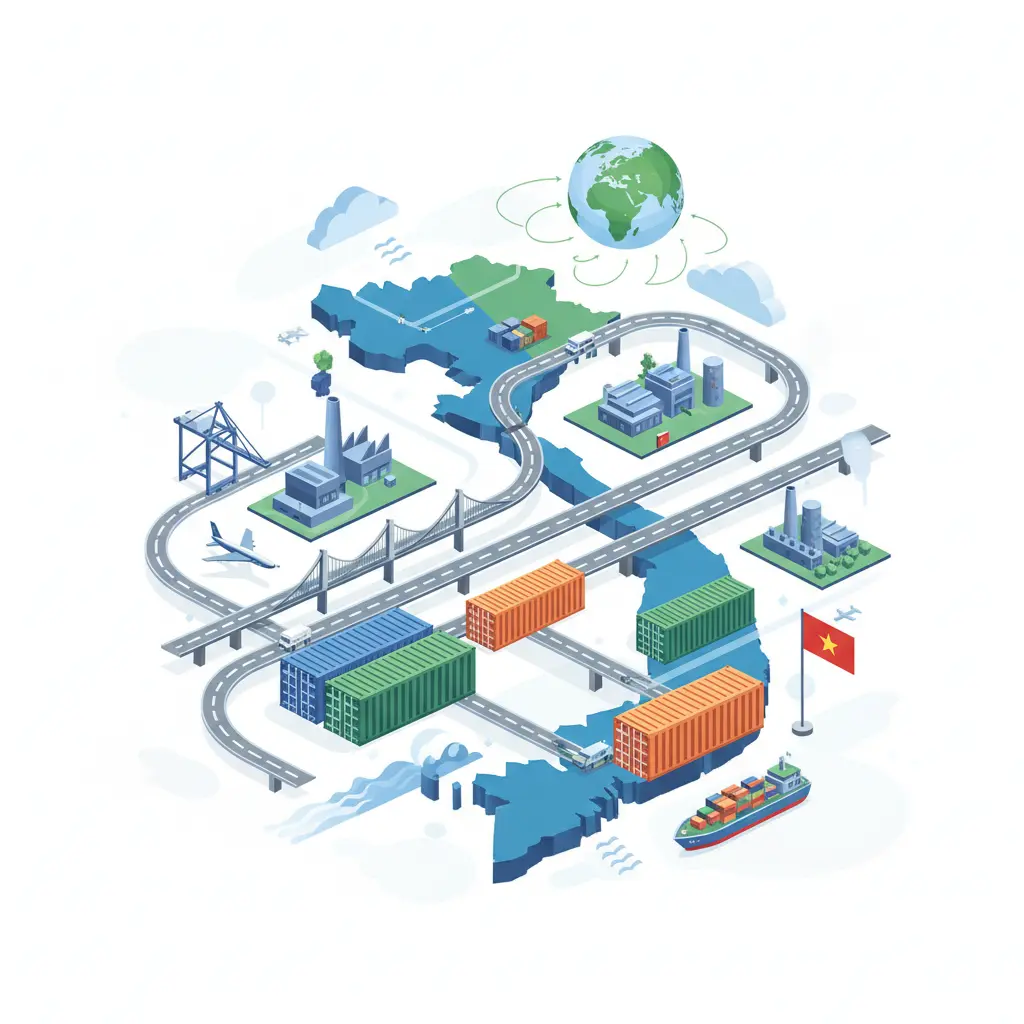
Vietnam has rapidly emerged as a global manufacturing and agricultural powerhouse, driven by strategic infrastructure development and a robust network of export hubs. Understanding the intricate details of these hubs is crucial for anyone looking into a Vietnam Export Commodities Report. The nation’s ability to efficiently move goods from production sites to international markets hinges on its well-planned port cities and industrial zones, which continuously receive significant investment to enhance their operational advantages and connectivity.
1. Strategic Ports and Economic Zones
Vietnam’s economic growth is inextricably linked to its major port cities, which serve as the primary gateways for its burgeoning exports. Key among these are Ho Chi Minh City in the south and Hai Phong in the north. Ho Chi Minh City, with its surrounding areas like Dong Nai and Binh Duong, is home to major industrial zones that produce a vast array of goods, from electronics and textiles to footwear and machinery. The Cai Mep-Thi Vai port complex, located southeast of Ho Chi Minh City, is a deep-water port capable of handling the world’s largest container vessels, making it vital for direct shipments to major global markets without transshipment. This complex is instrumental in supporting the region’s significant Vietnam manufacturing export data.
In the north, Hai Phong is the largest port city, serving as the main gateway for the Red River Delta economic region, including Hanoi and Quang Ninh. It facilitates exports from numerous industrial parks specializing in electronics, automotive components, and light industries. The Lach Huyen International Gateway Port in Hai Phong, also a deep-water facility, further bolsters the region’s capacity to handle growing trade volumes. These strategic ports are complemented by a network of Special Economic Zones (SEZs) and Industrial Parks (IPs) across the country, such as the Vietnam Singapore Industrial Parks (VSIPs) and various high-tech parks. These zones offer attractive incentives for foreign direct investment (FDI), streamlined customs procedures, and integrated logistics services, making them ideal for sourcing specific products Vietnam. Additionally, specialized zones in the Mekong Delta focus on processing and exporting agricultural products, contributing significantly to Vietnam agricultural exports statistics, including seafood, rice, and fruits.
2. Logistics Networks and Connectivity Enhancements
Beyond the ports themselves, Vietnam has made substantial strides in developing its broader logistics networks to ensure seamless connectivity between production sites and export hubs. The government’s focus on infrastructure development includes upgrading national highways, constructing new expressways, and expanding rail networks. The North-South Expressway, a mega-project, is progressively linking major economic centers, significantly reducing transportation times and costs. This enhanced road infrastructure directly benefits regions reliant on efficient freight movement to the major export hubs Vietnam.
Furthermore, investments in intermodal transport systems, combining road, rail, and inland waterways, are optimizing the supply chain. New logistics centers and dry ports are being established near industrial zones to facilitate warehousing, distribution, and customs clearance processes before goods reach the main seaports. Air cargo capacity is also expanding, with major international airports like Noi Bai (Hanoi) and Tan Son Nhat (Ho Chi Minh City) playing critical roles in expediting high-value and time-sensitive exports. These enhancements are crucial for maintaining Vietnam’s competitive edge in global trade and are often detailed in any comprehensive Vietnam Export Commodities Report, highlighting the efficiency of the country’s logistics backbone.
3. Investment Opportunities in Export-Oriented Infrastructure
The continuous growth of Vietnam’s export sector necessitates ongoing investment in its infrastructure. Recognizing this, the Vietnamese government actively promotes and welcomes foreign investment in key areas such as port expansion, logistics parks, road networks, and digital infrastructure. Public-private partnerships (PPPs) are a preferred model for funding large-scale projects, offering attractive incentives and a stable regulatory environment for investors.
Opportunities abound in developing new deep-water ports, modernizing existing facilities, and establishing integrated logistics centers equipped with advanced technology for inventory management and freight tracking. Investment in cold chain logistics is also critical, especially for perishable agricultural and seafood exports. As global supply chains evolve, there is also a growing need for smart logistics solutions, automation in ports, and improved connectivity through 5G networks and IoT. These investments not only promise lucrative returns but also play a pivotal role in solidifying Vietnam’s position as a reliable and efficient global export hub, further bolstering the insights found within a detailed Vietnam Export Commodities Report.
Partner with Vietnam’s Leading Suppliers
Looking for reliable suppliers in Vietnam? Contact VietnamSuppliers.com today to connect with verified manufacturers and exporters across all industries.
—————————————
References
– Vietnam and the WTO: https://www.wto.org/english/thewto_e/countries_e/viet_nam_e.htm
– USDA Foreign Agricultural Service provides comprehensive reports on Vietnam’s agricultural products: https://www.fas.usda.gov/data/vietnam-agricultural-products-annual-2023
– World Bank: Vietnam Overview: https://www.worldbank.org/en/country/vietnam/overview
– Vietnam Country Profile – World Bank Data: https://data.worldbank.org/country/vietnam
– Vietnam: Country Overview – World Bank: https://www.worldbank.org/en/country/vietnam/overview