
The Imperative for Supply Chain Diversification
In an era characterized by unprecedented global volatility, geopolitical shifts, and rapid technological evolution, the traditional approach to supply chain management—often optimized for cost-efficiency and lean operations—is no longer sufficient. Businesses, particularly those reliant on international trade, face a complex tapestry of risks, from natural disasters and pandemics to trade wars and cyberattacks. Proactive Supply Chain Diversification Strategies are not merely a defensive tactic; they are a critical imperative for ensuring business continuity, fostering growth, and building resilience in today’s highly interconnected global economy. This strategic shift is about future-proofing operations and seizing new opportunities.

1. Lessons from Recent Global Disruptions
The past few years have served as a stark reminder of the fragility inherent in concentrated supply chains. The COVID-19 pandemic exposed critical vulnerabilities, leading to widespread production halts, logistics bottlenecks, and dramatic spikes in shipping costs. Similarly, geopolitical tensions, such as trade disputes between major economies, have underscored the risks of over-reliance on single sourcing regions or dominant trading partners. Natural disasters, including floods, earthquakes, and extreme weather events, continue to disrupt production hubs and transportation networks with increasing frequency. These events have highlighted the urgent need for supply chain resilience and adaptability. Companies that had already begun implementing Export Product Diversification or exploring new markets found themselves better positioned to pivot, mitigate losses, and maintain operational stability compared to those with highly concentrated, single-source dependencies. For many, the crisis served as a powerful catalyst for re-evaluating sourcing strategies and embracing a more distributed, robust model.
2. Risk Mitigation vs. Opportunity Creation
While often viewed through the lens of risk mitigation, effective Supply Chain Diversification Strategies inherently create significant opportunities. By spreading sourcing across multiple geographies and suppliers, businesses can hedge against disruptions from any single point of failure. This approach minimizes exposure to localized economic downturns, political instability, or environmental disasters. Beyond defense, diversification opens doors to new markets and enhanced competitive advantage. Exploring New Markets for Vietnamese Goods, for instance, not only reduces reliance on traditional export destinations but also taps into burgeoning consumer bases and emerging economies. This can lead to increased sales volumes, greater market share, and reduced pricing pressure. Furthermore, diversified supply chains can foster greater innovation through exposure to varied manufacturing techniques, B2B Sourcing Innovation, and technological advancements from different regions, ultimately enhancing product quality and market responsiveness.
3. Practical Approaches to Diversification
Implementing effective Supply Chain Diversification Strategies requires a multifaceted approach. Firstly, geographical diversification of sourcing is paramount. This involves identifying and qualifying suppliers in different countries or regions to avoid over-reliance on a single production hub. For example, a company might source raw materials from one country, components from another, and assemble products in a third. Secondly, supplier diversification within regions can further enhance resilience, ensuring multiple vendors for critical inputs. Thirdly, Export Product Diversification involves expanding product lines or customizing offerings for various markets, spreading risk across different demand streams. Fourthly, embracing B2B Sourcing Innovation, such as leveraging advanced analytics, AI-driven supplier discovery platforms, and blockchain for transparency, can significantly streamline the diversification process and identify viable new partners more efficiently. Finally, investing in Resilient Sourcing Strategies means fostering stronger relationships with a wider array of suppliers, building inventory buffers strategically, and developing agile logistics networks capable of re-routing quickly during disruptions. For Vietnamese businesses, this also means proactively seeking out New Markets for Vietnamese Goods, building robust partnerships, and understanding diverse consumer needs to truly future-proof their global trade presence.
Resilient Sourcing Strategies: Beyond Single-Country Dependence
The global supply chain landscape has revealed the inherent vulnerabilities of single-country sourcing models. Geopolitical tensions, natural disasters, and pandemics necessitate a shift towards more robust and adaptable sourcing approaches. To mitigate risks and enhance continuity, businesses are embracing Supply Chain Diversification Strategies. This strategic pivot involves building multi-country sourcing networks, transforming traditional procurement into a dynamic, resilient ecosystem. For Vietnamese goods and suppliers, this presents a unique opportunity to integrate into diversified global supply chains, fostering growth and partnerships through a supply chain resilience imperative. The focus is on strategic depth and agility, moving beyond mere cost-efficiency to comprehensive Resilient Sourcing Strategies.
1. Multi-Regional Sourcing Hubs and Dual Sourcing
Foundational to modern supply chain resilience is establishing multi-regional sourcing hubs and implementing dual sourcing strategies. Multi-regional sourcing hubs involve setting up procurement and manufacturing operations across different geographic regions, rather than concentrating them in one area. This minimizes exposure to localized disruptions from political instability, labor shortages, or natural calamities. For instance, a company might source components from Southeast Asia for one product line and from Latin America for another, or even similar components from both. This geographical spread ensures continuity if one hub faces disruption.
Dual sourcing entails procuring a specific item or component from at least two independent suppliers, often in different countries or regions. This provides a crucial fallback option in case of supplier failure and fosters healthy competition, potentially improving pricing, quality, and innovation. Sourcing critical components from both Vietnam and Mexico, for example, significantly reduces reliance on a single vendor or region, bolstering the supply chain’s ability to withstand shocks and ensuring a steady flow of inputs. This strategy proactively supports Export Product Diversification for suppliers and enhances procurement security for buyers.
2. Nearshoring, Friendshoring, and Local Sourcing Initiatives
Companies are also exploring sourcing models that bring production closer to home or to politically aligned nations. Nearshoring involves relocating production or services to nearby countries, often sharing similar time zones. For North American companies, this might mean sourcing from Mexico; for European firms, Eastern Europe. Benefits include reduced lead times, lower transportation costs, and easier oversight. Vietnam, with its strategic location, stands to benefit significantly from nearshoring trends within the APAC region.
Friendshoring emphasizes sourcing from countries considered geopolitical allies, prioritizing supply chain security and reliability over purely economic factors. This builds robust, trustworthy supply networks in the long run, minimizing risks from geopolitical tensions.
Local sourcing initiatives prioritize procurement from domestic suppliers. This strengthens local economies, supports job creation, reduces reliance on international shipping, and allows for greater control over quality and ethical practices. For emerging economies like Vietnam, fostering local supplier ecosystems is crucial for sustainable development and B2B Sourcing Innovation. These strategies collectively contribute to a more resilient and less interdependent global supply chain.
3. Dynamic Supplier Relationship Management for Resilience
Beyond geographical restructuring, dynamically managing supplier relationships is paramount for true resilience. Dynamic Supplier Relationship Management (SRM) is an agile, proactive approach to monitoring, evaluating, and collaborating with suppliers, adapting strategies in real-time to evolving market conditions. This goes beyond traditional contract management, fostering deep, transparent partnerships built on trust and mutual benefit.
Key aspects include continuous performance monitoring for quality, delivery, financial health, and resilience capabilities. Implementing robust data analytics tracks performance, identifies risks early, and assesses contingency plans. Establishing clear communication channels and collaborative platforms facilitates swift information exchange during crises, enabling joint problem-solving. Sharing demand forecasts or production schedules with key suppliers allows them to prepare proactively, absorbing minor shocks.
Furthermore, dynamic SRM encourages joint innovation, where buyers and suppliers collaborate on new product development or process improvements, creating shared value. Investing in supplier development programs can elevate supplier capabilities, strengthening the entire network. This proactive engagement, combined with robust risk assessment, ensures supplier relationships become a source of strength, uncovering New Markets for Vietnamese Goods, and enhancing overall Supply Chain Diversification Strategies.
The strategic shift towards diversified, multi-country sourcing, coupled with dynamic supplier relationship management, is crucial for businesses aiming to thrive in an increasingly complex global economy.
Export Product Diversification: Expanding Vietnam’s Global Reach
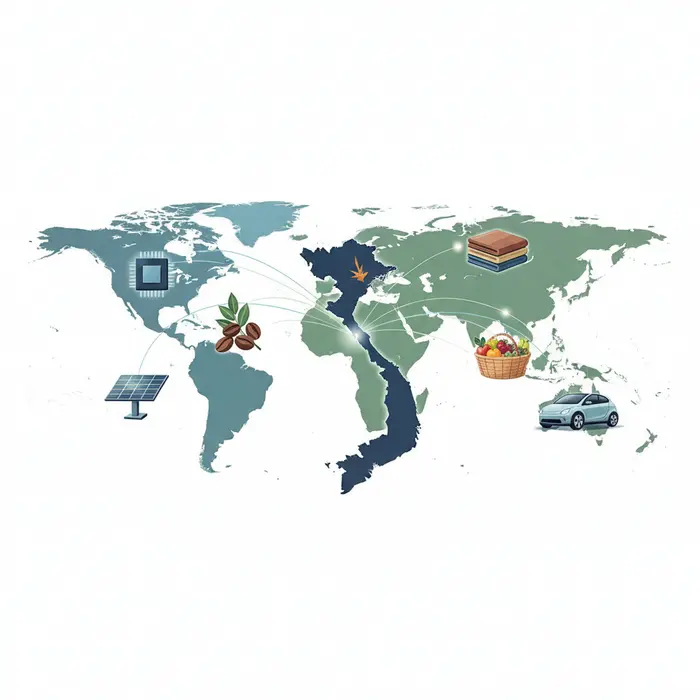
In an increasingly interconnected yet volatile global economy, Supply Chain Diversification Strategies have become paramount for national economic resilience. For Vietnam, a nation witnessing robust export growth, a key imperative is Export Product Diversification. This strategic shift involves not only broadening the range of goods exported but also identifying innovative applications and new markets for existing Vietnamese products. Moving beyond traditional strengths, Vietnam aims to foster Resilient Sourcing Strategies by cultivating a wider portfolio of exportable goods, thereby mitigating risks associated with over-reliance on a few key sectors or markets. This proactive approach supports sustainable economic development and enhances Vietnam’s competitive edge on the global stage, driving New Markets for Vietnamese Goods and fostering B2B Sourcing Innovation.
Identifying Niche Markets for Specialized Vietnamese Products
Success in product diversification often hinges on the ability to pinpoint and cater to niche markets. Vietnam possesses a rich tapestry of unique agricultural products, artisanal crafts, and specialized manufacturing capabilities that often go unnoticed in mainstream global trade. Strategies here involve in-depth market research to identify demand gaps for products with distinct Vietnamese characteristics. For instance, while coffee is a major export, focusing on single-origin, specialty robusta or arabica beans from specific regions, marketed for their unique flavour profiles, can open doors to premium segments. Similarly, traditional textiles, sustainably sourced aquaculture products, or specialized components for high-tech industries can find dedicated buyers seeking authenticity, ethical production, or specific functional attributes. This requires a shift from mass production to tailored offerings, often involving collaboration between producers, exporters, and market intelligence agencies to understand consumer preferences and regulatory requirements in these specialized segments. By targeting these specific opportunities, Vietnam can build stronger brands and achieve higher value for its unique offerings, driving New Markets for Vietnamese Goods.
Value-Added Processing, Branding, and Certification
Merely exporting raw materials or semi-finished goods limits a nation’s earning potential. A crucial step in Export Product Diversification is to invest heavily in value-added processing, robust branding, and international certification. This means transforming raw agricultural produce into processed foods, beverages, or nutraceuticals; converting textiles into finished apparel; or assembling electronic components into higher-level sub-systems. Effective branding goes beyond a simple logo; it tells a story of quality, origin, and sustainability, resonating with global consumers and B2B Sourcing Innovation partners. Furthermore, obtaining internationally recognized certifications (e.g., GlobalG.A.P. for agriculture, ISO for manufacturing, fair trade, organic, or specific national standards like CE marking) is non-negotiable for market access and premium pricing. These certifications assure buyers of product quality, safety, and ethical production practices, building trust and opening pathways to discerning markets. This strategy not only increases export revenue but also strengthens domestic industries, fostering job creation and technological advancement.
Leveraging FTAs and Trade Agreements for Product Access
Vietnam’s proactive engagement in numerous Free Trade Agreements (FTAs) and bilateral trade agreements offers an unparalleled advantage for Export Product Diversification. Agreements such as the Comprehensive and Progressive Agreement for Trans-Pacific Partnership (CPTPP), the EU-Vietnam Free Trade Agreement (EVFTA), and the Regional Comprehensive Economic Partnership (RCEP) significantly reduce tariffs and non-tariff barriers, creating preferential access for Vietnamese goods into vast consumer markets. Exporters must be thoroughly educated on the rules of origin and specific product-by-product benefits within these agreements. This knowledge allows businesses to strategize market entry for new products or expand existing product lines into previously inaccessible territories. For example, the EVFTA provides duty-free access for many agricultural and industrial products to the EU, encouraging Vietnamese firms to meet stringent European quality and sustainability standards, thereby upgrading their production processes. Actively utilizing these agreements is fundamental to developing Resilient Sourcing Strategies and discovering New Markets for Vietnamese Goods. The International Trade Centre (ITC) offers valuable resources for businesses navigating these complex trade landscapes, aiding in market entry and compliance efforts. Utilizing trade information resources provided by organizations like the ITC can significantly enhance market intelligence for exporters.
Embarking on Export Product Diversification is a multi-faceted journey that demands strategic planning, innovation, and a keen understanding of global market dynamics. By systematically identifying niche opportunities, enhancing product value through processing and branding, and strategically leveraging its extensive network of trade agreements, Vietnam can solidify its position as a dynamic and resilient global supplier. These Supply Chain Diversification Strategies are not merely about increasing export volumes but about building a sustainable, high-value export economy that can withstand future economic shocks and capitalize on emerging global trends.
Tapping New Markets for Vietnamese Goods
This section delves into strategic methods for identifying and penetrating untapped or emerging markets, thereby enhancing the global footprint and export potential of Vietnamese goods. By exploring new avenues, Vietnamese businesses can achieve greater Supply Chain Diversification Strategies, reduce reliance on traditional markets, and build a more robust and resilient sourcing ecosystem.
The global trade landscape is continuously evolving, presenting both challenges and opportunities for emerging economies like Vietnam. To sustain its impressive export growth and mitigate risks associated with market concentration, Vietnamese enterprises must proactively seek new markets for Vietnamese goods. This involves a comprehensive approach that moves beyond traditional trading partners, embracing innovative strategies for export product diversification and market penetration. The goal is to establish long-term, sustainable trade relationships that bolster Vietnam’s position as a reliable global supplier.
1. In-depth Market Research and Entry Strategies
Effective market penetration begins with thorough research. This involves identifying potential new markets based on factors such as economic stability, consumer purchasing power, trade agreements, regulatory environments, and competitive landscapes. Businesses should leverage data analytics to pinpoint countries with a growing demand for specific Vietnamese products, be it agricultural produce, textiles, electronics, or manufactured goods. For instance, analyzing demographic shifts and rising middle-class incomes in regions like Latin America, Africa, or Central Asia can reveal significant untapped potential. Tools provided by organizations like the International Trade Centre (ITC) market analysis tools offer invaluable insights into trade flows, market access conditions, and potential export opportunities, aiding in a robust export product diversification strategy. Once promising markets are identified, developing tailored entry strategies is crucial. These might include direct exporting, establishing joint ventures, licensing agreements, or setting up local distribution networks. Understanding and navigating local trade regulations, import duties, and non-tariff barriers are paramount to successful market entry and ensuring resilient sourcing strategies.
2. Utilizing Digital Platforms for Global Outreach and E-commerce
In an increasingly interconnected world, digital platforms are indispensable tools for expanding global reach. For Vietnamese businesses, leveraging B2B e-commerce platforms, online marketplaces, and digital trade shows can significantly lower the barriers to entry in new markets. These platforms facilitate direct engagement with international buyers, offer transparent communication channels, and streamline the transaction process from inquiry to delivery. Participating in virtual trade missions and utilizing digital marketing techniques, such as search engine optimization (SEO) for international markets and targeted social media campaigns, can raise awareness for new markets for Vietnamese goods. Furthermore, adopting advanced e-commerce solutions that support multiple languages, currencies, and payment methods is essential for seamless cross-border trade. This focus on B2B Sourcing Innovation through digital channels not only broadens market access but also provides valuable data on buyer preferences and market trends, allowing for agile adjustments in product offerings and marketing efforts.
3. Adapting Products and Marketing for Cultural Nuances
Successful penetration of new markets hinges on understanding and respecting local cultural nuances. This extends beyond language translation to encompass product design, packaging, branding, and marketing messages. Consumer preferences regarding aesthetics, color symbolism, dietary restrictions, religious sensitivities, and product utility can vary dramatically across cultures. For example, a food product might need different flavor profiles, ingredient sourcing, or certification (e.g., Halal or Kosher) to appeal to specific demographics. Similarly, textile products may require adaptations in sizing, fabric types, or design elements. Marketing campaigns must be culturally sensitive and resonate with the target audience, employing local idioms, imagery, and communication styles. Investing in local expertise or partnering with local agencies can provide invaluable insights, ensuring that Vietnamese products are not just available, but also desirable and culturally appropriate in their new markets. This strategic adaptation is a cornerstone of effective export product diversification and fosters long-term market acceptance.
Expanding Vietnam’s export footprint into new and emerging markets is a strategic imperative for sustained economic growth and resilience. By committing to comprehensive market research, embracing digital trade channels, and thoughtfully adapting products and marketing to cultural specificities, Vietnamese enterprises can unlock vast opportunities. These Supply Chain Diversification Strategies are not merely about increasing sales; they are about building a more diversified, robust, and globally integrated export economy, positioning Vietnam as a dynamic and adaptive player in international trade.
B2B Sourcing Innovation: Technology, Data & Collaboration
Exploring how advanced technologies, data analytics, and collaborative ecosystems can revolutionize B2B sourcing processes for efficiency and resilience.
In an increasingly complex and interconnected global economy, traditional B2B sourcing methods are no longer sufficient to navigate volatile markets, geopolitical shifts, and unexpected disruptions. Businesses, especially those looking to expand their global footprint and build robust procurement frameworks, must embrace B2B sourcing innovation. This means strategically implementing advanced technologies, leveraging data analytics for actionable insights, and fostering collaborative ecosystems to build truly Supply Chain Diversification Strategies. The goal is not just to cut costs, but to enhance agility, transparency, and resilience, ensuring a steady flow of goods and services even in challenging circumstances.

1. Leveraging AI, Blockchain, and IoT for Supply Chain Visibility
This section explores how advanced digital tools like Artificial Intelligence, Blockchain, and the Internet of Things collectively enhance real-time visibility and transparency across the entire supply chain.
The foundation of effective B2B sourcing innovation lies in unparalleled visibility. Artificial Intelligence (AI) plays a pivotal role in transforming vast datasets into predictive insights. AI-powered algorithms can analyze historical purchasing patterns, market trends, and even geopolitical events to forecast demand with remarkable accuracy, optimize inventory levels, and identify potential supplier risks proactively. This enables companies to pivot swiftly, creating more Resilient Sourcing Strategies that anticipate rather than react to disruptions.
Blockchain technology offers an immutable, distributed ledger that provides end-to-end traceability for every product and transaction. From raw material origin to final delivery, each step is recorded and verified, significantly reducing the risk of fraud, improving compliance, and ensuring ethical sourcing practices. For businesses engaged in Export Product Diversification, Blockchain offers a verifiable record of provenance, building trust with international partners and consumers.
The Internet of Things (IoT) further augments visibility by connecting physical assets. Sensors embedded in cargo, warehouses, and equipment provide real-time data on location, temperature, humidity, and even potential damage. This data stream allows businesses to monitor conditions proactively, predict maintenance needs, optimize logistics routes, and react instantly to unforeseen issues like delayed shipments or quality deviations, fostering a truly dynamic and responsive supply network.
2. Collaborative Logistics, Shared Warehousing, and Demand Forecasting
This section delves into the power of synergistic partnerships in logistics and storage, coupled with sophisticated demand prediction, to optimize resource utilization and responsiveness in sourcing.
Beyond individual technological adoption, the future of B2B sourcing lies in collaboration. Collaborative logistics involves multiple companies pooling their transportation resources, optimizing routes, and filling partial loads. This not only significantly reduces freight costs and carbon footprints but also enhances flexibility and reliability by creating a shared network of carriers. Such partnerships are crucial for efficiently managing complex supply chains and ensuring timely deliveries.
Shared warehousing models offer another layer of collaborative efficiency. Instead of maintaining underutilized dedicated facilities, companies can leverage shared warehouse spaces, paying only for the capacity they use. This model is particularly beneficial for managing seasonal demand fluctuations, entering new markets without heavy capital investment, or supporting inventory for diverse product lines. It provides scalability and cost-effectiveness, contributing to greater overall supply chain agility.
Advanced demand forecasting, often powered by AI and machine learning, is the lynchpin connecting these collaborative efforts. By accurately predicting future demand, businesses can coordinate logistics and warehousing resources more effectively, minimizing excess inventory and stockouts. Precise forecasting also facilitates strategic planning for expansion into New Markets for Vietnamese Goods, enabling businesses to prepare infrastructure and allocate resources efficiently to meet anticipated demand.
3. Data-Driven Decision Making and Predictive Analytics in Sourcing
This section emphasizes the critical role of sophisticated data analysis and forecasting models in informing strategic sourcing decisions, mitigating risks, and driving continuous improvement.
The sheer volume of data generated by modern supply chains presents both a challenge and an immense opportunity. Transforming this raw data into actionable intelligence is where data-driven decision-making shines. By applying robust analytics, sourcing professionals can gain deep insights into supplier performance, cost breakdowns, market dynamics, and geopolitical risks. This enables informed choices about supplier selection, contract negotiation, and risk mitigation strategies.
Predictive analytics takes this a step further by using statistical algorithms and machine learning techniques to identify patterns and predict future outcomes. For instance, predictive models can anticipate potential supply chain disruptions due to natural disasters, political instability, or economic shifts. They can forecast commodity price fluctuations, supplier insolvency risks, or even labor shortages in key regions. This foresight allows businesses to proactively develop contingency plans, diversify their supplier base, and adapt their procurement strategies before disruptions materialize. As the World Economic Forum highlights, technology is essential for building resilient supply chains capable of withstanding future shocks.
By harnessing the power of data, businesses can move away from reactive problem-solving to proactive, strategic planning. This includes optimizing inventory, identifying alternative sourcing locations, and continuously refining their Supply Chain Diversification Strategies, ultimately leading to more resilient, cost-effective, and competitive operations in the global marketplace.
Partner with Vietnam’s Leading Suppliers
Looking for reliable suppliers in Vietnam? Contact VietnamSuppliers.com today to connect with verified manufacturers and exporters across all industries.
—————————————
References
– supply chain resilience: https://www.weforum.org/agenda/2023/01/supply-chains-resilience-manufacturing-global-trade/
– The supply chain resilience imperative: How to future-proof global trade: https://www.weforum.org/agenda/2023/10/supply-chain-resilience-imperative/
– Utilizing trade information resources: https://www.intracen.org/trade-support-institutions/trade-information/
– International Trade Centre (ITC) market analysis tools: https://www.intracen.org/market-analysis-tools/
– The world needs resilient supply chains. Here’s how technology can help.: https://www.weforum.org/agenda/2021/04/supply-chain-resilience-technology-digitalization/

