What Are Port Handling Charges?
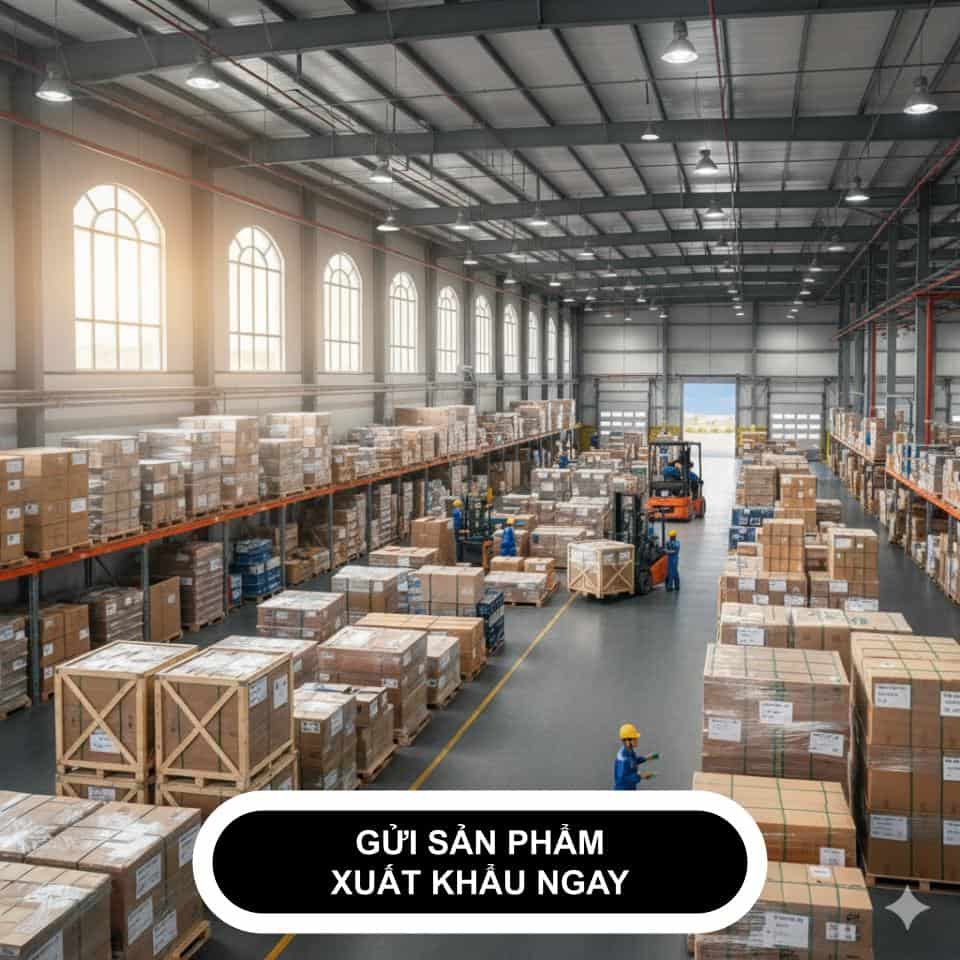
In the intricate world of global trade and logistics, the journey of goods from origin to destination involves numerous touchpoints and associated costs. Among the most crucial, yet often complex, are port handling charges explained. This section provides a foundational understanding of these essential fees, defining them and outlining their purpose in the shipping ecosystem. Grasping these charges is vital for any business engaged in international shipping, as they significantly impact overall freight costs and supply chain efficiency.

1. Port Charges Definition: The Basics
At its core, a port charges definition encompasses all fees levied by port authorities, terminal operators, and other service providers for the services rendered in handling, moving, and storing cargo within a port facility. These charges are an unavoidable component of international shipping, reflecting the extensive infrastructure, equipment, and labor required to manage the massive flow of goods through seaports.
These fees cover a broad spectrum of activities, ranging from the moment cargo arrives at the port gate or vessel berth to when it departs the port for its final inland destination. Understanding these costs is crucial for accurate budgeting and competitive pricing in the global marketplace. While often consolidated, it’s important to recognize that various individual services contribute to the overall port handling charges.
2. Why Port Handling Charges Exist
Port handling charges exist for several fundamental reasons, all centered around the operational demands and economic realities of running a modern, efficient port. Firstly, ports are immense logistical hubs requiring significant investment in infrastructure—docks, berths, warehouses, roads, rail connections, and advanced IT systems. These charges help fund the construction, maintenance, and ongoing upgrades of these critical assets.
Secondly, the movement of cargo demands specialized equipment and highly skilled labor. Giant cranes are needed to load and unload containers, while forklifts, reach stackers, and straddle carriers move cargo within the terminal. Furthermore, extensive security measures, customs inspections, and environmental compliance all contribute to operational overheads. Port charges ensure that these essential services, equipment, and personnel are available to facilitate the smooth and timely transfer of goods. Without these fees, ports would be unable to sustain their operations, leading to severe disruptions in global supply chains. Ultimately, they are a necessary mechanism to maintain the operational readiness and efficiency that global trade relies upon.
3. Key Components of Standard Port Charges
While the exact composition of port handling charges can vary by port, country, and the type of cargo, several key components are almost universally encountered:
- Terminal Handling Charges (THC): These are perhaps the most significant and commonly discussed port handling charges. THC covers the cost of handling containers at the terminal before loading onto a vessel or after discharge from a vessel. This includes activities like lifting containers on and off the ship, moving them within the container yard, stacking, and sometimes even plugging in reefer containers. Understanding THC is vital, as it often forms a substantial part of the total cost and can differ significantly between ports and shipping lines.
- Wharfage: This fee is charged for the use of the port’s wharf or quay facilities for loading and unloading cargo. It’s essentially a charge for occupying the waterfront space.
- Storage (Demurrage & Detention): These are charges applied when cargo or containers exceed their allotted free time at the port. Demurrage typically applies to containers left too long inside the terminal, while detention refers to containers kept outside the terminal beyond the free time. Minimizing these costs is a key aspect of how to reduce port handling costs.
- Pilotage & Towage: For larger vessels, these are charges for the services of a local pilot who guides the ship safely into and out of the harbor, and for tugboats that assist in maneuvering the vessel to its berth.
- Security Charges (ISPS): These fees cover the cost of implementing and maintaining security measures as mandated by the International Ship and Port Facility Security (ISPS) Code, designed to enhance the security of ships and port facilities.
- Documentation Fees: Costs associated with processing necessary paperwork, such as bills of lading, manifest filing, and customs declarations.
- Equipment Usage Fees: Charges for the use of specific equipment like specialized cranes for heavy lift cargo, or forklifts for general cargo not covered by standard THC.
Effectively managing these various charges requires careful planning, timely execution, and a clear understanding of who pays port handling charges, which is typically determined by the Incoterms agreed upon in the sales contract. By scrutinizing each component, businesses can identify opportunities for optimization and ensure their logistics operations remain cost-effective and efficient.
Decoding Terminal Handling Charges (THC)
In the intricate world of international trade and logistics, understanding every component of shipping costs is crucial for effective supply chain management. Among the myriad of fees, Terminal Handling Charges (THC) often stand out as a significant and sometimes confusing expense. These charges are a fundamental part of maritime logistics, representing the cost incurred for moving containers within the port terminal itself. A deep dive into THCs helps differentiate them from other port fees, clarifying their purpose, and highlighting their impact on the overall cost of goods transported globally. Grasping the nuances of these charges is key to optimizing shipping budgets and ensuring smooth cargo flow.
1. THC vs. Other Port Charges: Understanding the Difference
While THCs are undeniably a type of port charge, they possess a distinct identity that sets them apart from other fees levied at ports. At its core, a Port handling charges explained encompasses any fee associated with a ship’s stay in port or the movement of cargo through the port facility. This broad category includes charges like wharfage, which is a fee for using the pier or quay; pilotage, for the services of a pilot guiding the ship into and out of the harbor; and tug assistance fees. Demurrage and detention, often confused with THC, are penalties for exceeding free time—demurrage for containers staying too long at the terminal, and detention for containers being held by the consignee outside the terminal for too long.
Terminal Handling Charges, however, specifically cover the services provided by the terminal operator for handling the container itself. These services typically begin when the container arrives at the port gate from land (for export) or when it’s discharged from the vessel (for import), and end when it’s loaded onto the vessel (for export) or picked up by land transport (for import). Unlike a general “port charges definition” which covers a wider array of services and infrastructure usage, THC is granular, focusing solely on the physical handling and movement of the cargo unit within the terminal’s confines. This distinction is vital for shippers and freight forwarders to accurately budget and allocate costs.
2. Origin and Purpose of Terminal Handling Charges
The origin of Terminal Handling Charges can be traced back to the need for port operators and shipping lines to recover the substantial costs associated with operating modern container terminals. These terminals are highly capital-intensive, requiring massive investments in infrastructure (cranes, stacking yards, gates), equipment (reach stackers, yard trucks), and personnel (crane operators, planners, security). The primary purpose of THC is to cover the expenses related to the physical handling of containers from the moment they arrive at the terminal until they are loaded onto the vessel, or vice versa.
Specifically, THC covers a range of essential operations, including:
- Loading and Unloading: The actual lifting of containers onto and off the vessel using specialized gantry cranes.
- Stowage and Stacking: Moving containers to designated areas within the terminal for temporary storage, organizing them efficiently for future loading or pickup.
- Internal Haulage: The movement of containers by terminal tractors or other equipment between different areas within the terminal (e.g., from the quay to the stacking yard, or from the stacking yard to the gate).
- Gate Operations: Processing containers as they enter or exit the terminal, including necessary documentation and security checks.
Without these charges, terminal operators would struggle to maintain and upgrade their facilities, which are critical nodes in the global supply chain. Understanding “who pays port handling charges” often depends on the Incoterms agreed upon by the buyer and seller, though typically the shipper or consignee ultimately bears the cost, passed on by the shipping line.
3. Variations in THC: Local vs. International Contexts
Terminal Handling Charges are not uniform across all ports; they exhibit considerable variations based on a multitude of factors, including geographical location, the specific port’s infrastructure, the efficiency of its operations, and even the shipping line involved. In a local context, THC rates can differ significantly between ports within the same country due to varying labor costs, local regulations, land values, and the level of competition among terminal operators. For instance, a highly automated, efficient port might have lower per-unit THCs due to economies of scale, while a less developed port might have higher costs due to manual processes or older equipment.
Internationally, these variations become even more pronounced. Different continents and countries have distinct regulatory frameworks, taxation policies, and operational standards that influence THC levels. Asian ports, for example, might have different cost structures compared to European or North American ports. Moreover, the type of cargo (e.g., standard dry containers, reefer containers, oversized cargo) can also influence THC, with specialized handling often incurring higher fees. These variations complicate the process of comparing shipping costs across different routes and ports. To effectively manage and potentially reduce these expenses, businesses must gain a comprehensive understanding of “how to reduce port handling costs” by optimizing their routing, negotiating with carriers, and choosing ports with competitive THC structures. Factors like port efficiency and congestion can also play a role, as highlighted by reports on global port performance and container logistics. The UNCTAD Review of Maritime Transport provides valuable insights into global shipping trends and operational efficiencies influencing such costs.
In conclusion, Terminal Handling Charges are a vital, albeit often complex, component of global shipping costs. By understanding their specific purpose, distinguishing them from other port charges, and recognizing the factors that cause their variations, businesses can better navigate the complexities of international logistics, optimize their supply chains, and make more informed decisions to control their overall shipping expenditures.
Who Pays Port Handling Charges? Responsibility & Incoterms
Navigating international trade involves a myriad of costs, and among the most significant are port handling charges explained. These fees are an unavoidable part of moving goods through maritime ports and can significantly impact the overall profitability of a shipment. Understanding “who pays port handling charges” is not merely a matter of invoicing; it’s a critical aspect of cost management and risk allocation in global supply chains. These charges encompass a broad range of services, from the moment cargo arrives at the port until it is loaded onto the vessel or unloaded and made available for pick-up. This section delves into the intricate details of these charges, clarifying their definition, the common payment arrangements, and the indispensable role of Incoterms in determining financial responsibility.
1. Shipper vs. Consignee: Common Payment Arrangements
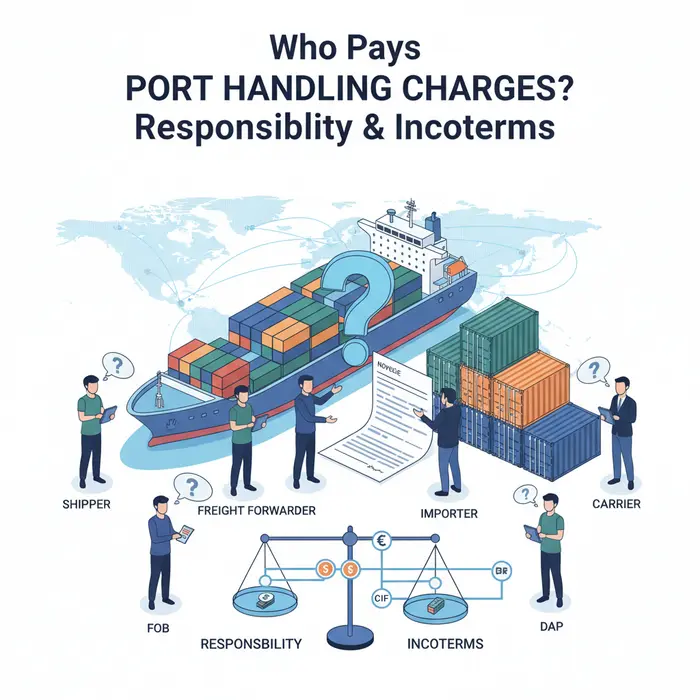
At its core, a port charges definition refers to the various fees levied by port authorities, terminal operators, and other service providers for the movement, storage, and processing of cargo within a port facility. These can include terminal handling charges (THC), wharfage, security fees, documentation charges, and more. The initial question of “who pays port handling charges” often boils down to the fundamental relationship between the shipper (seller/exporter) and the consignee (buyer/importer).
Generally, port handling charges are categorized into origin charges and destination charges. Origin charges cover the costs incurred at the port of loading, such as bringing the cargo into the terminal, loading it onto the vessel, and associated documentation. Conversely, destination charges cover the costs at the port of discharge, including unloading the cargo from the vessel, moving it within the terminal, and making it available for customs clearance and pick-up. In most conventional arrangements, the shipper is responsible for origin charges, while the consignee is responsible for destination charges. However, this simplistic division becomes significantly more nuanced and legally binding with the introduction of Incoterms, which specify the exact point of cost and risk transfer between parties. For less-than-container-load (LCL) shipments, these charges can be further complicated by consolidation and deconsolidation fees.
2. The Impact of Incoterms on Port Charge Responsibility
The International Commercial Terms, or Incoterms, published by the International Chamber of Commerce (ICC), are globally recognized rules that clearly define the responsibilities of buyers and sellers for the delivery of goods under sales contracts. They dictate precisely at what point costs and risks transfer from seller to buyer, making them the ultimate authority on “who pays port handling charges” in most international transactions.
For instance, under EXW (Ex Works) terms, the seller’s responsibility ends when the goods are made available at their premises; thus, the buyer typically bears all subsequent costs, including all origin and destination terminal handling charges. With FOB (Free On Board), the seller is responsible for bringing the goods to the port of shipment and loading them onto the vessel, covering origin port charges. The buyer then takes over responsibility for the main carriage, insurance, and all destination charges. Under CIF (Cost, Insurance & Freight) or CFR (Cost & Freight), the seller pays for the main carriage to the port of destination, meaning they cover origin port charges and freight, but the buyer remains responsible for destination charges and unloading. DDP (Delivered Duty Paid) places the maximum obligation on the seller, who is responsible for virtually all costs, including all port handling charges, duties, and taxes, right up to the buyer’s nominated delivery point. A clear understanding of the chosen Incoterm is paramount to avoid disputes and unexpected costs.
3. Negotiating Payment Responsibility with Freight Forwarders
While Incoterms define the contractual obligations between buyer and seller, the practical execution of payments for port handling charges explained often involves a freight forwarder. These intermediaries manage the logistics on behalf of either the shipper or consignee, consolidating cargo, arranging transport, and handling port formalities. Freight forwarders will itemize and invoice these charges, sometimes under different names, making transparency crucial.
Effective negotiation with your freight forwarder is key to managing and potentially reducing these costs. Always request a detailed breakdown of all charges, ensuring there are no hidden fees or surcharges. Compare quotes from multiple forwarders. For example, some forwarders might bundle terminal handling charges (THC) or offer slightly better rates due to their volume discounts with specific carriers or terminals. Understanding the specific services included in the port handling fees is also vital. In cases where you have flexibility, exploring options like consolidating shipments (for LCL) or optimizing container utilization (for FCL) can contribute to how to reduce port handling costs. Furthermore, clarifying who is responsible for which segment of the journey based on the agreed Incoterms allows you to challenge any discrepancies in the forwarder’s invoice. Proactive communication and clear contractual agreements with both your trading partner and your freight forwarder are essential for minimizing unexpected expenses and ensuring a smooth, cost-effective shipping process.
The Broader Impact of Port Charges on Your Supply Chain
Understanding port handling charges explained is crucial for any business engaged in international trade. These fees, levied by port authorities, terminal operators, and shipping lines, are far more than just minor line items on an invoice; they ripple throughout your entire logistics network, impacting everything from product pricing to delivery schedules and overall profitability. Overlooking the complexities and potential hidden costs associated with port charges can lead to significant financial surprises and operational inefficiencies. A comprehensive grasp of these charges, including their definitions, who is responsible for paying them, and strategies for mitigation, is essential for maintaining a competitive edge and ensuring the smooth flow of goods across global supply chains.
Port Charges and Their Effect on Total Logistics Costs
Port charges encompass a wide array of fees that contribute directly to the total cost of moving goods internationally. These typically include Port handling charges explained, such as terminal handling charges (THC), which cover the costs associated with loading, unloading, and moving containers within the port terminal. Other common fees fall under the broader port charges definition, including wharfage (a charge for using the port’s wharf), storage charges (for cargo held at the port beyond free time), and various administrative and documentation fees. Each of these charges, while seemingly small individually, accumulates to significantly inflate the overall logistics budget. For example, THC can represent a substantial portion of freight costs, especially for shorter shipping routes. The question of who pays port handling charges often depends on the Incoterms agreed upon between the buyer and seller, but ultimately, these costs are always factored into the final price of the goods, affecting competitiveness and profit margins. Failing to account for these cumulative costs can lead to inaccurate pricing models, underbidding on contracts, or unexpected financial strain. Therefore, a thorough understanding and careful accounting of every port-related fee are paramount to effective supply chain management.
Identifying Hidden Port Costs and Potential Surprises
Beyond the standard and expected port charges, businesses often encounter a labyrinth of hidden fees and potential surprises that can escalate costs dramatically. One of the most notorious examples involves demurrage and detention charges. Demurrage is a fee charged by the shipping line for containers that remain at the port terminal beyond the allotted free time, while detention is a fee for holding the shipping line’s container outside the port terminal beyond the free time. These charges can accrue rapidly, sometimes exceeding the value of the cargo itself, particularly during periods of port congestion or unforeseen customs delays. Other less obvious costs include chassis usage fees, cleaning fees for containers, re-stowage charges, or fees for special handling of oversized or hazardous materials. Customs inspection fees, often unpredictable in their timing and scope, can also add significant expenses and delays. Furthermore, currency fluctuations or sudden changes in port regulations can introduce unexpected costs. Proactive management and meticulous planning are vital for identifying and mitigating these hidden port costs. Understanding typical transit times, customs procedures, and having reliable logistics partners who can quickly clear cargo are key strategies to prevent these surprising financial drains and improve how to reduce port handling costs effectively.
The Importance of Accurate Cost Estimation and Budgeting
Given the complexity and variability of port charges, accurate cost estimation and meticulous budgeting are not merely good practices—they are indispensable for supply chain resilience and profitability. Miscalculations can lead to either overpricing products, making them uncompetitive, or underpricing, eroding profit margins. To achieve precise estimations, businesses must engage in thorough research, obtain detailed quotes from multiple service providers, and maintain clear communication with freight forwarders, carriers, and port authorities. Leveraging historical data from previous shipments can also provide valuable insights into typical expenses and potential pitfalls. Moreover, it’s crucial to build a contingency budget for unforeseen events like demurrage, detention, or unexpected inspection fees. Advanced supply chain analytics tools can help forecast potential delays and associated costs, enabling proactive adjustments. Companies that invest in understanding the granular details of every charge, from global supply chain costs to specific terminal handling charges, are better equipped to negotiate favorable terms, optimize routes, and manage their working capital efficiently. Accurate budgeting not only safeguards against financial shocks but also provides a clear picture of the true cost of goods, allowing for strategic pricing decisions and ultimately enhancing overall business performance in a competitive global market.
How to Reduce Port Handling Costs Effectively
Provides actionable strategies and best practices for businesses looking to minimize their port handling expenses and improve efficiency.
For any business involved in international trade, port handling charges explained represent a significant, often unavoidable, expenditure. These charges encompass a wide array of fees levied by ports and terminal operators for services rendered to cargo as it moves through the port. Understanding these costs is the first step towards controlling them. From the moment cargo arrives at the port to when it departs, various services such as loading, unloading, storage, stacking, sorting, and security all incur what’s broadly termed terminal handling charges.
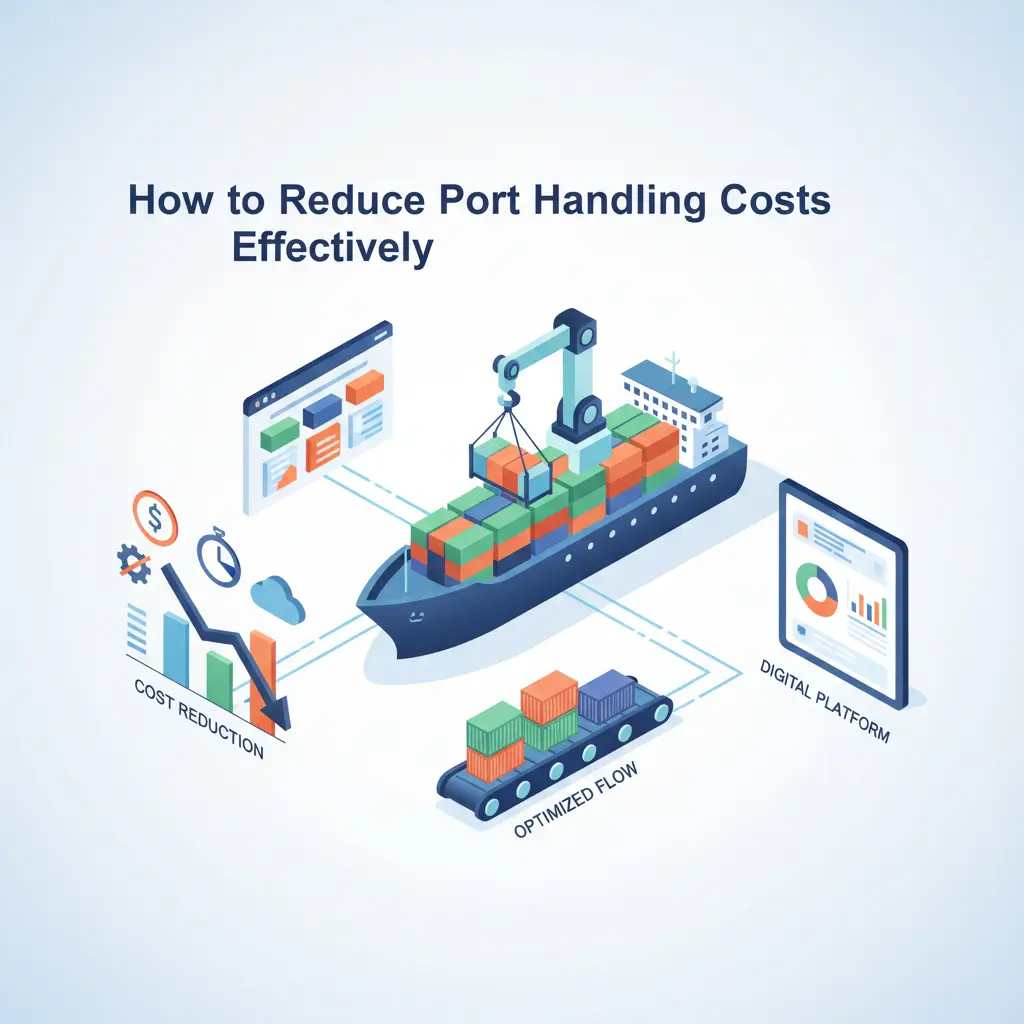
Effectively managing these expenses is crucial for maintaining competitive pricing and healthy profit margins. While shippers often bear a significant portion of these costs, their exact responsibility can vary based on Incoterms. Reducing port handling costs is not merely about cutting corners; it’s about optimizing processes, fostering better relationships, and strategically leveraging resources to enhance overall supply chain efficiency. This guide outlines actionable strategies to help businesses navigate and significantly reduce their port handling expenditures.
1. Optimizing Cargo Flow and Documentation
One of the most direct ways to reduce port charges definition is by ensuring a smooth, error-free flow of cargo and its accompanying documentation. Delays caused by incorrect paperwork, missing information, or customs hold-ups directly translate into higher costs, primarily through demurrage and detention fees. Demurrage is a charge levied by the shipping line for using their containers beyond the allowed free time *within* the terminal, while detention is a charge for using the container *outside* the terminal after the free time has expired.
To optimize this aspect:
- Accuracy and Timeliness: Ensure all shipping documents, including Bills of Lading, commercial invoices, packing lists, and customs declarations, are meticulously accurate and submitted well in advance. Pre-clearance of cargo, where possible, can significantly reduce dwell time at the port.
- Consolidation: For smaller shipments, consider cargo consolidation. Combining multiple smaller shipments into a single, larger consignment can often lead to lower per-unit port handling costs due to economies of scale in handling and documentation.
- Strategic Routing: Evaluate alternative ports or routes that might offer more efficient handling processes or lower fees. Sometimes, a slightly longer transit time through a less congested port can result in substantial savings in terminal charges.
2. Negotiating Favorable Rates with Carriers and Terminals
Building strong relationships and having effective negotiation strategies can yield significant reductions in port handling charges. This often requires a clear understanding of your shipping volume, frequency, and specific needs.
Key negotiation tactics include:
- Leverage Volume: For businesses with substantial and consistent shipping volumes, negotiate long-term contracts with carriers and terminal operators. Volume commitments often unlock preferential rates, extended free-time allowances for demurrage and detention, and potentially dedicated service.
- Bundle Services: Explore bundling port handling services with freight services from a single provider. This can sometimes lead to package deals that are more cost-effective than procuring each service separately.
- Understand Surcharges: Dive deep into the various surcharges applied. Many shipping costs are not transparent at first glance. Question and negotiate surcharges that seem excessive or unjustified. Knowing exactly what you’re paying for empowers better negotiation.
- Regular Reviews: Don’t set and forget. Regularly review your contracts and rates. The market is dynamic, and new opportunities for cost reduction may arise. Solicit multiple bids periodically to ensure you are getting the best possible terms.
3. Leveraging Technology for Greater Efficiency
In today’s interconnected world, technology offers powerful tools to enhance visibility, streamline operations, and ultimately reduce port handling costs.
Consider integrating the following:
- Logistics Software and TMS (Transportation Management Systems): Implementing a robust TMS can provide real-time tracking of shipments, automate documentation, optimize routing, and give predictive insights into potential delays. This proactive approach helps mitigate issues before they incur additional costs.
- EDI (Electronic Data Interchange) and API Integrations: Seamless electronic communication between your systems, carriers, customs brokers, and terminal operators minimizes manual errors and speeds up data exchange. This accelerates customs clearance and reduces the likelihood of delays that attract fees.
- Data Analytics: Utilize data from past shipments to identify trends, bottlenecks, and areas for improvement. Analyzing dwell times, demurrage charges, and specific port performance can inform strategic decisions on port selection, carrier choice, and process optimization.
- Predictive Analytics: Some advanced systems use AI and machine learning to predict potential disruptions, port congestion, or weather-related delays. This allows businesses to adjust their logistics plans proactively, avoiding costly last-minute changes or penalties.
By systematically applying these strategies – optimizing cargo flow and documentation, skillfully negotiating rates, and embracing technological advancements – businesses can gain significant control over their port handling expenses. This not only leads to direct cost savings but also contributes to a more efficient, resilient, and competitive supply chain.
Partner with Vietnam’s Leading Suppliers
Looking for reliable suppliers in Vietnam? Contact VietnamSuppliers.com today to connect with verified manufacturers and exporters across all industries.
—————————————
References
– :
– The UNCTAD Review of Maritime Transport: https://unctad.org/news/new-index-shows-how-ports-can-boost-trade-and-sustainable-development
– Incoterms: https://www.investopedia.com/terms/i/incoterms.asp
– Global Supply Chain Challenges – Deloitte: https://www2.deloitte.com/us/en/insights/topics/supply-chain/global-supply-chain-challenges.html
– World Shipping Council – Market Update: https://www.worldshipping.org/news/shipping-market-update-june-2024-container-throughput-continues-to-improve