Understanding the International Import Declaration Process
In the dynamic landscape of global commerce, navigating international trade regulations is paramount for business success. As we approach 2025, the complexities of cross-border transactions demand a thorough understanding of the International Import Declaration Process. This process is not merely a bureaucratic step; it is the cornerstone that ensures legal compliance, facilitates efficient customs clearance, and underpins the integrity of international supply chains. For businesses engaging in global trade, mastering import declarations is fundamental to avoiding delays, mitigating penalties, and fostering smooth, predictable trade operations.
1. What is an Import Declaration and Why is it Essential?
An import declaration is a formal statement submitted by an importer or their authorized agent to the customs authorities, providing detailed information about goods entering the country. This document typically includes particulars such as product description, value, origin, quantity, weight, and the applicable Harmonized System (HS) codes, along with importer details. Its purpose extends beyond simple notification, serving several vital functions:
- Customs Clearance: It provides customs officials with necessary data for efficient processing, preventing border delays.
- Regulatory Compliance: Ensures imported goods adhere to national laws, safety standards, and trade policies.
- Revenue Collection: Enables accurate assessment and collection of import duties and taxes explained, contributing to government revenue.
- Trade Statistics: Data gathered from declarations informs economic policy and international agreements.
- Security and Control: Helps prevent the entry of prohibited goods, counterfeit products, and threats to public safety.
In 2025, with increased scrutiny on supply chain transparency, an accurate and timely import declaration is more essential than ever. It acts as a legal commitment, safeguarding businesses against potential fines, cargo seizures, and reputational damage, ensuring legal and smooth international trade.
2. Key Stages of the International Import Process
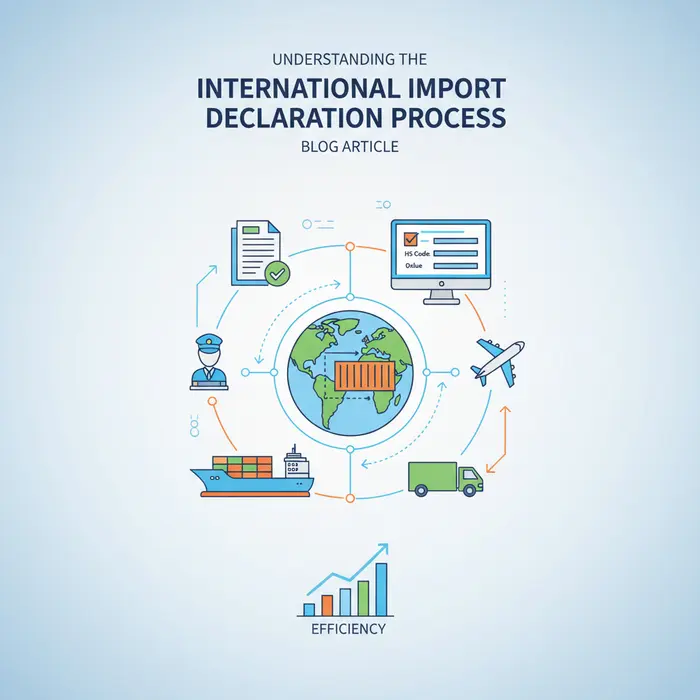
Navigating the International Import Declaration Process involves several critical stages, each demanding meticulous attention to detail and adherence to established protocols:
- Documentation Preparation: Importers must gather all essential customs clearance documents required, including commercial invoice, packing list, bill of lading/air waybill, certificate of origin, and any specific permits or licenses. Accuracy is paramount.
- Goods Classification (HS Code Lookup): Accurately classifying goods using HS code lookup international trade is crucial. The HS code dictates applicable duties, taxes, and regulatory requirements. Misclassification leads to incorrect duty payments and delays.
- Declaration Submission: The import declaration is formally submitted to the customs authority, often digitally via electronic customs declaration platforms, which many countries now mandate to streamline the process.
- Customs Assessment and Duty Payment: Customs officials review documentation, verify classification and valuation, and assess applicable import duties, taxes (VAT/GST), and other charges. Importers must pay these fees to secure cargo release.
- Goods Release and Post-Clearance: After duties are paid and formalities satisfied, goods are released. Customs may conduct post-clearance audits, requiring importers to retain records for a specified period.
3. Compliance Requirements for Global Importers
Achieving and maintaining compliance is fundamental for any business engaged in international importing. The global trade environment is subject to constant change, and importers must remain vigilant to avoid costly mistakes. Key compliance requirements include:
- Accuracy and Truthfulness: All information in the import declaration and supporting documents must be accurate, complete, and truthful. Misrepresentation can result in severe penalties, fines, or criminal charges.
- Thorough Documentation and Record-Keeping: Importers must maintain comprehensive records of all import transactions for several years. This includes invoices, transport documents, declarations, and proof of duty payments, vital for audits.
- Understanding Tariff & Tax Regulations: A deep understanding of applicable tariff rates, preferential trade agreements (e.g., FTAs), and domestic tax obligations (like VAT, excise duties) is essential. Stay updated on changes for correct cost calculations.
- Staying Informed on Regulatory Updates: Trade laws, product standards, safety regulations, and import restrictions are frequently updated. Importers need robust systems to monitor these changes, especially for sensitive goods.
- Risk Management: Developing a compliance program that identifies potential risks (e.g., origin fraud, valuation errors) and implements mitigation strategies is crucial. This often involves internal audits, staff training, and leveraging customs brokers or trade compliance software.
By prioritizing compliance, businesses can build a resilient and efficient import operation, safeguarding their reputation and financial stability in the competitive global marketplace of 2025.
Essential Customs Clearance Documents Required
Navigating the complexities of international trade demands meticulous attention to detail, especially when it comes to customs clearance. A smooth International Import Declaration Process hinges entirely on the accurate and timely submission of a comprehensive set of documents. Failure to provide the correct paperwork can lead to significant delays, hefty fines, and even the confiscation of goods. This section offers a detailed breakdown of all mandatory customs clearance documents required, explaining the purpose and importance of each for various import scenarios, ensuring your cargo moves efficiently across borders.
1. Commercial Invoice & Packing List: Your Core Documents
These two foundational documents provide customs authorities with crucial information about the transaction and the physical goods.
- Commercial Invoice: This legal document between the exporter and importer serves as a declaration of sale, detailing the goods, their value, and the terms of the transaction. Customs officials rely on it to determine the dutiable value and calculate applicable import duties and taxes explained. Key details include seller and buyer information, invoice number, date, detailed goods description (quantity, unit price, total value), currency, Incoterms, payment terms, and country of origin. Crucially, it must also include the Harmonized System (HS) code for each product. Understanding the correct HS code lookup international trade is paramount for accurate duty assessment and regulatory compliance.
- Packing List: Complementing the commercial invoice, the packing list provides a precise inventory of the cargo, detailing the contents of each package within a shipment. It’s essential for verifying shipment accuracy, aiding physical inspections, and facilitating cargo handling. It typically includes shipper and consignee details, package marks, number and type of packages, detailed goods description per package, and gross/net weight and dimensions. This document ensures freight forwarders, carriers, and customs officials know exactly what they are handling and can quickly identify discrepancies.
2. Transport Documents: Bill of Lading & Air Waybill
These documents serve as a contract between the shipper and the carrier, acting as a receipt for the goods and providing vital information for tracking and delivery across different modes of transport.
- Bill of Lading (B/L): Primarily used for ocean freight, the B/L fulfills three crucial functions: it’s a contract of carriage outlining transportation terms, a receipt acknowledging goods received, and for “negotiable” B/Ls, a document of title granting ownership to the consignee. Key information includes shipper, consignee, vessel name, ports of loading and discharge, and detailed goods description. Its accurate completion is vital for cargo release at the destination port.
- Air Waybill (AWB): For air freight, the AWB functions similarly as a contract of carriage and a receipt for goods, but it is not a document of title. It facilitates the movement and tracking of air cargo and is essential for customs declarations. Details typically include shipper, consignee, issuing carrier, flight information, goods description, weight, and declared value. Modern logistics increasingly leverage Electronic Customs Declaration Platforms that integrate AWB data, streamlining the clearance process significantly.
3. Certificate of Origin and Other Specific Permits
Beyond the core commercial and transport documents, certain goods or trade agreements necessitate additional certificates and permits to ensure regulatory compliance and potentially reduce costs.
- Certificate of Origin (COO): This document certifies the country where the goods were manufactured, produced, or processed. The COO is critical for determining eligibility for preferential tariffs under Free Trade Agreements (FTAs) and ensuring compliance with import quotas or country-of-origin labeling requirements. There are typically non-preferential (for general trade statistics) and preferential (for claiming reduced or zero duties under FTAs) types.
-
Other Specific Permits & Certificates: Depending on the goods’ nature, destination country regulations, and specific trade policies, additional documentation is often required. These include:
- Import Permits/Licenses: Mandatory for controlled goods (e.g., chemicals, pharmaceuticals, firearms) issued by government regulatory bodies.
- Phytosanitary Certificates: For plants and agricultural items, certifying freedom from pests and diseases.
- Health Certificates: For animal products (meat, dairy) confirming public health and safety standards.
- Certificates of Analysis (COA) / Conformity (COC): For industrial goods, chemicals, or food products, verifying quality, safety, or technical standards.
- Safety Data Sheets (SDS): Essential for hazardous materials, detailing hazards and safe handling.
- Fumigation Certificates: For wooden packaging, confirming pest treatment under ISPM 15 standards.
Thorough preparation and understanding of these specialized requirements are crucial for avoiding delays and ensuring a compliant and successful import process.
HS Code Lookup International Trade: A Critical Step
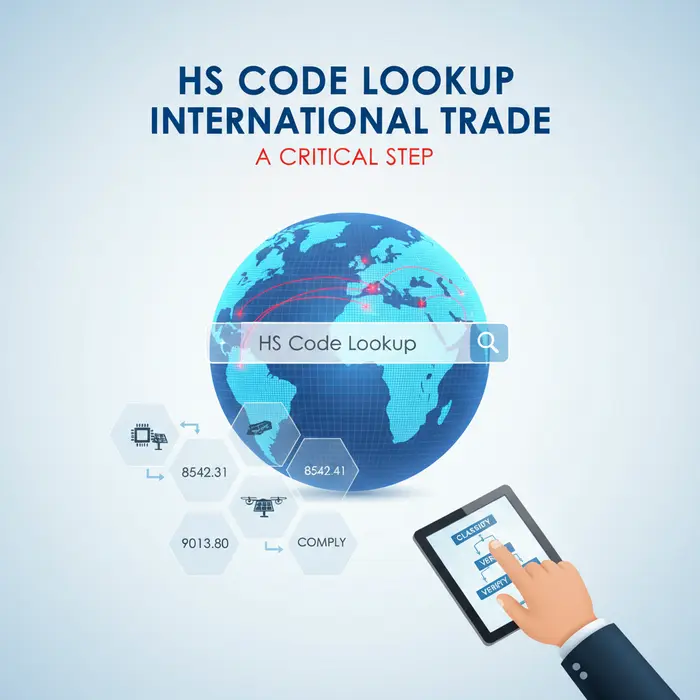
Navigating the complexities of global commerce requires precision at every step, and perhaps no step is as fundamental and impactful as the accurate determination of Harmonized System (HS) codes. For businesses engaged in international trade, mastering the International Import Declaration Process hinges significantly on getting these codes right. Incorrect classifications can lead to a cascade of problems, from costly delays and unexpected penalties to goods being held at customs, making a thorough HS code lookup essential for smooth customs clearance documents required and efficient supply chains.
1. What is an HS Code and Its Global Importance?
At its core, an HS Code is a globally standardized numeric classification system for traded products. Developed and maintained by the World Customs Organization (WCO), the Harmonized System comprises over 5,000 commodity groups, each identified by a six-digit code. These codes are organized into 97 chapters, grouped into 21 sections, ensuring a logical and systematic classification of nearly every product imaginable, from live animals to complex machinery. The initial six digits are universal across all participating countries, forming the bedrock of global trade classification. Beyond these six digits, individual countries can add further subdivisions for tariff or statistical purposes, extending the code to eight, ten, or even twelve digits, creating country-specific tariff codes.
The global importance of the HS Code cannot be overstated. It serves as a universal language for customs authorities worldwide, facilitating uniform collection of trade statistics, application of tariffs, rules of origin, and even security controls. Without a standardized system, international trade would be mired in confusion, with each country employing its own unique product classifications, leading to massive inefficiencies. For businesses, accurate HS codes are paramount for the Harmonized System (HS) Nomenclature – World Customs Organization as they directly impact import duties and taxes explained, eligibility for free trade agreements, and adherence to import/export regulations. They are a cornerstone of effective trade compliance and a prerequisite for any successful international import declaration process.
2. How to Accurately Determine Your Product’s HS Code
Accurately determining your product’s HS Code is a meticulous process that demands attention to detail and a thorough understanding of your goods. It’s not simply a matter of picking a code that “looks close.” The process often begins with a comprehensive analysis of the product itself: its material composition, its function, its end-use, and how it’s presented (e.g., assembled, unassembled, in sets). For complex products, understanding the primary components or the “essential character” is key.
Several resources and best practices aid in this critical HS code lookup international trade. Official customs websites of importing countries provide their specific tariff schedules, which include the extended HS codes. The WCO’s Explanatory Notes offer detailed guidance and interpretations of the Harmonized System. Furthermore, seeking Binding Tariff Information (BTI) from customs authorities provides a legally binding classification decision for specific products, offering certainty and reducing risk. Consulting with experienced customs brokers or trade compliance experts can also be invaluable, as they possess specialized knowledge and access to proprietary databases and classification tools. They can help navigate ambiguities, particularly for novel products or those with multiple uses. Investing time and resources in this step is crucial, as it lays the groundwork for seamless customs clearance documents required.
3. Impact of Incorrect HS Codes on Import Operations
The consequences of using incorrect HS Codes can be severe and far-reaching, significantly disrupting import operations and eroding profitability. Financially, misclassification can lead to incorrect import duties and taxes explained, potentially resulting in underpayment or overpayment. Underpayments, when discovered, often trigger fines, penalties, and back-duty assessments, which can quickly accumulate. Overpayments, while less punitive, still represent lost capital that could have been reinvested.
Beyond monetary costs, operational disruptions are a major concern. Shipments with incorrect HS codes are frequently flagged by customs, leading to delays, extended inspections, and even seizure of goods. These delays can incur significant demurrage and storage fees, damage perishable goods, and disrupt production schedules for manufacturers relying on timely imports. Reputational damage can also occur, impacting relationships with suppliers, customers, and customs authorities. In more serious cases, persistent misclassification could be interpreted as an attempt at tariff evasion, leading to stricter scrutiny, higher audit risks, and potential legal action. Given that many countries are moving towards sophisticated electronic customs declaration platforms, errors are more easily detected, making accurate HS code declaration more critical than ever to ensure compliance and maintain efficient global supply chains.
In conclusion, treating HS code lookup as a peripheral task is a perilous oversight in international trade. It is a fundamental pillar of compliance, cost management, and operational efficiency. Prioritizing accuracy through diligent research, expert consultation, and leveraging appropriate tools is not just a best practice; it is a prerequisite for success in the complex world of global import and export.
Navigating Import Duties and Taxes Explained
Embarking on international trade inherently involves understanding and navigating the complex landscape of import duties, tariffs, and taxes. These financial obligations are critical components of the total landed cost of goods, directly impacting profitability and market competitiveness. A robust understanding of the International Import Declaration Process and its associated costs is indispensable for any business engaged in cross-border commerce. This comprehensive guide aims to demystify these charges, explain calculation methods, payment processes, and outline strategies for managing costs effectively, ensuring smoother customs clearance and predictable financial planning.
1. Types of Import Duties: Tariffs, Anti-Dumping & Countervailing
Import duties, often broadly referred to as tariffs, are taxes levied on goods imported into a country. They serve multiple purposes, including revenue generation for the government, protection for domestic industries, and regulation of international trade. Understanding the different types is crucial for accurate cost forecasting.
- Tariffs (Customs Duties): These are the most common form of import duty. They can be applied in several ways:
- Ad Valorem Duties: Calculated as a percentage of the declared value of the imported goods (e.g., 5% of the CIF value).
- Specific Duties: A fixed amount charged per unit of measure, regardless of the goods’ value (e.g., $1.00 per kilogram).
- Compound Duties: A combination of both ad valorem and specific duties.
The specific tariff rate applicable to a product is determined by its classification under the Harmonized System (HS) code and the country of origin, often influenced by trade agreements.
- Anti-Dumping Duties (ADD): These are imposed when a foreign producer sells goods in an importing country at a price lower than their normal price in their domestic market, or below the cost of production (a practice known as “dumping”). ADDs are designed to protect domestic industries from unfair competition.
- Countervailing Duties (CVD): CVDs are levied to offset the benefits of subsidies provided by foreign governments to their exporting industries. If a foreign government provides financial assistance (subsidies) that allows its companies to export goods at artificially low prices, a CVD may be imposed to neutralize this unfair advantage.
Both ADD and CVD are special duties applied in addition to regular tariffs, following investigations by trade authorities.
2. Understanding VAT, GST, and Other Local Taxes
Beyond customs duties, importers must also contend with various domestic consumption taxes that apply to imported goods, ensuring fair competition with domestically produced items. The most prevalent are Value Added Tax (VAT) and Goods and Services Tax (GST).
- Value Added Tax (VAT): Common in Europe, many parts of Asia, and other regions, VAT is a consumption tax applied at each stage of the supply chain, from production to the point of sale. For imports, VAT is typically calculated on the CIF value plus any applicable customs duties and other charges. Importers usually pay VAT at the border and can often reclaim it later if they are VAT-registered businesses and the goods are used for taxable supplies.
- Goods and Services Tax (GST): Found in countries like Canada, Australia, India, and New Zealand, GST is a similar multi-stage consumption tax. Like VAT, it’s typically levied on imports at the point of entry, calculated on the aggregate value including customs duties. Businesses can usually claim input tax credits for GST paid on imports.
In addition to VAT/GST, other local taxes may apply, such as excise duties (on specific goods like alcohol, tobacco, or fuel), sales taxes (in jurisdictions like certain U.S. states), or environmental taxes. The specific taxes and their rates vary significantly by destination country, making diligent research paramount for accurate financial planning.
3. Calculating Duties and Taxes: Methods and Considerations
Accurately calculating import duties and taxes is a multi-step process that requires precise information and adherence to regulations. The primary determinant for most calculations is the product’s classification and its customs value.
- Harmonized System (HS) Code: Every product traded internationally is assigned a specific HS code lookup international trade, a globally standardized numeric code. This code determines the applicable tariff rates, import restrictions, and any eligibility for preferential treatment. Correct HS code classification is fundamental to avoiding penalties and overpaying duties.
- Customs Valuation: Duties are typically calculated on the “customs value” of the goods. The most common method for determining this is the transaction value, which is the price actually paid or payable for the goods when sold for export to the country of importation. This often includes the cost of the goods, freight, and insurance (CIF value), though some countries may use FOB (Free on Board) or other incoterms.
- Calculation Process:
- Identify the correct HS code for your product.
- Determine the country of origin.
- Ascertain the applicable tariff rate based on the HS code and origin, considering any Free Trade Agreements (FTAs) that might offer reduced or zero duties.
- Calculate the customs value (e.g., CIF value).
- Apply the tariff rate to the customs value to get the duty amount.
- Calculate VAT/GST and other local taxes, usually on the sum of the customs value and the duty amount.
- Payment and Documentation: Duties and taxes are typically paid by the importer of record or their customs broker at the time of customs clearance. Accurate customs clearance documents required, such as commercial invoices, packing lists, bills of lading/airway bills, and certificates of origin, are essential for this process. Many countries now utilize electronic customs declaration platforms to streamline submissions.
Navigating import duties and taxes explained effectively requires meticulous attention to detail, continuous monitoring of trade regulations, and potentially leveraging the expertise of customs brokers. Proactive planning and accurate documentation are key to minimizing costs and ensuring compliant, efficient international shipments.
Leveraging Electronic Customs Declaration Platforms
In today’s interconnected global economy, the movement of goods across borders is a daily occurrence, making the international import declaration process a critical component of supply chain management. Navigating the complexities of customs regulations, documentation, and compliance can be daunting for businesses of all sizes. Fortunately, modern digital solutions and platforms are revolutionizing this landscape, offering sophisticated tools designed to streamline the import declaration process. These technologies are not just about automation; they are about enhancing efficiency, significantly reducing errors, and ensuring robust compliance with ever-evolving international trade laws. By embracing electronic customs declaration platforms, importers can transform what was once a cumbersome, paper-intensive procedure into a swift, transparent, and highly manageable operation.

1. Benefits of Electronic Customs Declarations for Importers
The transition from manual to electronic customs declarations offers a myriad of advantages for importers. Firstly, these platforms dramatically increase efficiency. By automating data entry and validation, they cut down on the time spent on preparing and submitting declarations, allowing goods to clear customs faster. This accelerated clearance translates into reduced lead times and improved inventory management. Secondly, the risk of human error is significantly mitigated. Automated checks and pre-population features ensure data accuracy, thereby reducing delays caused by incorrect submissions or missing information. Thirdly, electronic platforms provide greater transparency and visibility throughout the international import declaration process. Importers can track the status of their declarations in real-time, providing better foresight and control. Lastly, and perhaps most crucially, these systems bolster compliance. They are often updated to reflect the latest regulatory changes, helping businesses avoid penalties, fines, and shipment detentions due to non-compliance with customs clearance documents required or other trade requirements.
2. Key Features to Look for in E-Customs Platforms
When selecting an electronic customs declaration platform, importers should prioritize several key features that can significantly impact their operational effectiveness. A robust platform should offer comprehensive data validation and error checking capabilities, automatically flagging discrepancies before submission. An integrated HS code lookup international trade tool is essential, allowing users to accurately classify goods and ensure correct import duties and taxes explained are applied. Seamless integration capabilities with existing ERP (Enterprise Resource Planning) or supply chain management systems are also vital to minimize manual data transfer and enhance overall workflow. Furthermore, look for platforms that provide real-time tracking and reporting, offering insights into declaration status and historical data for auditing and analysis. Advanced features like document management systems, which allow for the digital storage and easy retrieval of all customs-related paperwork, and multi-country support, are also highly beneficial for businesses with diverse international operations. Authority and reliable sources like the World Customs Organization (WCO) consistently advocate for such digital transformations, emphasizing their role in simplifying cross-border trade.
3. Popular Global and Regional Electronic Systems
Across the globe, various electronic customs declaration platforms have emerged to facilitate the international import declaration process. In the United States, the Automated Commercial Environment (ACE) serves as the primary system for processing import and export data, offering a single window for trade community submissions. In the UK, the Customs Declaration Service (CDS) has replaced the legacy CHIEF system, providing a more modern, efficient platform for declarations. Many countries, particularly in Asia and Africa, have adopted Single Window systems, which aim to allow parties involved in trade and transport to lodge standardized information and documents with a single entry point to fulfill all import, export, and transit-related regulatory requirements. Examples include Singapore’s TradeNet, which has been operational for decades, and various national single window initiatives being rolled out across the EU and other regions. These platforms, whether country-specific or regionally integrated, all share the common goal of digitalizing customs processes to foster smoother, more compliant, and ultimately, more profitable international trade for businesses.
Partner with Vietnam’s Leading Suppliers
Looking for reliable suppliers in Vietnam? Contact VietnamSuppliers.com today to connect with verified manufacturers and exporters across all industries.
—————————————
References
– Harmonized System (HS) codes: https://www.wcoomd.org/en/topics/nomenclature/instrument-and-tools/hs_brochure.aspx
– U.S. Customs and Border Protection – Harmonized Tariff Schedule: https://www.cbp.gov/trade/programs-initiatives/harmonized-tariff-schedule
– Harmonized System (HS) Nomenclature – World Customs Organization: https://www.wcoomd.org/en/topics/nomenclature/instrument-and-tools/hs-nomenclature.aspx
– World Customs Organization: What is the Harmonized System (HS)?: https://www.wcoomd.org/en/topics/nomenclature/overview/what-is-the-harmonized-system.aspx
– World Customs Organization (WCO): https://www.wcoomd.org/