What is International Freight Forwarding?
Global trade is the lifeblood of the modern economy, connecting businesses and consumers across continents. But behind every international shipment lies a complex web of regulations, logistics, and documentation. This is where International Freight Forwarding plays a crucial, often indispensable, role. Far more than just arranging transportation, freight forwarders are the architects of efficient global supply chains, ensuring goods move seamlessly from origin to destination.

1. Defining a Freight Forwarder and Their Core Role
At its core, a freight forwarder definition describes a company or individual that organizes shipments for individuals or corporations to get goods from the manufacturer or producer to a market, customer, or final point of distribution. Essentially, they act as an intermediary between the shipper (exporter) and various transportation services. Unlike a carrier, which owns the means of transport (ships, planes, trucks), a freight forwarder acts as a non-vessel operating common carrier (NVOCC) or an air cargo agent, leveraging their network and expertise.
Their primary role is to navigate the intricate landscape of international logistics. This includes managing the entire shipping process, from securing cargo space and negotiating freight rates to handling customs clearance and preparing necessary documentation. For businesses looking for robust International Freight Forwarding solutions, a competent forwarder is not just a service provider but a strategic partner, simplifying cross-border trade and mitigating potential risks. They are crucial for optimizing routes, minimizing transit times, and reducing overall shipping costs, making global trade accessible even for small and medium-sized enterprises (SMEs).
2. More Than Just Shipping: A Comprehensive Logistics Partner
While the act of moving goods is central, modern freight forwarders offer far more than just transportation arrangement. They function as comprehensive logistics solutions for exporters, integrating various aspects of the supply chain to provide end-to-end services. This includes warehousing, distribution, cargo insurance, and even supply chain consulting. Understanding how international shipping works can be daunting, with numerous carriers, routes, and regulatory hurdles. A freight forwarder takes on this complexity, offering invaluable benefits of using a freight forwarder that extend beyond simple cost savings.
They possess an in-depth understanding of international trade laws, customs regulations, and global geopolitical factors that can impact cargo movement. For instance, they can advise on optimal shipping modes (sea, air, road, rail), choose the most reliable carriers, and consolidate shipments to achieve economies of scale. Their network often spans the globe, allowing them to handle unforeseen delays or reroute shipments effectively. This expertise is particularly vital in managing perishable goods, hazardous materials, or high-value cargo, where specialized handling and expedited services are often required. By entrusting their logistics to a forwarder, businesses can focus on their core competencies, knowing their goods are in expert hands. According to the International Federation of Freight Forwarders Associations (FIATA), freight forwarders are “the architects of transport,” playing a pivotal role in facilitating international trade.
3. Key Services Offered by a Modern Freight Forwarder
The range of services provided by a contemporary freight forwarder is extensive and designed to cover every facet of international shipping:
- Transportation Management: Arranging carriage of goods by air, sea, road, or rail, including multimodal transport solutions. This involves selecting carriers, booking space, and negotiating rates.
- Customs Brokerage: Handling all customs documentation, duties, and taxes, ensuring compliance with import and export regulations in both the origin and destination countries. This is a critical service that prevents costly delays and penalties.
- Documentation and Compliance: Preparing and managing essential shipping documents such as bills of lading, airway bills, commercial invoices, packing lists, certificates of origin, and export/import licenses. They ensure all paperwork is accurate and submitted on time.
- Warehousing and Distribution: Offering storage solutions at strategic locations, inventory management, order fulfillment, and last-mile delivery services to optimize the supply chain.
- Cargo Insurance: Arranging appropriate insurance coverage for goods in transit, protecting against loss or damage.
- Supply Chain Visibility and Tracking: Providing real-time updates on shipment status, enabling businesses to monitor their cargo throughout its journey.
- Consultation and Advisory Services: Offering expert advice on trade agreements, customs tariffs, routing optimization, and best practices for international logistics.
In essence, a modern freight forwarder is a strategic ally, transforming the complexities of global trade into streamlined, efficient, and cost-effective operations. Their expertise allows businesses to expand their reach confidently, knowing their products will arrive safely and on schedule, regardless of geographical barriers.
Why Use an International Freight Forwarder?
In the intricate world of global trade, businesses, especially exporters, face a labyrinth of challenges when moving goods across borders. From complex regulations to optimizing shipping routes, the demands of international logistics can be overwhelming. This is where an international freight forwarder becomes an indispensable partner. At its core, a freight forwarder definition describes a company that specializes in organizing shipments for individuals or corporations to get goods from the manufacturer or producer to a market, customer, or final point of distribution. Essentially, they act as an intermediary between the shipper and various transportation services, offering comprehensive logistics solutions for exporters and importers alike. Understanding the benefits of using a freight forwarder is crucial for any business aiming for efficiency, compliance, and cost-effectiveness in their global supply chain.
1. Navigating Complex Regulations, Customs, and Documentation
One of the most daunting aspects of how international shipping works is the sheer volume and complexity of regulations, customs procedures, and documentation required. Every country has its own unique set of import and export laws, tariffs, quotas, and compliance standards. Exporters must contend with commercial invoices, packing lists, certificates of origin, bills of lading, export declarations, and often specific licenses or permits for certain goods. Mistakes in any of these areas can lead to significant delays, hefty fines, or even seizure of goods. An expert international freight forwarder possesses in-depth knowledge of global trade laws and customs requirements for various countries. They ensure all paperwork is accurately prepared and submitted, facilitating smooth customs clearance and preventing costly errors. They stay updated on changing regulations, such as those imposed by various trade agreements, helping businesses remain compliant and avoid potential pitfalls. For instance, understanding specific country-of-origin rules or restricted product lists is paramount, and forwarders act as vigilant guides through this regulatory maze. For more information on international trade regulations, resources like the WTO agreements on goods provide comprehensive insights.
2. Achieving Cost Savings and Enhancing Operational Efficiency
Partnering with an international freight forwarder can lead to significant cost reductions and a boost in operational efficiency that directly impacts a company’s bottom line. Freight forwarders leverage their extensive networks and buying power to negotiate more favorable rates with carriers (ocean lines, airlines, trucking companies) than individual shippers could achieve on their own. They can consolidate smaller shipments from multiple clients into larger, more economical bulk shipments, passing on the savings. Furthermore, their expertise in route optimization ensures that goods are transported via the most efficient and cost-effective paths, reducing transit times and fuel expenses. By outsourcing the intricate tasks of logistics, businesses free up their internal resources, allowing them to focus on core competencies like product development, marketing, and sales. This reduction in administrative burden and operational overhead translates into tangible financial benefits and improved overall productivity. Efficient cargo handling, proper warehousing, and streamlined communication also contribute to faster delivery times and enhanced customer satisfaction, further solidifying the benefits of using a freight forwarder.
3. Mitigating Risks and Ensuring Supply Chain Reliability
The global supply chain is susceptible to various disruptions, from natural disasters and geopolitical events to carrier delays and cargo damage. Navigating these risks independently can be overwhelming and financially perilous for exporters. An international freight forwarder plays a crucial role in mitigating these risks and ensuring the reliability of the supply chain. They often offer or facilitate cargo insurance, protecting goods against loss or damage during transit. In the event of unforeseen disruptions, forwarders have contingency plans and alternative routing options to minimize delays and keep shipments moving. They provide real-time tracking and communication, offering transparency and allowing businesses to monitor their cargo’s journey from origin to destination. Their proactive approach to problem-solving, coupled with their network of reliable partners, helps businesses avoid costly penalties associated with non-compliance or missed deadlines. By entrusting their international shipping needs to a seasoned professional, businesses gain peace of mind, knowing that their valuable cargo is in expert hands, significantly enhancing supply chain resilience and reliability.
In conclusion, for businesses engaged in international trade, particularly exporters, an international freight forwarder is far more than just a shipping agent. They are strategic partners providing essential logistics solutions for exporters. From expertly navigating complex regulations and documentation to unlocking significant cost savings and bolstering supply chain reliability, the benefits of using a freight forwarder are multifaceted and profound. Their specialized knowledge and operational prowess are critical for ensuring seamless, compliant, and cost-effective global shipments in today’s interconnected marketplace.
The Process: How International Shipping Works with a Forwarder
Navigating the complexities of international trade can be a daunting task for businesses looking to expand their reach across borders. From understanding intricate customs regulations to coordinating multiple carriers, the journey of goods from origin to destination requires meticulous planning and execution. This is where a professional International Freight Forwarding service becomes indispensable. Essentially, a freight forwarder definition outlines them as an intermediary expert who organizes shipments for individuals or corporations to get goods from the manufacturer or producer to a market, customer, or final point of distribution. They are pivotal in streamlining the entire logistics chain, acting as a single point of contact to orchestrate the movement of cargo. Let’s delve into the step-by-step process of how international shipping works with a forwarder, highlighting their critical involvement at each stage.

1. Quotation, Booking Freight Space, and Cargo Preparation
The journey begins long before the cargo ever leaves its origin. Businesses seeking to export or import goods first approach a freight forwarder to request a quotation. This initial phase involves providing critical details about the cargo, including its type, weight, dimensions, origin, destination, and desired transit time. Based on this information, the forwarder leverages their extensive network of carriers (sea, air, road, rail) to identify the most efficient and cost-effective shipping routes and modes. One of the primary benefits of using a freight forwarder is their ability to secure competitive rates and optimal shipping schedules, which might be inaccessible to individual shippers.
Once a suitable quotation is approved, the forwarder proceeds to book the necessary freight space with the chosen carriers. This requires careful coordination to ensure that cargo can be loaded and transported according to the agreed-upon timeline. Furthermore, the forwarder provides crucial guidance on cargo preparation. This includes advice on appropriate packaging to withstand the rigors of international transit, correct labeling to comply with regulations, and any specific permits or certifications required for the type of goods being shipped. Their expertise ensures that the cargo is ready for its long journey, minimizing the risk of damage or delays.
2. Mastering Documentation and Ensuring Compliance
Perhaps the most critical role of a freight forwarder lies in mastering the vast and often bewildering world of international shipping documentation and compliance. How international shipping works is heavily reliant on accurate paperwork, and errors can lead to significant delays, fines, or even seizure of goods. The forwarder meticulously prepares and manages all necessary documents, which typically include:
- Bill of Lading (B/L) or Air Waybill (AWB): The contract of carriage and receipt for goods.
- Commercial Invoice: Details of the transaction between exporter and importer.
- Packing List: Itemized list of contents of each package.
- Certificate of Origin: Verifies the country where the goods were manufactured.
- Customs Declarations: Essential for import and export clearance.
- Insurance Certificates: If cargo insurance is requested.
Beyond simply compiling documents, forwarders ensure strict compliance with international trade regulations, customs laws of both the origin and destination countries, and specific industry standards. They proactively handle customs declarations, tariffs, duties, and taxes, ensuring that all legal requirements are met. This comprehensive approach provides vital logistics solutions for exporters and importers, shielding them from the complexities and potential pitfalls of global trade compliance.
3. Tracking, Communication, and Final Delivery Coordination
Once the goods are in transit, the freight forwarder doesn’t disappear; their role continues as a central hub for communication and coordination. They provide real-time tracking updates, allowing clients to monitor the progress of their shipments. This transparency is crucial for inventory management and supply chain planning.
Should any unforeseen circumstances arise—such as adverse weather conditions, port delays, or customs inspections—the forwarder acts as the primary point of contact, proactively communicating issues to the client and implementing contingency plans. Their problem-solving expertise is invaluable in mitigating potential disruptions and keeping the shipment on track. Upon arrival at the destination port or airport, the forwarder coordinates the customs clearance process, ensuring all duties and taxes are paid and necessary inspections are completed efficiently. Finally, they arrange for the crucial "final mile" delivery, ensuring the cargo is transported from the port/airport to the consignee’s doorstep. This seamless coordination from start to finish underscores the irreplaceable value of a freight forwarder in navigating the intricate world of international shipping.
Key Logistics Solutions for Exporters
For businesses looking to expand their reach into global markets, successful exporting hinges on robust logistics. Navigating the complexities of international trade requires more than just finding buyers; it demands seamless, efficient, and compliant movement of goods across borders. This is where comprehensive international freight forwarding services become indispensable. An international freight forwarder definition refers to a company that specializes in organizing shipments for individuals or corporations to get goods from the manufacturer or producer to a market, customer, or final point of distribution. They act as intermediaries between exporters and various transportation services, offering expertise in everything from customs regulations to cargo insurance. The benefits of using a freight forwarder are manifold, significantly reducing the burden on exporters by streamlining operations, optimizing costs, and ensuring compliance, thereby acting as a critical partner in the success of export businesses.
1. Multimodal Transport Options (Sea, Air, Road, Rail)
Understanding how international shipping works often involves more than one mode of transport. Multimodal transport refers to the use of two or more different modes of transport (e.g., rail, road, air, sea) under a single contract, managed by a freight forwarder. This integrated approach allows exporters to leverage the unique advantages of each mode, creating optimized routes for efficiency, cost-effectiveness, and speed. For bulky goods or non-urgent shipments, sea freight offers unparalleled cost savings, especially for long distances. Air freight, while pricier, provides rapid delivery, crucial for perishable goods, high-value items, or time-sensitive orders. Road and rail transport serve as vital links for domestic legs of international journeys, connecting factories to ports or airports, and distributing goods from arrival hubs to final destinations. An experienced freight forwarder expertly combines these options, planning the most efficient sequence and handling all transitions, paperwork, and coordination across carriers. This strategic planning ensures that cargo moves smoothly from origin to destination, regardless of the geographic complexities, providing tailored logistics solutions for exporters facing diverse shipping requirements.
2. Warehouse & Distribution Services (WMS, Cross-docking)
Beyond transportation, effective warehousing and distribution are critical components of an exporter’s supply chain. International freight forwarders often provide integrated warehousing solutions that extend the value chain for exporters. Modern warehouse facilities, equipped with sophisticated Warehouse Management Systems (WMS), offer exporters real-time visibility and control over their inventory. A WMS optimizes storage space, tracks goods, manages order fulfillment, and orchestrates outbound shipments with precision, minimizing errors and delays. For many exporters, traditional warehousing can be costly and time-consuming. This is where innovative solutions like cross-docking come into play. Cross-docking is a logistics procedure where products from a supplier or manufacturing plant are distributed directly to a customer or retail chain with minimal to no handling or storage time. Goods are received at one docking station and immediately transferred across the dock to an outbound vehicle, bypassing long-term storage. This method significantly reduces inventory holding costs, shortens lead times, and improves the speed of delivery, making it an excellent option for high-turnover goods or just-in-time inventory strategies. Freight forwarders integrate these services, providing flexible and scalable solutions that adapt to fluctuating market demands and product flows.
3. Customs Brokerage, Tariffs, and Trade Compliance Management
Perhaps one of the most complex and critical services an international freight forwarding company provides is expertise in customs brokerage, tariffs, and trade compliance. International trade is governed by a labyrinth of national and international regulations, including varying customs duties, tariffs, taxes, and trade agreements. A slight error in documentation or misclassification of goods can lead to significant delays, hefty fines, or even seizure of cargo. Customs brokers, often an integral part of a freight forwarder’s team, are licensed experts who navigate these intricate rules on behalf of exporters. They ensure that all necessary documentation—such as commercial invoices, packing lists, certificates of origin, and import/export licenses—is accurately prepared and submitted. Furthermore, they are adept at identifying applicable tariffs and duties, helping exporters understand and potentially benefit from free trade agreements (FTAs) or special economic zones. Proactive trade compliance management is vital to mitigate risks. Freight forwarders stay updated on ever-evolving trade laws, sanctions, and preferential trade programs, advising exporters on best practices to maintain compliance and avoid costly penalties. This comprehensive approach to compliance ensures smooth customs clearance, prevents disruptions, and protects the exporter’s reputation and bottom line. For more information on navigating global trade regulations, resources like the U.S. Department of Commerce offer valuable guidance on export compliance and trade policies.
Navigating the complexities of global commerce requires more than just a product; it demands seamless logistics. For businesses looking to expand their reach beyond domestic borders, selecting the right international freight forwarder is not merely a task but a strategic decision that can significantly impact efficiency, cost-effectiveness, and customer satisfaction. A freight forwarder definition essentially describes an agent specializing in organizing shipments for individuals or corporations to get goods from the manufacturer or producer to a market, customer, or final point of distribution. They act as intermediaries between shippers and various transportation services, offering comprehensive logistics solutions for exporters. Choosing the right partner means building a successful, long-term global shipping partnership.
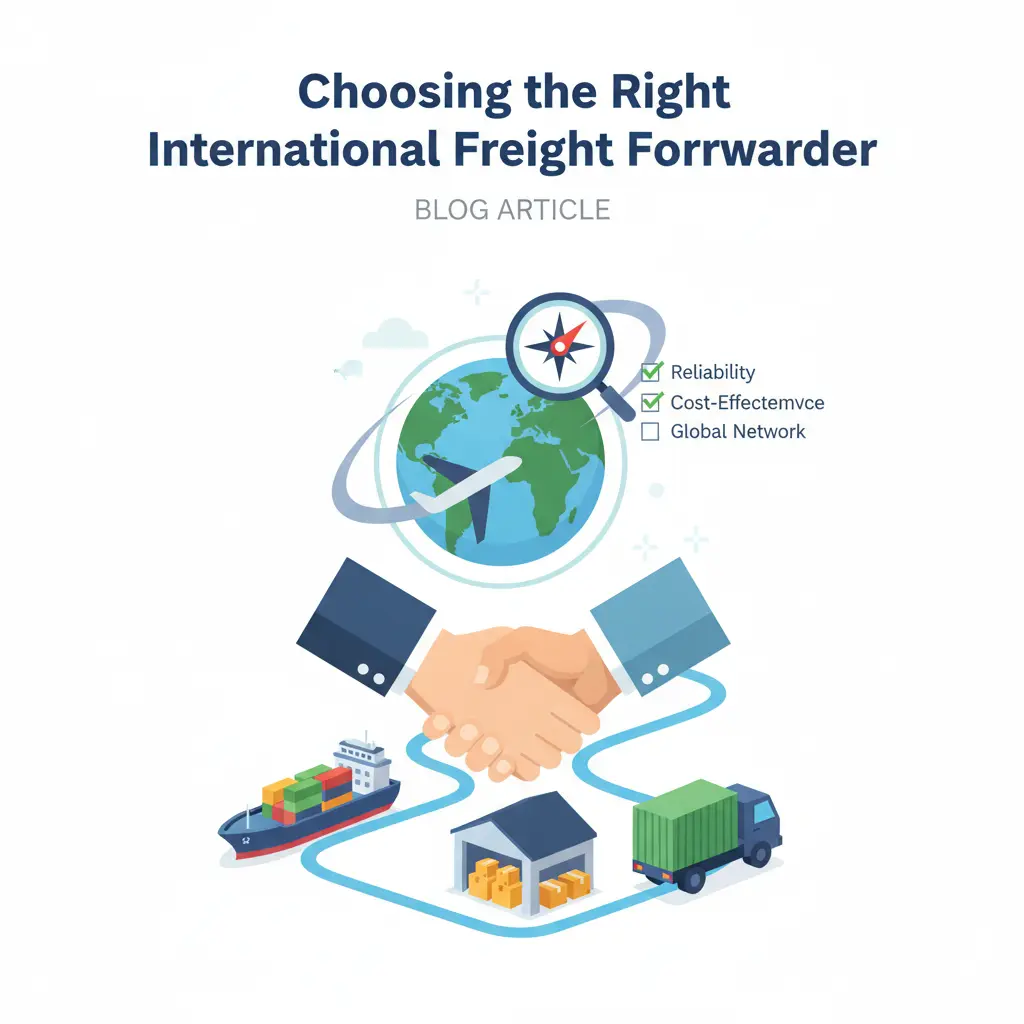
1. Assessing Experience, Reputation, and Global Network
When entrusting your valuable cargo to a third party, the first and foremost consideration should be their experience and established reputation. An experienced international freight forwarding company will have a proven track record of handling diverse types of cargo, navigating complex customs regulations, and mitigating potential shipping challenges. Look for forwarders with several years in the industry, particularly those with expertise in your specific trade lanes or product categories. Research their reputation through client testimonials, industry reviews, and professional references. A reliable forwarder should be transparent about their service quality and problem-solving capabilities.
Equally critical is the freight forwarder’s global network. A robust network of agents, partners, and carriers across key regions allows them to offer competitive rates, flexible routing options, and efficient door-to-door services. This extensive reach is vital for ensuring smooth transit and effective crisis management, especially when unexpected delays or disruptions occur. Ask about their network coverage, particularly in your target markets and origin countries, to ensure they can provide comprehensive support throughout the entire supply chain.
2. Evaluating Technology, Communication, and Digital Capabilities
In today’s fast-paced global market, technology plays a pivotal role in streamlining how international shipping works. A modern freight forwarder should leverage advanced digital platforms for shipment tracking, inventory management, and real-time visibility. Look for providers that offer user-friendly online portals, mobile applications, or robust API integrations that can seamlessly connect with your existing enterprise resource planning (ERP) systems. These technologies provide crucial transparency, allowing you to monitor your cargo’s journey, predict arrival times, and react proactively to any potential issues.
Beyond technology, effective communication is non-negotiable. A good freight forwarder maintains open, clear, and timely communication throughout the shipping process. This includes regular updates on shipment status, prompt responses to inquiries, and proactive alerts regarding any unforeseen challenges or changes. Evaluate their communication protocols: Do they offer a dedicated account manager? Are they accessible through multiple channels (phone, email, chat)? Strong communication fosters trust and ensures that you are always informed about your shipment’s progress, which is one of the key benefits of using a freight forwarder.
3. Understanding Specialization, Customer Service, and Support
Different products and industries have unique shipping requirements. A freight forwarder specializing in your particular niche can offer invaluable expertise. For instance, if you’re shipping perishable goods, you’ll need a forwarder with experience in cold chain logistics. If you’re dealing with hazardous materials, you require a partner knowledgeable in specific regulatory compliance. Discuss your specific product type, volume, and destinations to ensure the forwarder has the relevant specialization to handle your cargo efficiently and compliantly.
Finally, exceptional customer service and support are the bedrock of any successful long-term partnership. This goes beyond just handling shipments; it involves proactive problem-solving, personalized advice, and a commitment to your business’s success. Assess their responsiveness during the inquiry phase and ask about their approach to resolving issues or managing unforeseen circumstances. A dedicated and supportive team will be your advocate, offering solutions and guidance through every step of your international trade journey. They should act as an extension of your own team, dedicated to ensuring your global supply chain operates smoothly.
Choosing the right international freight forwarder is a multifaceted decision that impacts your operational efficiency and bottom line. By thoroughly assessing their experience, technological capabilities, specialization, and commitment to customer service, you can forge a partnership that facilitates seamless global trade and supports your business’s growth for years to come.
Partner with Vietnam’s Leading Suppliers
Looking for reliable suppliers in Vietnam? Contact VietnamSuppliers.com today to connect with verified manufacturers and exporters across all industries.
—————————————
References
– International Federation of Freight Forwarders Associations (FIATA): https://fiata.org/about/what-is-fiata.html
– WTO agreements on goods: https://www.wto.org/english/thewto_e/whatis_e/tif_e/agrm1_e.htm
– :
– U.S. Department of Commerce: https://www.trade.gov/exporting-and-importing
– WTO Agreement on Trade Facilitation: https://www.wto.org/english/tratop_e/tradfa_e/tradfa_e.htm