What is an HS Code and Why is it Crucial?
In the complex world of international trade, clarity and standardization are paramount. Navigating customs regulations, calculating duties, and ensuring compliance across borders would be an insurmountable task without a universal language for products. This is precisely where the Harmonized System (HS) Code comes into play. Often referred to simply as an HS Code, this global classification system is the bedrock of efficient cross-border commerce, impacting everything from logistics to legal compliance. For any business involved in buying or selling goods internationally, mastering the HS code lookup process and understanding its implications is not merely an advantage—it’s a necessity.
1. Definition of the Harmonized System
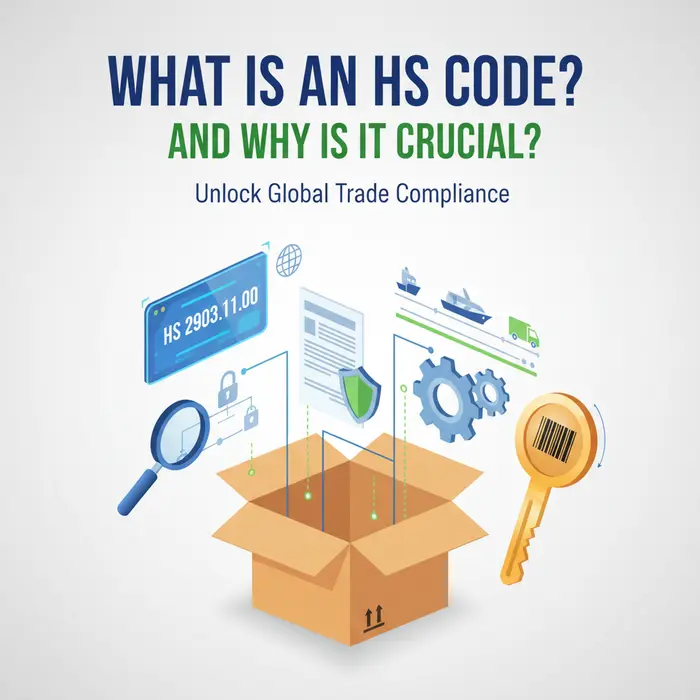
The Harmonized Commodity Description and Coding System, universally known as the Harmonized System (HS), is a standardized numerical method of classifying traded products. Developed and maintained by the World Customs Organization (WCO), it provides a logical, systematic structure for categorizing over 5,000 product groups. These groups are identified by a six-digit code, which is organized into 99 chapters, arranged into 21 sections. Each chapter represents a broad category of goods (e.g., Chapter 01 for live animals, Chapter 84 for machinery). The first two digits of an HS code designate the chapter, the next two represent the heading within that chapter, and the final two digits specify the subheading. For instance, an HS code like 1006.30.0000 refers to “semi-milled or wholly milled rice” (10 for cereals, 06 for rice, 30 for semi-milled or wholly milled). While the first six digits are globally harmonized, individual countries often extend these codes to 8, 10, or even 12 digits for further specificity, creating national customs tariff codes that cater to their unique regulatory and statistical needs. Understanding this structure is crucial for any Harmonized System code finder operation.
2. Importance for Import/Export Operations
The significance of HS codes for import/export operations cannot be overstated. Primarily, they serve as the universal language for customs authorities worldwide. When goods cross international borders, the HS code assigned to them dictates how they are treated by customs. This classification directly impacts critical aspects such as the applied customs duties and taxes, trade agreements (like free trade agreements), and any applicable quotas or restrictions. Furthermore, HS codes are vital for collecting international trade statistics, allowing governments and organizations to monitor global trade flows and economic trends accurately. For businesses, knowing the correct HS code for import export goods streamlines the customs clearance process, minimizing delays and avoiding costly detentions. It’s the primary piece of information needed on commercial invoices and other shipping documents, ensuring that goods are correctly identified and processed by the receiving country’s customs. Without an accurate HS code, a shipment can face significant holdups or even rejection.
3. Legal and Financial Implications of Classification
Accurate HS code classification carries substantial legal and financial weight for businesses. Misclassifying a product, whether intentionally or unintentionally, can lead to severe consequences. Legally, customs authorities can impose hefty fines and penalties for incorrect declarations, which might be thousands of dollars per shipment. Repeated errors could even result in heightened scrutiny, delays, or the loss of import/export privileges. Financially, an incorrect HS code can lead to paying the wrong amount of duty – either overpaying, which erodes profit margins, or underpaying, which triggers demands for back-duties, interest, and penalties. For example, if a product is incorrectly classified under a lower duty rate, customs will eventually discover the discrepancy and demand the difference, often with retroactive interest. Conversely, overpaying due to a higher duty rate can make a product uncompetitive in the market. Therefore, investing in thorough research and utilizing reliable tools to find HS code by product is not just about compliance; it’s about protecting a company’s bottom line and maintaining its reputation as a compliant and trustworthy international trader.
How to Find HS Code by Product: Step-by-Step Guide
Navigating international trade requires precision, with the Harmonized System (HS) Code being a critical element for seamless cross-border transactions. This standardized numerical classification system, maintained by the World Customs Organization (WCO), is used by customs authorities globally to classify products. An accurate HS code lookup is essential for determining applicable duties, taxes, regulations, and trade agreements. Misclassification can lead to costly delays, fines, or even seizure of goods. This guide provides actionable steps for finding the correct HS code by product, navigating the classification process using various resources.
1. Deconstructing your product for classification
Before diving into databases and tools, thoroughly understanding and “deconstructing” your product is the most crucial first step. Think of yourself as a customs officer needing to categorize an item they’ve never seen. What information would they need? This process involves breaking down your product into its core characteristics:
- What is it? Basic name (e.g., “shoes,” “lamp,” “shirt”).
- What is it made of? Primary material composition (e.g., leather, cotton, plastic, steel). If a mix, determine the predominant material by weight or value.
- What is its function? Intended purpose (e.g., “for walking,” “for illuminating,” “for wearing”).
- How is it made? Manufacturing process (e.g., woven, knitted, cast, forged, assembled).
- Who is it for? User (men, women, children) or application (industrial, consumer grade).
- Key features/components: Electrical components, motorization, specific chemicals, precious metals. Include all accessories or packaging sold with the main item.
For example, instead of just “shirt,” describe it as “Men’s short-sleeved t-shirt, knitted from 100% cotton, for casual wear.” The more detailed and accurate your product description, the easier it will be to pinpoint the correct customs tariff codes later in your HS code lookup journey.
2. Using official government customs databases
With a detailed product description, the most authoritative source for an HS code is a country’s official government customs database. These databases implement the WCO’s Harmonized System, often extending the 6-digit international standard to 8 or 10 digits with national classifications. Each digit beyond the initial six provides greater specificity, impacting duties and regulations.
Here’s how to use these resources:
- Identify the Importing Country’s Database: The HS code depends on the destination country. For imports into the USA, use the Harmonized Tariff Schedule (HTS) by the U.S. International Trade Commission (USITC). For the EU, the TARIC database is key. Most countries offer a publicly accessible customs website with a searchable tariff.
- Search by Keyword: Use the keyword search function with your detailed product description or specific terms. Be prepared to try variations if initial searches are not fruitful.
- Browse by Section and Chapter: The Harmonized System is structured into 21 sections, divided into 99 chapters. If keywords fail, browse sections (e.g., Section XI for Textiles) and then drill down into chapters (e.g., Chapter 61 for Knitted Apparel).
- Read Chapter Notes and General Interpretative Rules (GIRs): This is crucial. Each chapter has “Notes” providing definitions, exclusions, and classification rules. The GIRs, found at the beginning of the tariff schedule, are foundational rules for interpreting the entire HS system and are legally binding. Ignoring these can lead to misclassification.
Persistence and careful reading are vital. A small detail in your description or a specific tariff note can entirely change a code.
3. Utilizing commercial HS code lookup tools
While official government databases are the ultimate authority, commercial HS code lookup tools can significantly streamline the process, especially for those less familiar with tariff schedules or handling diverse products. These platforms often aggregate data from multiple countries and offer user-friendly interfaces and advanced functionalities.
Benefits of commercial tools:
- User-Friendly Interface: Intuitive search, guided questionnaires, or AI-powered classification suggestions simplify complex products.
- Multi-Country Coverage: Some tools provide HS codes for various countries, negating the need to navigate multiple national databases.
- Additional Information: Beyond the code, these tools might offer insights into duties, taxes, restrictions, and required documentation specific to different destinations.
- Expert Assistance: Some providers offer access to trade compliance experts for definitive classifications of challenging items.
When selecting an HS code finder, choose reputable providers that clearly state their data sources and update frequency. While these tools offer convenience for an HS code lookup, always cross-reference with official government sources for final confirmation, particularly for high-value or highly regulated goods. For complex cases, professional advice from a customs broker or trade consultant is recommended to ensure compliance and avoid potential issues.
Navigating Harmonized System Code Finders & Tools
In the intricate world of international trade, accurate product classification is paramount. Misclassifying goods can lead to significant delays, hefty fines, and lost revenue. This is why mastering the art of HS code lookup is crucial for importers, exporters, and logistics professionals. Fortunately, a robust ecosystem of Harmonized System code finders and tools has emerged, designed to simplify this complex process. This section reviews the best online resources available for accurate classification, detailing their features, benefits, and how to effectively leverage them for seamless cross-border operations.
- Official customs websites (e.g., ITC, WCO)
1. Official customs websites (e.g., ITC, WCO)
Official customs websites and intergovernmental organization platforms are the authoritative primary sources for Harmonized System (HS) codes and customs tariff codes. These government-run or international body sites provide direct access to national tariff schedules, international trade data, and regulatory information, making them indispensable for accurate classification. For instance, the World Customs Organization (WCO) is the global custodian of the Harmonized System, offering databases and guidelines that underpin all national tariff systems. Similarly, national customs portals, such as the U.S. International Trade Commission (USITC) or the EU’s TARIC database, provide country-specific classifications, duty rates, and import/export regulations.
Features and Benefits: The primary advantage of these platforms lies in their unparalleled accuracy and reliability. They are the definitive legal sources for classification, ensuring compliance and minimizing the risk of penalties. Many offer advanced search functionalities, allowing users to search by keyword, existing HS code, or product chapter. They also often include crucial details like specific duty rates, preferential trade agreements, and even regulatory restrictions.
How to Effectively Use Them: Start by understanding the basic structure of the Harmonized System. Begin your search with a broad product description and gradually narrow it down using the provided chapters, headings, and subheadings. Always cross-reference with any existing documentation or product specifications. For international guidelines, explore resources like the World Customs Organization (WCO) website. For country-specific classifications and duties, navigate directly to the customs authority website of the importing or exporting nation.
- Third-party HS code lookup platforms and software
2. Third-party HS code lookup platforms and software
Beyond official government sites, a vibrant ecosystem of third-party HS code lookup platforms and specialized software has emerged, designed to streamline and enhance the classification process. These commercial services often aggregate data from multiple official sources, presenting it in more user-friendly interfaces, and adding value through advanced features such as AI-driven suggestions, integration capabilities, and expert support. They cater to businesses seeking efficiency, reduced manual effort, and comprehensive compliance solutions for their HS code for import export needs.
Features and Benefits: These platforms often boast intuitive search engines that can interpret natural language descriptions, images, or even technical specifications to suggest relevant HS codes. Many incorporate artificial intelligence (AI) and machine learning (ML) algorithms to learn from past classifications and improve accuracy over time. Benefits include significant time savings, reduced human error, access to comprehensive databases that might include duty rates for various countries, trade agreements, and compliance alerts. Some platforms also offer integration with Enterprise Resource Planning (ERP) or supply chain management (SCM) systems, automating the classification process as part of broader operational workflows.
How to Effectively Use Them: Input detailed product descriptions, keywords, or even upload product images if the platform supports it. Leverage their advanced filtering and suggestion tools. These tools are particularly beneficial when trying to find HS codes by product that might be complex or fall into multiple categories. Always review the suggested codes against official guidelines to ensure accuracy, especially before final customs declarations. Many provide excellent educational resources and customer support to assist with complex classifications.
- Benefits of specialized code finders for efficiency
3. Benefits of specialized code finders for efficiency
Specialized HS code finders, encompassing both advanced official databases and sophisticated third-party platforms, are purpose-built tools that significantly streamline the often-complex process of identifying the correct Harmonized System (HS) code for goods. Their primary benefit lies in driving operational efficiency across international trade activities, from procurement to delivery.
Key Efficiency Benefits:
- Time-Saving: Manual classification, especially for a diverse product catalog, is labor-intensive. Specialized finders, with their intuitive interfaces, keyword search, and AI-powered suggestions, drastically reduce the time spent on classification from hours to minutes. This allows trade professionals to focus on more strategic tasks.
- Enhanced Accuracy: Human error is a common culprit in misclassification. These tools minimize this risk by providing robust search algorithms, cross-referencing capabilities, and often, direct links to official rulings. Greater accuracy means fewer customs inquiries, delays, and costly re-classifications.
- Cost Reduction: Accurate classification directly impacts landed costs. By preventing misclassified goods, businesses avoid unnecessary penalties, fines, and potential overpayment of duties. Many tools also highlight opportunities for duty reductions through free trade agreements, optimizing cost structures for HS code for import export.
- Improved Compliance and Risk Mitigation: Staying abreast of ever-changing global trade regulations and customs tariff codes is a monumental task. Specialized finders often incorporate real-time updates on tariffs, anti-dumping duties, and import restrictions, ensuring that businesses remain compliant and mitigate the risk of legal complications or shipment seizures.
- Better Planning and Forecasting: With reliable HS code data, companies can accurately calculate duties, taxes, and other trade-related costs upfront. This leads to more precise pricing strategies, better financial forecasting, and improved supply chain planning, allowing for more predictable international operations.
In essence, leveraging these dedicated tools transforms HS code classification from a tedious, high-risk chore into an efficient, accurate, and strategically advantageous process, empowering businesses to navigate the complexities of global trade with confidence and competence.
Understanding Customs Tariff Codes and Their Structure
Understanding the intricate world of international trade requires a firm grasp of the tools that facilitate its smooth operation. Among the most critical of these are customs tariff codes, commonly known as HS codes. These universally recognized numerical codes are the bedrock of global commerce, classifying every product traded across borders. Whether you’re an importer, exporter, or logistics professional, mastering the HS code for import export process is indispensable for compliance, accurate duty calculation, and efficient customs clearance. This section will delve into the detailed structure of these codes, explaining how different digits represent chapters, headings, and subheadings, and their direct link to customs duties and taxes, offering guidance on how to find HS code by product.
1. The 6-digit international standard breakdown
The foundation of all customs tariff codes lies in the Harmonized Commodity Description and Coding System, universally known as the Harmonized System (HS). Developed and maintained by the World Customs Organization (WCO), this system provides a standardized classification for goods traded internationally. At its core, the HS code is a 6-digit number, acting as an international standard breakdown that categorizes products into hierarchical levels, crucial for any Harmonized System code finder.
The first two digits (e.g., XXxxxx) denote the ‘Chapter,’ broadly classifying goods into major categories like ‘Live Animals’ (Chapter 01) or ‘Machinery and Mechanical Appliances’ (Chapter 84). The next two digits (e.g., xxXXxx) represent the ‘Heading’ within that chapter, offering more specificity. For instance, within Chapter 84, Heading 84.71 might be ‘Automatic data processing machines.’ Finally, the last two digits (e.g., xxxxXX) form the ‘Subheading,’ providing the most specific international breakdown, such as 8471.30 for ‘Portable automatic data processing machines.’ This 6-digit code is recognized by virtually all countries globally, ensuring consistency in product identification, making an HS code lookup powerful for international trade.
2. Country-specific extensions (7-10 digits) and their impact
While the 6-digit HS code provides a universal baseline, individual countries often extend this international standard with additional digits to create more granular classifications. These country-specific extensions, typically ranging from 7 to 10 digits, allow national customs authorities to define products with greater precision, catering to specific national trade policies, statistical requirements, and internal taxation systems. For instance, the United States uses the 10-digit Harmonized Tariff Schedule (HTS), while the European Union employs the 8-digit Combined Nomenclature (CN) and the 10-digit TARIC.
The impact of these extensions is significant. While the first six digits remain consistent, subsequent digits vary widely by country. This means that a product classified as 8471.30 internationally might be 8471.30.00.10 in the US, and 8471.30.00 in the EU. These additional digits often reflect specific national duties, import regulations, quotas, or statistical data collection unique to that country. Incorrectly applying these extensions leads to misdeclarations, penalties, and delays, underscoring the importance of using a reliable Harmonized System code finder tailored to the destination country for accurate customs tariff codes.
3. Connecting HS codes to duties, taxes, and trade agreements
The primary practical application of an HS code lies in its direct connection to the determination of customs duties, taxes, and the applicability of various trade agreements. Each HS code is assigned a specific duty rate by every importing country. When you classify a product using its correct HS code for import export, you immediately identify the tariff applicable to that specific item. This includes basic customs duties, Value Added Tax (VAT), excise taxes, and anti-dumping duties based on the product’s classification and origin.
Furthermore, HS codes are central to the implementation of free trade agreements (FTAs) and preferential tariff schemes. If two countries have an FTA, specific HS codes for products originating from one country might qualify for reduced or zero duties. For example, a product classified under a certain HS code might face a 10% duty from a non-FTA country but 0% duty if it originates from an FTA partner. Accurately classifying your goods is therefore not just about compliance; it’s also about optimizing costs and leveraging trade benefits. A precise HS code lookup is paramount to ensure businesses do not overpay duties or inadvertently violate trade regulations. Learning how to find HS code by product correctly can unlock significant savings and streamline your international supply chain.
Best Practices for HS Code Compliance & Avoiding Errors
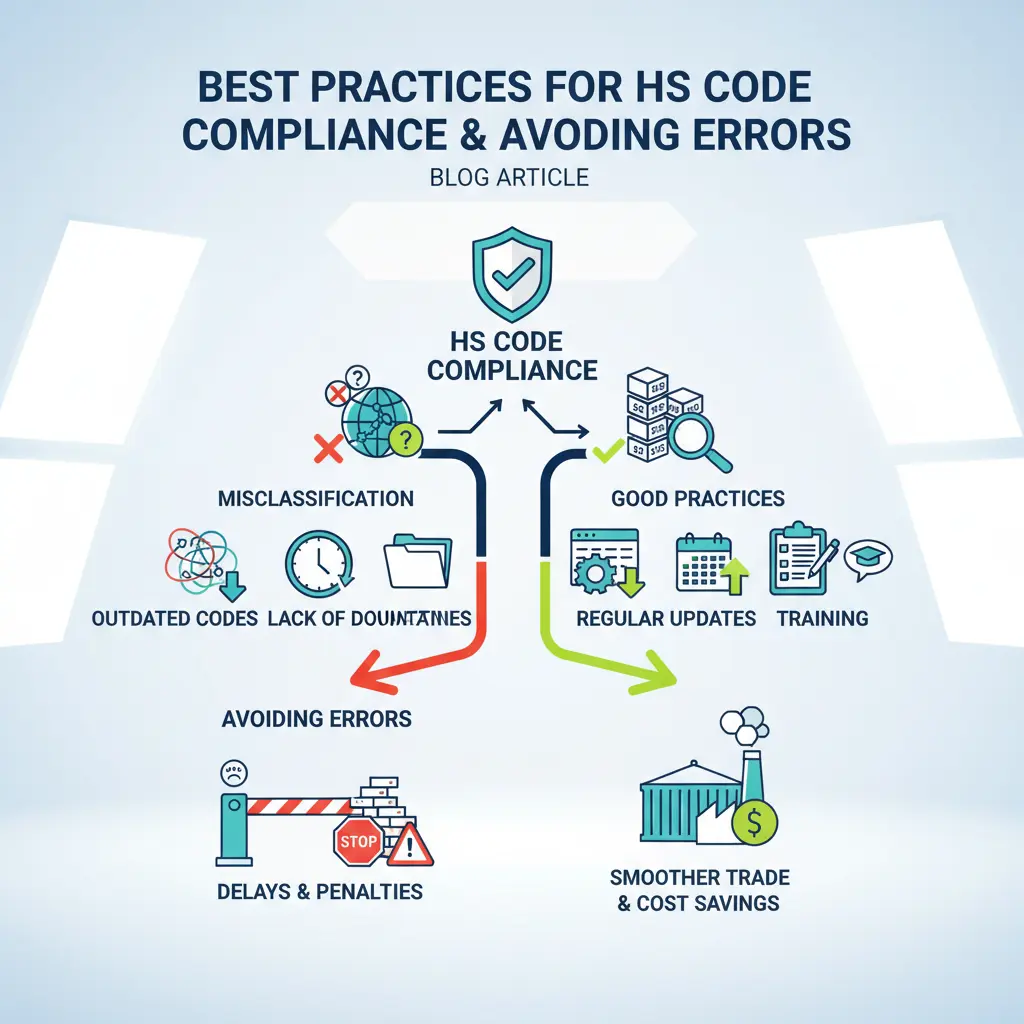
Accurate Harmonized System (HS) code classification is not merely a bureaucratic step; it’s a critical component of successful international trade. Errors in classifying goods can lead to significant delays, hefty fines, and even goods seizure, making proactive compliance indispensable. Businesses engaged in global commerce must master the art of the HS code lookup to navigate the complexities of customs regulations effectively. This section offers essential advice on maintaining precise HS code classifications, highlighting common pitfalls, and outlining robust strategies to ensure compliance and avoid costly penalties. Understanding how to find HS code by product accurately is paramount for every importer and exporter.
1. Regular review and updates of classifications
The world of trade is constantly evolving, and with it, the Harmonized System. HS codes are not static; they undergo amendments every five years by the World Customs Organization (WCO), with interim national changes also possible. Relying on outdated classifications is a common pitfall that can easily lead to non-compliance. A “regular review and updates of classifications” strategy means instituting a systematic process to re-evaluate your product classifications periodically, especially for high-volume or high-value goods. This involves subscribing to updates from relevant customs authorities and staying informed about changes to the WCO Harmonized System Nomenclature. It’s crucial to understand that even minor modifications to a product’s composition, intended use, or packaging can necessitate a different HS code. For businesses handling a diverse product range, utilizing a reliable Harmonized System code finder or software can streamline this continuous monitoring, ensuring your customs tariff codes remain accurate and compliant with the latest regulations, thereby safeguarding your supply chain from unexpected disruptions and costs.
2. Documenting your classification decision process
In the event of a customs audit or query, merely having the correct HS code is often not enough; you must be able to demonstrate how you arrived at that classification. “Documenting your classification decision process” involves maintaining a detailed record of the rationale behind each HS code assignment. This documentation should include product specifications, technical drawings, material compositions, intended use, and any legal rulings or advisories that influenced your decision. Crucially, it should reference the specific General Interpretive Rules (GIRs) and Section/Chapter Notes of the Harmonized System applied. This meticulous record-keeping acts as your defense, providing a transparent audit trail that can swiftly resolve disputes with customs authorities and prove due diligence. It reinforces your credibility and demonstrates a commitment to compliance. Without this detailed evidence, even a correct classification can be challenged, leading to delays and potential penalties. A robust internal process for capturing this data is vital for any company handling HS code for import export operations.
3. Seeking expert consultation for complex goods
While internal due diligence is essential, some products present inherent classification challenges due to their innovative nature, multi-component structure, or ambiguous descriptions within the Harmonized System. For such “complex goods,” “seeking expert consultation” is not just advisable; it’s often a necessity. This means engaging with customs brokers, trade consultants, or legal professionals specializing in customs law. These experts possess in-depth knowledge of trade regulations, customs rulings, and precedents that can significantly clarify classification ambiguities. Furthermore, for highly technical or specialized products, obtaining a Binding Tariff Information (BTI) ruling from your national customs authority provides a legally binding classification, offering unparalleled certainty and protection against future challenges. While this incurs a cost, it pales in comparison to the potential expenses of misclassification – including fines, back duties, and supply chain disruptions. Don’t hesitate to invest in specialized advice when faced with uncertainty; it’s a strategic move that fortifies your compliance framework. Knowing how to find HS code by product effectively often involves leveraging expert insights for these intricate cases.
Achieving and maintaining HS code compliance is an ongoing commitment that requires diligence, structured processes, and a willingness to seek external expertise when needed. By consistently reviewing and updating classifications, meticulously documenting your decisions, and consulting with experts for complex goods, businesses can significantly mitigate risks, streamline their international trade operations, and avoid costly errors. Prioritizing accurate HS code classification is an investment in your company’s global trade success and reputation.
Partner with Vietnam’s Leading Suppliers
Looking for reliable suppliers in Vietnam? Contact VietnamSuppliers.com today to connect with verified manufacturers and exporters across all industries.
—————————————
References
– :
– World Customs Organization: https://www.wcoomd.org/
– World Customs Organization: https://www.wcoomd.org/
– World Customs Organization (WCO): https://www.wcoomd.org/
– the WCO Harmonized System Nomenclature: https://www.wcoomd.org/en/topics/nomenclature/instrument-and-tools/hs_nomenclature_2022/overview.aspx