
Understanding the Landscape of Export Pricing Disputes
International trade, while offering immense opportunities for growth and market expansion, is inherently complex. Among its multifaceted challenges, export pricing disputes stand out as a particularly delicate and potentially damaging hurdle for businesses operating across borders. These disagreements, often emerging from what initially seemed like straightforward transactions, can quickly escalate, jeopardizing profitability, straining vital relationships, and even threatening long-term market presence. Navigating the intricate web of international contracts, fluctuating market conditions, and diverse cultural expectations requires not just business acumen, but also a deep understanding of proactive Export Pricing Dispute Resolution Strategies. This section aims to set the stage for these complexities, exploring their common origins, profound impacts, and the subtle cultural dynamics that frequently underpin international trade pricing disagreements.

1. Common Triggers for Export Pricing Disagreements
Export pricing disputes rarely arise from a single, isolated event; they are often the culmination of several interacting factors. One of the most frequent culprits is currency fluctuation. A sudden shift in exchange rates between the time a contract is signed and payment is due can significantly alter the real value of the agreed price, leading to one party feeling disadvantaged. Similarly, unforeseen changes in raw material costs or manufacturing expenses can squeeze profit margins for the exporter, prompting requests for price adjustments that the importer may resist. Logistics and shipping costs are another volatile area; unexpected surcharges, delays, or changes in trade routes can inflate delivery expenses beyond initial projections. Beyond these external economic pressures, internal issues like quality discrepancies – where the delivered product doesn’t meet the agreed specifications – or disputes over order volume commitments can also trigger price renegotiations. Ambiguities in contract language, particularly regarding price review clauses, incoterms, or payment terms, are also ripe for differing interpretations, leading to resolving buyer-supplier pricing conflicts B2B. Understanding these common triggers is the first step toward implementing effective international trade pricing negotiation best practices.
2. The Stakes: Financial, Reputational, and Relational Impacts
The consequences of unresolved export pricing disputes extend far beyond mere financial adjustments. Financially, businesses can suffer from reduced profit margins, delayed payments, significant legal fees, and even the cost of product recalls or reshipments. Persistent disputes can tie up capital and human resources, diverting them from core business activities. However, the damage often runs deeper. Reputational harm is a critical concern. A business known for frequent pricing disagreements or protracted legal battles can lose credibility in the international marketplace, making it harder to attract new clients and retain existing ones. This is particularly true in the digital age, where negative feedback can spread rapidly. Perhaps most enduring is the relational impact. Successful international trade is built on trust and mutual respect. A pricing dispute, if not handled with care and a focus on managing export sales pricing disagreements, can severely erode these foundations, leading to the termination of lucrative partnerships that took years to cultivate. The loss of a key buyer or supplier can cripple an export operation, highlighting the urgent need for robust Export Pricing Dispute Resolution Strategies to safeguard all aspects of the business.
3. The Nuances of Cross-Cultural Price Perceptions
One of the often-underestimated factors in international trade pricing disputes is the influence of cross-cultural differences. What constitutes a “fair” price, an acceptable negotiation style, or even the perception of value itself can vary significantly across cultures. In some cultures, price negotiation is an expected part of the buying process, symbolizing engagement and commitment, whereas in others, deviation from a quoted price might be seen as disrespectful or a sign of dishonesty. The emphasis on relationships versus purely transactional outcomes also plays a crucial role. For instance, in relationship-oriented cultures, maintaining harmony and long-term partnership might take precedence over achieving the absolute lowest price in a given deal. Conversely, highly transactional cultures might prioritize clear-cut financial terms above all else. Understanding these nuances is vital for effective international trade pricing negotiation. Without an appreciation for these cultural sensitivities, what one party views as a reasonable request for adjustment, the other might perceive as an attempt to exploit or an unacceptable breach of trust. Integrating international contract pricing dispute clauses that account for such cultural variations can preempt many disagreements, fostering smoother negotiations and more resilient partnerships in the complex world of global commerce.
Proactive Measures: Best Practices in Pricing Negotiation
In international trade, Export Pricing Dispute Resolution Strategies are most effective when they begin proactively, long before potential conflicts arise. By establishing robust pricing agreements and adhering to international trade pricing negotiation best practices, businesses can significantly minimize future disagreements, foster trust, and ensure smoother B2B transactions. This section delves into key strategies for setting up resilient pricing frameworks to prevent disputes and align with global trade standards.
1. Establishing Transparent Pricing Models
Clarity in pricing is fundamental to preventing resolving buyer-supplier pricing conflicts B2B. Ambiguity, particularly across diverse international markets and legal systems, often leads to misunderstandings and disputes. Therefore, establishing a transparent pricing model is paramount. This involves clearly itemizing all cost components: the base product or service price, any applicable discounts (e.g., volume, early payment), and specific surcharges for freight, insurance, customs duties, or specialized packaging. It also necessitates precise definitions of payment terms and the Incoterms governing delivery, risk transfer, and cost allocation. Documenting these elements meticulously, ideally within international contract pricing dispute clauses, ensures that both buyer and supplier possess a crystal-clear, shared understanding of the final cost and its derivation. Such transparency not only preempts common points of contention but also builds a robust foundation of trust, streamlining future negotiations and securing more durable agreements.
2. Leveraging Market Intelligence for Fair Valuation
Effective international pricing negotiation is intrinsically linked to informed decision-making. Suppliers must leverage comprehensive market intelligence to ensure fair and competitive valuations. This practice involves rigorous research into prevailing market conditions, competitor pricing strategies, and the precise value proposition of their offerings within the target market. Critical data points include global and regional economic indicators, supply-demand dynamics, production and logistics costs, and currency fluctuation forecasts. Presenting data-driven insights provides a compelling rationale for proposed prices, demonstrating their fairness, competitiveness, and sustainability. For instance, understanding the regional pricing landscape for similar products allows suppliers to justify their figures objectively, thereby enhancing credibility. This analytical approach transforms negotiations from subjective bargaining into an objective discussion anchored in demonstrable value, effectively aiding in managing export sales pricing disagreements. By grounding pricing proposals in solid market data, businesses align with international trade pricing negotiation best practices, fostering agreements that are mutually beneficial and resilient.
3. Building Trust Through Clear Communication
The bedrock of successful international business relationships is clear and consistent communication. Proactive pricing negotiation thrives on open dialogue between buyers and suppliers, which is crucial for preventing issues from escalating into full-blown disputes. This entails not only precisely articulating pricing proposals and their rationale but also actively listening to and understanding the buyer’s specific needs, budgetary constraints, and concerns. Cultural sensitivity is paramount; communication styles and expectations differ globally, requiring adaptable and empathetic approaches. Suppliers should endeavor to explain pricing strategies in a manner that resonates with the buyer’s cultural context, signaling a genuine willingness to collaborate and find common ground. Regular, proactive updates on factors potentially affecting pricing—such as raw material costs or shipping tariffs—further reinforce transparency and trust. Moreover, meticulous documentation of all agreed terms and conditions, including any special provisions, provides an undeniable reference point for both parties. Prioritizing culturally aware and transparent communication cultivates mutual respect and cooperation, thereby significantly reducing the potential for export pricing disputes and strengthening long-term partnerships.
By diligently implementing these proactive measures—establishing transparent pricing models, leveraging market intelligence, and building trust through clear communication—businesses can erect a robust defense against pricing conflicts. These international trade pricing negotiation best practices not only minimize disputes but also ensure equitable valuations and cultivate enduring global partnerships, solidifying a company’s reputation as a reliable and fair player in the international marketplace.
Tactical Approaches to Resolving B2B Pricing Conflicts
Navigating the complexities of international trade inevitably leads to situations where buyer and supplier pricing expectations diverge. These B2B pricing conflicts, if left unaddressed, can strain crucial business relationships, disrupt supply chains, and incur significant financial losses for both parties. Effective Export Pricing Dispute Resolution Strategies are paramount for maintaining long-term partnerships and ensuring smooth international transactions. This section details practical steps and methods for addressing and de-escalating existing pricing disputes between international buyers and suppliers, focusing on resolving buyer-supplier pricing conflicts B2B through proactive measures and structured engagement.
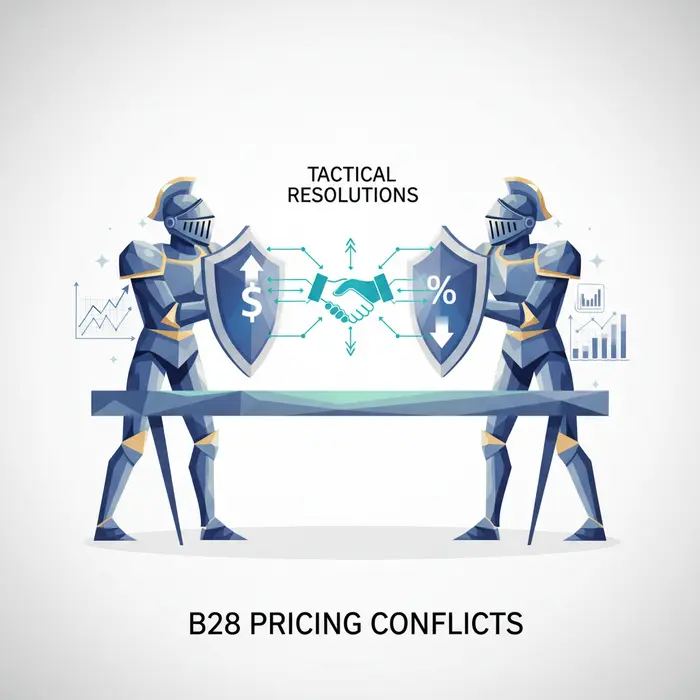
1. Early Intervention and Internal Alignment
The most effective strategy in resolving buyer-supplier pricing conflicts B2B is to address them as soon as they arise, preventing escalation. Early intervention involves promptly acknowledging the dispute and initiating a structured internal review. The first step for any supplier or buyer facing a pricing disagreement is to gain a comprehensive understanding of the root cause. Is it due to miscommunication, a change in market conditions, unforeseen logistical costs, or a misunderstanding of contractual terms? This requires a thorough examination of the initial agreement, relevant market data, and communication history.
Simultaneously, internal alignment is critical. Before engaging with the counterparty, assemble a dedicated team comprising representatives from sales, legal, finance, and operations. This team must coalesce around a unified understanding of the situation, define acceptable outcomes, and establish clear boundaries for negotiation. Internal alignment ensures that the organization presents a cohesive front, avoiding conflicting messages or concessions that could undermine the resolution process. It also involves clearly defining the company’s Best Alternative To a Negotiated Agreement (BATNA), providing a benchmark against which any proposed resolution can be measured. This preparatory phase is foundational for effective managing export sales pricing disagreements.
2. Structured Negotiation Frameworks
Once internal alignment is achieved, the next phase involves engaging the counterparty using structured negotiation frameworks. International trade pricing negotiation best practices advocate for an approach that focuses on interests rather than positions. Instead of simply stating desired prices, explore the underlying interests of both parties. For instance, a buyer might be seeking cost stability, while a supplier might be aiming for fair profit margins amidst rising input costs. Understanding these interests opens the door to creative, mutually beneficial solutions beyond mere price adjustments.
Utilize objective criteria wherever possible. Market benchmarks, industry standards, cost analyses, and transparent data can depersonalize the negotiation and lend credibility to proposals. Documents like incoterms, payment terms, and existing international contract pricing dispute clauses should be thoroughly reviewed and referenced. Communication should be clear, respectful, and focused on problem-solving. Consider offering tiered pricing structures, volume discounts, or revised payment terms as potential solutions that address specific needs without a unilateral price change. For more insights into effective negotiation strategies, resources like the Program on Negotiation at Harvard Law School offer valuable guidance on principled negotiation. Document all discussions and agreements meticulously to avoid future misunderstandings.
3. Mediation and Alternative Dispute Resolution (ADR)
When direct negotiations reach an impasse, or relationships are too strained for effective bilateral discussion, escalating to third-party intervention through mediation or other Alternative Dispute Resolution (ADR) methods becomes a prudent step. Mediation involves a neutral third party facilitating discussions between the buyer and supplier, helping them identify common ground and generate mutually acceptable solutions. The mediator does not impose a decision but guides the parties towards their own resolution, preserving the business relationship where possible. This is particularly valuable in international contexts where cultural nuances and differing legal frameworks can complicate direct talks.
Beyond mediation, other ADR options include conciliation, expert determination, or, as a last resort, arbitration. Conciliation is similar to mediation but often involves the conciliator suggesting non-binding solutions. Expert determination involves an independent expert providing a binding decision on a technical issue, such as valuation. Arbitration, typically outlined in international contract pricing dispute clauses, involves an independent arbitrator or panel hearing evidence and delivering a binding decision, similar to a court judgment but usually faster and more private. Opting for ADR can be significantly less costly and time-consuming than traditional litigation, offering a more flexible and confidential path to resolve complex export pricing dispute resolution strategies. Carefully evaluate the specific dispute and the existing contractual provisions to determine the most appropriate ADR mechanism.
The Role of Contractual Safeguards in Managing Disagreements
In global commerce, pricing disagreements are almost inevitable. However, their impact can be significantly mitigated, or even averted, through judicious contractual safeguards. Well-drafted contract clauses are the bedrock for stable international trade, explicitly outlining expectations and providing clear frameworks for resolving potential conflicts before they escalate into costly legal battles. For businesses in cross-border transactions, especially those facing fluctuating market dynamics, establishing robust mechanisms for Export Pricing Dispute Resolution Strategies is not merely a best practice; it is critical risk management. The goal is proactive dispute prevention, ensuring commercial continuity and predictability.
1. Crafting Effective Pricing Adjustment Clauses
Effective pricing adjustment clauses are contractual stipulations allowing for changes in the agreed-upon price of goods or services under specific, predefined conditions. In international trade, where supply chains are exposed to volatile global markets, these clauses are indispensable for maintaining fairness and sustainability. They prevent one party from bearing undue risk due to unforeseen economic shifts in raw material costs, currency exchange rates, or labor expenses.
These clauses should precisely define:
- Triggers: Specific events necessitating an adjustment (e.g., a +/- 5% change in a commodity index, currency fluctuation exceeding 3%).
- Mechanism/Formula: How the adjustment will be calculated, using a specific index or predefined method. Transparency here is key to “International trade pricing negotiation best practices.”
- Frequency & Limits: How often prices can be reviewed, and any maximum or minimum limits (caps and floors) to changes over time.
- Notification Process: A clear procedure for notifying the other party of an adjustment, including required documentation.
By detailing these elements, businesses pre-empt common sources of disagreement over price changes, turning potential flashpoints into managed contractual processes. This proactive approach significantly reduces the likelihood of “Managing export sales pricing disagreements” escalating.
2. Defining Dispute Resolution Mechanisms in Contracts
Dispute resolution mechanisms are formal procedures embedded within a contract that parties agree to follow if a disagreement arises, providing a structured pathway for “Resolving buyer-supplier pricing conflicts B2B.” These clauses ensure efforts are made to resolve issues efficiently and amicably, preserving business relationships before resorting to more adversarial means.
A well-structured clause typically follows a multi-tiered approach:
- Direct Negotiation: Initial step, requiring designated representatives to attempt direct resolution within a timeframe.
- Mediation: If negotiation fails, parties engage a neutral third-party mediator to facilitate discussions and reach a mutually acceptable, non-binding solution.
- Arbitration: If mediation is unsuccessful, parties submit the dispute to a neutral third-party whose decision is typically binding. Arbitration is often preferred over litigation in international trade due to confidentiality, speed, and cross-border enforceability.
- Litigation: A last resort, less common for international commercial disputes due to complexities.
Clearly defining these mechanisms, including timelines and rules, provides a roadmap for effective conflict management and reduces uncertainty.
3. Jurisdiction, Governing Law, and Arbitration Clauses
For international contracts, especially those with complex pricing structures, clauses related to jurisdiction, governing law, and arbitration are paramount. These clauses determine which legal system will interpret the contract and where any formal dispute resolution proceedings will take place, making them foundational to any comprehensive strategy for “International contract pricing dispute clauses.”
- Governing Law: Specifies which country’s laws will apply to contract interpretation and enforcement. The choice of law significantly impacts dispute outcomes, with parties often choosing a neutral jurisdiction or one with a developed commercial legal framework (e.g., English or New York law).
- Jurisdiction: Dictates which court has authority to hear disputes. In international trade, agreeing on a specific jurisdiction can be complex.
- Arbitration Clauses: Due to litigation challenges, arbitration is frequently preferred for international trade disputes. An effective clause should specify the Seat of Arbitration (determining procedural law), Arbitration Rules (e.g., ICC, LCIA), language, and number of arbitrators. Arbitral awards are generally easier to enforce internationally than court judgments, thanks to the New York Convention. More information on international arbitration can be found at reputable sources like the International Chamber of Commerce (ICC).
By carefully specifying these clauses, businesses establish a predictable legal framework, minimizing cross-border legal uncertainties and ensuring pricing disagreements are addressed efficiently and fairly.
Post-Dispute Learning and Relationship Management
In the dynamic world of international trade, export pricing dispute resolution strategies are not merely about settling disagreements; they are critical opportunities for profound organizational learning and relationship enhancement. While conflicts are inevitable, particularly when managing export sales pricing disagreements across different markets and cultures, the true measure of a successful exporter lies in their ability to transform these challenges into catalysts for continuous improvement. This section delves into how businesses can meticulously analyze past disputes, rebuild trust with international partners, and refine their export pricing models to foster more resilient and profitable future trade relationships.

1. Analyzing Root Causes and Implementing Preventative Action
Effective export pricing dispute resolution strategies begin with a thorough retrospective analysis. The first step after a dispute has been resolved is to conduct a detailed root cause analysis. This involves going beyond surface-level issues to identify the fundamental reasons why the conflict arose. Was it a misinterpretation of contract terms, an unexpected shift in market conditions, an oversight in the initial pricing calculation, or a communication breakdown? Common root causes often include ambiguous international contract pricing dispute clauses, insufficient due diligence on market intelligence, or a lack of understanding of the buyer’s operational constraints. For instance, a dispute over fluctuating raw material costs might indicate a need for more robust cost-plus pricing models or clearly defined price adjustment mechanisms in future contracts.
Once root causes are identified, the focus shifts to implementing preventative actions. This could involve standardizing contract templates with clearer language, enhancing pre-export market research to anticipate potential pricing pressures, improving internal communication channels between sales, finance, and legal teams, or investing in better training for negotiation teams. For complex B2B engagements, establishing a pre-dispute protocol or a conflict escalation matrix can also preemptively address future disagreements, ensuring all parties understand the agreed-upon steps for international trade pricing negotiation best practices. By meticulously documenting lessons learned and integrating them into operational procedures, exporters can significantly reduce the likelihood of recurring disputes.
2. Rebuilding and Strengthening Buyer-Supplier Relationships
A dispute, even when resolved, can leave a lasting impact on buyer-supplier relationships. Rebuilding trust and strengthening these crucial connections is paramount for long-term success in international trade. Open and honest communication is the cornerstone of this process. After a resolution, it’s vital to engage in a post-mortem discussion with the buyer, not to assign blame, but to jointly review what went wrong and how both parties can prevent similar issues in the future. This collaborative approach demonstrates a commitment to the relationship beyond just the transaction.
Furthermore, consider offering gestures of goodwill where appropriate, such as extended payment terms, a small discount on future orders (if commercially viable), or additional support services. These actions can help repair any damaged perception and reinforce the value of the partnership. Implementing more frequent check-ins and formalizing communication channels can also foster transparency and prevent minor misunderstandings from escalating. By consistently demonstrating reliability, flexibility, and a commitment to mutual success, exporters can transform a resolved conflict into an opportunity to forge a stronger, more resilient bond with their international buyers, effectively resolving buyer-supplier pricing conflicts B2B in the long run.
3. Continuous Improvement of Export Pricing Strategies
The insights gained from past disputes are invaluable for the continuous improvement of export pricing strategies. Rather than viewing pricing as a static element, successful exporters adopt an agile approach, regularly reviewing and adapting their strategies based on real-world experiences. This includes reassessing the accuracy of cost estimations, the competitiveness of pricing models in target markets, and the clarity of pricing terms and conditions.
For example, if multiple disputes have arisen due to currency fluctuations, it might prompt a review of hedging strategies or the adoption of multi-currency contracts. If conflicts stem from unforeseen tariffs or duties, integrating robust clauses for these contingencies or exploring Incoterms that better distribute risk could be beneficial. Leveraging data analytics to track pricing performance, identify trends, and forecast potential issues is also crucial. Regularly soliciting feedback from sales teams and international partners provides direct insights into market reception and potential points of friction. By treating every dispute as a learning experience, exporters can proactively refine their export pricing strategies, making them more resilient, transparent, and aligned with both market realities and buyer expectations, ultimately preventing future international trade pricing negotiation best practices from turning into disputes.
In conclusion, mastering post-dispute learning and relationship management transforms potential setbacks into strategic advantages. By systematically analyzing root causes, diligently rebuilding relationships, and continuously refining export pricing strategies, businesses not only mitigate future risks but also cultivate stronger, more sustainable international trade partnerships.
Partner with Vietnam’s Leading Suppliers
Looking for reliable suppliers in Vietnam? Contact VietnamSuppliers.com today to connect with verified manufacturers and exporters across all industries.
—————————————
References
– ICC Arbitration Rules: https://www.iccwbo.org/dispute-resolution/arbitration/rules-of-arbitration/
– Negotiating International Deals: https://hbr.org/2012/10/negotiating-international-deals
– Program on Negotiation at Harvard Law School: https://www.pon.harvard.edu/daily/negotiation-skills-daily/how-to-negotiate-better-deal/
– International Chamber of Commerce (ICC): https://iccwbo.org/dispute-resolution/arbitration/
– international trade pricing negotiation best practices: https://www.iccwbo.org/dispute-resolution/dispute-resolution-services/negotiation-mediation/

