
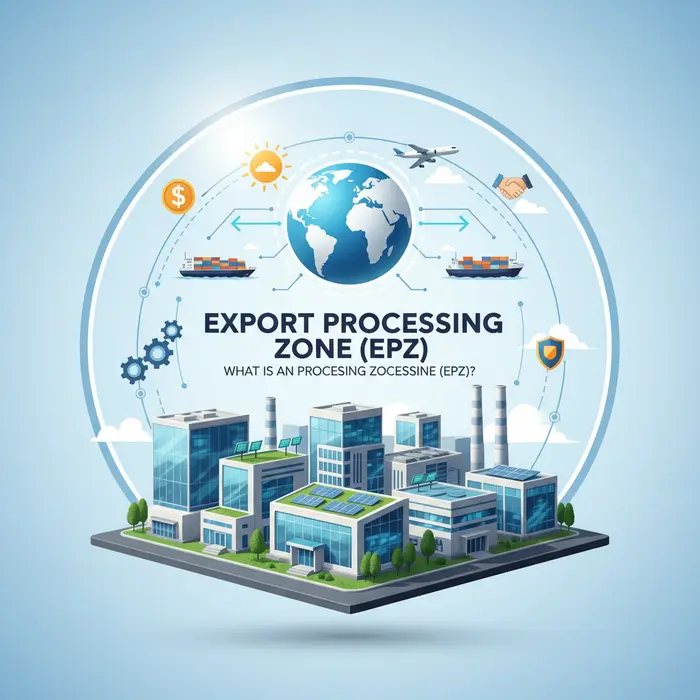
What is an Export Processing Zone (EPZ)?
An Export Processing Zone (EPZ) is a geographically delineated area within a country that operates under unique customs, tax, and regulatory regimes, distinct from the national economy. Its primary purpose is to attract foreign investment, stimulate industrial growth, and boost exports by offering a favorable operating environment for export-oriented businesses. The foundational concept behind an EPZ’s creation is to provide a competitive platform for manufacturing, processing, and assembly operations, allowing companies to reduce production costs and streamline their export processes, thereby enhancing a nation’s global trade participation.
1. Defining Export Processing Zones
An EPZ definition clarifies it as a specific industrial estate, typically fenced, that offers a range of incentives to companies manufacturing goods exclusively or primarily for export. These zones are designed to create an attractive business environment that mitigates common trade barriers and operational complexities. A crucial aspect of how EPZ works for exporters involves significant financial and logistical advantages. For instance, businesses operating within an EPZ typically benefit from customs duty exemptions EPZ on imported raw materials, components, and machinery used in the production of export goods. This exemption drastically reduces overhead costs and makes products more competitive in international markets.
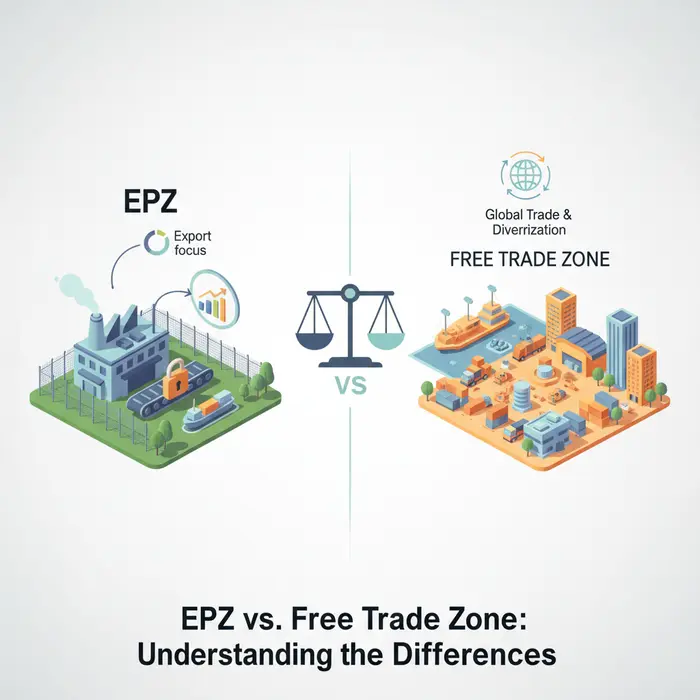
While often confused, understanding the Free Trade Zone vs EPZ distinction is vital. Free Trade Zones (FTZs) are broader in scope, often encompassing commercial activities like storage, re-export, and light assembly without specific export requirements for the final product, and may even cater to domestic consumption in some cases. EPZs, however, are specifically tailored for manufacturing and processing, with a strict focus on exporting the finished goods. This specialization allows governments to concentrate resources and incentives more effectively to foster export-led industrialization.
2. Historical Context and Global Presence
The concept of zones offering special economic incentives for trade is not new, but modern Export Processing Zones gained prominence in the late 1960s and early 1970s. Early pioneers included countries like Ireland (Shannon Free Zone, though closer to an FTZ) and developing economies in Asia such as Taiwan and South Korea, which sought to industrialize rapidly by attracting foreign direct investment (FDI) and integrating into global supply chains. The success of these early zones led to their proliferation across the globe, particularly in Asia, Latin America, and Africa.
Today, EPZs, often evolving into broader Special Economic Zones (SEZs) that encompass a wider range of activities, are a ubiquitous feature of the international economic landscape. Governments worldwide continue to establish and expand these zones as a strategic tool for economic development, job creation, technology transfer, and currency generation. They represent a global strategy to boost competitiveness and integrate national economies more deeply into the international trading system.
3. Key Characteristics of an EPZ
Beyond the fundamental customs duty exemptions, EPZs are characterized by a suite of features designed to make them highly attractive to export-oriented businesses. These include:
- Fiscal Incentives: Often encompassing tax holidays for corporate income tax, exemptions from value-added tax (VAT) or sales tax, and relief from excise duties on goods produced within the zone. These measures significantly reduce the financial burden on companies, increasing profitability and making investments more appealing.
- Streamlined Administrative Procedures: EPZs typically offer a one-stop shop for permits, licenses, and other regulatory requirements, cutting through bureaucratic red tape common outside the zone. This efficiency accelerates project implementation and operational timelines, which is a major draw for international investors.
- Robust Infrastructure: To support industrial operations, EPZs are usually equipped with high-quality infrastructure, including reliable power supply, water, telecommunications, well-maintained roads, and often proximity to ports or airports. This eliminates a major hurdle for businesses in developing countries where national infrastructure might be lacking.
- Duty-Free Import of Capital Goods and Raw Materials: As mentioned, a cornerstone of EPZs is the ability for companies to import machinery, equipment, spare parts, and raw materials duty-free, provided these are used for producing goods for export. This particular benefit reduces initial investment costs and ongoing operational expenses.
- Repatriation of Profits: Many EPZs allow for the full or partial repatriation of profits, encouraging foreign companies to invest without fear of their earnings being trapped within the host country.
- Labor Policies: While varying by country, some EPZs offer more flexible labor regulations or access to a trained workforce, aiming to meet the demands of international manufacturers.
Understanding Export Processing Zone benefits reveals why they are crucial tools for economic development. For companies, they offer cost reductions, operational efficiencies, and a competitive edge in global markets. For host countries, they drive industrialization, create employment opportunities, foster technology transfer, and generate valuable foreign exchange, ultimately contributing to sustained economic growth. The operational framework of an EPZ is thus meticulously crafted to facilitate trade and investment, empowering both businesses and national economies.
Core Economic Benefits for Businesses in EPZs
Operating within an Export Processing Zone (EPZ) offers a transformative advantage for businesses, especially those engaged in manufacturing, processing, or export-oriented activities. An EPZ definition typically refers to a designated industrial area that offers special incentives and streamlined regulations to attract foreign investment and boost exports. While often compared, understanding the nuances of Free Trade Zone vs EPZ is crucial; EPZs are generally more geared towards manufacturing for export, providing distinct economic benefits that foster growth and operational efficiency. For companies seeking to optimize their supply chains, reduce costs, and enhance global competitiveness, the Export Processing Zone benefits are manifold, fundamentally changing how EPZ works for exporters by creating a highly conducive business environment. These zones are designed to eliminate common hurdles faced by international businesses, from complex customs procedures to high operational costs, thereby driving significant financial and strategic advantages.
1. Tax Incentives and Fiscal Advantages
One of the most compelling Export Processing Zone benefits for businesses lies in the extensive range of tax incentives and fiscal advantages offered. Governments establishing EPZs aim to attract investment by significantly reducing the tax burden on resident companies. This often includes corporate income tax holidays, where businesses are exempt from paying corporate tax for a specified period, sometimes extending up to 10 or even 15 years. Following the tax holiday, companies typically benefit from a reduced corporate tax rate compared to those operating outside the zone. Beyond income tax, a critical advantage is the provision of Customs duty exemptions EPZ-wide. This means that raw materials, machinery, equipment, and components imported into the EPZ for the purpose of manufacturing or re-export are exempt from import duties, tariffs, and often value-added tax (VAT). This direct cost saving on inputs can dramatically lower production costs, making goods more competitive in international markets. Furthermore, sales to the domestic market (if permitted and usually subject to certain conditions) may also enjoy preferential tax treatment. These fiscal incentives directly contribute to higher profit margins and allow businesses to reinvest more capital into expansion, research, and development. This is a cornerstone of how EPZ works for exporters to achieve cost leadership and market penetration. For a broader understanding of how such zones operate globally, resources like UNCTAD provide valuable insights into free zones and their economic impact.
2. Streamlined Regulations and Bureaucracy
Beyond financial incentives, EPZs are characterized by a commitment to simplifying the administrative landscape for businesses. Operating in an Export Processing Zone means navigating a significantly less bureaucratic environment. Governments often establish “one-stop shop” administrative centers within EPZs, where companies can process all necessary permits, licenses, and approvals from a single point of contact. This drastically reduces the time and effort traditionally associated with setting up and running a business, accelerating project implementation and market entry. Customs procedures, which can be notoriously complex and time-consuming in conventional settings, are often streamlined and expedited within an EPZ. For instance, processes for importing raw materials and exporting finished goods are simplified, with fewer forms, faster clearances, and potentially dedicated customs officers for the zone. This efficiency is a major aspect of how EPZ works for exporters, ensuring smooth logistical flows and reducing lead times. The removal of unnecessary red tape translates into significant operational savings, allowing management to focus on core business activities rather than administrative compliance. This regulatory efficiency is a key differentiator, making EPZs particularly attractive for foreign direct investment.
3. Access to Infrastructure and Utilities
The strategic development of EPZs typically includes the provision of world-class infrastructure and reliable utilities, which are essential for modern manufacturing and logistics operations. Businesses operating within an Export Processing Zone benefit from ready access to well-maintained roads, efficient port facilities, and often proximity to international airports, facilitating seamless import and export operations. The zones are usually equipped with robust and dependable utility services, including stable electricity supply, clean water, wastewater treatment, and high-speed telecommunications infrastructure, often at competitive rates or with fewer interruptions than outside the zone. This dedicated and high-quality infrastructure eliminates common operational headaches and reduces the need for companies to invest heavily in their own utility provisions. Moreover, EPZs often offer shared facilities like warehouses, office spaces, and even security services, further reducing initial setup costs and ongoing operational expenses. For companies looking to leverage these advantages and understand more about Export Processing Zone benefits, resources such as the information available on vietnamsuppliers.com can provide valuable insights into specific regional offerings. The cumulative effect of superior infrastructure and utilities is enhanced operational reliability, increased productivity, and lower overall operational costs, providing a solid foundation for sustainable business growth.
EPZ vs. Free Trade Zone: Understanding the Differences
While often used interchangeably, Export Processing Zones (EPZs) and Free Trade Zones (FTZs) serve distinct purposes within the global trade landscape. Both are designed to boost economic activity by offering attractive incentives and a liberalized regulatory environment, but their fundamental objectives, operational models, and target markets differ significantly. Understanding these distinctions is crucial for businesses looking to leverage the advantages of special economic zones.
Common misconceptions often blur the lines between these two types of zones. This section aims to clarify their unique focuses, addressing how an Export Processing Zone benefits businesses, and contrasting it with the broader scope of a Free Trade Zone.
1. Primary Objectives and Activities Compared
At their core, the primary objectives of an EPZ and an FTZ are quite different. An EPZ definition centers around manufacturing and processing activities strictly for export. These zones are established with the specific goal of attracting foreign direct investment, promoting industrialization, creating employment, and boosting a nation’s foreign exchange earnings through increased exports. Businesses within an EPZ typically engage in the assembly, processing, or manufacturing of goods from imported raw materials or components, with the explicit mandate that the finished products must leave the host country.
In contrast, a Free Trade Zone (FTZ), also known as a foreign-trade zone or a free zone, has a broader mandate. While light manufacturing can occur, its main focus is on facilitating trade, logistics, and distribution. Activities commonly found in an FTZ include warehousing, storage, transshipment, re-packaging, labeling, quality control, and minor assembly for re-export or onward distribution. The goal here is to enhance a country’s role as a regional or international trade hub by simplifying logistics and reducing the cost burden associated with customs procedures.
2. Goods Flow and Market Orientation
The movement of goods and their ultimate market destination represent a critical distinction in the Free Trade Zone vs EPZ debate. In an EPZ, the operational model dictates a clear one-way flow for manufactured goods: from the zone directly to international markets. Raw materials and components are imported into the EPZ often under customs duty exemptions EPZ rules, processed or manufactured, and then the finished products are exported without incurring domestic customs duties or taxes. The domestic market is typically off-limits, or access is severely restricted and subject to full customs duties and taxes as if imported from abroad.
Understanding how EPZ works for exporters highlights this strict export orientation. Exporters benefit from a streamlined process specifically designed to support their international sales. This dedicated focus ensures that the entire operational framework, from infrastructure to regulatory oversight, is geared towards maximizing export efficiency.
Conversely, goods within an FTZ enjoy greater flexibility. While often destined for re-export, they can also enter the host country’s domestic market. Goods can be stored in an FTZ indefinitely without payment of duties. If these goods are then re-exported, no duties are paid. However, if they are eventually moved from the FTZ into the domestic market, they become subject to the standard customs duties and taxes of the host country. This flexibility makes FTZs ideal for businesses engaged in international logistics, supply chain management, and distribution, allowing them to defer duties until the final destination of the goods is determined.
3. Regulatory Frameworks and Compliance
The regulatory environments of EPZs and FTZs reflect their differing objectives. An EPZ definition often implies a more controlled and manufacturing-centric regulatory framework. Governments typically impose stricter oversight on production processes, employment conditions, and environmental standards within EPZs, ensuring compliance with export mandates. Incentives such as tax holidays, duty-free import of machinery, equipment, and raw materials are primarily tied to export performance and production capacity. Companies operating in EPZs often face specific reporting requirements related to their export volumes and the utilization of imported materials.
The regulatory approach in an FTZ, in the context of Free Trade Zone vs EPZ, is generally broader and more focused on trade facilitation. While customs procedures are simplified, the zones still operate under specific rules regarding inventory management, security, and the types of permitted activities. The primary regulatory advantage is the deferment, reduction, or elimination of customs duties and taxes on imported goods, as long as they remain within the zone or are re-exported. Compliance typically revolves around inventory control, proper documentation for goods entering and exiting the zone, and adherence to security protocols to prevent unauthorized entry or exit of goods. Both types of zones exist outside the normal customs territory of the host country, but the specific legal and administrative rules governing their operations are tailored to their respective economic missions.
Maximizing Customs Duty Exemptions and Other Incentives
Export Processing Zones (EPZs) are pivotal in fostering economic growth by offering a conducive environment for export-oriented manufacturing. For businesses operating within these designated areas, understanding and leveraging the specific fiscal and non-fiscal incentives is crucial for maximizing profitability and global competitiveness. These incentives are meticulously designed to reduce operational costs, streamline processes, and attract significant foreign direct investment. Central to the appeal of these zones are the substantial Export Processing Zone benefits, which include preferential tax treatments and simplified customs procedures. While the EPZ definition often overlaps with that of a Free Trade Zone (FTZ), EPZs are typically more focused on manufacturing and value-addition for export, whereas FTZs might encompass broader trade and warehousing activities. Effective utilization of these provisions dictates how EPZ enterprises can achieve significant cost savings and operational efficiencies.
1. Import Duty Exemptions on Raw Materials and Machinery
One of the most compelling advantages for enterprises within an EPZ is the comprehensive exemption from import duties. This key incentive directly addresses a significant portion of production costs by allowing businesses to import raw materials, components, semi-finished goods, and packaging materials without incurring customs duties. This immediate financial relief ensures that manufacturers can source inputs globally at competitive prices, free from the burden of tariffs that would otherwise inflate their production expenses. Beyond consumables, this exemption also extends to capital goods, including machinery, equipment, spare parts, and construction materials necessary for setting up or expanding manufacturing facilities within the zone. By eliminating these upfront costs, EPZs significantly lower the barriers to entry for new investments and encourage existing businesses to upgrade their technology and expand capacity. The ability to import state-of-the-art machinery duty-free also enhances productivity and the quality of exported goods, making products more competitive in international markets. This mechanism is fundamental to how EPZ works for exporters, giving them a distinct edge.
2. Exemption from Sales and Value-Added Taxes (VAT)
In addition to import duty exemptions, EPZ enterprises often benefit from substantial relief from domestic taxes, particularly Sales Tax and Value-Added Tax (VAT). This exemption typically applies to both the inputs procured locally and the final products manufactured within the zone, provided they are destined for export. For goods and services acquired from the domestic market for use within the EPZ, companies are usually exempt from paying VAT, which further reduces their operational overhead. This eliminates a significant portion of the cash flow tied up in tax payments and subsequent refund processes, simplifying financial management. Furthermore, the exported goods themselves are generally zero-rated or exempt from VAT, ensuring that the final products are not burdened with domestic taxes when they enter international markets. This dual exemption on inputs and outputs underpins the cost-effectiveness of EPZ operations, allowing companies to offer more competitive pricing for their exports and enhancing their profit margins. This comprehensive tax relief is a cornerstone of Customs duty exemptions EPZ provisions, making them highly attractive to global manufacturers.
3. Investment Incentives and Repatriation of Profits
EPZs are designed not only to reduce costs but also to create an attractive investment climate through various additional incentives and robust legal frameworks. Beyond direct tax exemptions, many EPZs offer corporate income tax holidays or significantly reduced tax rates for a specified period, further boosting investor returns. Some zones also provide other fiscal benefits, such as accelerated depreciation allowances or exemptions from municipal taxes. Non-fiscal incentives are equally important, including simplified administrative procedures, a “one-stop shop” service for business registration and licensing, and often superior infrastructure (e.g., reliable power, water, telecommunications). Perhaps one of the most critical aspects for foreign investors is the provision for the free repatriation of profits, dividends, and capital. This assurance allows foreign companies to invest with confidence, knowing that they can freely transfer their earnings back to their home countries without excessive restrictions or bureaucratic hurdles. Such provisions significantly mitigate investment risk and enhance the overall attractiveness of EPZs as a destination for international capital, facilitating sustainable growth and job creation within the host country’s economy. These comprehensive incentives solidify the role of EPZs as engines for export-led development.
How EPZs Facilitate Export Operations for Global Trade
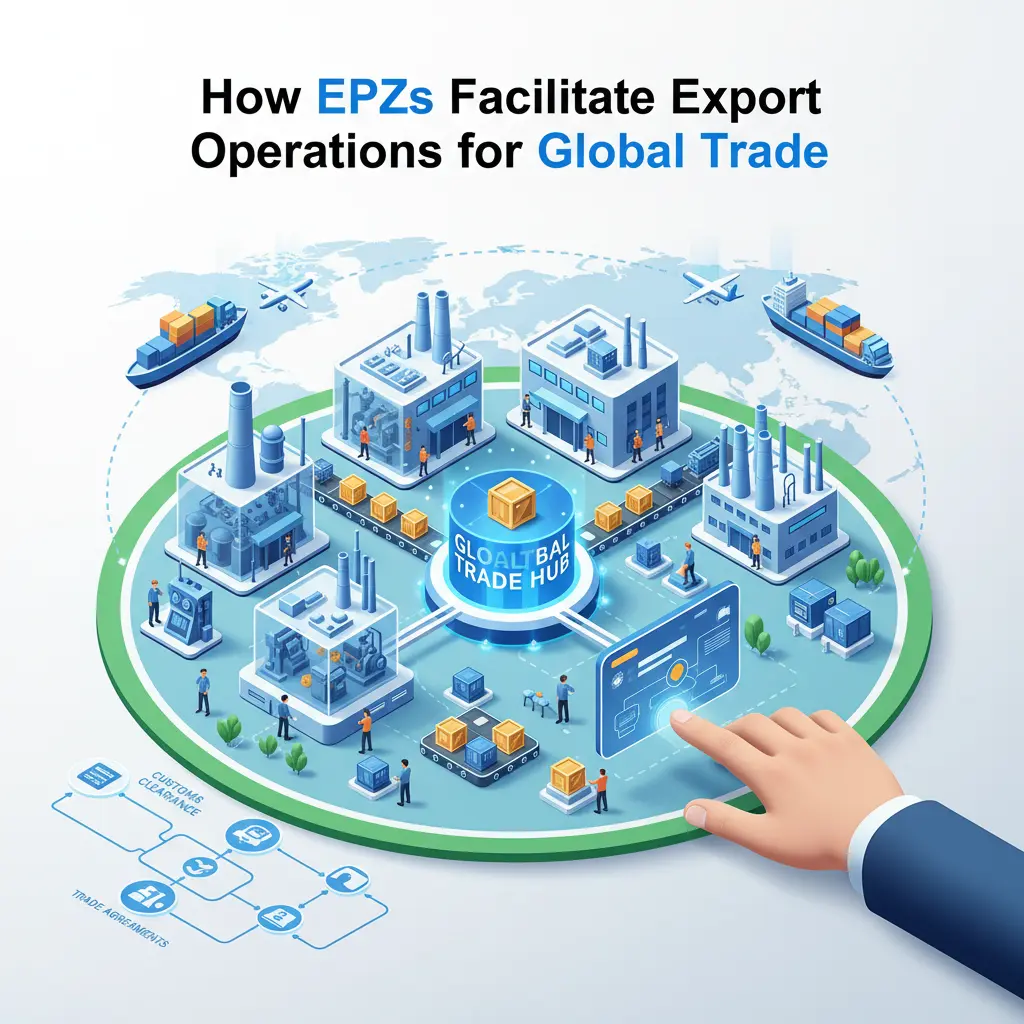
In the intricate world of global commerce, businesses constantly seek strategic advantages to streamline operations, reduce costs, and enhance their reach. Export Processing Zones (EPZs) emerge as pivotal instruments in achieving these goals, serving as specialized industrial areas designed to promote and facilitate export-oriented activities. An EPZ definition typically describes a geographically delimited area where companies enjoy various incentives and a more liberal regulatory environment to manufacture goods primarily for export. Unlike broader Free Trade Zones (FTZs) that encompass a wider range of commercial activities, EPZs are specifically geared towards production and manufacturing for international markets, offering a unique set of Export Processing Zone benefits that significantly simplify the entire export process—from initial production stages to final international shipping. Understanding how EPZ works for exporters is crucial for businesses aiming to optimize their global supply chains and boost their competitiveness.
1. Simplified Export Procedures and Documentation
One of the most compelling advantages of operating within an EPZ is the significant simplification of export procedures and documentation. Traditional international trade often involves navigating a complex web of customs regulations, permits, and paperwork, which can be time-consuming and prone to errors. EPZs, however, often operate under a single-window clearance system, consolidating various regulatory processes into one streamlined point of contact. This dramatically reduces bureaucratic hurdles, allowing companies to process import permits for raw materials and export clearances for finished goods with unprecedented efficiency. For instance, Customs duty exemptions EPZ provisions mean that raw materials and components imported into the zone for manufacturing are often exempt from import duties, provided the finished products are exported. This not only saves costs but also simplifies the customs declaration process, as companies avoid the intricate procedures associated with duty payments and subsequent drawback claims. This streamlined approach is a key part of how EPZ works for exporters, resulting in a faster, more predictable, and less administratively burdensome export pipeline, freeing up valuable resources for production and market expansion rather than administrative compliance.
2. Logistical Advantages and Connectivity
Beyond regulatory ease, EPZs are strategically located to offer unparalleled logistical advantages. Many zones are developed in close proximity to major seaports, international airports, and vital transportation networks, effectively creating a direct gateway to global markets. This strategic positioning minimizes transit times and reduces transportation costs, which are critical factors in competitive global trade. Within the zones, state-of-the-art infrastructure, including modern warehouses, loading docks, and efficient internal road networks, further streamlines supply chain management. Companies benefit from integrated logistics services, often provided by third-party logistics (3PL) providers operating within or near the zone, offering everything from warehousing and inventory management to freight forwarding and customs brokerage. This integrated ecosystem ensures that goods can move swiftly from the production line to the international shipping vessel, enhancing overall supply chain reliability and speed. Such robust connectivity and infrastructural support are significant Export Processing Zone benefits, playing a crucial role in enabling just-in-time manufacturing and delivery for exporters.
3. Boosting Competitiveness in International Markets
Ultimately, the culmination of simplified procedures, logistical efficiencies, and fiscal incentives within EPZs significantly boosts the competitiveness of companies in international markets. The most direct impact comes from cost savings. Beyond the Customs duty exemptions EPZ offers on imported inputs, companies often receive tax holidays, reduced corporate income tax rates, and exemptions from local taxes and levies. These financial incentives directly lower production costs, allowing exporters to offer more competitive pricing for their goods on the global stage. Furthermore, the stable and predictable regulatory environment within EPZs, coupled with access to skilled labor pools often attracted to these economic hubs, fosters an ideal setting for attracting foreign direct investment (FDI) and encouraging economies of scale. By reducing operational overheads and streamlining market access, EPZs empower businesses, especially SMEs, to effectively compete with larger, established international players, facilitating market penetration and expansion. This strategic advantage is why many governments worldwide utilize EPZs as a tool for economic development and export promotion, recognizing their potent role in fostering a robust export-oriented economy, as detailed by institutions like the UNCTAD in their analysis of Special Economic Zones.
In conclusion, Export Processing Zones are far more than just industrial parks; they are sophisticated ecosystems meticulously designed to propel export growth. By offering simplified customs and administrative procedures, unparalleled logistical connectivity, and substantial fiscal incentives, EPZs dismantle many traditional barriers to international trade. For companies aiming to optimize their global manufacturing and distribution networks, understanding the comprehensive Export Processing Zone benefits is paramount. They not only reduce operational costs and enhance efficiency but also provide a stable and conducive environment for businesses to thrive, ultimately strengthening a nation’s position in the competitive arena of global commerce.
Partner with Vietnam’s Leading Suppliers
Looking for reliable suppliers in Vietnam? Contact VietnamSuppliers.com today to connect with verified manufacturers and exporters across all industries.
—————————————
References
– Special Economic Zones (SEZs): https://unctad.org/topic/investment/special-economic-zones
– UNCTAD Free Zones: https://unctad.org/topic/investment/free-zones
– Free Trade Zone (FTZ): Definition, Purpose, and Types: https://www.investopedia.com/terms/f/free-trade-zone.asp
– Free zones and customs procedures by WTO: https://www.wto.org/english/thewto_e/whatis_e/tif_e/fact4_e.htm
– UNCTAD in their analysis of Special Economic Zones: https://unctad.org/news/special-economic-zones-can-play-key-role-sustainable-development-unctad-says

