Global Trade Dynamics: Shaping Emerging Economies
The global trade landscape in 2024 is a complex mosaic of opportunities and challenges, significantly influencing the trajectory of emerging economies. After a period of unprecedented disruption caused by the pandemic, the Emerging markets trade outlook 2024 indicates a cautious but determined push towards recovery and adaptation. Key drivers include accelerating digital transformation, the ongoing energy transition, and the evolving demands of a global consumer base. However, inhibitors such as persistent inflation, geopolitical fragmentation, and the lingering effects of supply chain shocks continue to test the resilience of these markets. Understanding these global trade trends emerging economies face is crucial for anticipating future economic shifts and policy responses.

1. Post-Pandemic Recovery & Resilience
The path to recovery for emerging markets since the COVID-19 pandemic has been uneven but marked by remarkable resilience in many regions. While some economies, particularly those reliant on tourism or specific commodity exports, faced prolonged downturns, others demonstrated agility in diversifying their export baskets and strengthening domestic demand. The rebound in manufacturing and increased digitalization played a pivotal role. For instance, ASEAN export import data shows a robust recovery in trade volumes, driven by electronics, automotive components, and processed agricultural goods, underscoring the region’s integration into global supply chains. However, varying vaccination rates and fiscal capacities led to disparate recovery speeds, with some countries still grappling with debt burdens and inflationary pressures. The ability of these economies to leverage their young populations and growing middle classes for domestic consumption and export growth remains a critical factor in their long-term resilience, though access to global capital and stable energy prices are equally vital.
2. Geopolitical Influences on Trade Flows
Geopolitical shifts are increasingly dictating the contours of international trade, profoundly impacting emerging markets. The rise of protectionist policies, trade disputes between major economic blocs, and regional conflicts have led to a re-evaluation of global sourcing strategies. Concepts like “friend-shoring” and “near-shoring” are gaining traction, compelling businesses to relocate production closer to home or to politically aligned nations. This presents both risks and opportunities for emerging economies. While some may benefit from new investments as companies seek alternative manufacturing hubs, others might face reduced market access or increased trade barriers. The evolving international trade policy emerging markets grapple with, including new tariffs, sanctions, and preferential trade agreements, requires astute navigation. Furthermore, the volatility in commodity market forecast emerging markets is heavily influenced by geopolitical events, affecting everything from energy prices to food security in vulnerable nations, demanding proactive risk management strategies.
3. Supply Chain Restructuring and Diversification
The vulnerabilities exposed by the pandemic and subsequent geopolitical tensions have spurred a significant push towards supply chain restructuring and diversification. Global companies are actively seeking to de-risk their operations by moving away from single-source dependencies and establishing more resilient, multi-regional supply networks. This trend offers a unique window of opportunity for emerging markets with competitive labor costs, improving infrastructure, and favorable trade policies. Countries that can demonstrate reliability, provide skilled labor, and offer supportive regulatory environments are poised to attract significant foreign direct investment (FDI). However, this also intensifies competition among emerging economies to become the preferred alternative production hubs. Investment in logistics, digital infrastructure, and workforce training will be paramount for these nations to capitalize on this rebalancing act. The World Bank offers further insights into the structural changes in global trade impacting development. Overall, the Emerging markets trade outlook 2024 is deeply intertwined with their capacity to adapt to these shifts, harness new technologies, and foster an environment conducive to diversified trade and investment.
Regional Focus: ASEAN & Other Key Blocs
The emerging markets trade outlook 2024 is largely shaped by the dynamic performance of key regional blocs. As global trade navigates a complex landscape of shifting supply chains, technological advancements, and evolving geopolitical realities, understanding the nuances within these economic powerhouses becomes critical. This deep dive explores the trade performance, opportunities, and challenges across several pivotal emerging regions, with a particular emphasis on the burgeoning Association of Southeast Asian Nations (ASEAN) and other significant developing market clusters. These regions are not merely participants but increasingly drivers of global trade trends emerging economies.
ASEAN’s Role in Global Exports and Imports
ASEAN, a bloc of ten Southeast Asian nations, stands as a formidable force in the emerging markets trade outlook 2024. Its strategic geographical location, coupled with a robust manufacturing base and burgeoning consumer markets, positions it as a critical hub in global supply chains. ASEAN export import data reveals a resilient trade performance, even amidst global uncertainties. The region has become a manufacturing powerhouse for electronics, automotive components, and textiles, while also being a significant exporter of agricultural products and raw materials. Driven by comprehensive free trade agreements, including the Regional Comprehensive Economic Partnership (RCEP), ASEAN nations are actively shaping international trade policy emerging markets, fostering greater intra-regional trade and enhancing connectivity with major economic partners like China, Japan, South Korea, Australia, and New Zealand. Opportunities abound in sectors like digital services, renewable energy, and advanced manufacturing, attracting substantial foreign direct investment. However, challenges persist, including the need for continuous infrastructure development, navigating geopolitical tensions, and building even greater supply chain resilience to mitigate future disruptions. The bloc’s collective efforts to streamline customs procedures and harmonize trade regulations further cement its position as a preferred destination for businesses seeking growth in a dynamic environment.
Growth Trajectories in Latin America and Africa
Beyond Asia, Latin America and Africa present distinct, yet compelling, global trade trends emerging economies that significantly influence the overall emerging markets trade outlook 2024. Latin America, rich in natural resources, heavily relies on the commodity market forecast emerging markets. Countries like Brazil, Argentina, and Chile are major global suppliers of agricultural products, minerals, and energy. While this dependence on commodities often leads to cyclical trade patterns, there’s a growing push for diversification into higher-value manufacturing, services, and renewable energy. Mexico, integrated closely with North American supply chains, continues its strong performance in manufacturing. Challenges for the region include political instability, infrastructure deficits, and external demand fluctuations.
Africa, on the other hand, represents a continent with immense untapped potential. The African Continental Free Trade Area (AfCFTA) is a transformative initiative aimed at boosting intra-African trade and creating a single market of 1.3 billion people. While specific ASEAN export import data isn’t directly relevant here, Africa’s own trade expansion mirrors some of ASEAN’s ambitions for regional integration. Key export sectors include minerals, oil, and agricultural goods, but a strong shift towards manufacturing, technology, and services is underway. The commodity market forecast emerging markets remains crucial for many African economies, yet efforts to add value to raw materials locally are gaining momentum. Opportunities lie in infrastructure development, digitalization, and catering to a rapidly growing and urbanizing population. Overcoming governance issues, improving logistics, and attracting consistent foreign investment are critical for sustained trade growth.
South Asia’s Emerging Trade Powerhouses
South Asia, particularly India and Bangladesh, is rapidly asserting itself as a significant player in the emerging markets trade outlook 2024. India, with its vast domestic market, burgeoning middle class, and strong service sector (especially IT and business process outsourcing), is a global trade force. Its manufacturing capabilities are also expanding, driven by initiatives like “Make in India.” Bangladesh has cemented its position as a global leader in ready-made garment exports, demonstrating remarkable resilience and growth. Other nations in the region, such as Pakistan and Sri Lanka, also contribute to the region’s trade dynamics, albeit with their own unique challenges and opportunities.
The global trade trends emerging economies suggest continued integration of South Asian nations into global value chains. International trade policy emerging markets in South Asia is increasingly focused on negotiating new trade agreements and diversifying export baskets beyond traditional goods. Opportunities in the region are driven by a young, growing workforce, increasing internet penetration, and significant investment in infrastructure. Challenges include addressing logistical bottlenecks, enhancing manufacturing competitiveness, and navigating complex geopolitical landscapes. As these economies mature and industrialize further, their contribution to global trade flows is expected to grow substantially, offering new avenues for international businesses and investors.
Commodity Markets: Forecasting Volatility and Demand
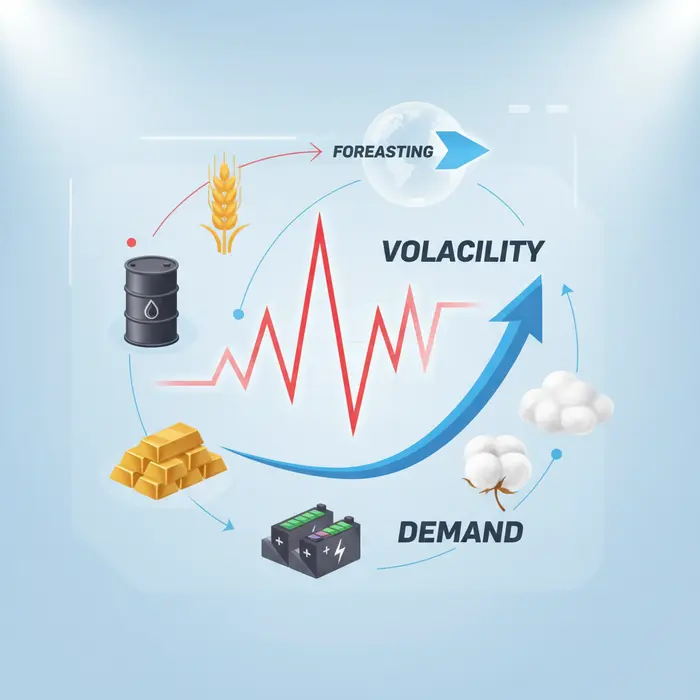
Analyzing the commodity market outlook for emerging economies reveals a landscape shaped by persistent volatility, evolving demand shifts, and intricate supply constraints. The Emerging markets trade outlook 2024 is inextricably linked to these dynamics, as these nations often depend heavily on commodity exports for revenue and imports for industrial growth and food security. Understanding the interplay of global economic conditions, geopolitical tensions, and climate change is crucial for navigating the complex future of commodity trade for these burgeoning economies.
Global trade trends emerging economies are experiencing include shifts towards green energy, renewed infrastructure development, and increased food demand driven by population growth and urbanization. These trends create both significant opportunities and profound challenges, necessitating strategic foresight and adaptive policy responses. The capacity of emerging economies to secure essential commodities and manage price fluctuations will define their economic resilience and growth trajectories in the coming years.
1. Energy Market Outlook: Oil, Gas, and Renewables
The energy market remains a linchpin for the global trade trends emerging economies, with oil and gas prices continuing to exert significant influence. For 2024, crude oil markets are expected to remain sensitive to OPEC+ production decisions, geopolitical events in key producing regions, and the pace of global economic recovery, particularly in major consumers like China and India. While demand for traditional fossil fuels persists, especially in industrializing nations, the transition towards cleaner energy sources is accelerating.
Natural gas markets, still recovering from recent supply disruptions, face regional price disparities. Emerging economies with access to LNG terminals are benefiting from more diversified supply, while others grapple with higher costs. Simultaneously, investments in renewables – solar, wind, and hydropower – are surging across emerging markets. Driven by decreasing technology costs, robust government incentives, and increasing environmental awareness, these nations are poised to become significant players in the global green energy transition. This shift will gradually reduce reliance on volatile fossil fuel imports, improving energy security and influencing the broader Commodity market forecast emerging markets.
2. Metals and Minerals: Industrial Demand and Pricing
Industrial metals and minerals are foundational to the economic development of emerging economies, supporting massive infrastructure projects, urbanization, and the burgeoning manufacturing sectors. Demand for key metals like copper, iron ore, and aluminum is projected to remain strong, fueled by sustained construction activity and the global push for electrification and digitalization. The rise of electric vehicles (EVs) and renewable energy technologies is particularly boosting demand for critical minerals such as lithium, nickel, cobalt, and rare earth elements.
Supply, however, is often constrained by a lack of new mining investments, stringent environmental regulations, and geopolitical factors impacting extraction and processing. Many emerging economies are both significant producers and consumers of these resources. For instance, detailed ASEAN export import data often highlights the region’s crucial role in the global supply chains for electronics components and automotive parts, which are heavily dependent on a steady supply of various metals. Price volatility in this sector presents both opportunities for mineral-rich nations and cost challenges for manufacturing-dependent economies.
3. Agricultural Commodities: Food Security and Export Potential
Agricultural commodities are vital for food security and represent a significant portion of the export potential for many emerging economies. The outlook for 2024 is heavily influenced by climate change, which manifests through unpredictable weather patterns, droughts, and floods, directly impacting crop yields for staples like wheat, maize, rice, and soybeans. For import-dependent emerging economies, these climatic shocks pose substantial risks to food security and can trigger inflationary pressures.
Conversely, agricultural powerhouses within emerging markets stand to benefit from robust global demand, particularly if they can maintain consistent production despite environmental challenges. Strategic investments in resilient agricultural practices, irrigation infrastructure, and diversified crop portfolios are becoming paramount. Furthermore, International trade policy emerging markets adopt, including tariff structures, export restrictions, and regional trade agreements, will significantly shape their ability to leverage their agricultural potential and ensure food supply stability, both domestically and internationally. Navigating these complexities will be key to unlocking sustainable growth.
International Trade Policy & Regulatory Shifts
The global trade landscape is undergoing significant transformation, marked by evolving international trade policies and regulatory shifts that critically influence emerging markets’ trade relationships and market access. As these economies strive for sustainable growth, understanding these dynamics is paramount for shaping their emerging markets trade outlook 2024. From the resurgence of protectionist tendencies to the proliferation of digital trade regulations, the complexities are multifaceted, demanding strategic adaptation and proactive engagement.
1. Impact of Bilateral and Multilateral Trade Agreements
The architecture of global trade agreements has seen a notable shift from multilateral consensus-building, often stalled at the World Trade Organization (WTO), towards a proliferation of bilateral and regional trade pacts. Emerging economies are increasingly leveraging these regional agreements, such as the Comprehensive and Progressive Agreement for Trans-Pacific Partnership (CPTPP), the Regional Comprehensive Economic Partnership (RCEP) in Asia, and the African Continental Free Trade Area (AfCFTA). These agreements offer preferential market access, reduce tariff and non-tariff barriers, and often include provisions for intellectual property, services, and investment, thereby shaping global trade trends emerging economies. While offering significant opportunities for integration and efficiency gains, they also present challenges. The so-called ‘spaghetti bowl’ effect, where numerous overlapping agreements create complex rules of origin and varying standards, can complicate supply chain management and increase compliance costs for businesses operating across multiple jurisdictions. For emerging markets, the strategic choice of which agreements to join, and how to maximize their benefits while mitigating potential disadvantages, remains a critical policy decision impacting their competitive position.
2. Tariffs, Non-Tariff Barriers, and Protectionism
In recent years, the specter of protectionism has loomed large, driven by geopolitical tensions, national security concerns, and efforts to reshore manufacturing capabilities. This has led to a renewed emphasis on traditional trade instruments like tariffs, but more significantly, a rise in non-tariff barriers (NTBs). These NTBs can include quotas, import licenses, subsidies, stringent technical standards, sanitary and phytosanitary (SPS) measures, and domestic content requirements. Such measures can be more insidious and challenging to navigate than tariffs, often disproportionately affecting emerging markets that may lack the resources or expertise to comply with complex regulatory frameworks. The impact of these barriers extends beyond manufacturing goods, significantly influencing the commodity market forecast emerging markets, where disruptions to supply chains or new export restrictions can have volatile price implications. Understanding and addressing these protectionist tendencies and the evolving nature of international trade policy emerging markets is crucial for maintaining market access and fostering stable trade relationships.
3. Digital Trade Regulations and E-commerce Growth
The exponential growth of e-commerce, particularly accelerated by the COVID-19 pandemic, has opened new avenues for trade for emerging markets, empowering small and medium-sized enterprises (SMEs) to reach global consumers directly. However, this digital transformation also brings a new frontier of regulatory challenges. The nascent and often fragmented landscape of digital trade regulations encompasses issues such as cross-border data flows, data localization requirements, digital services taxes, cybersecurity standards, and consumer protection laws. Many countries are grappling with how to regulate digital platforms and services without stifling innovation or imposing undue burdens on businesses. For instance, regulations impacting cross-border data flows can significantly affect the efficiency of global supply chains and the operations of digital service providers. As regions like ASEAN demonstrate robust e-commerce expansion, understanding and adapting to these evolving digital trade frameworks, which heavily influence ASEAN export import data, is essential for maximizing the benefits of the digital economy while ensuring secure and equitable trade practices.
In conclusion, the international trade policy and regulatory environment is dynamic and challenging for emerging markets. Navigating the complexities of evolving trade agreements, confronting protectionist measures, and adapting to new digital trade norms will be critical determinants of their economic prosperity and integration into the global economy in the coming years. Proactive policy engagement, strategic partnerships, and robust domestic reforms will be essential for these economies to thrive amidst an ever-changing global trade landscape.
Future Prospects & Risks for Emerging Markets
Concluding insights on the strategic opportunities and potential risks that emerging markets face in the coming trade landscape.
The global economic landscape continues to evolve at an unprecedented pace, presenting both significant opportunities and formidable challenges for emerging markets. As we navigate the Emerging markets trade outlook 2024 and beyond, these economies are at a pivotal juncture. Success will hinge on their ability to adapt to shifting global trade trends emerging economies, harness technological advancements, embrace sustainable practices, and fortify their economic resilience against persistent pressures. The coming years will be defined by the interplay of innovation, environmental imperatives, and macroeconomic stability, each demanding strategic foresight and agile policymaking.
1. Technological Disruption and Innovation in Trade
The rapid advancement of technology is fundamentally reshaping how trade is conducted, creating new avenues for growth but also introducing new complexities. Emerging markets stand to gain immensely from adopting digital technologies, from AI and blockchain to advanced e-commerce platforms. These innovations can streamline supply chains, reduce transaction costs, enhance transparency, and broaden market access for small and medium-sized enterprises (SMEs). For instance, sophisticated analytics can offer deeper insights into ASEAN export import data, allowing businesses to identify new opportunities and optimize logistics. The increasing digitalization of trade also necessitates a review of international trade policy emerging markets to foster an environment conducive to innovation while safeguarding against cyber threats and ensuring equitable access.
However, the digital revolution also poses risks. A significant digital divide could leave some economies or segments of their populations behind, exacerbating inequalities. Furthermore, increased automation could lead to job displacement in traditional manufacturing sectors, requiring strategic investments in reskilling and education to maintain labor market stability. Cybersecurity remains a critical concern, as emerging markets often have less robust infrastructure to protect against sophisticated attacks that could disrupt trade flows and erode trust.

2. Green Trade Initiatives and Sustainable Development
A growing global imperative for sustainable development is transforming international trade, pushing emerging markets towards greener practices and products. This shift presents a dual challenge and opportunity. On one hand, adhering to stricter environmental, social, and governance (ESG) standards can create new trade barriers and increase compliance costs for industries reliant on traditional production methods. The transition to a low-carbon economy will impact the commodity market forecast emerging markets, particularly those heavily dependent on fossil fuel exports, requiring them to diversify their economic bases.
On the other hand, embracing green trade initiatives opens up vast opportunities for innovation and new market access. Emerging economies can become leaders in renewable energy technologies, sustainable agriculture, and eco-friendly manufacturing. Investing in green infrastructure, promoting circular economy principles, and developing new export categories in environmental goods and services can attract foreign direct investment and foster long-term, resilient growth. International cooperation and a proactive approach to developing green trade policies will be crucial for emerging markets to leverage this transformation effectively. This strategic pivot is vital for securing a competitive edge in the evolving global trade landscape.
3. Inflationary Pressures, Debt, and Economic Stability
Many emerging markets continue to grapple with persistent inflationary pressures, rising interest rates, and escalating public and private debt levels. These macroeconomic challenges pose significant risks to economic stability and their capacity for sustainable trade growth. High inflation erodes purchasing power, dampens consumer demand, and increases operational costs for businesses, potentially impacting their competitiveness in export markets. Rising interest rates, often a response to inflation, increase the cost of borrowing for governments and corporations, exacerbating debt burdens and diverting resources from productive investments.
The specter of capital outflows and currency depreciation looms over economies perceived as vulnerable, making it challenging to finance imports and service foreign currency-denominated debt. This instability can directly affect trade volumes and patterns, including key indicators like ASEAN export import data. To mitigate these risks, emerging markets must prioritize sound fiscal management, strengthen central bank independence, and pursue structural reforms that enhance productivity and diversify economies. Building stronger regional trade blocs and fostering intra-regional trade can also provide a buffer against global economic volatility and help stabilize growth paths. Managing these pressures effectively will be critical for a positive Emerging markets trade outlook 2024.
In conclusion, the future for emerging markets in the global trade arena is characterized by dynamic interplay between transformative opportunities and significant risks. Harnessing technological innovation, embracing sustainable development, and maintaining macroeconomic stability will be paramount. Strategic policymaking, prudent investment, and international cooperation will enable these economies to navigate the complex trade landscape, capitalize on new growth drivers, and build more resilient and prosperous futures as they define the future of trade.
Partner with Vietnam’s Leading Suppliers
Looking for reliable suppliers in Vietnam? Contact VietnamSuppliers.com today to connect with verified manufacturers and exporters across all industries.
—————————————
References
– The World Bank: https://www.worldbank.org/en/topic/trade
– Global Trade Trends | UNCTAD: https://unctad.org/topic/globalization/global-trade-trends
– IMF World Economic Outlook October 2023: https://www.imf.org/en/Publications/WEO/Issues/2023/10/10/world-economic-outlook-october-2023
– :
– green trade policies: https://www.wto.org/english/tratop_e/envir_e/envir_e.htm