Understanding the De Minimis Threshold for Imports
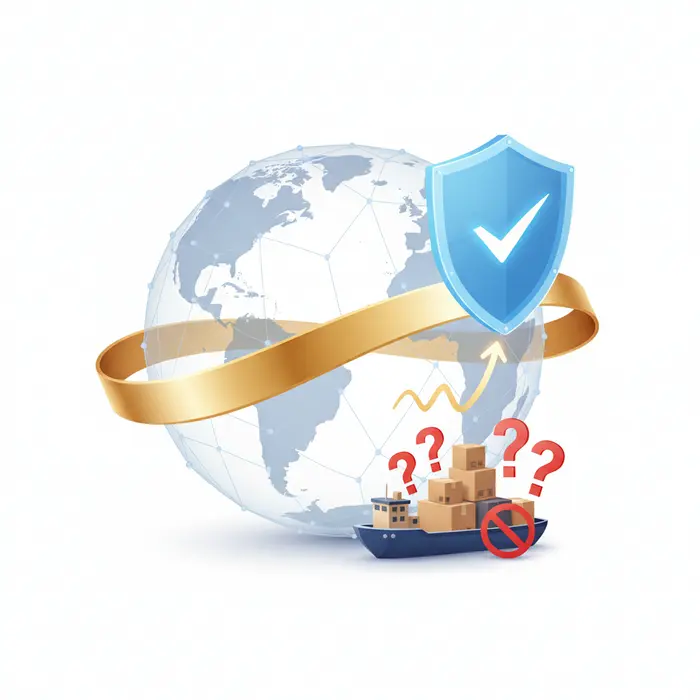
This section will define the ‘de minimis threshold,’ explain its fundamental purpose in international trade, and highlight why understanding it is crucial for businesses and individuals engaged in importing goods in 2025.
1. What is the De Minimis Rule?
At its core, the De Minimis Threshold is a principle derived from the Latin phrase “de minimis non curat lex,” meaning “the law does not concern itself with trifles.” In the context of international trade, it refers to a specific monetary value below which imported goods are exempt from duties, taxes (such as sales tax or VAT, depending on the country), and often, formal customs declaration procedures. This exemption is not merely a courtesy; it’s a strategic regulatory mechanism designed to facilitate the flow of low-value shipments across borders.
While the concept is universal, the actual threshold value varies significantly from country to country. For instance, the United States famously maintains a relatively high U.S. de minimis threshold of $800, operating under what’s known as Section 321 customs clearance. This means most shipments valued at $800 or less can enter the U.S. without incurring customs duties or many import taxes. In contrast, Canada’s de minimis is significantly lower at CAD $20 for duties and taxes, while the European Union has a €150 threshold for customs duties but abolished the VAT exemption for low-value imports in 2021. Understanding these international de minimis rules is paramount for anyone navigating global commerce, as it directly impacts import costs and logistics.
2. Why De Minimis Matters for Importers
For businesses and individuals engaged in importing goods, particularly in the rapidly evolving e-commerce landscape of 2025, grasping the nuances of the de minimis threshold is not just beneficial—it’s essential for operational efficiency and profitability. The primary reason it matters is the immediate cost savings. By qualifying for a customs duty exemption, importers can avoid paying duties and, in some cases, other import taxes, directly reducing the landed cost of their products.
Beyond direct savings, the de minimis rule significantly accelerates customs clearance processes. Shipments falling below the threshold often bypass extensive bureaucratic checks, complex paperwork, and lengthy delays that are typically associated with higher-value commercial imports. This streamlined logistics translates into faster delivery times, which is a critical competitive advantage in today’s fast-paced consumer market. For small businesses, dropshippers, and direct-to-consumer brands, leveraging the import tax threshold means less administrative burden and more predictable shipping schedules, allowing them to focus on sales and customer satisfaction rather than customs compliance headaches. It empowers them to compete effectively in global markets by offering more attractive pricing and quicker service.
3. The Benefits of Customs Duty Exemption
The advantages afforded by a customs duty exemption extend far beyond mere cost avoidance. These benefits can profoundly impact a business’s operational strategy, market reach, and overall financial health:
- Reduced Landed Cost: The most immediate and tangible benefit is the direct reduction in the total cost of bringing a product to market. This allows for either higher profit margins or the ability to offer more competitive pricing to end consumers, making products more appealing.
- Improved Cash Flow: By avoiding upfront duty payments, businesses can retain more capital, improving cash flow and freeing up resources for other investments, marketing efforts, or inventory management.
- Greater Market Access: The de minimis rule facilitates the entry of smaller, lower-value shipments, making international trade viable for a wider range of products and businesses that might otherwise be deterred by complex and costly customs procedures. It particularly supports the growth of cross-border e-commerce.
- Competitive Pricing: Without the added burden of duties, importers can price their goods more aggressively, gaining an edge over competitors who may not be efficiently utilizing de minimis provisions or are dealing with higher-value shipments.
- Simplified Compliance: Navigating international trade regulations can be daunting. The de minimis exemption drastically simplifies the compliance landscape for eligible shipments, reducing the risk of errors, fines, and delays associated with incorrect classifications or missing documentation.
- Focus on Core Business: Less time spent on customs paperwork and duty calculations means more time and resources can be dedicated to core business activities such as product development, sales, and customer service, ultimately fostering growth and innovation.
In conclusion, a thorough understanding of the De Minimis Threshold and its varying international de minimis rules is indispensable for any entity engaged in global trade. It represents a powerful tool for optimizing costs, streamlining operations, and enhancing competitiveness in the dynamic import market of 2025 and beyond.
US De Minimis: Section 321 Customs Clearance & $800 Limit
The United States utilizes a specific de minimis threshold, currently set at $800, to facilitate the entry of low-value goods. This provision, coupled with Section 321 customs clearance, enables eligible international shipments to enter the country duty and tax-free. Understanding these regulations is crucial for e-commerce businesses, individual consumers, and logistics providers involved in cross-border trade with the US, as it streamlines import processes and reduces costs. This section will delve into the specifics of the $800 limit, how Section 321 functions, and its associated eligibility and restrictions, alongside any potential future changes.
1. The $800 US De Minimis Limit Explained
The term “de minimis,” Latin for “of minimal importance,” in customs refers to a threshold below which goods are exempt from duties and taxes. The current US De Minimis Threshold of $800 means most imported shipments valued at $800 or less, per person per day, can enter without incurring customs duties or taxes. This limit was significantly increased from $200 in 2016 by the Trade Facilitation and Trade Enforcement Act (TFTEA), recognizing the growth of e-commerce and the need for efficient processing of low-value shipments. Its primary purpose is to reduce the administrative burden on both importers and U.S. Customs and Border Protection (CBP), allowing resources to focus on higher-value or higher-risk shipments. For businesses, this translates to lower landed costs, simplified pricing, and faster delivery times, making international trade more accessible. For consumers, it means receiving goods from overseas without unexpected additional charges, enhancing their online shopping experience.
2. Navigating Section 321 Customs Clearance
Section 321 of the Tariff Act of 1930 is the legal framework governing the US de minimis rule. It specifically authorizes CBP to admit shipments valued at $800 or less without formal entry procedures, duties, or taxes. Navigating Section 321 customs clearance is generally straightforward for eligible shipments. Typically, the carrier (e.g., FedEx, UPS, DHL, or postal services) electronically submits shipment data to CBP, often via an Entry Type 86 (ET86) manifest. This process allows for rapid customs processing and release, often within hours of arrival. The benefits are substantial: drastically reduced paperwork, fees, and time compared to traditional import declarations. This expedited clearance is crucial for time-sensitive e-commerce deliveries. Businesses leveraging Section 321 can offer more competitive pricing by eliminating duty and tax costs, making products more attractive to US consumers. Understanding and correctly applying the U.S. Customs and Border Protection (CBP) guidelines on Section 321 is essential for compliance and to avoid delays.
3. Eligibility and Restrictions for Section 321 Shipments
While the $800 de minimis threshold offers significant advantages, specific eligibility criteria and restrictions apply to Section 321 shipments. To qualify, a shipment must:
- Have a total fair retail value of $800 or less in the country of shipment.
- Be imported by one person on one day. Multiple shipments by the same importer on the same day, even if individually under $800, could be consolidated and exceed the limit, requiring formal entry.
- Not be one of several shipments sent by the same person, to the same consignee, arriving on the same day, where the aggregate value exceeds $800. This prevents splitting larger orders.
Certain goods are also explicitly excluded from Section 321 benefits, regardless of value:
- Goods subject to quotas (e.g., certain textiles or agricultural products).
- Goods regulated by other government agencies requiring specific permits or inspections (e.g., FDA, USDA), unless cleared by those agencies.
- Alcoholic beverages, perfumes containing alcohol, and tobacco products.
- Goods subject to antidumping (AD) or countervailing duties (CVD).
Regarding anticipated changes for 2025, discussions within the US government and trade circles are ongoing, particularly concerning its use by foreign e-commerce entities and potential security or trade enforcement concerns. While no confirmed changes have been announced, stakeholders are closely monitoring legislative debates. Potential future adjustments could include modifications to the value threshold, additional restrictions for certain goods or importers, or enhanced data collection. Businesses should stay informed through official CBP announcements and trade updates to adapt to evolving regulations.
International De Minimis Rules: A Global Perspective
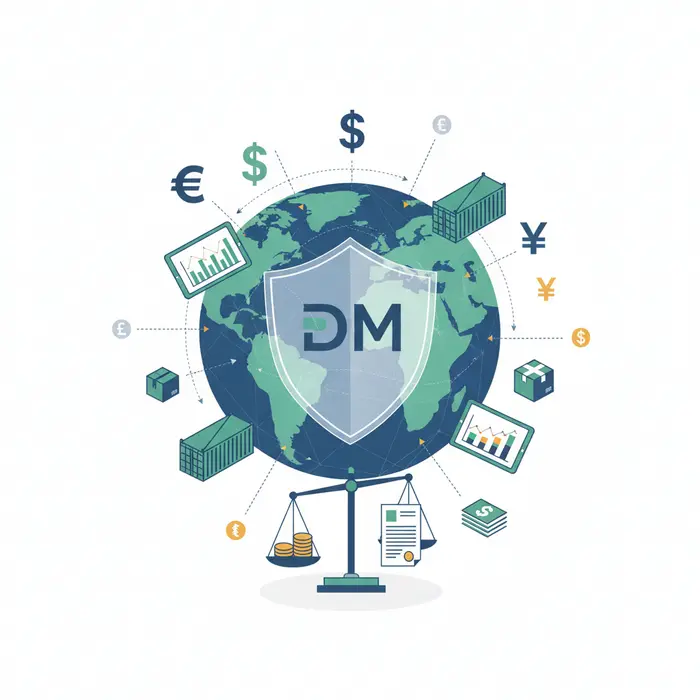
As global trade continues its rapid evolution, understanding the nuances of international de minimis rules becomes paramount for businesses engaged in cross-border commerce in 2025. A de minimis threshold refers to the maximum value of goods that can be imported into a country without incurring customs duties, taxes, or formal clearance procedures. These thresholds are designed to facilitate trade, reduce administrative burdens for low-value shipments, and keep customs processes efficient. However, these rules are far from uniform, varying significantly across different countries and economic blocs. This section explores how these thresholds vary across major regions like the EU, Canada, and the UK, comparing their implications for global trade.
De Minimis Thresholds in the European Union
The European Union (EU), as a single market comprising 27 member states, operates with harmonized customs and VAT regulations for imports from outside the bloc. For customs duties, the EU maintains a de minimis threshold of €150. This means that shipments valued at €150 or less are generally exempt from import duties, offering a significant advantage for businesses sending low-value goods into the EU. However, it’s crucial to distinguish this from VAT (Value Added Tax). Since July 1, 2021, the EU abolished the previous €22 VAT exemption for goods imported from outside the EU. Consequently, all commercial goods imported into the EU, regardless of their value, are now subject to VAT. This change was implemented to level the playing field between EU and non-EU businesses and to curb VAT fraud. For shipments up to €150, sellers can often opt to collect and declare VAT at the point of sale through the Import One-Stop Shop (IOSS) scheme, simplifying the process for consumers and ensuring a smoother customs experience. Understanding these intricate rules is vital for businesses to accurately price their products and manage customer expectations regarding the total landed cost of their purchases. For further details on the EU’s VAT e-commerce rules, consult the European Commission’s official guidance.
Canada’s Low-Value Shipment Thresholds
Canada presents a somewhat more complex, yet often more generous, landscape for low-value shipments, particularly for goods originating from specific trade partners. For most international imports, Canada’s de minimis threshold for duties and taxes is CAD $20. Shipments valued at CAD $20 or less typically enjoy a full customs duty exemption and are not subject to sales taxes (GST/HST/PST). This low threshold has historically been a point of contention for businesses, as it can make cross-border trade more costly for even modestly priced items compared to other nations.
However, under the Canada-United States-Mexico Agreement (CUSMA), which replaced NAFTA, Canada significantly raised its thresholds for goods imported from the U.S. and Mexico. For these specific origins, the de minimis threshold for duties is CAD $150, and for taxes (GST/HST/PST), it is CAD $40. This tiered system allows for a substantially larger value of goods to enter Canada from its CUSMA partners without duties, and a higher threshold for tax exemption. This particular structure is Canada’s equivalent to what is often referred to as Section 321 customs clearance in the U.S., designed to streamline the flow of e-commerce and boost regional trade by reducing bureaucratic hurdles for low-value parcels.
De Minimis Rules in the UK Post-Brexit
Following its departure from the European Union, the United Kingdom has established its own set of de minimis rules, significantly diverging from its former EU alignment. Currently, the UK applies an import tax threshold of £135 for import VAT. This means that for goods valued at £135 or less, import VAT is generally collected by the seller at the point of sale, rather than at the point of import. This system, similar to the EU’s IOSS, aims to simplify the process for consumers by including VAT in the initial purchase price, preventing surprise charges upon delivery. The previous £15 VAT exemption for low-value goods was abolished on January 1, 2021.
Regarding customs duties, goods valued at £135 or less are also generally exempt, provided they are not excise goods (like tobacco or alcohol). For shipments exceeding £135, both customs duties and import VAT typically apply, with duties calculated based on the commodity code and origin of the goods. Businesses trading with the UK must be acutely aware of these thresholds, particularly those selling directly to UK consumers (B2C), as they may be required to register for UK VAT and collect it at the point of sale to ensure a smooth customer experience and compliance with HMRC regulations. The post-Brexit landscape has necessitated a thorough re-evaluation of shipping strategies and pricing models for international traders targeting the UK market.
In conclusion, the global landscape of de minimis thresholds is a complex patchwork of regulations that significantly impacts the flow and cost of international trade. While the underlying goal across regions is to simplify customs for low-value shipments, the specific monetary thresholds, tax treatments, and procedural requirements vary wildly. For businesses, especially e-commerce enterprises, navigating these disparate international de minimis rules is not merely about compliance but about strategic advantage. A deep understanding of each market’s import tax threshold and customs duty exemption criteria can optimize logistics, enhance customer satisfaction by avoiding unexpected fees, and ultimately drive competitive pricing in the dynamic global marketplace of 2025.
Strategies for Maximizing Import Tax Exemptions
For businesses engaged in international trade, navigating the complexities of customs duties and import taxes can be a significant challenge. However, understanding and strategically utilizing De Minimis Threshold rules offers a powerful avenue to reduce or even eliminate these liabilities. De minimis refers to a value below which imported goods are exempt from duties and taxes, streamlining the import process for low-value shipments. This section provides practical advice and strategies for importers to effectively leverage these rules, ensuring compliance while maximizing savings. By adopting best practices for valuation, documentation, and operational planning, businesses can optimize their import tax threshold benefits and enhance their bottom line.
1. Packaging and Valuation Strategies for De Minimis
Effectively capitalizing on U.S. Customs and Border Protection de minimis rules, such as the Section 321 customs clearance in the U.S. which exempts goods valued at $800 or less from duties and taxes, requires meticulous attention to packaging and valuation. The core principle is ensuring that the declared value of each eligible shipment remains below the respective country’s de minimis threshold. This isn’t about undervaluing goods but rather accurately representing their fair market value.
- Accurate Valuation: The most crucial step is to correctly value your goods. This often includes the cost of the goods themselves, but might exclude international shipping costs and insurance, depending on the Incoterms used and the specific country’s regulations. Always verify what constitutes the ‘dutiable value’ for the destination country. For instance, if you’re importing multiple low-value items, ensure that each individual shipment or package is correctly valued against the threshold.
- Strategic Packaging: For businesses selling multiple low-value items, consider the possibility of sending separate packages to individual recipients, each valued below the de minimis threshold. This strategy is particularly effective for e-commerce businesses fulfilling direct-to-consumer orders. However, it’s vital that this is done legitimately and not as a deliberate attempt to circumvent duties for a single consolidated order that would otherwise exceed the limit. Customs authorities are vigilant against practices designed solely to evade duties.
- Understanding "Shipment": Clarify what customs authorities define as a "shipment." Often, it refers to goods sent by one consignor to one consignee on one bill of lading or air waybill. Misinterpreting this can lead to aggregation of values that push you over the customs duty exemption.
2. Avoiding Common Pitfalls and Misdeclarations
While the allure of international de minimis rules is strong, importers must tread carefully to avoid common pitfalls that can lead to penalties, delays, or even seizure of goods. Integrity and accuracy are paramount when dealing with customs.
- Intentional Undervaluation: Deliberately declaring a lower value than the actual transaction value to fall under the de minimis threshold is illegal and constitutes fraud. Penalties can be severe, including hefty fines, detention of goods, and loss of importing privileges. Always declare the true commercial value of your goods.
- Inaccurate Item Descriptions: Providing vague or incorrect descriptions of goods can raise red flags with customs. Ensure product descriptions are precise and detailed, accurately reflecting what is being imported. This helps customs officers correctly classify your goods and verify their eligibility for the import tax threshold.
- Misunderstanding "Prohibited" or "Restricted" Goods: The de minimis exemption typically applies only to duties and taxes, not to import restrictions or prohibitions. Even if an item is below the value threshold, it may still require permits, licenses, or be outright forbidden. Always check import regulations specific to your product type and destination country.
- Aggregating Shipments: Attempting to split a single commercial order that would exceed the de minimis value into multiple smaller shipments to the same recipient, sent on the same day, can be viewed as an attempt to circumvent duties. Customs authorities are sophisticated in identifying such patterns.
3. The Role of Accurate Documentation and HS Codes
Regardless of whether a shipment falls under the De Minimis Threshold, meticulous documentation is the bedrock of smooth customs clearance. For de minimis shipments, accurate paperwork ensures quick processing and prevents unnecessary scrutiny.
- Commercial Invoice: This is the most critical document. It must clearly state the seller, buyer, detailed description of goods, quantity, unit price, total value, currency, and terms of sale (Incoterms). Ensure the declared value accurately reflects the de minimis strategy being employed.
- Harmonized System (HS) Codes: Accurate HS classification is crucial. The HS code is an internationally standardized system of names and numbers to classify traded products. A correct HS code ensures the item is properly identified, which helps confirm its eligibility for customs duty exemption and validates that it’s not a restricted item. Misclassification can lead to delays, incorrect duty assessments (even for de minimis shipments if the system flags it), and penalties. Utilize official customs websites or professional classification tools to find the correct HS codes.
- Packing List: While often less critical for de minimis, a packing list provides details about the contents of each package, including dimensions and weight. This aids in verifying the physical shipment against the commercial invoice.
- Proof of Origin: For certain trade agreements or specific types of goods, proof of origin might be required, even for de minimis shipments, to ensure compliance with trade policy.
Leveraging de minimis rules offers a valuable opportunity for importers to achieve significant cost savings and operational efficiencies. By meticulously adhering to valuation guidelines, avoiding common pitfalls, and maintaining impeccable documentation with correct HS codes, businesses can confidently utilize these import tax exemptions. Staying informed about evolving international de minimis rules and local customs requirements is key to sustained success in global trade.
De minimis thresholds, allowing for the duty-free and tax-free entry of low-value shipments, have become a cornerstone of global e-commerce. As we approach 2025, the landscape surrounding these thresholds is fraught with debate, potential legislative shifts, and profound implications for international trade, supply chain dynamics, and consumer pricing. Originating from the legal maxim “de minimis non curat lex” (the law does not concern itself with trifles), these exemptions, such as the U.S. Section 321 customs clearance, were initially designed to streamline customs processes for negligible value goods. However, the exponential growth of cross-border e-commerce has transformed them into a critical, yet controversial, trade facilitator, making the future of the De Minimis Threshold a hot topic for businesses and policymakers alike.

1. Debates Around De Minimis Value Adjustments
The core of the ongoing discussion revolves around the appropriateness of current de minimis thresholds. In the United States, the $800 threshold set in 2016 is a particular point of contention. Domestic manufacturers, labor unions, and some policymakers argue vehemently for its reduction, asserting that it provides an unfair competitive advantage to foreign e-commerce giants and manufacturers by allowing goods to enter the U.S. market free of duties and taxes. Critics highlight concerns that this customs duty exemption also creates loopholes for illicit goods, counterfeit products, and items produced with forced labor to bypass traditional scrutiny. For instance, the U.S. Customs and Border Protection (CBP) has been actively working on enhancing enforcement against these abuses, acknowledging the growing challenges posed by high volume de minimis shipments. For detailed information on U.S. de minimis regulations, refer to the CBP’s official guidance on de minimis shipments.
Conversely, logistics providers, e-commerce platforms, and consumers largely champion the existing thresholds. They emphasize the substantial benefits in terms of reduced costs, faster delivery times, and broader product accessibility. Adjusting these values downward, they argue, would stifle innovation, increase consumer prices, and complicate an already intricate global supply chain. The debate is further complicated by the disparity in international de minimis rules worldwide, with some nations having much lower thresholds, fueling calls for either a global harmonization or a more nuanced, differentiated approach based on origin or product type.
2. Impact on Global Supply Chains and Competition
De minimis rules have fundamentally reshaped global supply chains, especially in the era of direct-to-consumer (DTC) shipping. By enabling a seamless import tax threshold benefit for low-value goods, they have incentivized brands and retailers to bypass traditional, often slower, wholesale import channels. This shift has led to significant investments in advanced fulfillment centers closer to major consumer markets, optimizing last-mile delivery logistics and enhancing overall efficiency. For countries like Vietnam, a burgeoning manufacturing hub, de minimis thresholds are crucial. They facilitate the efficient export of goods, particularly in sectors such as apparel, electronics, and small manufactured items, allowing Vietnamese suppliers to compete globally by offering competitive pricing and direct shipping solutions.
However, this structural change also intensifies competition. Domestic retailers and manufacturers often argue they operate at a disadvantage, contending with regulatory burdens and labor costs that their foreign counterparts leveraging de minimis exemptions can circumvent. The ease of entry for low-value goods, particularly via Section 321 customs clearance, has led to increased scrutiny from regulatory bodies concerned about potential exploitation for duty evasion or the entry of non-compliant goods. As a result, 2025 will likely see heightened enforcement and calls for stricter oversight, aiming to balance trade facilitation with fair competition and consumer protection.
3. The Role of Technology in De Minimis Compliance
Navigating the complex and evolving landscape of de minimis rules in 2025 will increasingly rely on technological advancements. Artificial intelligence (AI) and machine learning (ML) are becoming indispensable for automating customs declarations, conducting real-time risk assessments, and detecting potential fraud. These technologies can analyze vast datasets to identify suspicious patterns, such as fragmented shipments designed to stay below the de minimis threshold, or discrepancies in product descriptions and declared values. This enhanced data analytics capability allows customs agencies to target high-risk shipments more effectively while accelerating clearance for legitimate low-value parcels.
Furthermore, technologies like blockchain offer promising solutions for enhancing supply chain transparency and traceability. By creating immutable records of a product’s journey from origin to destination, blockchain can significantly mitigate concerns about illicit goods, counterfeit items, or products linked to forced labor entering countries via de minimis channels. The integration of advanced scanning technologies and real-time data sharing platforms between customs authorities and logistics providers will also play a pivotal role. The future will undoubtedly feature more sophisticated technological solutions, ensuring that the benefits of streamlined de minimis clearance are preserved for legitimate trade, while simultaneously bolstering security and upholding fair trade practices under evolving international de minimis rules.
Partner with Vietnam’s Leading Suppliers
Looking for reliable suppliers in Vietnam? Contact VietnamSuppliers.com today to connect with verified manufacturers and exporters across all industries.
—————————————
References
– De Minimis Threshold Info | U.S. Customs and Border Protection: https://www.cbp.gov/trade/basic-import-export/de-minimis-threshold-info
– U.S. Customs and Border Protection (CBP) guidelines on Section 321: https://www.cbp.gov/trade/basic-import-export/de-minimis-threshold
– European Commission’s official guidance on VAT e-commerce rules: https://taxation-customs.ec.europa.eu/customs-4/procedural-aspects/customs-declarations-simplified-declarations/vat-e-commerce_en
– U.S. Customs and Border Protection De Minimis Information: https://www.cbp.gov/trade/programs-initiatives/de-minimis-trade
– CBP’s official guidance on de minimis shipments: https://www.cbp.gov/trade/basic-import-export/de-minimis-info