
Understanding CPT Incoterms 2020: The Basics
In the intricate world of international trade, clarity regarding responsibilities, costs, and risks is paramount. Misunderstandings can lead to significant delays, disputes, and financial losses. This is where CPT Incoterms 2020 (Carriage Paid To) plays a crucial role, offering a structured framework for buyers and sellers engaged in cross-border transactions. Understanding its core principles is not just beneficial, but essential for seamless global supply chains, allowing businesses to accurately quote prices, manage logistics, and mitigate potential liabilities.
1. What “Carriage Paid To” (CPT) Actually Means
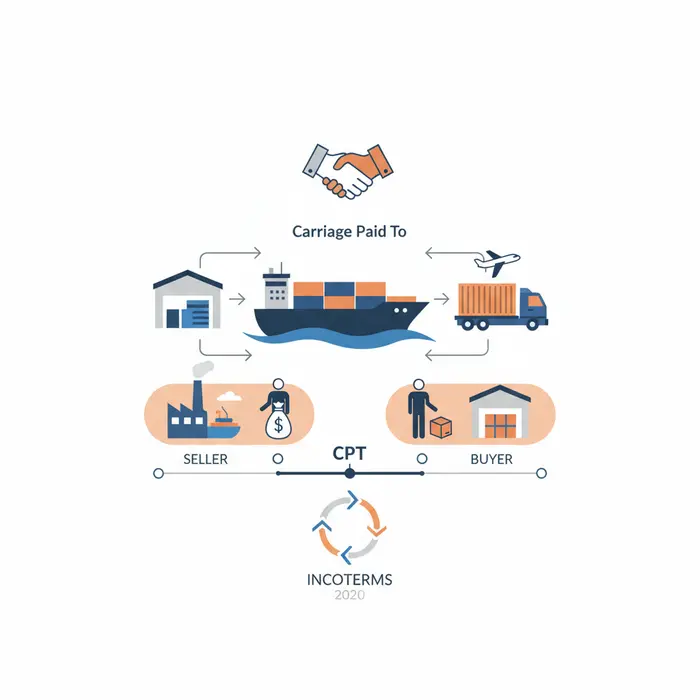
At its heart, “Carriage Paid To” (CPT) signifies that the seller pays for the carriage of goods to a named place of destination. However, a critical distinction lies in the transfer of risk. While the seller covers the freight costs, the risk of loss or damage to the goods transfers from the seller to the buyer much earlier – specifically, when the goods have been delivered into the custody of the first carrier nominated by the seller. This makes CPT a “two-point” Incoterm: one point for the transfer of risk and another, later point for the transfer of costs.
For instance, if goods are shipped from Vietnam to Europe, under CPT, the Vietnamese seller arranges and pays for the freight from their factory all the way to a designated warehouse or port in Europe. Yet, if the goods are damaged while en route from the Vietnamese factory to the port of loading (before being handed over to the main international carrier), that risk usually rests with the seller. However, once the goods are passed to the international carrier (the “first carrier”), any subsequent damage during the main transit would be the buyer’s responsibility, even though the seller paid for that leg of the journey.
2. Key Principles and Parties Involved (Seller, Buyer, Carrier)
The CPT rule meticulously outlines the obligations of the three primary parties involved in an international shipment: the seller, the buyer, and the carrier.
- Seller’s Obligations: The seller is responsible for delivering the goods to the nominated carrier at the agreed place of delivery. They must contract for carriage and pay the freight costs necessary to bring the goods to the named place of destination. This includes managing export customs clearance, obtaining any necessary licenses or authorizations, and providing the transport document to the buyer. Crucially, the seller bears all risks until the goods are delivered to the first carrier.
- Buyer’s Obligations: The buyer takes on responsibility for the goods once they are delivered to the first carrier. This means that from that point forward, the buyer assumes all risks of loss or damage, and must arrange for their own cargo insurance if desired (CPT does not obligate the seller to provide insurance, unlike CIP Incoterms). The buyer is also responsible for import customs clearance, duties, and taxes at the destination country, as well as unloading the goods at the named place of destination.
- Carrier’s Role: The carrier (or multiple carriers in a multimodal transport scenario) is the party contracted by the seller to transport the goods. They are responsible for the physical movement of the cargo as per the contract of carriage.
Understanding this CPT Incoterms risk transfer mechanism is vital. It’s a departure from many other Incoterms where risk and cost often transfer at the same point. For CPT, the seller takes care of the Carriage Paid To obligations, simplifying logistics for the buyer on the freight payment side, but pushing the risk burden to the buyer earlier in the journey.
3. Relevance in Modern Global Supply Chains
CPT Incoterms 2020 is particularly relevant and widely used in modern global supply chains, especially for containerized cargo, air freight, rail, and other forms of multimodal transport where goods often pass through several different modes of transport and carriers before reaching their final destination. Its flexibility allows sellers to leverage their purchasing power with freight forwarders to secure competitive shipping rates, potentially offering a more attractive overall price to the buyer.
For sellers, CPT provides control over the initial leg of the shipment, ensuring goods are properly handled and dispatched. For buyers, it offers the convenience of having freight costs covered up to a significant point, simplifying their procurement process. However, buyers must be acutely aware of the early risk transfer and are strongly advised to secure comprehensive cargo insurance from the moment the goods are handed over to the first carrier. This ensures protection against unforeseen events that could occur during the main transit, even though the seller has paid for that carriage. CPT strikes a balance, offering distinct advantages and responsibilities that make it a cornerstone for efficient and transparent international trade.
Seller and Buyer Obligations Under CPT
CPT, or “Carriage Paid To,” is one of the eleven Incoterms® 2020 rules designed by the International Chamber of Commerce (ICC) to standardize international trade terms. Applicable to all modes of transport, CPT Incoterms 2020 designates the seller as responsible for arranging and paying for the carriage of goods to a named place of destination. A defining characteristic of CPT is the early transfer of risk, which occurs when the goods are handed over to the first carrier. This crucial distinction underpins the specific responsibilities of both parties.
1. Seller’s Responsibilities: From Origin to Designated Place
The seller’s primary “Carriage Paid To obligations” encompass preparing goods for export and arranging their journey to the agreed destination. This includes proper packing and labeling suitable for the chosen transport mode. The seller must carry out all necessary export customs formalities, such as obtaining licenses, security clearances, and any pre-shipment inspections required by the exporting country, bearing all associated costs and risks. A significant part of the seller’s role is contracting for and paying the freight costs to the named place of destination, often involving a CPT freight forwarder quote. The crucial point of “CPT Incoterms risk transfer” occurs when the goods are delivered to the first carrier engaged by the seller. From this moment, the risk of loss or damage shifts to the buyer, even though the seller pays for the carriage. The seller must also provide the buyer with the necessary transport document (e.g., Bill of Lading, Air Waybill) to enable delivery at the destination.
2. Buyer’s Responsibilities: Taking Delivery and Beyond
The buyer’s responsibilities under CPT effectively begin with the “CPT Incoterms risk transfer” at the first carrier. From this point, the buyer assumes all risks of loss or damage, despite the seller paying for the freight. The buyer is responsible for unloading the goods at the named place of destination, including arranging and covering costs for necessary equipment or labor. Upon arrival, the buyer must handle all import customs formalities, obtaining import licenses, paying duties, taxes (like VAT or GST), and other official charges. Any inspections mandated by the importing country also fall to the buyer. Delays at customs or demurrage/detention charges due to the buyer’s failure to clear goods promptly are typically the buyer’s responsibility. Proactive monitoring of the shipment and coordination with the carrier are essential for smooth delivery and to mitigate additional costs.
3. Documentation Requirements for CPT Shipments
Accurate and timely documentation is paramount for CPT shipments, facilitating transit, customs clearance, and payment. Both seller and buyer have specific obligations regarding paperwork. The seller is primarily responsible for providing documents necessary for export clearance and the carriage of goods. Key documents include:
- Commercial Invoice: Details goods, quantity, price, and payment terms.
- Packing List: Information on package contents, dimensions, and weight.
- Transport Document: Bill of Lading, Air Waybill, or Consignment Note, proving contract of carriage, receipt, and destination.
- Export Licenses/Permits: As required by the exporting country.
The buyer uses these documents to claim goods and clear import customs, potentially also needing to provide Import Licenses/Permits, Certificates of Origin, or Inspection Certificates. Efficient communication and timely exchange are vital to prevent delays and ensure compliance.
It’s worth noting the distinction between CPT and CIP (Carriage and Insurance Paid To). While both Incoterms® require the seller to pay for carriage to the named destination and transfer risk at the first carrier, CIP additionally obliges the seller to obtain insurance against the buyer’s risk of loss or damage to the goods during carriage. CPT places no such obligation on the seller, meaning the buyer under CPT is responsible for arranging their own insurance coverage from the point of risk transfer, if desired. This difference in insurance responsibility is the primary factor when choosing between these two similar Incoterms® rules. The CPT rule, therefore, offers a clear delineation of responsibilities: the seller manages the logistical complexity and cost of transporting goods, but the buyer bears the risk for the majority of the transit period. Understanding these precise obligations is crucial for mitigating risks and ensuring smooth transactions in global trade.
CPT Incoterms Risk Transfer and Cost Allocation
Understanding the nuances of CPT Incoterms 2020 is paramount for anyone involved in international trade. Carriage Paid To (CPT) is one of the eleven Incoterms rules, and it defines critical points for both risk transfer and cost allocation between buyer and seller. While the seller covers the cost of carriage to a named destination, the point at which the risk of loss or damage to the goods shifts from seller to buyer occurs much earlier, creating a unique dynamic that impacts cargo insurance and financial liability.
1. The Dual Transfer Points: Risk vs. Cost
The most distinctive characteristic of CPT Incoterms lies in its separation of risk and cost transfer. Under Incoterms 2020 rules, specifically CPT, the seller has distinct Carriage Paid To obligations. They are responsible for contracting and paying for the carriage of goods to the named place of destination. This means the seller covers all transportation costs, including export customs formalities, until the goods arrive at the specified location in the buyer’s country. However, this financial responsibility does not extend to the risk of loss or damage to the goods during the main carriage.
The critical distinction here is that while the seller pays for the freight to the destination, they are not necessarily responsible for the goods if something happens during that journey. This dual transfer point often causes confusion, especially for buyers who might assume that because the seller pays for the carriage, the seller also bears the risk throughout that leg of the journey.
2. When and Where Risk Passes to the Buyer
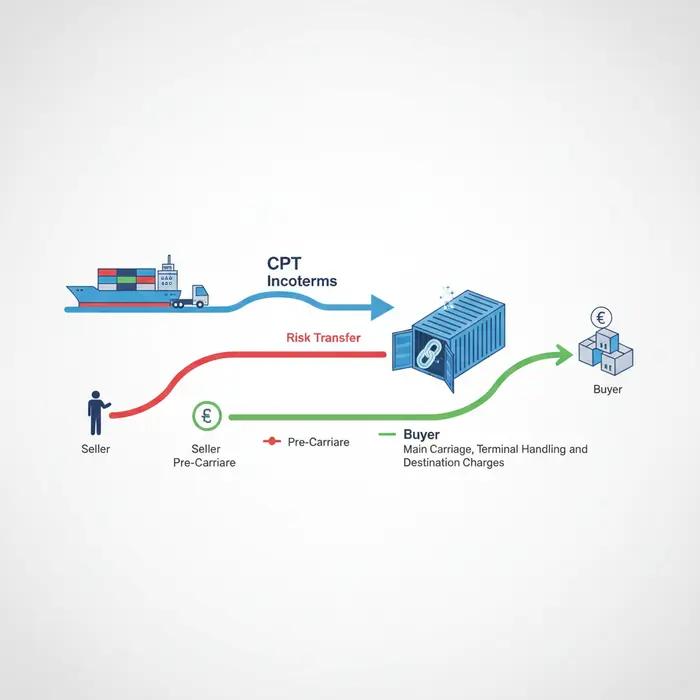
The pivotal moment for CPT Incoterms risk transfer is when the goods are delivered by the seller into the custody of the first carrier at a named place of delivery (which is typically the seller’s premises or a warehouse near the seller). This point of transfer can be significantly far from the named place of destination to which the seller has paid the carriage. For instance, if goods are shipped from Vietnam to the USA, the risk might transfer when the goods are handed over to the trucking company in Vietnam, even though the seller pays for the ocean freight to a port in the USA.
From that moment onwards—when the goods are with the first carrier—all risks of loss or damage to the goods pass from the seller to the buyer. This includes any unforeseen events during transit, such as theft, damage during loading/unloading, or natural disasters. The seller’s responsibility ends once the goods are in the hands of the initial transporter, even if the goods still need to undergo multiple legs of transit, including main carriage, before reaching the final destination. This early transfer of risk underscores the buyer’s need for diligent planning and appropriate insurance coverage.
3. Understanding Insurance Needs for CPT Shipments
Given the early risk transfer in CPT, cargo insurance becomes primarily the buyer’s responsibility. Since the risk passes to the buyer when the goods are delivered to the first carrier, the buyer should arrange insurance coverage for the goods from that point until their final destination. Failing to do so can leave the buyer financially exposed to significant losses if the goods are damaged or lost during the main carriage or subsequent legs of the journey.
This contrasts sharply with CIP (Carriage and Insurance Paid To) Incoterms, where the seller is obligated to arrange and pay for insurance covering the buyer’s risk of loss or damage to the goods during transit to the named place of destination. A CPT vs CIP comparison clearly highlights this difference: under CIP, the buyer enjoys the added security of seller-provided insurance, whereas under CPT, the onus is squarely on the buyer. When seeking a CPT freight forwarder quote, it’s crucial for the buyer to remember that such quotes typically only cover the cost of carriage and do not include insurance for their portion of the risk. Buyers must factor in the cost of separate marine cargo insurance to protect their investment from the moment the goods leave the seller’s control at the first carrier. Proper understanding and adherence to these insurance requirements are essential for mitigating financial liabilities in CPT transactions.
CPT vs. CIP: A Critical Comparison
Navigating the complexities of international trade requires a precise understanding of Incoterms 2020 rules. Among the most frequently used terms for multimodal transport are CPT (Carriage Paid To) and CIP (Carriage and Insurance Paid To). While sharing fundamental principles, these two Incoterms diverge critically regarding insurance obligations, significantly impacting risk and cost allocation between buyer and seller. A detailed CPT vs CIP comparison is essential for any exporter or importer looking to optimize their shipping strategies and protect their interests.
1. Shared Principles: Carriage Paid To a Named Place
Both CPT and CIP are versatile Incoterms 2020 rules designed for any mode of transport, including air, rail, road, and sea, or a combination thereof. Their primary commonality lies in the seller’s responsibility for carriage. Under both terms, the seller arranges and pays for the freight costs to bring the goods to a named place of destination. This means that from the seller’s perspective, both rules encompass similar Carriage Paid To obligations, covering the cost of transporting the goods to an agreed-upon point in the buyer’s country.
However, a crucial aspect to grasp for both CPT and CIP is the point of CPT Incoterms risk transfer. Despite the seller paying for carriage to the destination, the risk of loss or damage to the goods transfers from the seller to the buyer much earlier – specifically, when the goods are handed over to the first carrier at the place of shipment. This is a common misconception, as many mistakenly believe risk transfers at the final destination. For the buyer, this early transfer of risk means they become responsible for the goods from the moment they are loaded onto the initial transport vehicle, even if the seller is paying for the journey.
The seller’s responsibilities typically include export customs clearance, arranging the main carriage, and providing the transport document to the buyer. Conversely, the buyer is responsible for import customs clearance and taking delivery of the goods at the named destination.
2. The Insurance Imperative: What Sets CIP Apart
The defining difference between CPT and CIP lies in the obligation for marine insurance. This single factor has profound implications for both parties involved in international trade.
- CPT (Carriage Paid To): Under CPT Incoterms 2020, the seller has NO obligation to arrange or pay for cargo insurance. Once the goods are handed over to the first carrier, the risk transfers to the buyer. If the buyer wishes to insure the goods against loss or damage during transit, they are solely responsible for arranging and paying for this insurance. The seller’s responsibility ends with the delivery of goods to the carrier, alongside the obligation to pay for the main carriage.
- CIP (Carriage and Insurance Paid To): This Incoterm places an explicit and significant obligation on the seller to arrange and pay for insurance coverage against the buyer’s risk of loss or damage to the goods during carriage. Incoterms 2020 mandates that the seller must obtain insurance coverage at least to Institute Cargo Clauses (A) or similar clauses, which provide a comprehensive ‘all risks’ cover, subject to specified exclusions. This marks a change from Incoterms 2010, which allowed Clause (C) – a more limited coverage. The insurance must cover at least 110% of the value of the goods and be in the currency of the contract. This seller-provided insurance offers a greater level of security for the buyer, ensuring that their goods are protected throughout the main carriage, even after the risk has passed. Understanding these insurance nuances is critical for both parties, as detailed by authoritative sources on Incoterms rules.
3. Choosing the Right Incoterm for Your Specific Needs
The decision between CPT and CIP hinges on several factors, including risk appetite, cost considerations, the nature of the goods, and the relationship dynamics between buyer and seller.
When to Choose CPT:
- Buyer’s Control: CPT is often preferred when the buyer has established relationships with insurance providers, has comprehensive global insurance policies in place, or wishes to control the terms and costs of their insurance directly.
- Cost Management: If the buyer can obtain more favorable insurance rates than the seller, opting for CPT can lead to overall cost savings for the buyer.
- Seller’s Simplicity: From the seller’s perspective, CPT minimizes post-shipment obligations, as they are not responsible for procuring insurance. When requesting a CPT freight forwarder quote, sellers will find the insurance component is not included in their scope.
- Established Relationships: In long-standing B2B relationships where trust is high and both parties are sophisticated in logistics and insurance, CPT can be an efficient choice.
When to Choose CIP:
- Enhanced Buyer Protection: CIP is ideal for buyers seeking comprehensive protection provided by the seller, particularly for high-value goods, fragile items, or shipments prone to higher risks.
- New or Less Experienced Buyers: For buyers who are less familiar with international shipping insurance or do not have existing insurance arrangements, CIP offers a convenient and secure solution, reducing their administrative burden and risk exposure.
- Seller’s Added Value: Sellers can use CIP to offer a more complete and reassuring service to their buyers, potentially enhancing customer satisfaction and competitiveness, especially in markets where buyers expect such comprehensive coverage.
- Unfamiliar Routes/Carriers: When goods are traveling through less familiar routes or with new carriers, the ‘all risks’ coverage under CIP can provide significant peace of mind.
Ultimately, clear communication and mutual agreement between the buyer and seller are paramount, regardless of whether CPT or CIP is chosen. Both parties must thoroughly understand their respective obligations and liabilities to ensure a smooth and successful international shipment. The choice of Incoterm directly impacts pricing, risk management, and the overall efficiency of your supply chain.
Practical Applications and CPT Freight Forwarder Quotes
Carriage Paid To (CPT) Incoterms 2020 stands as a versatile rule in international trade, particularly favored for multimodal shipments. It defines the seller’s responsibility to arrange and pay for the carriage of goods to a named place of destination. However, the risk of loss or damage transfers from the seller to the buyer at the first carrier. Mastering CPT involves not just understanding its definitions but also its practical application, especially when navigating the complexities of freight forwarding and deciphering quotes. This section offers crucial insights into maximizing the benefits of CPT Incoterms 2020, ensuring smooth transactions and mitigating potential risks.

1. Working with Freight Forwarders for CPT Shipments
Under CPT, the seller is primarily responsible for contracting and paying for the main carriage to the agreed-upon destination. This often necessitates close collaboration with a reliable freight forwarder. A competent freight forwarder acts as an extension of the seller, managing the logistical intricacies from the point of origin to the named place of destination. Their role involves selecting appropriate carriers, negotiating freight rates, preparing necessary shipping documentation, and overseeing the loading and transit of goods. For sellers, choosing a freight forwarder with a strong track record, particularly in the destination region, is paramount. This ensures efficient customs clearance and smooth delivery processes, aligning with the seller’s Carriage Paid To obligations. Buyers, while not directly responsible for appointing the main carrier, must remain informed. Since the CPT Incoterms risk transfer occurs when the goods are handed over to the first carrier, the buyer should ideally arrange their own insurance coverage for the main carriage, protecting against loss or damage during transit.
2. Decoding a CPT Freight Forwarder Quote
A CPT freight forwarder quote can appear complex, but understanding its components is vital for both buyers and sellers. Sellers need to ensure the quote covers all aspects of carriage up to the named destination. Key elements to scrutinize include:
- Base Freight Charges: The cost for transporting goods from the origin to the named place of destination.
- Terminal Handling Charges (THC): Costs incurred at both origin and destination terminals for loading, unloading, and handling.
- Documentation Fees: Charges for preparing necessary export and transit documents.
- Security Surcharges: Additional fees for enhanced security measures.
- Fuel Surcharges: Variable costs tied to fuel price fluctuations.
It’s crucial to confirm that the quote explicitly states what is included up to the named destination and what potential charges might fall to the buyer upon arrival (e.g., import duties, taxes, customs clearance fees, and final delivery from the destination terminal). A clear quote will distinguish these. While under CPT, the seller pays for carriage, the buyer bears the risk from the first carrier. This contrasts with CIP (Carriage and Insurance Paid To), where the seller is also responsible for insuring the goods to the named destination. When evaluating a CPT freight forwarder quote, always seek a detailed breakdown to avoid hidden costs and clarify responsibilities.
3. Common Pitfalls and Best Practices for CPT Use
Despite its flexibility, CPT usage is not without its challenges. A primary pitfall is misunderstanding the CPT Incoterms risk transfer point. Many mistakenly assume risk transfers at the destination, whereas it actually shifts to the buyer at the moment the goods are handed over to the first carrier. This makes buyer-procured insurance for the main carriage absolutely critical. Another common issue is an imprecisely defined named place of destination. Ambiguity here can lead to disputes over who pays for local transport from a general port or airport to the buyer’s final desired location.
Best practices for CPT include:
- Clearly Define the Named Place: Specify the exact point of delivery at the destination to prevent confusion and additional costs.
- Buyer’s Insurance: The buyer should always arrange for comprehensive insurance coverage for the main carriage, covering the period from the first carrier onwards.
- Transparent Communication: Both parties, along with the freight forwarder, must maintain open lines of communication regarding shipment status, documentation, and any potential issues.
- Vetting Freight Forwarders: Sellers should thoroughly vet their chosen forwarder, checking their reputation, network, and ability to handle shipments to the specific destination.
- Understand Local Regulations: Buyers should be fully aware of import regulations, duties, and taxes in their country to avoid delays and unexpected expenses.
By adhering to these practices, businesses can leverage CPT effectively, ensuring efficient and secure international trade operations.
Partner with Vietnam’s Leading Suppliers
Looking for reliable suppliers in Vietnam? Contact VietnamSuppliers.com today to connect with verified manufacturers and exporters across all industries.
—————————————
References
– Incoterms® rules 2020 – ICC – International Chamber of Commerce: https://iccwbo.org/resources-for-business/incoterms-rules/
– ICC Incoterms 2020 Rules: https://www.iccwbo.org/resources-for-business/incoterms-rules/incoterms-2020/
– Incoterms 2020 rules: https://iccwbo.org/resources-for-business/incoterms-rules/incoterms-2020-rules/
– authoritative sources on Incoterms rules: https://iccwbo.org/resources-for-business/incoterms-rules/
– CIP (Carriage and Insurance Paid To): https://iccwbo.org/resources-for-business/incoterms-rules/incoterms-2020/