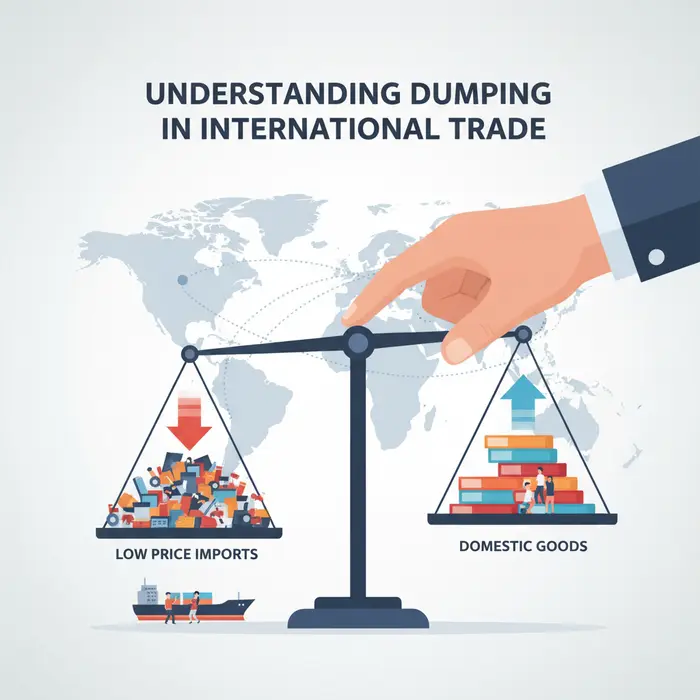
Understanding Dumping in International Trade
In the complex world of global commerce, the concept of dumping often emerges as a contentious issue, disrupting market stability and fairness. Understanding dumping in international trade is crucial for businesses, policymakers, and consumers alike. At its core, dumping refers to the practice where a country or company exports a product at a price lower than its domestic price or its cost of production in the exporting country, effectively selling goods below fair market value in a foreign market. This aggressive pricing strategy can severely disadvantage local industries in the importing country, leading to job losses, reduced investment, and an overall distortion of healthy competition.
The global trade landscape is governed by rules designed to prevent such unfair practices, with the Anti-Dumping Duties International Trade being a primary mechanism to counteract the detrimental effects of dumping. These duties are tariffs imposed on imported goods that are priced below their normal value, aiming to level the playing field for domestic producers. The intricate nature of international pricing and production costs often makes identifying and proving dumping a challenging endeavor, requiring thorough investigation and adherence to international trade laws, notably those overseen by the World Trade Organization (WTO).
1. Definition and Key Characteristics of Dumping
So, what is dumping in international trade specifically? It occurs when goods are introduced into the commerce of another country at less than their normal value. ‘Normal value’ is typically determined by the price of a like product in the ordinary course of trade in the exporting country’s domestic market. If a comparable domestic price is unavailable, it might be based on the highest comparable export price to a third country or the cost of production in the country of origin plus a reasonable amount for administrative, selling, and general costs and for profits. The key characteristics of dumping include an export price lower than the normal value, and often, an intention to gain an unfair market advantage. This disparity between the export price and the normal value is known as the ‘dumping margin’. When a significant dumping margin is established and it causes or threatens to cause material injury to the domestic industry in the importing country, remedial actions, such as anti-dumping duties, can be imposed. This process is complex, involving detailed price comparisons and economic analysis to establish both the existence of dumping and the resultant injury.
2. Motivations Behind Dumping Practices (e.g., market share, surplus disposal)
Companies or countries engage in dumping for various strategic and economic reasons. One primary motivation is to gain or expand market share in a foreign country by undercutting local competitors. By offering products at exceptionally low prices, exporters can quickly establish a foothold, build brand recognition, and capture a significant portion of the market, potentially driving domestic producers out of business. Another common driver is the disposal of surplus production. If a company produces more goods than its domestic market can absorb, exporting the excess at reduced prices becomes a way to clear inventory without depressing domestic prices. This strategy helps maintain price stability in the home market while generating revenue from otherwise unsellable goods. Other motivations can include achieving economies of scale (producing more to lower per-unit costs) or even strategic pricing to test new markets. Regardless of the intent, the practice can lead to significant market distortions and calls for protective measures from the affected industries.
3. Identifying Predatory Pricing vs. Legitimate Competition
Distinguishing between legitimate, aggressive competition and predatory pricing (a form of dumping) is vital in trade policy. Legitimate competition involves companies striving to offer better products or lower prices through efficiency, innovation, and genuine cost advantages. While it can also lead to lower prices for consumers, it does not involve selling below the cost of production or normal value with the intent to harm competitors. Predatory pricing, on the other hand, is characterized by the deliberate act of selling at unfairly low prices to eliminate competition, with the expectation of raising prices once rivals are gone. Identifying this intent and the resulting injury is a core component of investigations under the WTO Agreement on Anti-Dumping, which provides the legal framework for countries to respond to dumping. This agreement outlines the rules for conducting anti-dumping investigations and imposing Anti-Dumping Duties International Trade. It’s important to note that dumping is distinct from subsidies, which are government financial contributions to producers; subsidies are addressed by Countervailing duties international trade. The impact of dumping on global supply chains can be profound, disrupting established trade relationships, forcing companies to restructure, and potentially leading to trade disputes between nations. For instance, if a key component in a supply chain is dumped, it might give an unfair advantage to downstream producers who use that component, while harming domestic producers of the component itself, creating ripple effects across industries and national economies.
What Are Anti-Dumping Duties?
In the intricate landscape of global commerce, fair competition is paramount. However, certain trade practices can distort market dynamics, leading to significant disadvantages for domestic industries. One such practice is “dumping,” and the primary defense against it comes in the form of Anti-Dumping Duties International Trade. These duties are crucial protective measures designed to level the playing field when foreign producers sell their goods in an export market at a price lower than their domestic market price or cost of production, thereby causing or threatening to cause material injury to the competing domestic industry. Understanding their purpose, calculation, and application is essential for anyone navigating the complexities of international trade policy.
1. Purpose and Justification for Anti-Dumping Measures
At its core, dumping refers to a situation where a company exports a product at a price lower than the price it normally charges in its own home market, or lower than its cost of production. This practice, often referred to as what is dumping in international trade, is considered an unfair trade practice because it allows foreign companies to gain an artificial competitive advantage. The purpose of Anti-Dumping Duties (ADDs) is to counteract this unfair pricing, restoring market fairness and protecting domestic industries from the adverse effects of such imports. Without these measures, domestic companies facing dumped imports might struggle to compete, potentially leading to reduced production, job losses, and even factory closures. The WTO Anti-Dumping Agreement (officially the Agreement on Implementation of Article VI of the General Agreement on Tariffs and Trade 1994) provides the international legal framework for countries to impose ADDs, ensuring that such measures are not used as disguised protectionism but are applied only under specific, justifiable circumstances. It’s important to distinguish ADDs from countervailing duties international trade, which address unfair subsidies provided by foreign governments, whereas anti-dumping focuses solely on unfair pricing by companies. The ultimate goal is to mitigate the impact of dumping on global supply chains by preventing predatory pricing that disrupts established trade flows and harms local producers.
2. Calculation Methods and Criteria for Duty Imposition
The imposition of Anti-Dumping Duties is not arbitrary; it follows a rigorous process of calculation and adherence to specific criteria. The first step involves determining whether dumping has actually occurred. This is typically done by comparing the export price of a product to its “normal value.” Normal value can be the comparable price for the like product in the ordinary course of trade when destined for consumption in the exporting country. If a comparable domestic price isn’t available, other methods, such as the highest comparable price of the like product when exported to a third country or the cost of production in the country of origin plus a reasonable amount for administrative, selling, and general costs and for profits, are used. The difference between the export price and the normal value, expressed as a percentage, is known as the “dumping margin.”
Beyond proving dumping, an investigating authority must also demonstrate that the dumped imports are causing or threatening to cause “material injury” to the domestic industry producing a like product. This “injury test” involves examining factors such as the volume of dumped imports, their effect on prices in the domestic market (e.g., price depression or suppression), and the consequent impact on domestic producers (e.g., decline in sales, profits, output, market share, productivity, return on investments, or capacity utilization). Crucially, there must be a causal link established between the dumped imports and the material injury suffered by the domestic industry. The duty rate imposed is typically equivalent to the dumping margin, but it cannot exceed it, and in some jurisdictions, a “lesser duty rule” may apply, meaning the duty imposed is the lowest amount sufficient to remove the injury.
3. The Investigation and Imposition Process
The journey from an allegation of dumping to the imposition of Anti-Dumping Duties International Trade is a multi-stage, often lengthy, investigation process. It typically begins when a domestic industry files a petition or complaint with the relevant governmental authority (e.g., the Department of Commerce and the International Trade Commission in the U.S.). This petition must provide sufficient evidence of dumping, injury, and a causal link between the two. The investigating authority then formally initiates an investigation, notifying all interested parties, including the exporters, importers, and the complaining domestic industry.
During the investigation, vast amounts of data are collected from all parties through questionnaires and verification visits. This data covers pricing, costs, sales volumes, market shares, and financial performance. Based on the preliminary findings, provisional duties may be imposed to prevent further injury during the ongoing investigation. If the final determination concludes that dumping has occurred, that the domestic industry has suffered material injury, and that a causal link exists, definitive Anti-Dumping Duties International Trade are then imposed. These duties are typically applied for a period of five years, after which they are subject to a “sunset review” to determine if their continuation is still necessary to prevent recurrence of dumping and injury. The transparency and procedural fairness of this process are key, adhering to the principles outlined in the WTO Anti-Dumping Agreement to ensure legitimate protective measures rather than arbitrary trade barriers.
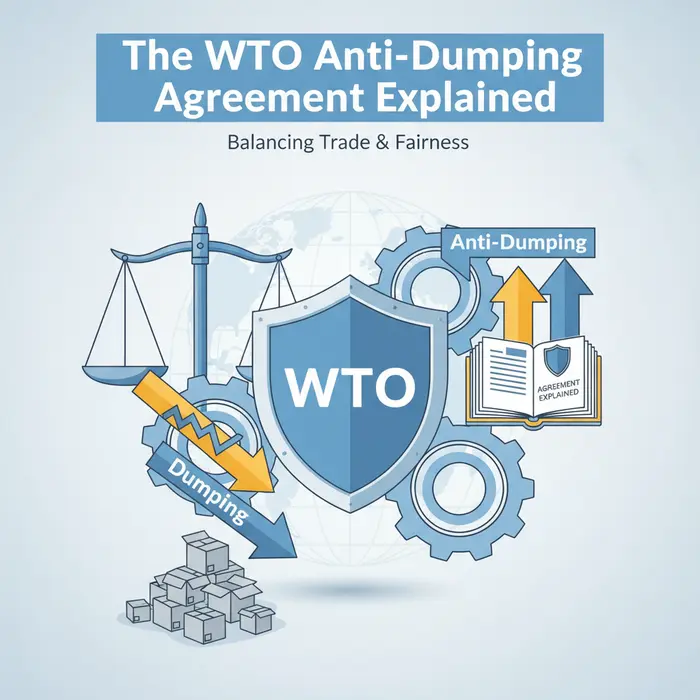
The WTO Anti-Dumping Agreement Explained
In the complex landscape of international trade, the practice of “dumping” presents a significant challenge. What is dumping in international trade? It occurs when a company exports a product at a price lower than the price it normally charges in its own home market, or lower than its cost of production. This practice can severely harm domestic industries in the importing country, leading to job losses, reduced profitability, and even business closures. To address this unfair trade practice, the World Trade Organization (WTO) established the Agreement on Anti-Dumping (ADA), officially known as the Agreement on Implementation of Article VI of the General Agreement on Tariffs and Trade (GATT) 1994. This agreement provides a framework for member countries to take action against dumped imports that cause material injury to their domestic industries, outlining rules, procedures for investigations, and mechanisms for dispute resolution.
1. Overview of the Agreement on Anti-Dumping (ADA)
The WTO anti-dumping agreement is a critical multilateral instrument designed to allow WTO members to defend their domestic industries against unfair pricing practices in international commerce. It acknowledges that while free trade is generally beneficial, certain predatory practices like dumping can distort markets and undermine fair competition. The primary objective of the ADA is to strike a balance: enabling importing countries to impose Anti-Dumping Duties International Trade when legitimate grounds exist, while simultaneously preventing the abuse of anti-dumping measures for protectionist purposes. It sets out the conditions under which an anti-dumping measure may be applied, ensuring that such actions are transparent, fair, and consistent with global trade rules. This framework is essential for mitigating the impact of dumping on global supply chains by providing a structured response mechanism.
2. Key Provisions and Member Obligations
The ADA details specific criteria that must be met before an importing country can impose anti-dumping duties. First, a finding of dumping must be established, meaning the export price of the product is less than its “normal value” – typically the comparable price for the like product in the ordinary course of trade in the exporting country. If no such domestic price exists, the normal value can be determined based on the product’s cost of production plus a reasonable amount for administrative, selling, and general costs and for profits. Second, the dumped imports must be causing “material injury” to a domestic industry in the importing country. This injury assessment considers factors such as the volume of dumped imports, their effect on domestic prices (e.g., price undercutting, depression, or suppression), and the consequent impact on the domestic producers (e.g., actual and potential decline in sales, profits, market share, productivity, return on investments, or employment). Third, a causal link must be established between the dumped imports and the material injury. The agreement also sets clear obligations for member states, emphasizing due process, transparency, and non-discrimination in their anti-dumping investigations, ensuring that all interested parties have opportunities to present evidence.
3. Investigation Procedures and Dispute Settlement Mechanisms
An anti-dumping investigation typically begins with a written application from the domestic industry alleging dumping, injury, and a causal link. Authorities in the importing country then conduct a thorough investigation, involving questionnaires to exporters, importers, and domestic producers, and often on-site verifications. The ADA specifies strict procedural requirements, including timelines for investigations (generally within one year, and in no case more than 18 months), notification requirements, and the right of all interested parties to defend their interests. Provisional anti-dumping duties can be imposed after 60 days but not before. If the final determination confirms dumping and injury, definitive Anti-Dumping Duties International Trade may be levied, typically for a period of five years, subject to a sunset review to determine if the duties are still necessary. Unlike Countervailing duties international trade, which address subsidies, anti-dumping duties specifically target unfair pricing. Should a WTO member believe that another member’s anti-dumping measure is inconsistent with the ADA, they can invoke the WTO’s robust Dispute Settlement Understanding (DSU). This mechanism allows for a panel and potentially an Appellate Body review, ensuring that anti-dumping measures conform to the agreed-upon multilateral rules and providing a critical safeguard against arbitrary or protectionist actions.
Anti-Dumping vs. Countervailing Duties
In the complex landscape of international trade, governments often employ various measures to ensure fair competition and protect domestic industries from predatory or unfairly subsidized imports. Among the most critical of these tools are anti-dumping duties and countervailing duties. While both serve as remedies against unfair trade practices, their application stems from fundamentally different types of market distortion. Understanding the distinction between these two duties is crucial for businesses engaged in global commerce and for policymakers aiming to uphold the principles of equitable trade.
1. Defining Countervailing Duties and Subsidies
To grasp the distinction, we must first define each concept. Countervailing duties (CVDs) are specific tariffs imposed by an importing country to neutralize the competitive advantage gained by products that have received unfair subsidies from the government of an exporting country. The World Trade Organization (WTO) provides a framework for such actions under its Agreement on Subsidies and Countervailing Measures (SCM Agreement).
At the heart of countervailing duty investigations is the concept of a “subsidy.” In international trade, a subsidy is a financial contribution by a government or public body that confers a benefit. This can take many forms: direct transfers (grants, loans), potential transfers (loan guarantees), tax exemptions, or the provision of goods/services at less than adequate remuneration. Crucially, for a measure to be actionable as a subsidy under WTO rules, it must be “specific”—meaning it benefits only certain enterprises, industries, or groups within the granting country, not generally available.
2. Key Differences and Similarities in Application
The core distinction between anti-dumping and countervailing duties lies in the source of the unfair trade practice. Anti-Dumping Duties International Trade address unfair pricing practices by individual foreign companies, whereas countervailing duties tackle unfair government support that distorts trade.
- Source of Unfairness: Anti-dumping targets “dumping,” where a foreign company sells a product in the importing country below its normal value (e.g., home market price or cost of production). This is a private business practice. Countervailing duties address government subsidies that enable a foreign industry to export products at artificially low prices, making it a government-initiated distortion.
- Focus of Investigation: An anti-dumping investigation primarily compares the export price to its normal value to determine the dumping margin. A countervailing duty investigation, conversely, focuses on identifying and quantifying the financial benefits conferred by government subsidies to the exporting industry.
- Governing WTO Agreements: Anti-dumping actions are governed by the WTO Agreement on Anti-Dumping (AD Agreement), while countervailing actions fall under the SCM Agreement.
Despite these differences, both types of duties share important similarities. Both are unilateral trade remedies imposed to offset the injurious effects of unfair trade practices. In both cases, the importing country must conduct a thorough investigation to determine: 1) the existence and magnitude of dumping or subsidization, 2) that the domestic industry is suffering material injury, and 3) a causal link between the dumped/subsidized imports and the injury. Both processes involve strict procedural requirements and opportunities for interested parties to present their cases, ensuring transparency.
3. Cases for Applying Each Duty Type: Examples
To illustrate the application of these duties, consider the following scenarios:
- Anti-Dumping Duty Example: A manufacturer of steel pipes in Country X sells its products in its domestic market for $1,000 per ton but exports them to Country Y for $700 per ton. If Country Y’s domestic steel pipe industry can demonstrate that these imports are causing material injury (e.g., lost sales, reduced profits), Country Y’s government could initiate an anti-dumping investigation. If dumping and injury are confirmed, anti-dumping duties would be imposed to bring the import price closer to a fair market value, mitigating the negative impact of dumping on global supply chains.
- Countervailing Duty Example: An industry in Country Z produces solar panels. The government of Country Z provides significant financial assistance to its domestic manufacturers, such as low-interest loans or grants. These subsidies allow the manufacturers to export solar panels to Country A at artificially low prices, making it difficult for Country A’s domestic solar panel industry to compete. If Country A’s industry suffers material injury, its government could launch a countervailing duty investigation. If the subsidies and injury are proven, countervailing duties would be applied to offset the benefit conferred by Country Z’s government, restoring a level playing field.
In essence, anti-dumping duties address price discrimination by companies, while countervailing duties address government interventions that distort competition. Both mechanisms are vital instruments for ensuring fair play in the global marketplace, protecting domestic industries from unfair competition, and promoting stable international trade relations.
Impact on Global Trade & Supply Chains
The landscape of global trade is continually shaped by various practices and regulations designed to ensure fair competition. Among the most significant of these are dumping and the application of anti-dumping duties. Dumping, in essence, occurs when a country exports goods at a price lower than their normal value, typically the price at which they are sold in the exporter’s domestic market or the cost of production. This predatory pricing strategy can severely disrupt markets, distort trade flows, and undermine domestic industries in importing countries. In response, nations often impose Anti-Dumping Duties International Trade, which are tariffs levied on imported goods deemed to be dumped, aiming to offset the price difference and restore a level playing field. Understanding the intricate impact of these measures is crucial for comprehending their effects on global supply chains, domestic economies, and consumer welfare.

1. Effects on Domestic Industries and Employment
Dumping practices pose a direct and significant threat to domestic industries. When foreign producers sell goods below market value, local companies find it incredibly difficult to compete on price, even if their products are superior in quality or innovation. This unfair competition can lead to reduced sales, decreased profitability, and ultimately, factory closures and job losses. The economic fallout can ripple through communities, affecting supporting industries and local economies. Anti-Dumping Duties International Trade serve as a critical defense mechanism, offering a lifeline to domestic manufacturers. By increasing the cost of dumped imports, these duties help level the playing field, allowing local businesses to compete fairly, safeguard jobs, and maintain their operational viability. Without such protective measures, a nation’s industrial base could be severely eroded, leading to a long-term dependency on imported goods and a significant decline in its manufacturing capabilities.
2. Implications for Global Supply Chain Resilience and Sourcing
The imposition of anti-dumping duties profoundly affects global supply chain strategies and resilience. When certain goods from a specific country are subject to duties, companies are compelled to re-evaluate their sourcing options. This often leads to diversification of suppliers, moving away from the duty-affected nation to other countries not engaged in what is dumping in international trade. While this shift can initially incur higher costs and logistical challenges, it can also enhance supply chain resilience by reducing over-reliance on a single source or region. Companies might explore near-shoring or re-shoring options to mitigate risks associated with international trade disputes and tariffs. Moreover, the anticipation or implementation of Anti-Dumping Duties International Trade forces businesses to conduct thorough due diligence on their global sourcing partners, factoring in geopolitical stability and trade policy risks alongside traditional cost and quality considerations. This proactive approach contributes to building more robust and adaptable supply chains, capable of weathering future trade uncertainties.
3. Consumer Impact and Market Dynamics
For consumers, the impact of dumping and anti-dumping duties presents a complex picture. Initially, dumping might appear beneficial, offering consumers access to cheaper goods. However, this short-term gain often comes at the expense of long-term market health and choice. Once domestic competitors are eliminated, the dumping country can then raise prices, leading to higher costs for consumers and reduced innovation due to lack of competition. The application of Anti-Dumping Duties International Trade, while protecting domestic industries, can also result in higher prices for imported goods in the short term, potentially impacting consumer purchasing power. Nonetheless, by preserving domestic industries, these duties ultimately foster a more competitive and stable market environment, encouraging innovation and ensuring a diverse range of products over time. It’s important to note that these duties operate within the framework of the WTO anti-dumping agreement, which sets strict rules and procedures for their imposition to prevent their misuse as protectionist tools. Alongside anti-dumping measures, ‘Countervailing duties international trade’ also exist, targeting goods that have received illegal subsidies from their country of origin, further ensuring fair trade practices and influencing market dynamics.
Partner with Vietnam’s Leading Suppliers
Looking for reliable suppliers in Vietnam? Contact VietnamSuppliers.com today to connect with verified manufacturers and exporters across all industries.
—————————————
References
– :
– WTO Anti-Dumping Agreement: https://www.wto.org/english/tratop_e/adp_e/adp_e.htm
– WTO | Anti-Dumping, Subsidies, Safeguards: Contingencies, etc.: https://www.wto.org/english/thewto_e/whatis_e/tif_e/agrm8_e.htm
– WTO Agreement on Subsidies and Countervailing Measures: https://www.wto.org/english/docs_e/legal_e/14-scm.pdf
– WTO anti-dumping agreement: https://www.wto.org/english/tratop_e/adp_e.htm