Understanding the Imperative for Supply Chain Resilience
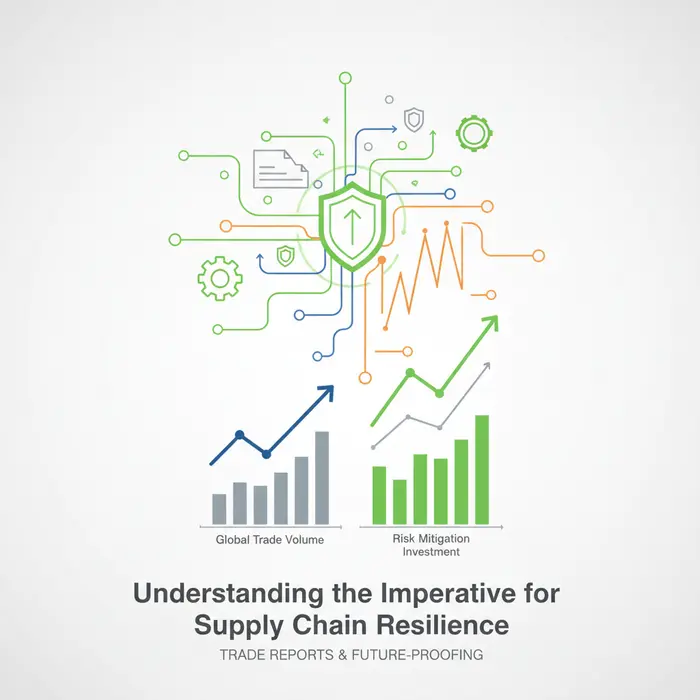
In an era defined by rapid technological advancement, geopolitical shifts, and unprecedented environmental challenges, the global trade environment has become increasingly volatile. Businesses worldwide are grappling with the urgent need for robust Supply Chain Resilience Strategies to navigate this complex landscape successfully. No longer a mere operational concern, supply chain resilience has emerged as a strategic imperative, directly impacting profitability, market share, and long-term sustainability. The ability to anticipate, withstand, and rapidly recover from disruptions is now a cornerstone of competitive advantage, transforming how companies approach everything from sourcing and logistics to international trade compliance and risk management.
1. Lessons Learned from Recent Global Disruptions
The past few years have served as an invaluable, albeit costly, lesson in the fragility of global supply chains. The COVID-19 pandemic exposed critical vulnerabilities inherent in highly optimized, just-in-time systems, leading to widespread shortages, production halts, and significant economic losses. Subsequent geopolitical conflicts, such as the war in Ukraine, highlighted the profound impact of regional instability on global commodity prices and trade routes. Events like the Suez Canal blockage, extreme weather occurrences, and evolving trade disputes further underscored the interconnectedness and delicate balance of international commerce.
These disruptions revealed several key weaknesses: over-reliance on single-source suppliers or specific geographic regions, insufficient inventory buffers, a lack of end-to-end supply chain visibility, and inadequate Export Controls Compliance mechanisms. Businesses discovered that their existing risk management frameworks were often reactive, designed for predictable risks rather than the systemic, high-impact events that have become the new normal. The imperative for resilient supply chains is thus not just about mitigating future shocks but about integrating these hard-won lessons into a fundamental re-evaluation of operational design and strategic planning.
2. Shifting from Reactive to Proactive Risk Management
Historically, supply chain risk management often operated in a reactive mode, addressing issues only after they materialized. However, the current environment demands a fundamental paradigm shift towards a proactive and predictive approach. This transition involves leveraging advanced analytics, artificial intelligence, and real-time data to identify potential vulnerabilities before they escalate into full-blown crises. Companies are increasingly investing in scenario planning and simulation tools to model the impact of various disruptions, from natural disasters to cyberattacks, and develop contingency plans accordingly.
Proactive risk management also necessitates robust International Trade Risk Management frameworks. This includes continuous monitoring of regulatory changes, geopolitical tensions, and economic indicators that could affect supply chain stability. Building strategic partnerships with suppliers and customers, fostering transparency, and implementing robust due diligence processes are crucial components. By moving beyond mere crisis response, organizations can build the capacity to anticipate threats, minimize their impact, and even transform potential challenges into opportunities for strategic growth and innovation, making their Supply Chain Resilience Strategies truly effective.
3. Building Enduring Resilience through Diversification and Strategic Sourcing
Achieving enduring resilience requires a multi-faceted approach centered on diversification and strategic sourcing. Relying on a limited number of suppliers or concentrated production hubs leaves businesses highly exposed. Consequently, Global Supply Chain Diversification has become a paramount strategy, encouraging companies to expand their supplier base across different geographies and even consider multi-sourcing for critical components. This reduces dependence on any single region or vendor, providing alternative pathways in times of disruption.
Furthermore, robust Critical Commodities Sourcing strategies are essential. This involves mapping the entire value chain for key raw materials and components, identifying potential chokepoints, and developing alternative sourcing options, including near-shoring, friend-shoring, or even on-shoring where feasible and economically viable. The goal is not necessarily to abandon global supply chains, but to optimize them for resilience rather than solely for cost efficiency. By strategically diversifying suppliers, production locations, and logistical routes, businesses can build adaptable and robust supply chains that are better equipped to withstand the unpredictable challenges of the modern global economy, safeguarding their future prosperity and operational continuity.
Navigating Export Controls & Regulatory Compliance
Delve into the complexities of international trade regulations, focusing on strategies to ensure compliance and mitigate risks associated with export controls.
In today’s interconnected yet increasingly fragmented global economy, managing export controls and regulatory compliance is paramount for businesses aiming to build Supply Chain Resilience Strategies. The landscape of international trade is perpetually shifting, marked by geopolitical tensions, technological advancements, and evolving national security concerns. Non-compliance can lead to severe penalties, reputational damage, and significant disruptions to global supply chains. A proactive and comprehensive approach to export controls compliance is not just a legal necessity but a strategic imperative for sustainable growth and competitive advantage.
1. Key Global Export Control Regimes and Sanctions
Understanding the myriad of international export control regimes and sanctions is the foundational step in mitigating trade risks. Key frameworks include the U.S. International Traffic in Arms Regulations (ITAR) for defense articles, the Export Administration Regulations (EAR) for dual-use items, and the European Union’s Dual-Use Regulation. Beyond these, multilateral agreements like the Wassenaar Arrangement aim to promote transparency and responsibility in the transfer of conventional arms and dual-use goods and technologies. Businesses must also closely monitor sanctions programs administered by entities like the United Nations (UN) and the U.S. Office of Foreign Assets Control (OFAC), which impose restrictions on trade with specific countries, entities, and individuals. Each regime has distinct scopes, licensing requirements, and prohibited activities, making continuous vigilance and expert interpretation essential for global supply chain operations.
2. Building Robust Internal Compliance Programs
An effective Internal Compliance Program (ICP) is the bedrock of Export Controls Compliance. Such a program should be tailored to the specific nature of a company’s products, services, and geographical reach. Core components typically include: a clear compliance policy statement from senior management, thorough risk assessments identifying potential vulnerabilities, detailed written procedures for all export-related activities (e.g., classification, licensing, screening), comprehensive training for all relevant personnel, and robust record-keeping practices. Regular internal and external audits are crucial to identify gaps and ensure the program remains effective and up-to-date with evolving regulations. Investing in a robust ICP safeguards against inadvertent violations and provides a structured framework for addressing complex trade scenarios, thereby enhancing overall International Trade Risk Management.
3. Global Supply Chain Diversification & Critical Commodities Sourcing
To fortify Supply Chain Resilience Strategies against export control challenges, deliberate strategies such as Global Supply Chain Diversification and strategic Critical Commodities Sourcing are indispensable. Over-reliance on a single region or supplier, particularly those in politically volatile areas or subject to frequent trade restrictions, significantly amplifies risk. By diversifying sourcing channels and manufacturing locations across multiple geographies, companies can mitigate the impact of sudden export bans, tariffs, or regulatory changes in any one jurisdiction. Furthermore, identifying and securing critical commodities from a wider array of reliable suppliers reduces vulnerability to supply shocks. This approach not only enhances resilience but also provides flexibility in navigating complex export licensing requirements by having alternative compliant routes or sources available.
4. Leveraging Technology for Enhanced Trade Risk Management
In the intricate world of international trade, technology plays a pivotal role in enhancing International Trade Risk Management and compliance efficiency. Modern trade compliance software and automated solutions can streamline various aspects of export control adherence. These tools can automate product classification, screen customers and partners against restricted party lists, manage export licenses, and track shipments in real-time. Artificial intelligence and machine learning are increasingly being employed to identify potential red flags, predict regulatory changes, and provide data-driven insights for strategic decision-making. By integrating these technologies into existing enterprise resource planning (ERP) systems, businesses can reduce manual errors, improve compliance accuracy, accelerate processing times, and free up resources to focus on more complex, strategic compliance issues, ensuring a more resilient and compliant global supply chain.
Ultimately, navigating the landscape of export controls and regulatory compliance demands a multi-faceted approach. It requires a deep understanding of global regimes, the implementation of strong internal programs, strategic diversification of supply chains, and the smart adoption of technology. By prioritizing these elements, businesses can not only meet their legal obligations but also transform compliance into a strategic advantage, fostering greater resilience and reliability in their global operations.
Strategies for Global Supply Chain Diversification
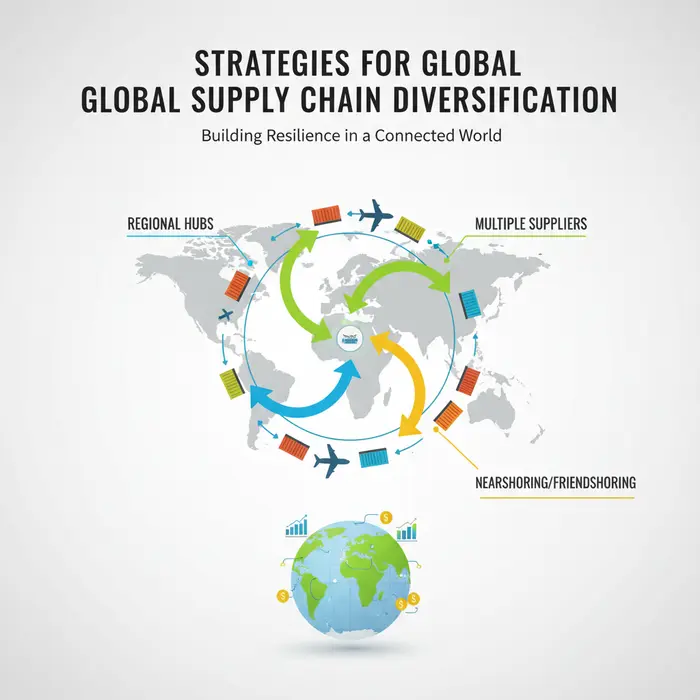
Exploring practical approaches to diversify sourcing and manufacturing locations is paramount for businesses aiming to enhance their resilience by reducing over-reliance on single regions or suppliers. In today’s volatile global landscape, characterized by geopolitical shifts, natural disasters, and unforeseen disruptions, a robust Supply Chain Resilience Strategies is no longer optional but a strategic imperative. Diversification not only mitigates risks but also opens avenues for competitive advantages, innovation, and improved market access. This section delves into actionable strategies that businesses can implement to achieve meaningful global supply chain diversification.
1. Geographic Expansion and Multi-Vendor Sourcing
The cornerstone of Global Supply Chain Diversification lies in expanding a company’s geographic footprint for both sourcing and manufacturing, coupled with the implementation of a multi-vendor strategy. Relying on a sole supplier, even if highly efficient, concentrates risk significantly. By identifying and qualifying multiple suppliers across different countries or regions for critical components and raw materials, companies can safeguard against localized disruptions, such as strikes, political instability, or natural calamities. This approach demands thorough due diligence on potential new vendors, assessing not only their capacity and quality but also their financial stability, ethical practices, and ability to comply with international standards and regulations. Furthermore, it involves understanding the broader geopolitical landscape and potential trade barriers in various regions. For instance, companies sourcing Critical Commodities Sourcing might consider expanding from a single dominant region to several emerging markets, leveraging different economic cycles and resource availabilities. This strategy helps to build redundancy into the supply network, ensuring continuity even when one source faces challenges. It also fosters competition among suppliers, potentially leading to better pricing and innovation.
2. Nearshoring, Reshoring, and Regional Hub Development
Beyond simply expanding geographically, companies are increasingly exploring nearshoring and reshoring initiatives to bring production closer to end-markets or back to their home country. Nearshoring, which involves moving production to a nearby country, offers benefits such as reduced lead times, lower transportation costs, and often greater cultural and regulatory alignment. This can be particularly advantageous for industries with tight deadlines or high freight costs. Reshoring, on the other hand, involves bringing manufacturing back to the country of origin, driven by factors like increasing labor costs in traditional offshore hubs, intellectual property protection concerns, and the desire for greater control over manufacturing processes and quality. Both strategies contribute to building regional supply chain hubs, creating more localized and responsive networks. Developing these regional hubs involves strategic investment in infrastructure, skilled labor, and technological capabilities within those regions. For example, a company might establish a manufacturing hub in Southeast Asia to serve the ASEAN market, another in Mexico for North America, and one in Eastern Europe for the EU. This distributed manufacturing model enhances agility, reduces exposure to long-haul shipping disruptions, and allows for quicker adaptation to regional market demands and regulatory changes, including nuances related to Export Controls Compliance.
3. Digital Transformation and Proactive Risk Management
Effective diversification is significantly bolstered by digital transformation and proactive risk management frameworks. Implementing advanced supply chain visibility tools, such as real-time tracking, predictive analytics, and AI-powered demand forecasting, enables companies to monitor their global operations with unprecedented clarity. These technologies provide early warnings of potential disruptions, allowing for agile responses and informed decision-making. Beyond technology, a robust International Trade Risk Management strategy is essential. This includes continuously assessing geopolitical risks, currency fluctuations, regulatory changes, and compliance requirements across all operational geographies. Developing scenario planning and stress-testing supply chains against various disruption models helps identify vulnerabilities before they materialize. Furthermore, establishing clear protocols for crisis management, including alternative sourcing plans and emergency logistics, is crucial. Collaborating with logistics partners, freight forwarders, and trade compliance experts can help navigate complex international regulations and mitigate risks associated with customs, tariffs, and trade sanctions. This holistic approach ensures that diversification efforts are not just about adding new locations but about building a resilient, intelligent, and adaptable supply chain capable of withstanding future shocks.
Securing Critical Commodities Sourcing
In an increasingly interconnected yet volatile global economy, the ability to secure a consistent and reliable supply of essential raw materials and components is paramount for business continuity and competitiveness. Effective Supply Chain Resilience Strategies are no longer a mere operational concern but a strategic imperative. This section delves into proactive methods for identifying, monitoring, and robustly securing these vital inputs, mitigating risks, and building a more resilient operational framework against disruptions stemming from geopolitical tensions, natural disasters, or market fluctuations. It’s about proactive Critical Commodities Sourcing and sophisticated International Trade Risk Management.
1. Mapping Critical Material Dependencies and Vulnerabilities
The first step in securing critical commodities is a thorough understanding of what’s truly critical and where the vulnerabilities lie. This involves creating a comprehensive bill of materials (BOM) analysis for all products and services, extending deep into tier-2 and tier-3 suppliers. Identify components or raw materials that are:
- Single-sourced: Where only one supplier exists.
- Geopolitically concentrated: Sourced predominantly from regions prone to instability, trade disputes, or environmental risks.
- Subject to high demand volatility: Prone to sudden price spikes or scarcity.
- Affected by regulatory changes: Such as tariffs, quotas, or Export Controls Compliance.
- Environmentally sensitive: Prone to disruption from climate change or resource depletion.
Tools like supply chain mapping software, risk assessment matrices, and scenario planning are invaluable here. This process helps pinpoint “bottlenecks” and “choke points” in the supply chain, allowing organizations to prioritize resources and develop targeted mitigation strategies for each specific critical commodity. Understanding these dependencies is the bedrock of effective Critical Commodities Sourcing.
2. Strategic Stockpiling and Exploring Alternative Materials
Once critical materials are identified, companies must implement strategies to buffer against supply shocks. Strategic stockpiling involves maintaining buffer inventories of essential raw materials and components beyond immediate operational needs. While this incurs carrying costs, the potential cost of production halts or missed market opportunities often far outweighs it. This strategy requires careful analysis of lead times, demand forecasts, and the shelf life of materials.
Simultaneously, exploring alternative materials and technologies is crucial for long-term resilience. This might involve:
- Material substitution: Identifying and qualifying alternative raw materials with similar properties but different supply bases.
- Product redesign: Modifying product designs to utilize more readily available or less volatile components.
- Investing in R&D: Supporting research into new materials or manufacturing processes that reduce reliance on existing critical commodities.
- Circular economy principles: Exploring recycling and reuse programs to reduce demand for virgin materials.
This proactive approach not only secures supply but can also drive innovation and cost efficiencies, enhancing overall Supply Chain Resilience Strategies.
3. Diversifying Suppliers and Geographies & Export Control Compliance
A cornerstone of robust Supply Chain Resilience Strategies is diversification – both in terms of suppliers and their geographical locations. Relying on a limited number of suppliers, especially those concentrated in a single region, significantly amplifies risk. Companies should actively cultivate a wider network of qualified suppliers across different countries and continents, fostering Global Supply Chain Diversification. This multi-sourcing strategy helps mitigate risks associated with:
- Regional disruptions: Natural disasters, political unrest, or labor strikes in one area won’t cripple the entire supply.
- Supplier-specific issues: Financial distress or operational failures of a single supplier.
- Trade policy changes: New tariffs or restrictions impacting specific trade lanes.
Furthermore, navigating the complex landscape of international trade requires diligent Export Controls Compliance. Governments worldwide impose regulations on the export, re-export, and transfer of certain goods, technologies, and software, often for national security or foreign policy reasons. Failure to comply can result in severe penalties, including fines, loss of export privileges, and reputational damage. Businesses must establish robust internal compliance programs that include:
- Regular screening: Vetting customers, partners, and transactions against restricted party lists.
- Classification of goods: Correctly identifying the export control classification number (ECCN) for their products.
- License determination: Ascertaining when an export license is required and applying for it correctly.
- Training: Educating employees on their compliance responsibilities.
Proactive management of Export Controls Compliance is an integral part of International Trade Risk Management, ensuring that diversified supply chains remain legally sound and operational, ultimately bolstering the overall security of critical commodities sourcing.
Advanced International Trade Risk Management
Navigating the intricate world of international trade demands more than just understanding market dynamics; it requires a proactive and comprehensive approach to risk management. From the volatile shifts in geopolitical landscapes to the ever-present threat of cyberattacks, businesses engaged in global commerce face a myriad of challenges. This section delves into advanced strategies designed to identify, assess, and effectively mitigate these diverse international trade risks, ensuring operational continuity and fostering robust Supply Chain Resilience Strategies.
1. Forecasting Geopolitical and Economic Instability
In an interconnected global economy, geopolitical events and economic fluctuations in one region can ripple across the entire supply chain. Effective international trade risk management begins with sophisticated forecasting models that analyze political stability indices, economic growth projections, currency volatility, and regulatory changes across key trading partners. Businesses must move beyond simple country risk ratings and incorporate qualitative intelligence from local experts, diplomatic channels, and specialized geopolitical risk consultancies. This involves monitoring elections, policy shifts, trade agreements, and potential conflicts that could disrupt trade routes, impose new tariffs, or lead to sanctions. Furthermore, understanding the interplay between global financial markets and commodity prices is crucial for anticipating supply shortages or demand shocks. By integrating AI-driven predictive analytics with expert human analysis, companies can develop early warning systems, allowing for strategic pre-positioning of inventory, alternative sourcing, and timely adjustments to hedging strategies, thereby safeguarding against unforeseen disruptions and enhancing Supply Chain Resilience Strategies.
2. Leveraging Technology for Real-time Risk Monitoring and Intelligence
The pace of global trade demands real-time visibility and actionable intelligence. Modern international trade risk management relies heavily on advanced technological solutions. Supply chain visibility platforms, powered by IoT sensors, blockchain, and big data analytics, provide end-to-end tracking of goods, offering immediate alerts on delays, deviations, or potential security breaches. AI and machine learning algorithms can process vast amounts of unstructured data – from news feeds and social media to regulatory updates – to identify emerging threats, such as port congestion, labor disputes, or sudden changes in Export Controls Compliance. Geofencing and satellite tracking offer precise location data for shipments, while predictive maintenance tools can anticipate equipment failures in logistics infrastructure. Moreover, cybersecurity tools are paramount for protecting sensitive trade data, intellectual property, and financial transactions from increasingly sophisticated cyber threats. Integrating these disparate data streams into a centralized risk dashboard empowers decision-makers with a holistic view of potential disruptions, enabling rapid response and informed strategic pivots to maintain robust Supply Chain Resilience Strategies.
3. Implementing Robust Supply Chain Resilience and Compliance Frameworks
Beyond forecasting and monitoring, active implementation of resilient strategies and stringent compliance frameworks is critical for mitigating international trade risks. This involves a multi-pronged approach starting with Supply Chain Resilience Strategies, such as Global Supply Chain Diversification, moving beyond single-source reliance to establish a network of suppliers and logistics partners across different geographical regions. Dual sourcing for critical components and establishing regional hubs for inventory can significantly reduce vulnerability to localized disruptions. Companies must also develop robust Critical Commodities Sourcing strategies, identifying essential raw materials and ensuring secure, ethical, and diversified procurement channels. Furthermore, strict adherence to Export Controls Compliance and sanctions regimes is non-negotiable; violations can lead to severe penalties, reputational damage, and loss of market access. This necessitates continuous training for personnel, automated compliance checks, and regular audits of third-party partners. Establishing clear incident response plans, including communication protocols and alternative logistics routes, ensures business continuity during crises. By proactively embedding these resilience and compliance measures, organizations can navigate the complex international trade landscape with greater confidence, as detailed by authoritative bodies like the World Trade Organization on trade and development, transforming potential weaknesses into strategic advantages in International Trade Risk Management.
Partner with Vietnam’s Leading Suppliers
Looking for reliable suppliers in Vietnam? Contact VietnamSuppliers.com today to connect with verified manufacturers and exporters across all industries.
—————————————
References
– :
– Wassenaar Arrangement Official Website: https://www.wassenaar.org/
– Global Supply Chain Diversification: https://www.wto.org/english/news_e/news23_e/sps_05oct23_e.htm
– What You Need to Know About Exporting – A Guide to the EAR | Bureau of Industry and Security: https://www.bis.doc.gov/index.php/documents/regulations-docs/2347-what-you-need-to-know-about-exporting-a-guide-to-the-ear/file
– :