The Volatile Relationship: Oil Prices & Shipping
The intricate dance between crude oil prices and the operational costs within the shipping industry is a fundamental, yet often unpredictable, driver of global trade. As the lifeblood of international commerce, shipping relies heavily on fuel, making it acutely sensitive to the ebb and flow of the global energy market. Understanding this dynamic relationship, from historical patterns to recent shifts, is crucial for anyone involved in international logistics and supply chain management. The constant fluctuations in crude oil prices directly impact vessel operating expenses, ultimately influencing shipping rates, freight forwarder profitability, and the broader economic landscape.
1. Historical Volatility: A Brief Overview of Market Dynamics
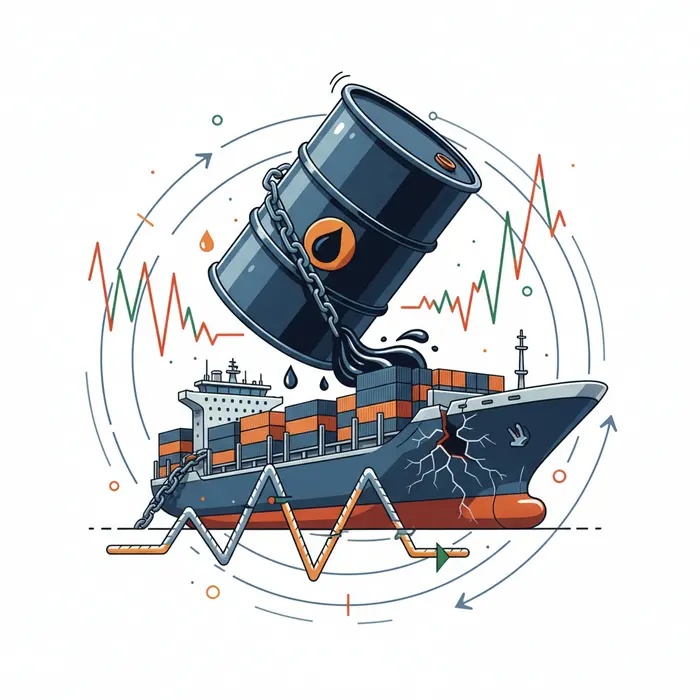
The history of oil prices is marked by periods of dramatic volatility, each leaving an indelible mark on the shipping industry. From the oil crises of the 1970s, which saw a quadrupling of prices and a subsequent scramble for energy efficiency, to the sharp drops in the mid-2010s and the unprecedented negative prices observed during the COVID-19 pandemic, these events underscore the inherent unpredictability of the commodity trading oil price volatility. Each spike or slump directly translates into higher or lower bunker fuel costs for carriers, profoundly affecting their financial health and their ability to offer competitive rates. This historical perspective reveals a pattern where shipping lines have continuously adapted, investing in more fuel-efficient vessels, exploring alternative fuels, and implementing surcharges to mitigate the impact of fluctuating bunker prices. The challenge has always been to forecast these shifts accurately and integrate them into long-term operational strategies.
2. Fuel’s Dominance in Shipping Operational Expenses (OPEX)
Fuel, primarily bunker fuel, stands as the single largest operational expense for shipping companies, often accounting for 30-50% of a vessel’s total OPEX. This significant proportion means that even minor percentage changes in oil prices can lead to substantial financial implications for carriers. For instance, a 10% increase in crude oil prices can translate into millions of dollars in additional costs for a large container ship operating on long-haul routes over a year. Consequently, managing this exposure is paramount for international logistics cost optimization. Shipping lines often employ Bunker Adjustment Factors (BAF) or Fuel Surcharges to pass some of these costs onto shippers, creating a direct link between the price of crude oil and container shipping rates oil prices. This mechanism, while necessary for carriers, adds an element of uncertainty for shippers trying to budget their freight expenses. The need for constant monitoring of the Global oil price impact on shipping costs is therefore non-negotiable for all stakeholders in the maritime supply chain.
3. Key Drivers of Crude Oil Price Fluctuations and Their Ripple Effects
The crude oil market is influenced by a complex interplay of geopolitical, economic, and environmental factors. Supply-side dynamics, such as decisions by OPEC+ countries, disruptions in major producing regions due to conflict or natural disasters, and the pace of new discoveries, significantly impact global availability. Demand-side factors, including global economic growth, industrial activity, and consumer behavior, also play a critical role. Furthermore, speculative trading, inventory levels, and the strength of the U.S. dollar can amplify price movements. Recent years have also seen the growing influence of environmental regulations, such as the IMO 2020 sulfur cap, which has increased demand for more expensive low-sulfur fuels, adding another layer of cost complexity. Predicting the crude oil price forecast trade involves assessing these multifaceted drivers. The ripple effects extend beyond direct fuel costs, influencing everything from the cost of manufacturing goods (due to higher energy inputs) to consumer purchasing power, ultimately shaping the volume and nature of global trade itself. The shipping industry must continuously adapt to these evolving market forces, seeking innovation in propulsion, operational efficiency, and risk management strategies to maintain stability and profitability in a perpetually fluctuating environment.
Decoding Crude Oil Price Forecasts for Trade 2025
Forecasting crude oil prices for 2025 is a complex undertaking, crucial for industries from energy production to international logistics. As businesses strategize for the coming year, understanding the myriad factors influencing the ‘Crude oil price forecast trade’ becomes paramount. The volatility inherent in commodity markets, particularly oil, directly impacts bottom lines, shaping decisions from investment in exploration to managing container shipping rates oil prices. This analysis delves into expert predictions and critical factors that will dictate the trajectory of oil prices, offering insights for those engaged in international logistics cost optimization and commodity trading oil price volatility.
1. Geopolitical Tensions and Potential Supply Shocks
The geopolitical landscape remains the most unpredictable, yet potent, driver of crude oil prices. Ongoing conflicts, particularly in the Middle East and Eastern Europe, carry an inherent risk premium that can swiftly elevate prices. Disruptions to critical shipping lanes, such as the Strait of Hormuz or the Bab el-Mandeb, could choke off significant portions of global oil supply, leading to immediate price surges. Sanctions imposed on major oil producers, like Russia, also introduce an element of uncertainty, forcing shifts in global trade flows and creating bottlenecks. The potential for unexpected political events or military escalations in key oil-producing regions means that the market will likely continue to price in a substantial risk premium for 2025, ensuring that supply shocks remain a significant factor in price discovery.
2. Global Demand Outlook: Economic Growth vs. Recession Risks
On the demand side, the global economic outlook for 2025 presents a delicate balance between potential growth and lingering recessionary risks. Interest rate policies by major central banks, inflationary pressures, and consumer spending patterns will collectively dictate industrial activity and fuel consumption. Robust economic growth, especially in emerging markets like China and India, would naturally bolster demand for crude oil, supporting higher prices. Conversely, a significant economic slowdown or recession in major economies could lead to a sharp contraction in demand, exerting downward pressure on prices. Analysts will closely monitor leading economic indicators from institutions like the IMF and the World Bank, alongside comprehensive oil market analysis from the International Energy Agency (IEA), to gauge the precise balance. The ongoing energy transition also plays a role, with the pace of EV adoption and renewable energy deployment subtly influencing long-term demand projections, though traditional fossil fuels are expected to dominate for the foreseeable future.
3. OPEC+ Strategies and Production Level Adjustments
The collective decisions of the Organization of the Petroleum Exporting Countries and its allies (OPEC+) will continue to exert substantial influence on global supply and, consequently, prices. OPEC+ has historically demonstrated a willingness to adjust production levels to stabilize the market, often cutting supply to bolster prices during periods of oversupply or weak demand. For 2025, the group’s strategy will likely hinge on balancing its members’ revenue needs with the imperative to prevent market share erosion from non-OPEC+ producers, particularly U.S. shale oil. Saudi Arabia’s pivotal role within the alliance, combined with Russia’s evolving output capabilities under sanctions, will be critical. Any divergence in their collective strategy, or unexpected compliance issues among members, could introduce significant volatility. Market participants will be keenly watching OPEC+’s ministerial meetings for clues on their production quotas and long-term market management strategies, as these adjustments can swiftly alter the supply-demand equilibrium.
In conclusion, the crude oil price forecast for 2025 remains a multifaceted puzzle shaped by geopolitical tensions, the global economic pulse, and the strategic maneuvers of OPEC+. For businesses involved in global trade and logistics, understanding these dynamics is paramount. The interplay of these factors will dictate everything from bunker fuel costs to overall Global oil price impact on shipping costs, profoundly influencing container shipping rates oil prices and demanding proactive strategies for international logistics cost optimization. Navigating this environment successfully will require continuous monitoring and agile adaptation to the persistent commodity trading oil price volatility.
Container Shipping Rates: The Oil Price Connection
The intricate dance between global oil prices and container shipping rates is a critical factor for anyone involved in international trade and logistics. As a primary energy source, crude oil’s price movements ripple through various sectors, but its impact on the maritime shipping industry is particularly profound and immediate. Understanding this relationship is key to effective Global oil price impact on shipping costs, allowing businesses to anticipate changes, manage budgets, and optimize their supply chains. The volatility in commodity trading oil price volatility directly influences operational expenses for shipping lines, which inevitably translates into adjustments in the freight rates paid by importers and exporters worldwide, making the connection between “Container shipping rates oil prices” a constant point of analysis for market watchers.
1. Bunker Fuel Costs: The Direct and Immediate Link
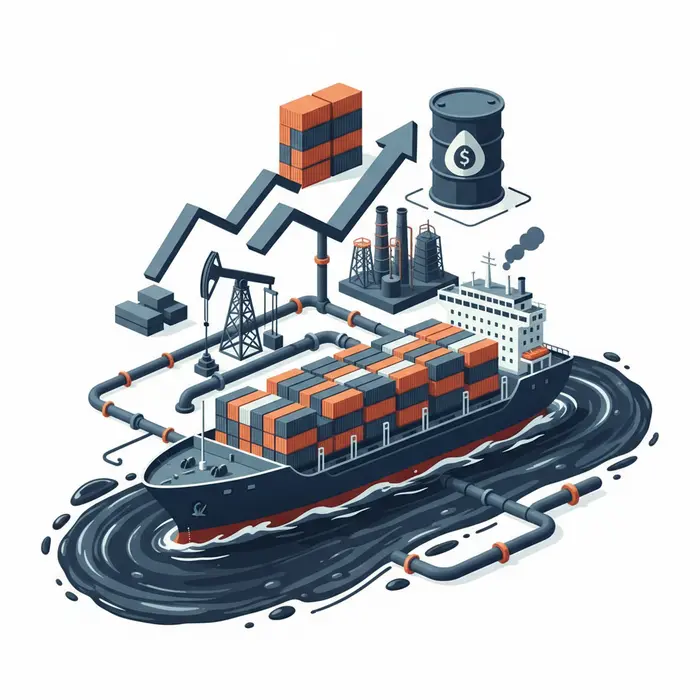
At the heart of the “Container shipping rates oil prices” dynamic lies bunker fuel. Bunker fuel, essentially heavy fuel oil (HFO) or very low sulfur fuel oil (VLSFO) derived from crude oil, powers the vast engines of container vessels. It constitutes the single largest operational expense for shipping companies, often accounting for 30-50% or even more of a vessel’s total voyage costs, depending on market conditions and the specific route. When global crude oil prices rise, the cost of bunker fuel follows suit almost immediately. Conversely, a drop in crude prices typically leads to a reduction in bunker fuel costs, albeit with a slight time lag due to existing inventories and contractual agreements.
This direct correlation means that any significant fluctuation in oil markets immediately pressures shipping lines’ profitability. To maintain financial viability, carriers are compelled to adjust their pricing strategies. For shippers, this translates into higher freight rates, directly reflecting the increased expense of propelling a vessel across oceans. The sensitivity of this link makes Crude oil price forecast trade an indispensable tool for strategic planning in international logistics.
2. Surcharges and Rate Adjustment Mechanisms (BAF, EBS)
To manage the inherent volatility of bunker fuel prices and ensure transparency in how these costs are passed on, shipping lines employ various surcharges. The most prominent among these is the Bunker Adjustment Factor (BAF). BAF is a fluctuating surcharge added to the base freight rate, designed to recover the additional cost of fuel that carriers incur due to changes in oil prices. It is typically reviewed and adjusted quarterly or monthly, based on a predefined formula that takes into account average fuel prices over a specific period and the trade lane’s specific fuel consumption characteristics.
Beyond the regular BAF, shipping lines may also implement an Emergency Bunker Surcharge (EBS) in response to sudden, unexpected, and significant spikes in oil prices. An EBS is usually a temporary measure to cover extraordinary fuel cost increases that cannot be absorbed or immediately addressed by the standard BAF mechanism. Both BAF and EBS mechanisms explicitly link “Container shipping rates oil prices” by ensuring that changes in fuel expenses are directly translated into the final cost borne by the shipper. For businesses aiming for International logistics cost optimization, understanding these surcharges and their calculation methodologies is crucial for accurate budgeting and forecasting.
3. Impact on Different Shipping Lanes and Vessel Types
The influence of oil prices on container shipping rates is not uniform across all trade lanes or vessel types; regional variations are considerable. Longer trade routes, such as the Trans-Pacific (Asia to North America) or Asia-Europe lanes, are naturally more susceptible to bunker fuel price changes. Vessels on these routes travel greater distances, consume significantly more fuel, and are thus more exposed to higher fuel costs. A modest percentage increase in fuel price can translate into millions of dollars in additional expenses for a mega-container ship on a round trip. Shorter, regional routes, while not immune, might experience less dramatic impacts due to lower overall fuel consumption per voyage.
Furthermore, different vessel types have varying fuel efficiencies. Newer, more technologically advanced ships are designed for better fuel consumption and may therefore be less impacted by price hikes compared to older, less efficient vessels. The competitive landscape within specific lanes also plays a role; highly contested routes might see carriers absorb a portion of the fuel cost increases to maintain market share, while less competitive routes might pass on the full cost more readily. Regional differences in fuel supply, taxation, and port costs also contribute to varying bunker prices, creating further complexity in the “Container shipping rates oil prices” equation for global supply chain managers. Monitoring Crude oil price forecast trade for specific regions and understanding individual carrier surcharges become paramount for effective cost management.
The connection between oil prices and container shipping rates is a dynamic and essential aspect of global trade. By understanding the direct link through bunker fuel, the mechanisms of surcharges like BAF and EBS, and the variations across different shipping lanes and vessel types, businesses can better navigate the complexities of international logistics and work towards International logistics cost optimization. Continuous monitoring of global oil price trends and their forecast implications remains critical for strategic decision-making in the shipping sector.
Strategies for International Logistics Cost Optimization
In the dynamic world of global trade, businesses constantly grapple with myriad challenges, not least among them being the unpredictable fluctuations in global oil prices and their impact on shipping costs. The volatility of crude oil prices directly translates into higher operational expenses for carriers, subsequently affecting container shipping rates and the overall cost of international logistics. To navigate this complex landscape and ensure sustained profitability, companies must adopt proactive and strategic approaches to international logistics cost optimization. This section provides actionable insights and strategies designed to mitigate the impact of volatile energy markets, helping businesses maintain competitive advantage and operational resilience.
1. Fuel Hedging and Derivative Strategies for Risk Management
One of the most effective ways for businesses involved in international logistics to insulate themselves from the immediate shocks of commodity trading oil price volatility is through fuel hedging. This strategy involves using financial instruments, such as futures, options, and swap contracts, to lock in a future price for fuel, thereby providing predictability in operating costs. By entering into these derivative contracts, companies can mitigate the risk associated with rising fuel prices, ensuring a more stable cost structure even when the market experiences significant upward swings. For instance, a shipping line or a freight forwarder can purchase crude oil futures contracts at a predetermined price for a future delivery date. If actual oil prices increase significantly by that date, the profit from the futures contract can offset the higher cost of buying physical fuel, effectively stabilizing their expenditure. Conversely, if prices fall, the loss on the futures contract might be balanced by lower physical fuel costs, though the primary goal of hedging is risk reduction rather than speculative profit. Implementing successful fuel hedging requires a deep understanding of market dynamics, access to sophisticated financial instruments, and careful monitoring of crude oil price forecast trends. Engaging with financial experts specializing in energy markets and commodity trading is often crucial for developing and executing a robust hedging strategy tailored to a company’s specific risk profile and operational scale.
2. Route Optimization, Slow Steaming, and Fleet Efficiency
Beyond financial hedging, significant cost savings can be achieved through operational efficiencies, particularly in route planning and vessel management. Route optimization involves using advanced algorithms and real-time data to determine the most fuel-efficient paths for vessels, considering factors like weather conditions, ocean currents, port congestion, and geopolitical risks. Even marginal improvements in route efficiency can lead to substantial reductions in fuel consumption over long voyages. Coupled with this is the practice of slow steaming, where ships reduce their speed to significantly decrease fuel burn. While it extends transit times, the exponential relationship between speed and fuel consumption means that a slight reduction in speed can yield disproportionately large fuel savings. For example, reducing a vessel’s speed by 10% can sometimes result in fuel savings of up to 30%. This strategy requires careful planning to ensure it doesn’t negatively impact delivery schedules or customer expectations. Furthermore, maintaining a modern and efficient fleet is paramount. Investing in vessels equipped with fuel-efficient engines, hydrodynamic designs, and advanced propulsion systems can drastically lower operational costs. Regular maintenance, hull cleaning to reduce drag, and propeller optimization also play vital roles in ensuring maximum fleet efficiency and minimizing the global oil price impact on shipping costs. Collaborating with shipping lines that prioritize these operational efficiencies can be a key differentiator for businesses seeking to control logistics expenses.
3. Leveraging Digital Tools for Visibility and Cost Control
In an increasingly interconnected world, digital transformation offers powerful avenues for international logistics cost optimization. Advanced digital tools and platforms provide unprecedented visibility into the entire supply chain, enabling businesses to identify inefficiencies, predict potential disruptions, and make data-driven decisions. Transportation Management Systems (TMS) are central to this, offering functionalities for freight procurement, shipment tracking, customs documentation, and performance analytics. By centralizing these processes, a TMS can streamline operations, reduce manual errors, and highlight areas where costs can be cut, especially concerning container shipping rates influenced by fuel prices. Real-time tracking and Internet of Things (IoT) sensors allow companies to monitor cargo movement, environmental conditions, and potential delays, enabling proactive adjustments that can prevent costly rerouting or demurrage charges. Furthermore, predictive analytics and Artificial Intelligence (AI) can analyze vast datasets, including crude oil price forecast trade patterns, historical shipping rates, and geopolitical events, to provide more accurate cost projections and optimized planning. Implementing blockchain technology can also enhance transparency and security, reducing administrative overheads and dispute resolution costs. By embracing these digital solutions, businesses can gain granular control over their logistics expenditures, negotiate better rates, and respond more agilely to market shifts, ultimately bolstering their resilience against volatile oil prices.
Navigating Commodity Trading Oil Price Volatility
The global commodity market is a complex ecosystem, with crude oil often acting as its pulsating heart. The inherent oil price volatility in this sector significantly influences overall trade dynamics, creating both challenges and opportunities for participants. Understanding the mechanisms behind this instability, particularly within commodity trading oil price volatility, is crucial for mitigating risks and optimizing supply chain efficiencies. From raw materials to finished goods, the global oil price impact on shipping costs reverberates across industries, demanding sophisticated strategies for adaptation and resilience. Businesses engaged in international logistics must constantly monitor crude oil market trends to achieve international logistics cost optimization, ensuring competitive pricing and sustainable operations.

1.
Futures Markets and Advanced Risk Management Techniques
Effectively managing commodity trading oil price volatility largely depends on leveraging financial instruments such as futures contracts. Futures markets provide a mechanism for buyers and sellers to lock in prices for future delivery, offering a hedge against unpredictable price swings. For companies heavily reliant on transportation, like those in container shipping, understanding crude oil price forecast trade strategies becomes paramount. Advanced risk management techniques go beyond simple hedging, incorporating options, swaps, and sophisticated algorithmic trading models. These techniques allow participants to protect margins, predict market movements with greater accuracy, and make informed decisions regarding procurement and sales. For instance, a shipping company can purchase oil futures to secure fuel prices, thereby stabilizing container shipping rates oil prices for their clients. This proactive approach minimizes exposure to adverse market fluctuations and contributes significantly to overall financial stability in a volatile environment. Implementing robust risk management frameworks is not just about avoiding losses; it’s about creating a competitive advantage through predictable cost structures and improved financial planning.
2.
Impact on Global Supply Chains and Inventory Management
The ripple effect of commodity trading oil price volatility extends deeply into global supply chains and profoundly influences inventory management practices. Sudden spikes in oil prices can lead to an immediate escalation in transportation costs, directly impacting the profitability of goods moving across continents. This phenomenon makes global oil price impact on shipping costs a critical factor for businesses engaged in international trade. Companies might face dilemmas regarding inventory levels: holding more inventory to buffer against potential future price hikes in shipping, or adopting just-in-time (JIT) strategies to reduce carrying costs, risking exposure to higher spot rates. For instance, a prolonged period of high crude oil prices can force manufacturers to reconsider their global sourcing locations, opting for closer suppliers to minimize freight expenses. The challenge lies in balancing the desire for efficiency with the need for resilience. Effective inventory management in this context often involves dynamic forecasting models that integrate crude oil price forecast trade data, allowing companies to adjust inventory buffers and shipping schedules strategically. The aim is to mitigate the financial burden associated with fluctuating container shipping rates oil prices, maintaining continuity and cost-effectiveness in supply chain operations.
3.
Strategic Sourcing in a Volatile Market Environment
In an era defined by significant commodity trading oil price volatility, strategic sourcing becomes an indispensable tool for achieving international logistics cost optimization. This involves a comprehensive approach to procurement that looks beyond immediate price tags, considering the long-term implications of oil market fluctuations on total cost of ownership. Strategic sourcing entails diversifying supplier bases, exploring multi-modal transportation options, and even investing in alternative energy sources for logistics where feasible. Companies should actively seek suppliers that demonstrate resilience to fuel price changes, perhaps through their own hedging strategies or close geographical proximity to key markets. Analyzing crude oil price forecast trade trends allows procurement teams to negotiate more favorable long-term contracts with freight carriers, potentially incorporating fuel surcharge caps or collars. Furthermore, exploring near-shoring or re-shoring initiatives can drastically reduce the global oil price impact on shipping costs and overall supply chain vulnerability. The goal is to build a robust and agile sourcing network that can adapt quickly to market shifts, ensuring continuity of supply and competitive pricing despite the inherent unpredictability of container shipping rates oil prices. This proactive stance transforms potential threats into opportunities for greater efficiency and competitive differentiation.
Partner with Vietnam’s Leading Suppliers
Looking for reliable suppliers in Vietnam? Contact VietnamSuppliers.com today to connect with verified manufacturers and exporters across all industries.
—————————————
References
– Short-Term Energy Outlook – U.S. Energy Information Administration (EIA): https://www.eia.gov/outlooks/steo/
– IEA Oil Market Report: https://www.iea.org/reports/oil-market-report
– Marine Fuel Prices Rise (S&P Global Commodity Insights): https://www.spglobal.com/commodityinsights/en/market-insights/latest-news/shipping/042622-marine-fuel-prices-rise-for-second-straight-week-in-major-hubs-amid-russia-ukraine-conflict
– crude oil price forecast trends: https://www.eia.gov/outlooks/steo/
– Oil Price Volatility: Definition, Causes, and Impact: https://www.investopedia.com/terms/o/oil-price-volatility.asp