
The Foundation of Global Trade Compliance
The intricate web of global commerce relies heavily on robust International Trade Compliance. In an increasingly interconnected yet volatile world, understanding and adhering to the myriad regulations governing cross-border transactions is not merely good practice—it is a non-negotiable imperative for any business engaged in international trade. As we approach 2025, the regulatory landscape continues to evolve, shaped by geopolitical shifts, technological advancements, and a renewed focus on sustainability and ethical sourcing. This section provides an essential overview of what international trade compliance entails, its critical importance for sustained business success, and the dynamic environment impacting global supply chains. From mastering Incoterms 2020 rules to navigating complex Customs clearance procedures and adhering to stringent Export control regulations, a proactive and informed approach is the bedrock of secure and efficient global trade.

1. Why Compliance Matters for Businesses
For businesses operating globally, International Trade Compliance extends far beyond simply avoiding penalties; it is fundamental to operational efficiency, risk management, and long-term reputational integrity. A well-structured compliance program ensures that goods move smoothly across borders, minimizing delays and unexpected costs that can erode profit margins and disrupt supply chains. Proactive compliance allows companies to leverage various Vietnam trade agreements and other free trade agreements effectively, gaining competitive advantages through reduced tariffs and streamlined processes. By adhering to international and national laws, businesses safeguard their brand image, build trust with partners and customers, and demonstrate a commitment to ethical and legal practices. This foresight is especially crucial when dealing with sensitive goods or regions, where a single misstep can lead to significant repercussions, including product seizures or blacklisting from markets. Effective compliance ensures seamless Customs clearance procedures, preventing costly demurrage and storage fees, and fostering predictable logistics.
2. Key Regulatory Bodies and Frameworks
The ecosystem of International Trade Compliance is governed by a diverse array of regulatory bodies and international frameworks. At a global level, organizations like the World Trade Organization (WTO) set overarching principles for international commerce, while the World Customs Organization (WCO) standardizes customs procedures. Regionally and nationally, government agencies such as the U.S. Department of Commerce, the EU Commission, or Vietnam’s General Department of Customs implement specific laws. Crucial among these frameworks are the Incoterms® 2020 Rules by ICC, published by the International Chamber of Commerce (ICC), which define the responsibilities of buyers and sellers for the delivery of goods under sales contracts, providing clarity on costs, risks, and obligations. Understanding these rules is paramount for accurate pricing and risk allocation. Furthermore, Export control regulations, often country-specific, dictate what goods, software, and technology can be exported to whom, for what purpose, and under what conditions, primarily to prevent proliferation of weapons, terrorism, or to enforce sanctions. Navigating these complex regulations requires diligent research and often, specialized expertise to ensure every shipment meets the necessary legal requirements across multiple jurisdictions.
3. Consequences of Non-Compliance
The repercussions of failing to adhere to International Trade Compliance requirements can be severe and multifaceted, posing significant threats to a company’s financial health and operational stability. Financial penalties are a common outcome, with fines reaching millions of dollars for violations of export controls, customs fraud, or sanctions evasion. Beyond monetary costs, non-compliance can lead to serious legal consequences, including criminal charges for individuals involved, lengthy investigations, and the loss of export privileges. Operationally, companies may face lengthy shipment delays, goods seizures, or outright rejection of imports/exports, causing substantial supply chain disruptions and failure to meet customer commitments. Perhaps most damaging are the reputational hits: public exposure of non-compliance can severely tarnish a brand’s image, erode customer trust, and make it difficult to secure new business or maintain existing partnerships. In the competitive global marketplace, a reputation for ethical and compliant trade practices is an invaluable asset. Businesses must invest in robust compliance programs, continuous training, and leveraging resources that offer comprehensive International Trade Compliance guidance to mitigate these risks effectively. The evolving landscape of 2025 demands a proactive, rather than reactive, approach to compliance.
Understanding Incoterms 2020 Rules in Detail
In the complex world of international trade, clarity and precision are paramount. Misunderstandings regarding responsibilities, costs, and risks can lead to costly disputes and delays. This is where Incoterms 2020 rules, published by the International Chamber of Commerce (ICC), play a crucial role. These universally recognized terms define the obligations of buyers and sellers for the delivery of goods, providing a common language for global commerce. Adhering to these rules is fundamental for effective International Trade Compliance, ensuring smooth transactions and avoiding unforeseen complications in areas such as customs clearance procedures and export control regulations. They dictate where responsibility for the goods transfers from seller to buyer, impacting everything from freight costs to insurance coverage.
1. EXW, FOB, CIF, DDP: Key Differences
Understanding the nuances between common Incoterms is essential for any party involved in international shipping. Each term specifies a distinct point at which the risk and cost transfer from the seller to the buyer.
- EXW (Ex Works): This term represents the minimum obligation for the seller. The seller makes the goods available at their own premises (e.g., factory or warehouse). The buyer bears all costs and risks involved in moving the goods from that point to their final destination, including loading, transport, customs clearance, and any associated duties or taxes. It’s often chosen when the buyer has significant experience in international logistics.
- FOB (Free On Board): A widely used Incoterm, particularly for sea and inland waterway transport. Under FOB, the seller delivers the goods on board the vessel nominated by the buyer at the named port of shipment. The risk of loss or damage to the goods transfers from the seller to the buyer when the goods are on board the vessel. The seller is responsible for export customs clearance and costs up to that point, while the buyer handles main carriage, insurance, and import clearance.
- CIF (Cost, Insurance and Freight): Also used exclusively for sea and inland waterway transport. The seller delivers the goods on board the vessel, similar to FOB. However, the seller pays the costs and freight to bring the goods to the named port of destination AND procures minimum insurance cover against the buyer’s risk of loss or damage during carriage. The critical distinction is that risk transfers at the port of shipment (when goods are on board the vessel), even though the seller pays for freight and insurance to the destination port.
- DDP (Delivered Duty Paid): This term represents the maximum obligation for the seller. The seller delivers the goods to the buyer at the named place of destination, cleared for import, and ready for unloading. The seller bears all costs and risks involved in bringing the goods to the destination, including duties, taxes, and other import formalities. DDP is often preferred by buyers who want minimal involvement in the shipping process, making it common in e-commerce or for buyers with limited import experience.
2. Choosing the Right Incoterm for Your Shipments
Selecting the appropriate Incoterm is a strategic decision that can significantly impact the efficiency and profitability of your supply chain. It requires careful consideration of several factors:
- Logistical Capabilities: Assess both the buyer’s and seller’s expertise and resources in managing international logistics, customs procedures, and transportation arrangements. If the buyer is new to importing, a DDP term might be safer, whereas an experienced buyer might prefer EXW for greater control and potential cost savings.
- Mode of Transport: Certain Incoterms are specific to particular modes (e.g., FOB, CIF for sea/inland waterway; FCA, CPT, CIP for any mode). Ensure the chosen term aligns with how your goods will be shipped.
- Risk Tolerance: Determine how much risk each party is willing to undertake. Sellers who want minimal risk often opt for EXW or FCA, while buyers seeking minimal risk might prefer DDP.
- Relationship and Trust: The existing relationship between the buyer and seller can influence the choice. Long-standing partners might be more comfortable sharing responsibilities.
- Nature of Goods: Perishable, fragile, or high-value goods might necessitate terms that provide specific insurance coverage or faster transit times.
- Regulatory Environment: Understand the customs clearance procedures and export control regulations in both the exporting and importing countries. For instance, navigating official Incoterms guidance or other regional pacts might influence the ease of certain responsibilities.
Open communication and mutual agreement between buyer and seller are crucial before finalizing any deal.
3. Impact on Costs, Risks, and Insurance
The chosen Incoterm directly determines who is responsible for various costs, who bears the risk of loss or damage, and consequently, who is responsible for arranging insurance.
- Costs: Incoterms precisely allocate costs such as:
- Loading/Unloading: Who pays for loading goods onto the first carrier, and who pays for unloading at the final destination?
- Main Carriage: Who covers the cost of transporting goods from the origin country to the destination country?
- Export/Import Clearance: Who is responsible for paperwork, permits, and fees associated with customs in both countries?
- Duties and Taxes: Who pays for tariffs, VAT, and other taxes levied by the importing country?
A term like EXW places almost all costs on the buyer, while DDP places them all on the seller.
- Risks: The point of risk transfer is perhaps the most critical aspect of Incoterms. It dictates when the buyer becomes responsible for any loss or damage to the goods during transit.
- Under EXW, risk transfers at the seller’s premises.
- Under FOB and CIF, risk transfers when goods are on board the vessel at the port of shipment.
- Under DDP, risk transfers at the final named place of destination.
Understanding this transfer point is vital for identifying who bears financial responsibility if something goes wrong.
- Insurance: While not all Incoterms mandate insurance, they clarify who is responsible for arranging it.
- Under CIF and CIP (Carriage and Insurance Paid To), the seller is obliged to obtain minimum cover. However, buyers might want to purchase additional coverage.
- For other terms, the party bearing the risk after the transfer point is typically the one who should obtain insurance. For example, under FOB, the buyer bears the risk once goods are on board the vessel, making it their responsibility to insure the main carriage. Failure to secure adequate insurance can lead to significant financial losses in case of unforeseen incidents.
In conclusion, a thorough understanding and correct application of Incoterms 2020 rules are indispensable for navigating the complexities of global commerce. They provide the necessary framework for transparency, minimize disputes, and facilitate compliant and efficient international trade.
Streamlining Customs Clearance Procedures
In the intricate world of global commerce, efficient Customs clearance procedures are not merely a bureaucratic hurdle but a critical component of successful International Trade Compliance. Delays and penalties at customs can significantly impact supply chains, increase costs, and damage business reputations. This section provides detailed insights into optimizing customs processes, ensuring all documentation is accurate, and implementing strategies to prevent common pitfalls in global shipping.

1. Required Documentation (Commercial Invoice, Packing List, B/L)
Accurate and complete documentation is the bedrock of smooth customs clearance. Any discrepancy, no matter how minor, can lead to significant delays, inspections, or even seizure of goods. Key documents include:
- Commercial Invoice: This is the primary document for customs valuation. It must precisely detail the transaction between the exporter and importer, including seller and buyer information, a clear description of goods, quantity, unit price, total value, currency, and the agreed-upon Incoterms 2020 rules. Precision here is paramount for calculating duties and taxes.
- Packing List: Complementing the commercial invoice, the packing list provides a comprehensive inventory of all items within each package. It specifies the number of packages, their contents, dimensions, and weights. This document assists customs officials in verifying shipments against manifests and identifying potential discrepancies.
- Bill of Lading (B/L) / Air Waybill (AWB): For ocean freight, the Bill of Lading serves as a contract of carriage, a receipt for goods, and a document of title. It outlines the terms of shipment, port of loading and discharge, and consignee details. For air freight, the Air Waybill performs a similar function, although it is not a document of title. These transport documents are essential for tracking and releasing cargo at its destination.
2. Tariff Classification and Valuation Methods
Correctly classifying goods and determining their value are critical steps that directly impact the duties and taxes applied by customs authorities.
- Tariff Classification: Goods are classified using the Harmonized System (HS code), a globally standardized numerical method for classifying traded products. An accurate HS code ensures that the correct tariffs, taxes, and import/export regulations are applied. Misclassification, whether accidental or intentional, can result in penalties, additional duties, and delays. Businesses must invest time in understanding their products’ classification or seek expert advice to avoid costly errors.
- Valuation Methods: Customs valuation typically follows the World Trade Organization (WTO) Valuation Agreement. The primary method is the ‘transaction value,’ which is the price actually paid or payable for the goods when sold for export to the country of importation. If the transaction value cannot be determined, alternative methods – such as the value of identical goods, similar goods, deductive value, computed value, or fallback method – are used. Understanding how various elements, including freight and insurance, contribute to the customs value is crucial for accurate duty assessment and compliance.
3. Customs Brokers: When and Why to Use Them
Navigating the complexities of international trade and ever-evolving International Trade Compliance can be overwhelming, especially for businesses without dedicated in-house expertise. This is where licensed customs brokers become invaluable.
- When to Use Them: Consider engaging a customs broker for complex shipments, high-value goods, frequent international trade, or when dealing with unfamiliar markets and unique Customs clearance procedures. They are particularly beneficial when new to specific Vietnam trade agreements or stringent Export control regulations.
- Why Use Them: Customs brokers possess specialized knowledge of import/export laws, tariff classifications, valuation rules, and specific country requirements. They can prepare and submit all necessary documentation, calculate duties and taxes, and handle communication with customs authorities on your behalf. Their expertise helps minimize the risk of errors, reduce delays, avoid penalties, and ensure adherence to all regulatory requirements. By leveraging their services, businesses can save time, streamline their operations, and focus on their core competencies, confident that their customs processes are in expert hands.
By prioritizing accurate documentation, understanding tariff classifications and valuation, and strategically utilizing customs brokers, businesses can significantly streamline their customs clearance procedures, ensuring compliant and efficient global shipping operations.
Navigating Export Control Regulations
Essential information on export control regulations, sanctions, and licensing requirements to ensure legal and secure international shipment of goods and technology.
Export control regulations are a critical component of International Trade Compliance, designed to prevent goods, software, and technology from falling into the wrong hands or being used for unauthorized purposes. These complex rules govern the cross-border movement of items that could have military applications, even if primarily designed for civilian use, or items destined for sanctioned entities or countries. Adhering to these regulations is not just about avoiding hefty fines and criminal penalties; it’s about safeguarding national security, promoting global stability, and protecting your company’s reputation. Navigating this intricate landscape requires a thorough understanding of various international and national frameworks, ranging from identifying controlled items to adhering to specific licensing requirements and understanding the implications of global sanctions. Successful global trade, whether involving basic commodities or advanced electronics, hinges on a robust understanding of these controls, seamlessly integrated into your International Trade Compliance strategy, alongside familiarization with Incoterms 2020 rules and Customs clearance procedures.
1. Dual-Use Goods and Restricted Technologies
One of the cornerstones of export control regulations is the concept of “dual-use goods.” These are items, including software and technology, that can be used for both civilian and military purposes. Examples range from seemingly innocuous items like advanced sensors, specialized chemicals, and high-performance computing components to more obvious ones like navigation systems or certain types of machinery that could be adapted for weapons production. The challenge lies in identifying these goods and understanding their specific control classifications, which often vary by jurisdiction. For instance, an item classified as dual-use by the European Union might have a different designation under the U.S. Export Administration Regulations (EAR). Companies must meticulously review their product portfolios against national control lists, such as the Commerce Control List (CCL) in the U.S. or Annex I of the EU Dual-Use Regulation. This classification process is crucial, as it determines whether an export license is required, irrespective of the item’s immediate intended use. Ignoring this step can lead to significant non-compliance issues.
2. Sanctions and Embargoes: What You Need to Know
Beyond the nature of the goods themselves, the destination, end-user, and end-use are equally critical. Global sanctions and embargoes impose restrictions on trade and financial transactions with specific countries, entities, or individuals due to foreign policy or national security concerns. Major bodies imposing these restrictions include the United Nations (UN), the U.S. Department of the Treasury’s Office of Foreign Assets Control (OFAC), the European Union, and individual national governments. Sanctions can take various forms:
- Comprehensive Embargoes: Prohibit nearly all transactions with a targeted country (e.g., Cuba, Iran, Syria, North Korea).
- Targeted Sanctions: Focus on specific individuals, entities, or sectors within a country (e.g., certain Russian entities, Venezuelan officials).
- Sectoral Sanctions: Restrict specific types of transactions within particular sectors (e.g., financing for energy projects).
Companies must implement robust screening processes to check all parties involved in a transaction – including customers, intermediaries, and ultimate consignees – against various sanctions lists (e.g., OFAC’s Specially Designated Nationals (SDN) List, EU Consolidated List). A hit on any of these lists generally means the transaction is prohibited or requires a specific authorization. The dynamic nature of sanctions regimes, often changing in response to geopolitical events, necessitates continuous monitoring and adaptation of compliance protocols. For businesses exploring opportunities related to Vietnam trade agreements, understanding how these global sanctions intersect with regional trade policies is particularly important.
3. Licensing Requirements and Compliance Programs
Once a good or technology is identified as controlled (dual-use) and not destined for a sanctioned party, the next step is determining if an export license is required. Licensing requirements depend on a confluence of factors: the item’s classification, the destination country, the end-user, and the end-use. Many items can be exported without a license to most destinations, while others may require specific authorizations, even to friendly nations. For example, some sensitive technologies might require a license even for export to allies, particularly if there’s a risk of diversion.
Different types of licenses exist, from individual licenses for specific transactions to bulk or global licenses covering multiple shipments over time. The application process typically involves detailed documentation about the item, parties involved, and the intended use. Failure to obtain a required license, or exporting contrary to license conditions, can result in severe penalties.
To effectively manage these complexities, businesses must establish and maintain comprehensive internal compliance programs (ICPs). An effective ICP integrates export control considerations into daily operations, from sales and marketing to procurement and shipping. Key elements of a robust ICP include:
- Management Commitment: Clear support from senior leadership.
- Risk Assessment: Identifying and evaluating potential compliance risks.
- Classification and Screening: Procedures for accurately classifying items and screening parties.
- Licensing Determination: A process for identifying when licenses are needed and applying for them.
- Record Keeping: Maintaining meticulous records of all export transactions.
- Training and Awareness: Regular training for all relevant employees.
- Auditing and Monitoring: Periodically reviewing the effectiveness of the ICP.
Adherence to Export Administration Regulations (EAR) and other national export control laws is paramount for any business engaged in international trade. A proactive and systematic approach to compliance not only mitigates legal and financial risks but also fosters trust with international partners and regulatory bodies, enabling secure and successful global operations.
Leveraging Vietnam Trade Agreements for Growth
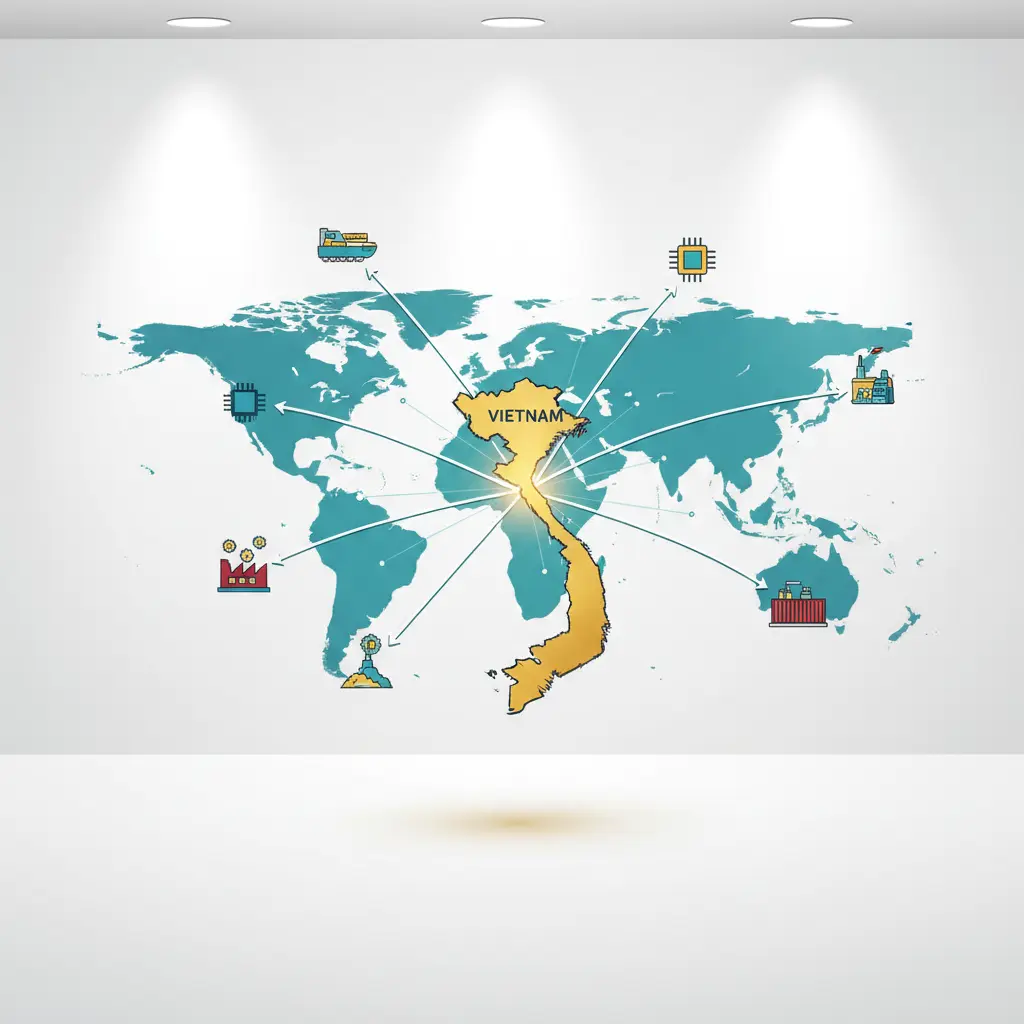
Vietnam has rapidly emerged as a dynamic hub in the global supply chain, driven significantly by its strategic embrace of free trade agreements. For international businesses, understanding and leveraging these Vietnam trade agreements is paramount to unlocking preferential tariffs, expanding market access, and fostering sustainable growth. This exploration delves into the key pacts involving Vietnam, highlighting the numerous opportunities and benefits for businesses willing to navigate the intricacies of International Trade Compliance.
1. EVFTA, CPTPP, and RCEP: Opportunities
Vietnam’s proactive participation in major regional and bilateral trade agreements signals its commitment to open markets and economic integration. These agreements are not just documents; they are comprehensive frameworks designed to reduce trade barriers, harmonize standards, and facilitate cross-border commerce.
- EVFTA (EU-Vietnam Free Trade Agreement): This landmark agreement with the European Union has eliminated nearly all tariffs (over 99%) on goods traded between Vietnam and the EU. For European businesses, it means cheaper imports from Vietnam and enhanced access to a rapidly growing consumer market. For Vietnamese exporters, it provides a significant competitive edge in one of the world’s largest economic blocs.
- CPTPP (Comprehensive and Progressive Agreement for Trans-Pacific Partnership): A high-standard agreement involving 11 Pacific Rim countries, the CPTPP provides deep market access across member economies, including Canada, Australia, Japan, and Mexico. It goes beyond tariff reductions, covering areas like services, investment, intellectual property, and labor standards, offering a comprehensive framework for businesses seeking to integrate into diverse supply chains.
- RCEP (Regional Comprehensive Economic Partnership): As the world’s largest free trade agreement, RCEP connects 15 Asia-Pacific countries, including China, Japan, South Korea, Australia, and New Zealand. While not as deep as the EVFTA or CPTPP in some aspects, its sheer scale and broad membership offer immense opportunities for regional supply chain optimization and market expansion within Asia.
These agreements collectively position Vietnam as a strategic gateway for businesses looking to access diverse global markets, from the developed economies of Europe and North America to the burgeoning consumer bases of Asia. They fundamentally reshape the global trade landscape for businesses operating in or with Vietnam.
2. Rules of Origin and Preferential Tariffs
The core benefit of these trade agreements lies in preferential tariffs, which can significantly reduce import and export costs. However, accessing these benefits is contingent upon strict adherence to the respective agreement’s Rules of Origin (ROO). ROO criteria determine whether a product originates from a member country, thereby qualifying for reduced or zero tariffs. These rules can be complex, often involving criteria such as ‘wholly obtained’ goods, ‘change in tariff classification,’ or ‘value-added’ thresholds.
For international businesses, understanding and accurately applying ROO is critical. It necessitates meticulous record-keeping and robust supply chain management to prove origin. Failure to comply can lead to the denial of preferential treatment, resulting in higher tariffs, potential penalties, and delays. Navigating specific Customs clearance procedures and adhering to stringent Export control regulations become non-negotiable for businesses aiming to capitalize on these agreements. Additionally, a clear understanding of Incoterms 2020 rules is essential, as they define the responsibilities of buyers and sellers regarding shipping, insurance, and customs formalities, directly impacting the overall cost and risk of international transactions under preferential tariff regimes.
3. Market Access and Investment Considerations
Beyond tariff reductions, Vietnam’s trade agreements open doors to broader market access, encompassing services, intellectual property, and investment. Many agreements include provisions that simplify bureaucratic processes, protect foreign investments, and ensure fair competition, creating a more stable and predictable business environment. For example, some agreements facilitate easier movement of business personnel, provide clearer regulations for cross-border data flows, and establish dispute resolution mechanisms.
For international investors, these agreements provide greater confidence and clarity, reducing risks associated with market entry and expansion. They signal Vietnam’s commitment to international norms and best practices, making it an attractive destination for foreign direct investment. However, businesses must also be prepared for potential adjustments in domestic regulations and competitive landscapes as a result of these agreements. This necessitates thorough due diligence, ongoing monitoring of regulatory changes, and a strong focus on International Trade Compliance to fully leverage the opportunities presented by Vietnam’s extensive network of trade pacts. Effective engagement requires not just understanding the agreements, but also adapting business strategies to align with their evolving provisions and market dynamics.
Partner with Vietnam’s Leading Suppliers
Looking for reliable suppliers in Vietnam? Contact VietnamSuppliers.com today to connect with verified manufacturers and exporters across all industries.
—————————————
References
– Incoterms® 2020 Rules by ICC: https://iccwbo.org/resources-for-business/incoterms-rules/
– official Incoterms guidance: https://www.iccwbo.org/resources-for-business/incoterms-rules/incoterms-2020/
– Incoterms 2020 rules: https://www.iccwbo.org/resources-for-business/incoterms-rules/
– Export Administration Regulations (EAR): https://www.bis.doc.gov/index.php/regulations/export-administration-regulations-ear
– World Bank Trade Data: https://www.worldbank.org/en/topic/trade

