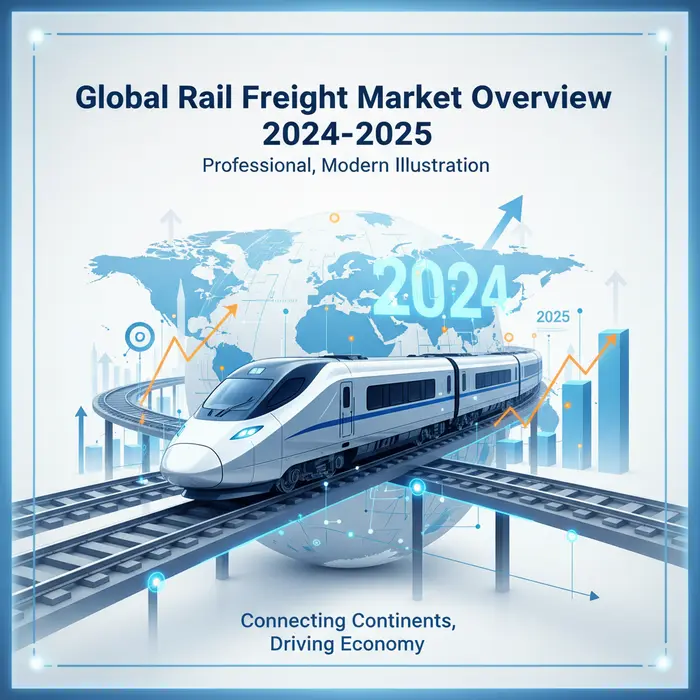
Global Rail Freight Market Overview 2024-2025
The global rail freight market is currently experiencing a dynamic period of transformation, driven by evolving trade patterns, technological advancements, and a growing emphasis on sustainable logistics. As businesses increasingly seek efficient, cost-effective, and environmentally friendly transportation solutions, rail freight is poised for significant expansion in 2024 and 2025. This introductory overview delves into the current state and future predictions for the industry, highlighting the key drivers and technological shifts that are shaping the Global Rail Freight Market Trends 2024, and beyond.
1. Key Growth Drivers & Economic Impact Factors
Several fundamental factors are propelling the growth of the global rail freight market. Economic globalization continues to expand, leading to increased demand for long-distance goods transport. The burgeoning e-commerce sector, in particular, generates massive volumes of parcels and freight, much of which can be efficiently handled by rail, especially for cross-country and international routes. Moreover, escalating environmental concerns and stringent carbon emission regulations are pushing industries towards more sustainable logistics choices. Rail freight, with its significantly lower carbon footprint per ton-kilometer compared to road transport, presents an attractive alternative for companies committed to reducing their environmental impact. The drive for supply chain resilience, exacerbated by recent global disruptions, also favors rail’s predictable scheduling and ability to move large volumes, mitigating risks associated with road congestion or driver shortages. Government investments in railway infrastructure, coupled with public-private partnerships, are further enhancing capacity and connectivity, particularly in developing economies.
2. Technological Advancements in Rail Logistics & Digitalization
Technological innovation is at the heart of the rail freight market’s evolution. The integration of the Internet of Things (IoT) sensors, Artificial Intelligence (AI), and machine learning is revolutionizing operational efficiency and safety. IoT devices provide real-time tracking of wagons and cargo, offering unprecedented visibility into the supply chain, while predictive analytics powered by AI helps optimize routing, scheduling, and maintenance, reducing downtime and operational costs. Automation, from automated yards to remotely operated locomotives in certain segments, is improving throughput and addressing labor challenges. Digital platforms are streamlining booking, documentation, and customs clearance processes, creating a more seamless and transparent experience for shippers. Furthermore, advancements in rolling stock design, including lightweight materials and more energy-efficient propulsion systems, are enhancing capacity and reducing fuel consumption. These digitalization efforts are crucial for making rail freight more competitive and adaptable in a rapidly changing logistics landscape.
3. Regional Market Dynamics and Emerging Opportunities
The global rail freight market exhibits diverse regional dynamics, with specific corridors emerging as major growth hubs. The Asia-Europe rail corridor, often referred to as the “New Silk Road,” is experiencing exponential growth, driven by increasing trade volumes between these two continents. The China Europe rail freight outlook remains robust, with new routes and expanded capacities continuously being developed to handle a diverse range of goods, from electronics to automotive components. This surge highlights the effectiveness of intermodal logistics solutions Asia Europe, which combine the cost-efficiency of rail with the flexibility of road or sea transport for last-mile delivery. However, cross-border rail shipping challenges, such as varying regulatory frameworks, infrastructure interoperability issues, and customs procedures, persist and require ongoing international cooperation to overcome. Emerging markets in Southeast Asia are also significantly contributing to the expansion. For instance, Vietnam international rail cargo services are gaining traction, connecting the country’s manufacturing hubs with broader regional and global networks. The development of new rail links, such as those connecting Vietnam to China and further into Europe, presents substantial opportunities for businesses looking to diversify their supply chains and access new markets. Investments in upgrading existing lines and constructing new ones are critical for these regions to fully capitalize on the potential of rail freight.
In conclusion, the global rail freight market is on an upward trajectory, propelled by economic imperatives, environmental consciousness, and groundbreaking technological innovation. The period of 2024-2025 is set to be a transformative era, cementing rail’s role as a cornerstone of resilient and sustainable global logistics.
China-Europe Rail Freight Corridor Outlook
The China-Europe Rail Freight Corridor, often dubbed the “New Silk Road,” has rapidly evolved into a vital artery for trade between Asia and Europe. This extensive network, primarily a component of China’s Belt and Road Initiative (BRI), offers a compelling alternative to traditional sea and air freight, connecting key industrial hubs directly to European markets. Its strategic importance lies in fostering enhanced connectivity, diversifying supply chains, and supporting economic integration across the Eurasian landmass. As we analyze Global Rail Freight Market Trends 2024, understanding the corridor’s performance, challenges, and evolving significance is paramount for businesses navigating international logistics.
1. Volume Growth, Capacity Utilization & Transit Times
The past decade has seen remarkable growth in China-Europe rail freight volumes. Driven by e-commerce expansion and demand for faster supply chains, train departures and container throughput surged significantly until early 2022. This rapid expansion, however, often strained existing infrastructure, leading to high capacity utilization and occasional congestion at critical border crossings. Efforts to enhance intermodal logistics solutions Asia Europe involve continuous improvements in terminal infrastructure, digital tracking, and streamlined customs to optimize freight flow and reliability.
A key advantage of rail freight is its competitive transit time, typically 12-18 days, significantly faster than sea freight (30-45 days) and more cost-effective than air freight. This balance makes it appealing for time-sensitive, high-value goods. Yet, maintaining consistent transit times remains a challenge, influenced by geopolitical factors, varying operational standards, and bottlenecks at gauge change points (from standard gauge in China/Europe to broad gauge in former Soviet states).
2. Geopolitical Influences & Route Diversification
Geopolitical dynamics profoundly impact the China-Europe rail corridor. The traditional Northern Corridor, traversing Russia and Belarus, historically handled the bulk of traffic. However, the Russia-Ukraine conflict, commencing in early 2022, introduced significant geopolitical risks and prompted a robust push for route diversification among shippers and logistics providers.
This shift has intensified interest in the “Middle Corridor” or Trans-Caspian International Transport Route (TITR). This alternative involves rail from China to Kazakhstan, sea transport across the Caspian Sea, onward rail through Azerbaijan and Georgia, and then across the Black Sea or via Turkey into Europe. While offering a politically more stable path, the Middle Corridor presents its own cross-border rail shipping challenges, including multiple modal transfers (rail-sea-rail), less developed infrastructure in some segments, and higher operational costs. Investments are underway to enhance its viability. Moreover, the broader network is expanding, with countries like Vietnam strengthening their connectivity, boosting Vietnam international rail cargo services and extending the reach of continental supply chains.
3. Competition with Sea and Air Freight Modes
The China-Europe rail freight corridor operates within a dynamic competitive landscape, primarily contending with established sea and air freight modes. Each mode caters to distinct logistical requirements.
Sea freight remains the most cost-effective for bulky, heavy, and non-time-sensitive goods, dominating global trade volumes due to vast capacity and low per-unit cost. Air freight, conversely, offers unparalleled speed for urgent, high-value, or perishable shipments, albeit at a significantly higher cost.
Rail freight strategically occupies a “middle ground,” offering considerable speed advantages over sea freight (2-3 times faster) and significant cost savings over air freight (often 50-70% cheaper). This blend makes it highly attractive for specific segments like e-commerce, automotive parts, electronics, and fashion, where balancing speed and cost is crucial. It supports reduced inventory holding costs and faster market responses. Furthermore, rail freight generally boasts a lower carbon footprint per ton-kilometer compared to air and some sea transport, aligning with growing sustainability goals. As Global Rail Freight Market Trends 2024 evolve, rail is increasingly viewed as a complementary mode within comprehensive intermodal logistics solutions. Its future growth hinges on sustained infrastructure investment, technological integration, and agile navigation of geopolitical complexities, solidifying its role in global supply chains.
Intermodal Logistics Solutions for Asia-Europe Connectivity
The burgeoning trade lanes between Asia and Europe necessitate robust and efficient transport mechanisms. Intermodal logistics solutions have emerged as a cornerstone in this cross-continental shipping landscape, offering a compelling blend of efficiency, cost-effectiveness, and sustainability. By seamlessly integrating different modes of transport—primarily rail, sea, and road—intermodal systems optimize supply chains, reduce transit times for certain routes, and enhance the overall reliability of freight movement. This approach is particularly vital for the high-volume, diverse cargo flows characteristic of the Asia-Europe trade corridor, driving advancements in operational excellence and environmental stewardship.

1. Key Intermodal Hubs, Terminals & Digital Integration
The effectiveness of intermodal logistics hinges significantly on the strategic placement and operational efficiency of key intermodal hubs and terminals. Across the vast expanse between Asia and Europe, these hubs act as critical transshipment points, facilitating the smooth transfer of goods between different transport modes. Major terminals in China (e.g., Zhengzhou, Chongqing, Xi’an), Central Asia (e.g., Almaty), and Europe (e.g., Malaszewicze, Duisburg, Hamburg) are constantly expanding and upgrading to handle increasing volumes of cargo. These facilities are not just physical locations; they are complex ecosystems demanding sophisticated management. Addressing cross-border rail shipping challenges, such as varying track gauges, customs procedures, and regulatory frameworks across multiple countries, requires meticulous planning and coordination at these hubs.
Beyond physical infrastructure, digital integration is paramount. Advanced Transport Management Systems (TMS), real-time tracking solutions (GPS/IoT), and blockchain technologies are revolutionizing visibility and transparency within the intermodal chain. Digital platforms enable stakeholders to monitor cargo movement, predict arrival times, manage documentation, and streamline customs clearance, significantly reducing delays and operational costs. This level of integration ensures that containers moving from, for instance, a factory in Southeast Asia through a port, onto a China-Europe freight train, and then to a final destination by truck, are tracked and managed cohesively, providing end-to-end supply chain intelligence.
2. Cost-Efficiency vs. Speed in Combined Transport
Choosing the optimal intermodal solution often involves a delicate balance between cost-efficiency and transit speed. While air freight offers unparalleled speed, its high cost makes it suitable only for high-value, time-sensitive goods. Ocean freight, conversely, provides the most cost-effective solution for bulk cargo, but with significantly longer transit times. Intermodal rail freight, especially along the New Silk Road routes, presents a compelling middle ground for the Asia-Europe corridor. It is considerably faster than sea freight (often cutting transit times by more than half) and significantly more economical than air freight. The Global Rail Freight Market Trends 2024 indicate a continued upward trajectory for transcontinental rail, driven by these very advantages.
For businesses seeking a balance, combined transport solutions leveraging rail as the primary long-haul mode offer immense value. The current China Europe rail freight outlook remains positive, albeit with geopolitical fluctuations, as it continues to attract shippers looking for reliable alternatives to traditional sea routes, particularly for goods that cannot afford extended ocean transit but are too heavy or bulky for air. The ability to switch between modes efficiently at intermodal terminals allows companies to optimize their logistics networks, choosing the right mode for each segment of the journey based on specific cargo requirements, budgetary constraints, and urgency.
3. Environmental Sustainability & Green Logistics Initiatives
One of the most compelling advantages of intermodal logistics solutions Asia Europe is their significant contribution to environmental sustainability. Rail transport, in particular, boasts a substantially lower carbon footprint per ton-kilometer compared to road transport. Shifting freight from road to rail on long-haul segments drastically reduces greenhouse gas emissions, air pollution, and road congestion. This aligns perfectly with growing corporate social responsibility agendas and global efforts to combat climate change, making intermodal solutions a key component of green logistics initiatives.
Governments and industry players are actively promoting and investing in greener intermodal practices. This includes developing electric rail networks, exploring alternative fuels for first and last-mile road segments, optimizing container loading, and implementing smart routing to minimize energy consumption. For example, the expansion of Vietnam international rail cargo services connecting to the broader Asia-Europe network provides sustainable export options for Vietnamese goods, reducing reliance on less eco-friendly transport methods. By embracing intermodal transport, businesses not only achieve operational efficiencies but also bolster their environmental credentials, contributing to a more sustainable global supply chain and future.
Navigating Cross-Border Rail Shipping Challenges
As global supply chains continue to evolve, rail freight is increasingly recognized as a sustainable and cost-effective alternative to sea and air cargo, particularly for intra-continental shipments. The Global Rail Freight Market Trends 2024 highlight a growing demand for efficient overland connections, spurred by e-commerce expansion and a drive for greener logistics. Routes like the Trans-Eurasian rail corridor, connecting China and Europe, demonstrate immense potential, reshaping the China Europe rail freight outlook. However, realizing the full benefits of international rail transport, especially for complex intermodal logistics solutions Asia Europe, requires overcoming a unique set of operational, regulatory, and infrastructural hurdles. Addressing these cross-border rail shipping challenges is crucial for unlocking greater efficiency and expanding the reach of services, including emerging corridors for Vietnam international rail cargo services.
1. Customs Procedures, Documentation & Harmonization
One of the most significant impediments to seamless international rail freight lies in the disparate customs procedures and documentation requirements across different nations. Unlike road or sea transport, which often benefit from more harmonized conventions (e.g., TIR for road, FAL for maritime), rail freight faces a mosaic of national and regional regulations. Each border crossing can introduce its own set of paperwork, declarations, and inspection protocols, leading to considerable delays and increased administrative burdens. For instance, a train traveling from China to Europe might traverse multiple customs territories, each with unique data submission standards and inspection regimes. The lack of a universally adopted, digitized, and harmonized system prolongs transit times and inflates operational costs. Solutions lie in fostering greater international cooperation to standardize customs forms, promote digital data exchange platforms (e-customs), and implement mutual recognition agreements. Initiatives like the Convention concerning International Carriage by Rail (COTIF) and the Agreement on International Rail Freight Traffic (SMGS) aim to facilitate this, but their full implementation and convergence remain ongoing tasks. Streamlining these processes is paramount for enhancing the competitiveness of rail in the global logistics landscape.
2. Infrastructure Gaps, Gauge Differences & Bottlenecks
The physical infrastructure of global rail networks presents another formidable challenge. A primary hurdle is the existence of varying track gauges. Europe primarily uses standard gauge (1,435 mm), while countries like Russia and other CIS states employ broad gauge (1,520 mm), necessitating time-consuming and costly transshipment operations at border points such as Brest on the Poland-Belarus border. Similarly, parts of Southeast Asia, including Vietnam, utilize meter gauge (1,000 mm), adding complexity to potential intermodal connections. Beyond gauge differences, infrastructure quality and capacity also vary dramatically. Sections of rail lines might be single-track, un-electrified, or suffer from insufficient signaling systems, limiting train speeds and overall throughput. Bottlenecks often arise at key border crossings, marshalling yards, and intermodal terminals where handling capacity may be insufficient for growing volumes. Investment in modern infrastructure, including dual-gauge tracks or advanced bogie-changing technologies, is vital. Furthermore, developing strategically located dry ports and enhancing terminal efficiency can mitigate transshipment issues and improve overall network fluidity. The International Union of Railways (UIC) actively promotes interoperability and standardization to overcome these technical barriers, which is critical for smooth Asia-Europe rail operations.
3. Security, Risk Management & Resilience Strategies
Ensuring the security and resilience of cross-border rail freight is a constant concern for shippers and operators alike. Cargo theft remains a significant risk, particularly for high-value goods, requiring robust physical security measures at terminals, during transit, and along vulnerable sections of routes. Beyond theft, geopolitical instability in transit countries, acts of terrorism, or even localized civil unrest can disrupt rail lines, causing severe delays and potential cargo loss. Natural disasters, from floods to earthquakes, also pose substantial threats to rail infrastructure and operational continuity. Effective risk management strategies involve a multi-pronged approach: implementing advanced tracking and monitoring technologies, deploying secure wagons and containers, and conducting thorough route risk assessments. Furthermore, building supply chain resilience means developing contingency plans for alternative routes, establishing robust communication protocols with local authorities, and leveraging comprehensive insurance policies. Collaborative efforts between national railway companies, customs agencies, and private security firms are essential to create a secure environment. By prioritizing security and resilience, the global rail freight industry can ensure reliability and maintain confidence among users, reinforcing its role as a dependable mode of international transport.
Overcoming these multifaceted challenges requires concerted effort from governments, rail operators, logistics providers, and international organizations. Harmonizing regulations, investing in resilient infrastructure, and implementing advanced security measures are not just about improving efficiency; they are about solidifying rail’s position as a cornerstone of future global trade and making intermodal logistics solutions truly seamless and competitive.
Vietnam’s Rising Role in International Rail Cargo Services
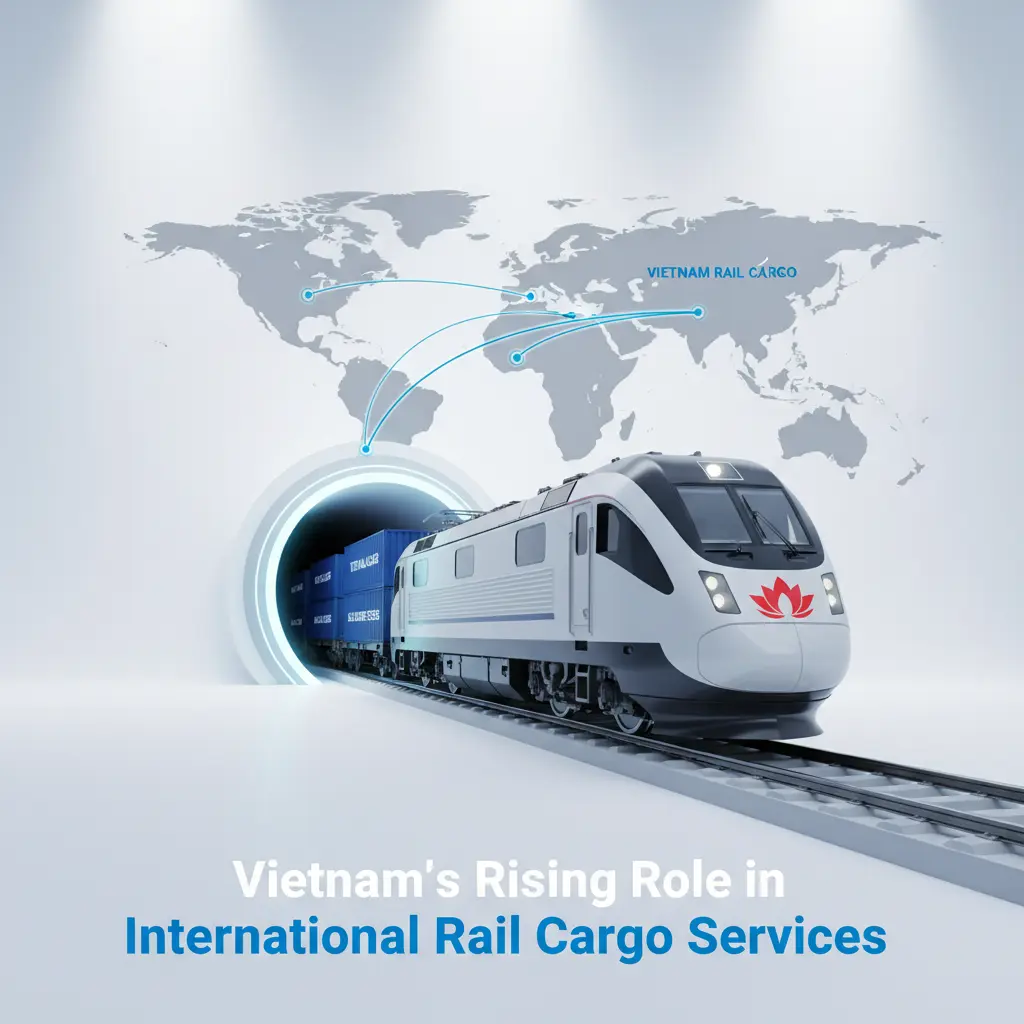
In the dynamic landscape of global trade, Southeast Asia is emerging as a critical hub, and Vietnam, with its strategic geographical position and rapidly developing economy, is increasingly pivotal. While maritime and road transport have traditionally dominated, the nation’s rail freight capabilities are gaining significant traction, positioning Vietnam as a vital link in the broader Global Rail Freight Market Trends 2024. This section delves into Vietnam’s growing importance and the evolution of its rail infrastructure within the international trade framework, highlighting its potential to redefine intercontinental logistics.
1. Connectivity to China and ASEAN Markets
Vietnam’s strategic location, sharing a long border with China and close proximity to other ASEAN nations, inherently positions it as a crucial transit point for global rail freight. The existing rail network, particularly the routes connecting Hanoi to Nanning (via Dong Dang-Pingxiang) and Kunming (via Lao Cai-Hekou), serves as a lifeline for cross-border trade with China. These connections are not merely bilateral; they form critical arteries for the burgeoning China Europe rail freight outlook, offering an alternative or supplementary route to the more congested direct China-Europe links. For goods originating from or destined for Vietnam, these rail corridors provide efficient pathways to Chinese distribution hubs, which then feed into the extensive China-Europe railway system. Furthermore, Vietnam’s aspirations for enhanced regional integration extend to establishing improved rail links with Cambodia and Laos, envisioning a cohesive ASEAN railway network that would significantly bolster Vietnam international rail cargo services and facilitate more seamless intermodal logistics solutions Asia Europe.
2. Government Initiatives & Investment in Rail Infrastructure
Recognizing the untapped potential of rail freight, the Vietnamese government has embarked on ambitious initiatives to modernize and expand its railway infrastructure. The “Master Plan for Railway Development by 2030, with a Vision to 2050” outlines substantial investments in new high-speed lines, upgrading existing tracks, and developing integrated logistics centers. Key projects include the construction of new standard-gauge lines, electrification of critical routes, and the enhancement of border railway stations to improve handling capacity and reduce transit times. These investments are aimed at overcoming existing cross-border rail shipping challenges, such as varying track gauges, outdated signaling systems, and bureaucratic hurdles. By streamlining customs procedures and enhancing digital platforms for cargo tracking, Vietnam seeks to present itself as a highly competitive and efficient option for global rail freight transportation. Such governmental foresight is crucial in fostering an environment conducive to increased volumes and improved reliability for both domestic and international cargo movements.
3. Future Growth Opportunities & Operational Challenges
The future for Vietnam’s role in international rail cargo services looks promising, driven by continued growth in global trade, the search for diversified supply chains, and the increasing demand for sustainable transport solutions. The China Europe rail freight outlook suggests ongoing expansion, and Vietnam is well-positioned to capitalize on this, particularly for high-value goods and e-commerce shipments requiring faster transit than sea freight. The development of dedicated freight corridors and improved coordination with neighboring countries will unlock new opportunities for intermodal logistics solutions Asia Europe. However, significant operational challenges remain. These include the persistent issue of different rail gauges between Vietnam (meter gauge) and China (standard gauge), necessitating transshipment at the border, which adds to costs and transit times. Furthermore, infrastructure gaps, limited rolling stock capacity, and the need for more skilled personnel in multimodal operations present hurdles. Addressing these cross-border rail shipping challenges through strategic investment, technological adoption, and regional policy harmonization will be essential for Vietnam to fully realize its potential as a dominant player in international rail cargo.
In conclusion, Vietnam is rapidly asserting its position in the global rail freight market, moving beyond traditional roles to become a proactive participant in intercontinental logistics. With robust government backing, strategic infrastructure investments, and its unique geographical advantage, Vietnam is poised to significantly enhance its international rail cargo services. While operational hurdles and the need for continued development persist, the trajectory points towards a future where Vietnam’s rail network plays an increasingly critical role in connecting Asia with global markets, offering efficient and reliable alternatives for the flow of goods.
Partner with Vietnam’s Leading Suppliers
Looking for reliable suppliers in Vietnam? Contact VietnamSuppliers.com today to connect with verified manufacturers and exporters across all industries.
—————————————
References
– ITF Transport Outlook 2023: https://www.oecd.org/transport/transport-research-centre/itf-transport-outlook-2023.htm
– UNCTAD Review of Maritime Transport 2023: https://unctad.org/publication/review-maritime-transport-2023
– Global Rail Freight Market Outlook – Transport Intelligence: https://www.ti-insight.com/product/global-rail-freight-market-outlook/
– International Union of Railways (UIC): https://uic.org/rail-transport-development/interoperability/articles/interoperability-a-key-factor-for-efficient-international-freight-transport/
– Global Rail Freight Transportation Market Report: https://www.mordorintelligence.com/industry-reports/global-rail-freight-transportation-market