Understanding International Trade Barriers
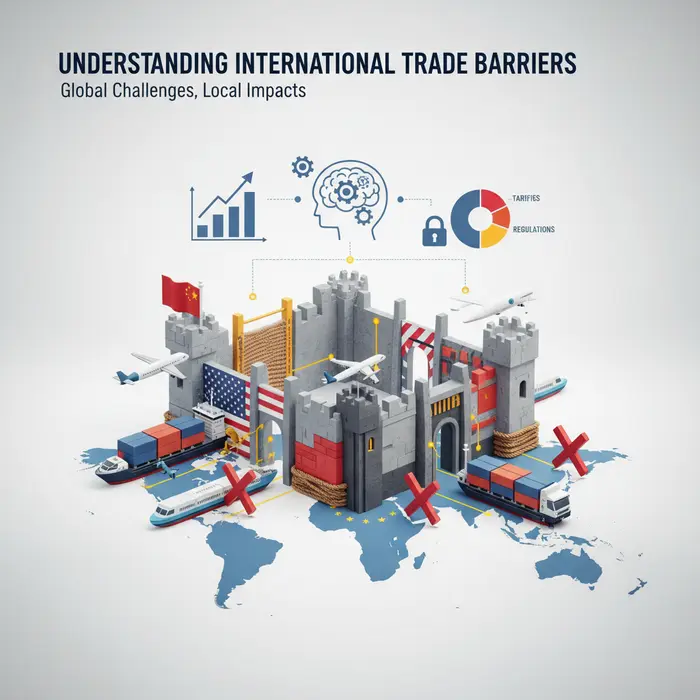
In the intricate world of global commerce, the free flow of goods and services is often regulated by various governmental interventions. These interventions, collectively known as international trade barriers, are policies or regulations imposed by national governments to restrict or alter the exchange of products, services, and capital between countries. Their fundamental purpose is multifaceted, ranging from protecting domestic industries and generating revenue to addressing national security concerns or correcting trade imbalances. Understanding why nations implement these barriers and their diverse forms is crucial for businesses navigating the complexities of international trade and for policymakers shaping global economic relations.
1.
What Constitutes a Trade Barrier?
At its core, a trade barrier refers to any government-imposed restriction on the free exchange of goods and services across international borders. These measures are designed to make imported goods and services less competitive, or even prohibit them outright, compared to domestically produced alternatives. While the ideal of free trade advocates for minimal governmental interference, most nations employ some form of trade barriers to achieve specific economic, social, or political objectives. These barriers can manifest in various forms, directly impacting prices, quantities, and the overall accessibility of foreign products in a domestic market. They are a significant aspect of global trade policy and frequently discussed in international forums.
2.
Economic and Political Rationales for Implementation
Nations implement international trade barriers for a complex array of reasons, balancing economic imperatives with political considerations. Economically, these barriers often serve to protect nascent or strategically important domestic industries from foreign competition, a concept known as the “infant industry argument.” By limiting imports, governments aim to allow these new industries to grow and achieve economies of scale before facing global rivals. Additionally, barriers can protect domestic jobs, prevent “dumping” (where foreign companies sell products below cost), and generate revenue through tariffs. From a balance of payments perspective, reducing imports can help alleviate trade deficits.
Politically, the rationales are equally compelling. National security is a powerful driver, leading countries to restrict imports of critical goods and technologies to ensure self-sufficiency in times of crisis. Trade barriers can also be used as a diplomatic tool, serving as leverage in international negotiations or as a form of retaliation against unfair trade practices by other nations. Furthermore, governments may impose barriers to uphold environmental standards, protect human rights, or even support domestic agricultural sectors for food security reasons, highlighting the diverse motivations behind import export regulations.
3.
Types of Trade Barriers: Tariff and Non-Tariff Measures
International trade barriers are broadly categorized into two main types: tariffs and non-tariff barriers. Tariffs are essentially taxes or duties levied on imported goods and services. These can be specific tariffs (a fixed fee per unit), ad valorem tariffs (a percentage of the value of the imported good), or compound tariffs (a combination of both). Tariffs directly increase the cost of imports, making them less attractive to domestic consumers and businesses, thereby offering a price advantage to local producers and generating revenue for the government. They are among the most straightforward and historically common types of trade barriers.
Non-tariff barriers (NTBs), on the specific other hand, encompass a wider and often more subtle range of restrictions that do not involve direct taxes. These include quotas, which set limits on the quantity of specific goods that can be imported; import licenses, requiring special permission to bring certain goods into a country; and subsidies to domestic producers, making their products cheaper than imports. Other significant NTBs include embargoes (total bans on trade), voluntary export restraints (VERs), strict customs procedures, and technical barriers to trade (TBTs) such as health, safety, and quality standards that might be designed to disadvantage foreign products. Sanitary and phytosanitary (SPS) measures, focusing on food safety and animal/plant health, also fall under NTBs. These tariff and non-tariff barriers collectively create a complex web of import export regulations that profoundly impact the flow of goods and services globally, often leading to debates about their impact on global trade.
In conclusion, international trade barriers are integral to how nations manage their economies and assert their sovereignty in a globalized world. While they can protect domestic industries, ensure national security, and provide revenue, they also carry the potential to stifle innovation, reduce consumer choice, and escalate international trade disputes. Navigating this landscape requires a nuanced understanding of both the overt and subtle ways these barriers shape global commerce.
Types of Trade Barriers: The Role of Tariffs
In the complex landscape of global commerce, international trade barriers play a pivotal role in shaping economic interactions between nations. These obstacles, encompassing various government policies, are primarily designed to restrict or regulate the flow of goods and services across borders. While there are numerous types of trade barriers, including quotas, subsidies, and administrative hurdles (often categorized as tariff and non-tariff barriers), tariffs stand out as one of the oldest and most widely recognized instruments. A tariff is essentially a tax imposed by a government on imported goods or services. These taxes increase the price of foreign products, making them less competitive compared to domestically produced alternatives. Understanding their application and consequences is crucial for comprehending the broader impact of trade barriers on global trade and the intricacies of import export regulations.
1. Ad Valorem vs. Specific Tariffs
Tariffs are not monolithic; they come in different forms, each with distinct implications for trade and revenue generation. The two primary categories are ad valorem and specific tariffs.
- Ad Valorem Tariffs: Derived from Latin, “ad valorem” means “according to value.” This type of tariff is calculated as a fixed percentage of the imported good’s value. For example, a 10% ad valorem tariff on an imported car valued at $30,000 would result in a $3,000 duty. Their primary advantage is that revenue automatically adjusts with changes in the imported goods’ prices due to inflation or market fluctuations. However, they can be more challenging to administer due to the need for accurate valuation of goods, potentially leading to disputes.
- Specific Tariffs: In contrast, a specific tariff is a fixed monetary charge levied per physical unit or quantity of an imported good, regardless of its value. For instance, a specific tariff of $2 per kilogram of imported coffee. These tariffs are simpler to administer because they don’t require goods valuation. Their disadvantage, however, is that their protective effect can diminish during inflation, as the fixed duty becomes a smaller percentage of the good’s increasing price. Conversely, if the price falls, the specific tariff’s burden on consumers can increase significantly.
2. Revenue vs. Protective Tariffs: Key Differences
Beyond their calculation method, tariffs can also be classified by their primary objective: whether to generate government income or protect domestic industries.
- Revenue Tariffs: The primary purpose of a revenue tariff is to raise funds for the government. Historically, tariffs were a significant source of government income. These tariffs are typically imposed on goods not produced domestically or produced in insufficient quantities, meaning they don’t face direct competition from local industries. Items like certain luxury goods might be subject to revenue tariffs, aiming to collect duties without significantly impacting domestic production.
- Protective Tariffs: As the name suggests, protective tariffs are designed to shield domestic industries from foreign competition. By making imported goods more expensive, these tariffs aim to shift consumer demand towards domestically produced alternatives. This helps local businesses maintain market share, potentially leading to job creation and economic growth within the protected sector. For instance, a country might impose a high tariff on imported steel to protect its own steel industry. While fostering domestic industrial development, protective tariffs often come at the cost of higher prices for consumers and can invite retaliatory tariffs from affected trading partners, escalating into trade disputes. The World Trade Organization (WTO), for example, works to reduce such barriers and promote freer trade.
3. Impact on Consumer Prices and Domestic Industries
The imposition of tariffs has immediate and far-reaching economic consequences, profoundly affecting both consumers and industries in importing and exporting nations.
- Impact on Consumer Prices: When an importing country levies a tariff, the cost of the imported good increases. This additional cost is typically passed on to the consumer in the form of higher retail prices. For example, if a 15% tariff is placed on imported electronics, consumers will pay more for those foreign products. This leads to a reduction in consumer purchasing power and can limit product variety if cheaper foreign options are restricted. Over time, sustained higher prices due to tariffs can contribute to inflation.
- Impact on Domestic Industries: For domestic industries, tariffs can offer a significant advantage. By raising the price of competing foreign goods, tariffs make domestically produced items relatively cheaper and more attractive. This can lead to increased sales, production, and profitability for local companies, potentially safeguarding jobs and encouraging investment. However, this protection can also reduce the incentive for domestic industries to innovate or improve efficiency. Furthermore, industries relying on imported components face higher input costs, disadvantaging them in global markets. Exporting nations face reduced demand for their products, hurting their industries and impacting economic growth.
Navigating Non-Tariff Barriers in Global Trade
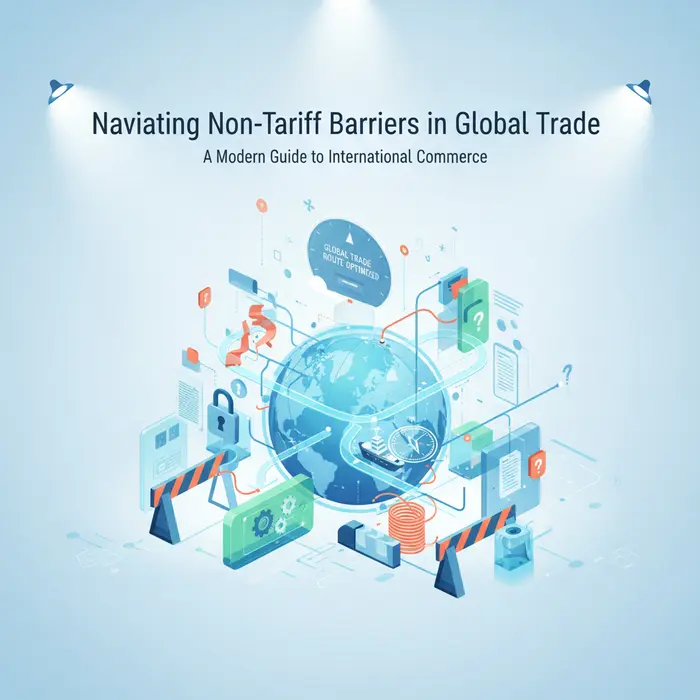
While tariffs—direct taxes on imported goods—are often the first barriers that come to mind in international trade barriers, the landscape of global commerce is increasingly shaped by more subtle yet equally potent restrictions: non-tariff barriers (NTBs). These encompass a broad range of regulations, policies, and administrative procedures that restrict trade without imposing direct taxation. Unlike tariffs, which are transparent and revenue-generating, NTBs can be complex, often disguised as legitimate domestic policies, making them harder to identify, quantify, and negotiate away. Understanding these multifaceted types of trade barriers is crucial for businesses aiming to expand their reach across borders and for policymakers striving to foster a fair and open global trading system. The presence of significant non-tariff measures can dramatically alter competitiveness, increase operational costs, and even dictate whether a product can enter a market at all.
1. Quotas, Embargoes, and Sanctions
Among the most direct forms of non-tariff barriers are quantitative restrictions designed to limit the volume of goods entering or leaving a country.
- Quotas are explicit limits on the quantity of a particular good that can be imported or exported during a specified period. They can be absolute, prohibiting imports beyond a certain volume, or tariff-rate quotas, where a certain quantity enters at a lower tariff rate, with higher tariffs applied to quantities exceeding that threshold. Quotas aim to protect domestic industries from foreign competition, manage supply, or conserve natural resources. However, they restrict consumer choice and can lead to higher domestic prices.
- An Embargo represents a complete prohibition of trade with a specific country or for specific goods. It is a severe form of trade barrier, typically imposed for political reasons, national security concerns, or as an act of diplomatic pressure. For instance, an embargo might be placed on arms sales to a conflict zone.
- Sanctions are broader coercive measures, which can include trade embargoes but also financial restrictions, travel bans, and asset freezes, imposed by one or more countries against another. They are usually implemented to compel a target country to change its policies or behavior, often in response to human rights violations, nuclear proliferation, or acts of aggression. The impact of trade barriers on global trade resulting from sanctions can be profound, disrupting supply chains and significantly altering trade flows.
2. Subsidies, Local Content Requirements, and Anti-Dumping Duties
These NTBs often appear as measures to support domestic industries or ensure fair competition but can severely distort international trade.
- Subsidies involve financial assistance provided by a government to domestic producers, effectively lowering their production costs and making their goods more competitive both domestically and internationally. While intended to foster local industries or promote specific sectors, subsidies can constitute an unfair advantage, enabling domestic firms to undercut foreign competitors, making them a contentious point in tariff and non-tariff barriers discussions.
- Local Content Requirements (LCRs) mandate that a certain percentage of a product’s value or its components must originate domestically. For example, a country might require that automobiles sold within its borders contain a minimum percentage of locally manufactured parts. LCRs aim to develop local industries, create jobs, and transfer technology, but they often force foreign firms to establish production facilities locally or source components from less efficient domestic suppliers, increasing costs and limiting trade flexibility.
- Anti-Dumping Duties are tariffs imposed on imported goods that are deemed to be priced below their normal value in the exporting country (dumping) and are causing material injury to a domestic industry. Governments levy these duties to counteract unfair pricing practices and protect local producers. While legitimate when actual dumping occurs, the process of determining dumping and injury can be complex and is sometimes used as a protectionist tool.
3. Regulatory & Administrative Hurdles: SPS, TBT, and Licensing
Perhaps the most pervasive and often challenging NTBs are those embedded within national regulatory frameworks and administrative procedures. These typically arise from legitimate domestic concerns such as public health, safety, environmental protection, or consumer information.
- Sanitary and Phytosanitary (SPS) Measures are applied to protect human, animal, or plant life or health from risks arising from food additives, contaminants, toxins, diseases, or pests. Examples include requirements for pesticide residue limits in food, animal disease control measures, or plant quarantine regulations. While vital for public well-being, SPS measures can become trade barriers if they are not based on scientific principles, are overly restrictive, or are applied discriminatorily.
- Technical Barriers to Trade (TBT) encompass a wide range of regulations, standards, testing, and certification procedures. These can relate to product characteristics (e.g., size, shape, labeling), production processes, or performance requirements. For instance, specific electrical voltage standards, safety certifications for toys, or eco-labeling requirements fall under TBT. Like SPS measures, TBTs are legitimate when necessary to achieve a policy objective (e.g., safety), but they can impede trade if they differ significantly across countries, lack transparency, or are more burdensome than necessary.
- Import/Export Licensing involves permits or approvals required from government authorities before goods can be imported or exported. While sometimes necessary for monitoring or controlling trade in sensitive goods (e.g., weapons, dual-use technologies), licensing procedures can become NTBs if they are overly bureaucratic, non-transparent, subject to delays, or arbitrarily applied. These import export regulations add layers of complexity and cost for businesses, especially SMEs, trying to navigate foreign markets.
Successfully navigating the intricate web of non-tariff barriers requires a deep understanding of market-specific regulations, proactive engagement with customs and regulatory bodies, and often, significant investment in compliance. As global supply chains become more integrated, the focus on dismantling or harmonizing these barriers will remain a central challenge for international trade policy.
The Far-Reaching Impact of Trade Barriers on Global Trade
Trade barriers, encompassing both international trade barriers like tariffs and a myriad of non-tariff measures, fundamentally reshape the landscape of global commerce. These governmental interventions, designed to influence the flow of goods and services across national borders, extend their reach far beyond simple import-export adjustments. Their extensive effects reverberate through global economic dynamics, profoundly affecting supply chains, consumer choices, and even international relations. Understanding the full spectrum of the impact of trade barriers on global trade is crucial for businesses, policymakers, and consumers alike.
1. Effects on Global Supply Chains and Efficiency
One of the most immediate and tangible consequences of trade barriers is their disruptive influence on global supply chains. Modern production relies heavily on the efficient, cross-border movement of intermediate goods and components, often assembled in multiple countries before reaching the final consumer. When types of trade barriers such as tariffs are imposed on these intermediate goods, the cost of production rises, forcing companies to reconsider their sourcing strategies. This can lead to costly reshoring or near-shoring efforts, which, while sometimes promoted as a means of national security or job creation, often result in higher operational expenses, reduced efficiency, and longer lead times.
Non-tariff barriers, including stringent customs procedures, quotas, complex import export regulations, or domestic content requirements, further complicate logistics. These measures introduce uncertainty, increase administrative burdens, and can even halt the flow of goods entirely, jeopardizing just-in-time inventory systems. The cumulative effect is a fragmented and less resilient global supply chain, prone to higher costs, delays, and a reduced capacity for innovation due to disrupted knowledge transfer and specialized component access.
2. Impact on Economic Growth and Development
The economic ramifications of tariff and non-tariff barriers are profound, directly influencing national economic growth and international development. While proponents often argue that protectionist measures shield nascent domestic industries or strategically important sectors, the long-term evidence frequently points to a net negative impact. By restricting competition, trade barriers can reduce the incentive for domestic firms to innovate and improve efficiency, leading to slower productivity growth. Consumers ultimately pay higher prices for lower-quality goods, diminishing their purchasing power.
For developing nations, trade barriers in wealthier countries can severely hinder their ability to export goods, denying them crucial access to international markets necessary for industrialization and poverty reduction. Similarly, imposing barriers domestically can deter foreign direct investment (FDI), which is a vital source of capital, technology, and managerial expertise. Studies have consistently shown that economies with lower trade barriers tend to experience faster economic growth and higher living standards. Research, such as the Peterson Institute for International Economics’ analysis on “The Costs of Protectionism: New US Tariffs,” frequently points to reduced GDP and fewer jobs in protected sectors compared to free trade scenarios.
3. Consumer Choice, Prices, and Innovation
Consumers bear a significant brunt of international trade barriers through higher prices and reduced choices. Tariffs directly increase the cost of imported goods, a cost typically passed on to the consumer. Even when domestic alternatives exist, the lack of foreign competition can allow local producers to raise their prices without fear of losing market share, essentially creating a ‘tariff equivalent’ for domestically produced goods. This erosion of purchasing power disproportionately affects lower-income households, turning everyday necessities into more expensive commodities.
Beyond price, trade barriers restrict the variety of goods available in the market. Consumers may find fewer unique products, less diverse styles, and a narrower range of brands, limiting their freedom of choice. Furthermore, by insulating domestic industries from international competition, barriers can stifle innovation. Without the pressure to compete with global leaders, local firms may have less incentive to invest in research and development, adopt new technologies, or improve product quality. This can lead to slower technological advancement within protected sectors, ultimately disadvantaging consumers who miss out on cutting-edge products and services.
Import Export Regulations and Future Trends in 2025
The global trade landscape is in constant flux, shaped by evolving import export regulations and compliance requirements. Understanding these dynamics is crucial for businesses engaged in cross-border commerce, as they directly impact market access, operational costs, and profitability. This section provides critical insights into current trade regulations, examines the pivotal role of international bodies like the WTO, and forecasts the future evolution of international trade barriers as we approach 2025. Navigating these complexities effectively demands a proactive approach to compliance and a keen awareness of emerging trends that will redefine global supply chains.

1. Compliance with International Trade Laws and Agreements
Compliance with international trade laws and agreements refers to the mandatory adherence to legal frameworks governing the movement of goods and services across national borders. Businesses must meticulously follow a labyrinth of rules, including customs regulations, product standards, intellectual property rights, and sanctions. Non-compliance can lead to severe penalties, including fines, confiscation of goods, supply chain disruptions, and reputational damage. Key international agreements, such as those overseen by the World Trade Organization (WTO), establish foundational principles like non-discrimination and transparency, influencing national import and export policies. Furthermore, numerous bilateral and regional free trade agreements (FTAs) create specific sets of rules, preferential tariffs, and streamlined procedures for member countries. Staying updated with these multifaceted regulations, including types of trade barriers and country-specific requirements, is paramount for sustainable international trade operations. The dynamic nature of geopolitical relations and economic shifts means these laws are subject to frequent amendments, requiring continuous monitoring and adaptation by traders to mitigate risks and ensure smooth operations.
2. The Role of WTO and Regional Trade Blocs
The World Trade Organization (WTO) serves as the primary international organization establishing and enforcing multilateral rules for global trade, aiming to reduce international trade barriers and ensure a level playing field. Through its agreements, the WTO addresses aspects like tariffs, non-tariff barriers, services trade, intellectual property, and dispute resolution. While the WTO’s influence remains significant in promoting open trade, its consensus-based decision-making process has faced challenges, leading to a rise in the prominence of regional trade blocs. Regional economic integration agreements, such as the European Union (EU), the ASEAN Free Trade Area (AFTA), and the United States-Mexico-Canada Agreement (USMCA), play an increasingly critical role. These blocs often facilitate deeper integration among member states, reducing internal trade barriers while sometimes creating new external trade barriers against non-members. This dual effect necessitates that businesses understand not only global rules but also the specific regulations and preferential treatments within key regional markets. The interplay between global WTO rules and regional bloc policies significantly shapes market access and competitive dynamics for exporters and importers worldwide.
3. Emerging Trends: Digital Trade Barriers and Environmental Regulations
Looking towards 2025 and beyond, two significant emerging trends are poised to redefine the landscape of international trade: digital trade barriers and evolving environmental regulations. Digital trade barriers encompass a range of policies that restrict the free flow of data, services, and digital products across borders. These include data localization requirements, mandatory cybersecurity standards, censorship rules, and cross-border data transfer limitations. Such barriers can significantly impact e-commerce, cloud services, and data-driven industries, adding compliance costs and hindering digital innovation. Simultaneously, environmental regulations are rapidly gaining traction as crucial non-tariff barriers. Countries are increasingly implementing stringent environmental standards, carbon border adjustment mechanisms, sustainable sourcing requirements, and eco-labeling mandates. These measures, while aimed at combating climate change and promoting sustainability, can disproportionately affect developing economies and introduce new complexities for supply chains. Both digital and environmental policies represent complex forms of trade barriers that demand strategic foresight and significant adaptation from international traders to remain competitive and compliant in the future global economy.
Partner with Vietnam’s Leading Suppliers
Looking for reliable suppliers in Vietnam? Contact VietnamSuppliers.com today to connect with verified manufacturers and exporters across all industries.
—————————————
References
– Global Trade Policy – WTO: https://www.wto.org/english/thewto_e/whatis_e/tif_e/fact3_e.htm
– The World Trade Organization (WTO): https://www.wto.org/english/thewto_e/whatis_e/tif_e/agrm1_e.htm
– WTO Agreement on Technical Barriers to Trade: https://www.wto.org/english/thewto_e/whatis_e/tif_e/agrm9_e.htm
– The Costs of Protectionism: New US Tariffs: https://www.piie.com/publications/policy-briefs/costs-protectionism-new-us-tariffs
– WTO Trade Agreements Overview: https://www.wto.org/english/thewto_e/whatis_e/tif_e/agrm_e.htm