
The Rise of Vietnam in Global Electronics Manufacturing
Vietnam has rapidly emerged as a formidable force in the global electronics manufacturing landscape. Once primarily known for textiles and agriculture, the Southeast Asian nation has strategically positioned itself as a crucial hub for high-tech production, attracting significant foreign direct investment (FDI) and reshaping global supply chains. This shift is not coincidental but the result of a confluence of strategic advantages and proactive policies that have made the Vietnam electronics supply chain an increasingly attractive option for international businesses seeking efficiency, resilience, and growth. Major players like Samsung, Foxconn, Intel, and LG have poured billions into establishing and expanding their operations, transforming Vietnam into a key production base for everything from smartphones and computers to semiconductors and consumer electronics components. This dramatic transformation underscores Vietnam’s growing influence and its potential to further solidify its role in future global technology trends.

1.
Strategic Location and Geopolitical Shifts
Vietnam’s geographical position on the edge of the South China Sea offers immense logistical advantages, facilitating efficient trade routes and connectivity to major global markets. This strategic location minimizes shipping times and costs, making it an ideal nexus for complex global supply networks. Beyond geography, recent geopolitical developments have significantly accelerated Vietnam’s ascent. Global trade tensions, particularly between the US and China, have prompted multinational corporations to diversify their manufacturing bases to mitigate risks and avoid tariffs. Vietnam has become a primary beneficiary of this global supply chain diversification, drawing substantial investments from companies eager to de-risk their operations. Its stable political environment and commitment to international trade further enhance its appeal as a reliable alternative production hub. This strategic pivot has allowed Electronics manufacturers Vietnam to capitalize on a global trend towards supply chain resilience, solidifying its role as a stable and predictable partner in the ever-evolving world of electronics production.
2.
Government Incentives and Trade Agreements
The Vietnamese government has played a pivotal role in fostering a conducive environment for Vietnam Electronics Manufacturing through a comprehensive suite of incentives and proactive engagement in international trade agreements. Foreign investors benefit from attractive corporate income tax rates, land lease exemptions, and streamlined administrative procedures, particularly for projects involving high technology or large capital investments. These policies are designed to draw in advanced manufacturing capabilities and foster local industry growth. Furthermore, Vietnam’s robust network of Free Trade Agreements (FTAs) is a major draw. Membership in agreements such as the Comprehensive and Progressive Agreement for Trans-Pacific Partnership (CPTPP), the EU-Vietnam Free Trade Agreement (EVFTA), and the Regional Comprehensive Economic Partnership (RCEP) provides preferential market access to key consumer markets globally. These FTAs reduce tariff and non-tariff barriers, making Vietnamese-made electronic goods more competitive on the international stage. Such governmental support creates a highly favorable landscape for companies looking for Contract manufacturing Vietnam electronics, ensuring both cost-effectiveness and broad market reach.
3.
Competitive Labor Costs and Growing Skilled Workforce
Another cornerstone of Vietnam’s success in global electronics manufacturing is its competitive labor costs combined with a rapidly expanding and increasingly skilled workforce. While wages are gradually rising, they remain significantly lower than in many established manufacturing hubs, offering substantial cost advantages for labor-intensive electronics assembly and production. Beyond mere cost, Vietnam boasts a young, adaptable, and industrious population. The government and private sector are heavily investing in education and vocational training programs aimed at upskilling the workforce to meet the demands of advanced manufacturing technologies. Universities and technical schools are increasingly focused on STEM fields, producing a steady stream of engineers, technicians, and skilled laborers proficient in complex assembly, quality control, and even R&D. This commitment to human capital development is transforming Vietnam from a low-cost assembly point into a sophisticated production hub capable of supporting advanced Vietnam electronics OEM operations, attracting companies seeking not just affordable labor but also a capable and motivated talent pool for their long-term growth strategies.
In conclusion, Vietnam’s remarkable rise in global electronics manufacturing is a testament to its strategic foresight and adaptability. The convergence of favorable geopolitical winds, proactive governmental support, competitive economics, and a developing skilled workforce has firmly established the nation as an indispensable part of the global electronics supply chain. For international buyers, procurement managers, and product development teams, exploring capabilities with reliable Vietnam Electronics Manufacturing companies and partners in Vietnam has become a strategic imperative. As the nation continues to climb the value chain, its position as a global leader in high-tech production is set to expand, offering robust and innovative solutions for the world’s electronics needs.
Core Capabilities: What Electronics Manufacturers Vietnam Offer
Vietnam has rapidly emerged as a pivotal player in the global electronics manufacturing landscape, offering a sophisticated and diverse range of services. As international supply chains continue to diversify, the capabilities of Electronics manufacturers Vietnam have become increasingly attractive to global brands seeking efficiency, quality, and strategic advantages. From conceptualization to final product assembly, Vietnamese facilities provide comprehensive solutions tailored to modern technological demands, positioning the country as a powerhouse in advanced electronic production.
1. Electronics Manufacturing Services (EMS) Spectrum
The core offering from electronics manufacturers in Vietnam lies within their expansive Electronics Manufacturing Services (EMS) spectrum. These services encompass a full lifecycle approach to product development and production, providing clients with end-to-end support. This includes everything from initial design support and prototyping to component procurement, assembly, testing, and even post-manufacturing logistics and after-market services. Companies specializing in contract manufacturing Vietnam electronics are adept at handling varying production volumes, from small-batch runs for specialized industrial applications to high-volume consumer electronics, ensuring scalability and flexibility. Their ability to integrate seamlessly into a client’s existing processes, while offering expertise in supply chain management and quality control, makes them invaluable partners. This comprehensive approach significantly reduces time-to-market and operational complexities for businesses worldwide.
2. Original Equipment Manufacturing (OEM) and Design (ODM) Expertise
Vietnamese electronics manufacturers excel in both Original Equipment Manufacturing (OEM) and Original Design Manufacturing (ODM), catering to distinct client needs. When engaging in Vietnam electronics OEM, manufacturers produce goods based entirely on the client’s provided designs and specifications. This requires meticulous adherence to engineering blueprints, strict quality assurance protocols, and precise execution to replicate the client’s product vision faithfully. It’s ideal for companies with established designs who require efficient and cost-effective production without compromising on their intellectual property or brand identity. Conversely, ODM services are offered to clients who may lack in-house design capabilities or wish to leverage the manufacturer’s existing product portfolios and R&D expertise. Here, Vietnamese firms not only manufacture but also design, develop, and even brand products, providing ready-to-market solutions. This dual capability underscores the versatility and technological depth of Vietnam’s electronics manufacturing sector, allowing it to support a broad range of product development strategies.
3. Specialized Production: PCB Assembly, SMT, Box-Build
At the heart of Vietnam’s capabilities are specialized production processes that form the backbone of modern electronics. Precision PCB Assembly is a cornerstone service, utilizing advanced techniques like Surface Mount Technology (SMT) for mounting tiny components onto printed circuit boards with extreme accuracy. SMT lines in Vietnam are equipped with state-of-the-art pick-and-place machines, automated optical inspection (AOI) systems, and reflow ovens, ensuring high-density, high-performance circuit boards essential for compact and powerful electronic devices. Alongside SMT, traditional Through-Hole Technology (THT) is also widely available for components requiring greater physical strength or specific electrical properties. Beyond individual board assembly, Vietnamese facilities offer comprehensive Box-Build Assembly. This service encompasses the complete construction of a product, from integrating assembled PCBs into enclosures to connecting cables, installing user interfaces, and performing final testing and packaging. This end-to-end integration under the umbrella of contract manufacturing Vietnam electronics ensures that clients receive a fully functional, market-ready product, complete with rigorous quality checks at every stage. These specialized production capabilities reinforce Vietnam’s position as a critical node in the global Vietnam electronics supply chain, offering reliability and advanced technical proficiency.
Navigating the Vietnam Electronics Supply Chain Landscape
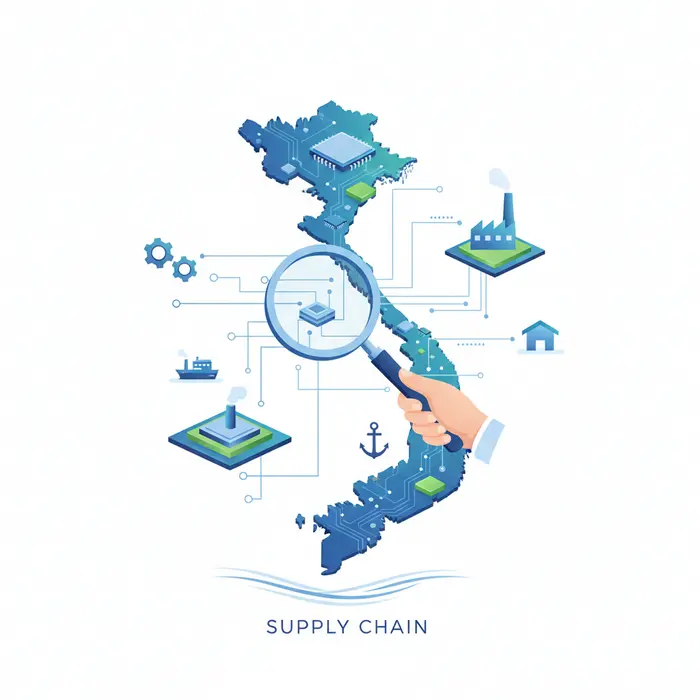
Vietnam has rapidly emerged as a pivotal hub in the global electronics manufacturing landscape, drawing significant attention from international buyers and supply chain strategists. This strategic shift, driven by geopolitical considerations, attractive trade agreements, and a competitive labor force, positions Vietnam as a premier destination for Vietnam Electronics Manufacturing. Understanding the intricacies of the Vietnam electronics supply chain—from local sourcing to logistics and regulatory compliance—is crucial for businesses aiming to successfully leverage the country’s growing industrial capabilities.
1. Local Sourcing and Component Ecosystem
While Vietnam has made remarkable strides in developing its domestic industrial base, its electronics sector still relies significantly on imported raw materials and high-tech components. For basic components like plastic molding, simple PCBs, cables, and packaging materials, a robust network of local suppliers has emerged, particularly within industrial zones near major cities like Hanoi, Ho Chi Minh City, and Da Nang. These local Electronics manufacturers Vietnam are increasingly capable of supporting both mass production and specialized requests, contributing to a more resilient supply chain. However, for sophisticated components such as integrated circuits, advanced display panels, and specialized sensors, reliance on established supply chains from China, South Korea, Taiwan, and Japan remains high. Companies engaged in Vietnam electronics OEM or Contract manufacturing Vietnam electronics often manage a hybrid sourcing model, balancing cost-effectiveness with the need for cutting-edge technology. The government is actively promoting localization efforts through investment incentives and developing supporting industries, aiming to deepen the domestic value chain and reduce import dependency. This evolving ecosystem presents both challenges and opportunities for foreign investors seeking to integrate into the Vietnam electronics supply chain.
2. Logistics and Export Infrastructure
Vietnam’s strategic geographical position and significant investment in infrastructure have created a robust logistics network essential for its electronics export prowess. The country boasts several deep-water ports, with Cai Mep-Thi Vai (near Ho Chi Minh City) and Lach Huyen International Gateway Port (near Hai Phong) serving as critical gateways for international shipping. These ports offer direct links to major global markets, minimizing transit times and costs. Air cargo operations are primarily facilitated by Noi Bai International Airport (Hanoi) and Tan Son Nhat International Airport (Ho Chi Minh City), which handle high-value, time-sensitive electronic components and finished products. An improving national highway system connects industrial parks and manufacturing hubs to these ports and airports, ensuring efficient inland transportation. Furthermore, Vietnam’s participation in numerous Free Trade Agreements (FTAs), including the CPTPP and EVFTA, significantly enhances its export competitiveness by reducing tariffs and streamlining customs procedures. This extensive and developing infrastructure underpins the efficiency and reliability of the broader Vietnam electronics supply chain, making it an attractive proposition for global businesses. The country’s transformation into a major tech manufacturing powerhouse has been significantly aided by these logistical improvements.
3. Customs Procedures and Regulatory Compliance
Navigating customs procedures and regulatory compliance is a critical aspect of operating within the Vietnamese electronics supply chain. While the government has made considerable efforts to streamline processes and reduce bureaucratic hurdles, understanding the specific requirements for importing raw materials and exporting finished goods is essential. Companies must comply with regulations concerning product quality, safety standards, environmental protection, and labor laws. Special economic zones and industrial parks often offer favorable tax incentives, customs benefits, and simplified administrative procedures to attract foreign direct investment in high-tech manufacturing. The process for obtaining import/export licenses, managing value-added tax (VAT) refunds, and ensuring compliance with origin rules under various FTAs requires meticulous attention. Engaging with experienced local logistics partners and legal counsel is highly advisable to ensure smooth operations and avoid potential delays or penalties. Foreign businesses looking to establish a presence or engage with Contract manufacturing Vietnam electronics should conduct thorough due diligence and leverage local expertise. Adherence to these regulatory frameworks is not only a legal obligation but also a fundamental factor in the long-term success and sustainability of a company’s operations within the dynamic Vietnamese market.
Identifying Key Contract Manufacturing Vietnam Electronics Partners
Vietnam has firmly established itself as a pivotal hub in the global electronics supply chain, attracting significant investment and becoming a go-to destination for businesses seeking robust and cost-effective manufacturing solutions. For international buyers, navigating the landscape of potential partners is crucial to leverage the country’s capabilities effectively. This guide will help you identify and vet suitable electronics manufacturers Vietnam, exploring optimal contract manufacturing Vietnam electronics options, and understanding the nuances of the Vietnam electronics supply chain.
Major Industrial Hubs and Clusters
The Vietnam Electronics Manufacturing industry is concentrated in several key industrial zones across the country, each offering unique advantages regarding infrastructure, labor, and logistical access. Understanding these hubs is the first step in identifying suitable partners.
- Northern Vietnam: Provinces like Bac Ninh, Bac Giang, Hai Phong, and Thai Nguyen are major magnets for electronics manufacturing due to their proximity to Hanoi, international airports, and deep-water ports. This region hosts large-scale operations for global tech giants, specializing in consumer electronics, semiconductors, and components. Its well-developed infrastructure and a growing pool of skilled labor make it ideal for high-volume production and complex assemblies.
- Southern Vietnam: Ho Chi Minh City, Dong Nai, Binh Duong, and Ba Ria-Vung Tau form another vibrant cluster. This region benefits from its established industrial base, extensive port facilities (like Cai Mep-Thi Vai), and a strong local Vietnam electronics supply chain for supporting industries. It’s a stronghold for diverse electronics products, from PCBs and components to finished goods, and offers excellent connectivity for exports.
These clusters not only provide advanced infrastructure but also foster an ecosystem of ancillary services, making them attractive for long-term strategic partnerships.
Leading Local and Foreign-Invested Manufacturers
The landscape of electronics manufacturers Vietnam is characterized by a blend of large foreign direct investment (FDI) enterprises and increasingly capable local players.
- Foreign-Invested Enterprises (FIEs): Global giants such as Samsung, Intel, LG, Foxconn, and Luxshare Precision have established significant manufacturing bases in Vietnam. These FIEs often bring cutting-edge technology, stringent quality standards, and vast production capacities, driving innovation and raising the bar for the entire industry. They primarily focus on high-volume production for global brands and often engage in sophisticated Vietnam electronics OEM (Original Equipment Manufacturer) services, producing components or finished products under contract for other international companies. Their presence significantly strengthens the overall Vietnam Electronics Manufacturing capabilities.
- Local Vietnamese Manufacturers: While perhaps not as globally recognized as the FIEs, a growing number of Vietnamese companies are emerging as strong contenders, particularly for mid-to-low volume runs, specialized components, or design-to-manufacturing services. These local firms often offer greater flexibility, competitive pricing, and a deep understanding of the local business environment. Many are investing heavily in R&D and advanced machinery to compete on a global scale. Identifying these capable local partners can be a strategic advantage for businesses looking for flexible and agile solutions. The continued influx of high-tech investment further cements Vietnam’s role as a manufacturing powerhouse, as detailed by recent reports on its economic growth. For comprehensive insights into this dynamic market and to connect with potential dedicated online platforms.
Criteria for Supplier Selection (Capacity, Technology, Quality)
Selecting the right contract manufacturing Vietnam electronics partner requires a thorough vetting process centered on three critical pillars: capacity, technology, and quality.
- Capacity: Evaluate the manufacturer’s production volume capabilities. Does their infrastructure (number of SMT lines, assembly lines, cleanrooms) align with your projected demand? Can they scale up or down efficiently based on your product lifecycle? Assess their labor force size, skill sets, and ability to manage peak production periods. Over-reliance on overtime can indicate insufficient capacity or poor planning.
- Technology: Assess the technological sophistication of the facility. This includes the modernity of their equipment (e.g., advanced pick-and-place machines, automated optical inspection (AOI) systems, X-ray inspection for PCBs), their engineering expertise, and R&D capabilities. Do they have experience with your specific product complexity, materials, and processes? A partner with robust R&D can offer valuable design for manufacturability (DFM) insights, optimizing your product for efficient production and cost savings.
- Quality: Non-negotiable in electronics manufacturing, quality assurance is paramount. Look for industry-standard certifications such as ISO 9001 (quality management), ISO 13485 (medical devices), or IATF 16949 (automotive), which indicate adherence to international benchmarks. Inquire about their quality control (QC) processes at every stage: incoming material inspection, in-process controls, and final product testing. Understand their defect rates, traceability systems, and corrective action procedures. A transparent approach to quality management signifies a reliable partner committed to excellence.
Beyond these core criteria, consider factors like communication effectiveness, intellectual property protection protocols, supply chain resilience, and cultural compatibility to foster a successful and long-lasting partnership in Vietnam Electronics Manufacturing.
Future Outlook and Sustained Growth for Vietnam Electronics
Vietnam has firmly established itself as a pivotal global hub for electronics manufacturing, captivating the attention of international investors and procurement managers seeking resilient and efficient supply chains. As we look towards 2025 and beyond, the future outlook for Vietnam Electronics Manufacturing is exceptionally promising, poised for sustained growth driven by strategic investments, evolving global supply chain dynamics, and a concerted national effort to enhance its industrial capabilities. The sector is currently witnessing a transition from pure assembly to higher value-added activities, making it an increasingly attractive destination for global brands. Indeed, Vietnam’s electronics exports are forecast to rise significantly, underlining the sector’s robust momentum. Key challenges include keeping pace with rapid technological advancements, developing a sophisticated local supporting industry, and ensuring a robust talent pipeline. Addressing these will be crucial for unlocking its full potential and solidifying its position on the world stage.

1. Automation and Industry 4.0 Adoption
The embrace of Industry 4.0 technologies is defining the next era for Vietnam’s electronics manufacturing sector. This paradigm shift, characterized by the integration of automation, artificial intelligence (AI), the Internet of Things (IoT), and big data analytics, is enabling smart factories and significantly boosting productivity and precision. Leading electronics manufacturers Vietnam are investing heavily in these technologies to streamline production processes, reduce errors, and enhance their competitive edge. The government’s push for digital transformation further supports this trend, aiming to create a highly efficient and integrated manufacturing ecosystem. This shift will not only improve operational efficiency but also attract more high-tech investments, fostering a more sophisticated manufacturing base.
2. Sustainability and ESG Considerations
Environmental, Social, and Governance (ESG) factors are no longer peripheral but central to global procurement decisions. For Vietnam’s electronics supply chain, integrating sustainable practices is becoming a competitive imperative. This involves adopting green manufacturing processes, minimizing waste, optimizing energy consumption, and ensuring ethical labor practices throughout the production lifecycle. Many international corporations are increasingly scrutinizing their supply chains for ESG compliance, making it essential for Vietnamese suppliers to demonstrate strong commitments in these areas. Furthermore, Vietnam’s government is actively promoting renewable energy and sustainable industrial development, aligning with global efforts to combat climate change and fostering a more responsible manufacturing environment. The growing demand for eco-friendly products also means that manufacturers focusing on sustainable components and production methods will gain a significant advantage.
3. Talent Development and R&D Investment
To move beyond its current strength in assembly and contract manufacturing, Vietnam needs to significantly invest in talent development and research & development (R&D). While competitive labor costs remain an advantage, the increasing complexity of modern electronics demands a highly skilled workforce proficient in areas such as AI, data science, advanced robotics, and semiconductor design. The government, alongside multinational corporations and local educational institutions, is focusing on bolstering technical and vocational training programs to bridge this skills gap. Moreover, fostering a culture of innovation through increased R&D investment is vital. This will enable Vietnamese companies to transition from being primarily contract manufacturing Vietnam electronics providers to innovators capable of original design manufacturing (ODM) and even original brand manufacturing (OBM). This strategic move up the value chain is critical for long-term competitiveness and for securing a more prominent role in the global electronics industry. Such investments will ensure that Vietnam remains at the forefront of the evolving technological landscape, attracting further foreign direct investment and fostering a dynamic local ecosystem.
In conclusion, Vietnam’s electronics manufacturing sector is on an upward trajectory, marked by strategic shifts towards advanced technologies, sustainable practices, and human capital development. While challenges persist, the government’s proactive policies, combined with the influx of foreign investment and a growing domestic market, position Vietnam as an indispensable player in the global electronics landscape for decades to come. Its ability to adapt to global trends and nurture an environment conducive to innovation will cement its status as a top-tier manufacturing destination. Global buyers and investors looking to diversify and strengthen their supply chains will find Vietnam an increasingly compelling partner, offering both capacity and advanced capabilities.
Partner with Vietnam’s Leading Suppliers
Looking for reliable suppliers in Vietnam? Contact VietnamSuppliers.com today to connect with verified manufacturers and exporters across all industries.
—————————————
References
– Vietnam attracts more investment amid supply chain diversification – Nikkei Asia: https://asia.nikkei.com/Spotlight/Supply-Chain/Vietnam-attracts-more-investment-amid-supply-chain-diversification
– :
– How Vietnam became a tech manufacturing powerhouse: https://asia.nikkei.com/Spotlight/Vietnam-factory/How-Vietnam-became-a-tech-manufacturing-powerhouse
– Vietnam attracts more high-tech investment amid global supply chain shifts: https://www.reuters.com/markets/asia/vietnam-attracts-more-high-tech-investment-amid-global-supply-chain-shifts-2023-11-20/
– Vietnam’s electronics exports are forecast to rise: https://asia.nikkei.com/Economy/Vietnam-s-electronics-exports-forecast-to-rise-13-in-2024-industry-says

