
In the intricate world of international commerce, understanding the flow of goods and services between nations is crucial for evaluating a country’s economic health. Among the key indicators, the concept of a trade surplus stands out as a powerful determinant of national prosperity and global economic influence. It’s a term frequently encountered in economic news, policy debates, and business strategies, yet its precise definition and implications can often be misunderstood.
Defining Trade Surplus and Its Components
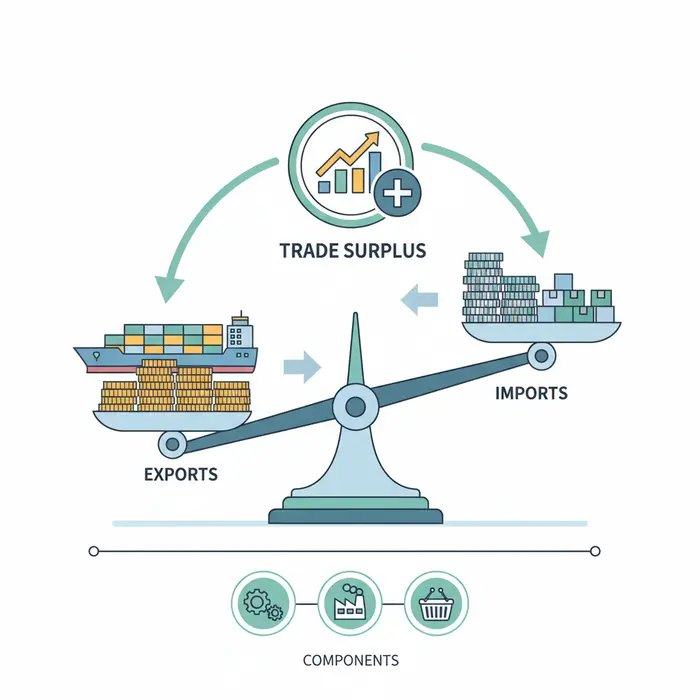
A country’s economic relationship with the rest of the world is largely encapsulated by its balance of trade, a fundamental metric that reflects the net difference between the monetary value of its exports and imports over a specific period. When a nation sells more goods and services to other countries than it buys from them, it achieves a trade surplus. This favorable position suggests a strong competitive edge in international markets and often underpins robust domestic industries. Conversely, a trade deficit explained as a situation where imports exceed exports, can signal various economic challenges.
1. What is a Trade Surplus?
At its core, a trade surplus occurs when the total value of a country’s exports surpasses the total value of its imports during a given period, typically measured quarterly or annually. This positive balance means the nation is a net exporter, earning more foreign currency from its sales abroad than it spends on foreign goods and services. For example, if Vietnam exports $100 billion worth of products and imports $80 billion, it enjoys a trade surplus of $20 billion. This excess foreign currency can be used to invest in foreign assets, pay down external debt, or accumulate foreign exchange reserves, strengthening the country’s financial position.
The economic benefits of trade surplus are numerous and significant. It often indicates a strong domestic manufacturing base, high productivity, and competitive industries capable of meeting global demand. A sustained surplus can lead to increased employment in export-oriented sectors, stimulate economic growth, and boost national income. Many countries pursue an export-led growth strategy, deliberately fostering industries that can compete internationally to achieve and maintain a trade surplus, believing it’s a direct path to prosperity and stability.
2. Exports vs. Imports: The Core Relationship
Understanding a trade surplus necessitates a clear distinction between exports and imports. Exports represent goods and services produced domestically and sold to residents of other countries. These can range from manufactured goods like electronics and textiles to agricultural products, raw materials, and services such as tourism, financial services, and software development. For the exporting country, these sales bring in foreign currency and revenue.
Imports, on the other hand, are goods and services produced in other countries and purchased by domestic residents. These include consumer goods, capital equipment, raw materials not available domestically, and services. While imports satisfy domestic demand and offer consumers a wider variety of products, they represent an outflow of domestic currency. The interplay between these two forces — the revenue generated by exports and the expenditure incurred by imports — directly determines a nation’s balance of trade. A healthy balance of trade definition often leans towards a surplus, but a dynamic and balanced approach to international trade is crucial for sustainable economic development.
3. Calculating the Balance of Trade
The calculation of the balance of trade is straightforward: it is simply the total value of a country’s exports minus the total value of its imports. The formula can be expressed as:
Balance of Trade = Total Value of Exports - Total Value of Imports
If the result of this calculation is a positive number, the country has a trade surplus. If the result is negative, it has a trade deficit. A balance of trade of zero, though rare, would indicate that exports perfectly match imports. It’s important to note that the “value” typically refers to monetary value, such as U.S. dollars or euros, allowing for a standardized comparison across different types of goods and services. This measurement, often a key component of a country’s broader balance of payments, provides insights into its international financial position and its economic interactions with the rest of the world.
In conclusion, a trade surplus is more than just a numerical advantage; it’s a reflection of a nation’s economic strength, its industrial competitiveness, and its ability to generate wealth through international exchange. By carefully managing exports and imports, countries aim to achieve a favorable balance that supports their long-term growth and stability in the global economy.
Trade Deficit Explained: The Opposite Side of the Coin
A country’s economic health is often gauged by its balance of trade. While a trade surplus signifies a nation exporting more than it imports, accumulating foreign currency and fostering an export-led growth strategy, a trade deficit represents the converse. This section explores the concept of a trade deficit, detailing its definition, underlying causes, and the varying perspectives on its short-term and long-term implications. Understanding the trade deficit is crucial for grasping international trade dynamics and their impact on domestic prosperity and global economic relations.
1. Understanding the Trade Deficit
The **balance of trade definition** refers to the difference between a country’s total value of exports and imports over a specific period. When a country’s imports exceed its exports, it experiences a **trade deficit explained** as a negative balance of trade. This means the country is spending more on foreign goods and services than it is earning from selling its own, resulting in a net outflow of domestic currency or an increase in foreign claims on domestic assets.
Unlike a trade surplus, which often reflects competitive advantage and leads to foreign exchange reserves, a deficit implies a nation is a net consumer of foreign products. Its significance depends heavily on underlying reasons and financing. For example, a deficit might stem from high domestic demand for diverse goods, some more efficiently produced abroad. Conversely, persistent and unsustainable deficits raise concerns about economic competitiveness and long-term financial stability. It’s a key indicator within the broader balance of payments, which tracks all monetary transactions between a country and the rest of the world.
2. Causes of a Trade Deficit
Several factors contribute to a country developing or sustaining a trade deficit, often interconnected from both domestic economic conditions and international trade dynamics:
- Strong Domestic Demand: A robust domestic economy with high consumer spending and business investment can fuel greater demand for all goods, including imports. If domestic production cannot keep pace or if consumers prefer foreign goods, imports naturally rise.
- Lack of Domestic Competitiveness: If a country’s industries struggle to compete with foreign producers in terms of cost, quality, or innovation, its exports may decline while imports increase. This can stem from higher production costs, outdated technology, or insufficient investment.
- Exchange Rate Appreciation: A strong domestic currency makes imports cheaper for domestic consumers and exports more expensive for foreign buyers. This dynamic dampens export growth and stimulates import demand, potentially widening the trade deficit.
- Fiscal Deficits (Twin Deficits): The “twin deficits” hypothesis suggests a link between a government’s budget deficit and a country’s trade deficit. Large government spending without corresponding revenue can boost overall demand, some of which spills over into imports. Government borrowing can also attract foreign capital, strengthening the domestic currency and exacerbating the trade deficit.
- Investment Opportunities & Capital Inflows: A country with attractive investment opportunities might experience a trade deficit. Foreign investors pouring capital into the country creates demand for the domestic currency, leading to appreciation. This appreciation, in turn, makes imports cheaper and exports more expensive. Such capital inflows often signal confidence in the country’s economic future.
- Dependence on Imported Resources: Nations heavily reliant on specific imported resources, such as oil, natural gas, or critical minerals, will naturally run a trade deficit if domestic production cannot meet demand.
3. Short-Term vs. Long-Term Deficit Perspectives
The implications of a trade deficit are not always straightforward and can vary significantly depending on short-term or long-term perspectives.
In the **short term**, a trade deficit can sometimes be viewed positively. It can signal a healthy, growing domestic economy with high consumer confidence and investment. Consumers benefit from a wider variety of goods and potentially lower prices due to foreign competition. Importing capital goods, such as machinery and technology, can boost productivity and future growth. If a deficit is financed by significant foreign direct investment (FDI) into productive sectors, it can indicate global confidence, bringing new technologies and creating jobs.
However, a persistent and growing trade deficit can raise concerns over the **long term**.
- Sustainability and Debt Accumulation: If a trade deficit is primarily driven by consumption rather than productive investment, and financed by borrowing from abroad, it can lead to a build-up of foreign debt. Servicing this debt requires future income outflows, potentially burdening future generations.
- Currency Vulnerability: A sustained large deficit can put downward pressure on the domestic currency over time. While a weaker currency can eventually help reduce the deficit, it can also lead to imported inflation, eroding purchasing power.
- Decline in Domestic Industries: A chronic deficit might indicate a fundamental lack of competitiveness in domestic industries, potentially leading to job losses and reliance on foreign production for essential goods. This can undermine a nation’s industrial base and reduce economic resilience.
- Risk of Sudden Stop: If foreign investors lose confidence in a country’s ability to service its debt or manage its economy, they might suddenly withdraw capital, triggering a financial crisis.
Ultimately, whether a trade deficit is beneficial or detrimental depends on its magnitude, duration, and underlying causes. A deficit resulting from strong investment and growth might be sustainable, whereas one driven by excessive consumption or a loss of competitiveness could pose significant long-term challenges. Policymakers must carefully analyze the deficit’s nature to implement appropriate fiscal, monetary, and trade policies that support sustainable economic growth and stability.
The Balance of Trade in the Global Economy
The balance of trade definition is a fundamental concept in international economics, representing the difference between a country’s total value of exports and its total value of imports over a specific period. This metric provides a snapshot of a nation’s trading relationship with the rest of the world. When a country exports more goods and services than it imports, it records a trade surplus. Conversely, a situation where imports exceed exports results in a trade deficit. Understanding this dynamic is crucial for assessing a nation’s economic health, its global competitiveness, and the trajectory of its international relations. A sustained trade surplus can signal robust industrial output and strong demand for domestic products abroad, while a persistent trade deficit explained might point to issues such as over-reliance on foreign goods, declining domestic production, or a strong consumer appetite for imports. The balance of trade is not merely an accounting figure; it is a powerful indicator that influences policy decisions, investment flows, and geopolitical strategies worldwide.

Beyond Surplus and Deficit: A Broader View
While the terms trade surplus and trade deficit explained offer a straightforward initial assessment, a deeper analysis reveals a more complex picture. Economists often differentiate between the balance of trade (goods and services) and the broader current account balance, which also includes net income from investments abroad and net transfers. A country running a trade deficit might still have a healthy current account if it receives substantial income from foreign investments. Similarly, a trade surplus, while often perceived positively, could indicate weak domestic demand if consumers and businesses are not investing or spending enough domestically.
For many developing nations, importing capital goods and technology, even if it contributes to a temporary trade deficit, can be a strategic investment that fuels future productivity and export-led growth strategy. These imports are essential for industrialization and building a competitive manufacturing base. Conversely, developed nations with a trade surplus often experience economic benefits of trade surplus such as accumulation of foreign reserves, which can be used to stabilize the economy during downturns or for strategic foreign investments. This surplus can also reflect strong domestic industries that are highly competitive on the global stage, leading to job creation and increased national wealth. However, an excessively large and persistent trade surplus can also lead to accusations of currency manipulation or protectionist policies, straining international trade relations.
Impact on National Currency and Exchange Rates
The balance of trade has a direct and significant impact on a nation’s currency value and exchange rates. When a country achieves a trade surplus, there is a higher demand for its currency in international markets because foreign buyers need to convert their money to purchase the country’s exports. This increased demand strengthens the national currency, making imports cheaper for domestic consumers and businesses, but simultaneously making exports more expensive for foreign buyers. Conversely, a trade deficit explained implies that a nation is importing more than it exports, requiring more of its currency to be converted into foreign currencies to pay for these imports. This increased supply of the domestic currency on international markets tends to weaken it. A weaker currency makes exports more competitive (cheaper for foreigners) and imports more expensive (costlier for domestic consumers), theoretically helping to correct the trade imbalance over time. However, a rapidly depreciating currency can also lead to imported inflation and reduced purchasing power for citizens. Central banks and governments often monitor these movements closely, sometimes intervening in currency markets to maintain stability or achieve specific economic objectives.
Global Trade Dynamics and Interdependence
The balance of trade is not an isolated national issue; it is a critical component of global trade dynamics and fosters deep economic interdependence among nations. Large, persistent trade surplus or trade deficit explained figures can become points of contention in international relations, often leading to calls for protectionist measures or trade negotiations. For instance, a country with a significant surplus might be accused of unfair trade practices or currency manipulation, while a country with a large deficit might face pressure to reduce its imports or boost its exports.
This interdependence means that the economic policies of one nation can have ripple effects across the globe. An export-led growth strategy in one country, while beneficial domestically, can contribute to deficits in partner countries if demand for their goods doesn’t keep pace. International institutions like the World Trade Organization (WTO) strive to create a level playing field, but trade imbalances frequently fuel geopolitical tensions. Understanding these dynamics is essential for promoting free and fair trade, maintaining global economic stability, and fostering cooperative international relations rather than resorting to trade wars that ultimately harm all parties involved. Nations are increasingly recognizing that sustainable economic growth often requires a balanced approach to trade that benefits all participants in the global economy.
Economic Benefits of a Trade Surplus
A trade surplus occurs when a country’s exports exceed its imports over a given period, meaning it sells more goods and services to the rest of the world than it buys. This favorable Balance of trade definition is often seen as a sign of economic strength and competitiveness, leading to a range of positive economic impacts. While a Trade surplus might sometimes be viewed with skepticism by trading partners, for the nation experiencing it, the economic benefits are significant, contributing to national wealth, job creation, and financial stability. Conversely, a trade deficit, explained as importing more than exporting, typically reflects money flowing out of the economy, which can have adverse effects if sustained.
1. Boosting Economic Growth and GDP
One of the most direct economic benefits of a trade surplus is its positive contribution to a nation’s Gross Domestic Product (GDP). GDP, the total value of goods and services produced within a country, is calculated using the formula Y = C + I + G + (X – M), where X represents exports and M represents imports. When exports (X) are greater than imports (M), the (X – M) component is positive, directly adding to the national income and stimulating economic expansion. This dynamic is often the cornerstone of an export-led growth strategy, where countries prioritize increasing their production for foreign markets.
An export-driven economy encourages domestic industries to scale up production to meet international demand. This increased output necessitates investment in capital, technology, and infrastructure, fostering innovation and enhancing productivity. Furthermore, the revenue generated from exports circulates within the domestic economy, boosting consumer spending and business investment, creating a virtuous cycle of economic activity. This sustained growth can elevate living standards and strengthen the overall economic resilience of the nation.
2. Job Creation and Industrial Expansion
A persistent trade surplus is a powerful engine for job creation across various sectors. As domestic industries ramp up production to satisfy international demand, they require more labor, leading to increased employment opportunities. This isn’t limited to manufacturing alone; sectors such as logistics, shipping, finance, and services that support export activities also experience growth. For instance, a surge in electronics exports requires more factory workers, engineers, quality control specialists, and personnel in freight forwarding and port operations.
Moreover, the expansion spurred by export success often encourages domestic firms to invest further in their capacity and capabilities. This industrial expansion involves building new factories, upgrading existing facilities, and adopting advanced technologies to remain competitive in global markets. Such investments not only create construction jobs but also foster a more sophisticated and robust industrial base, making the economy less vulnerable to external shocks and more capable of sustained growth. The increased demand for goods and services also stimulates related domestic industries, creating a ripple effect of job growth throughout the economy.
3. Accumulation of Foreign Exchange Reserves
Perhaps one of the most critical long-term advantages of a trade surplus is the accumulation of foreign exchange reserves. When a country exports more than it imports, it receives payments in foreign currencies (e.g., US dollars, Euros, Yen). These foreign currencies are then held by the nation’s central bank as reserves. A substantial reserve of foreign currency provides a critical buffer against economic uncertainties, such as sudden capital outflows or global financial crises.
These reserves enhance a country’s financial stability and international credibility. They can be used to stabilize the domestic currency, finance essential imports (especially during times of crisis), service foreign debt, and facilitate international transactions. A strong foreign reserve position also gives a country greater leverage in international trade negotiations and allows it to pursue independent monetary policies without undue external pressure. For developing nations, accumulating foreign reserves through a trade surplus is particularly vital, enabling them to fund development projects and attract foreign direct investment, secure in the knowledge of their financial backing.
Trade Surplus as an Export-Led Growth Strategy
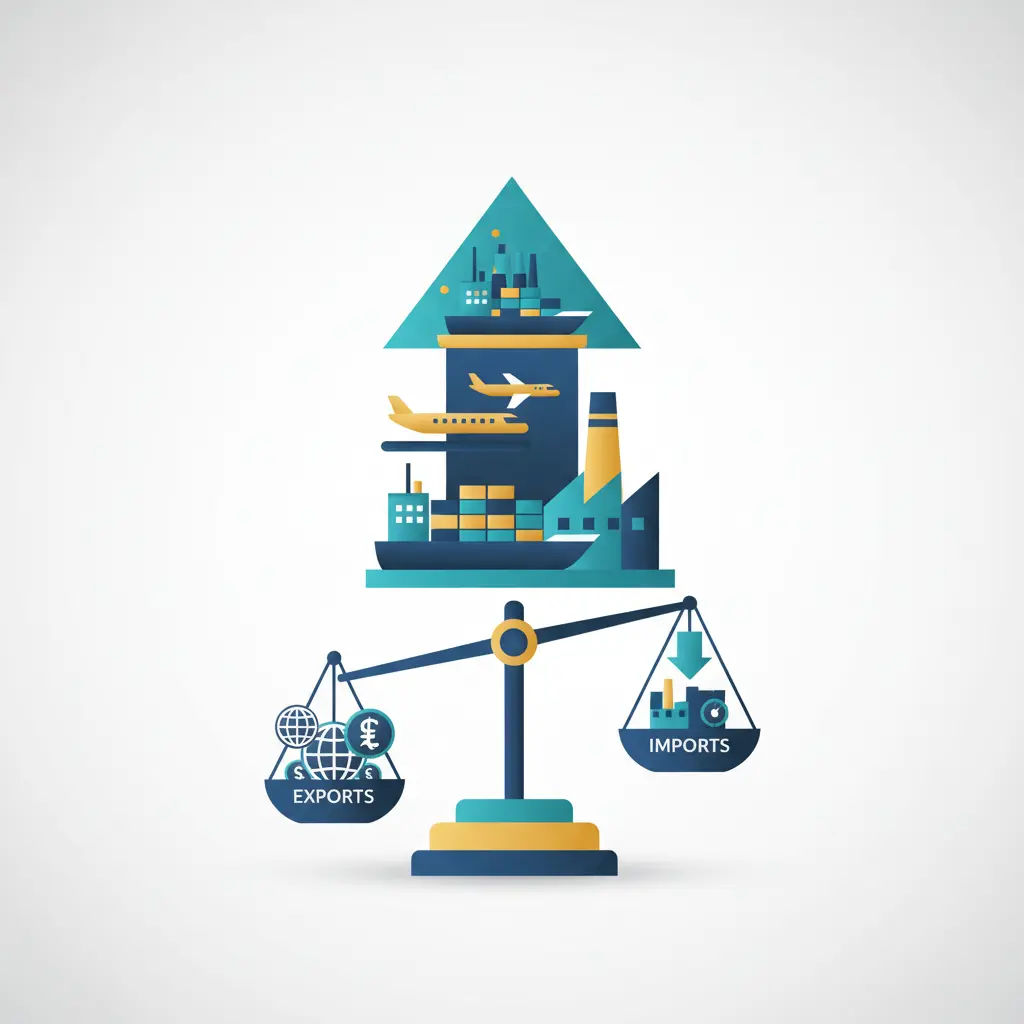
A nation’s economic health is often gauged by its balance of trade definition, which is the difference between the monetary value of its exports and imports over a specific period. When a country sells more goods and services to other countries than it buys, it achieves a trade surplus. Conversely, a trade deficit explained occurs when imports exceed exports. Strategically pursuing a trade surplus has long been a cornerstone of economic policy for many nations aiming to stimulate growth and development. This approach, often termed an export-led growth strategy, prioritizes robust export performance to drive national income, create employment, and accumulate foreign reserves, leading to significant economic benefits of trade surplus.
1. Implementing Export-Led Growth Models
The core of an export-led growth strategy involves focusing national resources and policy efforts on enhancing a country’s export capabilities. This model has been successfully adopted by various economies, from the post-World War II “Asian Tigers” (South Korea, Taiwan, Singapore, Hong Kong) to modern-day manufacturing powerhouses like Germany and China. These nations strategically invest in industries with high export potential, often manufacturing sectors, by developing competitive advantages through scale, efficiency, and technological innovation.
The rationale is straightforward: increased exports inject foreign currency into the domestic economy, boosting Aggregate Demand (AD) and Gross Domestic Product (GDP). This rise in demand stimulates domestic production, leading to job creation across various sectors, from manufacturing and logistics to research and development. Furthermore, consistent trade surpluses allow a nation to accumulate significant foreign exchange reserves, which can be used to stabilize its currency, invest in critical infrastructure, or repay foreign debt, strengthening its financial position on the global stage. This sustained outward orientation can transform an economy, lifting millions out of poverty and fostering rapid industrialization.
2. Government Policies Supporting Exports
Governments play a crucial role in orchestrating and sustaining an export-led growth model through a myriad of supportive policies. One common strategy is currency management, where a government might deliberately undervalue its national currency to make its exports cheaper and more attractive to foreign buyers, while simultaneously making imports more expensive. This dual effect helps to boost exports and curb imports, widening the trade surplus.
Another key policy involves providing subsidies and incentives to export-oriented industries. These can range from direct financial grants and tax breaks to low-interest loans and export credit guarantees. Such measures reduce production costs, enhance competitiveness, and mitigate risks for businesses venturing into international markets. Investments in infrastructure development are also paramount; building modern ports, efficient logistics networks, advanced communication systems, and reliable energy supplies directly facilitates the movement of goods and reduces trade barriers.
Moreover, governments actively pursue free trade agreements and participate in international trade organizations to secure preferential market access for their products. They also establish export promotion agencies that offer market research, trade mission support, and networking opportunities to domestic companies. Lastly, fostering a skilled workforce through education and investing heavily in research and development ensures that industries remain innovative and competitive in the long run.
3. Challenges and Sustainability of Export Dominance
While an export-led strategy offers compelling benefits, it is not without its challenges and potential pitfalls. Over-reliance on external demand makes an economy highly vulnerable to global economic downturns or shifts in international trade policies. A recession in key export markets or the imposition of protectionist measures can severely impact a nation’s economic stability.
This approach can also lead to trade friction with other countries. Accusations of currency manipulation, unfair subsidies, or dumping practices can result in retaliatory tariffs and trade disputes, undermining the very benefits sought. Furthermore, a singular focus on exports might neglect the development of the domestic market and internal consumption, potentially leading to imbalances in economic growth.
Environmentally, aggressive industrialization for export can result in significant pollution and resource depletion, posing long-term sustainability issues. From a social perspective, prioritizing export industries might divert resources from essential public services or create uneven development within a country. For long-term sustainability, nations pursuing export dominance must eventually transition from simply manufacturing low-cost goods to developing high-value, innovation-driven industries, avoiding the “middle-income trap.” Diversification of export markets and products, alongside robust domestic demand, becomes crucial for achieving balanced and resilient economic development.
Partner with Vietnam’s Leading Suppliers
Looking for reliable suppliers in Vietnam? Contact VietnamSuppliers.com today to connect with verified manufacturers and exporters across all industries.
—————————————
References
– Current Account Balance – IMF Factsheet: https://www.imf.org/en/About/Factsheets/Sheets/2023/current-account-balance
– IMF Factsheet: Balance of Payments: https://www.imf.org/en/About/Factsheets/Sheets/2016/08/01/Balance-of-Payments
– IMF Factsheet on External Sector Assessments: https://www.imf.org/en/About/Factsheets/Sheets/2023/ESAS
– Balance of Trade Definition: https://www.investopedia.com/terms/b/balancetrade.asp
– World Bank: Can Trade Cure All Ills? Export-Led Growth in the Developing World: https://www.worldbank.org/en/news/feature/2012/03/12/trade-cure-all-ills-export-led-growth-developing-world