
What is a Shipping Manifest Document and Its Core Purpose?
The shipping manifest document is a crucial piece of paperwork in the intricate world of global logistics and trade. Often underestimated, its fundamental role spans across various stages of the supply chain, ensuring transparency, compliance, and efficient movement of goods. From inventory management to international customs clearance, understanding the purpose and components of a shipping manifest is essential for anyone involved in import, export, or freight forwarding. This document serves as a comprehensive list of all cargo aboard a vessel, aircraft, truck, or train, detailing critical information required by carriers, customs authorities, and recipients alike. It’s more than just a list; it’s a legal declaration that underpins the entire journey of goods from origin to destination.
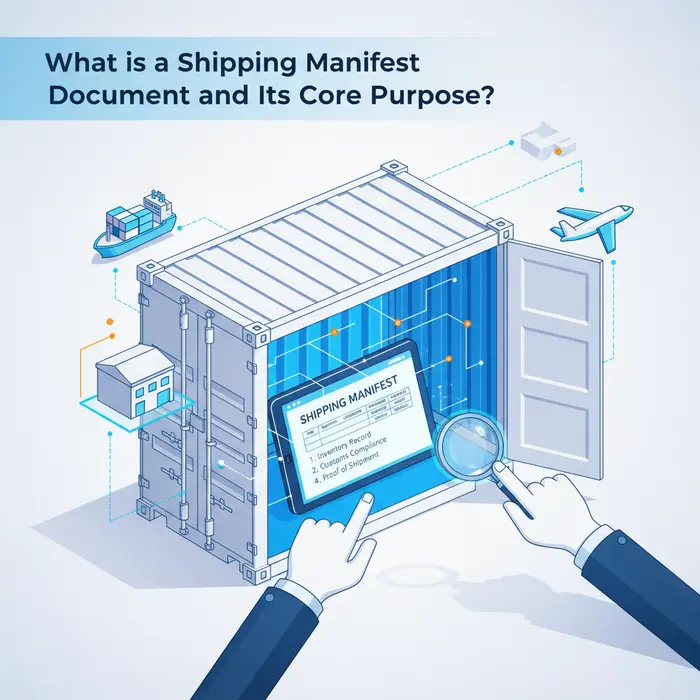
1. Definition and key components of a shipping manifest
A shipping manifest, sometimes simply called a freight manifest or cargo manifest, is a document that provides a detailed declaration of all goods being transported in a single shipment or on a specific conveyance. Unlike a single Bill of Lading (BoL) which details one specific consignment, the shipping manifest consolidates information for all consignments on a particular transport unit (e.g., a container, a vessel, or a flight). It acts as a master list for the carrier, offering a consolidated view of everything being moved.
Key components typically found in a shipping manifest include:
- Carrier Information: Name and details of the shipping company or carrier.
- Voyage/Flight/Trip Number: Unique identifier for the specific journey.
- Port of Loading/Origin: Where the goods were loaded.
- Port of Discharge/Destination: Where the goods are intended to be unloaded.
- Container/Vehicle Number: Identification of the specific transport unit holding the goods.
- List of Bills of Lading (or Waybills): Each manifest typically references multiple individual Bills of Lading, each corresponding to a distinct shipment within the overall cargo.
- Consignor/Shipper Details: Information about the sender of each consignment.
- Consignee Details: Information about the recipient of each consignment.
- Description of Goods: A general description of the cargo for each consignment, often including type, quantity, and packaging. This is crucial for customs manifest requirements.
- Weight and Volume: Total weight and volume of the cargo.
- Hazardous Materials Declaration: Any dangerous goods must be clearly identified and detailed.
- Seal Numbers: For containers, verifying integrity.
While a Bill of Lading focuses on the contract of carriage between the shipper and carrier for a single consignment, the shipping manifest encompasses all consignments on the entire vessel or vehicle. This distinction is vital when discussing bill of lading vs shipping manifest.
2. Primary functions and importance in the supply chain
The shipping manifest purpose extends far beyond simple record-keeping, serving multiple critical functions throughout the supply chain:
- Customs Clearance and Border Control: This is perhaps its most vital function. Customs authorities rely heavily on manifests to control and clear goods entering or exiting a country. The manifest allows them to assess duties, ensure compliance with import/export regulations, identify prohibited items, and conduct security screenings. The rise of e-manifest explained technologies has significantly streamlined this process, allowing for electronic submission and faster processing.
- Cargo Tracking and Management: For carriers, the manifest is an indispensable tool for managing cargo onboard. It helps in loading, unloading, and stowing operations, ensuring that goods are correctly placed and handled. In case of discrepancies or damage, it provides a reference point for investigation.
- Logistics Planning and Efficiency: By providing an overview of all cargo, logistics teams can plan subsequent transport, warehousing, and distribution more effectively. This facilitates optimal resource allocation and reduces potential bottlenecks.
- Security and Risk Management: Manifests contribute to supply chain security by providing a clear record of contents. This aids in identifying potential threats or suspicious shipments, allowing authorities to intervene before goods reach their destination.
- Legal and Audit Trail: The manifest serves as a legal document, providing evidence of goods loaded and carried. It is essential for auditing purposes, resolving disputes, and compliance checks.
- Proof of Goods on Board: For carriers, it acts as a declaration of what they are transporting, protecting them against claims for goods not listed.
3. Key stakeholders who utilize shipping manifests
Various parties across the global trade ecosystem depend on the information contained within a shipping manifest:
- Carriers (Shipping Lines, Airlines, Trucking Companies): They create and maintain manifests to manage their cargo, comply with regulations, and provide information to ports and customs. It is their primary operational document for cargo handling.
- Customs and Border Protection Agencies: As mentioned, these government bodies are major users, relying on manifests for regulatory compliance, security checks, and duty assessment. They often require manifests to be submitted electronically in advance of arrival, especially for customs manifest requirements in modern systems.
- Port Authorities and Terminal Operators: They use manifests to plan and execute cargo loading and unloading operations efficiently, allocate berths, and manage yard space.
- Freight Forwarders: Acting as intermediaries, freight forwarders use manifests to track their clients’ shipments, coordinate with carriers, and manage customs documentation.
- Consignees (Importers): While not directly handling the manifest, importers benefit from its existence as it facilitates the smooth and timely arrival and release of their goods. They often receive copies of relevant Bills of Lading which are listed on the manifest.
- Government Agencies (beyond Customs): Other agencies, such as those concerned with agricultural inspections or dangerous goods regulations, may also review manifest data.
The shipping manifest document is thus a cornerstone of international trade, fostering efficiency, security, and compliance across complex global supply chains. Its digital evolution, particularly with e-manifest explained systems, further underscores its indispensable role in modern logistics.
Shipping Manifest vs. Bill of Lading: Understanding the Differences
In the intricate world of international trade, a plethora of documents ensures the legal, secure, and efficient movement of goods across borders. Among the most fundamental are the shipping manifest and the bill of lading. While both are indispensable for global commerce, serving to track and identify cargo, they possess distinct roles, legal implications, and applications. Understanding the nuanced differences between a shipping manifest document and a bill of lading is crucial for shippers, carriers, freight forwarders, and customs authorities alike, preventing costly delays and legal complications. This section will clarify their unique characteristics, highlighting when and why each document is used.
1. Core differences in purpose, scope, and legal standing
At their core, the distinctions between a shipping manifest and a bill of lading stem from their fundamental purposes, the breadth of information they encompass, and their legal authority. This clarifies the bill of lading vs shipping manifest debate.
The Shipping Manifest, or cargo manifest, is a comprehensive document prepared by the carrier that lists all cargo carried on a specific vessel, aircraft, or vehicle for a particular journey. Its primary purpose is to provide customs authorities at both origin and destination with a consolidated overview of everything on board, including shippers, consignees, origins, destinations, and often total weight or volume. Its scope is broad, covering the entire cargo load. Legally, the manifest serves as a declaration to customs, crucial for border control and trade statistics, outlining customs manifest requirements. It’s increasingly submitted electronically as an e-manifest explained system, vital for regulatory compliance.
Conversely, the Bill of Lading (BoL) is a more granular, multifaceted document unique to a single consignment. It serves three critical functions:
- Contract of carriage: Legally binds the carrier to transport goods.
- Receipt of goods: Acknowledges the carrier has received goods in good order.
- Document of title: For negotiable BoLs, possession grants the holder the right to claim goods, making it invaluable in trade finance.
Its scope is narrow and deep, detailing specific information about one shipment (nature, quantity, condition, parties involved). Legally, the BoL is a binding commercial contract and, when negotiable, a transferable financial instrument representing ownership.
2. Situations where each document is primarily used
Understanding the primary use cases for each document further solidifies their distinct roles.
The Shipping Manifest is predominantly utilized in scenarios demanding an aggregate view of cargo for regulatory oversight and logistical planning. Its most critical application is during customs clearance procedures at ports of entry and exit. Customs officials rely on the manifest to verify the legality of goods, assess duties, and ensure compliance with import/export regulations. The shipping manifest document provides authorities with a complete picture of contents, vital for carrier operations in planning discharge and loading sequences, and managing security. The shipping manifest purpose is thus largely administrative and regulatory, focused on the vessel or vehicle as a whole.
In contrast, the Bill of Lading is integral to the commercial transaction and physical movement of a specific shipment. It comes into play the moment goods are handed over to the carrier for transportation. An exporter delivers goods, a Bill of Lading is issued. This document is then used by the consignee (buyer) to take possession of goods at the destination. In international trade, especially involving Letters of Credit, the original BoL is crucial for banks to release payments, signifying control over cargo. It’s also essential for resolving claims in case of damage, loss, or disputes, recording the condition of goods upon receipt by the carrier. The BoL is the cornerstone for individual cargo handling, proof of delivery, and facilitating trade financing.
3. How these two critical documents interact or overlap
While distinct, the shipping manifest and the bill of lading are not isolated documents; they are interconnected components of the broader logistics ecosystem. Their relationship is best understood as a hierarchy of information, where specific details contribute to a broader summary.
Essentially, the information contained within individual Bills of Lading provides the granular data that is then compiled and summarized to create the comprehensive shipping manifest document. Each line item on a shipping manifest, representing a particular consignment, draws its core details (like shipper, consignee, number of packages, weight) from the corresponding Bill of Lading. Thus, the manifest can be seen as an aggregation of multiple BoLs, presenting an overarching view for regulatory bodies and carrier management.
They interact in several critical ways:
- Data Source: The BoL is the primary source of information for individual shipments that collectively populate the manifest.
- Complementary Roles: The manifest fulfills customs and carrier-level overview, while the BoL addresses specific contractual and ownership needs.
- Legal Compliance: Both are essential. The manifest ensures the carrier declares all cargo to authorities, meeting customs manifest requirements. The BoL ensures the legal contract and rightful transfer of goods.
- Trade Facilitation: Together, they facilitate smooth cargo flow. A carrier uses the manifest for efficient port operations; the consignee uses the BoL to clear and collect cargo. Discrepancies can trigger customs audits or delays.
In summary, while the shipping manifest purpose focuses on the entirety of the cargo for regulatory and operational purposes, the Bill of Lading serves as the precise legal and commercial backbone for each unique consignment. One provides the forest, the other details the individual trees – both indispensable for international shipping.
Customs Manifest Requirements: Navigating International Trade Compliance
In the complex ecosystem of global commerce, the shipping manifest document stands as a cornerstone of international trade compliance and border security. More than just a piece of paper, it is a critical declaration that provides customs authorities with an exhaustive inventory of all cargo being transported into or out of a country. Understanding the intricacies of customs manifest requirements is not merely bureaucratic; it is essential for preventing delays, avoiding penalties, and ensuring the smooth flow of goods across borders.
While often confused, it’s vital to grasp the distinction between a shipping manifest document and a bill of lading vs shipping manifest. A bill of lading is primarily a contract of carriage between the shipper and the carrier, acting as a receipt for goods and a document of title. A shipping manifest, conversely, is a comprehensive list of all bills of lading (or waybills) on a particular conveyance (vessel, aircraft, truck, or train) destined for a specific port or country. Its primary shipping manifest purpose is to inform customs officials about the entire cargo onboard, serving as a vital security and compliance tool. With the advent of digital systems, the concept of an e-manifest explained how electronic submissions have streamlined this process, enhancing efficiency and accuracy.
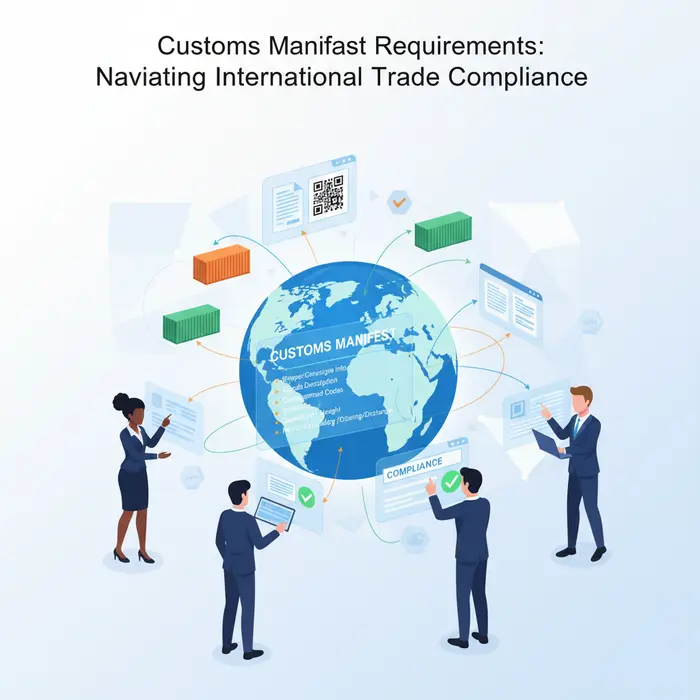
1. Legal obligations for import and export declarations
The imperative to file customs manifests stems directly from national and international laws designed to regulate trade, collect duties, and safeguard national security. Every nation has specific legislation governing the import and export of goods, requiring carriers and sometimes freight forwarders to provide detailed declarations of cargo. These U.S. Customs and Border Protection (CBP) regulations, for instance, mandate the submission of electronic manifests (e-manifests) for all cargo entering or exiting U.S. territory. This legal framework ensures that governments can track goods, assess appropriate taxes and duties, enforce trade embargoes, and intercept illicit shipments, including contraband, prohibited items, or goods subject to sanctions. Failure to comply with these stringent legal obligations can result in significant repercussions, disrupting supply chains and leading to severe financial penalties.
2. Essential data elements required by customs authorities
To fulfill its security and compliance role, a shipping manifest must contain a precise and comprehensive array of data elements. While specific requirements can vary slightly by country and mode of transport, common essential data includes:
- Carrier Information: Name, address, and identification of the transporting carrier (e.g., airline, shipping line, trucking company).
- Conveyance Details: Vessel name, flight number, vehicle license plate, or train number, along with expected arrival/departure dates and times.
- Shipper and Consignee Information: Full names, addresses, and identification numbers (e.g., tax IDs) of both the sender and the receiver of the goods.
- Goods Description: Detailed description of the cargo, including Harmonized System (HS) codes, quantity, weight, volume, and any hazardous material declarations.
- Port Information: Origin and destination ports, as well as any transit points.
- Master and House Bill of Lading Numbers: References to all associated transport documents.
The accuracy and completeness of these data elements are paramount. Inaccurate or missing information can trigger red flags, leading to extensive inspections, delays, and potential rejections of cargo by customs officials, thus undermining the primary shipping manifest purpose.
3. Consequences of non-compliance and data inaccuracies
The ramifications of non-compliance with customs manifest requirements and the submission of inaccurate data can be severe and far-reaching. For carriers, freight forwarders, and importers/exporters, these consequences can include:
- Financial Penalties: Substantial fines imposed by customs authorities, which can range from hundreds to thousands of dollars per violation, per manifest.
- Shipment Delays: Cargo can be held at the border for extended periods, pending further investigation or correction of manifest errors. This leads to increased demurrage and detention charges, spoilage for perishable goods, and disruption of supply chains.
- Cargo Seizures: In cases of serious non-compliance, misdeclaration, or the presence of prohibited items, customs may seize the entire shipment.
- Loss of Trade Privileges: Repeated violations can lead to a loss of trusted trader status, subjecting future shipments to greater scrutiny and slower processing times.
- Reputational Damage: Non-compliance can harm a company’s reputation, affecting relationships with clients, partners, and regulatory bodies.
Adhering strictly to customs manifest requirements, understanding the nuances of an e-manifest explained process, and meticulously ensuring data accuracy are therefore not just compliance tasks but critical aspects of risk management and operational efficiency in international trade. Investing in robust data management systems and employee training is essential to mitigate these risks and maintain a seamless global supply chain.
The Rise of E-Manifests: How Digitalization is Transforming Shipping
The global shipping industry, a colossal network of logistics and movement, has historically relied on vast quantities of paperwork to manage the flow of goods. From port declarations to customs clearances, the traditional paper-based system was prone to delays, errors, and inefficiencies. However, a significant digital revolution is underway, spearheaded by the widespread adoption of the e-manifest. This electronic transformation is not merely a technological upgrade; it’s a fundamental shift reshaping how cargo is declared, tracked, and cleared, promising unprecedented levels of efficiency, speed, and accuracy in modernizing the shipping sector.
1. Definition and operational mechanics of an e-manifest
At its core, an e-manifest is the digital equivalent of a traditional shipping manifest document. This crucial document provides a comprehensive inventory of all cargo carried on a vessel, aircraft, or truck, detailing everything from the contents and quantity of goods to the sender, recipient, and specific routing information. Unlike its paper predecessor, which required manual completion and physical submission, an e-manifest is electronically created, transmitted, and processed, typically through secure online portals or integrated software systems.
The operational mechanics of an e-manifest involve several key steps. First, carriers or freight forwarders compile all necessary cargo data electronically. This data is then formatted to meet specific customs manifest requirements and international standards, ensuring seamless communication across borders. The e-manifest is submitted to the relevant customs authorities and port operators well in advance of the cargo’s arrival. This proactive submission allows authorities to review and pre-clear shipments, identify potential risks, and streamline physical inspections. Understanding the shipping manifest purpose is key: it acts as a declaration to regulatory bodies, enabling control and facilitating trade. It’s important to note the distinction between a bill of lading vs shipping manifest. While a bill of lading is a contract of carriage and receipt for specific goods issued to a consignor, detailing individual shipments, a shipping manifest covers the entire consignment of goods on a single conveyance, providing a holistic overview for customs and port authorities. In essence, an e-manifest explained simplifies this complex process into a digital, verifiable data stream.
2. Advantages of digital manifests: efficiency, speed, and accuracy
The shift to e-manifests brings a multitude of benefits that directly address the pain points of traditional shipping.
- Enhanced Efficiency: Digital manifests drastically reduce the need for manual data entry and handling of paper documents. This automation minimizes administrative overhead, frees up personnel for more critical tasks, and streamlines the entire supply chain workflow from origin to destination.
- Increased Speed: Pre-submission and electronic processing allow customs authorities to review cargo information long before its physical arrival. This significantly accelerates customs clearance procedures, reduces dwell times at ports and borders, and ensures faster transit for goods. Delays caused by lost or incomplete paperwork become a relic of the past.
- Improved Accuracy: Human error is a major contributor to inaccuracies in paper-based systems. E-manifests leverage data validation tools and standardized electronic formats, ensuring higher data integrity. This reduction in errors leads to fewer discrepancies, smoother processing, and avoids costly penalties or re-submissions. Furthermore, real-time updates and amendments are far easier to manage digitally, ensuring all stakeholders have access to the most current information.
- Greater Transparency and Security: The digital nature of e-manifests provides enhanced visibility across the supply chain. All authorized parties can track the status of shipments, improving collaboration and accountability. Digitization also enables stronger security protocols, making it harder to tamper with information and easier to audit data trails, bolstering compliance with various customs manifest requirements.
- Cost Savings: By reducing delays, minimizing errors, and optimizing resource allocation, e-manifests contribute to substantial cost savings for carriers, shippers, and ultimately, consumers. Reduced paperwork also translates to environmental benefits through lower paper consumption.
3. Challenges and solutions in adopting e-manifest systems
Despite the undeniable advantages, the path to universal e-manifest adoption is not without its hurdles. One significant challenge is the initial investment required for new software, hardware, and employee training. Small and medium-sized enterprises (SMEs) might find this financial outlay daunting. Data standardization and interoperability also pose issues, as different countries and even different agencies within a country may have varying technical requirements and data formats for their customs manifest requirements.
Cybersecurity is another paramount concern. Transmitting sensitive cargo and commercial data electronically demands robust security measures to prevent breaches, data manipulation, and unauthorized access. Resistance to change from personnel accustomed to traditional methods, and the complexity of integrating new systems with legacy IT infrastructures, also present implementation obstacles. Additionally, the global nature of shipping means navigating a patchwork of regulations and diverse technological capabilities across different trade partners.
Solutions to these challenges are multifaceted. Governments and industry bodies are increasingly providing incentives, grants, and standardized frameworks to ease the financial burden and promote harmonization. The development of cloud-based e-manifest solutions offers a more accessible and scalable option, reducing the need for heavy upfront IT investments. Robust encryption, multi-factor authentication, and regular security audits are crucial for building trust and protecting data integrity. Comprehensive training programs, coupled with effective change management strategies, are vital for overcoming employee resistance. Furthermore, international collaboration through organizations like the World Customs Organization (WCO) is crucial for developing unified standards and best practices, paving the way for a truly interconnected and efficient global shipping ecosystem where the shipping manifest document becomes a seamless, digital component of global trade.
Optimizing Your Shipping Manifest Process for 2025 and Beyond
The landscape of global trade is constantly evolving, demanding greater precision, speed, and compliance from businesses involved in shipping. At the heart of this intricate process lies the shipping manifest document – a crucial record detailing cargo, origin, destination, and other vital information. Optimizing your shipping manifest process isn’t just about efficiency; it’s about mitigating risks, ensuring regulatory adherence, and fostering seamless logistics operations. For 2025 and beyond, businesses must move beyond traditional methods to embrace strategies that promise both accuracy and agility. This section provides actionable strategies and best practices for businesses to enhance their manifest creation and management, ensuring compliance and operational efficiency. Understanding the shipping manifest purpose is foundational; it acts as a comprehensive list of all cargo on a vessel, aircraft, or vehicle, serving as a critical document for customs, carriers, and consignees. It details every item, unlike a bill of lading vs shipping manifest, where a bill of lading is a contract of carriage and receipt for goods, typically issued per shipment, while a manifest consolidates information for all shipments on a given transport unit.

1. Best practices for accurate data entry and verification
Accuracy is paramount when it comes to shipping manifests. Errors, no matter how small, can lead to significant delays, hefty fines, and reputational damage.
- Standardize Data Input: Implement clear, universal data entry protocols across all teams and departments. Utilize dropdown menus, predefined fields, and validation rules in your systems to minimize manual input errors. Ensure consistency in units of measure, currency, and product descriptions.
- Automated Data Capture: Where possible, leverage technologies like Optical Character Recognition (OCR) for reading labels and documents, or direct API integrations with your inventory and order management systems. This reduces human intervention and transcribing mistakes.
- Multi-Stage Verification: Establish a robust verification process. This should involve at least two levels of checks: an initial review by the data entry personnel and a secondary audit by a supervisor or an automated system. Cross-reference manifest data with original sales orders, purchase orders, and packing lists.
- Regular Training: Provide continuous training for staff responsible for manifest creation. Keep them updated on evolving customs manifest requirements and internal best practices. Emphasize the critical role each data point plays in the overall logistics chain.
- Error Tracking and Feedback Loops: Implement a system to track common errors and analyze their root causes. Use this feedback to refine processes, update training materials, and improve data validation rules, preventing recurring issues.
2. Leveraging technology for manifest generation and submission
The days of manual manifest creation are quickly becoming obsolete. Modern logistics demands technological solutions to enhance efficiency, reduce errors, and ensure timely submission.
- Integrated Logistics Software: Invest in or upgrade to comprehensive Logistics Management Systems (LMS) or Enterprise Resource Planning (ERP) platforms that offer integrated manifest generation capabilities. These systems can pull data directly from your order, inventory, and warehouse management modules, automatically populating the shipping manifest document. This seamless data flow drastically reduces manual data entry and associated errors.
- Automated Manifest Systems (AMS) & E-Manifest Solutions: For international shipments, particularly into the U.S. and other regulated markets, compliance with systems like the Automated Manifest System (AMS) or similar e-manifest explained frameworks is mandatory. These systems allow for electronic submission of manifests to customs authorities before the cargo’s arrival, significantly speeding up clearance processes and reducing border delays. Integrating your LMS with these e-manifest portals, either directly or via third-party providers, is crucial for efficiency.
- Cloud-Based Platforms: Opt for cloud-based manifest solutions that offer scalability, accessibility, and real-time updates. Cloud platforms facilitate collaboration among different stakeholders – shippers, carriers, freight forwarders – and ensure everyone is working with the most current version of the manifest.
- API Integrations: Utilize Application Programming Interface (API) integrations to connect your manifest system with various external platforms, such as carrier booking systems, customs brokers, and port authorities. This enables automated data exchange, eliminating redundant data entry and improving overall data accuracy. For instance, an API can automatically update your manifest with carrier tracking numbers or confirmed departure times.
- Analytics and Reporting: Modern technology provides robust analytical tools. Leverage these to gain insights into your manifest accuracy rates, submission times, and compliance levels. Identifying bottlenecks and areas for improvement through data-driven analysis is key to continuous optimization.
3. Future trends and predictions for shipping manifest documentation
The future of shipping manifests is poised for significant transformation, driven by emerging technologies and an increasing demand for transparency and security.
- Blockchain Integration: Blockchain technology holds immense promise for shipping manifests. By creating an immutable, distributed ledger, blockchain can enhance the security, transparency, and traceability of manifest data. Each transaction and data point added to the manifest would be time-stamped and verifiable, reducing fraud and disputes. This will particularly impact complex global supply chains involving multiple parties.
- AI and Machine Learning for Predictive Compliance: Artificial Intelligence (AI) and Machine Learning (ML) algorithms will play a growing role in predictive analytics for compliance. AI can analyze historical manifest data, customs regulations, and trade patterns to identify potential compliance risks even before a shipment departs. It can flag discrepancies, suggest optimal routing to avoid delays, and even automate the classification of goods, further streamlining the shipping manifest document creation process.
- Increased Digitalization and Paperless Operations: The trend towards fully paperless operations will accelerate. As more countries adopt advanced e-manifest and digital customs platforms, physical documents will become relics of the past. This not only reduces environmental impact but also speeds up information flow and reduces administrative burden.
- Enhanced Data Harmonization and Standardization: There will be a stronger global push for harmonized data standards for shipping manifests. This will simplify cross-border trade by ensuring that data submitted in one country is readily understood and accepted by customs authorities in another. International bodies will continue to work towards universal data models, making the process of adhering to diverse customs manifest requirements much easier for businesses.
- IoT Integration for Real-Time Manifest Updates: Internet of Things (IoT) devices, such as smart sensors on containers and cargo, will provide real-time data on location, temperature, humidity, and other critical conditions. This data can be automatically integrated into the manifest, offering dynamic updates and an unprecedented level of visibility throughout the shipping journey. This will transform the static manifest into a living, continuously updated record, enabling proactive problem-solving and enhanced security.
Partner with Vietnam’s Leading Suppliers
Looking for reliable suppliers in Vietnam? Contact VietnamSuppliers.com today to connect with verified manufacturers and exporters across all industries.
—————————————
References
– Automated Commercial Environment (ACE) Manifest Information – U.S. Customs and Border Protection: https://www.cbp.gov/trade/automated-commercial-environment-ace/manifest
– CBP ACE E-Manifest Requirements: https://www.cbp.gov/trade/automated/ace-e-manifest
– U.S. Customs and Border Protection – Basic Importing and Exporting: https://www.cbp.gov/trade/basic-import-export
– :
– CBP e-Manifest Explained: https://www.cbp.gov/trade/automated-commercial-environment-ace/e-manifest

