Understanding the Fundamentals of REACH Regulation
The REACH Regulation stands as the cornerstone of chemical management within the European Union (EU) and European Economic Area (EEA). Enacted to streamline and improve the EU’s previous legislative framework on chemicals, REACH aims to ensure a high level of protection for human health and the environment, while promoting the free movement of substances on the internal market and enhancing innovation and competitiveness in the EU chemicals industry. This comprehensive regulation mandates that companies are responsible for identifying and managing the risks linked to the substances they manufacture and market in the EU. Its overarching framework shifts the burden of proof for chemical safety from public authorities to the industry, compelling manufacturers and importers to gather information on the properties of their chemical substances, register this information with the European Chemicals Agency (ECHA), and ensure their safe use throughout the supply chain.
1. Defining REACH: A Comprehensive Chemical Safety Overview
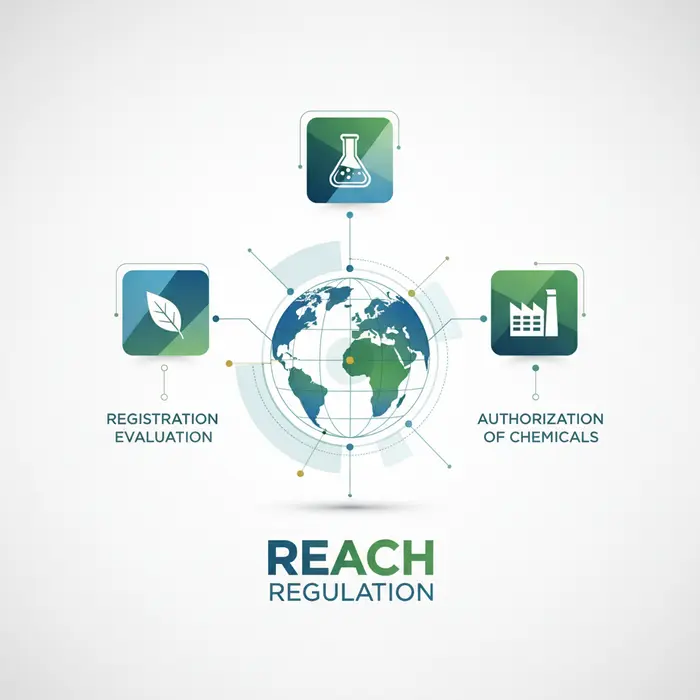
REACH is an acronym for Registration, Evaluation, Authorisation, and Restriction of Chemicals. It entered into force on 1 June 2007, replacing numerous previous directives and regulations with a single, unified system. The primary objectives of the REACH Regulation are multi-faceted:
- To protect human health and the environment from the risks that can be posed by chemicals.
- To promote alternative methods for the assessment of hazards of substances.
- To enhance the competitiveness of the EU chemicals industry by fostering innovation.
- To ensure the free movement of substances on the internal market of the EU.
At its core, REACH fundamentally alters the approach to chemical safety. Historically, public authorities bore the responsibility of proving a chemical was dangerous before regulating it. Under REACH, the responsibility lies with industry to demonstrate that chemicals are safe for their intended uses before they can be placed on the market. This proactive approach encourages companies to understand and manage the risks their products pose, fostering a culture of responsibility and continuous improvement in chemical safety. The European Chemicals Agency (ECHA) plays a central role in implementing REACH, managing the technical and scientific aspects of the regulation, and providing guidance to companies.
2. Who Does REACH Affect? Scope and Key Stakeholders
The scope of REACH is exceptionally broad, impacting virtually every company that manufactures, imports, or uses chemicals within the EU/EEA, regardless of their size or location. Its reach extends beyond the EU’s borders, making it a critical consideration for global businesses. Key stakeholders include:
- Manufacturers: Companies producing chemical substances within the EU/EEA.
- Importers: Companies that purchase chemical substances, mixtures, or articles from outside the EU/EEA and bring them into the EU/EEA territory. This group faces significant REACH compliance requirements EU, especially concerning the REACH registration process for exporters who need to ensure their products meet EU standards.
- Downstream Users: Companies or individuals who use a substance, either on its own or in a mixture, in their industrial or professional activities. This includes formulators, end-users, and producers of articles. They must ensure that their uses are covered by the manufacturer’s or importer’s registration.
- Only Representatives (OR): Non-EU companies exporting to the EU can appoint an EU-based Only Representative to fulfill the registration obligations. This allows non-EU manufacturers to maintain control over their supply chain and data.
- Producers of Articles: Companies that produce articles containing substances intended to be released under normal or foreseeable conditions of use, or articles containing Substances of Very High Concern (SVHCs) above a certain concentration threshold, also have specific obligations under REACH.
The regulation’s broad scope means that understanding and adhering to REACH requirements is not just a matter of compliance but a strategic business imperative for market access and supply chain integrity within the EU.
3. Core Principles and Key Processes of REACH
REACH operates through several integrated processes designed to manage chemical risks systematically:
- Registration: This is the most crucial component. Manufacturers and importers must submit a registration dossier to ECHA for each substance manufactured or imported in quantities of one tonne or more per year. The dossier includes information on the substance’s properties, classification, and how to use it safely. The higher the tonnage, the more extensive the data requirements. This process is particularly relevant for the REACH registration process for exporters looking to place products on the EU market.
- Evaluation: ECHA and Member State authorities evaluate registration dossiers to ensure compliance with REACH requirements and to clarify whether a substance presents a risk to human health or the environment. This can lead to requests for further information from registrants.
- Authorisation: Substances of Very High Concern (SVHCs) – which include carcinogens, mutagens, reproductive toxicants, persistent, bioaccumulative and toxic (PBT) substances, and very persistent and very bioaccumulative (vPvB) substances – are placed on the Candidate List. If added to the Authorisation List, their use requires specific permission from the European Commission to ensure that risks are adequately controlled or that socioeconomic benefits outweigh the risks. Companies must stay informed about the latest REACH SVHC list update to manage their product portfolios.
- Restriction: This process limits or bans the manufacture, placing on the market, or use of certain hazardous substances. Restrictions are typically used for substances that pose unacceptable risks to human health or the environment, are widely used, and where a Community-wide restriction is the most effective way to manage the risk.
These processes collectively aim to ensure that chemicals are produced and used responsibly. The REACH impact on supply chain is profound, as it necessitates extensive data exchange, communication, and collaboration between all actors, from raw material suppliers to downstream users, to ensure that chemicals are handled safely throughout their entire lifecycle.
Demystifying REACH Compliance Requirements EU
For businesses placing chemicals, mixtures, or articles containing certain substances on the European Union market, understanding the REACH Regulation is a legal imperative. As an acronym for Registration, Evaluation, Authorisation, and Restriction of Chemicals, REACH aims to protect human health and the environment from chemical risks, while promoting alternative hazard assessment methods. Navigating its complex REACH compliance requirements EU can be challenging, but a clear understanding of its pillars and obligations is crucial for manufacturers, importers, and downstream users.
1. The Four Pillars of REACH: Registration, Evaluation, Authorisation, Restriction
At its core, REACH is built upon four fundamental processes designed to ensure chemical safety:
- Registration: This cornerstone requires manufacturers and importers of chemical substances (on their own, in mixtures, or in articles intended for release) in quantities of one tonne or more per year to register them with the European Chemicals Agency (ECHA). The dossier includes substance properties, risk assessments, and management measures based on tonnage. Non-EU exporters often appoint an Only Representative (OR) in the EU to manage their REACH registration process for exporters.
- Evaluation: ECHA and Member States evaluate submitted dossiers to verify information quality and assess risks to human health or the environment, covering both compliance and risk clarification.
- Authorisation: Substances of Very High Concern (SVHCs), identified by hazardous properties (e.g., CMR, PBT, vPvB), appear on the Candidate List and potentially the Authorisation List. Companies using these SVHCs require specific authorisation, proving adequate risk control or socio-economic benefits outweighing risks, especially if alternatives are absent.
- Restriction: Restrictions act as a safety net, limiting or banning the manufacture, placing on the market, or use of hazardous substances across the EU (alone, in mixtures, or articles) if they pose unacceptable risks.
2. Obligations for Manufacturers, Importers, and Downstream Users
Each player in the supply chain has distinct responsibilities under REACH:
- Manufacturers (EU-based): EU manufacturers must generate data on substance properties, assess risks, register substances produced above one tonne per year, and communicate safety information via Safety Data Sheets (SDS) down the supply chain.
- Importers (EU-based): EU importers, bringing substances, mixtures, or articles from outside the EU, share responsibilities with manufacturers. This includes registering substances above the one-tonne threshold and ensuring supplier compliance. Non-EU exporters often appoint an Only Representative (OR) to manage their EU REACH obligations.
- Downstream Users (EU-based): EU downstream users, applying substances or mixtures in industrial or professional activities, must comply with SDS risk management measures. They communicate use information up the supply chain and may need to prepare a Chemical Safety Report (CSR) if their use isn’t covered by a supplier’s registration.
3. Navigating SVHCs and Supply Chain Implications
Managing Substances of Very High Concern (SVHCs) is a critical, dynamic REACH aspect. The REACH SVHC list update, typically biannual, expands substances potentially requiring authorisation. Businesses must monitor the Candidate List and communicate SVHC information:
- Articles Containing SVHCs: If an article contains an SVHC from the Candidate List above 0.1% w/w, suppliers must provide customers with sufficient information for safe use. Consumers can request this information, which must be provided within 45 days.
- Notification to ECHA: ECHA notification is required if an article contains an SVHC above 0.1% w/w, totals over one tonne per producer/importer annually, and its uses are unregistered.
The REACH impact on supply chain is profound, demanding robust communication and data exchange. Companies must trace product chemical composition, obtain supplier declarations, and align internal processes with reporting. Proactive monitoring, transparent communication, and adapting to changes are vital for EU compliance and market access.
Navigating the REACH Registration Process for Exporters
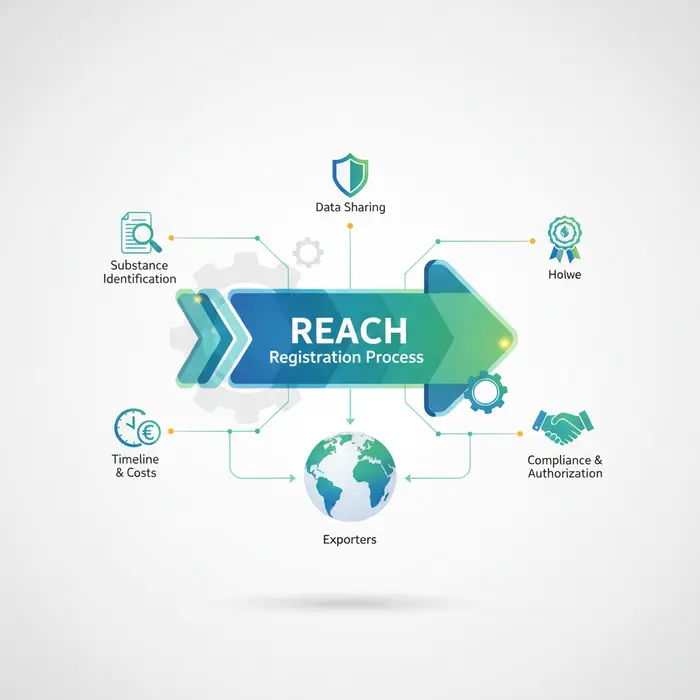
For non-EU companies looking to access the lucrative European Union market, understanding and complying with the REACH Regulation is not merely a recommendation but a mandatory prerequisite. REACH, standing for Registration, Evaluation, Authorisation and Restriction of Chemicals, is the EU’s comprehensive chemical legislation designed to improve the protection of human health and the environment from chemical risks. For exporters, successfully navigating the REACH registration process for exporters ensures uninterrupted market access and avoids costly disruptions. This guide outlines essential steps for non-EU companies to achieve REACH compliance.
1. Pre-registration and Inquiry: Initial Steps for Compliance
The initial phase of REACH compliance requirements EU involves determining if your substance needs registration and gathering preliminary information. While formal pre-registration for phase-in substances concluded in 2008, the “Inquiry” process is now the starting point for substances not pre-registered or for new ones. This involves submitting an inquiry to the European Chemicals Agency (ECHA) to check for existing registrations or data sharing possibilities. A key aspect is identifying the exact chemical identity and tonnage band (e.g., 1-10 tonnes, 10-100 tonnes per year), which dictates data requirements. Engaging early with Substance Information Exchange Fora (SIEFs) is vital for cost-effective data sharing, avoiding redundant animal testing and reducing costs. Understanding these initial steps is foundational to a smooth REACH Regulation journey.
2. Submitting Your Registration Dossier: Data Requirements and Technicalities
Once preliminary steps are complete, the core of the REACH registration process for exporters involves compiling and submitting a comprehensive registration dossier. This dossier typically consists of two main parts: the technical dossier and, for substances manufactured or imported in quantities of 10 tonnes or more per year, a Chemical Safety Report (CSR).
- Technical Dossier: This includes detailed information on the substance’s identity, physicochemical properties, toxicological data (human health), and ecotoxicological data (environmental impact). Data requirements increase with higher tonnage bands.
- Chemical Safety Report (CSR): This report documents the chemical safety assessment, demonstrating that risks from its manufacture and use are adequately controlled throughout its lifecycle, often including exposure scenarios.
All data must be prepared using ECHA’s free IUCLID software. Accuracy, completeness, and adherence to ECHA’s guidelines are paramount, as insufficient data can lead to rejections or delays, impacting market access and increasing costs. This stage has a significant REACH impact on supply chain planning.
3. The Role of Only Representatives (OR) for Non-EU Companies
For non-EU manufacturers, formulators, or producers of articles, the REACH Regulation states that the obligation to register substances lies with an EU-based entity. This is where an Only Representative (OR) becomes indispensable. An OR is an EU-based legal entity appointed by a non-EU company to fulfill the obligations of an importer under REACH. The OR takes on the responsibility for registering substances and ensuring compliance on behalf of the non-EU supplier.
Appointing an OR offers several significant advantages:
- Compliance Assurance: The OR, an expert in EU chemical regulations, ensures all REACH compliance requirements EU are met, from dossier submission to communication with ECHA.
- Market Access Facilitation: The OR, as the EU-based registrant, allows downstream EU users to be considered “downstream users” rather than “importers,” streamlining their supply chain.
- Information Management: The OR manages ECHA communications and keeps the non-EU company informed about regulatory changes, such as the frequent REACH SVHC list update.
- Confidentiality: It helps non-EU manufacturers maintain confidentiality regarding their EU customers, as the OR typically manages necessary interactions.
The selection of a competent and reliable Only Representative is a critical strategic decision for any non-EU company seeking seamless market entry and sustained presence in the EU chemical market. In conclusion, while the REACH registration process can appear complex, a methodical approach combined with expert guidance, particularly through a qualified Only Representative, can demystify the journey. Proactive engagement ensures not only compliance but also secures invaluable access to the vast EU market.
Staying Current: Critical REACH SVHC List Updates
Understanding and complying with the REACH Regulation is paramount for any business operating within, or exporting to, the European Union. Central to this complex regulatory framework are Substances of Very High Concern (SVHCs). The dynamic nature of the SVHC list, its continuous updates, and the far-reaching implications for product design, manufacturing, and reporting make it a critical area for ongoing vigilance. Businesses must not only understand what SVHCs are but also how to monitor changes, fulfill reporting obligations, and effectively communicate information throughout their supply chain to ensure robust REACH compliance requirements EU.
1. What are SVHCs? Identification and Criteria
Substances of Very High Concern (SVHCs) are chemical substances that have been identified as having serious adverse effects on human health or the environment. Their potential impacts necessitate stringent control under the REACH Regulation. The European Chemicals Agency (ECHA) plays a pivotal role in identifying and managing these substances. A substance is identified as an SVHC if it meets one or more of the following criteria:
- Carcinogenic, Mutagenic, or toxic for Reproduction (CMR) category 1A or 1B according to the CLP Regulation. These substances can cause cancer, genetic mutations, or harm reproductive systems.
- Persistent, Bioaccumulative and Toxic (PBT) substances. These chemicals remain in the environment for long periods, accumulate in living organisms, and are toxic.
- Very Persistent and Very Bioaccumulative (vPvB) substances. Similar to PBTs but with an even greater potential for persistence and bioaccumulation.
- Endocrine Disrupting Properties. Substances that interfere with the hormone systems of humans or animals.
- Substances of equivalent concern. These are identified on a case-by-case basis as having a level of concern equivalent to the above, potentially due to severe and irreversible effects on human health or the environment.
The identification of an SVHC is the first step towards its potential regulation and restriction, signaling a red flag for companies using or producing these chemicals.
2. Monitoring the Candidate List and Authorisation List
Once a substance is identified as an SVHC, it is typically proposed for inclusion on the REACH Candidate List, formally known as the ‘Candidate List of substances of very high concern for Authorisation’. This list is updated usually twice a year, meaning businesses must continuously monitor for the latest REACH SVHC list update. Inclusion on the Candidate List immediately triggers specific obligations for companies manufacturing, importing, or supplying these substances, either on their own, in mixtures, or in articles.
The Candidate List serves as a precursor to the Authorisation List (Annex XIV of REACH). Substances from the Candidate List may be progressively added to the Authorisation List. Once on Annex XIV, a substance cannot be placed on the market or used after a specific ‘sunset date’ unless an authorisation has been granted for a specific use. This authorisation process is rigorous and costly, highlighting the importance of proactively seeking alternatives and understanding the REACH registration process for exporters and importers early in the product lifecycle.
3. Reporting Obligations and Communication Down the Supply Chain for SVHCs
The presence of SVHCs in products triggers significant reporting obligations and necessitates robust communication practices throughout the supply chain. For producers and importers of articles, if an SVHC is present in the article above a concentration of 0.1% weight by weight (w/w) and the total amount of that SVHC in all articles produced or imported exceeds one tonne per year, a notification to ECHA under Article 7(2) of REACH may be required.
Furthermore, Article 33 mandates that suppliers of articles containing SVHCs above 0.1% w/w must provide recipients (professional users, distributors, and consumers upon request) with sufficient information to allow safe use of the article. This includes, as a minimum, the name of the SVHC. This requirement is crucial for ensuring REACH compliance requirements EU and minimizing the REACH impact on supply chain. Effective communication ensures that downstream users are aware of potential risks and can take appropriate measures.
In addition to these, the SCIP database (Substances of Concern In articles as such or in complex objects (Products)) further reinforces the importance of SVHC tracking. Companies supplying articles containing SVHCs above 0.1% w/w into the EU market must submit information about these articles to the SCIP database. This helps waste operators identify and treat hazardous substances more effectively, closing the loop on a sustainable circular economy. Staying abreast of these evolving requirements and fostering transparent communication are vital for maintaining compliance and safeguarding business operations.
REACH Impact on Supply Chain Management and Business Strategy
The Registration, Evaluation, Authorisation and Restriction of Chemicals (REACH) Regulation, enforced by the European Union, represents one of the most comprehensive and far-reaching pieces of chemical legislation globally. Its primary aim is to improve the protection of human health and the environment from the risks that can be posed by chemicals, while also promoting the competitiveness of the EU chemicals industry. However, the REACH Regulation extends its influence far beyond EU borders, profoundly reshaping global supply chains, business operations, and strategic planning for companies involved in manufacturing, importing, or using chemicals, articles, or mixtures within the EU market. Achieving and maintaining REACH compliance is not merely a regulatory hurdle but a critical strategic imperative that demands proactive engagement, transparent communication, and robust risk management throughout the entire product lifecycle.

1. Ensuring Supply Chain Communication and Data Exchange
One of the most significant REACH impact on supply chain management is the imperative for unprecedented levels of communication and data exchange across complex, multi-tiered global networks. For businesses, this translates into a need for robust systems to track chemical compositions not just of raw materials, but of components and finished articles. Companies must collect, manage, and disseminate information on the intrinsic properties of substances, their uses, and associated risks, often through Safety Data Sheets (SDS) and exposure scenarios. This becomes particularly challenging for non-EU exporters whose products eventually enter the EU market. They must navigate REACH compliance requirements EU, often relying on their EU importers or Only Representatives to fulfill registration obligations. Effective communication ensures that information on Substances of Very High Concern (SVHCs) and other restricted substances flows seamlessly from the initial manufacturer down to the end-user, enabling each actor in the supply chain to fulfill their duties and ensure safe handling and use. Without clear, consistent data exchange protocols, companies risk non-compliance, market access restrictions, and reputational damage.
2. Risk Management and Product Stewardship Under REACH
REACH places a strong emphasis on product stewardship, requiring companies to take responsibility for the safe management of chemicals throughout their entire lifecycle. This involves comprehensive risk assessment and the implementation of appropriate risk management measures. A key component of this is understanding and responding to the dynamic REACH SVHC list update, which identifies substances that may have serious effects on human health or the environment. Inclusion on this list often triggers notification requirements and can eventually lead to authorisation or restriction, impacting product formulations and sourcing strategies. For global companies, navigating the REACH registration process for exporters, for substances manufactured or imported into the EU in quantities exceeding one tonne per year, is a fundamental aspect of risk management. It necessitates detailed toxicological and ecotoxicological studies, exposure assessments, and the development of Chemical Safety Reports (CSRs). Businesses must proactively manage their chemical portfolios, identify alternatives where feasible, and integrate these considerations into their product development and procurement strategies to mitigate compliance risks and ensure market continuity.
3. Preparing for Future REACH Revisions and Long-term Compliance
The REACH Regulation is not static; it is a living framework subject to ongoing revisions, amendments, and interpretations, driven by scientific advancements, policy objectives, and emerging concerns. Companies must therefore adopt a forward-looking approach to ensure long-term compliance and strategic resilience. This involves continuous monitoring of regulatory developments, anticipating potential changes to substance lists, and preparing for stricter controls or new obligations. Investing in robust internal systems for data management, expert personnel for regulatory interpretation, and strong partnerships with suppliers and customers are crucial. Strategic planning under REACH requirements also entails evaluating the environmental and health footprint of products, exploring greener alternatives, and embracing sustainable chemical management practices. Companies that proactively integrate REACH compliance into their broader business strategy, rather than treating it as a siloed regulatory burden, will be better positioned to innovate, gain competitive advantage, and ensure sustained market access in the evolving global regulatory landscape.
Partner with Vietnam’s Leading Suppliers
Looking for reliable suppliers in Vietnam? Contact VietnamSuppliers.com today to connect with verified manufacturers and exporters across all industries.
—————————————
References
– European Chemicals Agency (ECHA) – Understanding REACH: https://echa.europa.eu/regulations/reach/understanding-reach
– European Chemicals Agency (ECHA): https://echa.europa.eu/regulations/reach/understanding-reach
– REACH Regulation: https://echa.europa.eu/regulations/reach/understanding-reach
– REACH Candidate List: https://echa.europa.eu/candidate-list-table
– REACH SVHC list update: https://echa.europa.eu/candidate-list-table