
What is a Pro Forma Invoice? Understanding the Basics
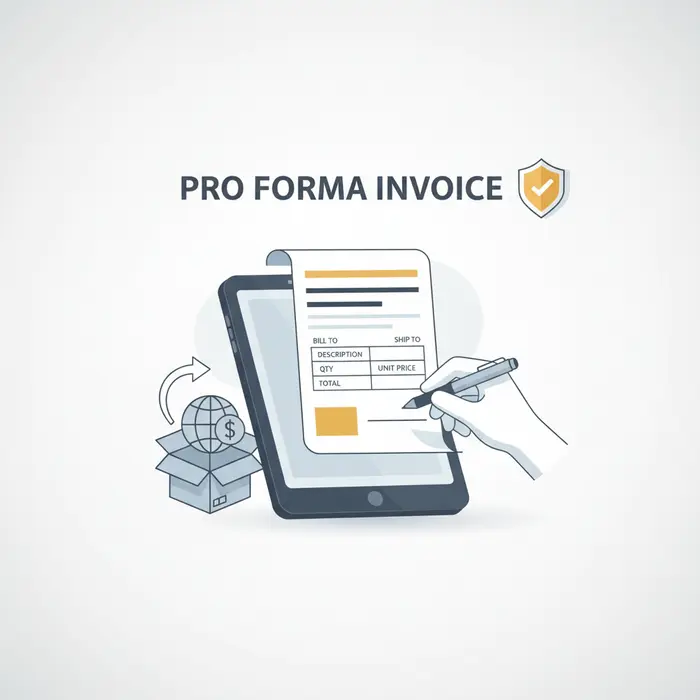
In the complex world of global commerce, efficient documentation is paramount to smooth transactions. Among the crucial documents, the pro forma invoice stands out as a foundational piece, especially in Pro Forma Invoice International Trade. It serves as a preliminary declaration that sets the stage for a successful export or import operation, acting as a critical communication tool between seller and buyer.
1. Definition & Core Purpose
At its heart, a pro forma invoice is a preliminary bill of sale sent to the buyer in advance of a shipment or final commercial invoice. Unlike a commercial invoice, which is a demand for payment for goods already shipped, a pro forma invoice essentially outlines a commitment from the seller to provide specified goods or services to the buyer at particular prices and terms. Think of it as a good-faith estimate or a formal quotation that details the proposed transaction. Its primary function is to provide the buyer with a precise understanding of the future sale, including product specifications, quantities, prices, and anticipated shipping costs. This early visibility is crucial for buyers to secure financing, obtain necessary import licenses, or make other logistical preparations before the goods are even dispatched. It bridges the gap between a simple price quote and the final, legally binding commercial invoice, making it an indispensable document for both exporters and import buyers alike.
2. Key Characteristics and Non-Binding Nature
A pro forma invoice typically contains most, if not all, the details expected on a commercial invoice, even though it is not a final request for payment. Key information commonly found on a pro forma invoice includes: the seller’s and buyer’s names and addresses, a detailed description of the goods (including quantity and unit price), the total value of the goods, the currency of the transaction, the applicable Incoterms (e.g., FOB, CIF), estimated shipping and insurance costs, payment terms, and the estimated delivery date. Crucially, a pro forma invoice is distinctly marked as such (e.g., “PRO FORMA INVOICE”) to differentiate it from a commercial invoice. Its non-binding nature means it can be amended before the final transaction. While it represents a serious offer from the seller, it does not legally obligate the buyer to purchase the goods until a formal agreement is reached or a commercial invoice is issued. This flexibility is beneficial, allowing both parties to clarify terms and adjust details without legal repercussion. For exporters, understanding these Pro Forma Invoice requirements export is vital for accurately communicating the terms of sale and preventing misunderstandings. It’s a tool for transparency and agreement, not enforcement.
3. When is a Pro Forma Invoice Issued?
The timing of a pro forma invoice is critical to its Purpose of Pro Forma Invoice. It is typically issued after a buyer has expressed serious interest or placed an initial order, but before the actual goods are packed, shipped, or the final commercial invoice is prepared. This preliminary stage allows the buyer to use the pro forma invoice for several important pre-shipment activities. For instance, Pro Forma Invoice for import buyers is essential when they need to apply for an import license from their government, arrange for foreign exchange with their bank, or secure financing for the purchase. In some countries, customs authorities may even require a pro forma invoice for preliminary valuation or pre-clearance procedures before the goods arrive. Furthermore, it serves as a detailed agreement for the buyer’s internal purchasing approval processes, enabling them to verify that the ordered goods, quantities, and prices align with their budget and needs. Essentially, the pro forma invoice solidifies the terms of the potential transaction, allowing both parties to prepare meticulously for the actual shipment and financial exchange, thereby minimizing delays and potential complications in the international supply chain.
Pro Forma Invoice vs. Commercial Invoice: The Key Differences
In the intricate world of Pro Forma Invoice International Trade, understanding the nuances between seemingly similar documents is paramount. While both a pro forma invoice and a commercial invoice play crucial roles, they serve distinct purposes at different stages of the international transaction. Misinterpreting their functions can lead to delays, legal complications, and financial discrepancies. This section will clearly differentiate these two vital documents, highlighting their legal implications, timing, and specific roles in customs and payment processes.
1. Legal Standing & Commitment: Binding vs. Non-Binding
The most fundamental distinction between a pro forma invoice and a commercial invoice lies in their legal standing and the level of commitment they represent. A pro forma invoice is essentially a preliminary bill of sale sent to the buyer in advance of a shipment or delivery of goods. It functions as a good-faith estimate or an offer to sell, outlining the proposed terms of sale, including the description of goods, quantity, price, shipping costs, and payment terms. Crucially, a pro forma invoice is generally non-binding; it is not a demand for payment and does not create a legal obligation for the buyer to purchase the goods or for the seller to provide them at the exact specified terms until a formal agreement or purchase order is issued.
Conversely, a commercial invoice is a legally binding document issued by the seller to the buyer after the goods have been shipped or are ready for shipment. It serves as a conclusive record of the sale between the exporter and importer. This document confirms the actual transaction that has occurred, stating the final agreed-upon price, terms of sale, and conditions. Unlike its preliminary counterpart, a commercial invoice is a formal demand for payment and legally obligates the buyer to pay the specified amount for the goods received. It signifies the completion of the sales agreement and is a critical document for both accounting and legal purposes, reflecting the definitive terms of the trade.
2. Timing of Issuance in the Trade Cycle
The timing of when each invoice type is issued within the international trade cycle further underscores their different purposes. A pro forma invoice is typically issued at the early stages of a transaction, often during the negotiation phase, and always before the goods are shipped or even formally ordered. It might be requested by an importer to obtain import permits, arrange financing, or to get a clear understanding of the costs involved before committing to a purchase. It acts as a detailed quotation that allows the potential buyer to assess the offer and make an informed decision.
In stark contrast, a commercial invoice is issued much later in the trade process, usually after the goods have been packaged and are ready for dispatch, or have already been shipped. Its issuance signals that the actual transaction has occurred and that the seller is now formally requesting payment for the goods supplied. This timing difference highlights their roles: the pro forma invoice precedes the sale as a proposal, while the commercial invoice follows the sale as a confirmation and a request for final settlement.
3. Role in Customs Declaration and Payment Collection
Perhaps the most significant functional difference lies in their respective roles concerning customs declaration and payment collection. A pro forma invoice is primarily used by the importer for internal purposes or for fulfilling pre-import requirements. It is instrumental for obtaining import licenses, applying for foreign exchange allocations, facilitating pre-shipment inspections, or securing necessary financing from banks. For import buyers, it helps to confirm the landed cost and plan budget, but it is generally not accepted by customs authorities for the official declaration of goods upon arrival or for the calculation of duties and taxes.
On the other hand, the commercial invoice is an indispensable document for customs clearance. It is a mandatory requirement for all international shipments and serves as the primary document upon which customs officials base their assessment of duties, taxes, and other charges. It provides crucial information such as the value of the goods, their description, country of origin, and Harmonized System (HS) codes, which are all vital for accurate customs valuation and classification. Furthermore, the commercial invoice is central to the payment collection process. Banks, particularly in letter of credit transactions, will almost always require the commercial invoice as proof of shipment and fulfillment of contractual obligations before releasing payment to the exporter. Without a commercial invoice, goods cannot be cleared through customs, and payment is often withheld, underscoring its pivotal role in finalizing the international trade transaction.
Purpose of a Pro Forma Invoice in Global Transactions
In the intricate world of international trade, documentation is paramount. Among the essential documents, the Pro Forma Invoice International Trade stands out as a crucial precursor to a commercial invoice. Far more than just a preliminary bill, a pro forma invoice serves multiple vital functions for both exporters and importers, ensuring clarity, compliance, and a smooth transaction flow. It acts as a binding commitment, outlining the specifics of a proposed sale before the goods are shipped, thereby preventing misunderstandings and facilitating various aspects of global transactions. This document is a cornerstone for preliminary negotiations, laying the groundwork for successful international commerce.

1. Providing an Accurate Price Quotation & Sales Terms
The primary Purpose of Pro Forma Invoice is to provide an accurate, detailed quotation of goods or services to a prospective buyer. It acts as a definitive offer from the seller, specifying all the critical terms of the sale. Unlike a mere price list, a pro forma invoice includes comprehensive information such as the exact product description, quantity, unit price, total value, and currency of transaction. Crucially, it defines the agreed-upon Incoterms® rules 2020, which clarify responsibilities for shipping costs, insurance, and the transfer of risk between the buyer and seller. For exporters, this document solidifies the Pro Forma Invoice requirements export, ensuring that all parties are on the same page regarding the scope of the deal before shipment. It details payment terms (e.g., advance payment, Letter of Credit, Cash Against Documents), estimated shipping date, and the validity period of the offer. This level of detail helps prevent disputes later, as it formalizes the agreement that will eventually lead to the issuance of a commercial invoice. While a Pro Forma Invoice vs Commercial Invoice comparison highlights the pro forma as a preliminary, non-binding invoice in terms of payment obligation (until the buyer accepts and acts upon it), it is legally considered a binding offer of sale by the seller, setting clear expectations for both parties.
2. Assisting with Import Licensing and Permits
For import buyers, the pro forma invoice is often an indispensable document required for navigating complex import regulations. It serves as crucial proof of a genuine transaction for various governmental and regulatory bodies, allowing importers to initiate and complete numerous bureaucratic processes. Specifically, it enables the Pro Forma Invoice for import buyers to apply for necessary import licenses, permits, and quotas from their respective government agencies. Many countries require a clear declaration of goods and their value, along with the origin and destination, before allowing them into the country, and the pro forma provides this essential information in a structured format. Moreover, it can be necessary for obtaining foreign exchange permits from central banks or authorized financial institutions, as it clearly demonstrates the legitimate purpose for the transfer of funds across international borders. Without a detailed pro forma invoice, importers might face significant delays, fines, or outright rejections in obtaining the required clearances, thus potentially halting the entire trade process. Its comprehensive breakdown of goods, origin, and value is invaluable for customs pre-classification, preliminary duty calculations, and risk assessment, streamlining the entry process.
3. Facilitating Payment Arrangements and Trade Financing
Beyond regulatory compliance, the pro forma invoice plays a pivotal role in facilitating the financial aspects of global transactions. It is a fundamental document for setting up various payment mechanisms and securing trade financing. For instance, when a buyer intends to use a Letter of Credit (L/C), the pro forma invoice is typically the first document the buyer presents to their bank. The bank uses the precise details from the pro forma—such as product description, quantity, value, shipping terms, and payment conditions—to draft the L/C, ensuring that it accurately reflects the agreed-upon transaction and minimizes discrepancies. Similarly, exporters can effectively use the pro forma invoice to apply for pre-shipment financing from their banks, as it provides clear evidence of a confirmed order or sales agreement. It demonstrates the anticipated revenue stream, helping banks assess the creditworthiness of the transaction and the exporter’s ability to fulfill the order. For transactions requiring advance payments, the pro forma invoice serves as the official request for payment, detailing the exact amount due, the banking information for remittance, and the purpose of the funds. Its comprehensive nature makes it an indispensable tool for banks and financial institutions to understand and facilitate the financing and payment flow for all international trade deals, whether they involve complex financing instruments or simple direct transfers.
In the dynamic realm of Pro Forma Invoice International Trade, precision and clarity are paramount. A pro forma invoice serves as a preliminary bill of sale, an essential document that outlines the terms of an international transaction before the goods are shipped. For exporters, mastering the art of creating a comprehensive pro forma invoice is not just about professionalism; it’s a critical step towards ensuring smooth customs clearance, facilitating payment, and building trust with international partners. Unlike a commercial invoice, which is issued after shipment, the purpose of a pro forma invoice is to provide the import buyers with an accurate estimate of costs and details, allowing them to arrange financing, apply for import licenses, and calculate duties and taxes well in advance.
This section will detail the essential Pro Forma Invoice requirements export businesses must meet, covering both mandatory data for compliance and recommended additions for operational efficiency, while also highlighting common pitfalls to avoid.
Mandatory Data Elements for Legal Compliance
This section outlines the non-negotiable details that must be present on a pro forma invoice to satisfy basic legal and customs requirements, allowing the import buyer to proceed with their side of the transaction and obtain necessary approvals. For any Pro Forma Invoice International Trade, these elements form the backbone of legal and transactional integrity.
- Seller’s Full Details: The complete legal name, address, and contact information of the exporting company.
- Buyer’s Full Details: The complete legal name, address, and contact information of the importing company. This is crucial for the import buyers to correctly identify themselves for their local customs and banking.
- Unique Pro Forma Invoice Number and Date: A distinct reference number for easy tracking and the date of issue.
- Clear Identification: Prominently display “PRO FORMA INVOICE” to differentiate it clearly from a commercial invoice. This distinction between a Pro Forma Invoice vs Commercial Invoice is fundamental.
- Detailed Goods Description: A precise and comprehensive description of each item, including product name, model number, quantity, unit price, and total price. Vague descriptions can lead to customs delays.
- Harmonized System (HS) Codes: The internationally recognized classification codes for each product. These are vital for customs authorities worldwide to assess duties and taxes accurately. For more information on HS codes, consult official sources like the World Customs Organization.
- Incoterms® 2020: Clearly state the agreed-upon Incoterms rule (e.g., EXW, FOB, CIF, DDP). This specifies the responsibilities for delivery, costs, and risks between the buyer and seller.
- Currency of Transaction: Specify the currency in which the transaction will be conducted (e.g., USD, EUR, JPY).
- Expected Date of Shipment: An estimated date when the goods are expected to leave the exporter’s facility.
- Country of Origin: The country where the goods were manufactured or produced.
Recommended Inclusions for Clarity and Smooth Trade
Beyond the mandatory elements, including additional information significantly enhances the clarity of the transaction, minimizes potential disputes, and streamlines the export-import process for all parties involved. These additions bolster the purpose of a pro forma invoice by providing a complete picture.
- Payment Terms: Specify the agreed payment method (e.g., Letter of Credit, T/T wire transfer), payment schedule (e.g., 30% upfront, balance upon shipment), and banking details of the exporter.
- Validity Period: State how long the prices and terms quoted in the pro forma invoice are valid. This protects both parties from price fluctuations or changes in availability.
- Estimated Freight, Insurance, and Other Charges: If not fully covered by the Incoterms, provide estimates for shipping costs, insurance premiums, and any other relevant charges to give the import buyers a complete cost projection.
- Gross and Net Weights, Dimensions, and Volume: Essential for logistics planning, calculating shipping costs, and customs declarations.
- Shipping Marks: If specific markings are required for the packages, include them for clear identification.
- Export License Information: If an export license is required for the goods, include its number or a note indicating its pending status.
- Disclaimer: A statement clarifying that this document is a pro forma invoice and not a final invoice, and that the actual commercial invoice may reflect minor adjustments. This helps in understanding the Pro Forma Invoice vs Commercial Invoice distinction.
Common Errors to Avoid When Preparing Your Pro Forma
This section highlights frequent mistakes exporters make when drafting pro forma invoices, which can lead to delays, misunderstandings, and even financial losses, emphasizing the importance of meticulous preparation. Avoiding these errors is key to successful Pro Forma Invoice requirements export compliance.
- Inconsistency with Other Documents: Ensure the pro forma invoice aligns with the initial quotation, purchase order, and ultimately, the commercial invoice. Discrepancies can raise red flags with customs or banks.
- Omitting or Misstating Incoterms: This is a critical error as Incoterms define liability and cost distribution. Vague or incorrect Incoterms lead to confusion and potential disputes.
- Incorrect or Missing HS Codes: Improper HS codes are a leading cause of customs delays, incorrect duty assessments, and potential fines. Always double-check these codes.
- Insufficient Product Description: Generic descriptions like “electronic goods” or “machinery” are unacceptable. Customs require specific details to classify goods accurately.
- Forgetting a Validity Period: Without a clear validity period, the quoted prices and terms can become outdated, leading to renegotiations or lost sales.
- Confusing Pro Forma with Commercial Invoice: Remember, the purpose of a pro forma invoice is preliminary. It should never be used as a substitute for the final commercial invoice required for import clearance and accounting.
- Ignoring Payment Terms and Currency: Lack of clarity here can cause significant delays in receiving payment. Always state both explicitly.
- Spelling and Grammatical Errors: While seemingly minor, these errors undermine professionalism and can suggest a lack of attention to detail, impacting the buyer’s confidence.
By meticulously adhering to both mandatory and recommended inclusions, and by being vigilant against common errors, exporters can leverage the pro forma invoice as a powerful tool. It not only facilitates compliance but also builds a foundation of transparency and trust, paving the way for successful and repeatable international trade transactions for all Pro Forma Invoice International Trade participants.
How Pro Forma Invoices Benefit Import Buyers
The world of international trade is complex, involving intricate documentation and precise planning. For import buyers, one of the most crucial preliminary documents is the pro forma invoice. Far more than just a quote, a pro forma invoice international trade serves as a vital tool that underpins successful import operations, offering significant advantages long before goods even leave the exporter’s facility. It’s a preliminary bill of sale sent by the seller to the buyer, outlining the proposed terms of a future transaction. Unlike a commercial invoice, which is the final bill for shipped goods, the purpose of a pro forma invoice is to provide the buyer with detailed information necessary for decision-making, financial arrangements, and logistical planning. Understanding its utility is paramount for any business engaged in cross-border procurement.
1. Budgeting, Cost Estimation, and Internal Approvals
For import buyers, accurate financial planning is non-negotiable. A pro forma invoice for import buyers offers an invaluable blueprint for this. It meticulously details the product description, quantity, unit price, total value, currency, shipping costs (freight, insurance), payment terms, and often, estimated delivery timelines. This comprehensive breakdown allows buyers to calculate the total landed cost – the true cost of getting the product from the supplier’s door to their own, including all associated expenses. This detailed estimation is critical for:
- Accurate Budget Allocation: Knowing the precise costs enables businesses to allocate funds appropriately and avoid unexpected expenditures that can disrupt cash flow.
- Pricing Strategy: Importers can better determine their selling price to ensure profitability, taking into account all acquisition costs.
- Internal Approvals: Before committing to a purchase, many organizations require internal authorization. The pro forma invoice provides the necessary documentation for financial controllers, procurement managers, and executives to review and approve the proposed transaction, ensuring compliance with internal purchasing policies and budget constraints. This step is crucial for streamlining the procurement process and securing the green light for the import.
2. Securing Import Financing (e.g., Letters of Credit)
International trade often involves significant capital, and import buyers frequently rely on various financing mechanisms, such as Letters of Credit (LCs), to facilitate transactions. The pro forma invoice plays a foundational role in securing such financing. Banks and other financial institutions require a definitive document outlining the terms of the sale before they will issue an LC or other trade finance instruments.
The pro forma invoice, with its clear articulation of the goods, value, and payment terms, acts as the primary document that:
- Authorizes Financial Institutions: It provides banks with the essential details they need to draft an LC, guaranteeing payment to the seller upon fulfillment of specific conditions. Without this detailed preliminary invoice, initiating an LC would be difficult, if not impossible.
- Reduces Risk for All Parties: By clearly defining the transaction parameters, the pro forma invoice minimizes ambiguity, thereby reducing financial risk for both the buyer and the bank. The bank uses this document to verify the legitimacy and details of the commercial agreement before committing funds.
Understanding the specific pro forma invoice requirements export (from the seller’s side) is thus indirectly vital for the import buyer, as it directly impacts their ability to secure necessary financing.
3. Streamlining Customs Pre-Clearance and Risk Mitigation
Navigating customs procedures can be one of the most challenging aspects of international trade. A pro forma invoice significantly aids import buyers in streamlining this process and mitigating potential risks. While it’s not the final document for customs valuation – that role belongs to the commercial invoice – the pro forma invoice provides critical information for pre-shipment inquiries.
Import buyers can use the pro forma invoice to:
- Determine Import Duties and Taxes: By presenting the detailed product description, Harmonized System (HS) codes (if provided), and declared value to customs brokers or authorities, buyers can get a preliminary estimate of import duties, value-added tax (VAT), and other levies. This foresight helps avoid unexpected costs and ensures accurate budgeting.
- Verify Compliance with Regulations: The details in the pro forma invoice allow buyers to check if the goods comply with local import regulations, licensing requirements, and standards before the shipment even begins. This proactive approach prevents goods from being held up at the border due to non-compliance.
- Expedite Clearance: Having all necessary information well in advance means that customs declarations can be prepared ahead of time, potentially leading to faster customs clearance upon arrival and reducing storage or demurrage charges.
- Mitigate Risks: By identifying potential issues related to classification, valuation, or regulatory compliance early on, buyers can work with sellers to resolve them before shipping, thereby minimizing delays, penalties, and costly rejections at the port of entry. This distinct role highlights why understanding the pro forma invoice vs commercial invoice difference is so important; the former prevents problems, while the latter confirms the transaction post-shipment.
In conclusion, the pro forma invoice is far more than a simple preliminary quote for import buyers. It is a strategic document that empowers them with foresight, control, and efficiency across every stage of the import process. From precise budgeting and securing essential financing to navigating complex customs procedures and mitigating risks, its value is undeniable. By leveraging the detailed information provided in a pro forma invoice, import buyers can make informed decisions, ensure smoother transactions, and ultimately enhance the profitability and reliability of their international procurement efforts.
Partner with Vietnam’s Leading Suppliers
Looking for reliable suppliers in Vietnam? Contact VietnamSuppliers.com today to connect with verified manufacturers and exporters across all industries.
—————————————
References
– Pro-Forma Invoice: https://www.export.gov/article?id=Pro-Forma-Invoice
– U.S. Department of Commerce – Commercial Invoice: https://www.trade.gov/knowledge-base/commercial-invoice-0
– Incoterms® rules 2020: https://iccwbo.org/resources-for-business/incoterms-rules/
– World Customs Organization: https://www.wcoomd.org/en/topics/nomenclature/instrument-and-tools/hs_classification.aspx
– commercial invoice: https://www.iccwbo.org/resources-for-business/incoterms-2020/commercial-invoice/