
Navigating the North American Economic Landscape
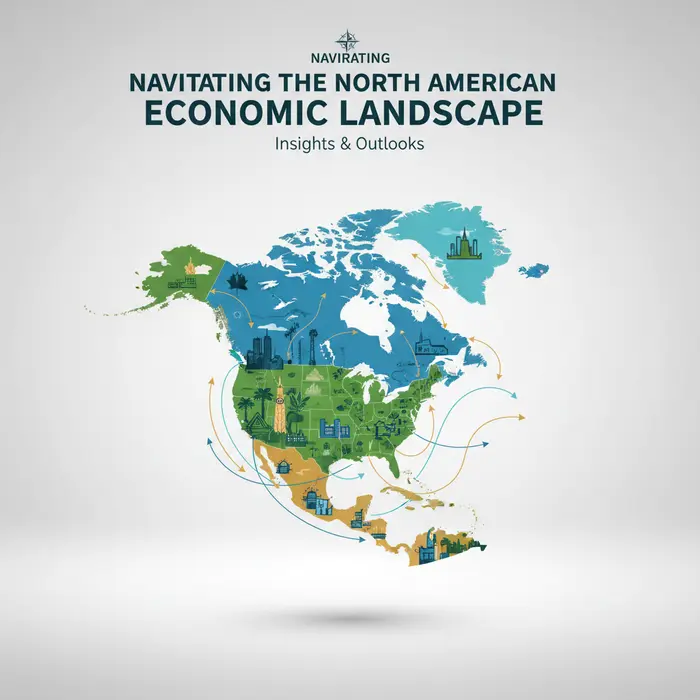
The year 2024 presents a complex yet dynamic economic picture for North America. As businesses look to optimize operations and seize new opportunities, understanding the confluence of global and regional factors shaping the trade environment across the United States, Canada, and Mexico is paramount. This section provides an in-depth North America Trade Outlook 2024, analyzing the forces that will define trade flows, investment decisions, and supply chain resilience in one of the world’s most integrated economic blocs.
1. Global Economic Headwinds & Tailwinds
The North American economic landscape in 2024 cannot be viewed in isolation. Several significant global forces are exerting pressure on trade dynamics. On the headwinds front, persistent inflation in major economies, albeit showing signs of moderation, continues to influence central bank policies, keeping interest rates elevated. This tight monetary policy environment can dampen consumer demand and business investment, impacting North American global economic outlook and export markets. Geopolitical instability, particularly in Eastern Europe and the Middle East, introduces an element of unpredictability, affecting energy prices, shipping costs, and investor confidence. Furthermore, slower-than-expected growth in key trading partners like China and parts of Europe could reduce demand for North American goods and services, influencing overall North American import export data.
Conversely, several tailwinds are also at play. Resilience in the global labor market, particularly in the U.S., provides a stable foundation for consumer spending. The ongoing push for digitalization and green energy transitions creates new avenues for innovation and trade. Most significantly for North America, the global trend towards friendshoring and nearshoring, driven by a desire for more secure and resilient supply chains, presents a substantial tailwind. Companies are increasingly looking to relocate production closer to end markets or to politically aligned countries, directly benefiting the integrated North America supply chain analysis and manufacturing capabilities of the U.S., Canada, and Mexico.
2. Regional Growth Forecasts by Country
Each country within the North American bloc faces distinct economic trajectories that will collectively shape the regional trade environment.
- United States: The U.S. economy is projected to demonstrate continued, albeit moderating, growth in 2024. Consumer spending remains robust, supported by a strong job market, while significant infrastructure investments are providing fiscal stimulus. However, the Federal Reserve’s stance on interest rates and the ongoing management of national debt will be critical factors. For Canada Mexico US trade trends, U.S. demand remains the primary driver for its neighbors’ exports.
- Canada: Canada’s economy is expected to experience more subdued growth, influenced by higher interest rates impacting the housing market and consumer debt. The energy sector, a significant contributor to Canada’s exports, will be sensitive to global oil and gas prices. Resource extraction and agricultural exports will continue to be vital, necessitating strong trade relationships, particularly with the U.S.
- Mexico: Mexico is poised for significant gains, largely propelled by the nearshoring phenomenon. Foreign direct investment (FDI) into manufacturing facilities, especially in automotive, electronics, and aerospace sectors, is booming. Its strategic geographic position and competitive labor costs make it an attractive alternative to Asian production hubs. This surge in manufacturing activity will significantly boost USMCA trade statistics and cross-border logistics.
The collective strength of these economies, underpinned by the USMCA agreement, facilitates robust intra-regional trade, with automotive and technology sectors leading the charge in North American import export data.
3. Geopolitical Influences on Trade Policy
Geopolitical considerations are increasingly intertwining with trade policy, creating both opportunities and challenges for North American businesses. The United States-Mexico-Canada Agreement (USMCA) remains the bedrock of regional trade, providing a framework for dispute resolution and market access. However, ongoing discussions and potential reviews under the agreement, particularly regarding rules of origin in sectors like automotive, could lead to adjustments in trade flows and manufacturing strategies. The enforcement of labor and environmental provisions within USMCA also merits close attention, potentially impacting compliance costs for businesses operating across borders.
Beyond regional agreements, the broader geopolitical rivalry between the U.S. and China continues to reshape global supply chains. This dynamic is accelerating the trend of companies diversifying their manufacturing bases away from China, with Mexico and, to a lesser extent, Canada emerging as beneficiaries. Investments in critical minerals and advanced manufacturing technologies within North America are gaining momentum, driven by national security and economic resilience objectives. This re-orientation emphasizes the importance of a resilient North America supply chain analysis, focusing on localized production and enhanced logistics networks. Furthermore, evolving trade relationships with other global partners, coupled with potential shifts in political leadership in each country, could introduce new policy directions impacting tariffs, import quotas, and regulatory harmonization, all crucial for a comprehensive North America Trade Outlook 2024.
USMCA Trade Performance & Statistics
The United States-Mexico-Canada Agreement (USMCA), which replaced NAFTA in July 2020, stands as a cornerstone of North American economic integration. Designed to modernize trade relations, strengthen supply chains, and enhance competitiveness, its performance is critical for understanding the current North America Trade Outlook 2024. A deep dive into its operational years reveals evolving dynamics in trade flows, the resilience of strategic sectors, and ongoing challenges related to both tariff and non-tariff barriers. Analyzing key USMCA trade statistics and North American import export data provides a comprehensive picture of how the agreement is shaping the economic landscape across the continent, particularly in light of global economic shifts and the push for nearshoring.
1. Intra-USMCA Trade Flows: US, Canada, Mexico
The core objective of USMCA is to facilitate and expand trade among its three member nations, fostering robust Canada Mexico US trade trends. Since its implementation, intra-USMCA trade has demonstrated significant resilience, quickly recovering from pandemic disruptions and subsequently reaching new heights. The United States remains the largest trading partner for both Canada and Mexico, while Canada and Mexico are, respectively, the U.S.’s first and second-largest goods trading partners. Total trilateral trade in goods regularly surpasses trillions of dollars annually, underscoring deep interdependence. This extensive network is driven by proximate markets, established supply chains, and harmonized regulations under the agreement. For instance, recent North American import export data indicates Canada and Mexico collectively account for a substantial portion of U.S. merchandise trade, highlighting the strategic importance of these bilateral relationships. The seamless movement of goods across these borders is a testament to the integrated nature of the North American economy, reinforcing the strategic advantage of regionalization. These USMCA trade statistics illustrate a dynamic and growing partnership, central to each nation’s economic prosperity.
2. Key Sectoral Performance (Automotive, Agriculture, Energy)
The USMCA’s impact is particularly pronounced in strategic sectors that form the backbone of the North American economy, directly influencing North America supply chain analysis.
- Automotive: This sector epitomizes North American integration. The agreement’s enhanced rules of origin, requiring 75% regional content for duty-free vehicle treatment (up from 62.5% under NAFTA), aimed to bolster regional manufacturing. While initially presenting adjustment challenges, these rules have spurred investment in North American production. The complex cross-border supply chains for automotive parts and finished vehicles continue to be a primary driver of trade volume, with components often crossing borders multiple times. This intricate production ballet underlines the necessity of smooth trade relations for industry efficiency and competitiveness.
- Agriculture: The agricultural sector has largely benefited from stable market access and reduced tariffs, continuing a trend from NAFTA. Canada and Mexico are critical export markets for U.S. agricultural products, including grains, meats, and processed foods, while the U.S. imports significant amounts of fruits and vegetables. The agreement largely maintained tariff-free trade for agricultural products, providing certainty for farmers and agribusinesses across the continent, contributing to food security.
- Energy: North America’s energy landscape is highly integrated, characterized by extensive cross-border infrastructure like pipelines and electricity transmission lines. The USMCA reinforces this integration by supporting the flow of energy products. While specific energy provisions are not as detailed as in some other agreements, the overarching framework facilitates the stability and predictability needed for energy investment and trade, significantly contributing to North America’s energy independence and security. For more detailed statistics on the flow of goods across these vital sectors, The U.S. Census Bureau provides comprehensive foreign trade statistics.
3. Tariff & Non-Tariff Barriers Analysis
While the USMCA significantly streamlines cross-border commerce by largely eliminating tariffs on most goods, the analysis of its performance must also consider the persistence and evolution of non-tariff barriers (NTBs). The agreement maintained and, in some cases, strengthened provisions against traditional tariffs, ensuring predictable market access. However, NTBs can often be more insidious and challenging to address than direct tariffs. These include varying regulatory standards, complex customs procedures, divergent labor and environmental regulations, and sanitary and phytosanitary measures. While the USMCA includes chapters dedicated to regulatory cooperation, disparities can still create friction and increase compliance costs for businesses engaged in North American import export data flows. For example, differences in automotive safety standards or agricultural inspection protocols can impede seamless trade. Furthermore, ongoing disputes, though addressed through the agreement’s dispute resolution mechanisms, occasionally highlight underlying tensions or interpretations of rules, impacting specific industries. The agreement’s robust enforcement mechanisms, including rapid response labor mechanisms, represent a new approach to addressing some of these non-tariff related issues. As the North America Trade Outlook 2024 continues to evolve, understanding and mitigating these non-tariff barriers will be crucial for fully realizing the economic potential of the USMCA and enhancing overall North America supply chain analysis and efficiency.
North American Import-Export Dynamics
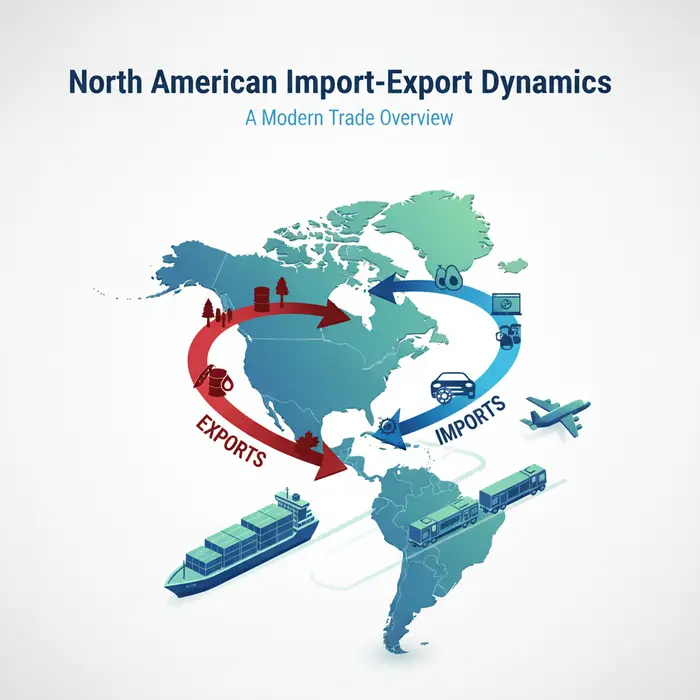
North America stands as a powerhouse in global commerce, with its import-export dynamics shaped by robust industrial bases, significant consumer markets, and the influential United States-Mexico-Canada Agreement (USMCA). A detailed examination of North American import export data reveals a complex interplay of trade relationships, product flows, and evolving strategic priorities. As we delve into the region’s trade landscape, understanding these intricate trade trends is paramount for businesses and policymakers alike.
1. Top Export & Import Categories by Country
The foundational pillar of North American trade is the intra-regional flow between the U.S., Canada, and Mexico. USMCA trade statistics consistently highlight the dominance of motor vehicles and parts as a top export and import category across all three nations, reflecting highly integrated automotive supply chains. For instance, the U.S. is a major exporter of machinery, electrical machinery, mineral fuels, and agricultural products to both Canada and Mexico. Conversely, the U.S. imports significant volumes of vehicles, machinery, and mineral fuels from Canada, and vehicles, electrical machinery, and agricultural goods from Mexico. Canada’s primary exports to the U.S. include crude oil, natural gas, automobiles, and machinery, while imports from the U.S. largely comprise machinery, electrical equipment, and vehicles. Mexico’s export profile is heavily concentrated on manufactured goods, particularly automotive products, electronics, and machinery destined for the U.S. market, with imports from the U.S. reflecting components for these industries alongside refined fuels and agricultural products. Beyond these core categories, pharmaceutical products, plastics, and optical instruments also feature prominently in the intra-North American trade landscape, demonstrating sophisticated manufacturing capabilities and consumer demand across the region. This intricate web of trade underscores the deep economic interdependence that defines Canada Mexico US trade trends.
2. Key Trade Balances & Deficits
While intra-North American trade is largely balanced in many sectors, the broader global picture reveals significant trade balances and deficits for each nation. The United States continues to run a substantial overall trade deficit, driven primarily by imports from Asian economies, particularly China, in sectors like electronics, apparel, and consumer goods. However, within North America, the U.S. maintains a more nuanced position. For example, the U.S. often has a trade surplus with Canada in services and some manufactured goods, while facing a deficit in energy products. With Mexico, the trade balance is typically a deficit for the U.S. in goods, especially given the scale of Mexican manufactured exports, though services trade can offset some of this. Canada generally experiences a trade surplus with the U.S., largely due to energy exports, but runs deficits with many other global partners. Mexico, benefitting from its manufacturing prowess and proximity to the U.S. market, usually maintains a significant trade surplus with the U.S. For official trade policy insights and detailed reports on these balances, sources like the Office of the United States Trade Representative provide comprehensive data. These key trade balances are influenced by a multitude of factors, including exchange rates, commodity prices, global consumer demand, and the strategic sourcing decisions of multinational corporations. Understanding these North American import export data trends is crucial for assessing regional economic health.
3. Diversification of Trade Partners & Markets
The dynamic global trade environment, marked by geopolitical shifts and the imperative for supply chain resilience, has underscored the importance of diversifying North America’s trade partners and markets. While the USMCA remains the cornerstone of regional trade, there’s a growing strategic emphasis on expanding trade relationships beyond the continent. Efforts are underway to strengthen ties with key markets in Europe, Asia-Pacific, and Latin America. For instance, Canada has pursued comprehensive trade agreements with the European Union (CETA) and nations in the Asia-Pacific region (CPTPP), aiming to reduce reliance on the U.S. market for certain exports and imports. Similarly, Mexico has diversified its trade portfolio, particularly with European and Asian partners, seeking to attract foreign direct investment and broaden its export base for non-US destinations. The United States, while focused on strengthening its existing alliances, also explores new opportunities to ensure robust and diversified supply chains. This push for diversification is not merely about market access; it’s a critical component of North America supply chain analysis, aiming to mitigate risks associated with over-reliance on single markets or suppliers. Such strategic moves are vital for maintaining economic stability and fostering long-term growth across the region, further shaping the overall North America Trade Outlook 2024.
Supply Chain Resilience & Transformation
The global economic landscape of recent years has undeniably reshaped how businesses view and manage their supply chains, particularly within North America. From the initial shocks of the COVID-19 pandemic to ongoing geopolitical tensions and extreme weather events, the imperative for robust supply chain resilience and strategic transformation has never been clearer. The current state of North American supply chains reflects a proactive shift away from purely cost-driven models towards strategies emphasizing security, agility, and sustainability. As we delve into the North America Trade Outlook 2024, a critical lens is applied to understanding how the region is adapting, fostering resilience, and leveraging innovation to safeguard its economic future. This analysis focuses on key strategic pillars influencing North American supply chain analysis, including a significant pivot towards regionalized production, the integration of advanced technologies, and substantial investments in critical infrastructure.
1. Nearshoring & Reshoring Initiatives Impact
The drive towards nearshoring and reshoring has emerged as a dominant trend in North American supply chain strategy, fundamentally altering global manufacturing and trade patterns. Nearshoring involves relocating production closer to the final consumption market, typically within the same continent (e.g., manufacturing in Mexico or Canada for the U.S. market). Reshoring, on the other hand, means bringing production back to the country of origin. Both strategies are propelled by a desire to mitigate risks associated with long, complex international supply chains, such as port congestion, geopolitical instability, and rising transportation costs. The impact on North American manufacturing is profound, contributing to job creation, increased domestic production capacity, and enhanced control over quality and intellectual property. Businesses are increasingly prioritizing shorter lead times and greater visibility, even if it entails slightly higher upfront costs. This strategic shift is particularly visible in sectors like automotive, electronics, and pharmaceuticals. The United States-Mexico-Canada Agreement (USMCA) plays a pivotal role here, offering a stable trade framework that incentivizes regional production. An examination of USMCA trade statistics reveals how these initiatives are bolstering inter-regional trade, enhancing the competitiveness of North American industries, and influencing Canada Mexico US trade trends. This emphasis on regionalization is a cornerstone of building enduring supply chain resilience.
2. Digitalization & Automation in Logistics
The transformation of North American supply chains is intrinsically linked to the rapid adoption of digitalization and automation. These technologies are no longer aspirational but essential tools for navigating modern complexities and achieving operational excellence. Artificial Intelligence (AI), the Internet of Things (IoT), blockchain, and advanced robotics are revolutionizing every facet of logistics, from warehousing and transportation to last-mile delivery. Digital platforms provide unprecedented end-to-end visibility, allowing companies to track goods in real-time, predict potential disruptions, and optimize routes and inventory management. Automation in warehouses, utilizing robotic picking systems and automated guided vehicles (AGVs), significantly boosts efficiency, reduces labor costs, and improves accuracy. Predictive analytics, powered by AI, enables better demand forecasting, minimizing overstocking and stockouts. Furthermore, blockchain technology is enhancing transparency and traceability, particularly crucial for ensuring compliance and combating counterfeiting in complex North American import export data flows. The integration of these digital tools not only streamlines operations but also fortifies supply chain resilience by enabling quicker responses to unforeseen events and fostering a more agile, data-driven decision-making environment across Canada, Mexico, and the US.
3. Infrastructure Development & Bottleneck Mitigation
Robust and efficient infrastructure is the backbone of a resilient supply chain, and North America is making significant strides in this area. Years of underinvestment in ports, roads, railways, and warehousing facilities led to critical bottlenecks that were severely exposed during recent global disruptions. Recognizing this, governments and private sectors across the continent are embarking on ambitious infrastructure development projects aimed at upgrading existing networks and building new capacities. Investments are being channeled into modernizing port facilities to handle larger cargo volumes more efficiently, expanding intermodal rail networks to reduce road congestion and emissions, and improving highway systems. The focus also extends to “smart infrastructure” – integrating digital technologies to optimize traffic flow, manage port operations, and enhance security. Furthermore, there’s a concerted effort to expand warehousing and distribution center footprints, particularly near major population centers, to support the growth of e-commerce and nearshoring initiatives. These strategic investments are crucial for mitigating future bottlenecks, improving the speed and reliability of goods movement, and ultimately reinforcing North America’s position as a robust trading bloc. By addressing these foundational elements, the region is actively working to ensure the seamless flow of goods, vital for sustained economic growth and continued North American supply chain analysis and evolution.
Future Trends, Challenges & Opportunities
The North American trade landscape is entering a period of profound transformation, characterized by dynamic shifts, emerging global pressures, and significant technological advancements. As businesses navigate this complex environment, a forward-looking perspective is crucial to harness strategic opportunities and mitigate potential challenges. The North America Trade Outlook 2024 underscores a growing need for resilience, innovation, and adaptability across all sectors involved in cross-border commerce, with a strong focus on enhancing regional competitiveness and integration.

1. Sustainability & ESG Factors in Trade
Sustainability and Environmental, Social, and Governance (ESG) factors are rapidly transitioning from niche considerations to core components of trade strategy. This shift involves businesses increasingly prioritizing eco-friendly practices, ethical labor standards, and transparent governance throughout their supply chains. Consumers, investors, and regulators are demanding greater accountability, pushing companies to measure and report on their carbon footprint, sourcing practices, and social impact. The pressure for greener logistics, sustainable packaging, and responsible resource utilization is intensifying. For companies engaged in North American import export data analysis, this means a deeper dive into product lifecycle assessments and the environmental impact of trade routes. Opportunities abound for businesses that innovate in green technologies, circular economy models, and sustainable certifications, potentially differentiating themselves in a crowded market. Adherence to rising ESG standards will become a prerequisite for market access and will undoubtedly influence future USMCA trade statistics. To stay competitive in the evolving trade ecosystem, businesses must integrate these considerations into their strategic planning, ensuring not just compliance but proactive engagement. For a deeper understanding of sustainable trade practices, the World Trade Organization’s initiatives on environmental goods and services offer valuable insights.
2. Labor Market & Workforce Implications
The labor market’s evolution presents both significant challenges and unique opportunities for North American trade. A persistent shortage of skilled labor, particularly in manufacturing, logistics, and technology, continues to impact supply chain efficiency and production capacity. Simultaneously, automation and artificial intelligence are redefining job roles, necessitating a strategic focus on workforce reskilling and upskilling. The trend of reshoring or nearshoring, driven by geopolitical considerations and the desire for more resilient supply chains, directly influences regional employment dynamics, creating new manufacturing jobs but also demanding a new set of advanced skills. Understanding these shifts is vital for interpreting Canada Mexico US trade trends, as labor availability and cost significantly affect production decisions and trade flows within the bloc. Businesses must invest in talent development, embrace innovative training programs, and adapt to evolving labor laws to maintain operational continuity. A comprehensive North America supply chain analysis now critically includes a thorough assessment of labor availability and skill sets across different regions. This dynamic environment requires businesses to strategically align their workforce planning with their trade objectives to remain competitive in the coming years. Reputable economic research institutions also offer further insights into labor trends’ impact on global trade.
3. Technological Innovation & Trade Facilitation
Technological innovation is poised to revolutionize North American trade facilitation, enhancing efficiency, transparency, and security across the entire supply chain. Digitalization, powered by advancements like blockchain, Artificial Intelligence (AI), and the Internet of Things (IoT), is streamlining processes from customs clearance and freight tracking to payment systems. Blockchain technology, for instance, offers immutable records for enhanced transparency and reduced fraud in trade finance and documentation. AI-driven analytics can optimize logistics routes, predict demand, and identify potential disruptions, significantly improving supply chain resilience. IoT devices provide real-time visibility into cargo location and condition, crucial for perishable goods and high-value shipments. These innovations are not only reducing operational costs but also accelerating trade flows, making cross-border transactions faster and more reliable. Companies that embrace these technologies will gain a competitive edge, allowing them to more effectively manage North American import export data and optimize their international operations. This technological paradigm shift is fundamental to shaping the North America Trade Outlook 2024, promising a more integrated and efficient trade environment. For businesses aiming to capitalize on these trends, continuous investment in digital infrastructure and skills is paramount, ensuring they can navigate complex USMCA trade statistics with agility and precision.
The future of North American trade is undeniably shaped by these interconnected trends. While challenges such as adapting to new sustainability standards, addressing labor market shifts, and implementing complex technologies persist, they also unlock unprecedented opportunities for growth and innovation. Businesses that strategically integrate ESG principles, proactively manage their workforce, and leverage technological advancements will not only overcome obstacles but also thrive, cementing their position in a dynamic and increasingly integrated North American market. The North America Trade Outlook 2024 signals a period where strategic foresight and agile execution will define success in cross-border commerce.
Partner with Vietnam’s Leading Suppliers
Looking for reliable suppliers in Vietnam? Contact VietnamSuppliers.com today to connect with verified manufacturers and exporters across all industries.
—————————————
References
– IMF World Economic Outlook, April 2024: https://www.imf.org/en/Publications/WEO/Issues/2024/04/16/world-economic-outlook-april-2024
– The U.S. Census Bureau provides comprehensive foreign trade statistics: https://www.census.gov/foreign-trade/
– Office of the United States Trade Representative – Americas: https://ustr.gov/countries-regions/americas
– USMCA Benefits and Implementation: https://ustr.gov/trade-agreements/free-trade-agreements/united-states-mexico-canada-agreement/benefits-usmca
– WTO | Trade and Environment: https://www.wto.org/english/tratop_e/envir_e/envir_e.htm

