What is Minimum Order Quantity (MOQ)?
Minimum Order Quantity (MOQ) is a fundamental concept in the world of supply chain management and procurement, serving as a critical determinant for both buyers and suppliers. It represents the smallest number of units of a product that a supplier is willing to produce and sell in a single order. Understanding MOQs is paramount for businesses engaged in any form of commerce, but it becomes especially critical and complex within the vast landscape of import and export trade. From the intricate decisions of small order quantity sourcing to large-scale international transactions, MOQs dictate feasibility, cost-effectiveness, and ultimately, a business’s ability to compete in global markets.

1. Defining MOQ: The Core Concept
At its simplest, a Minimum Order Quantity (MOQ) is the lowest quantity of a certain product that a supplier is prepared to supply. This quantity can vary dramatically depending on the industry, product type, supplier’s production capabilities, and their business model. For instance, a bespoke jewelry maker might have a MOQ of just one or two items, while a textile manufacturer could demand thousands of yards of fabric or hundreds of garments. The core concept behind MOQs is rooted in economic efficiency: suppliers set these thresholds to ensure that each production run or transaction is financially viable and maximizes their operational capacity. It’s not just about the final product; MOQs often cascade from raw material suppliers to manufacturers, influencing the entire value chain. Buyers encountering an MOQ must decide whether the required quantity aligns with their immediate needs, inventory capacity, and budget, or if seeking low MOQ suppliers is a more suitable strategy.
2. Why Suppliers Implement MOQs
Suppliers implement Minimum Order Quantities for a multitude of strategic and operational reasons, primarily centered around profitability and efficiency. The most significant driver is cost efficiency. Producing goods involves fixed costs (like machine setup, labor, and factory overheads) that remain constant regardless of the order size. By requiring a minimum quantity, suppliers can spread these fixed costs over more units, thereby reducing the per-unit production cost and achieving economies of scale. This makes larger orders more profitable and sustainable for the supplier. Furthermore, suppliers often face MOQs from their own raw material providers, necessitating minimum outputs to align with their input costs. Inventory management is another crucial factor; MOQs help suppliers manage their stock levels, ensuring they don’t produce small, infrequent orders that could lead to excess unsold inventory or inefficient use of storage space. For specialized or custom products, MOQs also help cover the costs associated with design, tooling, and specific material procurement. Understanding these underlying reasons is vital for buyers, as it provides leverage when negotiating MOQ terms or seeking alternative solutions.
3. The Significance of MOQ in Import/Export
The role of Minimum Order Quantity is profoundly amplified within the global arena of import and export. For international trade, MOQs are not merely about production costs but also encompass the complexities of logistics, customs, and heightened financial risks. When considering what is MOQ in import export, it’s essential to factor in increased shipping costs (both domestic and international freight), insurance, customs duties, and longer lead times. Suppliers engaged in international trade often impose higher MOQs to justify the administrative burden, communication challenges, and inherent risks associated with cross-border transactions. This can present a significant barrier for small and medium-sized enterprises (SMEs) looking to source products internationally, as meeting high MOQs might strain their working capital or lead to overstocking. Conversely, for large corporations, understanding and leveraging MOQs can lead to substantial cost savings per unit, strengthening their competitive position. Strategic buyers in import/export meticulously analyze MOQs against their market demand, cash flow, and inventory turnover rates to make informed sourcing decisions, sometimes opting for consolidators or trading companies to aggregate smaller orders and meet supplier MOQs indirectly. Ultimately, mastering the art of navigating MOQs is a cornerstone of successful global trade strategy, impacting everything from product diversification to market entry and supply chain resilience.
Understanding Different Types of MOQs
The Minimum Order Quantity (MOQ) is a fundamental concept in global procurement, representing the fewest units a supplier is willing to sell in a single transaction. For businesses engaged in import and export, mastering MOQs is critical, influencing everything from inventory levels to cash flow. While seemingly a simple threshold, MOQs manifest in various structures, each presenting distinct challenges and strategic considerations. Effectively navigating these types, from basic per-item demands to intricate multi-layered conditions, is essential for optimizing supply chains and ensuring financial stability. For small order quantity sourcing, identifying low MOQ suppliers offers a significant competitive edge.
1. Simple vs. Complex MOQ Structures
At its most basic, a simple MOQ dictates a minimum number of units for a single product SKU. This “per item” or “per SKU” model is common and straightforward, such as requiring 100 units of a specific t-shirt design. However, MOQs frequently extend beyond this basic structure.
Many suppliers implement “per order” MOQs, requiring a minimum total value or quantity for the entire purchase, irrespective of individual item quantities. For example, a factory might stipulate a minimum order value of $5,000, ensuring the economic viability of their production run.
A more complex variant is the “per material” or “per component” MOQ, particularly relevant in manufacturing. Here, the final product relies on various raw materials or sub-components, each potentially sourced from sub-suppliers with their own MOQs. This can compel buyers to purchase large quantities of a specific fabric or electronic chip, even if only a smaller amount is immediately needed for the final product.
Furthermore, “tiered” or “layered” MOQs are common, offering varying minimums based on product attributes (e.g., 500 units for standard colors, 1,000 for custom) or providing progressively lower unit prices for higher order volumes. Navigating these multi-layered conditions demands careful planning and a deep understanding of production economics, especially given how MOQs can be both a blessing and a curse in supply chain management.
2. Impact on Inventory Management & Storage
The type and magnitude of MOQs directly influence inventory management challenges. High MOQs, while often leading to lower per-unit costs, necessitate purchasing larger quantities than immediately required, resulting in excess inventory. The ramifications are significant:
Firstly, increased inventory demands more storage space, escalating warehousing costs encompassing rent, utilities, insurance, and handling labor. For businesses with limited capital or physical capacity, this can be a substantial financial burden. Secondly, holding large inventories heightens the risk of obsolescence, spoilage, or damage. Products can become outdated, expire, or be compromised, leading to costly write-offs and financial losses.
Moreover, extensive stock levels tie up capital that could otherwise be allocated to crucial operational needs, thereby affecting liquidity. Businesses pursuing lean operations and just-in-time inventory models often find high MOQs a considerable obstacle. This underscores the value of partnering with low MOQ suppliers, as they facilitate leaner stock levels, greater responsiveness to market shifts, and reduced inventory-related risks. Strategies such as order consolidation or negotiating MOQ are vital to alleviate these pressures.
3. Cash Flow Implications for Buyers
One of the most immediate and critical consequences of MOQs on buyers is their profound impact on cash flow. A high Minimum Order Quantity mandates a larger upfront capital investment. Instead of more frequent, smaller purchases that align with cash inflows, businesses are forced to commit significant funds to a single order. This can severely strain working capital, particularly for startups and small-to-medium-sized enterprises (SMEs) with limited financial reserves.
For instance, if a product costs $10 per unit and the MOQ is 1,000 units, the buyer must disburse $10,000 upfront. Should market demand be uncertain or slow, this capital remains locked in inventory, unavailable for essential business expenditures like marketing, product development, or operational overheads. This delay in cash conversion can hinder growth and, in extreme cases, jeopardize solvency.
Buyers often face a dilemma: higher MOQs typically offer superior per-unit pricing due to supplier economies of scale. While this appears appealing, the long-term cash flow implications must be meticulously evaluated. Effective negotiating MOQ becomes an essential skill to balance unit cost savings with maintaining healthy cash flow. Strategies include requesting staggered deliveries, finding consolidated suppliers, or exploring alternative small order quantity sourcing options. A clear understanding of what is MOQ in import export across diverse industries is crucial for informed procurement decisions that safeguard a company’s financial well-being.
Strategies for Finding Low MOQ Suppliers
For startups, small businesses, or those launching new products, the concept of Minimum Order Quantity (MOQ) can be a significant hurdle. Understanding what is MOQ in import export is crucial, as it represents the smallest quantity of a product a supplier is willing to produce or sell. High MOQs can tie up capital, lead to excess inventory, and stifle innovation by making it difficult to test the market with new items. Discovering low MOQ suppliers is not just a preference; it’s an essential strategy for maintaining agility, managing cash flow, and scaling effectively with evolving needs. This section will uncover actionable methods to locate partners who are willing to accommodate smaller order quantities, empowering your business to grow sustainably.
1. Identifying Niche Manufacturers & Wholesalers
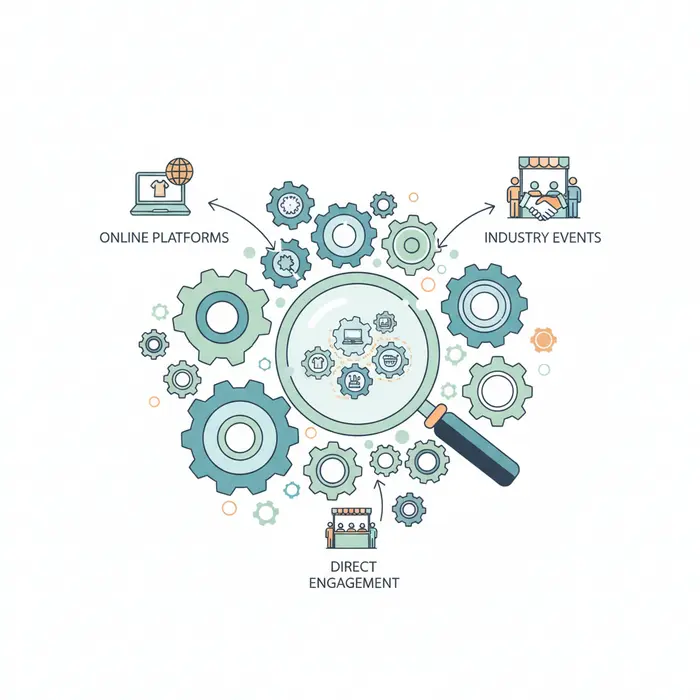
One of the most effective strategies for small order quantity sourcing is to target niche manufacturers and specialized wholesalers. Unlike large-scale factories that prioritize high-volume orders for economies of scale, smaller, more specialized operations are often more flexible and willing to work with lower MOQs. These businesses frequently cater to specific markets, custom orders, or emerging brands, making them ideal partners for businesses that need to start small. To identify them, begin by conducting targeted online searches using highly specific keywords related to your product and the term “low MOQ” or “small batch production.”
Participating in industry-specific trade shows, even online versions, can also connect you directly with these types of suppliers. Many niche manufacturers use these platforms to showcase their capabilities and attract new clients who might not meet the stringent requirements of larger factories. Networking within your industry and seeking recommendations from other small business owners can also open doors to less obvious, yet highly valuable, supplier relationships. These suppliers often value long-term partnerships and are more inclined towards negotiating MOQ terms, especially if they see potential for future growth.
2. Leveraging B2B Platforms (e.g., Alibaba, Global Sources) for Low MOQ Filters
Business-to-Business (B2B) platforms like Alibaba, Global Sources, and Made-in-China have revolutionized global sourcing, offering powerful tools to find low MOQ suppliers. These platforms are not just for large importers; they host a vast array of suppliers, many of whom are open to smaller orders. The key is to effectively utilize their advanced search filters. Most major B2B sites include a “Minimum Order Quantity” filter, allowing you to specify your desired quantity range (e.g., 1-100 units). Applying this filter immediately narrows down your search to suppliers who are already predisposed to accepting smaller orders.
Beyond the filters, pay close attention to supplier profiles. Look for indications like “ready to ship” products, which often come with no or very low MOQs, as these items are already manufactured and waiting for buyers. Engaging directly with suppliers through the platform’s messaging system is also vital. Even if a supplier lists a higher MOQ, initiating a conversation can open up opportunities for negotiating MOQ, particularly if you explain your business model, growth potential, and commitment to building a long-term relationship. Many suppliers are willing to be flexible for promising new clients, understanding that today’s small order could be tomorrow’s bulk purchase. Remember to clarify all terms, including production time, shipping costs, and payment conditions, as part of your supply chain management strategy.
3. Exploring Domestic vs. International Sourcing Options
When seeking low MOQ suppliers, evaluating the pros and cons of domestic versus international sourcing is a critical step. Each option presents distinct advantages and disadvantages related to minimum order quantities, costs, and logistics.
Domestic Sourcing: Opting for local or national suppliers often comes with inherently lower MOQs. Domestic manufacturers typically have smaller production runs, faster lead times, and can offer greater flexibility due to proximity and ease of communication. This is especially beneficial for testing new products, managing inventory closely, and responding quickly to market trends. While the unit cost might be slightly higher than international alternatives, savings on shipping, reduced customs complexities, and fewer inventory holding costs can offset the difference, making it a viable strategy for small order quantity sourcing. It also often aligns well with sustainability goals and supports local economies.
International Sourcing: While international suppliers, particularly from regions like Asia, are known for their competitive pricing, they traditionally demand higher MOQs to make production cost-effective. However, the landscape is changing. Many international factories, especially those looking to expand their client base, are becoming more amenable to lower quantities, particularly for specific product lines or during off-peak seasons. When considering international options, thorough research into their capabilities and direct communication is paramount. Factors such as shipping costs, import duties, and extended lead times must be carefully factored into your overall cost analysis and supply chain management planning. A balanced approach, possibly starting with domestic for initial runs and transitioning to international as demand grows, can be an effective strategy for managing MOQs while optimizing costs.
Mastering MOQ Negotiation Techniques
Navigating the complexities of global sourcing often means encountering the acronym MOQ – or Minimum Order Quantity. For many businesses, particularly startups or those testing new product lines, high MOQs can be a significant barrier. Understanding what is MOQ in import export isn’t just about knowing the definition; it’s about recognizing its impact on cash flow and inventory. However, MOQs are often negotiable. By employing effective negotiating MOQ tactics, businesses can secure more favorable terms, reduce initial investment, and open doors to a wider range of low MOQ suppliers. This section delves into proven strategies for reducing your Minimum Order Quantity, helping you optimize your supply chain and foster stronger supplier relationships.
1. Building Strong Supplier Relationships & Communication
At the heart of successful MOQ negotiation lies the cultivation of robust, trust-based relationships with your suppliers. Think of your suppliers not just as vendors, but as strategic partners. Open and honest communication is paramount. Share your business vision, your challenges (especially regarding initial order volumes), and your long-term potential. When suppliers understand your situation and see the potential for a lasting, profitable partnership, they are often more willing to be flexible on their Minimum Order Quantity. This involves:
- Transparency: Clearly communicate your expected order frequency, potential growth, and any specific market conditions influencing your current needs for small order quantity sourcing.
- Reliability: Always honor your commitments, pay on time, and provide clear, actionable feedback. Being a dependable customer significantly increases your leverage.
- Understanding their perspective: Acknowledge that suppliers have fixed costs associated with setting up production runs. Showing an understanding of their challenges can build goodwill and open avenues for compromise.
A strong relationship transforms a transactional interaction into a collaborative effort, making suppliers more inclined to work with you on reducing MOQs for mutual benefit.
2. Offering a Higher Price for Lower Volumes (Premium for Flexibility)
While the goal is often to reduce costs, sometimes a strategic increase in the per-unit price can be the key to unlocking lower MOQs. Suppliers typically set MOQs to ensure their production runs are cost-effective, covering setup costs, material procurement, and labor. If your desired order volume falls below their standard Minimum Order Quantity, offering a slightly higher price per unit for that smaller batch can make it financially viable for them. This “premium for flexibility” acknowledges their increased per-unit costs for a shorter run and signals your commitment to the partnership.
- Cost Justification: Explain that your current market test or initial launch requires flexibility, and you’re willing to absorb a slight premium for that service.
- Trial Orders: This strategy is particularly effective for trial orders, new product introductions, or testing new markets where you need to manage risk without committing to large volumes.
- Quantify the Difference: Calculate and propose a reasonable premium. For example, if their MOQ is 1000 units at $10 each, and you need 300 units, you might offer $11 or $12 per unit.
This tactic positions you as a pragmatic buyer willing to find a win-win solution, rather than just demanding a lower price.
3. Consolidating Orders & Making Future Commitments
Another powerful strategy for negotiating MOQ is to consolidate your current needs or provide assurances of future business. If you have several small orders for different product variations or components, explore whether the supplier can combine them into a single production run that meets their overall Minimum Order Quantity. This reduces their setup costs and increases the efficiency of their operation.
Even more effective is making a future commitment. This could involve:
- Blanket Orders: Committing to purchase a total quantity of goods over a specific period (e.g., 6 or 12 months), even if you take delivery in smaller, staggered batches. This gives the supplier long-term visibility and security, allowing them to procure materials more efficiently and plan their production schedule.
- Forecasting: Providing accurate and regular sales forecasts to your supplier. This helps them anticipate your needs and potentially adjust their production plans or material purchases to accommodate you with a lower initial MOQ.
- Long-term Contracts: For established relationships, consider negotiating a long-term contract with a guaranteed annual volume. In return for this commitment, suppliers are often amenable to reducing individual Minimum Order Quantity requirements for each shipment.
By offering consolidated orders or future commitments, you demonstrate value beyond just the immediate purchase, transforming your request for a lower MOQ into an opportunity for the supplier to secure stable, long-term business.
Overcoming MOQ Challenges for Small Businesses
For ambitious small businesses, the dream of sourcing high-quality products directly from manufacturers can often be met with a significant hurdle: the Minimum Order Quantity (MOQ). MOQs represent the fewest number of units a supplier is willing to produce or sell in a single order. For small enterprises with limited capital and storage, these high volume requirements can stifle growth, restrict product variety, and prevent competitive pricing. Understanding what is MOQ in import export is crucial, as it directly impacts your ability to access global markets.
However, the landscape of global sourcing is evolving, and with a blend of creativity and strategic planning, small businesses can navigate these challenges effectively. This section explores alternative solutions and creative strategies to help small businesses overcome high MOQs, enabling them to compete effectively and thrive in their respective markets.

1. Pooling Orders with Other Businesses (Group Buys)
One of the most effective ways for small businesses to tackle high MOQs is by collaborating with peers through a strategy known as ‘pooling orders’ or ‘group buys’. This involves multiple businesses combining their individual, smaller orders to meet a supplier’s minimum quantity requirement. By consolidating demand, the collective order becomes attractive to manufacturers who might otherwise dismiss a single small buyer.
Pooling orders offers several advantages: it allows businesses to access better per-unit pricing typically reserved for larger buyers, expands their product range without excessive inventory risk, and even potentially reduces shipping costs through consolidated freight. Identifying suitable partners can be done through industry associations, online forums, B2B networking events, or even direct outreach to complementary businesses. While requiring careful coordination and mutual trust, group buys can significantly enhance a small business’s purchasing power and help in negotiating MOQ terms that were previously unattainable.
2. Working with Trading Companies or Sourcing Agents
For businesses looking for a less hands-on approach to managing MOQs, engaging with trading companies or sourcing agents can be an invaluable solution. These intermediaries specialize in connecting buyers with manufacturers and often manage the complexities of international trade. A key service they provide is consolidating orders from multiple small clients into a single, large order that meets a factory’s MOQ.
Trading companies and sourcing agents effectively act as a larger buyer to the factory, allowing individual small businesses to place small order quantity sourcing without directly confronting high MOQs. Beyond just managing order volume, these agents often possess deep expertise in supply chain logistics, quality control, and customs clearance, offering a comprehensive solution for small businesses venturing into international sourcing. While their services come at a cost (usually a commission or mark-up), the benefits of reduced risk, streamlined operations, and access to otherwise inaccessible suppliers often outweigh the expense, making them a smart investment for overcoming MOQ barriers.
3. Considering Dropshipping or Print-on-Demand Models
Perhaps the most radical departure from traditional bulk purchasing, dropshipping and print-on-demand (POD) models completely eliminate the need to hold inventory, thereby nullifying the challenge of MOQs. In a dropshipping model, the small business acts as a storefront, taking customer orders and then forwarding them to a third-party supplier who directly ships the product to the customer. The business never physically handles the product, thus avoiding any upfront inventory investment or MOQ constraints.
Similarly, print-on-demand services allow businesses to create custom products (like T-shirts, mugs, or books) that are only produced and shipped once a customer places an order. Both models are ideal for testing new product ideas, offering a wide variety of items without financial risk, and operating with extremely low startup capital. While profit margins might be tighter compared to direct bulk purchasing, the unparalleled flexibility and freedom from MOQ concerns make these models attractive for startups and small businesses focused on marketing and customer acquisition rather than inventory management. They inherently work with low MOQ suppliers or systems that don’t require minimums, making them powerful tools for market entry and product diversification.
Partner with Vietnam’s Leading Suppliers
Looking for reliable suppliers in Vietnam? Contact VietnamSuppliers.com today to connect with verified manufacturers and exporters across all industries.
—————————————
References
– Minimum Order Quantity (MOQ) Definition: https://www.investopedia.com/terms/m/minimum-order-quantity-moq.asp
– MOQ Can Be a Blessing and a Curse: https://www.supplychainbrain.com/articles/29515-moq-can-be-a-blessing-and-a-curse
– supply chain management: https://www.investopedia.com/terms/s/scm.asp
– What is MOQ in Import Export: https://www.investopedia.com/terms/m/minimum-order-quantity.asp
– :