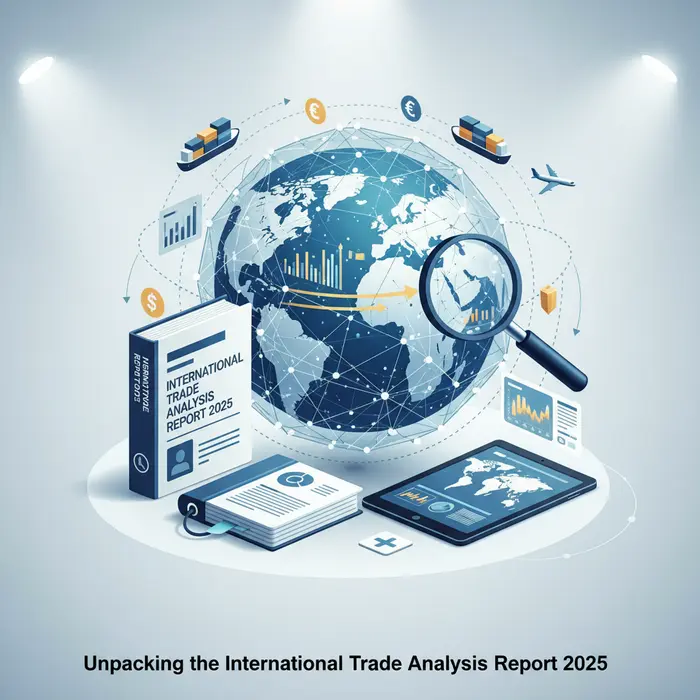
Unpacking the International Trade Analysis Report 2025
In an increasingly interconnected yet volatile global economy, understanding the intricate dynamics of international trade is paramount for sustained growth and strategic decision-making. The International Trade Analysis Report (ITAR) 2025 serves as an indispensable compass, providing businesses, investors, and policymakers with the granular insights needed to navigate complex market landscapes, anticipate shifts, and capitalize on emerging opportunities. This report delves deep into trade patterns, policy impacts, and market intelligence, offering a holistic view crucial for proactive engagement in the global arena. Its scope extends beyond mere data compilation, transforming raw statistics into actionable intelligence that underpins robust strategic planning.
1. What is an International Trade Analysis Report (ITAR)?
An International Trade Analysis Report (ITAR) is a comprehensive document designed to systematically evaluate and present critical information concerning global trade flows, policies, and market conditions. It synthesizes vast amounts of data from various sources to provide a coherent narrative of the international trading environment. At its core, an ITAR typically encompasses several key components:
- Global Trade Data Analysis: This involves scrutinizing import and export statistics across different countries, sectors, and product categories. It identifies trends, growth rates, and shifts in trade balances, often projecting future trajectories based on historical patterns and macroeconomic indicators.
- Country Trade Relations Reports: A significant portion of an ITAR focuses on bilateral and multilateral trade relationships. These reports detail trade agreements, tariffs, non-tariff barriers, and diplomatic ties that influence the ease and volume of trade between nations. They assess the impact of geopolitical events on trade partners and supply chains.
- Trade Policy Influence Analysis: This section examines the effects of existing and proposed trade policies, including free trade agreements, sanctions, subsidies, and regulatory frameworks. It assesses how these policies can alter market access, competitive landscapes, and operational costs for businesses. For an authoritative perspective on global trade rules and agreements, consult the World Trade Organization (WTO).
- Market Intelligence Trade Reports: Beyond raw numbers, ITARs provide qualitative and quantitative market intelligence. This includes insights into consumer behavior, emerging market opportunities, competitive landscapes, and supply chain vulnerabilities. It identifies niche markets, potential demand gaps, and areas ripe for investment or expansion.
In essence, an ITAR is not just a compilation of data but an interpretive tool, transforming complex information into understandable and actionable insights. It serves as a diagnostic report of the global trade health, highlighting both strengths and weaknesses within the system.
2. Why is ITAR critical for strategic business and policy decisions?
The strategic importance of an ITAR cannot be overstated, particularly in an era characterized by rapid technological advancements, evolving geopolitical dynamics, and increasing environmental concerns. For both commercial enterprises and governmental bodies, the insights derived from these reports are foundational for informed decision-making:
For Businesses:
- Market Entry and Expansion: ITARs provide critical intelligence for businesses contemplating new market entries or expanding existing operations. They help identify high-growth markets, assess regulatory hurdles, understand local competition, and tailor product strategies.
- Supply Chain Optimization and Resilience: By analyzing trade data and policy influences, businesses can better diversify their supply chains, mitigate risks associated with geopolitical tensions or natural disasters, and optimize logistics for cost-efficiency and reliability.
- Risk Management: The reports highlight potential trade barriers, policy shifts, currency fluctuations, and geopolitical risks that could impact business operations, allowing companies to develop proactive mitigation strategies.
- Competitive Advantage: Understanding global market trends, competitor activities, and emerging technologies through an ITAR enables businesses to innovate, adapt, and maintain a competitive edge.
For Policymakers:
- Formulating Trade Agreements: Governments rely on ITARs to negotiate favorable trade agreements, assess potential economic impacts, and protect national interests in international forums.
- Economic Development and Diversification: These reports inform policies aimed at fostering economic growth, attracting foreign direct investment, and diversifying export portfolios to reduce reliance on specific markets or products.
- Regulatory Frameworks: ITARs assist in developing and refining customs regulations, intellectual property laws, and other trade-related policies that balance national security, economic prosperity, and international obligations.
- Geopolitical Strategy: By analyzing International Trade Analysis Reports, policymakers gain insights into global power dynamics, trade dependencies, and potential areas of cooperation or conflict, informing foreign policy and diplomatic efforts.
In essence, an ITAR acts as a forward-looking strategic asset, empowering stakeholders to anticipate challenges, seize opportunities, and navigate the complexities of global trade with confidence. Its detailed analysis of market dynamics, trade policies, and economic indicators ensures that decisions are not just reactive but are built on a robust foundation of data-driven intelligence, crucial for navigating the global economy of 2025 and beyond.
Global Trade Data: Trends and Key Indicators
Understanding the intricate dynamics of global trade is paramount for businesses, policymakers, and investors navigating the interconnected world economy. A thorough International Trade Analysis Report provides critical insights into the ebb and flow of goods, services, and capital across borders. This section delves into comprehensive global trade data analysis, highlighting major shifts in trade volumes, values, identifying top trading blocs, and pinpointing emerging markets that redefine the global commercial landscape. By examining these trends and key indicators, stakeholders can better anticipate market shifts, formulate strategic responses, and capitalize on new opportunities.
1. Volume and Value Trends by Region and Sector
Global trade volumes and values serve as fundamental barometers of economic health and interconnectedness. Over the past decades, global trade has experienced periods of robust growth, punctuated by significant disruptions such as the 2008 financial crisis, the COVID-19 pandemic, and ongoing geopolitical tensions. Despite these challenges, the long-term trajectory generally points towards increasing integration, albeit with evolving patterns.
Regionally, Asia continues to dominate as both a manufacturing hub and a consumption market, driving a substantial portion of global trade. Countries within ASEAN and East Asia, in particular, demonstrate strong export-oriented economies. North America and Europe remain pivotal, characterized by high-value trade in manufactured goods, advanced technology, and services. Emerging economies in Africa and Latin America, while smaller in absolute terms, are witnessing significant growth rates, fueled by commodity exports and increasing industrialization. Sector-wise, manufacturing goods still comprise the largest share of merchandise trade, though the digital economy and services sector are rapidly gaining ground. The automotive, electronics, and machinery sectors consistently contribute substantially to global trade values. Agricultural trade, while influenced by weather patterns and policy, remains a vital component, ensuring global food security.
2. Key Commodities, Services, and Digital Trade Driving Growth
The composition of global trade is continually evolving, with certain categories emerging as principal drivers of growth. Traditional key commodities like crude oil, natural gas, metals, and agricultural products continue to hold immense value, their prices and trade volumes often reflecting geopolitical stability and global demand. However, the rise of advanced manufacturing has also pushed electronics components, pharmaceuticals, and specialized machinery to the forefront of merchandise trade.
Beyond physical goods, the trade in services has experienced exponential growth, often outpacing merchandise trade in recent years. This encompasses a broad spectrum, from financial and business services to tourism, transportation, and intellectual property. The export of knowledge-intensive services, such as IT consulting, software development, and research & development, is particularly buoyant, reflecting the shift towards knowledge economies. Perhaps the most transformative trend is the explosion of digital trade. Fueled by e-commerce platforms, cross-border data flows, and digital services, this segment allows businesses of all sizes to reach global consumers directly. Digital trade is not only about direct sales but also includes the underlying infrastructure and data transfer that facilitate traditional trade, blurring the lines between physical and virtual economies. This phenomenon necessitates sophisticated global trade data analysis to accurately capture its economic impact and inform future trade policies.
3. Top Trading Blocs, Emerging Markets, and Policy Impacts
The global trade landscape is significantly shaped by major trading blocs and the dynamism of emerging markets. The European Union (EU) stands as the world’s largest trading bloc, characterized by deep integration and substantial internal and external trade. Other influential blocs include the United States-Mexico-Canada Agreement (USMCA), the Association of Southeast Asian Nations (ASEAN), and the Regional Comprehensive Economic Partnership (RCEP), which represents a significant portion of global GDP and trade. These blocs facilitate trade among members through reduced tariffs and harmonized regulations, often influencing global trade norms.
Simultaneously, emerging markets are recalibrating global trade patterns. Countries like India, Vietnam, Indonesia, and various African nations are increasingly vital, not just as sources of raw materials or manufacturing bases, but also as significant consumer markets. Their growing middle classes and infrastructure investments are opening new trade corridors and diversifying global supply chains. The influence of trade policy cannot be overstated. Multilateral frameworks, primarily under the World Trade Organization (WTO), aim to ensure fair and open trade. However, the rise of bilateral and regional free trade agreements (FTAs), alongside occasional protectionist measures and trade disputes, creates a complex and sometimes volatile environment for international commerce. Analyzing these shifts and their implications is crucial for crafting effective Country trade relations reports and informing Trade policy influence analysis, ultimately guiding investment and market entry strategies. Businesses seeking comprehensive Market intelligence trade reports must consider all these facets to remain competitive.
Country Trade Relations and Bilateral Dynamics
Understanding the intricate web of country trade relations reports and bilateral dynamics is paramount for navigating the global marketplace. The landscape of international commerce is constantly reshaped by economic interests, technological advancements, and geopolitical shifts. This section delves into how specific nation-to-nation trade ties and broader multilateral frameworks influence global trade flows, investment patterns, and supply chain resilience. A comprehensive International Trade Analysis Report must not only chart current exchanges but also forecast future trends, considering the profound impact of alliances and rivalries.

1. Analysis of Major Bilateral & Multilateral Trade Agreements
Bilateral trade agreements, established between two countries, and multilateral agreements, involving multiple nations, form the bedrock of global commerce. These pacts, from the General Agreement on Tariffs and Trade (GATT) which evolved into the World Trade Organization (WTO), to contemporary arrangements like the United States-Mexico-Canada Agreement (USMCA) and the Comprehensive and Progressive Agreement for Trans-Pacific Partnership (CPTPP), aim to reduce trade barriers and foster economic integration. Their evolution reflects continuous efforts to facilitate market access, protect intellectual property, and streamline customs procedures. The WTO’s framework provides a crucial forum for dispute resolution and new trade rule negotiations, impacting diverse sectors. Analyzing these agreements is vital for businesses seeking to understand market access, regulatory compliance, and competitive landscapes, as they directly influence the flow of goods, services, and capital. Insights from such an analysis are critical components of robust country trade relations reports, helping businesses adapt strategies to capitalize on preferential trade terms. Understanding these frameworks is key to deciphering trade policy influence analysis on national economies. Detailed publications from institutions like the World Trade Organization offer deeper insights into global trade trends and the effectiveness of multilateral trading systems.
2. Emerging Market Partnerships and Regional Integration Initiatives
Beyond traditional agreements, the global trade landscape is increasingly defined by the proliferation of emerging market partnerships and ambitious regional integration initiatives. Groups like the Regional Comprehensive Economic Partnership (RCEP), the African Continental Free Trade Area (AfCFTA), and the expansion of BRICS nations represent significant shifts in global economic power dynamics. These initiatives often aim to create larger, more cohesive economic blocs, fostering intra-regional trade, attracting foreign direct investment, and enhancing collective bargaining power internationally. For businesses, these developments open new markets and supply chain opportunities, but also introduce complexities in terms of regulatory environments, logistics, and competition. Effective engagement with these markets requires nuanced market intelligence trade reports that provide granular insights into local consumer preferences, regulatory frameworks, and competitive dynamics. As these partnerships mature, they are poised to redefine global supply chains, making regional resilience and diversification more prominent themes. The strategic implications for sourcing, production, and distribution are immense, necessitating continuous global trade data analysis to identify growth corridors and potential challenges. For a deeper understanding of how these dynamics impact your specific business, exploring a comprehensive International Trade Analysis Report can provide invaluable strategic insights.
3. Geopolitical Influence on Trade Flows and Supply Chain Resilience
The profound impact of geopolitical alliances and rivalries on global trade flows cannot be overstated. From trade wars and economic sanctions to political conflicts and shifts in diplomatic relations, non-economic factors increasingly dictate the terms of international commerce. Nations are increasingly scrutinizing the origins and destinations of critical goods, leading to phenomena like ‘friend-shoring’ or ‘near-shoring’ as governments and corporations prioritize trusted partners and geographical proximity to secure supply chains. This strategic realignment aims to mitigate risks associated with geopolitical instability, natural disasters, and unexpected disruptions. Global trade data analysis becomes an indispensable tool in this context, helping stakeholders identify vulnerable points in their supply chains, assess geopolitical risk factors, and explore alternative sourcing or market entry strategies. The pursuit of supply chain resilience is now a top agenda item for many multinational corporations, influencing investment decisions and trade policy. Understanding these geopolitical currents is essential for businesses to navigate potential tariffs, embargoes, and policy shifts that can rapidly alter market conditions and profitability. Therefore, any robust trade policy influence analysis must integrate a thorough assessment of the geopolitical landscape to provide a truly comprehensive picture of future trade dynamics.
The Influence of Trade Policies and Geopolitics
The global economic landscape is in constant flux, shaped profoundly by evolving trade policies and the intricate web of geopolitical tensions. For businesses operating across borders, understanding these influences is not merely advantageous—it’s critical for survival and growth. A comprehensive International Trade Analysis Report provides invaluable insights into how governmental decisions, international agreements, and political events ripple through supply chains, dictate market access, and ultimately redefine the contours of global commerce. This continuous trade policy influence analysis is essential for anticipating shifts, mitigating risks, and identifying emerging opportunities in an increasingly interconnected yet fragmented world.
Impact of Tariff and Non-Tariff Barriers on Global Commerce
Trade barriers, traditionally categorized into tariffs and non-tariff measures, remain powerful instruments in shaping international trade flows. Tariffs, essentially taxes on imported goods, directly increase the cost of foreign products, making domestic goods more competitive. While they can protect nascent domestic industries and generate government revenue, their broader impact often includes higher consumer prices, reduced import volumes, and retaliatory tariffs from trading partners, leading to trade wars that harm global economic growth. For instance, the US-China trade disputes saw the imposition of significant tariffs on various goods, forcing companies to re-evaluate their sourcing strategies and impacting profit margins across numerous sectors.
Non-tariff barriers (NTBs) are more subtle but equally potent. These include quotas (quantitative limits on imports), subsidies (government support for domestic industries), import licensing requirements, and complex customs procedures. Technical barriers to trade (TBTs), such as stringent product standards, health and safety regulations, and sanitary and phytosanitary (SPS) measures, can also act as significant impediments, even when not explicitly designed to restrict trade. For businesses, navigating this labyrinth of NTBs requires extensive market intelligence trade reports and diligent compliance, often necessitating product redesigns or costly certification processes. These barriers collectively distort market competition, restrict market access for foreign firms, and necessitate constant global trade data analysis to understand their evolving implications on specific industries and supply chain resilience. The direct result is often increased operational costs, reduced efficiencies, and a global shift in manufacturing and distribution networks.
Geopolitical Events, Sanctions, and Supply Chain Resilience
Beyond traditional trade policy, geopolitical events and the imposition of sanctions have emerged as critical determinants of global commerce, testing the resilience of supply chains like never before. Political instability, regional conflicts, and disputes between major powers can lead to swift and unpredictable changes in trade relations. Economic sanctions, imposed by individual nations or multilateral bodies, are designed to exert political pressure by restricting trade, finance, and investment with target countries. Examples include sanctions against Russia following the invasion of Ukraine, which have profoundly altered energy markets, agricultural exports, and the global flow of critical raw materials.
These geopolitical pressures compel businesses to re-evaluate their global sourcing and distribution strategies. Diversification of supply chains, often through ‘reshoring’ (bringing production back home) or ‘nearshoring’ (moving production to nearby countries), has become a strategic imperative to reduce dependence on politically sensitive regions. Such shifts, while enhancing resilience, often come with increased costs and logistical challenges. Analyzing country trade relations reports becomes crucial for identifying potential political risks and understanding their implications for continuity of supply. As the world faces increasing fragmentation, understanding these dynamics is paramount for businesses to adapt and avoid costly disruptions. The potential for the global economy to fracture into rival blocs underscores the urgent need for careful risk assessment in supply chain management, as highlighted by reports on the economic costs of such fragmentation.
Regional Trade Agreements and the Evolving Trade Landscape
In response to, and sometimes in defiance of, the complexities posed by tariffs, non-tariff barriers, and geopolitical instability, regional trade agreements (RTAs) have proliferated, fundamentally reshaping the global trade landscape. These agreements, which include free trade agreements (FTAs), customs unions, and common markets, aim to reduce or eliminate trade barriers among member countries, fostering deeper economic integration. Examples like the European Union’s single market, the Comprehensive and Progressive Agreement for Trans-Pacific Partnership (CPTPP), and the Regional Comprehensive Economic Partnership (RCEP) demonstrate the powerful impact RTAs have on creating preferential market access and shaping trade flows.
For businesses, RTAs present both opportunities and challenges. They can lower the cost of imports and exports within member states, simplify customs procedures, and harmonize regulations, thereby increasing competitiveness and market reach. However, they also create trade diversion, where trade shifts from more efficient non-member countries to less efficient member countries due to preferential treatment. Understanding the rules of origin and specific provisions of each RTA is vital for leveraging their benefits. Consequently, a detailed trade policy influence analysis of these agreements is essential for businesses to strategically position themselves, optimize supply chains within these new frameworks, and navigate the evolving dynamics where multilateral trade negotiations often give way to powerful regional blocs. The ongoing evolution of these agreements continues to redefine global value chains and necessitates continuous scrutiny through comprehensive global trade data analysis to stay competitive.
Market Intelligence and Future Trade Outlook
In an increasingly interconnected yet volatile global economy, robust market intelligence is indispensable for strategic planning and sustainable growth. This section provides actionable insights derived from comprehensive international trade analysis, equipping businesses with the foresight needed to navigate complex market dynamics. By offering precise forecasts, identifying nascent sector-specific opportunities, and meticulously assessing potential risks, we empower stakeholders to make informed decisions for the coming year and beyond. Understanding the intricate web of global trade data and its influence on market trends is paramount for any entity looking to expand its reach or optimize existing trade operations.

Sector-Specific Opportunities and Emerging Risks
The global trade landscape presents a mosaic of diverse industries, each with unique growth trajectories and inherent challenges. Our market intelligence trade reports meticulously dissect these sectors, pinpointing promising opportunities. For instance, the global push towards sustainability fuels a boom in green technologies, renewable energy components, and eco-friendly manufacturing. Similarly, the digital economy, encompassing e-commerce infrastructure, cybersecurity services, and AI-driven solutions, represents a frontier with immense untapped potential. Detailed country-specific trade analysis further identifies geographic markets poised for growth due to favorable bilateral agreements or evolving consumer demands.
However, alongside these opportunities, emerging risks demand vigilant monitoring. Geopolitical tensions, fluctuating commodity prices, and persistent supply chain vulnerabilities continue to pose significant threats. The evolving global supply chains, influenced by reshoring and diversification efforts, necessitate continuous reassessment of procurement and distribution strategies. Furthermore, rapid technological change introduces risks such as intellectual property theft and the need for constant workforce reskilling. Our analysis helps identify these latent risks, allowing businesses to develop robust mitigation strategies and build operational resilience.
Predictive Models and 2025 Trade Growth Forecasts
At the core of effective market intelligence are sophisticated predictive models that transform raw data into actionable forecasts. Utilizing advanced econometric techniques and machine learning algorithms, we analyze vast datasets to anticipate future trade flows and economic trends. Our 2025 trade growth forecasts are built upon a comprehensive evaluation of global economic indicators, including GDP growth projections, consumer spending habits, and investment patterns. Robust global trade data analysis helps identify underlying patterns and deviations, offering a forward-looking perspective. While some mature economies may see moderate growth, emerging markets in Southeast Asia and Africa are projected to drive significant expansion in specific sectors, promising higher returns for strategic investments.
These forecasts consider factors such as anticipated sector recovery, the impact of new trade agreements, and global financial market stability. Our models account for both cyclical trends and structural shifts, providing a nuanced understanding of what lies ahead. Businesses can utilize these forecasts to calibrate production capacities, inventory management, and market entry strategies, ensuring optimal positioning to capitalize on projected growth and minimize exposure to potential downturns.
Trade Policy Influence and Strategic Adaptation
Trade policies, enacted at national, regional, or multilateral levels, profoundly influence the flow of goods and services. Understanding these shifts is critical for international businesses. Our trade policy influence analysis delves into the implications of new tariffs, quotas, free trade agreements, and non-tariff barriers, clarifying their impact on specific industries and supply chains. A new bilateral trade agreement, for example, could unlock unprecedented market access, while increased protectionism might necessitate reassessment of market entry strategies.
Strategic adaptation is key in such a dynamic environment. Businesses must be agile, ready to adjust sourcing strategies, refine pricing models, and even reconfigure manufacturing footprints in response to evolving policy landscapes. Our reports highlight the potential impacts of significant policy developments, such as ongoing regional comprehensive economic partnerships or evolving stances of major trading blocs. By understanding these influences, companies can proactively develop strategies that not only comply with new regulations but also leverage them for competitive advantage. This might involve diversifying supply chains, exploring new markets, or investing in technologies that mitigate trade barrier impacts. Staying ahead of policy changes, as tracked by authoritative sources like the World Trade Organization’s trade statistics, is essential for robust international operations.
In conclusion, a comprehensive International Trade Analysis Report offers more than just data; it provides a strategic compass. By integrating detailed sector analysis, robust predictive models, and insightful policy assessments, businesses gain the intelligence needed to navigate the complexities of global trade, mitigate risks, and seize opportunities for sustained growth and profitability in the coming year and beyond.
Partner with Vietnam’s Leading Suppliers
Looking for reliable suppliers in Vietnam? Contact VietnamSuppliers.com today to connect with verified manufacturers and exporters across all industries.
—————————————
References
– World Trade Organization (WTO): https://www.wto.org/english/thewto_e/whatis_e/whatis_e.htm
– World Trade Statistical Review 2023 – WTO: https://www.wto.org/english/res_e/statis_e/wts2023_e/wts23_toc_e.htm
– World Trade Organization Publications: https://www.wto.org/english/res_e/publications_e/pub_e.htm
– The World Could Fracture Into Rival Blocs, With Dire Economic Costs: https://www.imf.org/en/Blogs/Articles/2023/01/16/the-world-could-fracture-into-rival-blocs-with-dire-economic-costs
– World Trade Organization’s trade statistics: https://www.wto.org/english/res_e/statis_e/statis_e.htm