Overview of Global Trade Policy Shifts 2025
The year 2025 is poised to be a pivotal period for international commerce, characterized by significant Global Trade Policy Changes. Businesses worldwide must navigate a complex tapestry of evolving economic, geopolitical, and regulatory landscapes that are fundamentally reshaping global supply chains and market access. This overview provides a macro-level perspective, highlighting the major factors driving these shifts and offering insights for strategic business planning. From heightened protectionism to the imperative for supply chain resilience, understanding these dynamics is crucial for maintaining competitiveness and ensuring compliance in the international arena.

1. Geopolitical Landscape & Trade Relations
The geopolitical environment in 2025 remains a primary catalyst for trade policy adjustments. Ongoing strategic competition between major powers, particularly the U.S. and China, continues to fragment global trade relations. This competition manifests through export controls, restrictions on technology transfer, and increased scrutiny of foreign investments, compelling countries and companies to reassess their dependencies. Furthermore, regional conflicts and political instabilities in various parts of the world disrupt traditional trade routes and create new logistical challenges. Nations are increasingly prioritizing national security and economic sovereignty, leading to a rise in targeted trade measures designed to onshore critical production or friend-shore supply chains. This shift necessitates robust Supply Chain Resilience Strategies, with businesses exploring diversified sourcing, localized manufacturing, and robust inventory management to mitigate risks. For companies operating in or with economies like Vietnam, geopolitical considerations directly influence market access and investment conditions, requiring meticulous Trade Barrier Analysis Vietnam to understand potential tariff and non-tariff obstacles.
2. Economic Forecasts Impacting Global Trade
Global economic forecasts for 2025 present a mixed picture, significantly influencing trade policy directions. Persistent inflationary pressures, coupled with tightening monetary policies in major economies, continue to moderate global demand and trade volumes. While some regions anticipate mild recovery, the risk of localized recessions or slower growth persists, prompting governments to consider protectionist measures to safeguard domestic industries and employment. Currency fluctuations, driven by divergent economic performances and interest rate differentials, add another layer of complexity, affecting the competitiveness of exports and the cost of imports. The global push towards sustainability and green energy also introduces new economic imperatives, with trade policies increasingly incorporating environmental regulations and carbon border adjustment mechanisms. Businesses must stay abreast of Import Export Regulation Updates related to these economic shifts, ensuring adherence to evolving standards and tariffs. The increasing complexity of cross-border transactions underscores the critical need for meticulous Customs Compliance International Trade to avoid penalties and ensure smooth operations.
3. Key International Agreements & WTO Updates
The multilateral trading system, spearheaded by the World Trade Organization (WTO), faces ongoing challenges in 2025. While efforts to reform the dispute settlement mechanism and advance new agreements continue, progress remains slow amidst diverging national interests. This stagnation has prompted a proliferation of bilateral and regional trade agreements, which are becoming increasingly important for businesses seeking preferential market access. Major agreements like the Comprehensive and Progressive Agreement for Trans-Pacific Partnership (CPTPP) and the Regional Comprehensive Economic Partnership (RCEP) continue to shape trade flows, offering opportunities for reduced tariffs and harmonized standards within their blocs. However, the rise of “mini-lateral” agreements focusing on specific sectors (e.g., digital trade, critical minerals) adds another layer of complexity. Businesses need to monitor these developments closely, understanding how new agreements or amendments to existing ones might impact their operational frameworks and market strategies. The lack of consensus at the WTO on critical issues also means that trade disputes might increasingly be resolved through national legal frameworks or ad-hoc bilateral negotiations, requiring businesses to be agile and well-informed about the legal underpinnings of international trade.
In conclusion, 2025 demands a proactive and adaptive approach from businesses engaged in international trade. The confluence of geopolitical tensions, evolving economic landscapes, and a fragmented international trade policy environment necessitates continuous monitoring and strategic adjustments. Companies that invest in understanding these shifts, diversifying their supply chains, ensuring robust customs compliance, and leveraging regional trade agreements will be best positioned to thrive in this dynamic global trade ecosystem.
Strengthening Supply Chain Resilience Strategies
In an era marked by dynamic Global Trade Policy Changes and unprecedented disruptions, businesses worldwide are compelled to re-evaluate and fortify their operational frameworks. Building more robust and adaptable supply chains is no longer merely a strategic advantage but a critical imperative for survival and sustained growth. The goal is to develop comprehensive Supply Chain Resilience Strategies that not only mitigate risks but also foster agility and responsiveness to evolving trade landscapes, from new tariffs to unexpected geopolitical events. This requires a multi-faceted approach, integrating geographical diversification, technological advancements, and strategic re-evaluation of manufacturing footprints.
1. Diversification of Sourcing & Manufacturing Bases
Reliance on a single country or a concentrated region for sourcing and manufacturing exposes businesses to significant vulnerabilities. Whether it’s the impact of natural disasters, labor disputes, or sudden shifts in Import Export Regulation Updates, a localized disruption can have ripple effects across the entire supply chain. To counter this, businesses must strategically diversify their sourcing and manufacturing bases across multiple geographies. This includes identifying alternative suppliers in different countries or regions, ensuring that production capacity is not overly concentrated in any single location. For instance, a company might explore options beyond a primary manufacturing hub, perhaps considering countries with emerging industrial capabilities or those with stable trade agreements. This strategy not only spreads risk but can also open doors to new markets, optimize logistics, and potentially reduce overall costs by leveraging regional specializations. Implementing this requires thorough due diligence, ensuring that new partners can meet quality standards and that complex Customs Compliance International Trade regulations are meticulously managed across all new locations.
2. Nearshoring and Reshoring Trends
The pursuit of resilience has given rise to increased interest in nearshoring and reshoring strategies. Nearshoring involves relocating production facilities or sourcing closer to the primary consumer markets, often within the same continent or a neighboring region. Reshoring, on the other hand, entails bringing production back to the company’s home country. Both strategies aim to reduce the extensive lead times, high transportation costs, and geopolitical risks associated with distant global supply chains. By shortening supply routes, businesses can achieve faster response times to demand fluctuations, reduce inventory holding costs, and enhance the predictability of their operations. Furthermore, nearshoring and reshoring often lead to greater oversight of manufacturing processes, improving quality control and ethical sourcing practices. While these approaches may sometimes involve higher labor costs, the benefits of reduced risk exposure, improved flexibility, and better responsiveness to regional Trade Barrier Analysis Vietnam or other specific market demands often outweigh these additional expenses, contributing significantly to overall supply Chain Resilience Strategies.
3. Leveraging Technology for Supply Chain Visibility and Agility
In today’s complex global trade environment, technology is an indispensable tool for building resilient supply chains. Advanced digital solutions offer unparalleled visibility and agility, enabling businesses to anticipate and respond to disruptions proactively. Implementing end-to-end supply chain visibility platforms, powered by technologies like IoT (Internet of Things), AI (Artificial Intelligence), and blockchain, allows companies to track goods in real-time, monitor supplier performance, and gain insights into potential bottlenecks or delays. Predictive analytics, for instance, can forecast demand fluctuations or identify potential risks based on historical data and current events, empowering decision-makers to make informed choices. Furthermore, automation in logistics and warehousing can significantly enhance operational efficiency and reduce human error, contributing to faster and more reliable delivery. Embracing digital transformation is a critical aspect of supply chain resilience, providing the data-driven insights and operational flexibility needed to navigate unpredictable Global Trade Policy Changes and maintain competitive advantage in a constantly evolving global market.
Navigating Customs Compliance & International Trade Regulations
The year 2025 ushers in a new era for international trade, marked by significant Global Trade Policy Changes that demand heightened attention to customs compliance. Businesses operating in this dynamic landscape must meticulously detail critical updates and best practices concerning tariffs, non-tariff barriers, and evolving regulatory frameworks. Proactive engagement with these changes is not merely about adherence; it’s about building robust Supply Chain Resilience Strategies and ensuring uninterrupted market access. The landscape of Customs Compliance International Trade is undergoing rapid transformation, necessitating agile responses to new Import Export Regulation Updates.

1. Digitalization of Customs Processes and Documentation
The global push towards digital transformation has profoundly impacted customs procedures. By 2025, many customs authorities worldwide are intensifying their efforts to implement fully digitized processes, moving away from cumbersome paper-based systems. This involves the widespread adoption of electronic data interchange (EDI), blockchain technology for enhanced transparency and security, and artificial intelligence (AI) for risk assessment and fraud detection. Businesses must invest in compatible enterprise resource planning (ERP) systems and digital tools to streamline their documentation – from commercial invoices and packing lists to certificates of origin and import/export licenses. The benefits extend beyond compliance, offering significant improvements in efficiency, reduced processing times, and greater data accuracy, all contributing to stronger Supply Chain Resilience Strategies and smoother Customs Compliance International Trade operations.
2. Tariff Code Updates and Their Financial Impact
One of the most frequent and impactful areas of customs compliance revolves around tariff codes. The Harmonized System (HS) codes, which classify traded products, undergo periodic revisions by the World Customs Organization (WCO). These updates, often effective on January 1st of various years (the latest major one being 2022, but minor adjustments can occur annually), can significantly alter the classification of goods, directly impacting applicable duties, taxes, and eligibility for preferential trade agreements. Businesses must ensure their product classifications are meticulously reviewed and updated to reflect the latest HS code changes. Misclassification can lead to costly delays, penalties, overpayment, or underpayment of duties. Staying informed about Most Favored Nation (MFN) tariffs, anti-dumping duties, countervailing duties, and the specific rules of origin within free trade agreements (FTAs) is paramount. Tools and services specializing in tariff classification are invaluable. For detailed guidance on HS codes and their structure, consult the World Customs Organization’s HS Nomenclature resources.
3. Understanding Non-Tariff Barriers and Their Implications
Beyond traditional tariffs, non-tariff barriers (NTBs) represent an increasingly complex and subtle challenge for international trade. These include a wide array of measures such as technical barriers to trade (TBTs), sanitary and phytosanitary (SPS) measures, import licensing requirements, quotas, local content requirements, and intricate customs valuation rules. While often implemented for legitimate reasons like protecting public health or the environment, NTBs can inadvertently (or deliberately) restrict market access, increase operational costs, and create significant hurdles for businesses. For instance, specific product standards for electronics or food safety regulations in countries like Vietnam can act as substantial barriers for exporters. Conducting thorough Trade Barrier Analysis Vietnam and other key markets is essential for identifying and mitigating these risks. Understanding and proactively addressing NTBs is crucial for maintaining Supply Chain Resilience Strategies and ensuring competitive advantage in global markets impacted by recent Global Trade Policy Changes.
In conclusion, the evolving international trade landscape of 2025 demands a proactive, informed, and technologically adept approach to Customs Compliance International Trade. By embracing digitalization, staying vigilant on tariff code updates, and meticulously analyzing non-tariff barriers, businesses can not only navigate the complexities but also transform compliance into a strategic advantage, securing their position in the global marketplace amidst ongoing Import Export Regulation Updates.
Regional Spotlight: Trade Barrier Analysis Vietnam & Southeast Asia
Understanding the intricate dynamics of Global Trade Policy Changes is paramount for businesses navigating the evolving international marketplace. This section provides a specific analysis of trade policy shifts and potential barriers in key Southeast Asian regions, with a particular deep dive into Vietnam’s rapidly changing trade environment, highlighting both its challenges and myriad opportunities for businesses.
1. Vietnam’s Free Trade Agreements (FTAs) and Their Effects
Vietnam has strategically positioned itself as a pivotal manufacturing and export hub through an aggressive pursuit of Free Trade Agreements (FTAs). Its impressive network includes major accords such as the Comprehensive and Progressive Agreement for Trans-Pacific Partnership (CPTPP), the EU-Vietnam Free Trade Agreement (EVFTA), and the Regional Comprehensive Economic Partnership (RCEP). These agreements have been instrumental in transforming Vietnam’s economy, significantly boosting its exports, attracting substantial foreign direct investment (FDI), and deeply integrating the nation into global supply chains.
The primary effect of these FTAs has been the reduction or elimination of tariffs on a vast range of goods, making Vietnamese products more competitive in international markets. For instance, the EVFTA has notably boosted trade between Vietnam and the European Union, fostering growth in sectors like textiles, footwear, seafood, and electronics. Similarly, CPTPP has opened new avenues for trade with markets across the Pacific, while RCEP strengthens regional economic ties. Beyond tariffs, these FTAs often include provisions on intellectual property rights, customs procedures, and sustainable development, creating a more predictable and transparent trade environment. This stable framework has been a key driver for international businesses looking to diversify their manufacturing bases and optimize their global Supply Chain Resilience Strategies.
2. Emerging Trade Barriers and Market Access Challenges in Vietnam
Despite the advantages brought by FTAs, businesses operating in or with Vietnam must remain vigilant regarding emerging trade barriers and market access challenges. While tariff barriers have diminished, non-tariff barriers (NTBs) are increasingly prevalent. These can include complex technical regulations, stringent sanitary and phytosanitary (SPS) measures for agricultural products, and evolving environmental standards that require significant adaptation from foreign businesses. Import licensing requirements, often subject to frequent changes, can also pose delays and increase compliance costs.
Furthermore, navigating Vietnam’s customs procedures can sometimes be complex, requiring meticulous attention to detail and up-to-date knowledge of local regulations. Effective Customs Compliance International Trade is essential to avoid delays, penalties, and unexpected costs. Businesses also face challenges stemming from frequent Import Export Regulation Updates, which demand continuous monitoring and proactive adaptation. While the government aims for transparency, the practical implementation and interpretation of new rules can create temporary uncertainties. Additionally, the rise of trade defense measures, such as anti-dumping or countervailing duties, initiated by trading partners against Vietnamese exports, highlights the need for a comprehensive Trade Barrier Analysis Vietnam approach to mitigate risks.
3. Opportunities for Investment & Trade in Southeast Asia
Beyond Vietnam, the broader Southeast Asian region presents a compelling landscape for investment and trade. Characterized by a young, growing population, an expanding middle class, and rapid urbanization, the ASEAN bloc offers a robust consumer market. Strategic geographical location, coupled with improving infrastructure and a concerted effort towards regional economic integration through the ASEAN Economic Community (AEC), enhances its appeal.
Key sectors offering significant opportunities include manufacturing (especially high-tech and value-added production), the digital economy (e-commerce, fintech, IT services), renewable energy, and logistics. Countries like Indonesia, Thailand, Malaysia, and the Philippines are actively seeking foreign investment to fuel their economic diversification and infrastructure development. For businesses looking to build robust and diversified supply chains, Southeast Asia offers attractive alternatives and complements to existing manufacturing bases. Developing sound Supply Chain Resilience Strategies that leverage the region’s diverse strengths is crucial. Understanding the nuanced regulatory environments and cultural contexts of each nation, while keeping an eye on broader Global Trade Policy Changes, will be key to unlocking the full potential of this dynamic region.
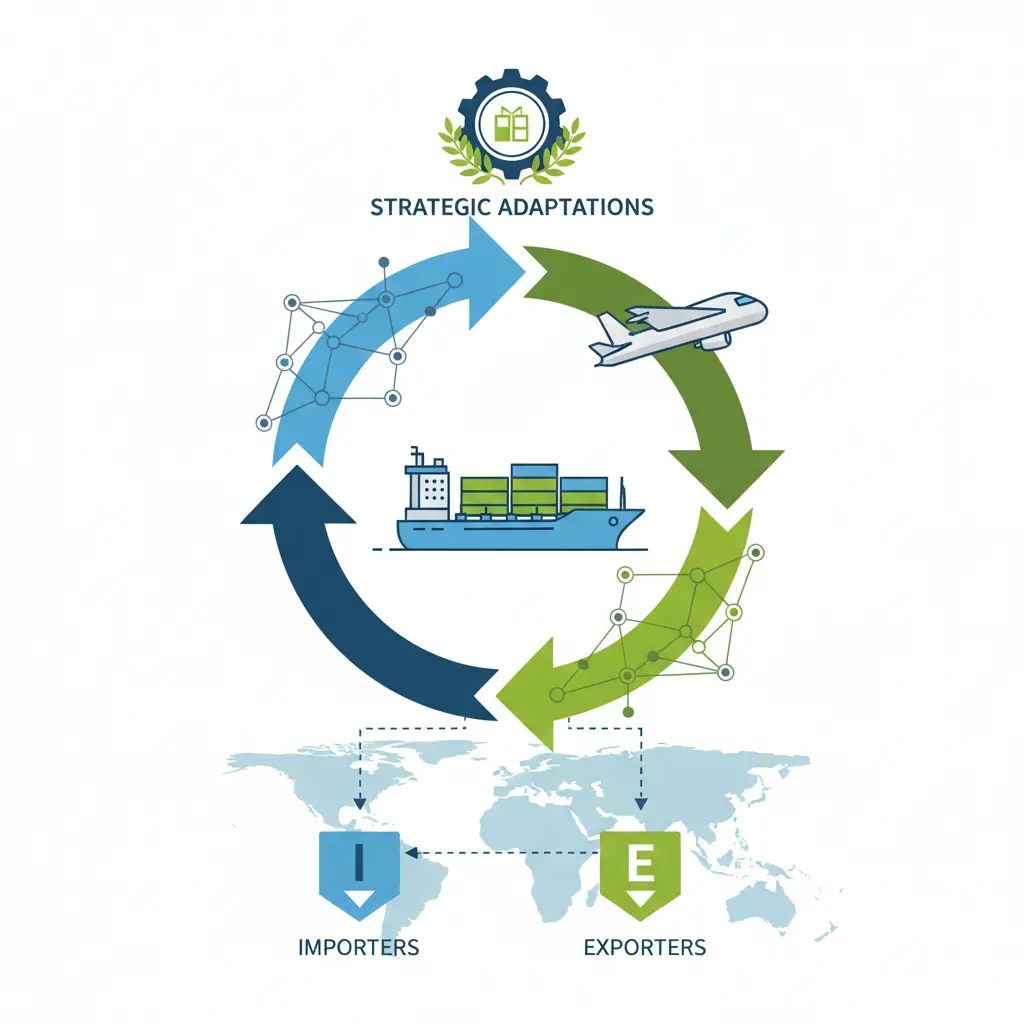
Strategic Adaptations for Importers & Exporters
The global trade landscape is in a constant state of flux, shaped by evolving geopolitics, economic shifts, and rapid technological advancements. For importers and exporters, understanding and proactively responding to these Global Trade Policy Changes is not merely an option but a necessity for sustained growth and competitive advantage. Businesses must adopt strategic frameworks to navigate new trade agreements, tariffs, non-tariff barriers, and Import Export Regulation Updates, ensuring both profitability and adherence to evolving international standards.
The imperative now is to build resilience, optimize operations, and leverage new opportunities presented by a dynamic global marketplace. This section provides actionable advice to help businesses adapt to these challenges, strengthening their Supply Chain Resilience Strategies and ensuring robust Customs Compliance International Trade practices. From reimagining sourcing networks to exploring innovative finance solutions, strategic adaptation is key to thriving amidst uncertainty.
1. Re-evaluating Global Sourcing and Procurement Strategies
The volatility introduced by recent Global Trade Policy Changes has exposed vulnerabilities in traditional global supply chains. A critical strategic adaptation for importers involves a thorough re-evaluation of sourcing and procurement. This means moving beyond a sole focus on cost efficiency to prioritize resilience, diversification, and ethical considerations. Businesses should conduct detailed supply chain risk assessments, identifying potential choke points and single points of failure. Diversifying sourcing locations, perhaps exploring a “China plus one” or “regionalization” strategy, can mitigate risks associated with geopolitical tensions or specific trade barriers. For instance, a comprehensive Trade Barrier Analysis Vietnam could reveal new opportunities or challenges in that market, influencing procurement decisions.
Furthermore, integrating advanced analytics and real-time data into procurement processes can enhance visibility and agility. This allows companies to respond swiftly to disruptions, renegotiate terms with suppliers, or even explore nearshoring/reshoring options where economically viable. Building stronger, more collaborative relationships with key suppliers, and even investing in their capabilities, can also contribute significantly to supply chain stability.
2. Optimizing Export Market Entry and Expansion
Exporters must constantly optimize their market entry and expansion strategies to counteract the impact of new tariffs, quotas, and non-tariff barriers. This requires rigorous market intelligence and adaptability. Instead of relying on a few established markets, businesses should actively identify emerging markets with favorable trade agreements or less stringent regulatory environments. Performing a comprehensive Trade Barrier Analysis Vietnam or other target countries can illuminate opportunities for market penetration. Leveraging digital platforms and e-commerce can also provide cost-effective avenues for reaching new international customers, circumventing some traditional logistical hurdles.
Understanding and complying with local regulations is paramount. Exporters must stay abreast of Import Export Regulation Updates in target markets, including product standards, labeling requirements, and intellectual property laws. Engaging with trade promotion agencies, chambers of commerce, and local legal counsel can provide invaluable insights and support during market entry. Customizing products and marketing approaches to suit local preferences and cultural nuances is also a crucial element of successful international expansion, helping businesses to effectively navigate the evolving global trade landscape.
3. Leveraging Trade Finance and Insurance Solutions
In an environment marked by increased uncertainty, importers and exporters need robust financial tools to manage risks and optimize cash flow. Leveraging modern trade finance and insurance solutions is a strategic imperative. Traditional methods like Letters of Credit remain vital, but businesses should also explore newer options such as supply chain finance, forfaiting, and peer-to-peer lending platforms, which can offer greater flexibility and access to capital. These solutions can help bridge payment gaps, manage currency fluctuations, and provide working capital, especially for small and medium-sized enterprises (SMEs) adapting to these global trade policy shifts.
Trade credit insurance is another essential tool for mitigating the risk of non-payment from international buyers, particularly in volatile markets. Political risk insurance can protect against losses arising from government actions like expropriation or currency inconvertibility, which are becoming more relevant given the impact of global trade policy changes. Furthermore, exploring government-backed export credit agencies (ECAs) can provide competitive financing and insurance options, often at more favorable terms. Proactive engagement with banks and financial institutions specializing in international trade can ensure businesses have access to the right financial instruments to support their global operations and manage exposure to various international trade risks.
Partner with Vietnam’s Leading Suppliers
Looking for reliable suppliers in Vietnam? Contact VietnamSuppliers.com today to connect with verified manufacturers and exporters across all industries.
—————————————
References
– Supply Chain Resilience Strategies: https://www.wto.org/english/news_e/news24_e/gc_13jun24_e.htm
– Building supply chain resilience: Lessons from the pandemic for the next normal: https://www.mckinsey.com/capabilities/operations/our-insights/building-supply-chain-resilience-lessons-from-the-pandemic-for-the-next-normal
– World Customs Organization’s HS Nomenclature: https://www.wcoomd.org/en/topics/nomenclature/instrument-and-tools/hs_nomenclature.aspx
– EVFTA: Boosting Sustainable Trade and Investment: https://www.eurochamvn.org/the-eu-vietnam-free-trade-agreement-evfta-five-years-on-boosting-sustainable-trade-and-investment/
– :