
The Shifting Landscape of Global Trade in 2025
The global trade environment is undergoing a profound transformation, characterized by escalating geopolitical tensions, technological disruptions, and a significant retreat from the multilateralism that defined the late 20th century. As we navigate 2024 and look ahead to 2025, businesses and policymakers alike face a complex web of challenges, most notably the pervasive rise of protectionism. This trend is reshaping supply chains, dictating market access, and ultimately influencing the profitability and sustainability of international commerce. This report aims to provide a comprehensive analysis of these evolving dynamics, focusing on the Global Trade Barriers Impact 2024 and beyond, to equip stakeholders with the insights needed to navigate future challenges and identify opportunities. Understanding the intricate interplay of these factors is crucial for strategic planning, especially for export-oriented economies and businesses heavily reliant on global supply chains.

1. Defining Trade Barriers: Tariffs vs. Non-Tariffs
To accurately assess the impact of a shifting trade landscape, it’s essential to first define the mechanisms through which trade is restricted. Traditionally, trade barriers were synonymous with tariffs – taxes imposed on imported goods and services. Tariffs directly increase the cost of foreign goods, making domestic products more competitive. While still prevalent, tariffs are increasingly complemented, and sometimes overshadowed, by a proliferation of non-tariff barriers (NTBs). These include quotas, import licensing, cumbersome customs procedures, subsidies, technical barriers to trade (TBTs) like product standards, sanitary and phytosanitary (SPS) measures, domestic content requirements, and even state-sponsored intellectual property theft. The World Trade Organization (WTO) highlights the complexity of TBTs, which, while often legitimate and aimed at consumer protection or environmental goals, can be manipulated to restrict market access. Analyzing non-tariff barriers to trade analysis is particularly challenging given their often opaque nature and potential for discriminatory application, significantly impacting export market access challenges 2024 for many industries.
2. Key Trends Driving Protectionism in 2024
The resurgence of protectionism is not a monolithic phenomenon but rather a confluence of several powerful trends. Firstly, geopolitical rivalries between major economic powers are increasingly manifesting as trade disputes, with countries weaponizing economic interdependence to gain strategic advantages. This often involves targeted tariffs, export controls on critical technologies, and efforts to “de-risk” or “decouple” supply chains. Secondly, national security concerns have expanded beyond traditional military defense to encompass economic resilience, leading governments to protect strategic industries such as semiconductors, rare earths, and critical infrastructure. Thirdly, the push for domestic industrial policy aims to foster local manufacturing, create jobs, and achieve self-sufficiency, often through subsidies and ‘Buy Local’ campaigns that distort international trade flows. Finally, environmental and social mandates are also becoming sources of new trade barriers, with carbon border adjustment mechanisms and stricter labor standards influencing import policies. This complex interplay of factors contributes significantly to the trade protectionism impact on exports across various sectors, demanding a nuanced understanding from global businesses.
3. Forecasting the Economic Climate for 2025
Looking ahead to 2025, the global economic climate is expected to remain characterized by volatility and uncertainty. Inflationary pressures, while potentially moderating, will likely persist in some form, impacting consumer demand and production costs. Interest rates, having risen significantly, are poised to stabilize or see modest reductions, yet their cumulative effect on borrowing costs will continue to constrain investment. Geopolitical tensions, particularly in Eastern Europe and the Middle East, coupled with the U.S.-China strategic competition, are set to remain defining features, perpetuating supply chain vulnerabilities and potentially sparking new rounds of trade restrictions. This environment necessitates a heightened focus on global supply chain resilience report initiatives, as companies seek to diversify sourcing, regionalize production, and adopt agile logistics strategies to mitigate disruptions. The combined effect of these factors suggests a continuation of the trend towards fragmented trade blocs and a more localized approach to economic security, making the task of navigating international markets even more challenging for businesses seeking sustained growth.
This report will delve deeper into specific regional analyses, sector-specific impacts, and actionable strategies for businesses to thrive amidst these complex shifts, providing a crucial guide for stakeholders grappling with the evolving Global Trade Barriers Impact 2024 and beyond.
Trade Protectionism’s Direct Impact on Exports
The Global Trade Barriers Impact 2024 report highlights a concerning trend: the rising tide of trade protectionism is fundamentally reshaping global commerce, with profound and often detrimental effects on export volumes, competitiveness, and profitability for businesses worldwide. As nations increasingly prioritize domestic industries, the ripple effects are felt across the entire global supply chain, forcing exporters to navigate a complex and often hostile international trade landscape. Understanding these direct impacts is crucial for developing robust strategies in an era of heightened economic nationalism.
1. Tariff Hikes and Retaliatory Measures
Tariffs, essentially taxes on imported goods, are perhaps the most straightforward and immediate form of trade protectionism. When a country imposes higher tariffs on specific products, it directly increases the cost of those goods for importers in the target market. For exporting businesses, this means their products become more expensive and less competitive compared to domestically produced alternatives or goods from countries not subject to the same tariffs. The initial impact is often a drop in export demand and sales volume. However, the situation frequently escalates due to retaliatory measures. When one nation imposes tariffs, affected trading partners often respond with their own tariffs on the first country’s exports. This creates a destructive cycle, effectively closing off markets for various sectors. For instance, agricultural exports can be particularly vulnerable to these cycles, as seen in recent trade disputes where tariffs on specific food products led to significant losses for farmers and exporters. The immediate fallout includes reduced profit margins, a necessity to absorb some of the tariff costs, or a complete loss of market share, all contributing to a severe trade protectionism impact on exports.
2. Subsidies and Domestic Preference Policies
Beyond tariffs, government subsidies and domestic preference policies represent another potent form of trade protectionism that significantly affects exporters. Subsidies, whether direct financial aid, tax breaks, or preferential loans, enable domestic producers to lower their production costs and offer goods at more competitive prices than their foreign counterparts. While seemingly beneficial for local industries, this creates an uneven playing field for exporters trying to compete in those subsidized markets. Their products, without comparable support, appear more expensive, making it harder to secure sales. Similarly, domestic preference policies, such as “Buy Local” campaigns or government procurement rules that favor domestic suppliers, directly restrict export market access. These policies can be particularly insidious as they don’t always manifest as explicit border taxes but rather as systemic advantages for local firms. The result is a shrinking addressable market for foreign exporters and increased export market access challenges 2024, forcing them to either relocate production or abandon certain markets altogether. This also directly impacts global supply chain resilience, as companies look to diversify or localize production to circumvent these barriers.
3. Case Studies: Export Sectors Most Affected
The impact of trade protectionism is not uniform across all sectors; some industries are inherently more exposed due to their nature or the political sensitivity of their products. A prime example is the automotive industry, which relies heavily on complex, integrated global supply chains. Tariff disputes on steel, aluminum, or finished vehicles can rapidly disrupt production, increase costs, and force companies to rethink their entire manufacturing and distribution networks. Another significantly affected sector is agriculture. Often a target in trade disputes, agricultural products face swift and devastating consequences from tariffs, embargoes, or stricter sanitary and phytosanitary (SPS) measures, which function as non-tariff barriers to trade. Farmers lose crucial export markets overnight, leading to surpluses and depressed domestic prices. The technology sector, particularly in areas like semiconductors or telecommunications equipment, also experiences substantial disruption from export controls, intellectual property disputes, and “national security” restrictions, which can severely limit market access for advanced components. Furthermore, industries with long production cycles or high capital investment, like aerospace, find it incredibly difficult to pivot once protectionist policies take hold. These case studies underscore the necessity for a comprehensive non-tariff barriers to trade analysis and robust strategies for navigating a fragmented global market, emphasizing the urgency reflected in any Global supply chain resilience report.
Navigating Non-Tariff Barriers to Trade
The landscape of international commerce is continuously shaped by dynamic forces, and in 2024, the growing complexity of non-tariff barriers (NTBs) stands out as a significant challenge for businesses worldwide. Unlike traditional tariffs, which are direct taxes on imports or exports, NTBs encompass a myriad of regulations, policies, and administrative hurdles that impede trade without imposing direct duties. These often opaque and multifaceted barriers can be more challenging to identify, quantify, and overcome than tariffs, having profound implications for Global Trade Barriers Impact 2024. From intricate technical regulations and stringent sanitary measures to restrictive quotas and burdensome customs procedures, NTBs elevate operational costs, extend lead times, and significantly constrain market access, thereby influencing global supply chain resilience and the overall competitiveness of exporting nations.
1. Technical Barriers to Trade (TBT) and SPS Measures
Technical Barriers to Trade (TBT) refer to mandatory technical regulations and voluntary standards that specify product characteristics, such as size, shape, design, labelling, and packaging. They also include conformity assessment procedures, which ensure that products meet these requirements (e.g., testing, inspection, certification). While often implemented with legitimate aims—such as protecting human health or safety, animal or plant life or health, or the environment—TBTs can inadvertently or intentionally create significant obstacles to international trade. For instance, differing electrical standards, complex eco-labelling schemes, or unique safety certifications for various markets force exporters to adapt products or undergo costly, time-consuming testing processes.
Closely related are Sanitary and Phytosanitary (SPS) Measures, which are applied to protect human, animal, or plant life or health from risks arising from food additives, contaminants, toxins, disease-carrying organisms, or pests. Examples include import bans on certain agricultural products due to disease outbreaks, mandatory pest inspections, or specific residue limits for pesticides in food. Although critical for public health and environmental protection, overly stringent, discriminatory, or scientifically unsubstantiated SPS measures can act as potent WTO’s Technical Barriers to Trade (TBT) Agreement and significant hurdles, impacting the Export market access challenges 2024 for developing and developed economies alike. Navigating these requires a deep understanding of local regulations and often significant investment in compliance.
2. Import Quotas and Licensing Requirements
Import quotas are quantitative restrictions on the amount or volume of a specific good that can be imported into a country during a given period. These barriers directly limit supply, often leading to higher domestic prices and reducing competition. Governments typically implement quotas to protect domestic industries from foreign competition, manage balance of payments issues, or address national security concerns. The impact on exports can be severe, as even highly competitive products may be excluded from markets once the quota limit is reached. This is a clear example of the Trade protectionism impact on exports.
Complementing or often accompanying quotas are licensing requirements, which mandate that importers obtain specific permits or licenses before bringing certain goods into a country. While licenses can serve legitimate purposes, such as monitoring imports or ensuring compliance with safety standards, they can also become administrative hurdles. Complex application procedures, arbitrary approval processes, limited license availability, or lengthy waiting times can significantly delay or even prevent imports, adding to the cost and uncertainty of international trade. Businesses seeking to enhance Global supply chain resilience report often find these unpredictable licensing regimes particularly disruptive, necessitating careful planning and robust contingency strategies.
3. Customs Procedures and Bureaucratic Obstacles
Even when products meet all technical standards and fall outside quota restrictions, they can still face significant delays and added costs due to complex customs procedures and bureaucratic obstacles. These include excessive documentation requirements, redundant inspections, inefficient processing systems, inconsistent application of rules, and, in some cases, corruption. Each additional form, inspection, or processing delay translates into higher storage costs, increased risk of spoilage for perishable goods, and missed market opportunities. Small and medium-sized enterprises (SMEs) are often disproportionately affected by these administrative burdens, as they typically lack the resources and expertise of larger corporations to navigate intricate customs landscapes.
The cumulative effect of these procedural impediments contributes significantly to a higher overall cost of doing business internationally, undermining the benefits of trade liberalization. Streamlining customs processes, enhancing transparency, and implementing digital solutions are crucial steps in mitigating these non-tariff barriers, fostering a more predictable and efficient global trading environment. Effective Non-tariff barriers to trade analysis shows that even minor improvements in customs efficiency can yield substantial economic gains for all trading partners, reducing the overall Global Trade Barriers Impact 2024.
Fortifying Global Supply Chain Resilience
The global economy continues to grapple with unprecedented disruptions, from geopolitical tensions and climate events to evolving trade policies. Building robust and resilient global supply chains is no longer a strategic option but an imperative. The landscape of international commerce is increasingly shaped by Global Trade Barriers Impact 2024, demanding proactive strategies to mitigate risks and ensure continuity. Businesses worldwide face significant challenges, including the growing “trade protectionism impact on exports” and the complex web of “non-tariff barriers to trade analysis,” all of which contribute to “export market access challenges 2024.” A comprehensive approach is essential to navigate these complexities and build durable supply networks capable of withstanding future shocks.
Diversification and Nearshoring Strategies
A cornerstone of enhanced supply chain resilience lies in strategic diversification. Relying on a single geographic region or supplier exposes businesses to immense risk should that region face disruption. Diversification involves expanding supplier bases across multiple countries, reducing concentration risk and fostering a more distributed network. Complementing this is the rising trend of nearshoring and friendshoring. Nearshoring involves relocating production or sourcing closer to end markets, often within the same continent. This strategy can significantly shorten lead times, reduce transportation costs, and improve responsiveness to demand fluctuations. Friendshoring, meanwhile, prioritizes sourcing from geopolitically aligned nations, adding a layer of security against political instability or trade embargoes. While these strategies may initially incur higher operational costs compared to hyper-efficient, single-source models, the long-term benefits in terms of stability and risk mitigation, especially given the “trade protectionism impact on exports,” often outweigh the initial investment. Companies are increasingly seeking to balance cost-efficiency with resilience, understanding that the true cost of a supply chain includes its vulnerability to disruption.
Technological Solutions for Supply Chain Visibility
In today’s intricate global networks, visibility is paramount. Technological advancements offer powerful tools to achieve end-to-end transparency, which is critical for enhancing supply chain resilience. Blockchain technology, for instance, can provide an immutable and transparent ledger of transactions, tracking goods from raw material to final delivery, thereby improving traceability and combating counterfeiting. Artificial intelligence (AI) and machine learning (ML) algorithms can analyze vast datasets to predict potential disruptions, optimize inventory levels, and even identify alternative routes or suppliers in real-time. Internet of Things (IoT) devices, such as smart sensors, enable real-time monitoring of product location, condition (e.g., temperature, humidity), and security, providing early warnings for potential issues. Furthermore, advanced data analytics platforms can offer sophisticated Global supply chain resilience report capabilities, allowing businesses to model various disruption scenarios and assess their potential impact. Investing in these technologies is crucial for businesses aiming to proactively manage risks and respond swiftly to unforeseen events, addressing the evolving “export market access challenges 2024” with data-driven insights.
Policy Recommendations for Enhanced Resilience
While individual companies can implement internal strategies, government policies play a crucial role in fostering a resilient global trade environment. International cooperation is vital to harmonize trade regulations and reduce “non-tariff barriers to trade analysis,” which often create significant hurdles for businesses. Policies that encourage investment in critical infrastructure, such as ports, logistics hubs, and digital networks, can significantly bolster supply chain capabilities. Furthermore, governments can establish strategic reserves for essential goods or components, provide incentives for diversification and nearshoring, and support the development of advanced manufacturing capabilities. Trade agreements need to evolve to include provisions for supply chain continuity during crises, fostering collaborative frameworks rather than purely competitive ones. Collaborative efforts between public and private sectors are essential to identify vulnerabilities and co-create solutions. For instance, shared data platforms or early warning systems for trade disruptions, especially regarding the “Global Trade Barriers Impact 2024,” could provide invaluable insights. By fostering an environment conducive to investment in resilience and reducing arbitrary trade impediments, policymakers can collectively build a more stable and predictable global trading system.
The journey towards fortified global supply chains is continuous, marked by ongoing adaptation and strategic foresight. Addressing the “Global Trade Barriers Impact 2024” requires a multi-pronged approach that integrates operational adjustments, technological innovation, and supportive policy frameworks. As businesses and governments alike learn from past disruptions, the emphasis on building adaptable, transparent, and diversified supply networks will only intensify, ensuring that global commerce can withstand future shocks and continue to drive prosperity.
Overcoming Export Market Access Challenges 2025
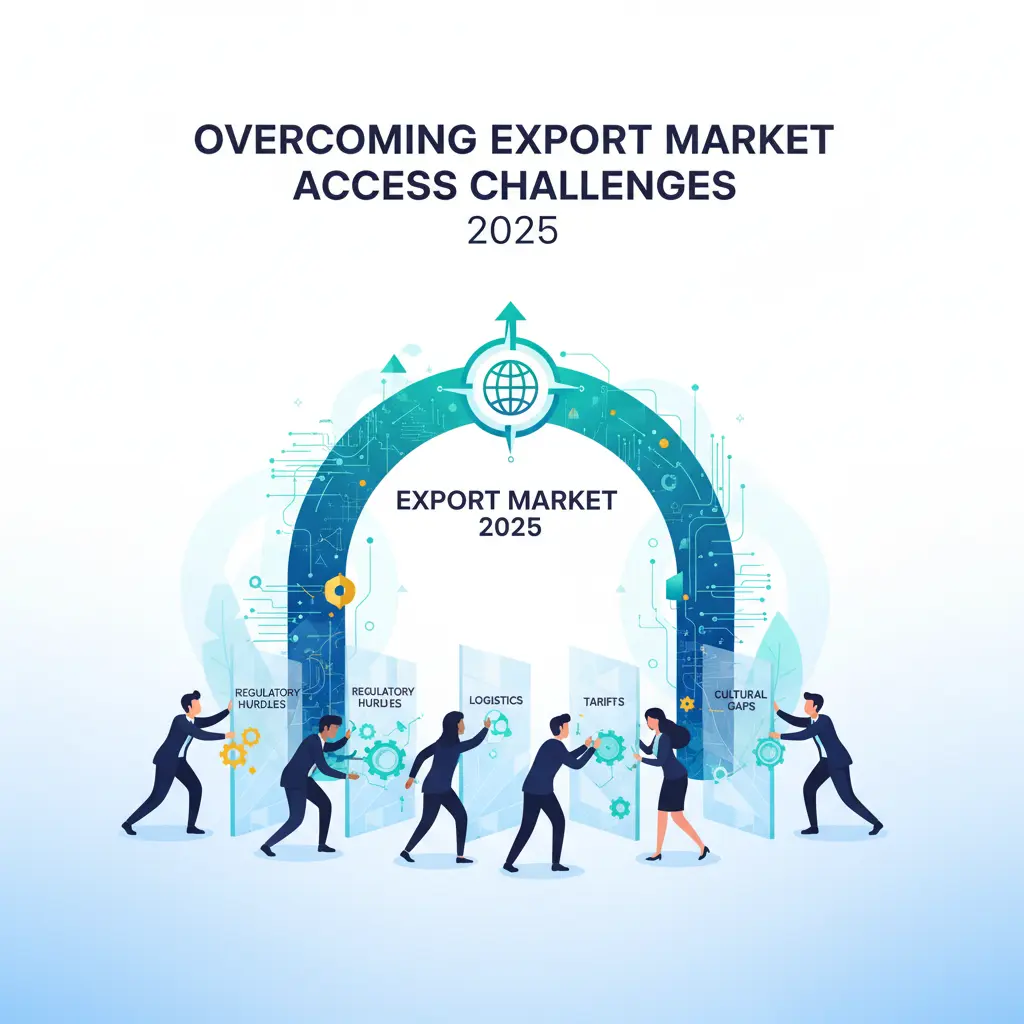
The landscape of international trade is perpetually in flux, presenting both immense opportunities and formidable obstacles for businesses aiming to expand their global footprint. As we look towards 2025, understanding and navigating these complexities become paramount. This section delves into the specific hurdles businesses face in gaining and maintaining access to international markets, including evolving trade agreements, intricate dispute resolution mechanisms, and the ever-present demands of regulatory compliance. The Global Trade Barriers Impact 2024 highlighted significant shifts, and these export market access challenges are projected to intensify, demanding strategic foresight and agile responses from exporters.
1. Impact of Bilateral and Multilateral Trade Agreements
In 2025, the framework of international trade continues to be shaped by a complex web of bilateral and multilateral trade agreements. These pacts, ranging from comprehensive free trade agreements (FTAs) to more focused sectoral agreements, are designed to reduce tariffs and streamline market entry for signatory nations. However, their evolving nature, renegotiations, and occasional withdrawals create significant uncertainty. Businesses must meticulously track these developments, as changes can swiftly alter competitive advantages, supply chain logistics, and even the viability of certain export markets. The rise of trade protectionism, often disguised within new trade clauses or non-tariff measures, further complicates the landscape. Exporters must invest in robust legal and policy analysis capabilities to understand how new or revised agreements, such as those within the CPTPP, RCEP, or bilateral accords, specifically affect their products, services, and operational models in target markets. The overall evolving global trade landscape necessitates a continuous re-evaluation of market strategies, acknowledging the trade protectionism impact on exports.
2. Geopolitical Risks and Market Restrictions
Beyond formal trade agreements, geopolitical dynamics increasingly dictate market access. Tensions between major economic blocs, regional conflicts, and political instability can lead to abrupt market restrictions, including sanctions, embargoes, and punitive tariffs. These measures, often imposed for political rather than purely economic reasons, can severely disrupt established trade routes and render entire markets inaccessible overnight. Furthermore, governments are increasingly leveraging non-tariff barriers (NTBs) as tools for protectionism or strategic advantage. These NTBs encompass a wide array of measures, from stringent import quotas and domestic content requirements to complex licensing procedures, technical regulations, and sanitary and phytosanitary (SPS) standards. A thorough non-tariff barriers to trade analysis is crucial for identifying hidden costs and potential show-stoppers before committing resources to a new market. The heightened focus on national security and technological sovereignty also contributes to data localization requirements and restrictions on technology transfer, adding another layer of complexity for digital service providers and high-tech exporters. Businesses need to adopt dynamic risk management frameworks to assess and mitigate the impact of such unpredictable geopolitical shifts and regulatory hurdles on their export strategies.
3. Strategies for Enhanced Market Entry and Compliance
To thrive amidst these challenges, exporters must adopt proactive and adaptive strategies for market entry and compliance in 2025. First, comprehensive market research extending beyond economic indicators to include political stability, regulatory frameworks, and cultural nuances is non-negotiable. Engaging local partners, distributors, or legal counsel can provide invaluable on-the-ground insights and facilitate smoother navigation of local bureaucracies and compliance requirements. Second, supply chain diversification and resilience are paramount. The lessons from recent global disruptions underscore the need for flexible supply chains capable of pivoting away from restricted markets or impacted logistics routes. Investing in a detailed Global supply chain resilience report is vital for identifying vulnerabilities and building redundancy. Third, technological adoption, particularly in areas like AI-powered compliance tools and blockchain for supply chain transparency, can significantly reduce the burden of regulatory adherence and enhance traceability. Finally, continuous engagement with trade promotion organizations and staying updated on evolving trade policies and dispute resolution mechanisms is crucial. Preparing for potential trade disputes by understanding international arbitration procedures can save significant time and resources. By prioritizing adaptability, informed decision-making, and robust compliance frameworks, businesses can effectively overcome the export market access challenges 2024 and beyond, securing their foothold in the global marketplace.
Successfully navigating the complex web of global trade barriers in 2025 requires more than just high-quality products; it demands an intricate understanding of international law, geopolitical realities, and agile strategic planning. By proactively addressing evolving trade agreements, mitigating geopolitical risks, and implementing sophisticated market entry and compliance strategies, businesses can transform daunting obstacles into pathways for sustained international growth. The persistent impact of global trade barriers underscores the urgency of these adaptive measures.
Partner with Vietnam’s Leading Suppliers
Looking for reliable suppliers in Vietnam? Contact VietnamSuppliers.com today to connect with verified manufacturers and exporters across all industries.
—————————————
References
– WTO Technical Barriers to Trade: https://www.wto.org/english/tratop_e/tbt_e/tbt_e.htm
– Tariffs | WTO: https://www.wto.org/english/tratop_e/tariffs_e/tariffs_e.htm
– :
– Building supply-chain resilience: Lessons from COVID-19 and other crises: https://www.mckinsey.com/capabilities/operations/our-insights/building-supply-chain-resilience-lessons-from-covid-19-and-other-crises
– WTO Trade Policy Reviews: https://www.wto.org/english/tratop_e/tpr_e/tpr_e.htm

