State of Global Supply Chain Lead Times in 2025
As we navigate into 2025, the global supply chain landscape continues its dynamic evolution, profoundly influencing lead times across industries. Far from returning to pre-pandemic predictability, businesses face a new normal characterized by persistent volatility and nuanced challenges. Understanding the current state of global supply chain lead times is paramount for strategic planning, inventory management, and maintaining competitive advantage. This in-depth analysis delves into the critical trends, persistent hurdles, and underlying factors shaping delivery schedules worldwide, offering insights into optimizing operations amidst ongoing disruption.

1. Key factors influencing lead time volatility (e.g., geopolitical, economic shifts)
The persistent fluctuation in global supply chain lead times in 2025 is largely attributable to a confluence of macroeconomic and geopolitical forces. Geopolitical tensions, particularly in critical shipping lanes and manufacturing hubs, continue to introduce significant uncertainty. Conflicts, trade disputes, and evolving diplomatic relationships can trigger sudden shifts in sourcing strategies, rerouting of shipments, and increased scrutiny at borders, directly impacting international shipping delays. Economic shifts, including inflationary pressures, fluctuating consumer demand, and monetary policy changes in major economies, also play a crucial role. For instance, a sudden surge in demand in one region can strain shipping capacities globally, while an economic downturn can lead to excess inventory and delayed orders. Furthermore, the increasing frequency and intensity of extreme weather events, exacerbated by climate change, are becoming a regular disruptor, causing port closures, overland transport delays, and production stoppages. Businesses are increasingly investing in sophisticated supply chain resilience strategies to mitigate these multifaceted risks.
2. Regional variations and performance benchmarks
While global trends paint a broad picture, lead time performance varies significantly across regions. Asia, particularly Southeast Asia, remains a critical manufacturing powerhouse, but individual country performance differs. For instance, Vietnam sourcing lead times have seen improvements in some sectors due to infrastructure investments and streamlined processes, yet others still grapple with port congestion and logistics challenges. North America and Europe, while generally benefiting from mature infrastructure, are not immune to disruptions, with inland transport bottlenecks and labor shortages frequently impacting final-mile delivery. Benchmarking against regional averages provides companies with critical insights. For example, average ocean freight lead times from Asia to North America, while improved from their peak, still hover above pre-2020 levels, necessitating proactive inventory planning. Companies employing advanced supply chain visibility solutions are better positioned to track these regional nuances, enabling more accurate forecasting and responsive adjustments to their logistics networks.
3. Impact of infrastructure bottlenecks and labor dynamics
Infrastructure bottlenecks continue to exert a substantial drag on global supply chain lead times. Despite ongoing investments, port congestion, outdated rail networks, and insufficient warehousing capacity remain persistent issues in key trade corridors. The sheer volume of goods moving through these arteries often outstrips their processing capabilities, leading to extended dwell times and increased demurrage charges. Simultaneously, labor dynamics present another layer of complexity. Shortages of skilled workers – from truck drivers and warehouse personnel to port operators and customs agents – create critical chokepoints. Union disputes, evolving labor regulations, and the aging workforce demographic contribute to an unpredictable labor environment. The push for customs clearance times optimization is also heavily dependent on efficient labor and digitalized processes, yet many regions still rely on manual verification, adding days to transit times. Addressing these infrastructure and labor challenges requires sustained investment, technological adoption, and collaborative efforts between public and private sectors to build more robust and resilient logistics ecosystems.
In conclusion, the state of global supply chain lead times in 2025 is a complex tapestry woven from geopolitical shifts, economic pressures, regional disparities, and fundamental infrastructure and labor constraints. Businesses that thrive in this environment are those that embrace agility, invest in advanced data analytics and visibility tools, diversify their sourcing and logistics strategies, and foster strong partnerships across their value chain. Proactive risk management and a continuous pursuit of optimization will be the hallmarks of successful supply chain operations in the years to come.
Tackling International Shipping Delays & Freight Challenges
The intricate web of global commerce is increasingly susceptible to disruptions, leading to significant international shipping delays, freight capacity issues, and escalating logistics costs. These challenges directly impact global supply chain lead times, making it imperative for businesses to adopt proactive strategies. From geopolitical tensions to port congestion and unforeseen events, the landscape of international logistics demands resilience and foresight. Mitigating these impacts is not merely about cost reduction; it’s about maintaining competitive advantage, ensuring product availability, and fostering customer trust. This section delves into actionable solutions to navigate the complexities of modern freight and optimize the flow of goods across borders.
1. Optimizing ocean freight routes and carrier selection
Ocean freight remains the backbone of international trade for bulk goods, yet it is frequently subjected to volatility. To counter this, businesses must move beyond simply choosing the lowest-cost carrier. A comprehensive strategy involves diligent carrier selection based on reliability, transit time consistency, and a proven track record of navigating disruptions. Establishing strong, long-term partnerships with multiple, reputable ocean carriers can provide greater flexibility and preferential treatment during periods of high demand or limited capacity. Furthermore, it’s crucial to evaluate and optimize ocean freight routes. This might mean exploring alternative ports that are less congested or less prone to specific regional delays, even if they initially appear to add a slight increase in transit time. Diversifying routes and port entry points can effectively de-risk a supply chain, spreading exposure rather than concentrating it on a single, potentially bottlenecked corridor. Regular analysis of carrier performance data and market conditions is vital to adapt quickly and avoid known chokepoints before they severely impact lead times. Proactive communication with carriers regarding upcoming volume and potential shifts in demand can also help secure necessary capacity.
2. Leveraging air freight strategically for time-sensitive cargo
While significantly more expensive than ocean freight, air freight offers unparalleled speed and predictability for time-sensitive cargo. Its strategic application is key to mitigating the most critical impacts of shipping delays. Air freight should be reserved for high-value goods, critical components that could halt production, or products with extremely tight market windows. Rather than a blanket solution, it serves as an agile tool within a broader logistics strategy. Businesses should conduct a thorough cost-benefit analysis, weighing the increased freight cost against the potential losses from production downtime, missed sales, or expiring inventory. For situations where full air freight is cost-prohibitive but ocean transit is too slow, multimodal solutions like “sea-air” combinations can offer a middle ground, using ocean freight for the initial long haul and air freight for the final, time-critical leg. Effective planning and forecasting are crucial to minimize reliance on emergency air shipments, which typically come at a premium. Integrating advanced analytics can help identify which specific SKUs or components truly warrant air freight, ensuring this premium service is utilized judiciously to protect critical lead times without unnecessarily inflating logistics expenditure.
3. Improving port efficiency and transit processes
Beyond carrier selection and mode diversification, optimizing processes at the port and throughout transit is fundamental to reducing global supply chain lead times. A significant portion of delays occurs due to bottlenecks in customs clearance and port operations. Implementing robust supply chain visibility solutions is critical, providing real-time tracking of shipments from origin to destination. This transparency allows for proactive management of potential issues, from pre-empting demurrage and detention charges to expediting the retrieval of containers. Customs clearance times optimization can be achieved through early submission of accurate documentation, leveraging electronic data interchange (EDI), and collaborating closely with experienced customs brokers who possess deep knowledge of local regulations and procedures. Engaging in initiatives like direct delivery programs or pre-clearance processes can also dramatically cut down on dwell times. Furthermore, fostering strong relationships with drayage companies and port authorities can facilitate smoother handoffs and quicker turnaround times. Investing in technology that automates documentation, provides predictive analytics on port congestion, and streamlines communication between all parties involved in the transit process is no longer a luxury but a necessity for building a resilient and efficient supply chain.
By strategically optimizing ocean and air freight, and relentlessly improving port efficiency and transit processes, businesses can significantly mitigate the impact of international shipping delays and freight challenges. These integrated strategies are vital for maintaining competitive advantage and ensuring predictable global supply chain lead times in an increasingly volatile world.
Enhancing Supply Chain Visibility with Technology Solutions
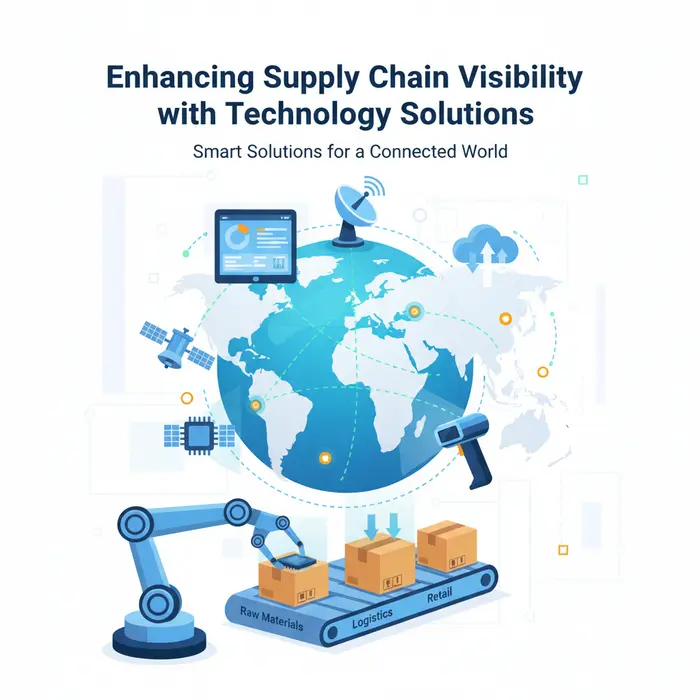
In an increasingly interconnected yet volatile global economy, managing Global supply chain lead times has become a critical challenge for businesses worldwide. Disruptions, whether from geopolitical events, natural disasters, or unexpected demand shifts, can significantly impact delivery schedules and operational costs. Achieving true supply chain visibility is no longer a luxury but a necessity, offering real-time insights that enable proactive decision-making, predict potential disruptions, and ultimately shorten lead times. This section explores how cutting-edge technology solutions are transforming supply chain management, making it more transparent, resilient, and efficient.
1. Implementing real-time tracking and IoT for end-to-end transparency
End-to-end transparency is the bedrock of modern supply chain visibility. This is largely achieved through the strategic implementation of real-time tracking technologies and the Internet of Things (IoT). By embedding IoT sensors, RFID tags, and GPS trackers into goods, vehicles, and even warehouse infrastructure, companies gain granular data on the location, condition, and status of inventory at every stage. For instance, sensors can monitor temperature, humidity, and shock, ensuring product integrity, especially for sensitive shipments. This continuous flow of data provides immediate alerts regarding potential *international shipping delays*, enabling logistics managers to identify bottlenecks, reroute shipments, or communicate proactively with customers. This capability is particularly vital for intricate global routes, such as those involved in *Vietnam sourcing lead times*, where goods traverse multiple borders and modes of transport. Real-time tracking empowers businesses to monitor their inventory in transit, optimize warehouse management, and significantly improve their ability to achieve *customs clearance times optimization* by having all necessary documentation and information ready ahead of arrival. This comprehensive view not only minimizes risks but also fosters greater accountability across the entire supply chain.
2. Utilizing predictive analytics and AI for proactive risk management
While real-time data provides a current snapshot, predictive analytics and artificial intelligence (AI) elevate supply chain visibility from reactive to proactive. AI algorithms, powered by machine learning, can analyze vast datasets—including historical performance, weather patterns, geopolitical news, economic indicators, and social media trends—to forecast demand, identify potential disruptions, and model various scenarios. For example, AI can predict the likelihood of port congestion, anticipate a surge in demand for specific products, or even foresee raw material shortages. This foresight allows businesses to develop contingency plans, optimize inventory levels, and explore alternative sourcing or shipping routes before issues materialize. This capability is crucial for mitigating the impact of unexpected events on global supply chain resilience and proactively addressing challenges that would otherwise extend *Global supply chain lead times*. By understanding potential risks earlier, companies can make informed decisions, such as adjusting production schedules, securing alternative suppliers, or pre-positioning inventory, thereby transforming potential crises into manageable challenges and reducing overall time-to-market.
3. The role of digital platforms in collaborative supply chain management
Beyond individual technological applications, the integration of digital platforms is revolutionizing collaborative supply chain management. These platforms serve as centralized hubs, connecting all stakeholders—from raw material suppliers and manufacturers to logistics providers, distributors, and even end-customers—in a unified ecosystem. They facilitate shared data access, standardized communication protocols, and streamlined processes, breaking down traditional silos that often hinder efficiency. Features such as shared dashboards, automated workflows for documentation (e.g., customs paperwork), and integrated communication tools drastically reduce administrative burdens and enhance coordination. For instance, clear communication channels between freight forwarders and customs brokers can significantly speed up *customs clearance times optimization*. By providing a single source of truth, these platforms ensure that everyone involved has access to the most current information, preventing misunderstandings and speeding up decision-making. This collaborative environment is a cornerstone of effective *supply chain visibility solutions*, fostering trust and enabling faster responses to changes, ultimately contributing to a significant reduction in *Global supply chain lead times* and improving overall operational fluidity, especially for complex international operations like those involved in *Vietnam sourcing lead times*.
In conclusion, the integration of real-time tracking, AI-driven predictive analytics, and collaborative digital platforms is indispensable for modern supply chain management. These technologies collectively provide the enhanced visibility needed to navigate the complexities of global trade, mitigate risks, optimize operations, and crucially, reduce *Global supply chain lead times*, paving the way for more resilient, efficient, and responsive supply chains.
Optimizing Customs Clearance Times & Compliance
In today’s interconnected global economy, efficient goods movement is paramount. Businesses continually grapple with complex international logistics, where Global supply chain lead times are heavily influenced by the speed and accuracy of customs clearance. Undue international shipping delays at borders can ripple throughout the supply chain, impacting production schedules, increasing warehousing costs, and ultimately affecting customer satisfaction. To mitigate these challenges and ensure a competitive edge, optimizing customs clearance processes and maintaining stringent compliance is no longer an option but a strategic imperative. By implementing best practices and leveraging available programs, companies can significantly reduce bottlenecks and accelerate their goods across international territories, contributing directly to overall global supply chain lead times optimization.
1. Best practices for efficient documentation and pre-clearance procedures
One of the most significant contributors to international shipping delays is errors or omissions in documentation. Streamlining this aspect is fundamental to customs clearance times optimization. Best practices begin with meticulous preparation and digital accuracy. Ensuring all required documents—commercial invoices, packing lists, bills of lading, certificates of origin, and permits—are complete, accurate, and electronically submitted well in advance is crucial. Adopting digital platforms for document creation and sharing can significantly reduce manual errors and processing times. Furthermore, leveraging pre-clearance procedures, where declarations are filed and sometimes even approved before goods arrive at the border, can dramatically expedite release. This proactive approach, coupled with the correct application of Harmonized System (HS) codes, ensures that shipments are accurately classified, minimizing the likelihood of delays due to discrepancies or misinterpretations by customs authorities.
2. Navigating evolving trade regulations and tariffs effectively
The landscape of global trade regulations and tariffs is in a constant state of flux, influenced by geopolitical developments, new trade agreements, and domestic policy changes. Effectively navigating this complex environment is vital for maintaining compliance and avoiding unexpected costs or delays. Businesses must implement robust systems for continuous monitoring of regulatory updates pertinent to their specific products and target markets. This includes staying informed about changes in import/export restrictions, product safety standards, and preferential tariff treatments. Investing in compliance management software or engaging with customs brokers and trade consultants who specialize in specific regions can provide invaluable expertise. Proactive adaptation to these evolving regulations not only prevents penalties and seizure of goods but also allows companies to strategically plan their supply chain routes and sourcing decisions, ensuring a smoother flow of goods.
3. Leveraging Free Trade Agreements and authorized economic operator (AEO) programs
Strategic utilization of Free Trade Agreements (FTAs) and Authorized Economic Operator (AEO) programs offers significant advantages in reducing costs and expediting customs clearance. FTAs, such as those involving major economies or regional blocs, can significantly reduce or even eliminate tariffs on eligible goods, leading to substantial cost savings. To benefit, companies must understand the rules of origin and maintain thorough documentation to prove compliance. Simultaneously, AEO programs, recognized globally through frameworks like the World Customs Organization’s SAFE Framework of Standards, confer ‘trusted trader’ status upon businesses that demonstrate secure supply chains and a high level of customs compliance. AEO status typically translates to fewer physical inspections, priority processing, and expedited clearance, directly addressing international shipping delays. Implementing robust supply chain visibility solutions can greatly assist in managing the data and processes required for both FTA compliance and AEO accreditation, further enhancing the efficiency and security of international shipments.
By diligently adopting these strategies—from meticulous documentation and proactive regulatory navigation to strategic leveraging of trade agreements and trusted trader programs—businesses can achieve significant customs clearance times optimization. This holistic approach not only minimizes the impact of international shipping delays but also fortifies the resilience of the entire supply chain, making it more predictable and cost-effective, particularly for critical regions like Vietnam sourcing lead times. Ultimately, such efforts contribute to a more agile and competitive global trade operation.
Diversifying Sourcing: A Spotlight on Vietnam Sourcing Lead Times
In an increasingly volatile global economy, businesses worldwide are reassessing their sourcing strategies, moving away from over-reliance on single regions to mitigate risks and enhance resilience. This strategic pivot has brought countries like Vietnam into sharp focus, transforming it into a vital hub in global supply chains. As companies seek to optimize efficiency and minimize disruptions, understanding the nuances of global supply chain lead times, particularly from emerging markets, becomes paramount. This section delves into Vietnam’s growing role, examining its specific lead times, the inherent benefits it offers, and the challenges that demand strategic navigation for successful sourcing.

1. Assessing average sourcing lead times from Vietnam and key sectors
Vietnam has emerged as a powerhouse across various manufacturing sectors, including textiles and apparel, footwear, electronics, furniture, and agriculture. The average Vietnam sourcing lead times can vary significantly based on the product’s complexity, raw material availability, production volume, and the specific supplier’s capacity. For instance, basic textile products might have lead times ranging from 30-60 days for production, while custom electronics or furniture could extend to 90-120 days or more, excluding shipping. Factors influencing these timelines include the efficiency of local manufacturing processes, the reliability of domestic raw material supply (though many industries still rely on imported components, impacting initial procurement stages), and the effectiveness of local logistics and infrastructure.
Improvements in Vietnam’s infrastructure, including enhanced port capabilities like those in Hai Phong and Cai Mep, and ongoing investments in road and rail networks, are continuously working to reduce transit times within the country. However, businesses must also account for potential international shipping delays, which can be influenced by global freight capacity, port congestion, and geopolitical events. Proactive planning and leveraging robust supply chain visibility solutions are crucial for accurately forecasting and managing these variables. This approach helps in optimizing global supply chain lead times.
2. Strategies for establishing and managing supplier relationships in Vietnam
Successful sourcing in Vietnam hinges on building strong, enduring supplier relationships. This goes beyond transactional interactions, requiring a commitment to mutual understanding and long-term partnership. Key strategies include conducting thorough due diligence to verify supplier credentials, capacity, and quality control systems. Regular, open communication is vital, overcoming language barriers through local representation or proficient translators. Many foreign companies find value in establishing a local presence or partnering with experienced sourcing agents who possess in-depth knowledge of the Vietnamese business culture and regulatory environment. Negotiating clear contracts that define quality standards, delivery schedules, and payment terms is essential. Furthermore, continuous performance monitoring, regular factory visits, and investing in supplier development programs can significantly improve efficiency and reduce overall global supply chain lead times. Nurturing these relationships fosters trust and collaboration, leading to greater flexibility and responsiveness, particularly when addressing unexpected production issues or managing order fluctuations. Effective customs clearance times optimization also plays a critical role, often benefiting from established relationships with logistics providers and a clear understanding of local customs procedures.
3. Comparing Vietnam sourcing to other emerging manufacturing hubs
When juxtaposing Vietnam with other emerging manufacturing hubs like Bangladesh, India, Indonesia, or even Mexico, several distinguishing factors emerge, particularly concerning supply chain agility and lead times. Vietnam boasts a relatively stable political environment and a government keen on attracting foreign investment through favorable trade policies and free trade agreements, such as the EVFTA and CPTPP. Its strategic geographical location, with extensive coastlines, facilitates efficient maritime shipping to major markets. The workforce is generally skilled, adaptable, and cost-effective, though rising labor costs are a consideration in specific sectors. Moreover, Vietnam has invested heavily in developing industrial zones and export processing zones, streamlining manufacturing and export operations.
While countries like Bangladesh offer competitive labor costs for textiles, they may present challenges in infrastructure or diversification beyond a few key sectors. India, with its vast internal market and growing manufacturing base, sometimes faces bureaucratic hurdles or more complex logistics networks. Mexico offers proximity to the North American market but might not match Vietnam’s expertise or cost-efficiency in certain Asian-centric supply chains. According to the World Trade Organization (WTO), Vietnam has consistently demonstrated robust export growth and integration into global trade, showcasing its reliability as a sourcing destination. Companies must weigh these factors, including specific product requirements, desired lead times, and risk profiles, when determining the most suitable sourcing location. Vietnam’s commitment to improving its logistics and trade facilitation continues to position it as a highly attractive option for businesses seeking to diversify and optimize their global supply chain lead times.
In conclusion, Vietnam offers a compelling proposition for diversifying sourcing, characterized by its growing manufacturing capabilities, strategic location, and improving infrastructure. While managing global supply chain lead times from Vietnam requires careful planning, robust supplier relationships, and an understanding of both domestic and international logistics, the benefits of enhanced resilience, competitive costs, and access to new markets make it an increasingly indispensable player in the future of global sourcing.
Partner with Vietnam’s Leading Suppliers
Looking for reliable suppliers in Vietnam? Contact VietnamSuppliers.com today to connect with verified manufacturers and exporters across all industries.
—————————————
References
– Supply chain resilience: How to build it and why it matters | McKinsey: https://www.mckinsey.com/capabilities/operations/our-insights/supply-chain-resilience-how-to-build-it-and-why-it-mattes
– WTO Trade Facilitation Agreement: https://www.wto.org/english/tratop_e/tradfa_e/tradfa_e.htm
– Gartner: https://www.gartner.com/en/supply-chain/insights/digital-supply-chain
– World Customs Organization’s SAFE Framework of Standards: https://www.wcoomd.org/en/topics/facilitation/instrument-and-tools/tools/safe_package/aeo.aspx
– World Trade Organization (WTO) report on Vietnam’s integration into global trade: https://www.wto.org/english/news_e/news24_e/report_vietnam_e.htm