The Promise of Blockchain in Global Supply Chains
In an increasingly interconnected yet complex world, global supply chains are the backbone of international commerce, moving goods from raw materials to end-consumers across continents. However, these intricate networks are often plagued by inefficiencies, a lack of transparency, and vulnerabilities to fraud and disruptions. This is where global supply chain blockchain solutions emerge as a transformative force. They offer decentralized, immutable ledger technology designed to revolutionize how goods are tracked, traded, and financed. By addressing fundamental challenges of trust, transparency, and data integrity, blockchain promises to usher in a new era of efficiency and resilience for international trade.

Traditional global supply chains rely on fragmented systems, paper-based documentation, and siloed data. This leads to opaque product origins, making it difficult to verify ethical sourcing or authenticity. It causes delays from manual processes and results in significant financial overheads. The lack of end-to-end visibility exacerbates risks related to counterfeiting, product recalls, and compliance failures, costing industries billions annually. Blockchain technology, with its inherent ability to create a shared, tamper-proof record of every transaction and movement, is uniquely positioned to address these pervasive challenges, offering a pathway to greater accountability, trust, and operational excellence.
1. The Imperative for Transparency and Trust in Global Trade
The absence of verifiable transparency and unwavering trust remains a significant impediment to efficient global trade. Consumers increasingly demand product origin details, driven by concerns over sustainability, labor practices, and safety. For businesses, the inability to swiftly trace goods leads to costly delays, reputational damage during recalls, and difficulties in proving compliance. A supply chain traceability blockchain solution fundamentally alters this landscape. By recording every transfer of ownership, location update, and quality check on an immutable ledger, it provides an undeniable audit trail. This builds consumer confidence and empowers businesses with real-time insights to pinpoint bottlenecks, verify ethical sourcing, and respond proactively to disruptions. The shared, distributed nature of the ledger fosters a new level of trust among trading partners, replacing traditional reliance on bilateral agreements with cryptographic proof.
2. Understanding Core Blockchain Principles for Supply Chain Applications
To fully appreciate blockchain’s potential in modern logistics and trade, grasp its foundational principles. Blockchain is a distributed ledger technology (DLT) where transactions are grouped into ‘blocks’ and cryptographically linked, making past records virtually impossible to alter. Key principles include:
- Decentralization: No single entity controls the network, ensuring resilience.
- Immutability: Once recorded, transactions cannot be changed or deleted, guaranteeing data integrity.
- Transparency (Selective): Participants can view relevant transactions, fostering trust, with privacy maintained through permissioned access.
- Smart Contracts: Self-executing contracts with terms written into code, automatically triggering actions when predefined conditions are met, eliminating intermediaries and speeding processes.
These principles are incredibly powerful when applied to global trade. A B2B blockchain logistics platform can leverage these features to automate customs clearances, verify shipment conditions via IoT data, and optimize routing based on real-time information. This drive towards international trade digitalization blockchain solutions hinges on these principles, enabling a seamless, paperless flow of goods and information across borders, reducing bureaucratic hurdles and accelerating global commerce.
3. Enhancing Efficiency and Security with Trade Finance Blockchain Solutions
Beyond tracking goods, blockchain offers profound advantages for the financial aspects of global trade. Traditional trade finance is notoriously cumbersome, characterized by lengthy paperwork, multiple bank intermediaries, high transaction costs, and risks of fraud or delayed payments. Letters of credit and other financial instruments can take days or weeks to process, tying up capital and introducing significant inefficiencies. Trade finance blockchain solutions directly address these pain points by digitizing and automating the entire workflow.
Using smart contracts, the terms of a trade agreement—such as payment upon delivery verification, or release of funds upon customs clearance—can be hardcoded into the blockchain. Once predefined conditions are met and recorded on the immutable ledger, payments are automatically initiated, reducing settlement times from days to hours. This automation enhances security by removing manual intervention, prone to error and fraud, while also reducing costly intermediaries. The transparent, shared nature of the blockchain ledger provides financial institutions with a clearer, more reliable view of trade transactions, potentially unlocking new financing opportunities and reducing lending risks. This streamlined approach boosts liquidity for businesses and fosters greater trust among all parties in global commerce.
Revolutionizing Supply Chain Traceability Blockchain
Blockchain technology is rapidly transforming industries worldwide, and its impact on supply chain management is particularly profound. The traditional supply chain, often fragmented and opaque, has long struggled with issues of transparency, authenticity, and efficiency. Enter the supply chain traceability blockchain, a disruptive force designed to address these challenges head-on. By establishing an immutable, distributed ledger, blockchain offers a revolutionary approach to tracking and tracing goods, ensuring unprecedented levels of transparency and authenticity from the moment a product’s raw materials are sourced to its final delivery to the consumer. This innovative paradigm is paving the way for advanced global supply chain blockchain solutions, enabling businesses to build trust, reduce risks, and enhance operational efficiencies across complex networks. It’s not just about tracking; it’s about creating a verifiable digital history for every product, fundamentally reshaping how goods move and how value is exchanged in international trade.
1. Achieving End-to-End Visibility and Immutability
One of the most significant breakthroughs offered by blockchain in supply chain management is its ability to provide end-to-end visibility and an immutable record for every transaction and movement. Unlike traditional centralized databases, a blockchain records data in “blocks” that are cryptographically linked together, forming a chain that cannot be altered once a block is added. This inherent immutability ensures that all information – from origin details, manufacturing dates, quality control checks, transportation logs, to delivery confirmations – is tamper-proof and verifiable. Participants in the B2B blockchain logistics platform can access a shared, real-time ledger, gaining unprecedented insights into their goods’ journey. This transparency extends across multiple tiers of suppliers, manufacturers, distributors, and retailers, eliminating information silos and fostering greater collaboration. For instance, knowing the exact origin of a component or the precise conditions under which a perishable good was transported empowers stakeholders to make informed decisions, quickly identify bottlenecks, and proactively address potential issues. This level of visibility is crucial for optimizing logistics, reducing waste, and building robust, resilient supply chains in an increasingly interconnected world.
2. Combating Counterfeiting and Ensuring Product Authenticity
Counterfeiting is a multi-billion dollar problem plaguing numerous industries, from luxury goods and pharmaceuticals to electronics and food. It erodes consumer trust, damages brand reputation, and poses significant health and safety risks. Here, the supply chain traceability blockchain emerges as a powerful weapon. By assigning a unique digital identity to each product – often through QR codes or NFC tags linked to the blockchain – companies can create an irrefutable record of authenticity. Consumers, using a simple smartphone app, can scan a product and instantly verify its origin, manufacturing details, and journey through the supply chain. This transparency makes it incredibly difficult for counterfeiters to infiltrate the legitimate supply chain, as any discrepancy would be immediately flagged on the distributed ledger. For high-value goods or sensitive products, this ensures consumers receive genuine articles, while brands can protect their intellectual property and reputation. Furthermore, integrating trade finance blockchain solutions into this framework can provide verifiable proof of product authenticity for financial institutions, streamlining payment processes and reducing risks associated with fraudulent transactions in global commerce.
3. Enhancing Regulatory Compliance and Auditing Processes
Navigating the labyrinth of international regulations and compliance standards is a monumental challenge for global businesses. From environmental certifications and labor practices to food safety standards and ethical sourcing, the demands for verifiable data are constantly increasing. Blockchain technology offers a streamlined, efficient solution for enhancing regulatory compliance and simplifying auditing processes. With every transaction and event immutably recorded on the ledger, companies possess an undeniable audit trail that can be easily accessed and verified by regulators and third-party auditors. This eliminates the need for cumbersome manual record-keeping, reduces the potential for human error, and drastically cuts down the time and resources required for compliance checks. For instance, demonstrating sustainable sourcing practices or adherence to specific manufacturing standards becomes straightforward when all relevant data is transparently recorded on a blockchain. This digital transformation of global supply chains through platforms like international trade digitalization blockchain not only fosters greater trust between businesses, consumers, and regulators but also drives operational efficiencies, allowing companies to focus on innovation and growth rather than administrative burdens. The ability to quickly and accurately provide verifiable data for compliance is a significant competitive advantage in today’s complex regulatory landscape, making it easier for businesses to participate responsibly in the global economy and demonstrating accountability at every step. Explore advanced Global supply chain blockchain solutions to optimize your operations.
Transforming Trade Finance & B2B Blockchain Logistics Platforms
The global landscape of commerce is undergoing a profound transformation, driven by innovative technologies that promise unprecedented efficiency and transparency. At the forefront of this revolution is blockchain, which is rapidly redefining how businesses conduct international trade and manage their supply chains. By exploring blockchain’s transformative role, we can unlock the potential for streamlining trade finance operations and optimizing Global supply chain blockchain solutions, leading to unparalleled efficiency in B2B blockchain logistics platforms. From enhancing supply chain resilience and trust to facilitating secure and rapid financial transactions, blockchain is becoming indispensable for modern businesses navigating the complexities of global trade digitalization blockchain.
1. Automating Trade Finance with Smart Contracts
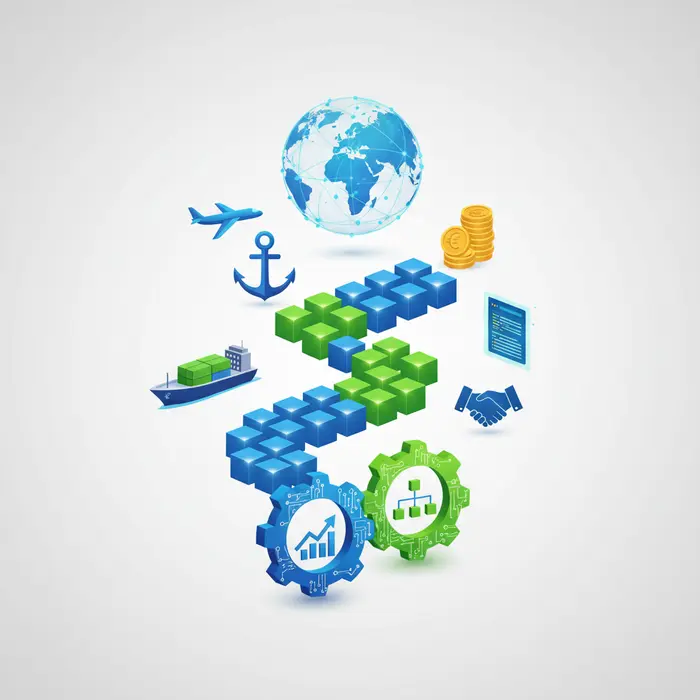
One of the most significant impacts of blockchain on international trade is the automation of trade finance through smart contracts. These self-executing contracts, with the terms of the agreement directly written into code, automatically trigger actions and payments once predefined conditions are met. In traditional trade finance, processes often involve extensive paperwork, multiple intermediaries, and manual verification, leading to delays and increased operational costs. Smart contracts eliminate the need for many of these manual steps by providing an immutable and transparent record of transactions and agreements. For instance, a payment for goods could be automatically released from an escrow account once sensors confirm the delivery of goods to a specific location, or once digital documents (like bills of lading) are validated on the blockchain. This level of automation significantly reduces human error, mitigates the risk of fraud, and accelerates the entire trade finance cycle, making Trade finance blockchain solutions a game-changer for businesses seeking efficiency and reliability.
2. Reducing Payment Delays and Financial Risk
Payment delays and associated financial risks are persistent challenges in global trade. The lack of real-time visibility and the fragmented nature of conventional financial systems often result in extended settlement times and increased exposure to credit and operational risks. Blockchain technology directly addresses these issues by offering a decentralized, tamper-proof ledger that provides all authorized parties with a single, synchronized view of transactions. This enhanced transparency and immutability build trust among trading partners, reducing the need for extensive due diligence and complex guarantees. Furthermore, blockchain-based payment systems can facilitate near-instantaneous cross-border transactions at lower costs compared to traditional banking rails. By leveraging blockchain for International trade digitalization blockchain, companies can significantly reduce the lead time for payments, enhance liquidity management, and minimize exposure to currency fluctuations and counterparty defaults. The secure and auditable nature of blockchain also strengthens compliance, ensuring that all transactions adhere to regulatory requirements and further mitigating financial risks across the supply chain.
3. Optimizing Freight, Inventory, and Warehouse Management
Beyond finance, blockchain is revolutionizing the operational aspects of B2B blockchain logistics platforms, particularly in freight, inventory, and warehouse management. Traditional logistics suffer from data silos, lack of real-time visibility, and complex coordination across numerous stakeholders, from manufacturers and carriers to customs officials and retailers. A robust B2B blockchain logistics platform provides an end-to-end, shared ledger for all supply chain events. This means every movement of goods, every change in inventory, and every step in the warehousing process can be recorded and verified on the blockchain. This creates unparalleled supply chain traceability blockchain, allowing businesses to track products from their origin to the final destination with granular detail. For example, a container’s journey, including temperature logs, handling events, and customs clearances, can be immutably recorded, ensuring integrity and accountability. This real-time visibility enables proactive problem-solving, optimizes routing and storage, and significantly reduces losses due to damage, theft, or spoilage. By improving data accuracy and sharing, blockchain empowers more efficient inventory management, reduces warehouse operational costs, and ultimately enhances customer satisfaction through faster, more reliable deliveries, solidifying its role as a cornerstone of modern global supply chain blockchain solutions.
Driving International Trade Digitalization with Blockchain
The intricate web of international trade, traditionally reliant on extensive paperwork, manual processes, and fragmented data, is on the cusp of a revolutionary transformation powered by blockchain technology. This digital ledger system offers an unparalleled opportunity to modernize global commerce, driving unprecedented levels of transparency, efficiency, and collaboration. By providing a secure, immutable, and shared record-keeping system, blockchain stands to significantly reduce the complexities, costs, and delays inherent in cross-border transactions. Its application extends across various facets of the supply chain, fostering trust among disparate parties and paving the way for truly digitized international trade. From enhancing Global supply chain blockchain solutions to optimizing trade finance and logistics, blockchain is the cornerstone for the next era of global commerce, fundamentally altering how goods move across continents and how businesses interact.
1. Standardizing Digital Documentation Across Borders
One of the most significant hurdles in international trade is the lack of standardized digital documentation. Different countries, regulatory bodies, and industry participants often use varying formats and systems, leading to errors, discrepancies, and significant delays. Blockchain offers a robust solution by providing a unified, distributed ledger where all trade-related documents – from bills of lading and customs declarations to certificates of origin and insurance policies – can be digitized, time-stamped, and immutably recorded. This shared source of truth ensures that all authorized parties access the same, up-to-date information, eliminating the need for reconciliation and reducing the potential for fraud. Smart contracts, self-executing agreements encoded on the blockchain, can further automate document validation and release, contingent on predefined conditions being met. This capability dramatically enhances supply chain traceability through blockchain, ensuring that goods can be tracked from production to final delivery with unprecedented transparency and accuracy. By creating a universally accessible and verifiable digital trail, blockchain underpins a more efficient and trustworthy framework for international trade digitalization.
2. Streamlining Customs and Border Procedures
The complexities of customs and border procedures are notorious for causing bottlenecks in global trade. Manual inspections, redundant data entry, and a lack of real-time information sharing contribute to longer transit times and higher operational costs. Blockchain has the potential to fundamentally streamline these processes by providing customs authorities with secure, real-time access to verified shipping data before goods even arrive. This pre-clearance capability, leveraging a shared B2B blockchain logistics platform, allows for more accurate risk assessments, reducing the need for physical inspections and speeding up clearance times. For instance, trade finance blockchain solutions can integrate with customs systems, ensuring that payment releases are triggered automatically upon customs clearance, further accelerating the flow of goods and capital. By creating a single, trusted source of information for all relevant stakeholders, including freight forwarders, carriers, and regulatory bodies, blockchain enhances predictive capabilities, automates compliance checks, and fosters a more proactive approach to border management, ultimately leading to faster, more secure, and less costly movement of goods across international lines.
3. Enhancing Collaboration Among Trade Stakeholders
International trade involves a vast ecosystem of stakeholders, often operating in silos with limited visibility into each other’s operations. This fragmentation leads to inefficiencies, communication breakdowns, and a lack of trust. Blockchain’s inherent design as a distributed ledger promotes a new paradigm of collaboration by creating a shared, unchangeable record of all transactions and events accessible to all authorized participants. Manufacturers, logistics providers, financial institutions, customs agencies, and buyers can all contribute to and view the same data in real-time, fostering unprecedented transparency and accountability. This collective insight facilitates proactive problem-solving, improved coordination, and a deeper level of trust across the entire supply chain. For example, a shared platform could allow a bank to verify a shipment’s progress before releasing funds, or a buyer to track the environmental footprint of their products with verifiable data. By providing a secure and neutral platform for information exchange, blockchain effectively breaks down traditional barriers, encouraging a collaborative ecosystem where all parties benefit from enhanced visibility, reduced disputes, and more efficient operations, ultimately driving the complete international trade digitalization blockchain journey.
Challenges, Future Outlook, and Implementation Strategies by 2025
The promise of global supply chain blockchain solutions to revolutionize transparency, efficiency, and trust is undeniable. By 2025, the imperative for businesses to adopt these transformative technologies will only intensify, driven by consumer demand for ethical sourcing, regulatory pressure for accountability, and the inherent desire for operational excellence. However, realizing this potential requires navigating a complex landscape of technical hurdles, regulatory ambiguities, and strategic implementation challenges. This section will delve into the critical obstacles facing widespread adoption, illuminate the future trajectory of this technology, and provide actionable strategies for successful integration within the global supply chain ecosystem.

1. Overcoming Scalability and Interoperability Challenges
One of the foremost technical challenges for blockchain in extensive supply chains remains scalability. Traditional blockchain networks, particularly public ones, struggle with high transaction volumes and speeds necessary for a global logistics network, often leading to latency and increased costs. Storing vast amounts of transactional data, especially for real-time tracking of millions of items across continents, also poses a significant data management hurdle. To mitigate these issues, emerging solutions include the development of Layer-2 scaling protocols, sharding techniques, and the increasing preference for private or consortium blockchains that offer controlled access and higher throughput tailored for enterprise use. These specialized networks can process transactions faster and more efficiently, crucial for enabling robust supply chain traceability blockchain initiatives.
Equally critical is interoperability. The global supply chain operates on a myriad of disparate systems, from legacy ERP platforms to various blockchain networks implemented by different partners. For blockchain solutions to truly connect the fragmented chain, they must be able to seamlessly communicate and exchange data across different blockchain protocols and traditional IT infrastructures. Industry initiatives are focusing on common data standards and API integrations to foster a more interconnected ecosystem, allowing for a fluid exchange of information, essential for real-time visibility and collaborative decision-making across diverse stakeholders in the B2B blockchain logistics platform space.
2. Navigating the Evolving Regulatory Landscape
The nascent nature of blockchain technology means that the regulatory environment is still largely undefined and fragmented across jurisdictions. This lack of clear legal frameworks presents significant challenges, particularly concerning data privacy, smart contract enforceability, and cross-border data governance. Questions around data ownership, the immutability of records in light of “right to be forgotten” clauses (like GDPR), and the legal standing of decentralized autonomous organizations (DAOs) need comprehensive answers. Different countries are adopting varying stances on digital assets and blockchain applications, creating a patchwork of compliance requirements that can complicate international trade digitalization efforts.
Businesses implementing trade finance solutions, for instance, must navigate complex financial regulations alongside data privacy laws. Overcoming these hurdles requires proactive engagement with legal experts and regulatory bodies, advocating for standardized frameworks, and participating in industry consortiums that aim to shape policy. As highlighted by institutions like the World Economic Forum, international collaboration is paramount to establish clear, harmonized guidelines that will foster innovation while protecting consumers and ensuring market integrity. Establishing regulatory sandboxes and pilot programs can also help inform policymakers and demonstrate the practical benefits and challenges of blockchain implementation in a controlled environment.
3. Key Considerations for Adopting Blockchain in Your Supply Chain
Successful adoption of blockchain in supply chains by 2025 hinges on several strategic considerations. Firstly, organizations must clearly define their business objectives and identify specific pain points that blockchain can effectively address, whether it’s enhancing international trade digitalization blockchain efforts, improving product authenticity, or optimizing payment processes. Starting with pilot projects focused on a specific use case and a limited number of partners can provide valuable insights and demonstrate tangible ROI before scaling up.
Secondly, successful implementation is highly dependent on ecosystem collaboration. Blockchain’s power lies in its network effect; therefore, engaging key stakeholders—suppliers, manufacturers, logistics providers, and financial institutions—from the outset is crucial. Ensuring data quality and establishing robust data governance protocols are also paramount, as the integrity of the blockchain relies entirely on the accuracy of the data entered into it. Future outlooks suggest an increasing convergence of blockchain with other emerging technologies like AI, IoT, and digital twins, creating even more sophisticated and intelligent supply chain networks. Businesses should invest in developing internal expertise and fostering a culture of innovation to fully leverage these integrated solutions, preparing for a future where intelligent automation and immutable records drive unparalleled transparency and efficiency across the global supply chain.
Partner with Vietnam’s Leading Suppliers
Looking for reliable suppliers in Vietnam? Contact VietnamSuppliers.com today to connect with verified manufacturers and exporters across all industries.
—————————————
References
– How blockchain helps transform the supply chain – IBM: https://www.ibm.com/blogs/blockchain/2020/02/how-blockchain-helps-transform-the-supply-chain/
– digital transformation of global supply chains: https://www.weforum.org/agenda/2021/04/blockchain-supply-chain-digital-transformation-sustainable/
– Blockchain can build supply chain resilience and trust – here’s how: https://www.weforum.org/agenda/2021/02/blockchain-can-build-supply-chain-resilience-and-trust-here-is-how/
– Deloitte – Blockchain and the supply chain: https://www2.deloitte.com/content/dam/Deloitte/uk/Documents/consultancy/deloitte-uk-blockchain-and-supply-chain.pdf
– World Economic Forum: https://www.weforum.org/agenda/2020/09/blockchain-supply-chain-digital-trade-covid19-pandemic/