What Are EXW Incoterms?
Navigating the complexities of international trade requires a clear understanding of various shipping terms. Among the most fundamental yet demanding for buyers are the EXW Incoterms Explained for International Buyers. EXW, or Ex Works, represents the minimum obligation for the seller, placing nearly all risks, costs, and responsibilities squarely on the shoulders of the buyer. For businesses engaging in global sourcing, especially from regions like Vietnam, grasping the nuances of EXW is not merely beneficial—it’s essential for accurately calculating landed costs, managing logistics, and avoiding costly surprises.
1. Incoterms® 2020: An Overview
Before diving deep into EXW, it’s crucial to understand the framework within which it operates: Incoterms®. Developed and published by the International Chamber of Commerce (ICC), Incoterms are a globally recognized set of 11 rules that define the responsibilities of sellers and buyers for the delivery of goods under sales contracts. They specify who is responsible for paying and managing the shipment, insurance, documentation, and customs clearance. The latest version, Incoterms® 2020, came into effect on January 1, 2020, and provides updated guidelines to reflect contemporary shipping practices. For international buyers, Incoterms serve as a vital language, simplifying complex transactions and preventing misunderstandings that could lead to disputes, delays, or unexpected expenses. A solid grasp of these rules empowers buyers to make informed decisions, negotiate effectively, and streamline their supply chain operations.
2. Defining EXW (Ex Works) in Practice
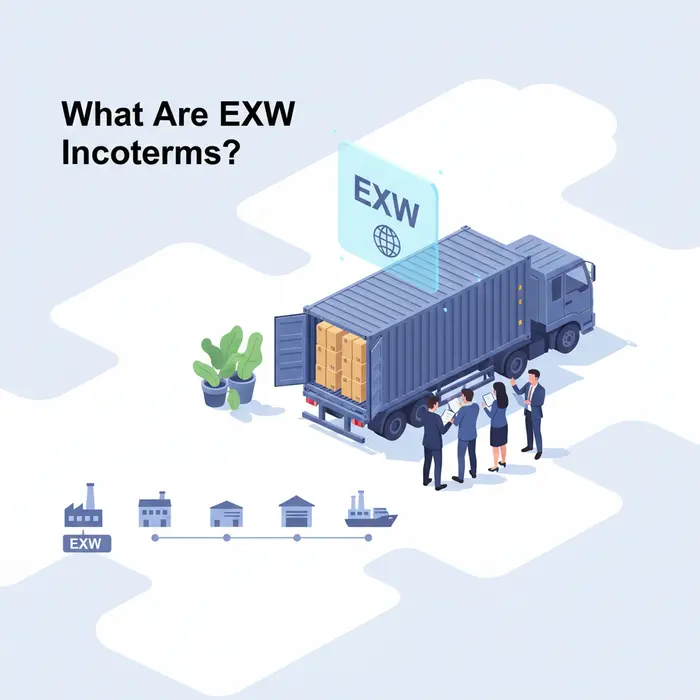
EXW stands for “Ex Works,” meaning the seller fulfills their obligation when they make the goods available at their own premises – typically their factory, warehouse, or plant. At this precise point, the EXW buyer responsibilities kick in, taking over all subsequent costs and risks. This includes loading the goods onto the first carrier, inland transportation from the seller’s premises to the port or airport, export customs clearance, main carriage, import customs clearance, and delivery to the final destination. The seller, under EXW, has no obligation to load the goods onto any collecting vehicle, nor to clear the goods for export, although in practice, they often assist with loading as a courtesy. This means the buyer is entirely responsible for arranging all aspects of the shipment from the moment the goods are ready for collection at the seller’s door. Understanding this transfer of risk and cost is paramount for international buyers, as it directly impacts their financial liabilities and logistical planning.
3. The Core Principle: Seller’s Minimal Obligation
The defining characteristic of EXW is the seller’s minimal obligation. Unlike other Incoterms where the seller might be responsible for export clearance, loading, or even main carriage (like EXW vs FOB Incoterms, where FOB sellers are responsible for getting goods onto the ship), under EXW, the seller’s role largely ends at making the goods available. This structure presents both EXW Incoterms advantages disadvantages for the buyer. The primary advantage is that the buyer gains maximum control over the entire shipping process, from origin to destination. This can be beneficial if the buyer has a well-established logistics network or preferred freight forwarders, potentially leading to cost savings through consolidated shipments or optimized routes. It also offers transparency in EXW shipping costs calculation, as the buyer handles and accounts for every single expense. However, this control comes with significant responsibilities and risks. Buyers must be proficient in managing local transport, navigating export regulations in the seller’s country, dealing with customs, and arranging all aspects of international and local freight. Any errors or delays in these steps fall solely on the buyer, potentially leading to increased costs, storage fees, or even penalties. For many international buyers, especially those new to a specific market or lacking robust logistics partners, the extensive responsibilities associated with EXW can be daunting and complex, making other Incoterms like FOB or CIF potentially more appealing despite less control.
EXW Buyer Responsibilities & Risks
Under Ex Works (EXW) Incoterms 2020, the buyer assumes the most significant responsibilities and risks in an international transaction. This shipping term places the minimum obligation on the seller, making it crucial for international buyers to fully understand what they are undertaking. Unlike other Incoterms, such as EXW vs FOB Incoterms where sellers handle export clearance and loading onto the main carrier, EXW means the buyer is in charge of virtually every aspect of the shipment from the moment the goods are made available at the seller’s premises. This comprehensive section will detail all the obligations an international buyer must undertake, from the initial pickup to the final destination, outlining the substantial EXW buyer responsibilities and associated risks.
1. Taking Possession: At the Seller’s Dock
The very first and fundamental responsibility for an EXW buyer is taking physical possession of the goods at the seller’s designated premises, usually their factory or warehouse. This includes the critical task of loading the goods onto the buyer’s (or buyer’s appointed carrier’s) vehicle. The moment the goods are made available, and subsequently loaded, is when the risk of loss or damage transfers from the seller to the buyer. Therefore, buyers must ensure their chosen carrier is capable of proper loading. It is highly advisable for buyers to arrange for a thorough inspection of the goods at this stage to confirm quality, quantity, and condition before they leave the seller’s control, as rectifying issues later can be extremely complex and costly. This initial pickup represents the earliest point of risk transfer in any Incoterm, making the buyer’s vigilance paramount.
2. Arranging Export Customs Clearance
Perhaps one of the most challenging and often underestimated EXW buyer responsibilities is arranging for export customs clearance in the seller’s country. Under EXW, the seller is not obligated to clear the goods for export. This means the buyer, or their designated agent, must prepare and submit all necessary export documentation, obtain any required licenses or permits, and pay any export duties or taxes. This can be a complex endeavor, especially for buyers unfamiliar with the exporting country’s specific regulations and bureaucratic procedures. Engaging a local customs broker or freight forwarder in the seller’s country is almost always necessary to navigate these complexities, ensuring compliance and avoiding costly delays or penalties. Failure to correctly handle export clearance can lead to goods being held indefinitely at the border, incurring demurrage charges and significant headaches for the buyer.
3. Managing All Transportation & Insurance
From the moment the goods are loaded at the seller’s premises, the EXW buyer is solely responsible for managing and paying for every leg of the transportation journey to the final destination, as well as securing comprehensive insurance coverage. This involves a long list of costs and logistical arrangements that contribute to the overall EXW shipping costs calculation:
- Initial Inland Transport: Arranging and paying for the transportation of goods from the seller’s warehouse to the port or airport of export.
- Terminal Handling Charges: At the port/airport of export, including fees for loading onto the main international carrier.
- Main Carriage: Securing and paying for the international freight, whether by sea, air, road, or rail, from the country of origin to the country of destination.
- Terminal Handling Charges (Destination): At the port/airport of import, including unloading from the main international carrier.
- Import Customs Clearance: Handling all customs declarations, duties, taxes (e.g., VAT, GST), and obtaining necessary import permits in the destination country. This is a significant financial and administrative burden.
- Final Inland Transport: Arranging and paying for the transportation from the port or airport of import to the buyer’s final delivery address.
- Insurance: Crucially, the buyer is responsible for arranging and paying for cargo insurance for the entire journey, from the seller’s premises to the final destination. Given the early risk transfer, adequate insurance is non-negotiable to protect against potential loss or damage during transit.
This extensive list underscores that EXW places the ultimate control—and burden—on the buyer. While this offers maximum control over logistics and potentially allows for optimizing costs if the buyer has strong logistical capabilities, it also presents significant EXW Incoterms advantages disadvantages. For inexperienced international buyers, the complexities and potential for unforeseen costs make EXW a high-risk proposition, often better suited for buyers with established logistics networks or those who are sourcing domestically but using international terms for clarity.
Calculating EXW Shipping Costs & Total Landed Cost
Accurately estimating costs is paramount for buyers operating under EXW (Ex Works) Incoterms. Unlike other Incoterms where some shipping responsibilities are shouldered by the seller, EXW places the maximum obligation—and thus the maximum cost burden—squarely on the buyer. This section will meticulously guide international buyers through calculating all potential expenses, from the moment goods leave the factory gate in the country of origin to their final arrival at the buyer’s designated warehouse. Understanding these costs is critical not only for budgeting but also for comparing the true total landed cost against other Incoterms like EXW vs FOB Incoterms, allowing for informed decision-making and preventing unexpected financial surprises.
1. Key Cost Components Under EXW
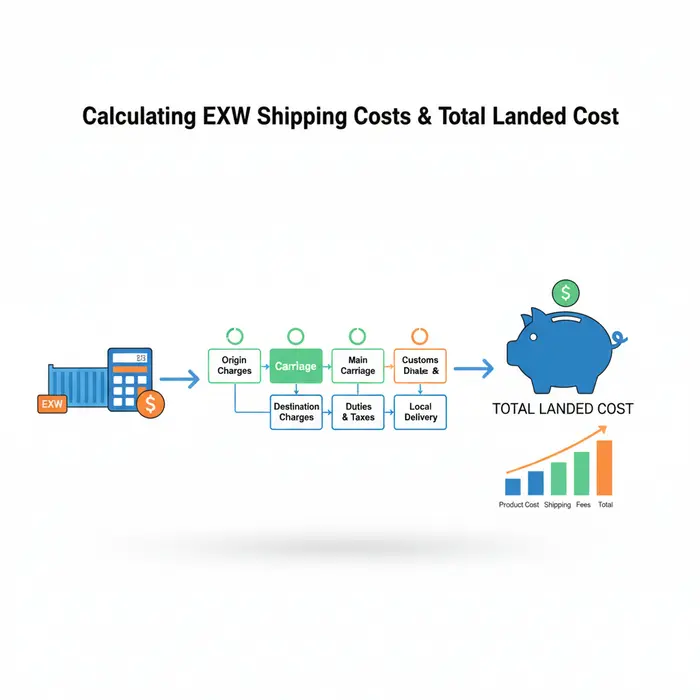
When operating under EXW Incoterms Explained for International Buyers, the buyer is responsible for virtually every aspect of the shipping process once the goods are made available at the seller’s premises (factory, warehouse, or other designated location). This means that all transportation costs, export clearances, import duties, and insurance fall to the buyer. The primary cost components that an EXW buyer must account for include:
- Inland Haulage: Transportation from the seller’s factory to the port or airport of loading in the origin country.
- Loading Fees: Costs associated with loading the goods onto the first carrier at the factory.
- Export Documentation & Customs Clearance: Preparing and submitting all necessary paperwork for the goods to legally leave the country of origin.
- Terminal Handling Charges (THC) at Origin: Fees charged by the port or airport terminal for handling the cargo before it’s loaded onto the main vessel/aircraft.
- Ocean or Air Freight: The primary cost of transporting the goods from the origin country to the destination country.
- Cargo Insurance: Protecting the goods against loss or damage during transit.
- Terminal Handling Charges (THC) at Destination: Fees for handling the cargo upon arrival at the destination port or airport.
- Import Customs Clearance & Duties/Taxes: Procedures and payments required to legally bring the goods into the destination country.
- Inland Haulage at Destination: Transportation from the destination port/airport to the buyer’s final warehouse.
Understanding these distinct phases is crucial for accurate EXW shipping costs calculation, ensuring no hidden fees surprise the buyer.
2. Estimating Inland Haulage & Loading Fees
The first significant set of expenses under EXW Incoterms involves moving the goods from the seller’s factory to the initial point of international departure, typically a port or airport, and the associated loading. Inland haulage refers to the cost of transporting the goods via truck, rail, or barge from the seller’s premises to the loading port or airport. Several factors influence this cost: the distance from the factory to the port, the type and size of the goods (e.g., standard pallets vs. oversized machinery), the weight of the shipment, and the local fuel prices. Buyers should request quotes from multiple local logistics providers in the origin country to get competitive rates. Providing precise pickup location details, package dimensions, weight, and the exact destination port/airport is essential for accurate quotes.
Loading fees, often overlooked, are the charges for physically loading the goods onto the first carrier at the seller’s factory. While some sellers might absorb this if they have their own equipment and staff, many will charge extra, or the buyer’s contracted carrier will charge for this service. This can include costs for forklifts, cranes, or manual labor. Clarifying whether the seller will assist with loading and at what cost, or if the chosen freight forwarder’s inland transport quote includes loading, is vital during the negotiation phase. These initial steps are fundamental to managing EXW buyer responsibilities and establishing a realistic total cost.
3. Export Documentation & Terminal Handling Charges
Once the goods are packed and prepared for departure from the origin country, buyers must account for the costs associated with export formalities and terminal operations. Export documentation and customs clearance are critical. Under EXW, the buyer is responsible for arranging all export licenses and clearances from the country of origin. This typically involves hiring a local customs broker or freight forwarder in the origin country to prepare and submit documents such as the commercial invoice, packing list, certificate of origin, and potentially specific licenses or permits depending on the nature of the goods and the origin country’s regulations. The fees for these services can vary widely based on the complexity of the shipment and the broker’s rates. Failing to properly clear goods for export can lead to significant delays and penalties, making it a crucial component of Incoterms compliance.
Additionally, Terminal Handling Charges (THC) at origin are another significant cost. These are fees levied by port or airport operators for the services involved in processing cargo before it is loaded onto the main international carrier. This includes moving containers from the gate to the vessel side, stacking, weighing, and other administrative tasks. These charges are usually fixed per container (for FCL shipments) or per cubic meter/ton (for LCL or air freight). While the exact amount varies by port and carrier, it’s a non-negotiable part of the EXW shipping process that buyers must factor into their overall EXW Incoterms advantages disadvantages assessment and total landed cost calculation. Securing a detailed quote from your freight forwarder that itemizes these charges is essential for transparency and accurate budgeting.
EXW vs. FOB: A Critical Comparison for Buyers
Navigating the complexities of international trade often brings buyers to a pivotal decision point: choosing between Ex Works (EXW) and Free On Board (FOB) Incoterms. While both are fundamental to global commerce, they represent vastly different allocations of responsibility and cost between buyer and seller. A clear understanding of these distinctions is crucial for efficient supply chain management, accurate budgeting, and avoiding unforeseen complications. This section offers a comprehensive comparison, empowering buyers to select the most appropriate Incoterm for their specific trade scenarios.
1. Fundamental Differences in Responsibilities
The primary divergence between EXW and FOB lies in where the transfer of risk and responsibility occurs. Under EXW Incoterms Explained for International Buyers, the seller’s obligation is minimal: simply making goods available at their premises. From that point, the buyer assumes all risks and costs, including loading, origin domestic transport, export customs, international freight, and all subsequent stages until final delivery. This means that EXW buyer responsibilities are extensive, demanding complete control and management of the entire shipping process from the seller’s door.
In contrast, with FOB Incoterms, the seller undertakes significantly more responsibility. They deliver goods on board the vessel nominated by the buyer at the named port of shipment, including costs and risks of loading and all export clearance. Risk and responsibility transfer to the buyer only once goods are safely on board the vessel, covering main carriage, import clearance, and final delivery. The key for buyers comparing EXW vs FOB Incoterms is the point of hand-off: EXW places almost all burdens on the buyer at origin, while FOB shifts them after goods are loaded onto the ship at the export port.
2. Comparing Cost Implications for Buyer & Seller
Varied responsibilities directly impact cost distribution. Under EXW, the buyer bears the entirety of shipping costs from the seller’s factory to the final destination. This includes initial loading, origin inland transport, export customs, ocean or air freight, insurance, import duties, and local delivery. The EXW shipping costs calculation requires buyers to itemize every logistical step. While the EXW price for goods might seem lower, the total landed cost can be substantially higher. Buyers need robust logistics capabilities or a reliable freight forwarder to manage these complexities efficiently.
For FOB, the seller covers costs up to loading goods onto the vessel at the port of shipment, including origin inland transport, terminal charges, and export customs. The buyer’s costs commence once goods are aboard the ship, encompassing international freight, insurance, import duties, and destination inland transport. The FOB price from the seller may be higher than an EXW price, but the buyer’s direct shipping costs and administrative burden are reduced, often leading to more predictable overall costs. The choice hinges on the buyer’s ability and willingness to manage the initial, often intricate, logistics segment.
3. When to Opt for EXW Over FOB
The decision between EXW and FOB should align with a buyer’s experience, logistical resources, and strategic goals. EXW is often preferred by experienced buyers with an established logistics network in the seller’s country. These buyers might have their own freight forwarders or consolidation points near the supplier, enabling greater control over transit, combining shipments from multiple vendors, and potentially negotiating more competitive freight rates. The EXW Incoterms advantages disadvantages for buyers revolve around control: significant autonomy and potential cost savings if logistics are managed expertly, versus substantial risk and operational burden if not. It’s ideal for buyers consolidating goods from various suppliers in the same region, offering complete oversight over export documentation and compliance.
Conversely, FOB generally suits buyers seeking less logistical complexity and risk. It’s an excellent choice for those new to international trade, unfamiliar with export procedures in the origin country, or lacking a robust freight forwarding setup. By delegating export clearance and initial transport to the seller, FOB minimizes the buyer’s administrative load and potential pitfalls. While the seller’s quoted price might be higher, the overall cost can be more predictable, and the buyer’s risk exposure begins only once goods are safely loaded onto the vessel. The ultimate choice demands a careful assessment of internal capabilities, supplier relationships, and specific trade lane requirements. For definitive guidance, buyers should consult authoritative sources such as the International Chamber of Commerce’s official Incoterms rules.
EXW Incoterms: Advantages & Disadvantages for Buyers
For international buyers seeking maximum control over their supply chain, understanding Incoterms is paramount. Among the eleven Incoterms rules, Ex Works (EXW) represents the minimum obligation for the seller and the maximum for the buyer. This means that while EXW can offer unique advantages, it also comes with significant risks and complexities that experienced buyers must be prepared to manage. This section provides a balanced perspective on using EXW, outlining the potential benefits alongside the significant challenges and risks that must be carefully managed. Understanding EXW Incoterms Explained for International Buyers is crucial for navigating global trade successfully.

Potential Advantages: Control & Cost Savings (Sometimes)
One of the primary draws of EXW for an experienced international buyer is the unparalleled level of control it provides over the entire shipping process. From the moment goods are packed and made available at the seller’s factory or warehouse, the buyer dictates every subsequent step. This means the buyer can choose their preferred carriers, negotiate freight rates directly, select specific routes, and consolidate shipments from multiple suppliers in the same region. This comprehensive control can lead to potential cost savings, especially if the buyer has established strong relationships with freight forwarders or owns their logistics infrastructure. By managing the logistics chain end-to-end, buyers can optimize efficiencies and potentially secure better rates than if the seller were to arrange the initial legs of the journey. However, it’s critical to emphasize that these cost savings are “sometimes” realized; they are contingent on the buyer’s logistical expertise, market knowledge, and ability to effectively manage the entire chain.
Major Disadvantages: High Risk & Complexity
Despite the allure of control, EXW comes with substantial disadvantages for the buyer due to high risk and considerable complexity. Under EXW, the seller’s responsibility ends when they make the goods available at their premises. This means EXW buyer responsibilities begin immediately, encompassing every subsequent stage:
- Loading: The buyer is responsible for loading the goods, often requiring specific equipment at the seller’s location.
- Local Transport & Export Customs Clearance: The buyer is solely responsible for all export formalities, licensing, and duties in the seller’s country. This requires intimate knowledge of local regulations and potentially a local presence or competent freight forwarder. Incorrect clearance can lead to significant delays, fines, and even seizure.
- Main Carriage & Import: Arranging and paying for international freight, import duties, taxes, and formalities in the destination country.
The transfer of risk under EXW is the earliest among all Incoterms 2020 rules. Risk transfers to the buyer as soon as goods are placed at their disposal. While initial EXW shipping costs calculation might seem simple, unexpected charges for documentation, inspections, or logistical hurdles can inflate expenses, eroding perceived savings. EXW is ill-suited for novice international buyers or those without robust logistical support.
Mitigating Risks When Using EXW
Given the extensive EXW buyer responsibilities and inherent risks, effective mitigation is crucial. The cornerstone of successful EXW operations is partnering with a highly experienced and reliable freight forwarder with a strong presence or network in the country of origin. This forwarder must be capable of handling local pickup, export customs clearance, and all necessary documentation efficiently, navigating foreign regulations to minimize delays.
Before agreeing to EXW, buyers must conduct thorough due diligence, including understanding the seller’s willingness to assist with information and access. Clear communication about cargo readiness, packaging, and specific documentation is vital. Securing comprehensive cargo insurance covering the goods from the seller’s premises until final delivery provides a critical safety net.
Finally, buyers should carefully evaluate if EXW truly aligns with their capabilities. For many, especially those new to international trade, alternative Incoterms like Free On Board (FOB) might be more appropriate. A comparison of EXW vs FOB Incoterms often shows that FOB, while placing more responsibility on the seller for export, significantly reduces the buyer’s initial risk and complexity. Consider your logistical infrastructure, expertise, and risk tolerance to avoid costly operational nightmares.
Partner with Vietnam’s Leading Suppliers
Looking for reliable suppliers in Vietnam? Contact VietnamSuppliers.com today to connect with verified manufacturers and exporters across all industries.
—————————————
References
– International Chamber of Commerce (ICC): https://iccwbo.org/resources-for-business/incoterms-rules/
– Trade.gov EXW Incoterms 2020: https://www.trade.gov/knowledge-product/incoterms-2020#EXW
– Incoterms Rules: https://iccwbo.org/resources-for-business/incoterms-rules/
– International Chamber of Commerce’s official Incoterms rules: https://iccwbo.org/resources-for-business/incoterms-rules/
– Incoterms 2020: https://iccwbo.org/resources-for-business/incoterms-rules/incoterms-2020/