What is EU CBAM and Why Does it Matter for 2025?
The European Union’s Carbon Border Adjustment Mechanism (CBAM) represents a landmark environmental policy poised to significantly reshape global trade dynamics. As the EU pushes towards its ambitious climate targets, the CBAM serves as a critical tool to prevent ‘carbon leakage’ – the relocation of carbon-intensive production outside the EU to countries with less stringent climate policies. For businesses worldwide, particularly those involved in importing goods into the EU, understanding the intricacies of EU CBAM is not merely an option but a strategic imperative, especially as 2025 marks the transition to its full financial implementation.
1. Defining the Carbon Border Adjustment Mechanism
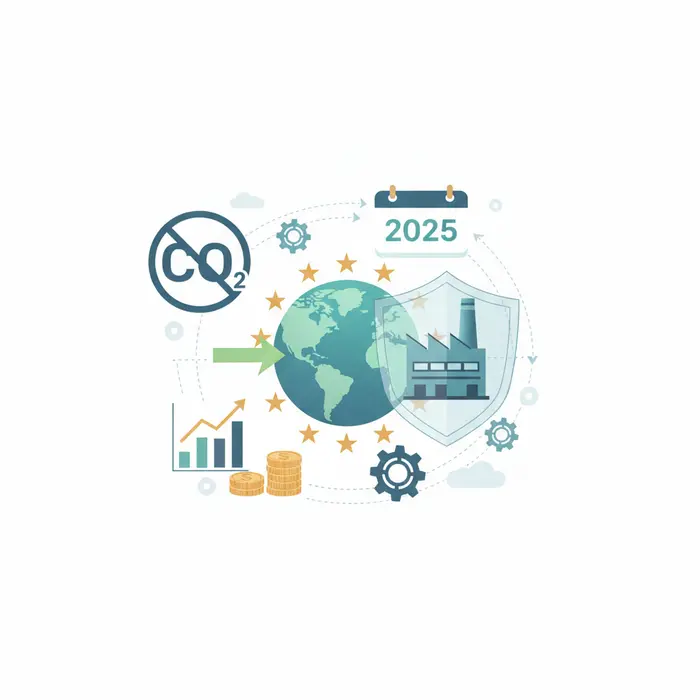
At its core, the Carbon Border Adjustment Mechanism (CBAM) is a tariff system designed to put a fair price on the carbon emitted during the production of certain goods imported into the EU. This mechanism applies to specific carbon-intensive sectors, including cement, iron and steel, aluminum, fertilisers, electricity, and hydrogen. It aims to mirror the carbon price that EU domestic producers already pay under the EU Emissions Trading System (ETS). Importers will be required to purchase CBAM certificates corresponding to the embedded carbon emissions of their goods. This system essentially extends the EU’s carbon pricing beyond its borders, ensuring that imported products face the same carbon costs as those produced within the EU. Businesses engaged in international trade, therefore, must adapt to these new sustainable import regulations EU, which are fundamentally transforming the landscape of global commerce and environmental responsibility.
2. Key Objectives: Decarbonization & Leveling the Playing Field
The EU CBAM is driven by two primary, interconnected objectives. Firstly, and most significantly, it aims to accelerate global decarbonization efforts. By imposing a carbon cost on imports, the EU intends to incentivize producers in non-EU countries to adopt greener production methods and invest in low-carbon technologies. This mechanism seeks to reduce global greenhouse gas emissions by preventing carbon leakage, ensuring that the EU’s climate ambitions are not undermined by emissions simply shifting elsewhere. Secondly, the CBAM seeks to level the playing field for EU industries. European manufacturers bear the costs of the EU ETS, which can put them at a competitive disadvantage against producers in countries with less stringent or no carbon pricing. By requiring importers to pay a similar carbon price, CBAM ensures fair competition, protecting EU businesses that have already invested in sustainable practices and encouraging a transition towards more green supply chain sourcing globally. This dual approach underscores the EU’s commitment to both environmental protection and economic equity.
3. Phased Rollout: Reporting Obligations to Financial Impact
The journey of CBAM implementation began with a transitional period, which commenced on October 1, 2023. During this initial phase, importers are primarily focused on carbon reporting import export. This means they are obligated to collect and report quarterly data on the embedded emissions of their imported goods without incurring any financial charges. This reporting period is crucial for businesses to familiarize themselves with the data collection methodologies and reporting requirements, preparing them for the full operational phase. The critical date for businesses to mark is January 1, 2025, when the CBAM will begin its phased financial implementation. From this point onwards, importers will be required to purchase and surrender CBAM certificates corresponding to the emissions embedded in their goods, similar to how EU producers acquire ETS allowances. The financial obligations will gradually increase, reaching full effect by 2026. Therefore, understanding and ensuring CBAM compliance by 2025 is not just about reporting; it’s about strategizing for direct financial implications that will impact procurement costs, supply chain management, and overall business sustainability. Proactive preparation during this transitional phase is essential to mitigate future risks and maintain competitiveness in the EU market.
As the EU CBAM moves closer to its full financial impact in 2025, its significance for international trade and environmental policy cannot be overstated. It is a clear signal that the cost of carbon will increasingly become a factor in global commerce, urging businesses worldwide to prioritize decarbonization and transparent emissions reporting. Companies that proactively adapt to these evolving regulations will not only ensure compliance but also gain a competitive edge in a global market increasingly valuing sustainability.
Navigating CBAM Compliance: Key Requirements for Importers
The European Union’s Carbon Border Adjustment Mechanism (EU CBAM) represents a landmark shift in global trade, aiming to prevent carbon leakage by placing a carbon price on certain goods imported into the EU. For businesses engaged in international trade, understanding and achieving CBAM compliance is not just a regulatory obligation but a strategic imperative for navigating sustainable import regulations EU. This mechanism compels importers to report the embedded greenhouse gas emissions of their goods and, eventually, to purchase CBAM certificates. This section details the practical steps, stringent data requirements, and significant administrative duties importers must undertake to successfully comply with CBAM, ensuring a smooth transition towards a greener global supply chain.
Product Scope and Covered Emissions
The initial phase of the EU CBAM focuses on goods from specific carbon-intensive sectors, chosen for their high emissions intensity and risk of carbon leakage. Importers must first ascertain whether their products fall within this defined product scope, which currently includes cement, iron and steel, aluminium, fertilisers, electricity, and hydrogen. Continuous monitoring is crucial as the mechanism may expand. Compliance hinges on accounting for ’embedded emissions’ – the greenhouse gas emissions (GHG, primarily CO2) released during the production of these goods. This covers both direct emissions from production processes and indirect emissions from consumed electricity. During the transitional period (October 2023 to December 2025), businesses face reporting obligations, requiring accurate identification and quantification of these emissions. This critical first step in CBAM compliance demands a thorough understanding of product classifications and producer processes for accurate carbon reporting import export.
Data Collection and Calculation Methodologies
Perhaps the most challenging aspect of CBAM compliance is the rigorous requirement for data collection and precise calculation methodologies for embedded emissions. Importers are obligated to obtain accurate and verifiable emissions data from their non-EU suppliers, detailing both direct and indirect emissions. While actual emissions data, precisely measured, is preferred, default values are available during the transitional period as a fallback. However, reliance on default values often results in higher reported emissions, increasing future financial burdens. Therefore, establishing robust communication channels and data-sharing agreements with suppliers is paramount. Importers need robust internal systems for collecting, verifying, and managing this complex environmental data for quarterly reporting. This necessitates deep engagement with upstream supply chain partners, often requiring support for their own carbon reporting import export capabilities. The methodology for calculating emissions must align with EU standards and may require future independent verification. Proactive measures in green supply chain sourcing are key to streamlining this process and securing reliable, low-carbon inputs.
The Role of the CBAM Declarer and Authorized Status
The responsibility for fulfilling CBAM obligations primarily rests with the ‘CBAM Declarer’ – typically the EU importer or their indirect customs representative. The CBAM Declarer must submit an annual CBAM declaration by 31 May each year, covering embedded emissions from the preceding calendar year. This declaration includes the total quantity of goods, total embedded emissions, and the number of CBAM certificates required. From 2026, these certificates, priced based on EU ETS allowance prices, must be purchased and surrendered. To ease administrative burden, businesses can apply for ‘Authorized CBAM Declarer’ status. This status, granted by national authorities, requires demonstrating financial and operational capacity, customs compliance, and accurate emissions calculation and reporting. Becoming authorized offers simplified procedures and reduced administrative hurdles, making it an attractive option for frequent importers committed to long-term CBAM compliance. Non-compliance, including inaccurate reporting or insufficient certificate surrender, will result in significant penalties, underscoring the importance of meticulous planning and proactive engagement with sustainable import regulations EU.
Sustainable Import Regulations EU: Beyond Carbon Reporting
The European Union’s Carbon Border Adjustment Mechanism (CBAM) represents a landmark shift in global trade, extending the bloc’s climate ambitions beyond its borders. While often discussed in terms of its immediate impact on carbon accounting and border levies, EU CBAM is far more than a simple carbon tax. It is an integral component of the EU’s overarching environmental agenda, designed to stimulate global decarbonization and ensure that the efforts of European industries to reduce emissions are not undermined by carbon leakage. This section explores how CBAM integrates into the broader landscape of the EU’s environmental policies, particularly the European Green Deal, and its profound implications for companies’ overall sustainable sourcing strategies.
1. Connecting CBAM to the European Green Deal
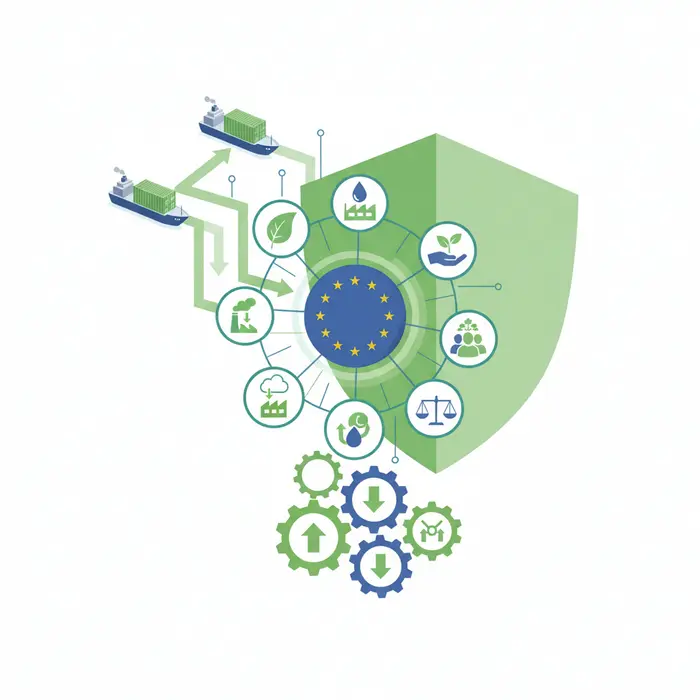
At its core, the European Green Deal is the EU’s growth strategy to transform the Union into a modern, resource-efficient, and competitive economy, aiming for climate neutrality by 2050. CBAM is a cornerstone policy instrument within this ambitious framework. Its primary objective is to prevent ‘carbon leakage,’ a scenario where EU companies might shift carbon-intensive production abroad to countries with less stringent climate policies, or where EU products are replaced by more carbon-intensive imports. By imposing a carbon price on imports equivalent to the one paid by domestic producers, CBAM levels the playing field, ensuring that the EU’s climate efforts contribute to genuine global emission reductions rather than merely displacing them.
This mechanism directly complements other Green Deal initiatives, such as the Emissions Trading System (ETS) and industrial decarbonization strategies. It sends a clear signal to international trading partners that access to the lucrative EU market will increasingly depend on aligning with robust environmental standards. For businesses, understanding this nexus is crucial for effective CBAM compliance and for anticipating future expansions of sustainable import regulations EU beyond the initial scope of cement, iron and steel, aluminium, fertilisers, electricity, and hydrogen.
2. Due Diligence and Supply Chain Transparency
The operationalization of CBAM demands unprecedented levels of supply chain transparency and rigorous due diligence from importing companies. To accurately report and ultimately pay for the embedded emissions in their goods, importers must collect verified data on the carbon footprint of their imported products from their non-EU suppliers. This goes far beyond traditional customs declarations, requiring detailed information on production processes, energy consumption, and raw material sourcing.
This requirement for comprehensive carbon reporting import export data fundamentally alters the relationship between importers and their global suppliers. Companies can no longer operate with limited visibility into their upstream value chains. Instead, they must establish robust systems for data collection, verification, and reporting, often involving direct engagement and capacity building with their suppliers. This push for transparency aligns with broader EU initiatives, such as upcoming corporate sustainability due diligence directives, fostering an environment where environmental performance is as critical as cost and quality in supplier selection. Failure to comply with these enhanced reporting obligations will lead to penalties, underscoring the imperative for proactive engagement.
3. The Drive Towards Green Supply Chain Sourcing
Ultimately, CBAM serves as a powerful catalyst for the adoption of green supply chain sourcing strategies. As the cost of embedded carbon in imported goods becomes a tangible financial factor, companies will be incentivized to seek out suppliers who have invested in decarbonizing their production processes. This shift will not only mitigate CBAM costs but also enhance brand reputation and align with growing consumer and investor demand for sustainable products.
The mechanism encourages a strategic re-evaluation of sourcing decisions, potentially favoring suppliers in regions with lower carbon intensity or those committed to adopting greener technologies. This long-term perspective means that while initial focus will be on compliance, progressive companies will leverage CBAM to drive innovation across their supply chains, reduce overall environmental impact, and build resilience against future climate-related regulations. For many businesses, navigating these sustainable import regulations EU will mean fundamentally redesigning their procurement practices to prioritize environmental performance alongside traditional economic metrics, setting a new benchmark for responsible global trade.
Green Supply Chain Sourcing: Strategies for Adaptation
Offering actionable advice, this section outlines how companies can adjust their procurement and supply chain practices to meet CBAM requirements, reduce emissions, and enhance their sustainability profile.
The introduction of the EU Carbon Border Adjustment Mechanism (CBAM) signifies a critical shift in global trade, compelling importers into the EU to account for the embedded carbon emissions of specific goods. Designed to prevent carbon leakage and align import prices with the EU’s climate targets, CBAM makes proactive adaptation a strategic imperative for businesses. Navigating EU CBAM compliance demands a comprehensive approach, transforming traditional procurement into sustainable, transparent, and resilient green supply chain sourcing. This section offers actionable advice for companies to adjust procurement and supply chain practices, not only to meet these new sustainable import regulations EU but also to significantly reduce emissions and enhance their sustainability profile.
Supplier Engagement and Data Exchange Protocols
Meeting CBAM requirements fundamentally hinges on accurate carbon reporting import export data, demanding unprecedented transparency and collaboration with suppliers. Companies must foster partnerships focused on environmental performance.
- Establish Clear Communication: Initiate dialogues with upstream suppliers about CBAM’s implications for their EU exports. Clearly articulate the need for detailed data on embedded emissions for CBAM-scope products (cement, iron and steel, aluminium, fertilisers, electricity, hydrogen).
- Develop Robust Data Exchange: Implement standardized frameworks for collecting and verifying carbon emissions data. Leverage digital platforms, blockchain, or ERP systems for data integrity and traceability. Standardized Emissions Declaration templates will streamline reporting.
- Capacity Building: Many suppliers, especially SMEs, may lack expertise for accurate carbon footprinting. Importers can offer training, technical assistance, or incentives to help suppliers measure and report emissions effectively, building robust and resilient supply chains.
- Performance Benchmarking: Encourage suppliers to benchmark their carbon performance against industry best practices to foster continuous improvement and identify emission reduction areas.
Investing in Low-Carbon Production Technologies
A long-term strategy for CBAM compliance and enhanced sustainability involves actively promoting and investing in low-carbon production technologies within supplier networks. This proactive approach yields significant benefits beyond regulatory adherence.
- Incentivizing Green Innovation: Explore partnerships with key suppliers to co-invest in cleaner production methods, renewable energy sources, or energy efficiency upgrades. This might include green financing access, preferential purchasing, or technology know-how sharing.
- Life Cycle Assessment (LCA): Encourage suppliers to conduct comprehensive Life Cycle Assessments for products. This provides a holistic view of environmental impacts, pinpointing critical emission reduction hotspots. Design for sustainability principles can reduce embedded carbon from the outset.
- Shifting to Renewable Energy: Work with suppliers to transition to renewable energy for manufacturing. This significantly lowers Scope 2 emissions and CBAM charges. Explore green electricity, onsite solar, or supporting regional renewable energy projects.
- Process Optimization: Support suppliers in optimizing processes to reduce energy consumption, minimize waste, and improve material efficiency. This lowers carbon emissions and often leads to cost savings.
Geographic Diversification and Reshoring Considerations
Strategic geographic diversification, and in some cases reshoring or nearshoring, can be powerful strategies to mitigate CBAM impacts and strengthen overall supply chain resilience, though not always feasible.
- Optimizing Sourcing Locations: Evaluate carbon intensity across regions. Sourcing from countries with cleaner energy grids or stricter environmental regulations can result in lower embedded emissions and CBAM liabilities, potentially shifting procurement away from highly carbon-intensive economies.
- Reducing Transportation Emissions: Shorter supply routes inherently lead to lower transportation-related carbon emissions (Scope 3). Reshoring or nearshoring production closer to the EU market significantly reduces the carbon footprint from shipping and logistics, contributing to green supply chain sourcing.
- Supply Chain Resilience: Beyond carbon, diversifying supplier locations reduces dependency on single regions, enhancing resilience against geopolitical risks or disruptions. This aligns with broader trends towards de-risking global supply chains.
- Local Production Incentives: Explore government incentives for local manufacturing or sustainable technology investment in specific regions. These can offset initial reshoring costs and contribute to a sustainable local economy. A careful total cost of ownership analysis, including carbon costs, is crucial.
In conclusion, the EU CBAM is a catalyst for profound changes in global trade and supply chain management. By embracing proactive strategies such as robust supplier engagement and data exchange, investing in low-carbon technologies, and strategically considering geographic diversification, companies can achieve CBAM compliance and build more resilient, sustainable, and future-proof supply chains. This holistic approach to green supply chain sourcing positions businesses to thrive in an increasingly carbon-conscious global economy, transforming regulatory challenges into opportunities for innovation and competitive advantage.
Preparing for CBAM 2025: Best Practices and Future Outlook
The European Union’s Carbon Border Adjustment Mechanism (EU CBAM) represents a pivotal shift in global trade, compelling importers to account for the embedded carbon emissions of certain goods. As the transitional phase draws to a close and financial obligations begin in 2025, proactive preparation is no longer an option but a necessity. This concluding section summarizes crucial preparation steps, addresses potential challenges, and looks ahead at the broader implications of CBAM for global trade, encouraging proactive readiness among businesses worldwide.

1. Implementing Robust Carbon Reporting Systems
At the heart of EU CBAM compliance lies the meticulous collection and reporting of carbon emissions data. Businesses importing specified goods into the EU must establish robust systems capable of accurately tracking Scope 1 and Scope 2 emissions, and where relevant, Scope 3 emissions for their supply chains. This process extends beyond simply compiling data; it requires understanding the methodologies approved by the EU, ensuring data integrity, and preparing for third-party verification. Best practices include:
- Early Engagement with Suppliers: Collaborate closely with non-EU suppliers to gather primary data on their production processes and embedded emissions. This transparency is vital, as accurate data from origin countries will directly impact CBAM costs. Suppliers must understand the importance of providing verified data.
- Standardized Data Collection: Implement standardized protocols and tools for collecting emissions data across the entire supply chain. This minimizes inconsistencies and facilitates easier aggregation and reporting.
- Internal Expertise Development: Invest in training internal teams or engaging external consultants with expertise in carbon accounting and the specific requirements of CBAM regulations. Understanding the nuances of reporting direct and indirect emissions is critical.
- Pre-verification and Audit Readiness: Proactively prepare for potential audits by maintaining detailed records and documentation. Regularly cross-reference reported data with actual production volumes and energy consumption. This groundwork will streamline the mandatory verification process for CBAM declarations. Accurate carbon reporting import export is not just about compliance; it’s about strategic advantage.
2. Leveraging Technology for Compliance and Optimization
The complexity and data intensity of CBAM requirements make technological solutions indispensable for efficient compliance and strategic optimization. Manual processes are prone to errors and scalability issues, particularly for companies with diverse product portfolios and extensive supply chains.
- Data Management Platforms: Utilize specialized software platforms that can integrate with existing ERP systems to automate the collection, aggregation, and analysis of emissions data. These platforms can track emissions per product, per shipment, and across different suppliers.
- Supply Chain Visibility Tools: Deploy tools that offer end-to-end visibility of your supply chain. This includes tracking raw material origins, manufacturing locations, and transportation routes, all of which contribute to the embedded carbon footprint. Enhanced visibility facilitates identifying high-emission hotspots and exploring alternative, greener sourcing options.
- AI and Machine Learning for Optimization: AI-powered analytics can help identify patterns in emissions data, predict future CBAM liabilities, and model the impact of different mitigation strategies. This allows businesses to optimize their green supply chain sourcing by selecting lower-carbon suppliers or processes, potentially reducing overall CBAM costs.
- Blockchain for Data Integrity: Blockchain technology can offer a secure, immutable ledger for emissions data, enhancing trust and transparency across the supply chain. This is particularly valuable for verifying data submitted by multiple upstream suppliers, bolstering the credibility of carbon reports. Leveraging technology not only ensures adherence to sustainable import regulations EU but also drives operational efficiencies and fosters innovation.
3. The Global Impact of EU CBAM and Future Expansion
The EU CBAM is more than just a European environmental policy; it’s a trailblazer with significant global implications. Often referred to as the “Brussels Effect,” the mechanism is set to influence carbon pricing and climate policy far beyond EU borders.
- Catalyst for Global Carbon Pricing: CBAM incentivizes non-EU countries to implement or strengthen their own carbon pricing mechanisms. Nations with robust domestic carbon pricing that is equivalent to or higher than the EU’s will see their exports face lower or no CBAM charges, pushing more countries towards adopting similar policies to remain competitive in international trade. This could lead to a global convergence towards more consistent carbon accounting and pricing.
- Reshaping Global Supply Chains: Businesses worldwide will increasingly prioritize suppliers and production methods with lower carbon footprints. This shift will accelerate the transition towards sustainable production practices and cleaner energy sources in various sectors, leading to a broader transformation of global trade routes and manufacturing hubs. Companies will need to critically assess their existing supply networks and actively seek opportunities for CBAM compliance and carbon reduction.
- Potential for Expansion: While currently focused on specific carbon-intensive sectors (cement, iron and steel, aluminium, fertilisers, electricity, and hydrogen), the EU has explicitly stated its intention to review and potentially expand CBAM to cover more products and sectors in the future. This signals that businesses, regardless of their current direct exposure, should view CBAM as a template for future sustainable import regulations globally and begin building their carbon management capabilities now.
The future outlook suggests an era where carbon emissions are intrinsically linked to trade costs and market access. Proactive engagement with CBAM, therefore, is not merely about avoiding penalties but about positioning businesses for long-term resilience and competitiveness in a rapidly greening global economy.
Partner with Vietnam’s Leading Suppliers
Looking for reliable suppliers in Vietnam? Contact VietnamSuppliers.com today to connect with verified manufacturers and exporters across all industries.
—————————————
References
– sustainable import regulations EU: https://eur-lex.europa.eu/legal-content/EN/TXT/?uri=CELEX%3A32023R0956
– Carbon Border Adjustment Mechanism (CBAM) – European Commission: https://taxation-customs.ec.europa.eu/carbon-border-adjustment-mechanism_en
– Carbon Border Adjustment Mechanism (CBAM) – European Commission: https://taxation-customs.ec.europa.eu/carbon-border-adjustment-mechanism_en
– About the EU Carbon Border Adjustment Mechanism: https://taxation-customs.ec.europa.eu/carbon-border-adjustment-mechanism_en
– EU Carbon Border Adjustment Mechanism (CBAM) Regulation: https://eur-lex.europa.eu/legal-content/EN/TXT/?uri=CELEX:32023R0956