
What is a Customs Bonded Warehouse?
In the intricate world of international trade, efficiency, compliance, and cash flow management are paramount. A customs bonded warehouse stands as a critical solution, offering businesses a strategic advantage by allowing the storage of imported goods without immediate payment of duties and taxes. These secure facilities operate under the stringent control of a country’s customs authority, serving as a pivotal hub for goods awaiting final clearance, re-export, or processing. Understanding the nuances of a customs bonded warehouse is essential for any enterprise engaged in global commerce, seeking to optimize its supply chain and financial operations.
1. Definition and Core Purpose
A customs bonded warehouse is a secure, government-approved facility where imported goods can be stored, handled, or even manufactured without the payment of customs duties, taxes, or excises, until they are withdrawn for consumption in the domestic market or re-exported. Essentially, it functions as a “customs duty deferment warehouse,” holding goods in a form of customs limbo, legally considered not yet to have entered the commerce of the country. The “bonded” aspect refers to the financial guarantee (a bond) placed with the customs authority, ensuring that all duties and taxes will be paid if the goods eventually enter the domestic market.
The core purpose of these warehouses is multifaceted:
- Duty Deferment: To postpone the payment of duties and taxes, significantly improving an importer’s cash flow.
- Storage and Security: To provide secure storage for goods, often for extended periods, under customs supervision, reducing risks associated with theft or damage.
- Processing and Manipulation: To allow certain operations like sorting, re-packaging, labeling, testing, or even light manufacturing (in some types of bonded warehouses) to be performed on the goods before duty payment.
- Facilitating Re-export: To enable goods to be re-exported without ever incurring domestic duties, making a country an attractive transit or distribution hub.
The legal framework governing customs bonded warehouses varies by jurisdiction but generally involves strict licensing, operational requirements, and detailed record-keeping mandated by the national customs agency, such as the U.S. Customs and Border Protection. These regulations ensure that the integrity of the revenue system is maintained while offering flexibility to traders.

2. The Role of Customs Bonds and Guarantees
Central to the operation of a customs bonded warehouse is the concept of a customs bond. This is a contractual agreement backed by a financial guarantee (often from a surety company) that ensures the payment of customs duties, taxes, and other fees to the government if the imported goods are not handled or cleared in accordance with customs laws and regulations. Essentially, the bond acts as a promise to customs that if the goods stored in the warehouse are eventually sold domestically, or if there’s any breach of customs rules, the owed revenue will be secured.
The responsibility for providing the bond typically lies with the warehouse operator or, in some cases, the importer. The type of bond can vary: a single-entry bond covers a specific shipment, while a continuous bond covers multiple shipments over a period, providing ongoing security. This financial instrument is crucial because it allows the customs authority to trust that even though duties are deferred, they are not forsaken. Without this guarantee, the system of duty deferment and flexible handling within these facilities would not be viable. The bond safeguards government revenue and underpins the operational integrity of all types of bonded warehouses, from general storage to manufacturing and exhibition facilities.
3. Key Benefits for Importers and Exporters
Operating with customs bonded warehouse services for international trade offers a multitude of strategic advantages for businesses.
- Cash Flow Optimization: The most significant benefit is the deferment of import duties and taxes. Businesses only pay these charges when goods are withdrawn from the warehouse for domestic consumption, or they may avoid them entirely if goods are re-exported. This dramatically improves working capital management, freeing up funds for other operational needs.
- Market Responsiveness and Flexibility: Importers can store goods and observe market demand before committing to duty payments. This allows for better inventory management, reduced risk of overstocking, and the ability to respond swiftly to changing market conditions. Goods can be consolidated from multiple sources, sorted, labeled, or re-packaged to meet specific customer requirements or country-of-origin rules before being cleared or re-exported.
- Reduced Logistics Costs: By leveraging warehouse storage import export capabilities, businesses can consolidate shipments, reducing transportation costs. For goods destined for re-export, the ability to avoid paying and then reclaiming duties (which can be a lengthy process) offers considerable savings and simplification.
- Enhanced Compliance and Security: Goods stored in a bonded warehouse are under constant customs supervision, ensuring a high level of security and helping businesses maintain compliance with complex customs regulations. This reduces the risk of penalties and ensures smooth customs clearance processes.
- Strategic Hub for Re-exports: For businesses with a global distribution network, a customs bonded warehouse can serve as a strategic hub. Goods can be imported, processed, and then efficiently re-exported to other countries without ever formally entering the domestic economy for duty purposes, making it an invaluable tool for global supply chain management. For businesses looking to optimize their supply chain within countries like Vietnam, understanding these options is crucial. More insights into such logistics solutions can be found by exploring Customs bonded warehouse services on VietnamSuppliers.com.
In conclusion, customs bonded warehouses are more than just storage facilities; they are integral components of a robust international trade strategy, empowering businesses with financial flexibility, operational efficiency, and enhanced compliance in a competitive global marketplace.
Types of Customs Bonded Warehouses
Understanding the various classifications of Customs bonded warehouses is crucial for businesses engaged in international trade. These specialized facilities offer significant advantages, primarily enabling the deferment of import duties and taxes until goods are withdrawn for domestic consumption or export. By strategically utilizing different types of bonded warehouses, businesses can optimize cash flow, manage inventory more efficiently, and navigate complex international trade regulations, adhering to U.S. Customs and Border Protection guidelines. This section explores the distinctions between public and private facilities, delves into specialized operations like Foreign-Trade Zones, and provides guidance on selecting the ideal solution for your specific business requirements, highlighting the diverse Customs bonded warehouse services available to support global supply chains.
1. Public vs. Private Bonded Warehouses
The fundamental distinction in types of bonded warehouses operations lies between public and private facilities, each serving different business scales and needs. A public Customs bonded warehouse is a facility operated by an independent third party, licensed by customs authorities, that offers warehouse storage import export services to multiple importers. These warehouses are ideal for small to medium-sized businesses, or those with fluctuating import volumes, as they allow for shared costs and offer flexibility without requiring significant capital investment in infrastructure or licensing. Public warehouses typically provide a range of services, including storage, inventory management, consolidation, and distribution, all under the umbrella of Customs duty deferment warehouse regulations.
In contrast, a private Customs bonded warehouse is owned and operated by a single entity exclusively for its own imported goods. This option is typically pursued by large corporations or businesses with consistent, high-volume international trade activities that justify the substantial investment in obtaining the necessary licenses, security infrastructure, and dedicated personnel. Private bonded warehouses offer greater control over operations, security, and customization of services to meet specific business processes. While the upfront costs and ongoing operational responsibilities are higher, the long-term benefits include tailored solutions, enhanced supply chain integration, and often reduced per-unit handling costs for large volumes.
2. Specialized Bonded Facilities (e.g., FTZs, Manufacturing)
Beyond the public and private classifications, several specialized types of bonded warehouse services for international trade cater to unique logistical and manufacturing requirements. One prominent example is a Foreign-Trade Zone (FTZ), a secure, designated geographical area within the United States, but considered outside U.S. customs territory for duty purposes. Goods can be brought into an FTZ without formal Customs entry or payment of duties, allowing for storage, exhibition, assembly, manufacturing, and other processing operations. Duties are only paid if the merchandise enters U.S. commerce, or if manufactured goods exit the FTZ into the U.S. market, often at a lower duty rate (inverted tariff). FTZs are powerful tools for managing inventory, improving cash flow, and reducing costs for companies involved in significant import and export activities.
Another specialized category includes Customs bonded warehouses for manufacturing or processing. These facilities allow imported components or raw materials to be stored, assembled, or processed into finished goods without paying duties on the imported inputs until the final product is entered into the domestic market. If the finished product is then exported, no duties on the imported components may ever need to be paid. This is particularly beneficial for industries like automotive, electronics, or textiles, where imported parts are integral to the manufacturing process. These specialized facilities underscore the versatility of Customs bonded warehouses as more than just storage spaces; they are integral components of global manufacturing and distribution strategies.
3. Choosing the Right Type for Your Business Needs
Selecting the appropriate type of Customs bonded warehouse is a strategic decision that depends on several factors, including your company’s size, import volume, nature of goods, capital availability, and long-term business objectives. For businesses seeking flexibility, lower initial investment, and a wide array of support services, a public bonded warehouse is often the best choice. It allows access to expert logistics and compliance management without the overhead.
Conversely, if your business has substantial, consistent import volumes, requires highly customized operations, or involves complex manufacturing processes that benefit from duty deferral on components, investing in a private bonded warehouse or utilizing a specialized facility like an FTZ or a manufacturing bonded warehouse may yield greater efficiencies and cost savings in the long run. Consider factors such as the potential for inverted tariffs, the need for processing or assembly operations, and the desire for enhanced control over your supply chain. Consulting with trade experts and logistics providers, particularly those familiar with types of bonded warehouses and their specific regulations, can help you navigate the complexities and make an informed decision that aligns with your strategic goals for international trade and optimizes your warehouse storage import export operations.
The Advantage of Customs Duty Deferment
In the complex world of international trade, managing cash flow efficiently is paramount for business success. One of the most significant tools available to importers seeking to optimize their financial operations is the customs bonded warehouse. These specialized facilities play a crucial role in facilitating customs duty deferment, allowing businesses to store imported goods without immediately paying import duties, taxes, and fees. This strategic deferral dramatically reduces the immediate financial burden on companies, freeing up capital that can be reinvested or utilized for other operational needs. By understanding and leveraging the capabilities of a customs duty deferment warehouse, businesses can significantly improve their cash flow, enhance financial flexibility, and gain a competitive edge in global markets.

1. Understanding Duty, Tax, and Fee Deferral
The core benefit of a customs bonded warehouse lies in its ability to defer the payment of import duties, taxes, and certain fees. When goods arrive from an international origin, they are typically subject to various charges imposed by the importing country’s customs authority. These can include customs duties (tariffs), excise taxes, value-added taxes (VAT) or goods and services taxes (GST), and other specific fees. Without a bonded facility, these charges would be due immediately upon the goods’ arrival in the country. However, by placing goods into a customs duty deferment warehouse, businesses can postpone these payments until the goods are formally withdrawn from the warehouse for domestic consumption or until they are exported.
This deferral mechanism provides a crucial grace period, often extending for several years, depending on the specific regulations of the country. During this time, the imported merchandise is considered to be “in bond” and technically not yet entered into the commerce of the importing country. This distinction means that the financial liability for duties and taxes is delayed, providing significant breathing room for importers. It allows businesses to align their duty payments with their sales cycle, paying only when goods are actually sold and released into the market, rather than bearing the upfront cost for inventory that might sit for an extended period.
2. Improved Cash Flow and Financial Flexibility
The most immediate and tangible advantage of utilizing a customs bonded warehouse is the dramatic improvement in a company’s cash flow. By deferring the payment of duties and taxes, businesses avoid tying up significant capital in these charges before their products even reach the consumer. This capital, which would otherwise be spent upfront, remains available for other critical business operations such as marketing, product development, inventory management, or investment in growth opportunities. This financial flexibility is particularly vital for small to medium-sized enterprises (SMEs) that may have limited working capital.
For businesses involved in high-volume `warehouse storage import export` activities, the cumulative savings from deferred duties can be substantial. It reduces the need for short-term financing to cover duty payments, thereby lowering interest expenses and improving the overall financial health of the company. Furthermore, it allows for better inventory management. Goods can be stored in the bonded warehouse and only cleared for domestic entry as demand dictates. This minimizes the risk of overpaying duties on goods that might become obsolete or are subject to market fluctuations before they can be sold, enhancing both profitability and adaptability in a dynamic global marketplace. The strategic use of a customs duty deferment warehouse transforms a fixed upfront cost into a variable cost, directly linked to sales.
3. Impact on Re-exports and Value-Added Services
Beyond simple deferment, `customs duty deferment warehouse` facilities offer unparalleled advantages for re-export operations and value-added services. For goods that are imported with the intention of being re-exported to another country, a bonded warehouse becomes invaluable. Storing these goods in bond means that import duties and taxes never have to be paid in the first place, as the merchandise never officially enters the domestic commerce of the first importing country. This avoids the cumbersome and often complex process of duty drawbacks, where duties are paid upfront and then reclaimed upon re-exportation, which can be time-consuming and involve significant administrative effort.
Moreover, bonded warehouse services for international trade often extend to allowing certain value-added activities to be performed on the goods while they are still in bond. These services can include labeling, re-packaging, kitting, minor assembly, testing, or quality control checks. Crucially, these operations can be carried out without triggering the payment of duties and taxes. This allows businesses to customize products for specific markets or customers, consolidate shipments, or rectify issues before the goods are finally released, either for domestic consumption (at which point duties would be paid) or for re-export (where no duties would be due). This flexibility in a customs bonded warehouse enhances supply chain efficiency, reduces logistics costs, and allows companies to respond more agilely to market demands without incurring premature duty liabilities, making them indispensable for modern international trade strategies. Different `types of bonded warehouses`, such as private or public, offer varying levels of control and services to cater to diverse business needs.
Services for International Trade in Bonded Warehouses
In the complex landscape of global commerce, Customs bonded warehouse facilities play an indispensable role, acting as strategic hubs that streamline international trade operations. These secure, customs-controlled locations allow businesses to store imported goods without payment of duties and taxes until they are withdrawn for domestic consumption or re-export. This crucial advantage, often referred to as Customs duty deferment warehouse benefits, provides significant cash flow advantages and operational flexibility. Beyond mere storage, modern bonded warehouses offer a comprehensive suite of services designed to enhance efficiency, reduce costs, and ensure compliance for businesses engaged in import and export activities. Understanding the full spectrum of these bonded warehouse services for international trade is key for optimizing global supply chains.
1. Secure Storage and Inventory Management
At the core of any bonded warehouse offering is the provision of secure storage for a diverse range of goods. These facilities are meticulously designed to safeguard merchandise from theft, damage, and unauthorized access, often featuring advanced surveillance systems, restricted entry protocols, and environmental controls. Specialized areas for hazardous materials, temperature-sensitive products, or oversized cargo ensure that goods are stored under optimal conditions, preserving their quality and integrity. Beyond physical security, bonded warehouses excel in sophisticated inventory management. Utilizing cutting-edge Warehouse Management Systems (WMS), they provide real-time visibility into stock levels, movement, and location. This includes precise tracking for individual SKUs, batch control, FIFO (First-In, First-Out) or LIFO (Last-In, First-Out) methodologies, and detailed reporting. Such robust inventory control is vital for businesses managing large volumes of goods, enabling efficient order fulfillment, accurate forecasting, and significant reductions in carrying costs. The flexibility offered by warehouse storage import export options within a bonded environment allows goods to remain in a duty-suspended status, giving businesses more time to assess market demand before committing to duties.
2. Value-Added Services (e.g., Kitting, Labeling, Assembly)
Modern bonded warehouses are far more than just storage depots; they are dynamic centers offering a wide array of value-added services that can transform raw goods into market-ready products. These services are invaluable for businesses looking to customize products, meet specific market regulations, or simply enhance their supply chain efficiency without moving goods out of customs control. Common value-added services include:
- Re-packaging: Adapting packaging to suit different market requirements, consumer sizes, or promotional campaigns. This can involve breaking down bulk shipments into smaller units or consolidating multiple items.
- Labeling: Applying country-specific labels, barcodes, price tags, or brand labels to comply with local regulations (e.g., language, ingredients, safety warnings) or brand guidelines.
- Kitting: Assembling multiple separate items into a single ready-to-ship package or kit, common in e-commerce and retail.
- Light Assembly: Performing minor assembly tasks, such as combining components, configuring electronics, or preparing display units, allowing products to be customized before duty payment.
- Quality Control & Inspection: Conducting visual inspections, sampling, and basic testing to ensure goods meet specified quality standards and compliance before distribution.
- Order Fulfillment: Picking, packing, and dispatching orders directly from the warehouse, optimizing the entire distribution process.
These services enable businesses to defer duties until after goods have undergone necessary modifications, thus minimizing financial risk and improving market responsiveness.
3. Customs Clearance and Documentation Support
Navigating the intricacies of international customs regulations can be daunting. Bonded warehouses act as crucial intermediaries, simplifying the customs clearance process for their clients. Their expertise is particularly valuable for understanding the nuances of duty deferment and suspension. By storing goods in a bonded facility, importers can postpone the payment of duties and taxes until the goods are officially released into the domestic market, or avoid them altogether if the goods are re-exported. This flexibility is a cornerstone of Customs bonded warehouse advantages.
Furthermore, many bonded warehouse operators provide extensive documentation support. This includes assistance with:
- Import/Export Declarations: Preparing and filing the necessary customs declarations accurately and promptly.
- Tariff Classification: Correctly classifying goods to ensure accurate duty assessment and compliance with trade agreements.
- Permits and Licenses: Helping secure any required permits or licenses for specific types of goods.
- Compliance Checks: Ensuring that all shipments adhere to local and international trade laws, including health, safety, and environmental regulations.
Their deep knowledge of types of bonded warehouses and associated regulations, coupled with established relationships with customs authorities, significantly reduces the risk of delays, fines, and compliance issues, making the international trade process smoother and more predictable for businesses worldwide.
Optimizing Warehouse Storage for Import/Export Operations
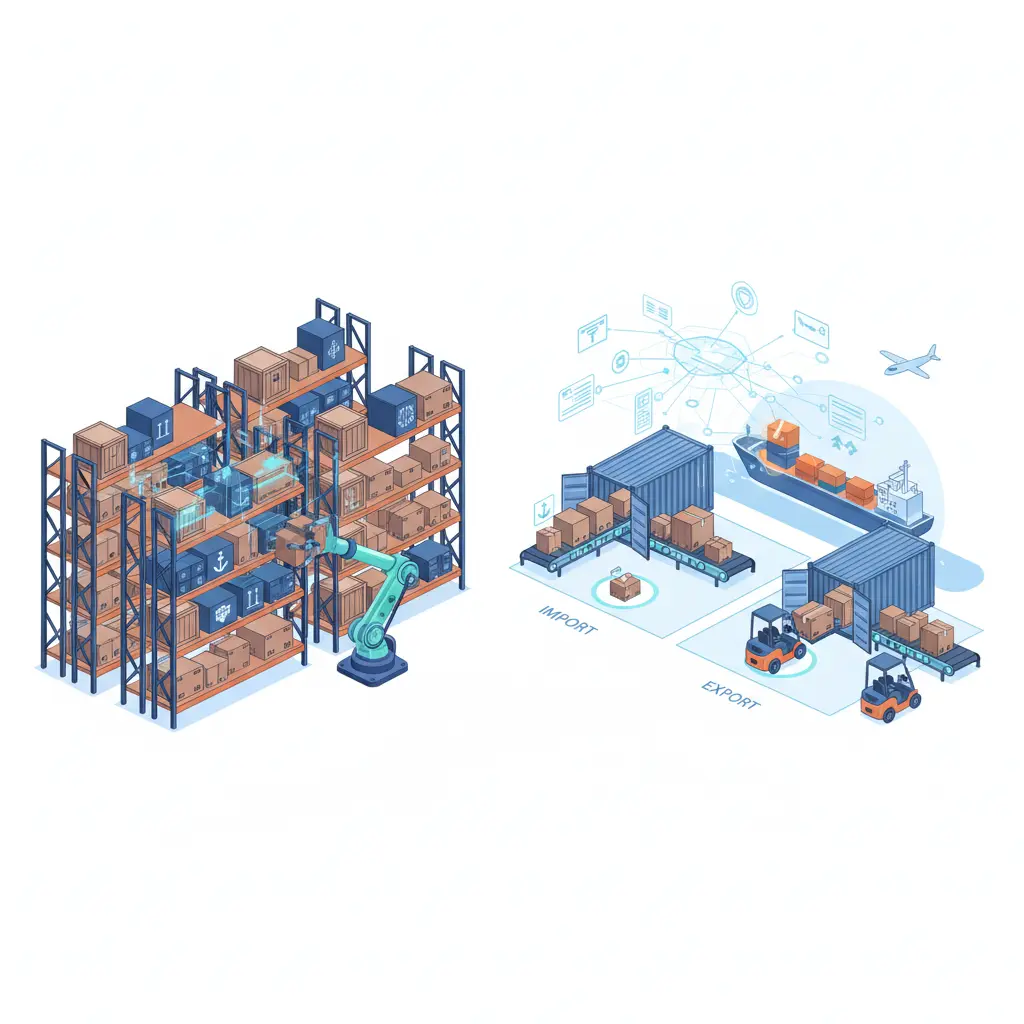
In the intricate world of global trade, efficient logistics and supply chain management are paramount for business success. One strategic asset that significantly streamlines import and export operations is the customs bonded warehouse. These specialized facilities offer a myriad of benefits, from customs duty deferment to enhanced inventory control, making them indispensable for companies engaged in international trade. Leveraging these warehouse storage import export solutions strategically can lead to substantial cost savings, improved cash flow, and greater operational flexibility. Understanding the different types of bonded warehouses and their specific services is crucial for optimizing your supply chain.
1. Strategic Location and Transit Benefits
A key advantage of utilizing a customs bonded warehouse lies in its strategic location, often near major ports, airports, or international borders. This positioning allows for goods to be held in transit without immediately incurring customs duties or taxes. A customs duty deferment warehouse essentially acts as a temporary holding zone, enabling businesses to defer payment until the goods are officially released into the domestic market or re-exported. This deferment can dramatically improve a company’s cash flow, especially when dealing with high-value imports or fluctuating market demand. Furthermore, for goods destined for re-export, storing them in a bonded facility means avoiding duties altogether, as they never technically enter the customs territory of the country. This is particularly beneficial for transit trade or when performing light manufacturing or re-packaging for onward shipment. The flexibility offered by these facilities in terms of storage duration, often up to several years, provides businesses with ample time to manage market fluctuations, secure buyers, or complete necessary customs documentation. This allows for greater agility in responding to global supply chain dynamics.
2. Consolidation and Deconsolidation Services
Bonded warehouse services for international trade extend beyond mere storage, encompassing critical logistics operations like consolidation and deconsolidation. Consolidation involves combining multiple smaller shipments from various suppliers into a single, larger consignment for export. This practice significantly reduces shipping costs, as full container load (FCL) rates are typically much lower per unit than less than container load (LCL) rates. Conversely, deconsolidation involves breaking down a large incoming shipment into smaller, individualized consignments for distribution to different domestic buyers or onward to other markets. This service is invaluable for importers dealing with diverse product lines or serving multiple retail outlets. By performing these activities within a customs bonded warehouse, businesses can defer duties on the entire consolidated shipment until individual components are extracted and cleared. This also streamlines inventory management and reduces handling costs, as goods can be sorted, labeled, and prepared for final distribution efficiently, all while maintaining their customs-bonded status. This flexibility is a cornerstone of optimizing global distribution networks.
3. Integrating Bonded Warehousing into Your Supply Chain
Effective integration of customs bonded warehouses into your broader supply chain strategy is crucial for maximizing their benefits. This involves a comprehensive analysis of your import/export volumes, product types, and market destinations. For instance, businesses can use these warehouses as regional distribution hubs, allowing them to import goods in bulk, defer duties, and then fulfill orders regionally or internationally as needed. This approach minimizes the risk associated with committing to duties on unsold inventory. Moreover, bonded facilities often offer value-added services such as quality control checks, re-packaging, labeling, assembly, and minor processing without losing their bonded status. This capability transforms the warehouse from a simple storage unit into an active processing center within the supply chain, adding significant value before final customs clearance. For a deeper understanding of compliance and operational best practices, consulting resources like the U.S. Customs and Border Protection’s guide on bonded warehouses can be highly beneficial. By strategically placing and utilizing these facilities, companies can achieve leaner inventory levels, optimize transportation routes, and significantly enhance their competitive edge in international markets. This proactive approach ensures that your import and export operations are not just efficient, but also highly resilient and adaptable to the ever-changing global trade landscape.
Partner with Vietnam’s Leading Suppliers
Looking for reliable suppliers in Vietnam? Contact VietnamSuppliers.com today to connect with verified manufacturers and exporters across all industries.
—————————————
References
– U.S. Customs and Border Protection on Foreign Trade Zones (a type of bonded facility): https://www.cbp.gov/trade/basic-import-export/foreign-trade-zones
– U.S. Customs and Border Protection guidelines: https://www.cbp.gov/trade/basic-import-export
– U.S. Customs and Border Protection – Foreign Trade Zones: https://www.cbp.gov/trade/basic-import-export/foreign-trade-zones
– Bonded Warehouses | U.S. Customs and Border Protection: https://www.cbp.gov/trade/basic-import-export/ports-entry/bonded-warehouses
– U.S. Customs and Border Protection’s guide on bonded warehouses: https://www.cbp.gov/trade/bonded-warehouses

