
What is an Air Waybill (AWB)?
The Air Waybill (AWB) stands as one of the most critical documents in the complex world of air freight. Far more than just a piece of paper, it serves as the linchpin for international air cargo operations, facilitating the swift and secure movement of goods across borders. Understanding its intricacies is essential for anyone involved in global trade, from shippers and consignees to freight forwarders and airlines. This section will delve into the core definition, purpose, and legal implications of this indispensable air cargo documentation.
1. Definition & Core Purpose of an AWB
At its heart, an Air Waybill (AWB) is a non-negotiable transport document that accompanies goods shipped by air. It is issued by the carrier (airline) or their authorized agent (often a freight forwarder) and serves multiple crucial functions:
- Contract of Carriage Evidence: While not the contract itself, it acts as evidence of the contract of carriage between the shipper and the carrier. It outlines the terms and conditions under which the goods are transported.
- Receipt for Goods: Upon acceptance of the cargo, the AWB functions as a receipt, acknowledging that the carrier has received the goods in apparent good order and condition, ready for shipment.
- Customs Declaration: It provides vital information required for customs clearance at both the origin and destination airports, detailing the nature of the goods, their value, and other relevant data.
- Delivery Instructions: The AWB contains instructions for the handling and delivery of the cargo, ensuring it reaches the correct consignee.
- Tracking Instrument: Each AWB has a unique 11-digit number, allowing for real-time tracking of the shipment from departure to arrival, a fundamental aspect of modern air cargo documentation.
Unlike a Bill of Lading used in ocean freight, an AWB is non-negotiable, meaning it does not confer title to the goods. The consignee named on the AWB is entitled to take delivery of the shipment, provided all terms and conditions are met.
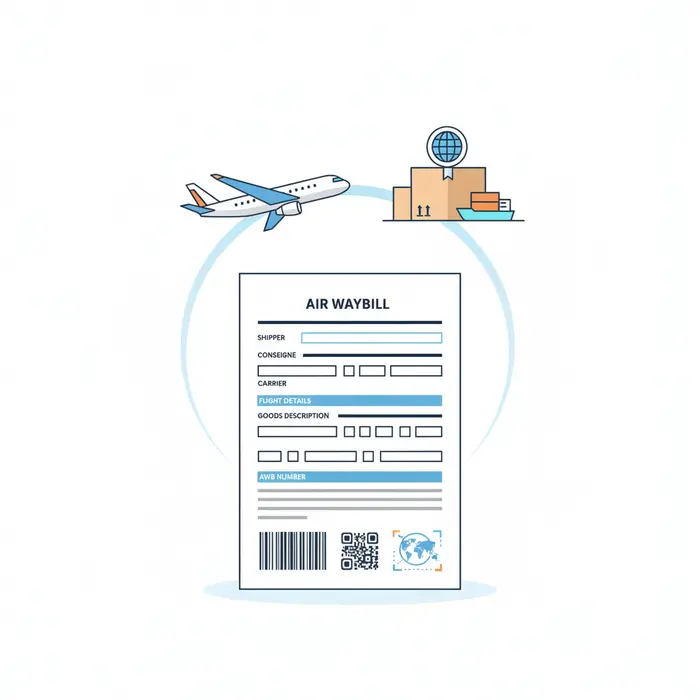
2. Key Information Contained in an Air Waybill
The integrity and efficiency of air cargo depend heavily on the accuracy and completeness of the information within the Air Waybill. A typical AWB will meticulously detail the following:
- Shipper’s Name and Address: Full contact details of the party sending the goods.
- Consignee’s Name and Address: Full contact details of the party receiving the goods.
- Issuing Carrier’s Name: The airline responsible for the main leg of the transportation.
- AWB Number: The unique 11-digit identification number for the shipment.
- Airport of Departure and Destination: The IATA codes for the origin and destination airports.
- Flight Number and Date: The specific flight on which the cargo is booked and its scheduled departure date.
- Description of Goods: A precise and detailed description of the items being shipped, including quantity, weight (gross and chargeable), dimensions, and nature of the goods (e.g., dangerous goods classification).
- Declared Value for Customs and Carriage: These values are crucial for customs duties and for determining the carrier’s liability.
- Charges Information: Details of freight charges (prepaid or collect), other charges, and currency.
- Special Handling Instructions: Any specific requirements for the cargo, such as “perishable,” “keep upright,” or “live animals.”
- Signature of Shipper or Agent: Acknowledgment of the terms and conditions.
For international shipments, a freight forwarder AWB might take the form of a House Air Waybill (HAWB), which consolidates multiple individual shipments under one Master Air Waybill (MAWB) issued by the airline. The HAWB specifies the actual shipper and consignee for each individual shipment, streamlining the process for smaller consignments.
3. Legal Significance and Role as a Contract of Carriage
The Air Waybill’s legal standing is paramount in international trade. While it doesn’t represent title to the goods, it serves as irrefutable evidence of the contract of carriage between the shipper and the carrier. This means it legally binds both parties to the terms and conditions printed on the reverse side of the document, or by reference to the carrier’s tariff and conditions of carriage.
Crucially, the AWB delineates the responsibilities and liabilities of the carrier for the safe transport and delivery of the goods. It specifies the limits of liability in case of loss, damage, or delay, which are typically governed by international conventions such as the Warsaw Convention or the Montreal Convention. These conventions standardize liability rules for international air transport, protecting both carriers and shippers.
The distinction between a Master Air Waybill vs House Air Waybill is also legally significant. An MAWB is issued by the airline to the freight forwarder, covering the consolidated shipment. A HAWB is issued by the freight forwarder to the actual shipper, detailing their individual consignment. The freight forwarder acts as the “carrier” to the actual shipper under the HAWB and as the “shipper” to the airline under the MAWB. This layered structure allows freight forwarders to offer flexible services while maintaining legal clarity.
In recent years, the industry has seen a significant shift towards digitalization with the advent of the e-Air Waybill (e-AWB). Endorsed by the International Air Transport Association (IATA), the e-AWB eliminates the need for a paper AWB by replacing it with electronic data interchange (EDI) messages. This digital transformation enhances efficiency, reduces processing times, and improves data accuracy, contributing to a more sustainable and streamlined air cargo ecosystem. IATA’s initiative aims to digitize the entire air cargo supply chain, making it faster, more reliable, and cost-effective. You can learn more about the e-AWB initiative and its benefits on the IATA website. For more insights into how proper Air cargo documentation impacts your logistics, explore resources available at Vietnam Suppliers. The AWB, whether physical or electronic, remains an indispensable tool, ensuring transparency, accountability, and legal compliance in air freight operations worldwide.
Master Air Waybill vs. House Air Waybill
Navigating international air freight requires a deep understanding of key documentation. Among the most fundamental are the Master Air Waybill (MAWB) and the House Air Waybill (HAWB). While both serve as contracts of carriage and receipts for goods, their distinct roles are essential for smooth logistics operations, particularly in multi-party shipments involving freight forwarders and airlines. Clarifying the critical differences between Master and House Air Waybills is key to efficient air cargo documentation.
1. Understanding the Master Air Waybill (MAWB)
The Master Air Waybill (MAWB) is a cornerstone of air cargo documentation when a freight forwarder consolidates multiple shipments. This vital document is issued directly by the airline (the carrier) to the freight forwarder. It serves as the primary contract of carriage between the airline and the freight forwarder for the entire consolidated consignment.
Key characteristics of a MAWB include:
- Issuer: The airline.
- Parties: It lists the freight forwarder as the ‘shipper’ and their agent at the destination as the ‘consignee’. Actual individual shippers are not named.
- Scope: It covers the complete consolidation of goods.
- Tracking: Each MAWB has a unique, trackable number from the airline.
- Function: Beyond being a contract, it acts as a receipt for goods and contains crucial details like flight number, airports, weight, and a general description of the consolidated goods. It signifies the airline’s responsibility for the cargo until delivery to the designated forwarder’s agent.
2. Understanding the House Air Waybill (HAWB)
In contrast to the MAWB, the House Air Waybill (HAWB) is issued by the freight forwarder to the actual shipper for each individual shipment within a consolidation. While the MAWB represents the overall carriage agreement with the airline, the HAWB establishes the contractual relationship between the freight forwarder and their individual client (the actual exporter). This is where the concept of ‘Freight forwarder AWB’ truly comes into play.
Key characteristics of a HAWB include:
- Issuer: The freight forwarder.
- Parties: It names the actual shipper as the ‘shipper’ and the actual consignee as the ‘consignee’.
- Scope: Each HAWB pertains to a single, specific shipment.
- Reference: Every HAWB will contain a reference number to the Master Air Waybill under which it is consolidated, vital for tracking and customs clearance.
- Function: The HAWB serves multiple purposes for the actual shipper: a receipt for goods, a contract of carriage with the forwarder, and a document providing specific details about their shipment, including origin, destination, detailed description of goods, weight, and volume. It often includes freight charges from the forwarder, providing transparency.
3. When to Use MAWB vs. HAWB: Practical Scenarios
The synergy between the Master Air Waybill vs. House Air Waybill is crucial for freight forwarders to facilitate cost-effective air cargo for businesses.
Scenario 1: Direct Shipment (MAWB Only)
For very large volume goods, a shipper might work directly with an airline. The airline issues a MAWB directly to the shipper, eliminating the need for a HAWB. The shipper effectively manages their own freight.
Scenario 2: Consolidated Shipment (MAWB and HAWBs)
This is the common scenario for most businesses. A freight forwarder consolidates numerous smaller shipments from various shippers heading to the same general destination.
- For the Shipper: Each individual shipper receives a HAWB from their freight forwarder, detailing their specific cargo and outlining terms of carriage with the forwarder. It allows tracking of their specific item.
- For the Freight Forwarder: The forwarder receives a single MAWB from the airline covering the entire consolidated shipment, simplifying booking and leveraging volume discounts.
- At Destination: The forwarder’s agent receives the consolidated shipment under the MAWB, then uses individual HAWBs to identify and release specific cargo to each actual consignee.
HAWBs enable freight forwarders to offer competitive rates by consolidating cargo, making air freight accessible to businesses without sufficient volume for direct airline bookings. They also provide a dedicated point of contact for the shipper and simplify customs by presenting individual shipment details.
The modern e-Air Waybill (e-AWB), promoted by IATA, streamlines these processes. This digital transformation applies to both MAWB and HAWB functionalities, improving accuracy and accelerating cargo flows. For further insights into various Air Waybill types and efficient supply chain management, explore our platform.
The Evolution of the e-Air Waybill (e-AWB)
The global air cargo industry, a vital artery of international trade, has long relied on extensive paperwork to facilitate the movement of goods. At the heart of this documentation lies the Air Waybill (AWB), a crucial contract of carriage, receipt for goods, and customs declaration all rolled into one. However, the manual handling of these paper documents presented significant inefficiencies, delays, and environmental concerns. Recognizing the imperative for modernization, the industry embarked on a transformative journey towards digitalization, leading to the advent and widespread adoption of the electronic Air Waybill, or e-AWB. This shift represents a monumental leap in streamlining air cargo documentation, promising enhanced efficiency, improved sustainability, and greater transparency across the entire logistics chain.
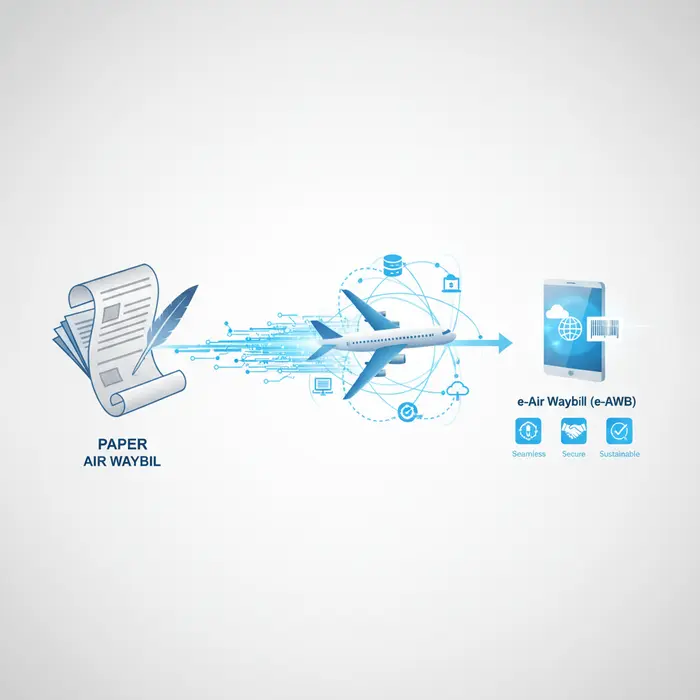
1. What is an e-AWB and How Does It Work?
The e-AWB is the digital equivalent of the traditional paper Air Waybill, eliminating the need for printing, handling, and archiving physical documents. Instead of a multi-part paper form, the e-AWB is an electronic message, typically exchanged using IATA’s Cargo-IMP or Cargo-XML standards, between airlines, freight forwarders, and other stakeholders. Functionally, it serves the identical legal purpose as its paper predecessor: it is a contract of carriage, a proof of receipt of goods, and a detailed instruction to the carrier regarding the shipment. For a typical shipment, a Freight forwarder AWB (or House Air Waybill – HAWB) is issued to the shipper, while the consolidated cargo under a single Master Air Waybill (MAWB) is managed by the airline. The e-AWB initiative aims to digitize both the MAWB and the HAWB, ensuring that all parties from the consignor to the consignee benefit from electronic data exchange. This digitalization removes up to 20 paper documents per shipment, accelerating processes and reducing the risk of errors associated with manual data entry.
2. Benefits of Adopting the Digital Air Waybill
The adoption of the e-Air Waybill brings a cascade of benefits that significantly enhance modern logistics efficiency and sustainability. Firstly, operational efficiency is vastly improved. Digital data eliminates manual re-keying, drastically reducing human errors, processing times, and potential delays at customs. Shipments can be processed faster, leading to quicker turnaround times and improved reliability. Secondly, substantial cost savings are realized. Forwarders and airlines save on printing, archiving, and physical document handling expenses. The digital nature also provides real-time visibility into shipment status, improving planning and reducing the need for costly manual tracing. Thirdly, the e-AWB contributes significantly to environmental sustainability. By replacing paper documents, it reduces deforestation, energy consumption, and carbon emissions associated with paper production and transportation. Finally, enhanced data accuracy and security are paramount. Electronic data interchange (EDI) standards ensure data integrity, while digital trails provide better auditability and compliance, protecting sensitive information and minimizing fraud risks in the complex supply chain.
3. Implementation, Challenges, and Future Trends of e-AWB
The journey towards full e-AWB adoption has been progressive, with the International Air Transport Association (IATA) playing a pivotal role in driving industry standards and implementation targets. While significant strides have been made, particularly among major airlines and freight forwarders, challenges persist. One primary hurdle is interoperability across diverse systems and varying levels of technological maturity among stakeholders globally. Ensuring seamless data exchange between numerous airlines, forwarders, ground handlers, and customs authorities requires continuous harmonization efforts. Furthermore, varying legal and regulatory frameworks across different countries sometimes necessitate hybrid solutions or legal adaptations to fully recognize electronic documents. Overcoming initial resistance to change and securing universal buy-in from all supply chain partners also remains crucial. Looking ahead, the future of the e-AWB is intertwined with broader digitalization trends in logistics. We can anticipate further integration with advanced technologies such as blockchain for immutable record-keeping, artificial intelligence (AI) for predictive analytics in air cargo operations, and enhanced API-driven connectivity for real-time data exchange. These advancements will move the industry closer to a completely paperless, intelligent, and highly efficient air cargo documentation ecosystem, solidifying the e-AWB’s position as a cornerstone of modern air logistics.
Navigating Essential Air Cargo Documentation
While the physical movement of goods is the most visible aspect of air cargo, the unseen world of documentation is equally, if not more, critical. Beyond the foundational Air Waybill (AWB), a complex ecosystem of paperwork governs international shipments, demanding meticulous attention to detail and unwavering compliance. Understanding these vital documents is paramount for ensuring smooth customs clearance, avoiding costly delays, and maintaining the integrity of the supply chain. This section delves into the broader documentation landscape, emphasizing its integrated nature and the necessity of precision.
1. The AWB’s Role Within Broader Documentation
The Air Waybill (AWB) stands as the primary contract of carriage and receipt for goods shipped by air. However, its significance extends beyond merely listing shipper, consignee, and goods; it acts as the central hub around which all other air cargo documentation revolves. Crucially, distinguishing between a Master Air Waybill (MAWB) and a House Air Waybill (HAWB) is vital. A MAWB is issued by the airline to a freight forwarder, covering consolidated shipments. Conversely, a HAWB is issued by the freight forwarder to individual shippers within that consolidation, detailing their specific consignment. Each HAWB references the overarching MAWB, creating a traceable chain for every parcel.
The evolution of documentation has also brought forth the e-Air Waybill (e-AWB), a digital counterpart that streamlines processes, reduces paper waste, and enhances data accuracy. Embracing the e-AWB is a step towards a more efficient and environmentally friendly logistics future. Regardless of its format, the AWB provides critical information for tracking, customs declarations, and final delivery, making it the linchpin of any air cargo documentation set. For any freight forwarder AWB, accuracy and consistency across all linked documents are non-negotiable.
2. Other Critical Air Cargo Documents (e.g., manifest, customs declaration)
While the AWB details specific consignments, other documents provide broader oversight and satisfy regulatory requirements. The Cargo Manifest, for instance, is a comprehensive list prepared by the airline or freight forwarder detailing all cargo on a specific flight. It consolidates information from multiple AWBs, serving as a critical document for airline operations and airport authorities, summarizing the entire load.
Equally important are customs-related documents. The Customs Declaration, often accompanied by a Commercial Invoice and Packing List, provides governmental agencies with detailed information about the goods’ value, origin, quantity, and nature. The Commercial Invoice specifies the terms of sale and value for customs valuation, while the Packing List itemizes the contents of each package, aiding in inspection and verification. Depending on the cargo’s nature and destination, additional documents may be required, such as Certificates of Origin (proving the country of manufacture), Dangerous Goods Declarations (for hazardous materials), Health or Phytosanitary Certificates (for food, plants, or animal products), and various permits or licenses. Adhering to these diverse international air cargo documentation requirements is crucial for lawful import and export.
3. Ensuring Compliance and Avoiding Delays with Proper Documentation
The integrated nature of air cargo documentation means that an error or omission in one document can ripple through the entire shipping process, leading to significant complications. Inaccurate or incomplete paperwork can result in cargo being held at customs, incurring storage fees, fines, or even seizure. Delays impact delivery schedules, damage supply chain reliability, and can erode customer trust. Therefore, ensuring meticulous accuracy and completeness in every document, from the AWB to specialized certificates, is paramount.
Freight forwarders play a critical role in navigating this complex landscape. Their expertise in global trade regulations, customs procedures, and specific country requirements makes them invaluable partners. They act as a central point for consolidating, verifying, and submitting all necessary documentation, helping shippers to maintain compliance and mitigate risks. Investing in robust internal processes for document preparation and leveraging experienced logistics partners are key strategies for avoiding compliance pitfalls and ensuring efficient, delay-free international air cargo movements. Proper air cargo documentation isn’t just a formality; it’s the backbone of efficient global trade.
How Freight Forwarders Utilize the Air Waybill
In the complex world of international trade, efficient logistics is paramount. When it comes to air cargo, businesses often rely on expert freight forwarders to navigate the intricate web of regulations, carriers, and documentation. At the heart of this process lies the Air Waybill (AWB), a crucial document that serves as a contract of carriage, a receipt for goods, and a declaration of value. Understanding the pivotal role of freight forwarders in issuing and managing Air Waybills, and how their expertise streamlines the complexities of air cargo logistics for businesses, is essential for any company looking to optimize its supply chain.

1. The Freight Forwarder’s Essential Role in Air Cargo
A freight forwarder acts as an intermediary between a shipper and various transportation services, including airlines. For air cargo, their role extends far beyond simply booking space on an aircraft. They consolidate shipments, negotiate rates, handle customs clearance, manage warehousing, and perhaps most critically, oversee all necessary air cargo documentation. Their deep understanding of international shipping laws and carrier requirements ensures that goods move smoothly and compliantly across borders. By leveraging a freight forwarder’s extensive network and industry knowledge, businesses can avoid costly delays, penalties, and operational headaches, allowing them to focus on their core competencies.
2. Process of a Freight Forwarder Issuing AWBs (MAWB & HAWB)
The Air Waybill (AWB) is the single most important document in air freight. Issued by the airline or its authorized agent (the freight forwarder), it details the shipper, consignee, origin, destination, goods description, charges, and conditions of carriage. Freight forwarders often utilize two distinct types of AWBs:
- Master Air Waybill (MAWB): This is issued by the airline to the freight forwarder. It covers the entire consolidated shipment, from one airport to another, under a single tracking number. The freight forwarder is listed as the shipper, and their agent at the destination airport is listed as the consignee.
- House Air Waybill (HAWB): Issued by the freight forwarder to each individual shipper whose goods are part of the consolidated MAWB shipment. The HAWB specifies the actual shipper and consignee, and provides specific details about their individual consignment. It acts as the contract of carriage between the shipper and the freight forwarder.
The process typically begins with the shipper providing their shipment details to the freight forwarder. The forwarder then groups multiple individual shipments into a larger consignment, which allows them to secure better rates from airlines. Once consolidated, the freight forwarder issues individual House Air Waybills to each client and then receives a Master Air Waybill from the airline covering the entire consolidated load. This dual AWB system is a cornerstone of the freight forwarding business model, enabling efficiency and cost savings for their clients.
Furthermore, the industry is increasingly moving towards the e-Air Waybill (e-AWB), a paperless version that streamlines processes, reduces errors, and enhances data accuracy. Forwarders are at the forefront of adopting this technology, integrating it into their digital platforms to offer faster and more transparent services. For more detailed information on the e-AWB, you can refer to authoritative sources like IATA’s Air Waybill Handbook.
3. Tips for Choosing a Freight Forwarder for Air Cargo Shipments
Selecting the right freight forwarder is crucial for ensuring the smooth and efficient transport of your air cargo. Here are key considerations:
- Expertise in Air Cargo: Look for a forwarder with proven experience and a strong network in air freight logistics. They should demonstrate a clear understanding of international air regulations and carrier specific requirements.
- Master Air Waybill vs House Air Waybill Management: Ensure they are proficient in managing both MAWBs and HAWBs, providing clear documentation and tracking for your specific shipment, even within a consolidated load.
- Technology and Transparency: A reputable forwarder should offer advanced tracking systems, provide real-time updates, and ideally support e-AWB capabilities for enhanced efficiency and transparency.
- Customs Clearance Capabilities: Verify their ability to handle customs declarations and duties efficiently at both origin and destination, minimizing delays.
- Customer Service: Excellent communication and responsiveness are vital. You need a partner who can proactively address issues and provide timely information.
- Cost-Effectiveness: While not always the cheapest, a good forwarder offers competitive rates and transparent pricing, demonstrating value for the services provided.
By carefully evaluating these factors, businesses can choose a freight forwarder who not only effectively utilizes the freight forwarder AWB system but also acts as a strategic partner, streamlining their air cargo operations and contributing to overall supply chain success.
Partner with Vietnam’s Leading Suppliers
Looking for reliable suppliers in Vietnam? Contact VietnamSuppliers.com today to connect with verified manufacturers and exporters across all industries.
—————————————
References
– IATA website: https://www.iata.org/en/programs/cargo/eawb/
– IATA e-Air Waybill Initiative: https://www.iata.org/en/programs/cargo/e-awb/
– IATA e-AWB: https://www.iata.org/en/programs/cargo/e/e-awb/
– IATA Cargo Policy and Standards: https://www.iata.org/en/policy/cargo/
– IATA’s Air Waybill Handbook: https://www.iata.org/en/publications/store/air-waybill-handbook/

