
The Rise of Nearshoring in Latin America
In an increasingly interconnected yet volatile global economy, businesses are constantly re-evaluating their operational strategies to enhance resilience, reduce costs, and improve market responsiveness. Among these evolving approaches, nearshoring to Latin America has emerged as a predominant trend, redefining global supply chains and offering significant opportunities for growth and stability. This strategic shift involves relocating business operations, production, or services to a nearby country, capitalizing on geographical proximity, cultural similarities, and favorable economic conditions. The post-pandemic landscape, marked by unprecedented supply chain disruptions and geopolitical tensions, has significantly accelerated this trend, positioning Latin America as a critical hub for global businesses seeking a competitive edge and robust supply chain solutions.

1. Defining Nearshoring and its Evolution
Nearshoring refers to the practice of transferring a business operation to a nearby country, often one sharing a border or a common time zone. This concept stands in contrast to offshoring, which involves relocating operations to a distant country (like Asia for Western companies), and reshoring, which brings operations back to the company’s home country. Initially gaining traction primarily for IT and business process outsourcing, nearshoring’s scope has significantly broadened. Its evolution has been driven by a shift in priorities: from an almost exclusive focus on minimizing labor costs to a more holistic consideration of total cost of ownership, risk mitigation, and agility. Today, businesses are nearshoring manufacturing, logistics, customer service, and R&D functions, recognizing the multifaceted benefits of proximity beyond just reduced wages. This strategic move aims to optimize speed to market, foster closer collaboration, and enhance responsiveness to consumer demands, particularly for the North American market.
2. Key Drivers: Geopolitical Shifts & Supply Chain Resilience
Several powerful forces are propelling the Nearshoring Latin America trend. Foremost among these are the significant geopolitical shifts witnessed over the past decade. Trade tensions, particularly between the U.S. and China, have prompted companies to diversify their manufacturing bases away from traditionally dominant regions. The desire for ‘friend-shoring’ – sourcing from politically stable and allied countries – has further accentuated Latin America’s appeal. Simultaneously, the imperative for supply chain resilience has become undeniable. The COVID-19 pandemic exposed the fragility of extended, single-source global supply chains, leading to unprecedented delays, increased shipping costs, and inventory shortages. Businesses learned valuable lessons about the risks associated with distant production hubs and the critical need for shorter, more agile supply lines. Latin America offers a compelling solution, drastically reducing transit times and logistics complexities compared to distant Asian markets. This geographical advantage directly translates into lower transportation costs, reduced lead times, and a smaller carbon footprint, aligning with growing sustainability goals. Moreover, the ease of communication, cultural alignment, and often overlapping time zones facilitate more efficient management and problem-solving, making Latin America supply chain opportunities increasingly attractive for firms prioritizing stability and responsiveness.
3. Economic Impact on Latin American Nations
The rise of nearshoring is poised to have a transformative economic impact on Latin American nations. It is a significant catalyst for increased Foreign Direct Investment (FDI) as companies establish new facilities, expand existing operations, and invest in local infrastructure. This influx of capital directly translates into substantial job creation across various sectors – from manufacturing and logistics to administrative services and technology. Beyond direct employment, nearshoring fosters the development of a skilled labor force through training and technology transfer, enhancing the region’s human capital. Governments in the region are actively responding by investing in critical infrastructure, including port modernization, road networks, and energy supply, to support the increased industrial activity. This infrastructure development, in turn, creates a positive feedback loop, making the region even more appealing for future investments. The focus on Latin America export trends 2024 highlights the region’s growing capacity to serve global markets efficiently. Furthermore, nearshoring diversifies Latin American economies, moving them beyond traditional resource-based industries towards higher-value manufacturing and service sectors. It encourages the growth of local ecosystems of suppliers, fostering domestic small and medium-sized enterprises (SMEs) that can act as Latin America B2B commodities suppliers and service providers. This strategic shift bolsters regional integration and collaboration, establishing Latin America as a dynamic and integral part of global sourcing strategies.
Unlocking Latin America Supply Chain Opportunities
In an increasingly volatile global landscape, businesses are actively seeking resilient and efficient supply chain solutions. The paradigm shift towards nearshoring has brought Latin America into sharp focus, presenting significant advantages for supply chain optimization and diversification. This strategic reorientation promises not only to mitigate risks associated with distant manufacturing but also to enhance operational efficiency and responsiveness. Exploring Nearshoring Latin America reveals a wealth of opportunities for companies looking to bolster their competitive edge and streamline their operations.
1. Geographic Proximity and Time Zone Alignment
One of the most compelling reasons for considering Latin America for supply chain diversification is its unparalleled geographic proximity to North America. Countries like Mexico, Central American nations, and even parts of South America are just a short flight or shipping journey away, dramatically reducing transit times compared to traditional Asian sourcing hubs. This closeness facilitates quicker inventory replenishment and more agile responses to market fluctuations. Beyond mere distance, the significant overlap in time zones—often just a few hours difference, or even identical in some cases—proves invaluable. This alignment enables real-time communication between headquarters, production facilities, and logistics partners, fostering seamless collaboration, accelerating decision-making, and minimizing delays often encountered when dealing with significant time zone disparities. For businesses requiring frequent oversight or direct engagement with their manufacturing partners, the ease of travel and direct access further strengthens this advantage, making Latin America a highly attractive destination for Latin America supply chain opportunities.
2. Reduced Shipping Costs and Lead Times
The shorter distances inherent in nearshoring to Latin America directly translate into substantial reductions in shipping costs and lead times. Freight expenses, whether by land, sea, or air, are significantly lower when transporting goods from neighboring countries compared to trans-Pacific routes. This cost efficiency positively impacts profit margins and makes products more competitively priced in the target market. More critically, reduced lead times are a game-changer for modern supply chains. Faster delivery allows companies to operate with leaner inventories, decreasing warehousing costs and minimizing the risk of obsolescence. This agility is particularly crucial in fast-moving consumer goods sectors and industries subject to rapid technological changes, where market responsiveness is paramount. As Latin America export trends 2024 continue to show growth and diversification, the efficiency gained from shorter transit corridors positions the region as a vital component in resilient global supply networks, allowing businesses to adapt quickly to evolving consumer demands and geopolitical shifts.
3. Infrastructure Development and Logistics Hubs
Recognizing the strategic importance of efficient trade, many Latin American nations have made significant investments in upgrading their infrastructure and developing robust logistics networks. Major ports along both Atlantic and Pacific coasts (e.g., Manzanillo and Veracruz in Mexico, Santos in Brazil, Cartagena in Colombia) have undergone modernization, enhancing their capacity and efficiency. Crucial investments have also been directed towards improving road networks, railways, and international airports, creating a more integrated and reliable transportation ecosystem. Countries like Panama, with its iconic canal and free trade zones, and Mexico, with its extensive border infrastructure, have emerged as vital logistics hubs, streamlining the flow of goods across the hemisphere. These developments are integral to effective Latin America sourcing strategies, facilitating the movement of raw materials and finished products. Furthermore, the presence of an expanding base of Latin America B2B commodities suppliers benefits from these enhanced logistics, ensuring reliable access to necessary inputs. The ongoing commitment to infrastructure development, as highlighted by initiatives like those supported by the Inter-American Development Bank, solidifies Latin America’s position as a mature and capable partner for global supply chains, promising continued improvements in efficiency and connectivity.
Latin America Export Trends 2024-2025: A Deep Dive
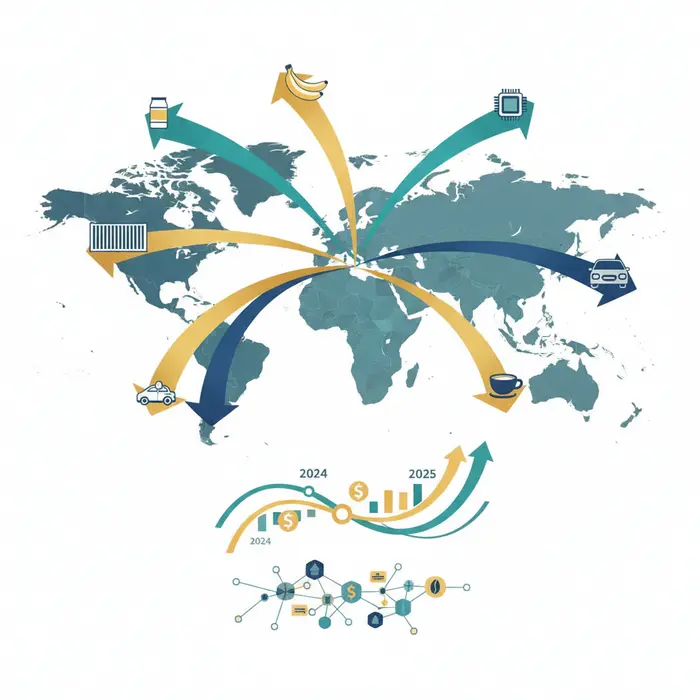
Latin America is rapidly transforming into a pivotal player in the global supply chain, driven by strategic geographic positioning, a burgeoning skilled workforce, and favorable trade policies. The concept of Nearshoring Latin America has gained significant traction, positioning the region as an attractive alternative to distant manufacturing hubs. This shift is not merely a transient trend but a structural evolution, fueled by a global demand for resilient and diversified supply chains. As we look at Latin America export trends 2024 and 2025, a comprehensive analysis reveals robust growth sectors and ample opportunities for foreign investment, particularly in manufacturing, automotive, and technology, redefining Latin America supply chain opportunities.
1. Booming Sectors: Manufacturing, Automotive, Tech
The manufacturing sector across Latin America is experiencing a renaissance, largely due to the nearshoring phenomenon. Countries like Mexico, with its proximity to the U.S. market, continue to lead, but nations such as Brazil, Colombia, and Costa Rica are also emerging as significant manufacturing hubs. This growth is evident in diverse areas, from consumer goods to sophisticated industrial components. The automotive industry, in particular, showcases robust expansion. Mexico remains a powerhouse, attracting significant investments from global auto manufacturers seeking to streamline production and logistics. Brazil is also a major player, driven by a strong domestic market and growing export capabilities, especially in electric vehicle (EV) components and assembly. These developments highlight the region’s increasing capability to handle complex production, offering attractive Latin America sourcing strategies for international businesses.
Furthermore, the technology sector is flourishing, extending beyond traditional IT services. Software development, cybersecurity, and fintech are areas where Latin American talent is making a global impact. Countries like Argentina, Uruguay, and Chile boast highly skilled tech workforces, attracting multinational companies looking for innovation and cost-effective solutions. The rise of tech parks and government-backed innovation initiatives is further fueling this growth, creating a dynamic ecosystem that supports both local startups and foreign tech investments. This diversification beyond raw materials and agricultural products underscores a maturing export landscape, paving the way for advanced Latin America B2B commodities suppliers in manufactured goods and high-tech solutions.
2. Trade Agreements and Policy Support
A critical enabler of Latin America’s export surge is the extensive network of trade agreements and supportive government policies. Agreements such as the USMCA (United States-Mexico-Canada Agreement) provide a stable and predictable framework for trade, significantly benefiting Mexico’s manufacturing and automotive exports. Similarly, MERCOSUR (covering Brazil, Argentina, Uruguay, and Paraguay) facilitates regional trade, promoting economic integration and creating larger market access for member states. The Pacific Alliance (Chile, Colombia, Mexico, Peru) further enhances trade liberalization, fostering deeper economic ties with Asia-Pacific markets.
Beyond these established pacts, many Latin American governments are actively implementing policies to attract foreign direct investment (FDI) and boost exports. These include tax incentives, special economic zones, simplified customs procedures, and investments in infrastructure—ports, roads, and digital connectivity. Such proactive measures not only reduce operational costs for businesses but also improve supply chain efficiency, making the region more competitive globally. These strategic interventions are crucial for businesses considering their Latin America sourcing strategies, as they mitigate risks and enhance profitability, as detailed in various World Bank economic updates on the region.
3. Emerging Markets within Latin America
While economic powerhouses like Brazil and Mexico continue to anchor the region’s export performance, several emerging markets within Latin America are presenting compelling new opportunities. Colombia, for instance, is making strides in agricultural technology, processed foods, and light manufacturing, supported by its growing middle class and strategic location. Peru is diversifying its mining-centric economy by expanding into high-value agricultural exports (e.g., avocados, blueberries) and fishing products, gaining significant international market share.
Central American nations, particularly Costa Rica and Panama, are leveraging their robust services sectors and logistical advantages. Costa Rica is a notable hub for medical device manufacturing and ecotourism, while Panama’s expanded canal capacity and free trade zones bolster its role as a regional logistics and distribution center. Even smaller economies are finding niches: Uruguay in IT services and sustainable agriculture, and Paraguay in renewable energy and commodity exports. These emerging markets not only offer fresh Latin America supply chain opportunities but also cater to specialized Nearshoring Latin America demands, enriching the overall landscape of Latin America export trends 2024-2025. Businesses looking to expand their footprint or diversify their procurement channels should closely monitor these dynamic regional players for their unique contributions to Latin America B2B commodities suppliers.
In conclusion, Latin America’s export outlook for 2024-2025 is characterized by a dynamic shift towards higher-value goods and services, underpinned by strategic nearshoring initiatives, supportive trade policies, and the rise of diverse regional markets. This evolution positions the continent not just as a source of raw materials but as a sophisticated manufacturing and technological hub, offering enduring opportunities for global investors and partners.
Strategic Sourcing in Latin America: Best Practices
In an era defined by supply chain volatility and the imperative for resilience, Nearshoring Latin America has emerged as a compelling strategic imperative for businesses worldwide. The region offers significant Latin America supply chain opportunities, driven by geographical proximity to North American markets, favorable trade agreements, and a growing skilled labor pool. As companies pivot away from distant supply chains, understanding optimal Latin America sourcing strategies becomes crucial for tapping into the region’s vast potential, particularly in securing reliable Latin America B2B commodities suppliers. This section delves into actionable strategies designed to help businesses effectively source goods and services from Latin American countries, navigating its unique landscape to build robust and sustainable supply chains. The Latin America export trends 2024 continue to show a dynamic and evolving market, ripe for strategic engagement.
1. Identifying Reliable Latin America B2B Commodities Suppliers
The foundation of successful strategic sourcing in Latin America lies in meticulously identifying and vetting reliable B2B commodities suppliers. This process goes beyond mere price comparison, demanding a deep dive into various operational and ethical aspects. Businesses must prioritize suppliers with a proven track record, demonstrated financial stability, and the necessary production capacity to meet demand consistently. Due diligence should include evaluating certifications (e.g., ISO, industry-specific standards), quality control protocols, and adherence to international labor and environmental standards. Leveraging local trade associations, chambers of commerce, and reputable B2B platforms can provide valuable inroads and recommendations. Furthermore, conducting on-site audits and requesting references from existing clients are critical steps to verify operational integrity and commitment to quality. For commodities, understanding a supplier’s logistics capabilities, including warehousing, transportation networks, and customs expertise, is paramount to ensure timely and cost-effective delivery. Engaging with seasoned sourcing consultants who possess deep regional knowledge can also significantly de-risk the selection process and help pinpoint the most suitable Latin America B2B commodities suppliers.
2. Navigating Regulatory Frameworks and Compliance
Sourcing from Latin America requires a thorough understanding of the diverse and often complex regulatory frameworks that govern trade, business operations, and compliance across its various nations. Each country presents its own set of customs duties, tariffs, import/export regulations, and local content requirements. Companies must be well-versed in applicable trade agreements, such as USMCA, Mercosur, the Pacific Alliance, and numerous bilateral accords, which can significantly impact cost structures and lead times. Engaging local legal counsel specializing in international trade is not merely advisable but often essential to ensure full compliance and mitigate legal risks. Furthermore, understanding labor laws, environmental regulations, and anti-corruption policies (e.g., FCPA, local equivalents) is crucial for ethical and legal operation. Implementing robust compliance programs, including due diligence on third-party intermediaries and internal controls, helps protect against potential liabilities. Staying informed about political and economic stability, currency fluctuations, and shifts in trade policy is an ongoing requirement for successful Nearshoring Latin America initiatives.
3. Building Sustainable Supplier Relationships
Beyond transactional engagements, successful strategic sourcing in Latin America hinges on cultivating long-term, sustainable relationships with suppliers. This approach fosters trust, encourages collaboration, and enhances resilience across the supply chain. Open and transparent communication is key, establishing clear expectations for performance, quality, and delivery. Regular performance reviews, joint problem-solving sessions, and continuous improvement initiatives help drive efficiency and innovation. Cultural sensitivity plays a vital role; understanding local business customs, communication styles, and negotiation practices can significantly strengthen rapport. Investing in supplier development programs, which might involve sharing expertise, technology, or best practices, can elevate a supplier’s capabilities and align them more closely with your strategic objectives. Building strong relationships also enables more effective risk management, allowing for shared contingency planning and agile responses to unforeseen challenges. By viewing suppliers as strategic partners rather than mere vendors, businesses can unlock greater value, foster loyalty, and ensure the long-term viability of their Latin America supply chain opportunities.
Challenges and Future Outlook for Nearshoring Latin America
The appeal of Nearshoring Latin America continues to grow as companies worldwide seek to diversify supply chains, reduce transit times, and gain closer proximity to major markets. This strategic shift, driven by geopolitical tensions, rising logistics costs, and the desire for greater resilience, positions Latin America as a prime destination. However, while the region offers significant Latin America supply chain opportunities, realizing its full nearshoring potential requires navigating a complex landscape of inherent challenges. A forward-looking perspective reveals both formidable obstacles and clear pathways for sustained growth and evolution, demanding concerted efforts from both public and private sectors to solidify its standing as a global nearshoring hub.

1. Overcoming Infrastructure and Political Hurdles
One of the most significant impediments to fully leveraging Nearshoring Latin America is the varying quality and capacity of its infrastructure. While some countries boast modern ports and logistics hubs, others struggle with inadequate road networks, outdated energy grids, and insufficient digital connectivity. These deficiencies can negate the benefits of geographical proximity by increasing lead times, costs, and operational complexities for businesses. Furthermore, political stability and regulatory consistency remain crucial concerns. Companies considering Latin America sourcing strategies often face risks associated with policy changes, bureaucratic inefficiencies, and corruption, which can deter long-term foreign direct investment. To address these hurdles, governments must prioritize investment in critical infrastructure, streamline customs procedures, and foster transparent, predictable legal and regulatory frameworks. Collaborative efforts through public-private partnerships are essential for developing robust multimodal transport systems, reliable energy supplies, and high-speed internet. Such improvements will not only enhance Latin America supply chain opportunities but also build confidence among international investors. According to the Inter-American Development Bank, addressing these structural issues is key to unlocking the region’s full nearshoring potential, emphasizing the need for strategic investments to capitalize on this global trend. The bank highlights how targeted improvements can significantly boost competitive advantages and draw more companies towards nearshoring models.
2. Talent Development and Workforce Readiness
A skilled and adaptable workforce is paramount for any successful nearshoring initiative, particularly in sectors requiring advanced manufacturing, technology, and specialized services. While Latin America possesses a young and growing population, a significant challenge lies in bridging the skills gap to meet the demands of modern industries. Many nearshoring ventures require proficiency in areas such as engineering, IT, data analytics, and project management, often coupled with strong English language capabilities. Without a ready supply of qualified professionals, companies may struggle to achieve desired productivity levels and innovation. The future outlook for Nearshoring Latin America is heavily reliant on proactive talent development strategies. This involves strengthening educational systems, promoting vocational training aligned with industry needs, and fostering partnerships between academic institutions and businesses. Investing in reskilling and upskilling programs for the existing workforce is equally vital. By ensuring a robust pipeline of skilled labor, the region can not only attract more diverse industries but also empower local communities and contribute to higher-value Latin America export trends 2024, moving beyond traditional commodities. This focus on human capital will reinforce the region’s appeal as a competitive location for advanced manufacturing and services.
3. Long-Term Investment and Sustainability
For nearshoring to truly thrive and provide lasting benefits to Latin American economies, it must be underpinned by long-term investment commitments and a strong focus on sustainability. Many companies are not just looking for cost savings but also for partners who align with their Environmental, Social, and Governance (ESG) criteria. This means that future Latin America sourcing strategies will increasingly consider a region’s commitment to responsible manufacturing, fair labor practices, and environmental protection. Attracting and retaining significant foreign direct investment (FDI) requires more than just geographical proximity; it demands economic stability, legal certainty, and a supportive business ecosystem that encourages growth and innovation. Governments and local industries must work together to create an attractive investment climate, offering transparent incentives and facilitating ease of doing business. The evolution of Nearshoring Latin America will also hinge on developing strong local supply chains, enabling robust networks of Latin America B2B commodities suppliers and service providers. This localized approach fosters economic resilience, reduces dependency on external inputs, and promotes circular economy principles. As global Latin America export trends 2024 continue to evolve, the integration of sustainable practices and the cultivation of an investment-friendly environment will be crucial determinants of the region’s continued success as a nearshoring powerhouse. These efforts ensure that the nearshoring boom translates into sustainable economic development and shared prosperity across the region.
Partner with Vietnam’s Leading Suppliers
Looking for reliable suppliers in Vietnam? Contact VietnamSuppliers.com today to connect with verified manufacturers and exporters across all industries.
—————————————
References
– Latin America supply chain opportunities: https://www.pwc.com/mx/es/assets/pdfs/nearshoring-mexico-2023.pdf
– Inter-American Development Bank Announces Investment: https://www.idbinvest.org/en/news-media/news/inter-american-development-bank-announces-investment-over-18-billion-infrastructure
– World Bank economic updates on Latin America and the Caribbean: https://www.worldbank.org/en/region/lac/publication/latin-america-and-caribbean-economic-update
– :
– The Nearshoring Opportunity for Latin America and the Caribbean: https://blogs.iadb.org/integration-trade/en/the-nearshoring-opportunity-for-latin-america-and-the-caribbean/

