Understanding ISO Certification for Export
In today’s interconnected global economy, businesses aspiring to expand beyond domestic borders face a myriad of challenges, from navigating complex regulations to building trust with international partners. For companies eyeing the lucrative opportunities in foreign markets, achieving ISO certification for export is not merely a bureaucratic hurdle but a fundamental strategic imperative. This globally recognized endorsement signals a commitment to quality, efficiency, and reliability, paving the way for smoother entry and sustained success in the international trade arena.
ISO certification provides a universally understood language of quality and process management, giving businesses a distinct competitive edge. It assures potential international buyers and regulators that a company adheres to stringent, internationally agreed-upon standards, thereby significantly reducing perceived risks and fostering confidence. For any enterprise serious about thriving in export markets, understanding and pursuing the appropriate ISO standards is an indispensable step towards achieving global reach and enduring credibility.
1. What is ISO Certification?
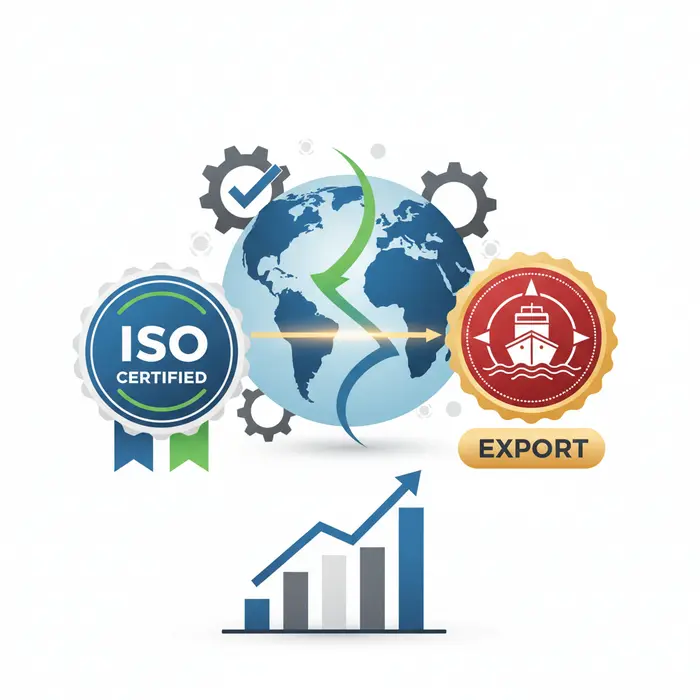
ISO, or the International Organization for Standardization, is an independent, non-governmental international organization that develops standards to ensure the quality, safety, and efficiency of products, services, and systems. ISO certification, therefore, is a third-party verification that a company complies with these internationally recognized standards. It’s not a single certificate but rather a designation awarded for adherence to specific standards, such as those governing quality management, environmental responsibility, or information security.
These standards are developed by experts from around the world and are designed to provide a framework for organizations to operate more effectively and reliably. Obtaining ISO certification demonstrates that an organization has robust, well-documented processes in place, consistently meets customer and regulatory requirements, and is committed to continuous improvement. For businesses, this translates into enhanced credibility and a competitive advantage, particularly when engaging in international trade where a common benchmark for quality and process is highly valued.
2. Why ISO Matters for International Trade
For businesses engaged in international trade, ISO certification serves as a powerful testament to their operational integrity and product quality, significantly easing their journey into new markets. One of the primary reasons ISO matters is its role in providing export market access ISO certification. Many countries and international buyers either mandate or strongly prefer suppliers to hold specific ISO certifications, viewing them as a baseline requirement for doing business. This dramatically reduces trade barriers and streamlines import processes, as certification already signifies compliance with global best practices.
Furthermore, ISO certification builds indispensable trust and confidence. When an international client evaluates potential suppliers, an ISO-certified company stands out as one that has undergone rigorous third-party auditing and adheres to globally recognized standards. This is particularly crucial for supplier quality assurance ISO standards, as it reassures buyers about consistent product quality, reliable service delivery, and robust internal processes. For instance, meeting ISO 9001 requirements for international trade demonstrates a commitment to a quality management system that systematically addresses customer needs and regulatory compliance.
The benefits of ISO certification for exporters extend beyond market entry. It often leads to improved operational efficiency, reduced waste, and enhanced customer satisfaction due to standardized processes and a culture of continuous improvement. This internal optimization further strengthens a company’s ability to compete globally, offering a tangible return on investment through fewer rejections, higher customer loyalty, and a stronger international reputation.
3. Common ISO Standards for Exporters
While numerous ISO standards exist, certain certifications are particularly pertinent and beneficial for exporters seeking to establish and maintain a strong presence in international markets. The most widely adopted and often essential standard is ISO 9001: Quality Management Systems. This standard sets out the criteria for a quality management system and is suitable for any organization, regardless of size or industry. For exporters, ISO 9001 certification demonstrates a consistent ability to provide products and services that meet customer and regulatory requirements, which is a critical factor for international buyers seeking reliability and consistency.
Beyond ISO 9001, other standards can provide specific advantages depending on the industry and target market:
- ISO 14001: Environmental Management Systems (EMS): Increasingly important for exporters targeting environmentally conscious markets or industries where sustainability is a key purchasing factor. This standard helps organizations manage their environmental responsibilities in a systematic manner.
- ISO 45001: Occupational Health and Safety Management Systems: Relevant for manufacturing and industrial exporters, this standard signals a commitment to ensuring a safe and healthy workplace. It helps prevent work-related injury and ill-health, which can be a vital aspect of ethical sourcing and supply chain transparency for international partners.
- ISO 27001: Information Security Management Systems (ISMS): Crucial for exporters dealing with sensitive data, intellectual property, or operating in IT-dependent sectors. This standard provides a framework for managing information security risks, assuring international clients that their data is protected.
Choosing the right ISO certification is a strategic decision that should align with a company’s specific industry, products, services, and the regulatory landscape of its target export markets. A well-chosen and successfully implemented ISO standard acts as a universal passport, opening doors to new international business opportunities and solidifying a company’s global standing.
ISO 9001 Requirements for International Trade
The global marketplace presents immense opportunities for businesses, but also a complex web of standards and expectations. For companies aiming for successful international trade, demonstrating a commitment to quality is paramount. This is where ISO 9001, the globally recognized standard for quality management systems (QMS), plays a crucial role. Achieving ISO certification for export is not merely a formality; it’s a strategic advantage that unlocks doors to new markets, builds trust, and streamlines operations. Understanding the specific ISO 9001 requirements for international trade is essential for any business with global ambitions.
1. Core Principles of ISO 9001
ISO 9001 is built upon a set of fundamental principles that guide organizations in establishing and maintaining an effective QMS. These principles are universally applicable, making the standard highly relevant for diverse industries engaging in global commerce. At its heart, ISO 9001 emphasizes a customer-centric approach, ensuring that products and services consistently meet customer and regulatory requirements. Key principles include:
- Customer Focus: Organizations must understand and strive to exceed customer expectations. For exporters, this means anticipating international client needs, cultural nuances, and specific market demands.
- Leadership: Strong leadership is vital for setting the direction and creating an environment where employees are engaged in achieving quality objectives. This includes defining a clear quality policy relevant to export operations.
- Engagement of People: Competent, empowered, and engaged personnel at all levels are essential for enhancing an organization’s capability to create and deliver value. This is critical for managing the complexities of international logistics and compliance.
- Process Approach: Managing activities as interconnected processes helps achieve consistent and predictable results. For international trade, this means optimizing processes from order intake and production to shipping, customs, and after-sales support.
- Improvement: Continuous improvement is a permanent objective. Exporters must constantly seek ways to enhance their products, services, and processes in response to market feedback and evolving international standards.
- Evidence-based Decision Making: Decisions should be based on the analysis and evaluation of data and information. This supports informed choices regarding market entry strategies, supplier selection, and risk management in export activities.
- Relationship Management: For sustained success, an organization manages its relationships with interested parties, such as suppliers and partners. This is particularly important for supplier quality assurance ISO standards, ensuring that every link in the global supply chain meets specified quality criteria.
Adherence to these principles not only enhances operational efficiency but also provides a robust framework for managing the unique risks and challenges associated with international trade.
2. Implementing ISO 9001 for Export Readiness
Implementing ISO 9001 requires a systematic approach that touches every aspect of a business, from top management commitment to the daily tasks of employees. For export-oriented businesses, this implementation must be strategically aligned with global market demands.
- Context of the Organization: Understand internal and external issues relevant to your purpose and strategic direction, particularly those impacting international operations (e.g., trade agreements, geopolitical risks, market-specific regulations).
- Planning: Identify risks and opportunities related to your international trade activities. This includes planning for changes in demand, logistics disruptions, or new regulatory requirements. Establish quality objectives that support your export goals.
- Support: Ensure adequate resources (people, infrastructure, environment, knowledge) are available for international trade operations. This includes competent staff for export documentation, logistics, and multi-lingual communication.
- Operation: Control operational planning and production/service provision. This means establishing robust processes for handling international orders, managing supply chains that might span multiple countries, and ensuring product compliance with diverse market standards. Effective management of nonconforming outputs is crucial, especially when dealing with international returns or complaints.
- Performance Evaluation: Monitor, measure, analyze, and evaluate your QMS effectiveness, especially in relation to your export performance. Conduct internal audits and management reviews to identify areas for improvement.
- Improvement: Address nonconformities and implement corrective actions. Continuously improve the suitability, adequacy, and effectiveness of the QMS, adapting to feedback from international customers and market trends.
By systematically addressing these areas, businesses can leverage ISO 9001 to build a resilient and responsive system, thereby enhancing their export market access ISO certification and overall competitiveness.
3. Meeting Buyer Expectations with ISO 9001
In the competitive world of international trade, buyers, especially large multinational corporations, often prioritize suppliers who can demonstrate a certified QMS. ISO 9001 acts as a universal language of quality, offering immediate assurance to potential international clients.
- Enhanced Trust and Credibility: ISO 9001 certification signifies that an organization adheres to internationally recognized quality management principles. This significantly boosts trust and credibility, reducing perceived risks for international buyers who might be unfamiliar with a new supplier.
- Consistency and Reliability: Buyers expect consistent quality and timely delivery. An ISO 9001-certified QMS ensures that processes are well-defined, controlled, and continuously monitored, leading to more reliable outcomes in terms of product quality and service delivery, which is vital for maintaining long-term international relationships.
- Risk Mitigation: The standard’s emphasis on risk-based thinking helps organizations identify and mitigate potential issues that could affect product quality or delivery. For international trade, this includes risks associated with logistics, customs, currency fluctuations, and differing regulatory environments.
- Competitive Advantage: Many global tenders and procurement processes either require or highly favor ISO 9001 certification. Possessing this certification gives exporters a distinct competitive edge, differentiating them from non-certified competitors and broadening their eligibility for lucrative international contracts.
- Demonstrated Commitment to Improvement: International buyers appreciate suppliers who are committed to continuous improvement. ISO 9001 mandates regular reviews and updates to the QMS, assuring buyers that their supplier is proactive in enhancing quality and efficiency.
The benefits of ISO certification for exporters extend beyond compliance, translating into improved reputation, stronger business relationships, and ultimately, sustained growth in global markets. It transforms quality management from a mere operational necessity into a powerful strategic tool for international success.
Supplier Quality Assurance Through ISO Standards
For any business eyeing the global marketplace, especially those in manufacturing or distribution, ensuring robust quality throughout the supply chain is not merely good practice—it’s a critical prerequisite for successful exporting. Adhering to various ISO standards, not just the ubiquitous ISO 9001, provides a universally recognized framework for achieving this. By integrating these internationally accepted benchmarks into your supplier quality assurance processes, you not only enhance product integrity but also significantly streamline your path to gaining crucial export market access and navigating the complexities of international trade.

1. Elevating Supply Chain Reliability
A reliable supply chain is the backbone of any successful export operation. When sourcing components or finished goods from international suppliers, the potential for variability and risk increases exponentially. This is where ISO standards become invaluable. Implementing a system of supplier quality assurance ISO standards ensures that every link in your chain operates under a consistent, auditable framework. This commitment to quality permeates from raw material sourcing to final product assembly, fostering a level of trust and predictability essential for international dealings. The benefits of ISO certification for exporters extend beyond mere compliance; they build a reputation for dependability, reduce the likelihood of costly rejections or returns, and ultimately safeguard your brand’s integrity in competitive global markets. Establishing a robust ISO-certified supply chain signifies to international buyers and regulatory bodies that your products meet stringent quality benchmarks, smoothing the way for market entry and sustained growth.
2. Key ISO Standards for Supplier Vetting
While ISO 9001:2015 remains the cornerstone for quality management systems, a comprehensive approach to supplier vetting involves considering a broader spectrum of ISO certifications. ISO 9001 requirements for international trade demand a supplier’s demonstrated ability to consistently provide products and services that meet customer and regulatory requirements. However, depending on your industry and product, other standards can be equally crucial. For instance, ISO 14001 (Environmental Management Systems) assures buyers of a supplier’s commitment to sustainable practices, which is increasingly important for ethical sourcing and market differentiation. ISO 45001 (Occupational Health and Safety) demonstrates a supplier’s dedication to worker welfare, mitigating reputational risks associated with unethical labor practices. Furthermore, in an era of heightened data sensitivity, ISO 27001 (Information Security Management) can be critical, especially for suppliers handling sensitive product designs, customer data, or logistical information. Integrating these diverse supplier quality assurance ISO standards into your vetting process provides a holistic view of a potential partner’s capabilities and commitment to best practices, significantly reducing your exposure to various operational and ethical risks.
3. Minimizing Risks with Quality Assurance ISO Standards
The proactive adoption of quality assurance ISO standards is a powerful strategy for risk mitigation in the export sector. Product non-conformance, shipping delays, and regulatory penalties can all stem from an unreliable supply chain, jeopardizing contracts and damaging business relationships. By mandating ISO certification for export from your suppliers, you are essentially outsourcing a significant portion of your quality control to an internationally recognized, independently audited system. This systematic approach dramatically reduces the incidence of defects, ensures consistent product specifications, and promotes timely delivery. Furthermore, having suppliers with strong ISO credentials simplifies customs clearance processes and helps avoid potential trade barriers, as many countries and international buyers view ISO compliance as a mark of reliability. In essence, these standards act as a preventative shield, protecting your export ventures from unforeseen challenges and ensuring that your products consistently meet the high expectations of the global marketplace. This commitment to quality through comprehensive ISO adherence is not just about compliance; it’s a strategic investment in long-term international business success and reputation.
Export Market Access & ISO Certification
In today’s interconnected global economy, expanding into international markets presents immense opportunities for growth. However, it also comes with a complex web of regulatory frameworks, diverse customer expectations, and intense competition. For businesses aiming to thrive on the world stage, ISO certification for export is not merely a bureaucratic hurdle but a crucial strategic asset. It acts as a universal key, unlocking new export market access by demonstrating a commitment to world-class quality, efficiency, and customer satisfaction, thereby meeting and often exceeding international demands.
Achieving ISO certification signals to potential international buyers, partners, and regulators that a company adheres to globally recognized best practices. This standardized approach to quality management, particularly through widely adopted standards like ISO 9001, streamlines operations and enhances credibility, making a company a more attractive prospect in foreign markets. The benefits of ISO certification for exporters extend far beyond mere compliance, positioning businesses for sustainable success in the competitive landscape of international trade.
1. Navigating International Regulations
One of the primary challenges for exporters is understanding and complying with the myriad of international regulations and standards specific to different countries and regions. The ISO 9001 requirements for international trade provide a robust framework that helps organizations systematically address these varying demands. While ISO 9001 itself is a generic quality management system standard, its principles of continuous improvement, customer focus, and process-based approach are fundamental to meeting country-specific product and service regulations.
Many importing nations and trade blocs recognize ISO standards as a baseline for quality and operational integrity. By having ISO 9001, businesses can often demonstrate compliance with essential aspects of regulatory requirements, reducing the need for multiple, country-specific audits or certifications. This not only saves time and resources but also significantly reduces the risk of non-compliance, preventing potential delays, penalties, or outright rejection of goods at customs. It provides a credible, internationally accepted assurance that a company’s products or services are manufactured or delivered under a controlled and quality-focused environment.
2. Gaining Competitive Edge in New Markets
Entering new export markets requires building trust and confidence with unfamiliar buyers and stakeholders. ISO certification provides an immediate and powerful signal of reliability and professionalism. It differentiates certified companies from uncertified competitors, offering a significant competitive edge. When potential international clients evaluate suppliers, the presence of export market access ISO certification often serves as a powerful indicator of a company’s commitment to quality management and operational excellence.
This assurance extends to supplier quality assurance ISO standards, where a certified company demonstrates its capability to consistently deliver products and services that meet defined quality criteria. This not only mitigates risk for the buyer but also enhances the exporter’s reputation for dependable supply chains and consistent product quality. The psychological advantage of being ISO certified cannot be overstated; it instills confidence, fosters long-term relationships, and ultimately translates into increased sales and market penetration. The benefits of ISO certification for exporters are particularly evident in emerging markets where trust and proven capabilities are paramount.
3. ISO as a Prerequisite for Global Tenders
For many substantial international trade opportunities, particularly those involving government contracts, large corporations, or multinational organizations, ISO certification is not just an advantage but an explicit requirement. Global tenders, often highly competitive and lucrative, frequently list ISO 9001 or other relevant ISO standards as a mandatory prerequisite for participation. Without this certification, a company may be automatically disqualified, regardless of the quality or competitiveness of its products or services.
Possessing an ISO certification for export therefore becomes a gateway to these high-value contracts. It streamlines the pre-qualification process, allowing companies to meet essential tender criteria swiftly and efficiently. This opens doors to a vast array of business prospects that would otherwise be inaccessible. Moreover, maintaining ISO certification demonstrates an ongoing commitment to quality and continual improvement, which reinforces the company’s long-term suitability for recurring global contracts and partnerships. In essence, it transforms a potential barrier into a direct pathway to significant international business opportunities.
In conclusion, ISO certification is an indispensable tool for any business serious about expanding its export horizons. It simplifies regulatory navigation, sharpens competitive positioning, and serves as a fundamental requirement for securing lucrative global tenders, ultimately solidifying a company’s presence and reputation in the international marketplace.
Key Benefits of ISO Certification for Exporters
In today’s highly competitive global marketplace, exporters face constant pressure to demonstrate reliability, quality, and adherence to international standards. Achieving ISO certification for export is not just a regulatory hurdle but a strategic advantage that can unlock a multitude of advantages, making it an indispensable asset for businesses aiming for sustained growth and success in international trade. This certification signals to global partners and customers that a company operates with a commitment to excellence, continuous improvement, and robust management systems. It empowers businesses to navigate complex international trade requirements with confidence, reducing risks and enhancing their competitive edge.
1. Enhanced Credibility and Trust
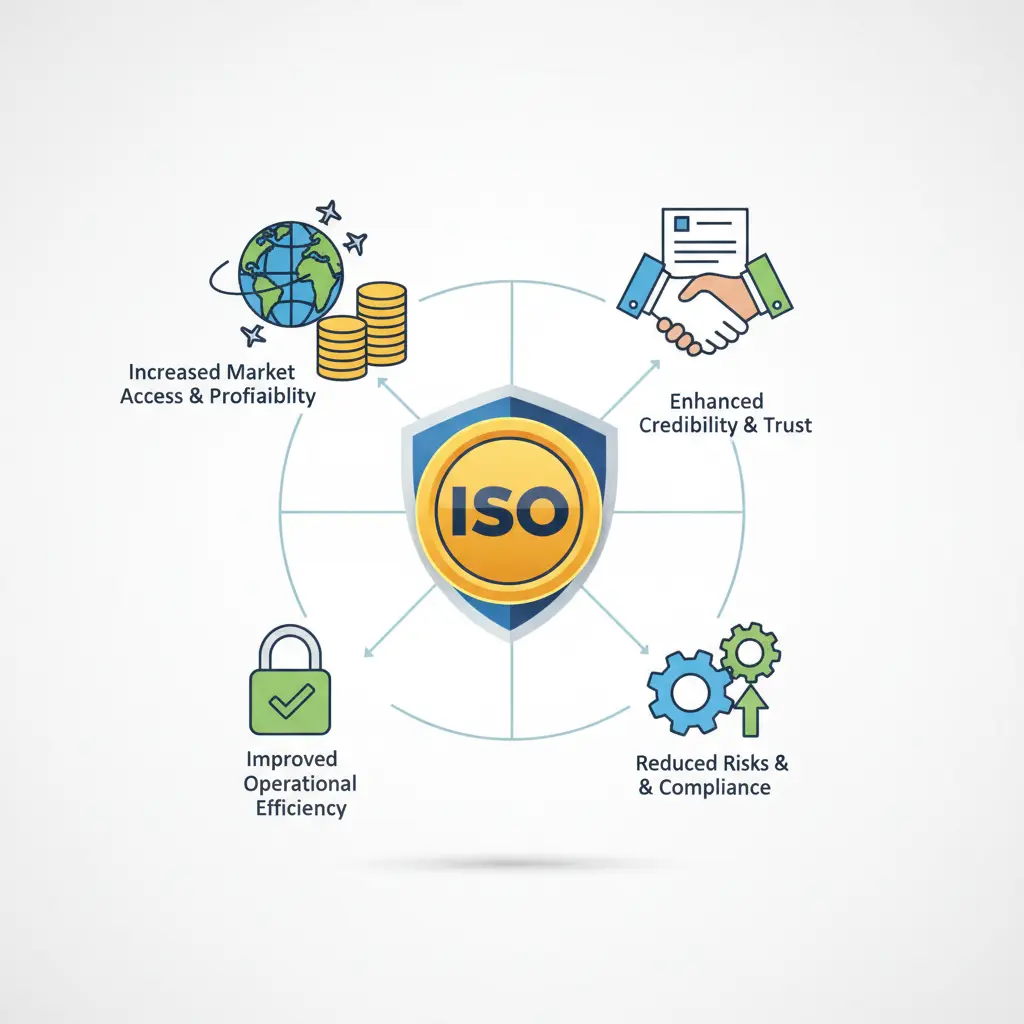
One of the most immediate and significant gains from ISO certification for export is the substantial boost in a company’s credibility and the trust it instills in international stakeholders. In markets where reputation is paramount, an ISO certificate serves as a universally recognized hallmark of quality and reliability. It assures potential overseas buyers, distributors, and logistics partners that your organization adheres to stringent, globally accepted standards. This trust is particularly vital for export market access ISO certification, as many countries and major corporations often require suppliers to be ISO certified as a prerequisite for doing business. It acts as a powerful differentiator, distinguishing certified exporters from their non-certified counterparts and paving the way for easier market penetration and stronger business relationships worldwide. Demonstrating compliance with ISO standards helps mitigate concerns about product quality, service delivery, and ethical practices, thereby strengthening your brand’s standing on the international stage.
2. Operational Efficiency and Cost Savings
Beyond external perception, ISO certification drives profound internal improvements. The process of achieving and maintaining ISO standards, particularly in meeting ISO 9001 requirements for international trade, necessitates a thorough review and optimization of all operational processes. This systematic approach leads to greater consistency, reduced errors, and streamlined workflows. By clearly defining roles, responsibilities, and procedures, companies can identify and eliminate redundancies, minimize waste, and improve resource utilization. For exporters, this translates into tangible cost savings through fewer product rejections, reduced rework, and more efficient logistics. Enhanced supplier quality assurance ISO standards also play a crucial role, ensuring that the raw materials and components received meet specified requirements, further preventing costly defects down the line. Moreover, better risk management processes inherent in ISO frameworks help mitigate potential disruptions in the supply chain, ensuring smoother operations and predictable delivery times, which are critical for international trade.
3. Improved Customer Satisfaction & Loyalty
At its core, ISO certification is about meeting customer expectations consistently. By establishing robust quality management systems, exporters can ensure that their products and services not only meet but often exceed the requirements of their international clients. This commitment to consistent quality, timely delivery, and effective complaint resolution directly leads to higher customer satisfaction. Satisfied customers are more likely to become repeat buyers and loyal advocates, contributing significantly to long-term business growth. In the global arena, where competition is fierce, a reputation for consistent quality becomes a powerful tool for customer retention and acquisition. The structured approach to customer feedback and continuous improvement mandated by ISO standards ensures that businesses are constantly evolving to better serve their clientele. Ultimately, the benefits of ISO certification for exporters extend far beyond compliance, fostering a culture of excellence that resonates with customers and reinforces their trust, securing future orders and market share.
Partner with Vietnam’s Leading Suppliers
Looking for reliable suppliers in Vietnam? Contact VietnamSuppliers.com today to connect with verified manufacturers and exporters across all industries.
—————————————
References
– ISO – International Organization for Standardization: https://www.iso.org/home.html
– ISO 9001 certification: https://www.iso.org/iso-9001-quality-management.html
– ISO 9001 Quality Management: https://www.iso.org/iso-9001-quality-management.html
– ISO 9001 Quality Management System: https://www.iso.org/iso-9001-quality-management.html
– ISO standards: https://www.iso.org/benefits-of-standards.html