
The Rise of Vietnam in Global Sourcing
In the dynamic landscape of global manufacturing and supply chains, Vietnam has emerged as a beacon for international businesses seeking reliable and cost-effective production destinations. Once overshadowed by its larger neighbors, Vietnam’s strategic economic policies, robust infrastructure development, and proactive engagement in international trade have propelled it to the forefront of Vietnam sourcing. This shift is not merely coincidental but a testament to the nation’s deliberate efforts to cultivate a competitive environment, making it a preferred choice for importers looking to diversify their supply chains and enhance their operational resilience.

1. Key Economic Indicators & Growth
Vietnam’s economic trajectory over the past two decades has been nothing short of remarkable. Consistently achieving impressive GDP growth rates, often exceeding 6-7% annually, the country has transitioned from a primarily agrarian economy to a manufacturing powerhouse. This sustained growth is underpinned by a young, increasingly skilled, and cost-competitive labor force. Foreign Direct Investment (FDI) has surged, attracted by government incentives, political stability, and improving business conditions. Manufacturers, particularly those looking for reliable Vietnam OEM manufacturers, find a rapidly developing industrial base capable of producing a wide array of goods, from textiles and footwear to electronics and machinery. The government’s commitment to industrialization and export-led growth ensures continued investment in infrastructure, including ports, roads, and industrial parks, further solidifying its appeal as a global sourcing hub.
2. Geopolitical Advantages & Trade Agreements
Vietnam’s strategic geographical location, bordering China and possessing an extensive coastline, offers significant logistical advantages for global trade. Its access to major shipping routes makes it an ideal gateway for distributing goods across Asia and beyond. Crucially, Vietnam has proactively pursued and ratified a plethora of free trade agreements (FTAs), establishing itself as a linchpin in the global trading system. These include the Comprehensive and Progressive Agreement for Trans-Pacific Partnership (CPTPP), the EU-Vietnam Free Trade Agreement (EVFTA), and the Regional Comprehensive Economic Partnership (RCEP). These agreements provide preferential tariffs, reduce trade barriers, and facilitate easier access to major consumer markets, offering immense benefits for companies engaged in global trade and services. For international businesses, leveraging Vietnam’s FTA network can translate into significant cost savings and expanded market reach, making it an indispensable part of their sourcing strategy.
3. Diversifying Beyond Traditional Markets
The global supply chain disruptions experienced in recent years, largely exacerbated by geopolitical tensions and the COVID-19 pandemic, have prompted a fundamental reevaluation among international businesses. The imperative to diversify sourcing beyond single-country dependencies has become paramount. Vietnam offers a compelling alternative to traditional manufacturing hubs, particularly for companies seeking to mitigate risks associated with over-reliance on any one region. Its growing capacity in diverse sectors, coupled with a government keen on attracting high-value manufacturing, means that Vietnam OEM manufacturers are increasingly capable of meeting complex production demands. This diversification strategy not only enhances resilience against future shocks but also allows importers to tap into new pools of talent and innovation, fostering a more robust and adaptable global supply chain. For any enterprise seeking to future-proof its operations and expand its market presence, Vietnam’s multifaceted advantages present an unmissable opportunity for strategic sourcing.
Understanding Vietnam OEM Manufacturers Landscape
Vietnam has rapidly emerged as a powerhouse in global manufacturing, establishing itself as a preferred destination for businesses seeking reliable Original Equipment Manufacturer (OEM) partners. Its strategic location, competitive labor costs, supportive government policies, and burgeoning infrastructure make it an attractive alternative or complement to traditional manufacturing hubs. For companies engaged in global Vietnam Sourcing, understanding the intricate landscape of Vietnam OEM manufacturers is crucial for forging successful and sustainable partnerships.
1. Major Industries & Product Categories
The diversity and sophistication of Vietnam’s manufacturing capabilities are continually expanding. While initially known for labor-intensive industries, the country has successfully moved up the value chain. Key sectors where Vietnam OEM manufacturers excel include:
- Textiles & Apparel: A long-standing strength, Vietnam is a global leader in producing high-quality garments, footwear, and textile products for major international brands. This sector benefits from skilled labor and an established supply chain.
- Electronics & High-Tech Components: With significant investments from multinational giants like Samsung and LG, Vietnam has become a major hub for manufacturing smartphones, computers, consumer electronics, and electronic components. The country is increasingly capable of producing complex assemblies.
- Furniture: Vietnam is a leading exporter of wooden and upholstered furniture, known for both craftsmanship and cost-effectiveness.
- Automotive Parts & Components: The automotive sector, though smaller than electronics, is growing, with OEM manufacturers producing various parts for domestic assembly and export.
- Plastics & Rubber Products: A broad category encompassing everything from industrial components to consumer goods and packaging.
- Machinery & Equipment: Growing capabilities in manufacturing industrial machinery, agricultural equipment, and precision mechanical parts.
These industries benefit from a strong network of supporting suppliers and a workforce increasingly trained in modern manufacturing techniques, positioning Vietnam as a versatile base for various product categories.
2. Regional Manufacturing Hubs & Specializations
Vietnam’s manufacturing prowess isn’t concentrated in a single area but spread across several dynamic regional hubs, each with its unique specializations and advantages:
- Southern Region (Ho Chi Minh City, Binh Duong, Dong Nai, Long An): This is the traditional industrial heartland, offering the most developed infrastructure, including major ports (Cat Lai, Cai Mep) and extensive industrial parks. It’s a diverse manufacturing hub, strong in textiles, footwear, furniture, electronics, food processing, and heavy industry. Ho Chi Minh City acts as the commercial and logistical gateway.
- Northern Region (Hanoi, Hai Phong, Bac Ninh, Bac Giang, Vinh Phuc): Rapidly gaining prominence, especially for high-tech manufacturing. This region hosts major electronics manufacturers (e.g., Samsung, LG) and is strong in automotive components, electrical appliances, and precision machinery. Hai Phong is a critical port city, facilitating trade, especially with China.
- Central Region (Da Nang, Binh Dinh): An emerging hub with a strategic location, offering a balance between the north and south. Da Nang is developing into a center for high-tech, IT, and light manufacturing, with a focus on sustainable development.
Understanding these regional strengths helps businesses pinpoint the most suitable OEM partners based on their specific product needs and logistical requirements.
3. Key Considerations for OEM Partnerships
Engaging with Vietnam OEM manufacturers requires diligent planning and consideration of several critical factors to ensure successful partnerships and mitigate risks:
- Quality Control (QC) & Standards: Establish clear quality benchmarks and implement robust QC processes. Regular factory audits, independent third-party inspections, and well-defined testing protocols are essential to ensure products meet international standards and client expectations.
- Communication & Cultural Understanding: Overcoming language barriers (Vietnamese, English) and understanding cultural nuances are paramount. Clear, concise communication, preferably with local support or translators, helps prevent misunderstandings and fosters stronger relationships.
- Logistics & Infrastructure: Evaluate a manufacturer’s proximity to ports, airports, and major transportation routes. Assess the efficiency of their supply chain and logistics capabilities to ensure timely delivery and cost-effective shipping. Vietnam’s resilient export-led growth relies heavily on continuous infrastructure improvements.
- Intellectual Property (IP) Protection: While Vietnam has strengthened its IP laws, proactive measures are still crucial. Implement strict Non-Disclosure Agreements (NDAs) and manufacturing agreements, and register your IP in Vietnam to safeguard your designs and proprietary information.
- Compliance & Ethical Sourcing: Ensure your OEM partners adhere to international labor laws, environmental regulations, and ethical sourcing practices. Conduct thorough due diligence and regular audits to confirm compliance with your company’s Corporate Social Responsibility (CSR) standards.
- Cost-Effectiveness vs. Value: While competitive pricing is a draw, focus on the overall value proposition. This includes not just unit cost, but also quality, lead times, reliability, and the potential for long-term partnership growth.
By carefully navigating these considerations, businesses can unlock the immense potential offered by Vietnam OEM manufacturers, leveraging their growing capabilities for efficient, high-quality, and cost-effective production, thereby strengthening their global supply chains.
Navigating the Vietnam Sourcing Process Effectively
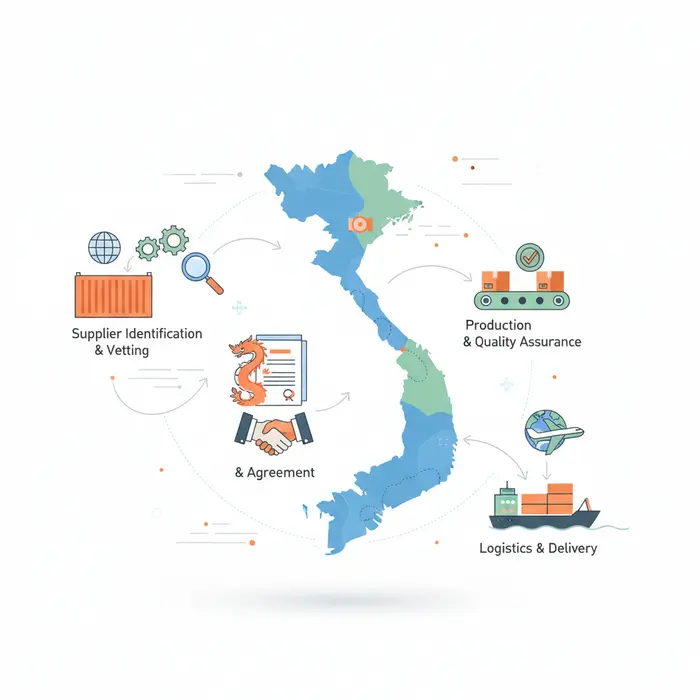
Vietnam has emerged as a powerhouse in global manufacturing, offering an attractive alternative to traditional sourcing hubs. Its strategic location, competitive labor costs, growing infrastructure, and a robust network of suppliers make it a prime destination for businesses seeking to diversify their supply chains. However, successful Vietnam sourcing requires a methodical approach, keen understanding of the local landscape, and diligent execution. This guide provides a step-by-step roadmap, from identifying reputable partners to ensuring quality and ethical practices, designed to help businesses navigate the complexities and unlock the full potential of sourcing from Vietnam.
1. Finding Reputable Suppliers & Vetting Processes
The foundation of a successful sourcing strategy in Vietnam lies in identifying and partnering with reliable suppliers. This initial phase involves thorough market research to pinpoint potential Vietnam OEM manufacturers or ODM partners that align with your product requirements and business values. Begin by leveraging online B2B platforms, industry-specific directories, and attending trade shows (both virtual and in-person) focused on Vietnamese manufacturing. Organizations like the Vietnam Chamber of Commerce and Industry (VCCI) or various industry associations can also provide valuable leads and insights into the local supplier landscape.
Once a list of potential suppliers is compiled, a rigorous vetting process is crucial. This goes beyond just reviewing their product catalogs and price lists. Essential vetting steps include:
- Background Checks: Verify the company’s legal registration, operational history, and ownership structure.
- Factory Audits: Conduct or commission a comprehensive factory audit. This assesses production capabilities, equipment, quality management systems (e.g., ISO certifications), and general working conditions. Physical visits are highly recommended to gain firsthand insight.
- Reference Checks: Request client references, especially from international buyers, and follow up diligently to understand their experiences regarding product quality, communication, and delivery reliability.
- Compliance Assessment: Ensure the supplier complies with local labor laws, environmental regulations, and any international standards relevant to your industry.
Paying close attention to these details upfront can mitigate significant risks down the line and ensure you establish a partnership with a truly reputable and capable manufacturer.
2. Negotiation Strategies & Contract Management
Effective negotiation is paramount to securing favorable terms and a stable supply relationship in Vietnam. While price is often a primary focus, successful negotiations encompass a broader range of factors, including payment terms, minimum order quantities (MOQs), lead times, intellectual property protection, and dispute resolution mechanisms. Cultural nuances play a significant role; Vietnamese business culture often values building relationships and trust, so a patient, respectful, and clear communication style is beneficial.
Key negotiation strategies include:
- Clarity on Specifications: Provide detailed product specifications, quality standards, and packaging requirements to avoid misunderstandings.
- Long-Term Relationship Focus: Emphasize your intent for a long-term partnership, which can often lead to better pricing and more flexible terms over time.
- Understanding Costs: Have a clear understanding of the supplier’s cost structure to negotiate fairly and effectively.
Crucially, all agreed-upon terms must be formalized in a robust, legally binding contract. This contract should be comprehensive, detailing all aspects of the agreement, including:
- Product specifications and quality standards (including AQL – Acceptable Quality Limit).
- Pricing, payment schedule, and currency.
- Delivery timelines and Incoterms.
- Intellectual property rights and non-disclosure agreements.
- Warranty, returns, and dispute resolution procedures (e.g., arbitration in a neutral jurisdiction).
- Force majeure clauses.
It’s advisable to have the contract reviewed by a legal professional with experience in Vietnamese commercial law to ensure enforceability and protect your interests, especially considering Vietnam’s burgeoning role in global supply chains.
3. Quality Control & Ethical Sourcing Practices
Maintaining consistent quality and adhering to ethical sourcing standards are non-negotiable for sustainable sourcing from Vietnam. Proactive quality control (QC) measures throughout the production cycle are essential. This isn’t merely a final inspection but a continuous process that begins even before manufacturing starts.
Key quality control stages include:
- Pre-Production Inspection (PPI): Checking raw materials and components to ensure they meet specifications before mass production begins.
- In-Process Inspection (DPI/DUPRO): Monitoring production at various stages to identify and correct defects early, preventing widespread issues.
- Final Random Inspection (FRI): A comprehensive inspection of finished goods based on a statistically representative sample before shipment, ensuring they meet all agreed-upon quality standards and specifications.
- Loading Supervision (LS): Overseeing the loading process to ensure correct quantities, packaging, and safe handling.
Engaging a reputable third-party QC agency can provide unbiased inspections and expert oversight, offering an additional layer of assurance. Beyond quality, ethical sourcing practices are increasingly important for brand reputation and regulatory compliance. Ensure your suppliers comply with international labor standards, fair wages, safe working conditions, and environmental regulations. Conducting social compliance audits (e.g., SA8000, BSCI) can verify adherence to these standards. By prioritizing both stringent quality control and ethical sourcing, businesses not only protect their brand but also contribute to a more responsible and sustainable global supply chain, fostering long-term success in their Vietnam sourcing endeavors.
Overcoming Challenges and Mitigating Risks
Vietnam has firmly established itself as a global manufacturing hub, attracting businesses worldwide with its competitive labor costs, growing infrastructure, and favorable trade agreements. However, like any emerging market, engaging in Vietnam Sourcing presents its own set of unique challenges. Successfully navigating these hurdles requires proactive planning, thorough due diligence, and a deep understanding of the local landscape. By anticipating potential roadblocks and implementing robust mitigation strategies, companies can ensure smooth operations, secure supply chains, and maximize the benefits of sourcing from this dynamic Southeast Asian nation. From logistics complexities to cultural nuances and intellectual property concerns, strategic foresight is key to unlocking Vietnam’s full potential as a sourcing destination.
1. Logistics & Supply Chain Resilience
One of the primary concerns for businesses involved in Vietnam Sourcing is managing logistics and ensuring supply chain resilience. While Vietnam’s infrastructure is rapidly developing, challenges such as congested ports, varying road quality, and customs clearance complexities can lead to delays and increased costs. Furthermore, geopolitical events, natural disasters, or unexpected global disruptions can significantly impact the flow of goods, highlighting the critical need for a resilient supply chain.
To mitigate these risks, companies should adopt several key strategies. Firstly, diversify shipping routes and consider multi-modal transport options to avoid over-reliance on a single channel. Partnering with experienced, reputable third-party logistics (3PL) providers with strong local networks and expertise in Vietnamese customs procedures can streamline operations. These partners often have established relationships and can navigate local bureaucracies more efficiently. Secondly, focus on developing strong relationships with your Vietnam OEM manufacturers who prioritize supply chain transparency and have contingency plans in place. This includes manufacturers with multiple production sites or access to alternative component suppliers. Implementing advanced inventory management systems and exploring localized warehousing solutions can also reduce lead times and provide a buffer against unforeseen disruptions. Finally, regularly assess and stress-test your supply chain for vulnerabilities, as emphasized by experts in the field. Building a truly resilient supply chain means being prepared for the unexpected and having the agility to adapt. For more insights on this, refer to resources like PwC’s guide on Building Supply Chain Resilience.
2. Cultural Differences & Communication Barriers
Effective communication is the cornerstone of any successful business relationship, yet cultural differences can often pose significant barriers in Vietnam Sourcing. Vietnamese business culture often prioritizes indirect communication, relationship-building (known as ‘mối quan hệ’), and saving face (‘giữ thể diện’). Direct confrontation or overly assertive negotiation tactics, common in some Western cultures, can be counterproductive and even damaging to long-term partnerships. Misunderstandings regarding deadlines, quality expectations, or contractual terms can arise from these communication gaps.
To overcome these challenges, businesses must invest in cultural intelligence. Hiring local staff or consultants who understand both Vietnamese and foreign business practices can bridge communication divides effectively. Implementing clear and concise communication protocols, utilizing visual aids, and ensuring all agreements are documented meticulously can prevent ambiguity. Furthermore, fostering a long-term, trust-based relationship with your Vietnam OEM manufacturers is paramount. This involves regular face-to-face meetings, demonstrating respect for local customs, and taking the time to understand their perspective. Patience and empathy are vital; building rapport often takes precedence over immediate transactional gains. Organizations engaging in Vietnam Sourcing should view cultural understanding not as a hurdle, but as an opportunity to build stronger, more sustainable partnerships.
3. Intellectual Property Protection & Legal Frameworks
For many companies, especially those dealing with innovative products or proprietary designs, intellectual property (IP) protection is a critical concern when sourcing from any foreign market. While Vietnam has made significant strides in strengthening its IP legal framework to align with international standards (such as TRIPS agreement), concerns about enforcement and potential infringement still exist. This is particularly relevant for businesses working with Vietnam OEM manufacturers who may have access to product designs, specifications, and manufacturing processes.
To safeguard IP, a multi-faceted approach is essential. Firstly, conduct thorough due diligence on potential suppliers, assessing their reputation, track record, and willingness to comply with IP protection measures. Secondly, ensure comprehensive legal agreements are in place. This includes Non-Disclosure Agreements (NDAs), Manufacturing Agreements, and Supply Agreements that clearly define IP ownership, usage rights, and remedies for infringement. It’s crucial that these contracts are drafted by legal experts familiar with both international and Vietnamese law. Thirdly, proactively register your intellectual property (trademarks, patents, industrial designs) in Vietnam. This provides a legal basis for enforcement if infringement occurs. Finally, implement strict internal controls and monitoring mechanisms with your manufacturing partners. Regularly auditing facilities, limiting access to sensitive information, and developing a trusted relationship can further reduce risks. Staying informed about the evolving IP landscape in Vietnam and seeking ongoing legal counsel are vital steps for any company engaged in significant Vietnam Sourcing activities.
Future Outlook for Vietnam Sourcing 2025 and Beyond
Vietnam’s manufacturing sector continues its dynamic evolution, positioning itself as a cornerstone of global supply chains. As businesses look ahead to Vietnam sourcing in 2025 and beyond, understanding the emerging trends, potential shifts, and strategic imperatives is crucial. The nation is transitioning from a low-cost manufacturing hub to a more sophisticated, value-added production base, driven by policy, investment, and technological adoption. Importers can expect a landscape increasingly defined by advanced manufacturing processes, a strong commitment to sustainability, and a growing emphasis on long-term, collaborative partnerships.

1. Impact of Digital Transformation & Automation
The digital transformation wave is profoundly reshaping Vietnam sourcing. As labor costs gradually rise and global competition intensifies, Vietnamese factories are increasingly investing in automation, AI, and IoT solutions. This strategic shift is vital for enhancing efficiency, improving product quality, and reducing lead times, making them more competitive on the global stage. Importers will find that Vietnam OEM manufacturers are adopting smart factory concepts, integrating advanced robotics, automated quality control systems, and data analytics into their production lines. This means a move towards greater precision, customization capabilities, and the potential for faster reaction to market demands. Supply chain visibility will also improve significantly, allowing for better inventory management and more resilient logistical operations. Businesses looking to partner with Vietnamese suppliers will benefit from this technological leap, accessing more sophisticated manufacturing capabilities and a more streamlined sourcing process.
2. Sustainability & Green Manufacturing Initiatives
Sustainability is no longer a peripheral concern but a central pillar of future Vietnam sourcing strategies. The Vietnamese government, alongside international partners and consumer demand, is pushing for significant advancements in green manufacturing. Policies promoting renewable energy, waste reduction, and eco-friendly production methods are gaining traction. This includes initiatives for cleaner production technologies, responsible resource management, and adherence to international environmental standards. For instance, Vietnam is actively pursuing its Sustainable Development Goals Action Plan, which directly influences industrial practices. Importers seeking sustainable supply chains will find Vietnam an increasingly attractive option, with manufacturers proactively integrating environmental, social, and governance (ESG) factors into their operations. This shift not only aligns with global ethical sourcing trends but also offers opportunities for product innovation and brand enhancement through greener practices.
3. Long-Term Strategic Partnership Benefits
The future of Vietnam sourcing is moving beyond transactional relationships towards deeper, more strategic partnerships. As the manufacturing landscape matures, both importers and Vietnam suppliers recognize the mutual benefits of long-term collaboration. These partnerships foster shared growth, enable co-innovation, and build greater supply chain resilience. Engaging in strategic alliances allows for more transparent communication, collaborative problem-solving, and a better understanding of each party’s needs and capabilities. Importers can gain dedicated production capacity, preferential pricing, and access to new product development expertise, while Vietnamese manufacturers benefit from stable order volumes, technology transfer, and opportunities for continuous improvement. Such partnerships are essential for navigating potential geopolitical shifts, economic uncertainties, and rapidly changing consumer preferences, ensuring a stable and adaptive supply chain for years to come.
Partner with Vietnam’s Leading Suppliers
Looking for reliable suppliers in Vietnam? Contact VietnamSuppliers.com today to connect with verified manufacturers and exporters across all industries.
—————————————
References
– World Trade Organization (WTO) – General Agreement on Trade in Services (GATS): https://www.wto.org/english/thewto_e/whatis_e/tif_e/gats_e.htm
– World Bank: Vietnam’s economy remains resilient amidst global headwinds: https://www.worldbank.org/en/news/press-release/2023/10/30/world-bank-vietnam-s-economy-remains-resilient-amidst-global-headwinds
– :
– PwC’s guide on Building Supply Chain Resilience: https://www.pwc.com/sg/en/sustainability/reimagining-supply-chains/building-supply-chain-resilience.html
– Vietnam’s Sustainable Development Goals Action Plan: https://www.adb.org/news/speeches/vietnam-sustainable-development-goals-action-plan

