Understanding FTA Preferential Duty Rates
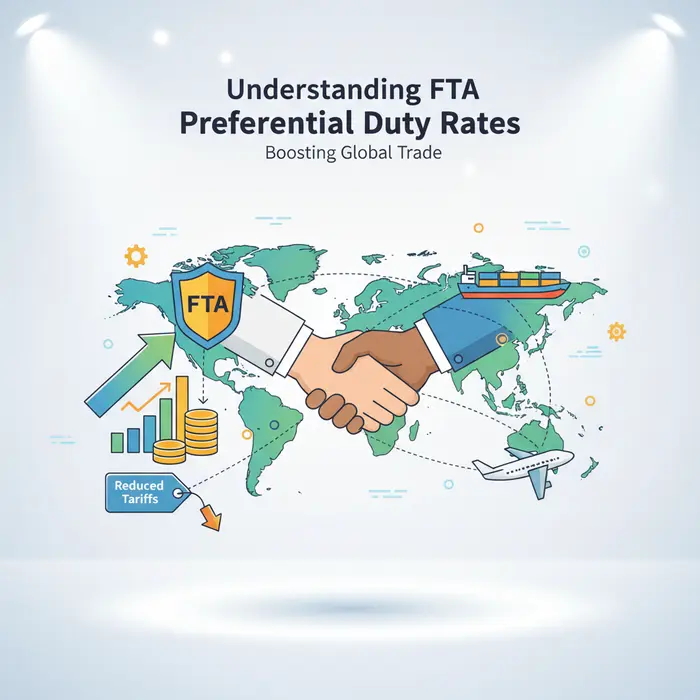
In the intricate world of international trade, FTA preferential duty rates represent a critical mechanism for businesses seeking to optimize costs and enhance competitiveness. Simply put, these are reduced or eliminated customs duties applied to goods traded between countries that are signatories to a Free Trade Agreement (FTA). Unlike the standard Most Favored Nation (MFN) rates levied on imports from non-FTA countries, preferential rates offer significant financial advantages, directly impacting a company’s bottom line and market position.
For businesses engaged in cross-border commerce, understanding and leveraging these rates is not merely an option but often a strategic imperative. The economic impact is profound: lower import costs translate into more competitive pricing for consumers, increased profit margins for importers, and greater market access for exporters. This preferential treatment encourages trade flows among member countries, fosters economic integration, and can significantly boost a nation’s export capabilities, such as offering substantial Vietnam export tariff benefits for goods originating from the country.
Ignoring the potential for Free trade agreement duty benefits can put businesses at a severe disadvantage against competitors who effectively utilize these provisions. It’s a key factor in supply chain planning, product sourcing, and market expansion strategies, making Customs preferential treatment eligibility a primary concern for international traders.
1. What are Free Trade Agreements (FTAs)?
Free Trade Agreements (FTAs) are legally binding pacts between two or more countries that aim to reduce or eliminate barriers to trade and investment. These agreements go beyond merely cutting tariffs; they often address a wide range of issues including customs procedures, intellectual property rights, labor and environmental standards, and services trade. The core objective of an FTA is to create a freer, more predictable, and more transparent trading environment among its members, thereby stimulating economic growth and fostering closer diplomatic ties.
Globally, there are hundreds of FTAs in effect, ranging from bilateral agreements (e.g., between Vietnam and the EU) to mega-regional pacts (e.g., the Comprehensive and Progressive Agreement for Trans-Pacific Partnership – CPTPP). Each FTA has its unique set of rules, particularly concerning the criteria goods must meet to qualify for preferential treatment. This complexity underscores the need for businesses to meticulously understand the specific requirements of the agreements relevant to their trade routes.
The World Trade Organization (WTO) provides a framework for international trade negotiations and agreements, and FTAs often operate within the broader context of WTO rules, aiming to complement multilateral liberalization efforts. For a deeper understanding of regional trade agreements and their role in global commerce, consult resources from organizations like the World Trade Organization.
2. Economic benefits of preferential duty treatment
The economic advantages derived from FTA preferential duty rates are multifaceted and extend to various stakeholders within the trading ecosystem:
- Cost Reduction: The most direct benefit is the reduction or elimination of import tariffs. This lowers the landed cost of goods, making products cheaper for importers and ultimately for consumers. For exporters, it makes their goods more competitive in destination markets.
- Increased Competitiveness: Businesses that can leverage preferential duties gain a significant competitive edge over those paying standard MFN rates. This allows them to offer more attractive pricing, capture larger market shares, and expand their customer base.
- Enhanced Profit Margins: Lower duty costs directly translate into higher profit margins for businesses involved in importing and distributing goods. This increased profitability can be reinvested into operations, research and development, or passed on to consumers.
- Market Expansion: Reduced trade barriers make it more economically viable for companies to enter new markets within FTA partner countries. This opens up opportunities for growth and diversification that might otherwise be cost-prohibitive.
- Supply Chain Optimization: Companies can strategically source components or finished goods from FTA partners to take advantage of these benefits, leading to more efficient and cost-effective supply chains.
- Stimulated Economic Growth: At a macro level, preferential duties encourage increased trade volumes, stimulate production, create jobs, and foster overall economic growth within member countries. Nations like Vietnam have seen significant boosts in their export industries due to various FTAs, leading to substantial Vietnam export tariff benefits.
3. Qualifying for Preferential Treatment: The Role of Rules of Origin
While the allure of zero or reduced tariffs is strong, qualifying for FTA preferential duty rates is not automatic. The cornerstone of eligibility lies in meeting the specific “Rules of Origin” (ROO) outlined in each FTA. These rules are crucial because they determine where a product genuinely originates, preventing goods from non-FTA countries from simply transiting through a member country to avoid duties. This concept is often referred to as Rules of origin preferential treatment.
Rules of Origin can be complex and vary significantly between agreements, but generally fall into a few categories:
- Wholly Obtained: Products entirely grown, extracted, or manufactured within a single FTA member country (e.g., agricultural produce, minerals).
- Change in Tariff Classification (CTC): This requires that non-originating materials used in production undergo a sufficient change in their Harmonized System (HS) tariff classification when transformed into the final product.
- Value-Added (VA): This rule stipulates that a certain percentage of the product’s value must originate from the FTA region (e.g., Regional Value Content – RVC).
- Specific Process Rules: Certain products may require specific manufacturing or processing operations to be performed within the FTA territory.
Businesses seeking Customs preferential treatment eligibility must meticulously document their production processes and material sourcing to demonstrate compliance with the relevant ROO. This often involves obtaining a Certificate of Origin (COO) or a self-certification document, which is presented to the importing country’s customs authorities. Failing to meet these requirements or providing inadequate documentation can result in the denial of preferential rates, leading to unexpected duty payments, penalties, and delays. Therefore, thorough understanding and adherence to Rules of origin preferential treatment are paramount for unlocking the full Free trade agreement duty benefits.
The Cornerstone: Rules of Origin Preferential Treatment
Free Trade Agreements (FTAs) are powerful tools designed to foster economic growth by reducing or eliminating tariffs and non-tariff barriers. However, merely being an FTA signatory does not automatically guarantee access to FTA preferential duty rates. This is where Rules of Origin (ROO) emerge as the undeniable cornerstone, acting as gatekeepers to ensure only goods genuinely originating from member countries benefit from concessions. Understanding and diligently applying ROO is paramount for businesses seeking to leverage free trade agreement duty benefits, secure customs preferential treatment eligibility, and ensure fair trade, preventing goods from non-member countries from illicitly gaining preferential access.
1. Non-preferential vs. preferential origin explained
To grasp ROO’s significance, it’s crucial to distinguish between non-preferential and preferential origin. Non-preferential origin refers to the ‘economic nationality’ of goods, determined by domestic legislation for statistical purposes, safeguard measures, and Most Favoured Nation (MFN) tariff rates. Goods typically face MFN tariffs unless specific agreements dictate otherwise.
In contrast, preferential origin is conferred on goods meeting specific criteria outlined in an FTA. Qualifying goods become eligible for reduced or zero tariffs, providing significant rules of origin preferential treatment. This distinction is vital for exporters and importers as it directly impacts product cost-effectiveness and competitiveness. Businesses aiming to tap into new markets, such as those covered by FTAs with Vietnam, must ascertain if their products meet these stringent requirements to unlock substantial Vietnam export tariff benefits.
2. Common ROO criteria: Wholly obtained and substantial transformation
The methodologies for determining preferential origin primarily revolve around two core concepts: “wholly obtained” and “substantial transformation.”
- Wholly Obtained Goods: These are products entirely grown, harvested, produced, or manufactured in a single country, without incorporating any non-originating materials. Examples include minerals extracted, agricultural products harvested, or animals born and raised within a member country’s territory. Verification is generally straightforward.
-
Substantial Transformation: Most manufactured goods incorporate components from various countries. For such products, origin is conferred when they undergo a “substantial transformation” within a member country, fundamentally changing their nature or character. This criterion is typically defined by one of three methods:
- Change in Tariff Classification (CTC): The most common method, requiring non-originating materials to undergo a manufacturing process resulting in a change in the product’s Harmonized System (HS) tariff classification at a specified level (e.g., chapter, heading, or subheading).
- Regional Value Content (RVC): This method mandates a certain percentage of the product’s value to be added within the FTA region. It ensures a significant portion of production costs, labor, and materials originate from member countries.
- Specific Process Rules (SPR): For certain products, FTAs may stipulate specific manufacturing or processing operations that must occur within the originating country, irrespective of CTC or RVC. These are common for textiles, chemicals, or electronics.
Navigating these criteria is crucial for businesses to legitimately claim FTA preferential duty rates and avail themselves of the intended free trade agreement duty benefits.
3. The Critical Role of Certification and Compliance
Establishing that goods meet ROO criteria is only the first step; proper documentation and compliance are equally vital. To claim customs preferential treatment eligibility, exporters must provide a Certificate of Origin (COO) or an origin declaration, attesting goods are wholly obtained, produced, or processed in a particular country. These are usually issued by designated authorities or can be self-certified.
Customs authorities verify origin claims. Non-compliance, whether due to error or deliberate misrepresentation, can lead to severe consequences: denial of preferential tariffs, retroactive application of full MFN duties, financial penalties, and reputational damage. Thus, businesses leveraging Vietnam export tariff benefits through FTAs must invest in robust internal processes, meticulous record-keeping, and continuous training to ensure full adherence to all ROO requirements. Proactive management of origin documentation is a strategic imperative for seamless trade and competitive advantage.
Navigating Customs Preferential Treatment Eligibility
In today’s global economy, businesses actively seek ways to optimize supply chains and reduce costs. A significant avenue for savings lies in leveraging FTA preferential duty rates. Free Trade Agreements (FTAs) and other preferential trade arrangements offer considerable duty benefits, allowing importers to pay lower or even zero tariffs on eligible goods. However, accessing these Free trade agreement duty benefits requires a precise understanding of the rules and diligent adherence to customs procedures. This section details the practical steps and documentation essential for claiming preferential duty rates, focusing on the fundamental eligibility criteria to ensure a smooth and compliant import process.
Required documentation: Certificate of Origin (COO) and supplier declarations
The cornerstone of claiming Customs preferential treatment eligibility is robust documentation, primarily the Certificate of Origin (COO). A COO is an official document certifying the country of origin of goods, indispensable for proving that goods meet the origin requirements of a specific FTA. Importers must obtain the correct COO type (e.g., Form A, B, E, EUR.1), accurately completed and endorsed by the authorized body in the exporting country.
Beyond the COO, supplier declarations are crucial, especially in complex supply chains. These are statements from suppliers confirming the originating status of materials or components used in the final product. While not always directly presented at customs, they are vital for the exporter to accurately issue a COO and are often required during post-clearance audits to substantiate origin claims. Verifying the authenticity and accuracy of these declarations is paramount.
Common pitfalls in customs declarations and how to avoid them
Navigating preferential treatment is fraught with potential pitfalls. One common error is incorrect classification of goods using Harmonized System (HS) codes, which can lead to incorrect duty rates or disqualification from preferential treatment if the origin rule is linked to specific HS codes.
Another frequent mistake is misinterpreting or misapplying Rules of Origin preferential treatment. Businesses might mistakenly assume goods qualify simply because they were shipped from a partner country, without verifying if the goods actually meet the specific origin criteria. Other pitfalls include incomplete or invalid documentation, failure to comply with direct consignment rules, and inadequate record-keeping. To avoid these issues, businesses should invest in thorough research, consider professional customs brokerage advice, implement robust internal compliance checks, and conduct due diligence on suppliers.
Understanding Rules of Origin for Preferential Treatment
The core principle underpinning Customs preferential treatment eligibility is “Rules of Origin” (RoO). These are specific criteria within each FTA determining where a product originates. Without meeting these, goods will not qualify for preferential tariffs. RoO typically categorize origin as:
- Wholly Obtained Goods: Products entirely grown, extracted, or produced in a single country.
- Goods Undergoing Sufficient Transformation: For products with non-FTA materials, they must undergo “sufficient working or processing” to confer origin. This is defined by criteria like:
- Change in Tariff Heading (CTH): Non-originating materials must result in a change of the product’s HS tariff heading.
- Value-Added Criterion (VAC): A percentage rule where non-originating materials’ value doesn’t exceed a certain percentage of the product’s ex-works price, or a percentage of value must originate in the FTA partner country.
- Specific Processing Rule: Detailed rules for certain products outlining specific manufacturing or chemical processes.
FTAs often include cumulative origin, allowing materials originating in one partner country to count as originating in another when used in further processing. De minimis rules offer flexibility, permitting a small percentage of non-originating materials without affecting originating status. For businesses importing from Southeast Asia, understanding specific rules for Vietnam export tariff benefits under agreements like the EVFTA or CPTPP is crucial to effectively claim preferential rates.
Maximizing Free Trade Agreement Duty Benefits
In today’s globalized economy, businesses constantly seek avenues for competitive advantage. One of the most powerful yet often underutilized tools at their disposal is leveraging Free Trade Agreements (FTAs). These international accords reduce or eliminate tariffs and non-tariff barriers between signatory countries, offering significant FTA preferential duty rates. For businesses engaged in international trade, strategically navigating these agreements can lead to substantial cost savings, enhanced profitability, and a stronger position in the global marketplace. This section explores best practices for businesses to fully capitalize on the Free trade agreement duty benefits, transforming them into a tangible competitive edge.
1. Identifying Applicable FTAs for Your Products and Markets
The first critical step in maximizing FTA benefits is to accurately identify which agreements apply to your specific products and target markets. The global landscape is rich with bilateral, regional, and multilateral FTAs, each with its own scope and member countries. Businesses must thoroughly research the trade agreements in force between their country of origin (or manufacturing) and their export destinations.
This process typically involves:
- Product Classification: Understanding your product’s Harmonized System (HS) code is fundamental. This universal classification system dictates the tariff rates applied and determines product-specific rules within FTAs.
- Market Analysis: Pinpoint your primary export markets and potential growth regions. Then, identify all active FTAs involving these countries. For instance, a company exporting from Vietnam should investigate agreements like the EVFTA (EU-Vietnam FTA) or the CPTPP (Comprehensive and Progressive Agreement for Trans-Pacific Partnership) to understand potential Vietnam export tariff benefits.
- Agreement Specifics: Each FTA has unique provisions. Businesses must delve into the details, checking for specific product exclusions, phased duty reductions, or quotas that might affect their goods. Utilizing resources from customs authorities or trade promotion agencies can be invaluable during this research phase.
2. Calculating Duty Savings and Assessing Their Impact on Profitability
Once applicable FTAs are identified, the next crucial step is to quantify the potential duty savings and evaluate their impact on your company’s profitability and pricing strategy. This involves a direct comparison between the Most Favored Nation (MFN) duty rate (the standard tariff applied to non-FTA countries) and the preferential duty rate offered under the FTA.
The calculation is straightforward:
Duty Savings = (MFN Duty Rate - Preferential FTA Duty Rate) x Product Value
However, the assessment goes beyond simple numbers. Businesses should consider:
- Landed Cost Reduction: Lower duties directly reduce the landed cost of goods, making your products more competitively priced in the target market. This can allow for either lower retail prices to gain market share or higher profit margins.
- Supply Chain Optimization: Significant duty savings can influence sourcing decisions. If sourcing components or raw materials from an FTA partner reduces import duties for your finished product, it can optimize your entire supply chain.
- Investment in R&D or Marketing: Reinvesting duty savings into product development, market expansion, or brand building can further enhance competitive advantage.
By meticulously calculating these savings, businesses can make informed decisions about market entry strategies, pricing adjustments, and resource allocation, directly impacting their bottom line.
3. Ensuring Compliance and Documentation for Preferential Treatment
Securing FTA benefits is not automatic; it requires strict adherence to the agreement’s terms, particularly regarding origin. Ensuring Customs preferential treatment eligibility is paramount. The most critical aspect here involves understanding and complying with Rules of Origin (ROO).
- Understanding Rules of Origin (ROO): ROO are specific criteria used to determine the national origin of a product. A product must meet these rules to qualify for Rules of origin preferential treatment under an FTA. ROO can be complex, involving criteria like ‘wholly obtained’ (for agricultural or mineral products), ‘change in tariff heading’ (CTH), or ‘value-added’ (minimum percentage of regional value content). Businesses must meticulously analyze their manufacturing processes and material sourcing to ensure their products meet the relevant ROO.
- Accurate Documentation: Proper documentation is indispensable. The primary document is often the Certificate of Origin (COO), which attests that the goods meet the ROO requirements of a specific FTA. Other crucial documents may include supplier declarations for inputs, production records, and invoices. Any discrepancies or errors can lead to denial of preferential treatment, retrospective duty payments, or even penalties.
- Due Diligence and Audits: Companies should implement robust internal processes for verifying origin claims and maintaining accurate records. Customs authorities frequently conduct post-importation audits, and businesses must be prepared to demonstrate compliance. Proactive engagement with customs brokers, legal advisors, and trade consultants specializing in FTAs can help mitigate risks and ensure ongoing compliance.
Mastering these compliance aspects is not just about avoiding penalties; it’s about confidently and consistently accessing the duty benefits that FTAs offer, thereby solidifying your competitive position in the international trade arena.
Case Study: Vietnam Export Tariff Benefits in 2025
Vietnam, a dynamic Southeast Asian economy, has strategically positioned itself as a global manufacturing and export hub. A cornerstone of this strategy is its proactive engagement in Free Trade Agreements (FTAs). By leveraging these comprehensive trade pacts, Vietnam offers significant export tariff benefits to businesses, making its products highly competitive in international markets. This case study delves into how a country like Vietnam utilizes these FTAs to provide tangible advantages, illustrating real-world applications and lucrative opportunities for exporters in 2025 and beyond.
1. Key FTAs Impacting Vietnam’s Trade (e.g., EVFTA, CPTPP)
Vietnam’s network of Free Trade Agreements is extensive, providing a robust framework for reducing trade barriers and enhancing market access. Among the most impactful are the EU-Vietnam Free Trade Agreement (EVFTA) and the Comprehensive and Progressive Agreement for Trans-Pacific Partnership (CPTPP).
The EU-Vietnam Free Trade Agreement (EVFTA), effective August 2020, commits to eliminating over 99% of tariffs over a transitional period, offering Vietnamese exporters significant cost savings into the 27-member EU bloc. The Comprehensive and Progressive Agreement for Trans-Pacific Partnership (CPTPP), effective for Vietnam from January 2019, similarly reduces or eliminates tariffs across 11 Pacific Rim countries, including major economies like Canada, Australia, and Japan. Both agreements provide crucial Free trade agreement duty benefits, driving Vietnam’s export growth and market diversification.
2. How Vietnamese Exporters Can Benefit from Preferential Duty Rates
Leveraging the FTA preferential duty rates offered by these agreements requires a clear understanding of the operational mechanisms. The core principle revolves around demonstrating that goods originate from Vietnam, thereby qualifying for reduced or zero tariffs in partner countries.
The critical element here is adherence to Rules of Origin (ROO). Each FTA specifies precise criteria that products must meet to be considered “originating.” These rules typically involve:
- Wholly Obtained: Products entirely grown, harvested, or manufactured in Vietnam (e.g., agricultural produce).
- Change in Tariff Classification (CTC): Non-originating materials used in production undergo a sufficient transformation in Vietnam, resulting in a change in their tariff heading.
- Regional Value Content (RVC): A certain percentage of the product’s value must be added in Vietnam or the FTA region.
Exporters must meticulously document their sourcing and production processes to prove Rules of origin preferential treatment. This usually involves obtaining a Certificate of Origin (C/O) from the relevant Vietnamese authority (e.g., the Vietnam Chamber of Commerce and Industry – VCCI) or, in some cases, self-certification by approved exporters. Accurate classification of goods under the Harmonized System (HS) code is also paramount, as tariffs and ROO requirements are tied to these codes. By ensuring compliance, Vietnamese businesses can unlock substantial savings on import duties, enhancing their competitiveness and profit margins.
3. A Practical Example: Exporting Textiles to the EU under EVFTA
Consider a Vietnamese textile manufacturer, “An Phat Garment,” planning to export a shipment of high-quality denim jeans to a buyer in Germany in 2025. Without the EVFTA, these jeans would typically face a Most Favoured Nation (MFN) import duty of around 12% in the EU.
However, under the EVFTA’s progressive tariff elimination schedule, the duty on many textile and apparel products from Vietnam to the EU will be eliminated or significantly reduced by 2025. For denim jeans, the tariff might already be at 0% or a very low rate, depending on the specific HS code and the EVFTA’s staging category. To benefit from this, An Phat Garment must ensure its jeans meet the EVFTA’s Rules of Origin. For textiles, this often involves the “double transformation” rule – meaning both the fabric and the garment must be made within Vietnam or the EU. If An Phat Garment sources its fabric from a non-EVFTA country (e.g., China), it would need to demonstrate that the fabric underwent substantial processing in Vietnam (e.g., weaving, dyeing, printing) before being cut and sewn into jeans.
Upon successfully proving origin, An Phat Garment would obtain a Certificate of Origin Form EUR.1 or, if registered, make an origin declaration on the invoice. This documentation allows the German importer to claim Customs preferential treatment eligibility, effectively paying 0% import duty instead of 12%. This 12% saving directly translates into either a lower price for the German buyer (making An Phat’s product more attractive) or a higher profit margin for An Phat Garment. For more details on the EVFTA’s specifics, refer to the EU-Vietnam Trade Agreement official page.
Partner with Vietnam’s Leading Suppliers
Looking for reliable suppliers in Vietnam? Contact VietnamSuppliers.com today to connect with verified manufacturers and exporters across all industries.
—————————————
References
– World Trade Organization: https://www.wto.org/english/tratop_e/region_e/region_e.htm
– International Trade Centre’s Rules of Origin guide: https://www.intracen.org/trade-support/trade-policy/rules-of-origin/
– WTO | Rules of origin: https://www.wto.org/english/tratop_e/roi_e/roi_e.htm
– International Trade Centre (ITC) – Rules of Origin: https://www.intracen.org/trade-support/trade-policy/rules-of-origin/
– EU-Vietnam Trade Agreement official page: https://trade.ec.europa.eu/access-to-markets/en/content/eu-vietnam-trade-agreement