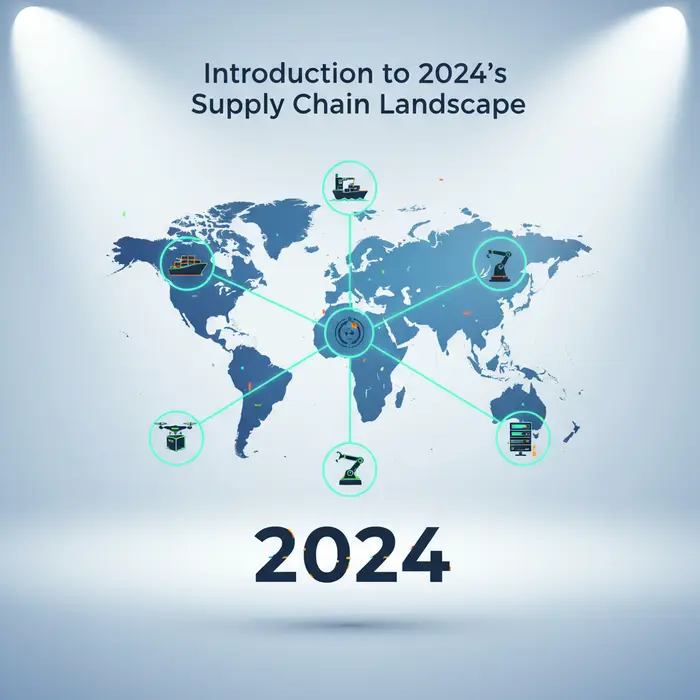
Introduction to 2024’s Supply Chain Landscape
The global economy in 2024 continues to grapple with persistent and evolving challenges to its intricate supply networks. Far from a return to pre-pandemic normalcy, businesses worldwide are navigating a complex environment characterized by escalating geopolitical tensions, climatic extremes, and their direct impact on critical maritime arteries. This section sets the stage by providing an overview of the ongoing challenges impacting global supply chains and highlighting the unique aspects of the current International Supply Chain Congestion 2024, which demands new strategies and heightened resilience from manufacturers, logistics providers, and consumers alike.
1. Recap of 2023-2024 Global Trade Challenges
The tail end of 2023 saw the global supply chain landscape already strained by a confluence of factors. Lingering effects from the COVID-19 pandemic, including labor shortages and fluctuating consumer demand, continued to ripple through various sectors. Geopolitical instabilities, particularly the ongoing conflict in Ukraine, disrupted crucial energy and agricultural markets, leading to inflationary pressures and shifts in trade flows. Manufacturing hubs, especially in Asia, faced intermittent shutdowns and capacity constraints, further exacerbating lead times. Moreover, an intensified focus on nearshoring and friend-shoring began to reshape global manufacturing strategies, albeit slowly, creating localized bottlenecks even as it promised future resilience. These accumulated pressures laid the groundwork for a highly volatile trade environment entering 2024, setting the stage for subsequent, more acute disruptions that have defined the International Supply Chain Congestion 2024.
2. Key Factors Driving Current Congestion
The present wave of global supply chain congestion is primarily driven by two critical, simultaneous choke points that have fundamentally altered shipping routes and increased operational costs:
- Red Sea Shipping Impact on Trade: Since late 2023, attacks on commercial vessels in the Red Sea by Houthi militants have forced major shipping lines to reroute vessels away from the Suez Canal, opting instead for the longer journey around the Cape of Good Hope. This diversion adds approximately 10-14 days to transit times between Asia and Europe/East Coast Americas, significantly increasing fuel consumption, operational costs, and demanding more vessels to maintain schedules. The ripple effect includes vessel repositioning challenges, equipment shortages, and profound delays across multiple trade lanes.
- Panama Canal Drought Restrictions: Concurrently, severe drought conditions have led to unprecedented restrictions on daily vessel transits and draught limits through the Panama Canal. A critical artery connecting the Atlantic and Pacific oceans, the canal’s reduced capacity has created substantial backlogs, particularly impacting routes for container ships, bulk carriers, and LNG tankers. This has led to extended waiting times, increased surcharges, and forced some carriers to seek alternative, often longer, routes.
The dual impact of these disruptions is pushing the global freight rates outlook upwards, affecting everything from manufacturing costs to consumer prices. Businesses are urgently seeking supply chain disruption solutions B2B to mitigate these direct and indirect costs.
3. What’s Different from Previous Disruptions?
While the world has experienced significant supply chain upheavals in recent years, particularly during the initial phase of the COVID-19 pandemic, the current situation in 2024 presents several distinct characteristics:
- Geographic Concentration vs. Widespread Shutdowns: Unlike the pandemic-era disruptions which were characterized by widespread factory shutdowns and an unprecedented surge in consumer demand for goods, the current congestion is largely rooted in specific geographical choke points (Red Sea and Panama Canal) affecting transit times and operational logistics.
- Supply-Side Constraints Driven by External Factors: The primary drivers are geopolitical instability (Red Sea) and climate change (Panama Canal drought), rather than manufacturing capacity issues or sudden demand spikes. This makes mitigation more complex, as businesses have less direct control over the root causes.
- Compounding Effects: The simultaneous nature of these two major disruptions means that there are fewer viable alternative routes, and the pressures compound rather than offering clear workarounds. The knock-on effect on vessel availability and equipment rotation is more severe. As UNCTAD highlights, the combined impact poses a significant threat to the stability of global trade, demanding innovative supply chain disruption solutions B2B centered on diversification and real-time adaptability rather than simply ramping up production.
- Increased Cost and Risk: The current disruptions translate directly into higher operating costs, increased insurance premiums, and greater uncertainty, pushing companies to re-evaluate their entire logistics strategy and risk management frameworks.
Understanding these unique characteristics is crucial for businesses as they strategize for resilience and continuity in the face of ongoing International Supply Chain Congestion 2024.
Geopolitical Hotspots & Their Shipping Fallout
The intricate web of global commerce is increasingly susceptible to disruptions emanating from geopolitical flashpoints. In 2024, these tensions have manifested in significant challenges for international shipping, leading to widespread International Supply Chain Congestion 2024. From vital maritime chokepoints to key trade routes, the fallout includes altered transit times, escalating costs, and a heightened need for robust supply chain resilience. Understanding the specific impacts of these events, particularly the ongoing Red Sea crisis and the concurrent Panama Canal drought restrictions, is crucial for businesses navigating this turbulent environment.
1. The Red Sea Crisis: Rerouting and Delays
The Red Sea, a critical maritime artery connecting Europe and Asia via the Suez Canal, has been the epicenter of severe disruption since late 2023. Attacks by Houthi militants on commercial vessels have forced major shipping lines to reroute their traffic away from this vital waterway. Instead of transiting the Suez Canal, hundreds of ships are now undertaking the significantly longer journey around the Cape of Good Hope at the southern tip of Africa. This rerouting adds approximately 7-14 days to transit times, depending on the origin and destination, and thousands of nautical miles to each voyage. The direct Red Sea shipping impact on trade is profound, affecting East-West trade flows and creating a ripple effect across global schedules. Vessels designed for specific port rotations are now arriving late, causing schedule integrity issues and creating bottlenecks at subsequent ports.
2. Increased Shipping Costs and Transit Times
The decision to reroute around Africa has an immediate and substantial financial impact. The extended journey requires significantly more fuel, contributing to higher operational costs for shipping companies. Moreover, maritime insurance premiums for vessels operating in or near the Red Sea have skyrocketed, with some reports indicating increases of several hundred percent. These additional expenses are invariably passed on to shippers in the form of elevated freight rates, fundamentally altering the global freight rates outlook. Furthermore, the longer transit times mean that vessels are tied up for longer periods, effectively reducing global shipping capacity even if the total number of ships remains constant. This capacity crunch, coupled with potential port congestion at alternative hubs, exacerbates delays and adds further pressure on already strained logistics networks. While the Red Sea crisis is the dominant factor, it’s worth noting that Panama Canal drought restrictions, limiting daily transits, have simultaneously reduced capacity on trans-Pacific and intra-Americas routes, creating a dual challenge for global shipping and contributing further to higher costs and extended lead times.
3. Impact on Specific Industries (e.g., Energy, Consumer Goods)
The widespread disruptions in key shipping lanes have far-reaching implications across various industries. The energy sector is particularly vulnerable, as the Suez Canal and Red Sea are crucial for the transport of crude oil and liquefied natural gas (LNG) from the Middle East to Europe. Rerouting adds to the cost and time of delivery, potentially leading to increased energy prices and supply uncertainties for importing nations. For consumer goods, industries ranging from electronics and apparel to automotive parts face significant challenges. Longer transit times mean extended lead times for inventory, potentially disrupting just-in-time (JIT) manufacturing processes and leading to stockouts or delays in product launches. Retailers may experience higher shipping costs, which could ultimately translate into increased consumer prices. Manufacturers reliant on a steady flow of raw materials or components from overseas are also experiencing delays, impacting production schedules and potentially forcing them to seek more expensive air freight options. The cumulative effect underscores the urgent need for businesses to implement robust supply chain disruption solutions B2B, including diversifying sourcing strategies, enhancing inventory management, and exploring alternative logistics providers to mitigate ongoing geopolitical risks.
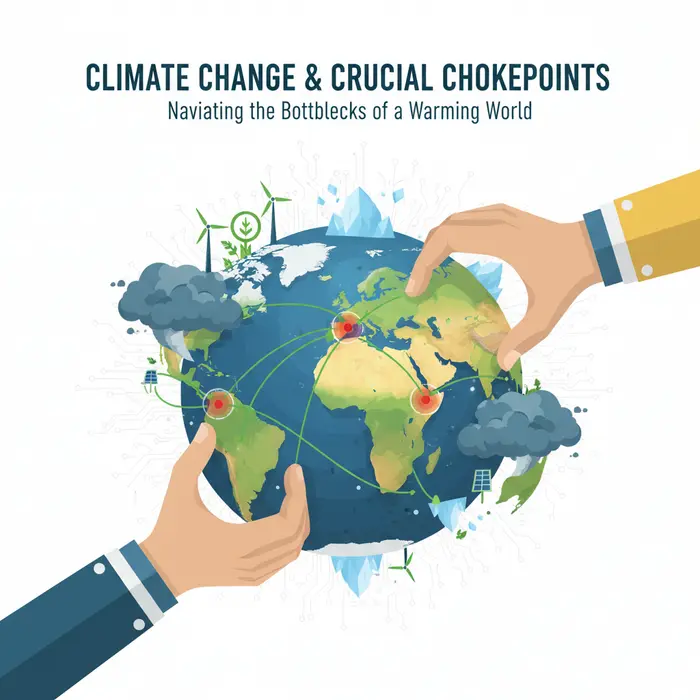
Climate Change & Crucial Chokepoints
The global supply chain, a complex web of interconnected logistics, has historically faced disruptions from geopolitical tensions, economic shifts, and technological hurdles. However, an increasingly dominant and unpredictable force amplifying these pressures is climate change. Its escalating impacts, from severe droughts to extreme weather events, are creating bottlenecks at crucial maritime chokepoints and straining infrastructure worldwide, contributing significantly to International Supply Chain Congestion 2024. Understanding these climate-related challenges is vital for businesses seeking resilience and sustainability in their global operations.
1. Panama Canal Drought: Restricted Transits and Capacity
The Panama Canal stands as a monumental feat of engineering and a critical artery for global trade, facilitating approximately 5% of all seaborne trade and connecting the Atlantic and Pacific oceans. Its operation, however, is entirely dependent on freshwater from Gatun Lake, which is fed by rainfall. In recent years, severe and prolonged droughts, exacerbated by El Niño weather patterns and rising global temperatures, have led to record low water levels. This environmental crisis has forced the Panama Canal Authority to implement unprecedented Panama Canal drought restrictions. These measures include daily transit limits, significantly reduced draft restrictions for vessels, and an auction system for coveted booking slots, dramatically altering transit capacity and increasing operational uncertainty. The result is extended waiting times, surcharges, and a scramble for limited slots, directly translating into higher shipping costs and delayed deliveries for businesses relying on this vital passage.
2. Alternative Routes and Their Trade-offs
The challenges at the Panama Canal are compounded by other geopolitical and environmental disruptions impacting major shipping lanes. The Red Sea shipping impact on trade, for instance, driven by recent geopolitical tensions in the Bab al-Mandab Strait, has forced many carriers to reroute vessels away from the Suez Canal and around the Cape of Good Hope. This confluence of events means that alternative routes, which would normally absorb some of the Panama Canal’s diverted traffic, are themselves under immense pressure or rendered unfeasible. For cargo typically passing through the Panama Canal, the primary alternative is a lengthy voyage around Cape Horn at the southern tip of South America. While offering an unrestricted passage, this route adds considerable time—often weeks—to transit schedules. These longer journeys consume more fuel, incur higher operational costs, and expose cargo to potentially harsher sea conditions, increasing the risk of damage. Such rerouting directly impacts the Global freight rates outlook, pushing them upwards due to increased demand for vessels, higher fuel consumption, and the opportunity cost of longer travel times. Businesses must weigh these significant trade-offs, balancing cost against speed and reliability when planning their logistical strategies.
3. Broader Climate Impacts on Logistics Infrastructure
Beyond specific maritime chokepoints, climate change presents a pervasive threat to the entire logistics infrastructure. Extreme weather events are becoming more frequent and intense, disrupting land-based transportation networks. Flooding can submerge roads and rail lines, making them impassable; hurricanes and typhoons can damage port facilities and airports, causing operational shutdowns; and wildfires can lead to widespread closures and delays. Rising sea levels pose a long-term threat to coastal ports and warehousing facilities, increasing vulnerability to storm surges and requiring costly infrastructure upgrades. Furthermore, climate change impacts agricultural supply chains through droughts affecting crop yields and extreme heat stressing workers and equipment. These broader impacts underscore the urgency for robust supply chain disruption solutions B2B that go beyond tactical responses to immediate crises. Companies must invest in climate-resilient infrastructure, diversify their transportation modes and routes, and leverage advanced analytics to anticipate and mitigate climate-related risks. The era of climate-induced supply chain volatility is here, demanding proactive adaptation and strategic foresight to maintain continuity and competitive advantage in a changing world.
Global Freight Rates & Market Dynamics
The global freight market continues to be defined by significant volatility and disruption, a trend that is expected to persist through late 2024 and into 2025. Businesses worldwide are grappling with unpredictable shipping costs, driven by a complex interplay of geopolitical tensions, environmental challenges, and evolving supply-demand dynamics. Understanding these shifts is crucial for managing International Supply Chain Congestion 2024 and planning future logistics strategies.
1. Current State of Container and Bulk Shipping Rates
Container shipping rates have experienced a turbulent period. After peaking during the pandemic and undergoing a subsequent correction, rates saw a dramatic rebound from late 2023 into early 2024. This surge was primarily fueled by the escalating crisis in the Red Sea, necessitating the rerouting of vessels around the Cape of Good Hope. This Red Sea shipping impact on trade effectively extended transit times by 7-14 days, absorbing a substantial portion of global vessel capacity and pushing benchmark indices like Drewry’s World Container Index (WCI) significantly higher. While some routes have seen marginal fluctuations, the underlying pressure from extended voyages keeps rates elevated compared to pre-crisis levels.
Bulk shipping rates, monitored by indices such as the Baltic Dry Index (BDI), show sensitivity to global economic activity and commodity demand. While less directly impacted by the Red Sea rerouting than container vessels, bulk carriers contend with localized port congestion and the broader implications of global economic shifts on commodity trade volumes. Both segments are also contending with the cascading effects of the Panama Canal drought restrictions, which limit daily transits and impose weight restrictions, adding friction to East-West trade flows and driving up costs for specific cargo types.
2. Factors Influencing Rate Volatility (Fuel, Demand, Capacity)
Several interconnected factors contribute to the pronounced volatility in global freight rates:
- Fuel Costs: Bunker fuel prices are a primary driver of operating expenses. Geopolitical instability in oil-producing regions, coupled with global demand and OPEC+ decisions, directly influences crude oil prices and, consequently, bunker costs. Longer routes, such as those mandated by the Red Sea diversions, significantly increase fuel consumption, thus placing upward pressure on freight rates.
- Global Demand & Economic Health: The strength of global trade, influenced by consumer spending, manufacturing output, and inventory levels, profoundly impacts freight demand. A robust global economy typically translates to higher demand for shipping services, driving rates up. Conversely, economic slowdowns or recessions can lead to overcapacity and declining rates, directly affecting businesses managing their international supply chains.
- Capacity Dynamics: This factor encompasses both the physical number of vessels and their effective deployable capacity. While new vessel orders placed during the pandemic are steadily entering service, potentially increasing overall capacity, this is frequently offset by other factors. Port congestion, slow-steaming regulations, and crucially, geopolitical disruptions that force longer routes (like the Red Sea crisis) effectively reduce available capacity by tying up ships for longer periods. The cumulative effect means that even with new tonnage, effective capacity may struggle to efficiently meet demand, particularly in the face of ongoing supply chain disruptions.
These elements create a delicate balance, where a sudden shift in any one factor can send ripples throughout the entire shipping ecosystem, demanding robust Supply chain disruption solutions B2B.
3. Freight Rate Outlook for Late 2024 and 2025
The Global freight rates outlook for late 2024 and 2025 remains complex and highly sensitive to external events. For the remainder of 2024, rates are expected to remain elevated, particularly on key East-West routes. The Red Sea crisis is unlikely to be resolved swiftly, meaning rerouting via the Cape of Good Hope will continue to absorb substantial capacity. This, combined with the traditional peak shipping season in the third and fourth quarters, could trigger further rate spikes as shippers compete for space. The lingering effects of the Panama Canal drought restrictions will also continue to impact specific trade lanes, adding surcharges and extending transit times.
Looking into 2025, the picture becomes more nuanced. While a significant influx of new container ship capacity is anticipated, potentially easing pressure if disruptions subside, the market’s direction will largely depend on three key variables: the resolution or prolonged nature of geopolitical conflicts (especially in the Red Sea), the global economic trajectory, and the severity of climate-related disruptions. If geopolitical tensions de-escalate and global trade demand softens, a downward correction in rates due to overcapacity could occur. However, a continuation of current disruptions, coupled with a resilient global economy, could see rates stabilizing at higher-than-historical averages. Shippers should anticipate continued volatility and prioritize flexible, resilient logistics strategies rather than banking on a swift return to pre-2020 shipping costs.
Navigating Disruption: B2B Solutions & Strategies
The global trade landscape continues its tumultuous journey, characterized by persistent challenges that demand proactive and adaptable responses from businesses. As we navigate the complexities of International Supply Chain Congestion 2024, B2B entities face an urgent need to build resilience, mitigate risks, and adapt to an evolving environment. From geopolitical tensions impacting crucial shipping lanes to extreme weather events, the traditional predictability of supply chains has vanished. The Red Sea shipping impact on trade, for instance, has rerouted vessels, increasing transit times and fuel costs, while Panama Canal drought restrictions have limited passage, creating bottlenecks in another vital artery of global commerce. These disruptions underscore a fundamental truth: relying on single points of failure is no longer sustainable. Practical, actionable solutions are paramount for businesses to weather these storms and emerge stronger.

1. Diversifying Sourcing and Logistics Networks
One of the most effective strategies for combating International Supply Chain Congestion 2024 is to move away from concentrated reliance on single regions or suppliers. Diversifying sourcing involves exploring new manufacturing hubs, potentially embracing ‘nearshoring’ or ‘friendshoring’ to bring production closer to consumption markets or to politically stable allies. This not only shortens lead times but also reduces exposure to specific regional risks, such as geopolitical flare-ups or natural disasters. Equally important is diversifying logistics networks. Businesses should consider a multimodal approach, combining ocean, air, rail, and road freight where appropriate, rather than solely depending on one mode. For example, when ocean routes are disrupted by the Red Sea shipping impact on trade, having pre-established relationships with air freight carriers or alternative land routes can provide crucial flexibility. Building a portfolio of logistics partners across different regions also enhances resilience, ensuring that if one route or carrier faces issues, alternatives are readily available.
2. Leveraging Technology for Visibility and Resilience
In an increasingly complex supply chain environment, ignorance is no longer bliss; it’s a direct path to failure. Advanced technology is the cornerstone of modern supply chain disruption solutions B2B, providing the real-time visibility and predictive analytics necessary to anticipate and respond to disruptions. Implementing robust supply chain management (SCM) software, augmented by AI and machine learning, allows companies to track goods in transit, monitor geopolitical events, and even forecast potential bottlenecks. IoT sensors can provide granular data on cargo location and condition, while blockchain technology can ensure transparency and traceability across the entire chain. Predictive analytics tools can simulate various disruption scenarios, such as the ongoing Panama Canal drought restrictions, allowing businesses to model impacts and develop contingency plans before problems fully materialize. This technological backbone transforms reactive responses into proactive strategies, enabling quicker decision-making and minimizing the financial and operational fallout from unforeseen events.
3. Building Agility and Redundancy into Supply Chains
Beyond diversification and technology, the structural design of a supply chain itself must prioritize agility and redundancy. Agility refers to the ability to quickly adapt to changing conditions, whether it’s shifting production volumes, re-routing shipments, or adjusting inventory levels. This can be achieved through flexible manufacturing processes, cross-trained workforces, and modular product designs that allow for easier component substitution. Redundancy, often mistakenly viewed as inefficiency, is about having backup options. This could mean maintaining strategic safety stock at various points in the supply chain – not just finished goods, but also critical components and raw materials – to cushion against sudden shortages. It also involves having backup suppliers, production facilities, and logistics partners, even if they come at a slightly higher cost. While optimizing for cost-efficiency remains important, the disruptions of recent years, including the significant Red Sea shipping impact on trade and other global events, have highlighted that pure lean strategies can be brittle. A balanced approach that integrates lean principles with strategic buffers and agile capabilities is essential for enduring the ongoing volatility in global trade.
Successfully navigating the turbulent waters of International Supply Chain Congestion 2024 requires a multi-faceted approach. By strategically diversifying sourcing and logistics, leveraging advanced technology for unparalleled visibility, and embedding agility and redundancy into their core operations, B2B companies can transform vulnerabilities into strengths. These proactive strategies not only mitigate risks from events like the Red Sea shipping impact on trade but also position businesses to better manage the volatility of the Global freight rates outlook, ensuring sustained operations and competitive advantage in an ever-changing world.
Partner with Vietnam’s Leading Suppliers
Looking for reliable suppliers in Vietnam? Contact VietnamSuppliers.com today to connect with verified manufacturers and exporters across all industries.
—————————————
References
– UNCTAD: Global trade faces major disruptions from Red Sea attacks and Panama Canal drought: https://unctad.org/press-material/unctad-global-trade-faces-major-disruptions-red-sea-attacks-and-panama-canal-drought
– Red Sea Disruptions Lead To Container Shipping Rates Soaring: https://www.hellenicshippingnews.com/red-sea-disruptions-lead-to-container-shipping-rates-soaring/
– Panama Canal extends drought restrictions into 2024, raising freight costs: https://www.reuters.com/markets/commodities/panama-canal-extends-drought-restrictions-into-2024-raising-freight-costs-2024-01-09/
– Drewry’s World Container Index: https://www.drewry.com/supply-chain-advisors/supply-chain-insight/world-container-index
– :