What Exactly is an HS Code?
Navigating the complexities of global commerce requires precision, especially when it comes to classifying goods. At the heart of this classification system lies the HS Code, a fundamental component for any business engaged in international trade. But what is an HS Code, precisely? In essence, it’s a globally standardized numerical classification system for traded products, designed to ensure uniformity in customs declarations, tariffs, and trade statistics across borders. Understanding this code is not merely a bureaucratic requirement; it’s a strategic imperative for efficient logistics, accurate costing, and seamless customs clearance.
1. Defining the Harmonized System (HS)
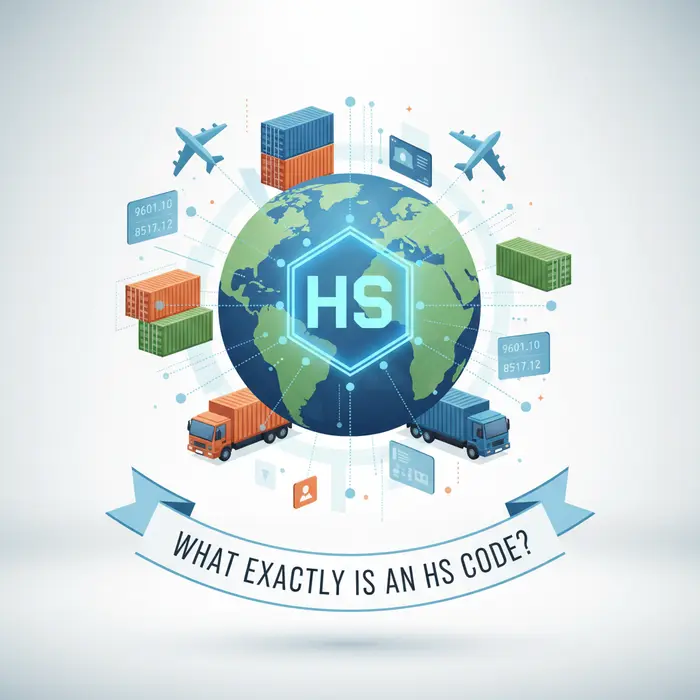
The Harmonized Commodity Description and Coding System, commonly known as the Harmonized System (HS), is an internationally recognized standard for classifying goods. Developed and maintained by the World Customs Organization (WCO), it came into effect in 1988 and has since been adopted by over 200 countries and economic or customs unions worldwide. The system provides a logical and structured framework for categorizing virtually all goods in international trade. At its core, an HS code is a multi-digit number, typically six digits at the international level, that represents a product’s specific category. This six-digit code is universally recognized, ensuring that a product classified under a certain code in one country will be recognized under the same code in another, facilitating consistent identification and treatment across borders. Beyond the international six digits, individual countries may add further digits for more detailed national classifications, making some HS codes 8, 10, or even 12 digits long. This ensures granular specificity while maintaining global compatibility for the first six digits. This systematic approach is what makes the Harmonized System code explained here so critical for global trade.
2. The purpose of global product classification
The primary purpose of the HS Code system extends far beyond mere identification; it serves as the backbone for virtually all international trade operations. Its uniform application ensures that goods are consistently classified, which is vital for calculating import duties and taxes. Without a standardized system, each country would apply its own unique classifications, leading to confusion, delays, and potential disputes. For businesses, knowing the correct HS code for customs clearance is essential to avoid overpaying or underpaying duties, which can result in fines, penalties, and shipment delays. Moreover, HS codes are indispensable for collecting and analyzing international trade statistics. Governments and economic organizations rely on this data to monitor trade flows, negotiate trade agreements, and implement trade policies. The system also plays a crucial role in enforcing regulations related to restricted or prohibited goods, health and safety standards, and environmental controls. From determining origin to applying preferential trade agreements, the HS Code provides the necessary common language that underpins the legality and efficiency of global commerce. Therefore, understanding the HS code importance in international trade cannot be overstated; it truly is the universal language of goods.
3. Who uses HS codes and why
The utility of HS codes spans across a wide spectrum of stakeholders in the international trade ecosystem. Primarily, **exporters and importers** are the direct users. They must accurately determine the HS code for their products to complete customs declarations, calculate duties, and ensure compliance with all import/export regulations. An incorrect HS code can lead to significant financial penalties, shipment confiscation, or severe logistical bottlenecks, underscoring the necessity for a precise HS code lookup. **Customs authorities** in every country are central to the system, using HS codes to verify declarations, assess applicable tariffs, collect revenue, and enforce trade laws and restrictions. Without these codes, their ability to process vast volumes of goods efficiently would be severely hampered. Beyond the direct transactional parties, **governments and policymakers** utilize HS code data to formulate economic policies, analyze market trends, and negotiate bilateral or multilateral trade agreements. **Logistics providers, freight forwarders, and customs brokers** also rely heavily on HS codes to facilitate smooth transit, prepare necessary documentation, and advise their clients. Ultimately, the comprehensive adoption of the Harmonized System streamlines international trade, reduces barriers, and fosters transparency, making it an indispensable tool for anyone involved in the movement of goods across borders.
Decoding the Harmonized System: Structure & Origin
The world of international trade relies on a universal language for product classification: the Harmonized System (HS). Understanding what is an HS Code is crucial for businesses engaged in importing and exporting, serving as the bedrock for customs clearance and trade statistics. This section delves into the origin and hierarchical structure of the Harmonized System, detailing how the 6-digit international code is expanded by national authorities to ensure precise product identification across borders. The HS code importance in international trade cannot be overstated, directly impacting duties, taxes, and compliance.
1. Origin of the World Customs Organization (WCO)
The need for standardized classification in global commerce led to the Harmonized System. Before the HS, disparate national systems caused confusion, delays, and disputes. To address this, the Customs Co-operation Council (CCC) was established in 1952, later renamed the World Customs Organization (WCO) in 1994. The WCO, an independent intergovernmental body with over 180 member countries, is the global hub for customs matters, developing international instruments and standards, and facilitating trade. It was under the WCO’s stewardship that the International Convention on the Harmonized Commodity Description and Coding System (HS Convention) was adopted in 1983 and came into force in 1988. This landmark agreement created the foundational structure for the HS code lookup system, fostering transparency and efficiency. The WCO remains the custodian of the HS, regularly updating its nomenclature to adapt to technological advancements and evolving trade patterns.
2. Understanding the 6-digit international structure (Chapters, Headings, Subheadings)
At its heart, the Harmonized System code explained involves a meticulously organized, hierarchical structure. Every HS code begins with a 6-digit international classification, universally recognized by all WCO member countries. This 6-digit code is composed of three distinct pairs, each providing a more specific level of detail:
- Chapters (First two digits): The HS is divided into 97 chapters, grouped into 21 sections. These first two digits broadly categorize goods by their nature. For instance, Chapter 85 covers “Electrical machinery and equipment and parts thereof.”
- Headings (Next two digits): The next two digits (3rd and 4th) refine the classification within a chapter. They identify a specific category of products. For example, within Chapter 85, “8517” refers to “Telephone sets, including smartphones and other apparatus for the transmission or reception of voice, images or other data.”
- Subheadings (Last two digits): The 5th and 6th digits further break down the product category, offering the most detailed international classification. For example, under heading 8517, “8517.12” specifies “Cellular telephones, including smartphones.” This 6-digit combination forms the standardized global HS code. This systematic approach ensures that products are classified identically worldwide, streamlining the process for HS code for customs clearance.
3. National variations: 8, 10, or 12-digit codes
While the first six digits of an HS code are globally consistent, national authorities expand upon this standard to meet specific tariff, statistical, and regulatory requirements. This is where the Harmonized System code explained becomes country-specific. An HS code might extend to 8, 10, or even 12 digits.
- 8-digit codes: Many countries, including those in the European Union (using the Combined Nomenclature, CN) and China, extend the 6-digit HS code to 8 digits. The 7th and 8th digits provide further national specificity, often related to unique tariff lines or trade statistics.
- 10-digit codes: The United States uses a 10-digit Schedule B code for exports and the Harmonized Tariff Schedule (HTS) for imports. These additional four digits allow for highly granular classification, differentiating products based on material, size, or specific technical characteristics relevant for U.S. customs duties and trade policy. Canada also uses a 10-digit system.
- 12-digit codes: Some countries may use 12-digit codes for extremely precise classification, though less common. These additional digits are crucial for identifying specific sub-types, often for internal statistical tracking, quota management, or domestic tax purposes.
This expansion beyond the international 6-digit standard means businesses must perform an accurate HS code lookup specific to the importing country to ensure correct duties and compliance. Failure to do so can lead to delays, penalties, or even goods being seized. Understanding what is an HS Code in its full national context is paramount for seamless international trade operations.
The Crucial Role of HS Codes in International Trade
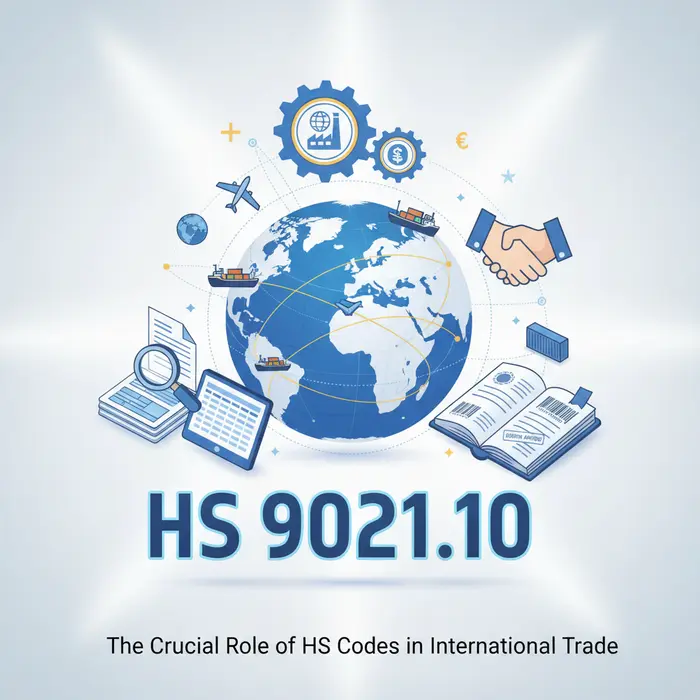
In the intricate ecosystem of global commerce, where goods traverse continents and oceans daily, a seemingly simple code plays an absolutely pivotal role: the HS Code. For anyone involved in importing or exporting, understanding what is an HS Code is not just beneficial, it’s essential. The Harmonized Commodity Description and Coding System, more commonly known as the Harmonized System (HS), provides a standardized numerical classification for traded products. This universally recognized system, maintained by the World Customs Organization (WCO), assigns a unique six-digit code to virtually every product. This allows customs authorities worldwide to identify products consistently, forming the bedrock of efficient international trade operations.
The significance of the Harmonized System code explained through its widespread adoption cannot be overstated. From determining the duties and taxes applied to goods to enabling precise trade statistics and enforcing crucial import/export regulations, HS codes are the universal language that facilitates seamless and lawful cross-border transactions. Incorrect classification can lead to significant delays, hefty fines, and even goods being seized, underscoring the critical need for accurate HS code lookup and understanding its implications for global supply chains and economic policy.
1. Determining customs duties, tariffs, and taxes
Perhaps the most immediate and tangible impact of an HS code is its direct influence on the financial aspects of international trade. Every country applies specific customs duties, tariffs, and taxes based on the classification of the imported goods. The six-digit HS code forms the international standard, but most countries extend this to eight or ten digits for greater specificity, which directly dictates the percentage of duty payable. For businesses, accurate HS code classification is paramount for several reasons:
- Cost Prediction: Knowing the correct HS code allows importers to accurately predict landed costs, crucial for pricing strategies and budget planning.
- Avoiding Penalties: Misclassifying goods, whether intentionally or accidentally, can lead to incorrect duty payments, resulting in penalties, fines, and retrospective duty assessments.
- Expedited Customs Clearance: Correct HS codes streamline the HS code for customs clearance process, preventing delays that can incur storage fees and disrupt supply chains.
Therefore, precise identification through a thorough HS code lookup is not just a regulatory formality but a critical financial tool for any entity engaging in international trade.
2. Trade statistics and economic analysis
Beyond individual transactions, HS codes serve as the backbone for collecting and analyzing global trade data. Governments, international organizations, and research institutions rely on the standardized nature of HS codes to compile comprehensive statistics on imports and exports. This data is indispensable for:
- Economic Forecasting: Tracking trade volumes and types allows economists to forecast economic trends, identify emerging markets, and predict supply and demand shifts.
- Policy Development: Policymakers use HS data to formulate trade agreements, negotiate tariffs, and develop industrial policies that support national economic interests.
- Market Research: Businesses can leverage HS code-based statistics to identify potential new markets, assess competition, and understand consumer preferences in different regions.
- Monitoring Global Trends: International bodies utilize this data to monitor global economic health, assess the impact of trade policies, and address imbalances.
Without the uniformity provided by the Harmonized System, collecting such granular and comparable global trade data would be an impossible task, significantly hindering economic analysis and international cooperation.
3. Enforcing import/export regulations and restrictions
The HS code is not merely a financial or statistical tool; it is a powerful instrument for enforcing a myriad of import and export regulations, restrictions, and prohibitions. National customs authorities rely heavily on these codes to control the movement of specific goods across their borders. This includes:
- Product-Specific Regulations: Many products are subject to specific health, safety, environmental, or technical standards. For example, certain chemicals, pharmaceuticals, or agricultural products require permits or certifications based on their HS classification.
- Quotas and Embargoes: Governments can impose import quotas on specific goods (e.g., textiles, steel) or full embargoes on products from certain countries, all managed and enforced through HS codes.
- Dual-Use Goods: Goods with both civilian and military applications are strictly controlled using their HS classification to prevent proliferation of sensitive technologies.
- Anti-Dumping and Countervailing Measures: HS codes are crucial in identifying goods subject to anti-dumping duties or countervailing measures designed to protect domestic industries from unfair trade practices.
- Security and Illicit Trade: Customs officials use HS codes to identify and interdict illegal trade in contraband, endangered species, counterfeit goods, and other illicit items.
The correct application of HS codes is thus critical for compliance, security, and the integrity of global supply chains, making the HS code importance international trade an indisputable reality for every stakeholder involved.
HS Codes: Your Key to Smooth Customs Clearance
In the complex world of international trade, navigating customs regulations can often feel like an intricate puzzle. One of the most critical pieces is the What is an HS Code. This globally recognized classification system is not merely a string of numbers; it’s the universal language of trade, dictating everything from applicable duties to trade statistics. Understanding and correctly applying your Harmonized System (HS) code is paramount for any business engaged in cross-border commerce, serving as the linchpin for efficient and compliant customs clearance. Without precise classification, shipments can face frustrating delays, unexpected costs, and even severe penalties, underscoring the profound HS code importance international trade.
The Harmonized System code, often referred to as an HS code, is a standardized numerical method of classifying traded products. Developed and maintained by the World Customs Organization (WCO), it comprises over 5,000 commodity groups, each identified by a six-digit code. Countries further expand upon this base with additional digits, creating ten or twelve-digit national tariff codes. For any exporter or importer, mastering the art of an HS code lookup is an indispensable skill, directly impacting the speed and legality of their global supply chain. Let’s explore its practical applications in customs clearance.
1. Avoiding costly delays and penalties at borders
One of the most immediate benefits of accurate HS code classification is the prevention of significant operational headaches. Misclassifying goods, whether intentionally or inadvertently, is a common pitfall leading to severe consequences. When a shipment arrives at a border with an incorrect or ambiguous HS code, customs officials often halt its progress for further inspection. This “detention” can range from days to weeks, incurring demurrage charges, storage fees, and expedited shipping costs. More critically, incorrect classification can result in monetary penalties, fines, and even goods seizure, profoundly impacting a company’s financial health and reputation. By diligently ensuring every product is assigned the correct Harmonized System code, businesses can ensure seamless passage through customs, avoiding these costly disruptions and maintaining efficient supply chain operations. It’s a foundational step towards smooth HS code for customs clearance.
2. Ensuring accurate declaration and duty calculation
Beyond avoiding delays, the HS code serves as the primary determinant for the duties, taxes, and tariffs applicable to imported goods. Each country’s tariff schedule is meticulously mapped to the Harmonized System, meaning a slight variation in an HS code can lead to a vastly different duty rate. An incorrect classification could lead to underpayment or overpayment of duties. Underpayment risks penalties for customs fraud, while overpayment results in unnecessary expenses and reduced profit margins. Customs authorities rely on the precise Harmonized System code explained by the importer to calculate the exact amount of import duties, value-added tax (VAT), and other charges. Moreover, HS codes are crucial for determining eligibility for free trade agreements (FTAs) or preferential duty programs. Accurate HS code classification ensures transparent and compliant financial declarations, safeguarding against legal complications and optimizing landed costs.
3. Facilitating security checks and risk assessment
In an increasingly security-conscious global trade environment, customs agencies leverage HS codes far beyond just duty calculation. These codes play a vital role in national security, public health, and environmental protection. Governments use HS codes to identify controlled substances, restricted items, and goods subject to specific import/export licenses or regulations. For instance, goods like certain chemicals, hazardous materials, or dual-use technologies are immediately flagged by their HS codes, triggering enhanced scrutiny and requiring specific documentation. Customs officials use this information to conduct risk assessments, identify potential threats, and ensure compliance with a myriad of non-tariff barriers and import restrictions. Accurate HS codes enable authorities to efficiently process low-risk shipments while focusing resources on higher-risk cargo, contributing to both national security and faster processing times for legitimate trade. It truly highlights the HS code importance international trade from a regulatory perspective.
In conclusion, the Harmonized System code is far more than an administrative detail; it is a strategic tool for successful international trade. From preventing expensive customs delays and penalties to ensuring precise duty calculations and facilitating critical security checks, the accurate application of HS codes underpins the entire customs clearance process. Businesses that prioritize thorough HS code lookup and classification are better positioned to achieve operational efficiency, maintain regulatory compliance, and enhance their competitiveness in the global marketplace. Investing time in understanding and correctly assigning these codes is an investment in the reliability and profitability of your international supply chain.
How to Perform an HS Code Lookup & Ensure Accuracy
In the complex world of international trade, precision is paramount. One of the most critical elements for smooth customs clearance and compliance is the Harmonized System (HS) code. Understanding What is an HS Code is the first step, but accurately identifying the correct code for your products is where many businesses face challenges. An incorrect HS code can lead to shipment delays, hefty fines, overpayment or underpayment of duties, and even goods being seized. This guide provides a practical approach for businesses to effectively perform an HS code lookup and ensure the accuracy of their classifications, emphasizing the vital HS code importance international trade.
The Harmonized System code explained, is a globally standardized system of names and numbers for classifying traded products. Developed and maintained by the World Customs Organization (WCO), it comprises over 5,000 commodity groups, each identified by a six-digit code. Countries can extend this to 8 or 10 digits for more detailed national classifications, which are crucial for HS code for customs clearance.
1. Official Government Customs Websites and Databases
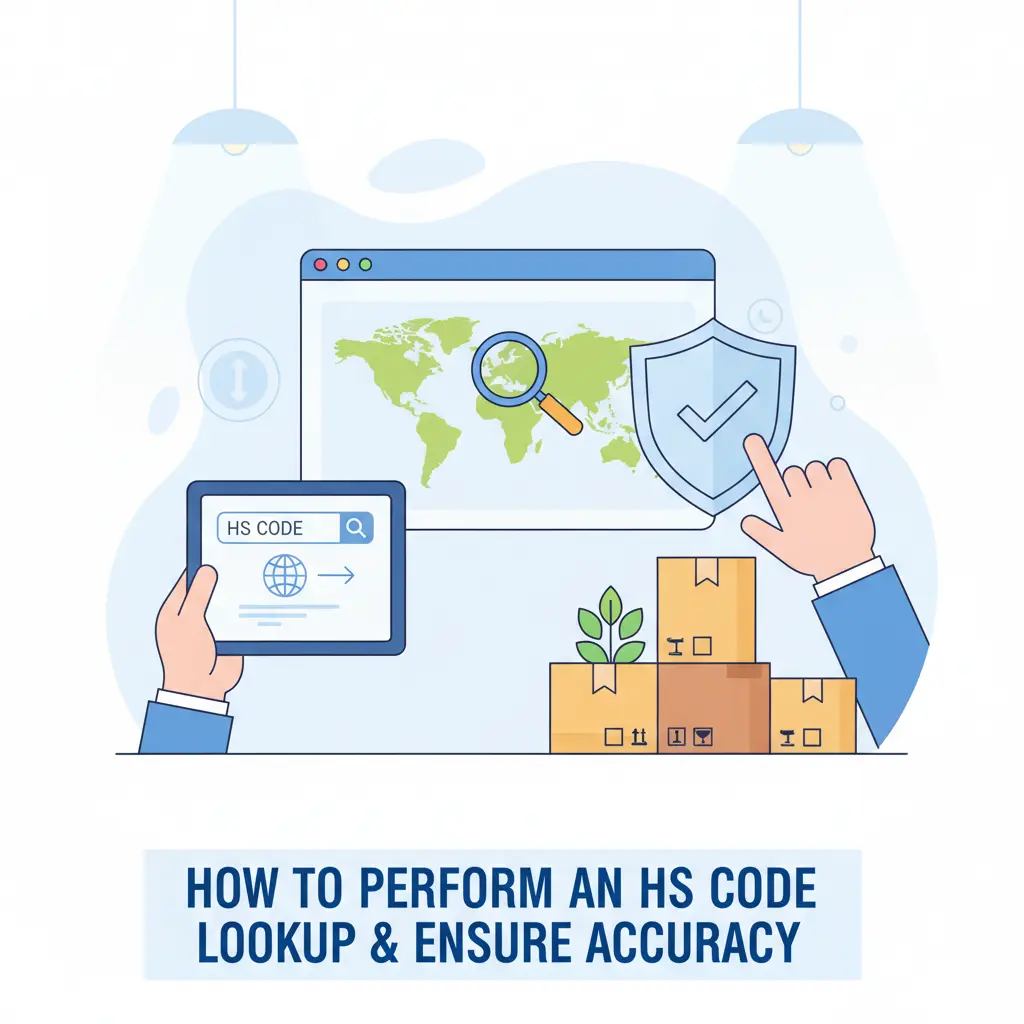
The most authoritative source for HS code classification comes directly from government customs agencies and international trade organizations. These platforms often provide detailed classification guides, explanatory notes, and search functionalities based on product descriptions.
- How to utilize:
- Visit National Customs Websites: Most countries have a dedicated section on their customs agency website for tariff classification. For example, the U.S. Customs and Border Protection (CBP) provides the Harmonized Tariff Schedule (HTS) search tool, while the European Union has the TARIC database.
- Explore International Databases: Tools like the International Trade Centre’s (ITC) Trade Map or the World Customs Organization’s (WCO) website offer valuable resources. The ITC Trade Map, in particular, allows you to search for trade data by HS code and provides an extensive database of national tariffs, often linking to official country schedules. This is an excellent starting point for understanding how different countries classify specific goods. It’s crucial to cross-reference with the importing country’s specific tariff schedule, as national variations beyond the 6-digit level can significantly impact duties and regulations.
- Explanatory Notes: The WCO’s Explanatory Notes provide official interpretations of the Harmonized System, offering detailed descriptions and examples for each heading and subheading. These are indispensable for complex classifications.
- Key takeaway: Always prioritize the importing country’s official tariff schedule. While international databases are great for an initial HS code lookup, the final decision rests with the customs authority at the destination.
2. Utilizing Online HS Code Lookup Tools and Software
Beyond official government sites, a variety of commercial online tools and software solutions are available to assist with HS code classification. These platforms often leverage AI, extensive databases, and user-friendly interfaces to simplify the process.
- Benefits:
- User-friendliness: Many tools are designed for ease of use, allowing businesses to search by keyword, product description, or even images.
- Speed and Efficiency: They can quickly narrow down potential classifications, saving significant time compared to manual searches through extensive tariff schedules.
- Additional Features: Some advanced platforms offer features like duty calculators, compliance checks, and integration with shipping software, providing a comprehensive solution for international trade management.
- Considerations:
- Accuracy: While convenient, these tools should be used with caution. Their classifications are often advisory, and businesses bear the ultimate responsibility for accuracy. Always verify the results against official sources, especially for high-value goods or products with complex classifications.
- Cost: Many advanced tools come with subscription fees, which can be a factor for smaller businesses.
3. Consulting with Customs Brokers and Trade Experts
For complex products, novel items, or businesses new to international trade, consulting with a professional customs broker or trade expert is often the most reliable path to accurate HS code classification.
- When to consult:
- Ambiguous Products: If your product doesn’t neatly fit into existing categories or if there are multiple potential classifications, an expert can provide clarity.
- High-Value Shipments: The financial implications of incorrect classification for expensive goods can be substantial, making expert advice a worthwhile investment.
- New Markets: Experts have deep knowledge of specific country regulations, preferential trade agreements, and potential pitfalls in new markets.
- Binding Rulings: In some cases, a customs broker can help you obtain a binding ruling from the customs authority of the importing country. This official classification provides legal certainty and protection against future challenges.
- Value of expertise: Customs brokers are licensed professionals with extensive knowledge of tariff schedules, customs laws, and trade regulations. They can analyze your product’s composition, function, and end-use to determine the most accurate HS code, ensuring compliance and optimizing duty costs.
Ensuring the accuracy of your HS code classification is not merely a bureaucratic step; it’s a strategic imperative for businesses engaged in global commerce. By leveraging a combination of official government resources, commercial tools, and expert consultation, businesses can confidently navigate the complexities of international trade, prevent costly errors, and facilitate smooth, efficient customs clearance for their goods worldwide. Regular review and staying updated with changes in the Harmonized System are also crucial for sustained compliance.
Partner with Vietnam’s Leading Suppliers
Looking for reliable suppliers in Vietnam? Contact VietnamSuppliers.com today to connect with verified manufacturers and exporters across all industries.
—————————————
References
– What is the Harmonized System – World Customs Organization: https://www.wcoomd.org/en/topics/nomenclature/instrument-and-tools/harmonized_system_nomenclatur/what_is_the_harmonized_system.aspx
– World Customs Organization: https://www.wcoomd.org/
– :
– HS code importance international trade: https://www.wcoomd.org/en/topics/nomenclature/instrument-and-tools/hs_explained.aspx
– ITC Trade Map: https://www.trademap.org/