What is Trade Finance? A Core Definition
Trade Finance stands as the lifeblood of international commerce, providing the essential financial mechanisms that facilitate seamless transactions between buyers and sellers across borders. In an increasingly interconnected global economy, businesses often face complexities ranging from payment defaults and currency fluctuations to political instability and logistical hurdles. Trade finance emerges as a critical solution, designed to mitigate these inherent risks, ensure timely payments, and provide the necessary capital for businesses to conduct import and export activities with confidence. It acts as a bridge, transforming the inherent uncertainties of cross-border trade into manageable, secure, and financially viable operations for businesses worldwide.

1. Defining Trade Finance: Bridging Gaps in Global Transactions
At its core, Trade Finance encompasses a range of financial products and services that underpin international trade and commerce. It provides the necessary liquidity and risk mitigation tools to facilitate the exchange of goods and services between importers and exporters. Essentially, it helps bridge the trust gap that often exists when parties in different countries, with varying legal systems and business practices, engage in transactions. The goal is to ensure that the exporter gets paid for their goods or services, and the importer receives the goods as agreed upon.
According to Investopedia, “Trade finance is a broad term that describes the financial products and services used to facilitate international trade and commerce.” This comprehensive definition highlights its role in providing solutions for businesses navigating the intricacies of global supply chains. For companies seeking robust Trade Finance solutions to optimize their import and export operations, exploring options available through platforms like vietnamsuppliers.com can offer significant advantages in securing competitive financing and risk management. Understanding “What is trade finance definition” is the first step towards leveraging its power in global markets.
2. The Core Purpose: Mitigating Risk & Facilitating Payments
The primary objective of trade finance is twofold: to mitigate the diverse risks associated with international transactions and to ensure efficient and timely payment for goods and services. Cross-border trade inherently involves a higher degree of risk compared to domestic trade. These risks include:
- Credit Risk: The risk that an importer will default on payment.
- Political Risk: Instability or changes in government policy in the importing country that could affect payment or delivery.
- Currency Risk: Fluctuations in exchange rates between the time a deal is struck and payment is made.
- Performance Risk: The risk that either party fails to fulfill their contractual obligations (e.g., exporter fails to ship goods, importer fails to pay).
Trade finance instruments are specifically designed to address these challenges. By involving third-party financial institutions (typically banks), trade finance provides assurance to both the buyer and the seller. For exporters, it guarantees payment, often before shipment or upon presentation of documents. For importers, it assures that payment will only be released once the goods have been shipped according to the agreed terms. Common trade finance instruments list includes Letters of Credit (LCs), Bank Guarantees, Export Credit Insurance, Supply Chain Finance, and Factoring. These import export trade finance options are crucial for businesses, enabling them to expand into new markets and manage larger order volumes with greater security. Many B2B trade finance solutions are tailored to specific industry needs, offering flexible financing and risk coverage.
3. Key Players in the Trade Finance Ecosystem
The successful execution of trade finance transactions relies on the collaboration of several key players, each fulfilling a vital role:
- Exporter (Seller): The party shipping the goods or services, seeking assurance of payment.
- Importer (Buyer): The party receiving the goods or services, seeking assurance of delivery and quality.
- Issuing Bank (Importer’s Bank): Issues financial instruments (e.g., Letter of Credit) on behalf of the importer, guaranteeing payment to the exporter’s bank.
- Advising Bank (Exporter’s Bank): Receives the instrument from the issuing bank and advises the exporter of its terms and conditions.
- Confirming Bank (Optional): Often adds its own guarantee to an instrument issued by the issuing bank, providing an additional layer of security, especially when the issuing bank’s creditworthiness is a concern.
- Financiers/Lenders: Provide capital to exporters or importers, often through pre-shipment or post-shipment finance, or supply chain finance solutions.
- Export Credit Agencies (ECAs): Government-backed institutions that provide insurance and guarantees to support domestic exporters.
- Insurers: Offer coverage against commercial and political risks, complementing bank instruments.
This intricate network of participants works in concert to provide the trust, security, and liquidity necessary for international trade to flourish. By understanding the roles and responsibilities of each player, businesses can more effectively structure their trade finance arrangements, ensuring smoother, safer, and more profitable global transactions.
Essential Trade Finance Instruments & Mechanisms
Detail the various tools and financial instruments used in trade finance, from traditional methods to modern financial products.
Trade finance is the backbone of global commerce, facilitating transactions between importers and exporters by mitigating risks and providing necessary working capital. Essentially, trade finance encompasses a range of financial instruments and services that make international trade possible, especially for B2B trade finance solutions where large sums and geographical distances create inherent complexities. Understanding these tools is crucial for any business engaged in import export trade finance options.
1. Letters of Credit (LCs) and Guarantees
A Letter of Credit (LC), also known as a Documentary Credit, stands as one of the most traditional and secure instruments in trade finance. It is a commitment by a bank (the issuing bank), on behalf of its client (the importer/buyer), to pay a specific amount to a third party (the exporter/seller) once the exporter presents specified shipping documents that comply with the terms and conditions of the LC. This mechanism significantly reduces payment risk for the exporter and ensures that the importer only pays when goods have been shipped as agreed. There are various types of LCs, including revocable, irrevocable, confirmed, unconfirmed, standby LCs, and transferable LCs, each serving slightly different needs and risk profiles.
Bank Guarantees, while similar to LCs in that they involve a bank’s commitment, typically serve as a secondary payment mechanism or a performance bond. A bank guarantee assures a beneficiary (e.g., buyer) that if the applicant (e.g., seller) fails to meet their contractual obligations, the bank will pay a specified sum. Unlike LCs, which are primary payment instruments, guarantees are generally called upon only in instances of default or non-performance. Both LCs and guarantees are vital components of the trade finance instruments list, offering robust financial security in cross-border transactions.
2. Factoring, Forfaiting, and Supply Chain Finance
Beyond the traditional LC, modern trade finance offers more flexible solutions, particularly in managing working capital and cash flow. Factoring involves a business selling its accounts receivable (invoices) to a third party (a ‘factor’) at a discount. This provides immediate cash flow, transferring the risk of collection to the factor, and often includes credit protection. It’s particularly useful for businesses seeking quick liquidity without waiting for customer payments.
Forfaiting is a specialized form of factoring, typically used for larger, longer-term export receivables. Here, an exporter sells its medium- to long-term receivables (often evidenced by promissory notes or bills of exchange) to a financial institution (the ‘forfaiter’) without recourse. This means the exporter is completely absolved of the payment risk, allowing them to improve cash flow and remove contingent liabilities from their balance sheet. This can be a critical import export trade finance option for capital goods or project finance.
Supply Chain Finance (SCF), also known as reverse factoring, focuses on optimizing the flow of funds within an entire supply chain. It’s initiated by the buyer, who leverages their strong credit rating to allow their suppliers to access early payment on approved invoices, often at a lower financing cost than the supplier could obtain independently. This benefits both parties: suppliers get faster access to cash, improving their liquidity, while buyers can potentially extend their payment terms without negatively impacting their suppliers, strengthening supply chain relationships and overall B2B trade finance solutions.
3. Export Credit Insurance and Other Risk Mitigation Tools
In the complex world of international trade, risks extend beyond payment and performance. Political instability, commercial insolvencies, and currency fluctuations can all disrupt transactions. Export Credit Insurance provides a critical safety net for exporters, protecting them against commercial risks (e.g., buyer insolvency, protracted default) and political risks (e.g., war, expropriation, currency transfer restrictions) in foreign markets. This insurance allows exporters to offer competitive credit terms to overseas buyers, expand into new markets with greater confidence, and access additional financing, as insured receivables are more attractive to lenders. Government-backed agencies, such as the Export-Import Bank in the U.S. or UK Export Finance, often play a significant role in providing or underwriting these policies, acting as key players in what is trade finance definition.
Other essential risk mitigation tools include Hedging Instruments (like forward contracts, futures, and options) to manage foreign exchange rate volatility, ensuring predictable costs and revenues. Documentary Collections, while offering less security than LCs, provide a bank-intermediated process for handling shipping documents against payment or acceptance of a draft. These various tools, when strategically combined, form a comprehensive suite of import export trade finance options, allowing businesses to navigate the global marketplace with greater security and efficiency.
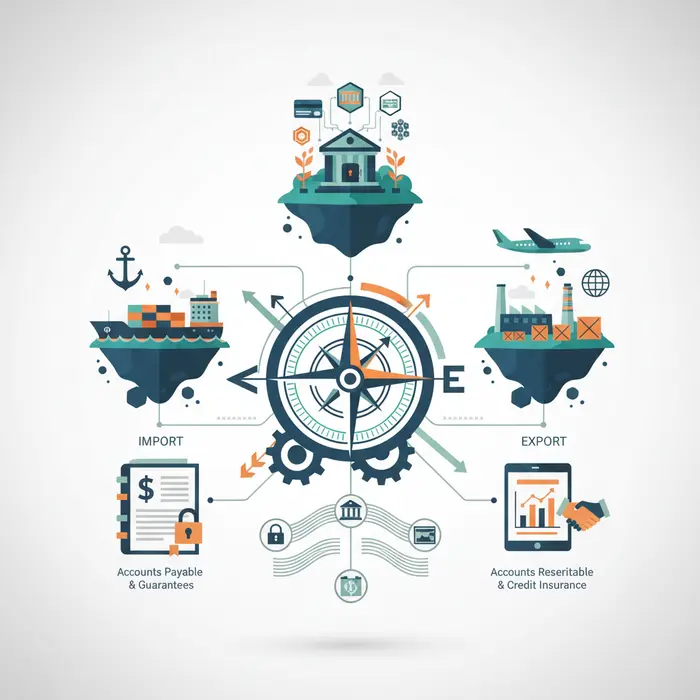
Navigating Import & Export Trade Finance Options
Global trade, a cornerstone of economic growth, inherently involves complexities and risks, especially concerning payments and financing. For businesses engaged in cross-border transactions, securing adequate trade finance is not merely an option but a strategic necessity. What is trade finance definition? At its core, trade finance refers to the various financial instruments and services that facilitate international trade and commerce by mitigating the financial risks involved. It essentially bridges the funding gap between buyers and sellers in different countries, ensuring smooth and secure transactions. This section will explore specific import export trade finance options tailored for both importers and exporters, addressing their unique challenges and needs in the global marketplace, offering robust B2B trade finance solutions. We will delve into a comprehensive trade finance instruments list that empowers businesses to manage cash flow, mitigate risks, and expand their international reach.
Financing for Importers: Ensuring Timely Goods Delivery
Importers often face the challenge of securing goods from overseas suppliers while managing cash flow and ensuring payment security. They need reliable financial mechanisms to build trust with suppliers, guarantee payments, and ultimately ensure the timely delivery of their purchased goods. Effective import trade finance options help importers overcome these hurdles.
- Letters of Credit (LCs): One of the most common and secure trade finance instruments, LCs provide an irrevocable undertaking by a bank on behalf of the importer to pay the exporter a specified sum of money, provided the exporter presents complying documents. This significantly reduces payment risk for the exporter and gives the importer confidence that payment will only be made upon fulfillment of agreed terms.
- Documentary Collections: Less secure than LCs but often more cost-effective, documentary collections involve the importer’s bank collecting payment from the importer against the presentation of shipping documents. It can be either “documents against payment” (D/P) or “documents against acceptance” (D/A).
- Import Loans/Trade Loans: These are short-term loans provided by banks to importers to finance the purchase of goods. They help bridge the gap between when payment is due to the supplier and when the importer sells the goods and receives payment from their customers.
- Supply Chain Finance (SCF) / Payables Finance: Designed to optimize working capital, SCF programs allow importers to extend their payment terms to suppliers while enabling suppliers to receive early payment from a finance provider, often at a discount. This is a powerful B2B trade finance solution for large supply chains.
Boosting Exports: Accessing Capital for Overseas Sales
Exporters, on the other hand, grapple with different sets of challenges, including payment risk from unknown overseas buyers, the need for working capital to fulfill large orders, and market entry costs. Effective export trade finance options are crucial for mitigating these risks and facilitating growth in international markets.
- Export Factoring: This involves selling an exporter’s accounts receivable (invoices) to a third-party financial institution (factor) at a discount. The factor then takes over the collection of payments, providing immediate cash flow to the exporter and often assuming the credit risk.
- Export Credit Insurance: Offered by government agencies or private insurers, this protects exporters against the risk of non-payment by foreign buyers due to commercial or political risks. It allows exporters to offer more competitive payment terms, expanding their market reach.
- Pre-shipment and Post-shipment Finance: Pre-shipment finance provides working capital to exporters to cover expenses like raw materials, production, and packaging before goods are shipped. Post-shipment finance helps bridge the gap between shipment and receipt of payment from the buyer, often by discounting bills of exchange or promissory notes.
- Forfaiting: Similar to factoring but typically for larger, longer-term transactions involving capital goods, forfaiting is the purchase of medium- to long-term trade receivables (e.g., promissory notes, bills of exchange) without recourse to the exporter.
Government Programs and Support for Trade Finance
Recognizing the critical role of international trade in national economies, many governments worldwide offer various programs and support mechanisms to facilitate trade finance. These initiatives aim to reduce risks for private lenders, encourage exports, and support small and medium-sized enterprises (SMEs) in accessing global markets.
- Export Credit Agencies (ECAs): These government-backed institutions provide loan guarantees, insurance, and direct financing to support their country’s exporters. Examples include the U.S. Export-Import Bank (EXIM Bank), UK Export Finance (UKEF), and various national ECAs across Europe and Asia. ECAs often step in where commercial banks may be hesitant due to higher perceived risks, making them a vital component of the broader trade finance ecosystem. Their support can range from protecting against political risks to offering working capital guarantees.
- Trade Promotion Organizations: Beyond direct finance, many government bodies offer advisory services, market intelligence, and networking opportunities to help businesses navigate the complexities of international trade and identify suitable B2B trade finance solutions.
Conclusion
Navigating the intricate landscape of global trade demands a deep understanding and strategic application of various trade finance options. Whether an importer needs to assure timely goods delivery or an exporter aims to boost overseas sales and mitigate payment risks, a diverse trade finance instruments list is available. By leveraging solutions like Letters of Credit, export factoring, and government-backed support, businesses can optimize cash flow, manage risks, and expand their international footprint confidently. Choosing the right import export trade finance options is pivotal for sustainable growth in the dynamic world of global commerce, underscoring the indispensable role of robust trade finance solutions for success.
B2B Trade Finance Solutions for Modern Businesses
The global landscape of commerce is ever-evolving, driven by technological advancements and the increasing demands for efficiency and transparency. For businesses operating in the B2B sector, navigating international trade and managing cash flow are paramount. This is where modern B2B trade finance solutions become indispensable, transforming the traditional mechanisms of securing transactions and optimizing working capital. Technology and innovation are not just influencing; they are fundamentally reshaping the entire trade finance landscape, offering unprecedented opportunities for growth and resilience.
Digitalization and Automation in Trade Finance
Understanding what is trade finance definition is crucial before delving into its modern applications. At its core, trade finance facilitates international and domestic trade by mitigating financial risks, providing working capital, and ensuring smooth transactions between buyers and sellers. Historically, this involved extensive paperwork, manual processes, and significant lead times. Today, however, digitalization and automation are revolutionizing every facet of trade finance.
Distributed Ledger Technology (DLT), including blockchain, is at the forefront of this transformation. By creating immutable and transparent records of transactions, DLT significantly reduces fraud, accelerates document processing, and enhances trust among trading partners. Smart contracts automatically execute terms upon predefined conditions, eliminating manual intervention and reducing disputes. Furthermore, Artificial Intelligence (AI) and Machine Learning (ML) are being deployed to analyze vast datasets, improve risk assessment models, and automate compliance checks, thereby streamlining operations and reducing human error. This technological pivot not only makes trade finance more efficient and secure but also more accessible, especially for SMEs that traditionally faced barriers to entry due to complex procedures and high costs. The integration of digital platforms allows for real-time tracking of goods and payments, offering unparalleled visibility and control throughout the supply chain.
Supply Chain Finance for Enhanced Cash Flow
In the intricate web of global commerce, managing cash flow effectively is critical for business survival and growth. Supply chain finance (SCF) offers innovative mechanisms to optimize working capital for all parties involved in a transaction, from the smallest supplier to the largest corporate buyer. SCF solutions address the common challenge of mismatched payment terms, where buyers often seek longer payment periods while suppliers require earlier access to funds.
Through instruments like reverse factoring, dynamic discounting, and confirmed payables, SCF provides flexible B2B trade finance solutions. For instance, suppliers can receive early payments on their invoices, typically at a discount, providing immediate liquidity and improving their financial health. Concurrently, buyers can extend their payment terms without negatively impacting their suppliers, thereby optimizing their own working capital. This symbiotic relationship strengthens the entire supply chain, making it more resilient and efficient. For businesses engaged in cross-border transactions, import export trade finance options within SCF frameworks are particularly valuable. They bridge the gap between different financial systems and regulatory environments, ensuring that goods can flow smoothly across borders without liquidity bottlenecks. This strategic approach to finance helps businesses manage their inventory, meet production schedules, and mitigate currency risks, ultimately fostering stronger supplier relationships and ensuring operational continuity.
Platform-Based Solutions and Fintech Innovations
The rise of fintech has ushered in an era of unprecedented innovation in trade finance, moving away from traditional bank-centric models to more agile, platform-based solutions. These platforms leverage technology to connect businesses directly with a broader range of funders, including alternative lenders, peer-to-peer networks, and specialized trade finance providers. This democratizes access to capital, offering more competitive rates and tailored financial products.
A comprehensive trade finance instruments list now extends beyond letters of credit and guarantees to include digital-first solutions like e-invoicing finance, purchase order financing, and securitization of trade receivables, all facilitated through these modern platforms. These innovations offer speed and flexibility that traditional methods often lack. Online portals provide intuitive interfaces for submitting applications, tracking transactions, and managing documentation digitally, significantly reducing administrative burdens and processing times. Moreover, these platforms often integrate with existing ERP systems and accounting software, creating a seamless financial ecosystem. For businesses seeking diverse B2B trade finance solutions, these fintech-driven platforms offer transparency, allowing them to compare various financing options and choose the most suitable one for their specific needs. Discover a range of import export trade finance options and explore reliable partners through platforms like VietnamSuppliers, enhancing your global trade capabilities.
The confluence of digitalization, supply chain finance, and platform-based fintech innovations is fundamentally redefining trade finance. These contemporary solutions are not merely incremental improvements; they represent a paradigm shift, enabling businesses to operate with greater agility, security, and financial efficiency in the complex global marketplace.
Benefits and Future Trends in Trade Finance 2025
Trade finance, the essential financial infrastructure for international trade, ensures smooth transactions, mitigates risks, and optimizes cash flow for global businesses. As we approach 2025, this vital sector is rapidly evolving, driven by technological innovation and a profound emphasis on sustainability. Understanding these shifts is paramount for companies seeking sustained growth and operational excellence in a connected trade finance world.

Key Advantages for Businesses: Cash Flow, Risk, and Growth
Effective trade finance provides significant business advantages. It first enhances cash flow management. Instruments like factoring and letters of credit allow exporters immediate funds against receivables and grant importers extended payment terms, optimizing working capital and liquidity crucial for operations.
Secondly, trade finance is critical for risk mitigation. International trade carries commercial, political, and performance risks. Tools such as letters of credit guarantee payment to sellers upon document presentation, shifting risk to a bank. Credit insurance further protects against buyer default. These diverse import export trade finance options instill confidence, enabling businesses to expand into new markets with reduced financial exposure.
Lastly, strategic use of a comprehensive trade finance instruments list fuels business growth. By minimizing payment risks and optimizing cash flow, companies can confidently pursue larger orders and enter new international markets. This empowers small and medium-sized enterprises (SMEs) to compete globally by accessing essential capital and risk protection.
The Impact of ESG Factors on Trade Finance
The global focus on sustainability is profoundly reshaping trade finance. Environmental, Social, and Governance (ESG) factors are now integral to risk assessment and investment decisions. Financial institutions increasingly incorporate ESG criteria, favoring businesses with strong sustainability commitments. This drives “green trade finance” and “sustainable supply chain finance,” where financing terms link to a company’s environmental and social performance.
For businesses, robust ESG practices can unlock new financing opportunities, potentially offering better rates or access to specialized products. Conversely, poor ESG records may lead to higher financing costs or limited access. This trend is crucial for competitive advantage and long-term resilience. As supply chains face scrutiny over ethics, carbon footprints, and resource management, trade finance evolves to incentivize responsible practices. The International Chamber of Commerce (ICC) actively promotes sustainable trade finance frameworks, emphasizing due diligence. ICC Sustainable Trade Finance Guidelines. Businesses must integrate sustainability to remain competitive.
Predicting the Future: Blockchain and AI in Trade Finance
Digital transformation, particularly through blockchain and Artificial Intelligence (AI), is set to revolutionize trade finance, addressing challenges in efficiency, transparency, and accessibility.
Blockchain technology offers unprecedented transparency and immutability. Digitizing documents and creating unalterable records significantly reduces reliance on paper, cutting administrative costs, processing times, and fraud. Smart contracts can automate payment triggers upon specific conditions, accelerating settlements. Several consortia are developing blockchain for various B2B trade finance solutions, promising a more streamlined and secure future.
AI brings powerful analytical capabilities. Machine learning algorithms enhance risk assessment, predict market trends, and detect fraud with greater accuracy. AI automates document verification and provides real-time supply chain insights. AI-driven tools also improve customer service and facilitate easier access to trade finance information, especially for SMEs. The combined force of blockchain for secure execution and AI for intelligent automation will forge a more efficient, inclusive, and resilient trade finance ecosystem, fostering new instruments and services.
In conclusion, trade finance remains a dynamic cornerstone of global commerce. Businesses embracing its core advantages, integrating ESG factors, and leveraging cutting-edge digital technologies like blockchain and AI will not only secure current trade activities but also unlock unparalleled opportunities for future growth and resilience towards 2025 and beyond.
Partner with Vietnam’s Leading Suppliers
Looking for reliable suppliers in Vietnam? Contact VietnamSuppliers.com today to connect with verified manufacturers and exporters across all industries.
—————————————
References
– Trade finance definition by Investopedia: https://www.investopedia.com/terms/t/tradefinance.asp
– Export Credit Insurance: https://www.investopedia.com/terms/e/export-credit-insurance.asp
– What is Trade Finance Definition: https://www.iccwbo.org/resources-for-business/trade-finance/
– Trade Finance: What It Is, How It Works, Types, and Example: https://www.investopedia.com/terms/t/trade-finance.asp
– ICC Sustainable Trade Finance Guidelines: https://iccwbo.org/publication/icc-sustainable-trade-finance-guidelines/