Understanding the Trade Embargo Meaning
In the complex landscape of international relations and global commerce, governments often resort to powerful economic tools to achieve foreign policy objectives. Among these, the trade embargo stands out as a particularly stringent measure. Understanding the trade embargo meaning is crucial for businesses, policymakers, and anyone seeking to comprehend the intricate dynamics of global geopolitics and market access. This section will define trade embargoes, clearly distinguish them from other forms of trade restrictions like sanctions, and explore their fundamental purpose, tracing their evolution through history.
1. Defining a Trade Embargo
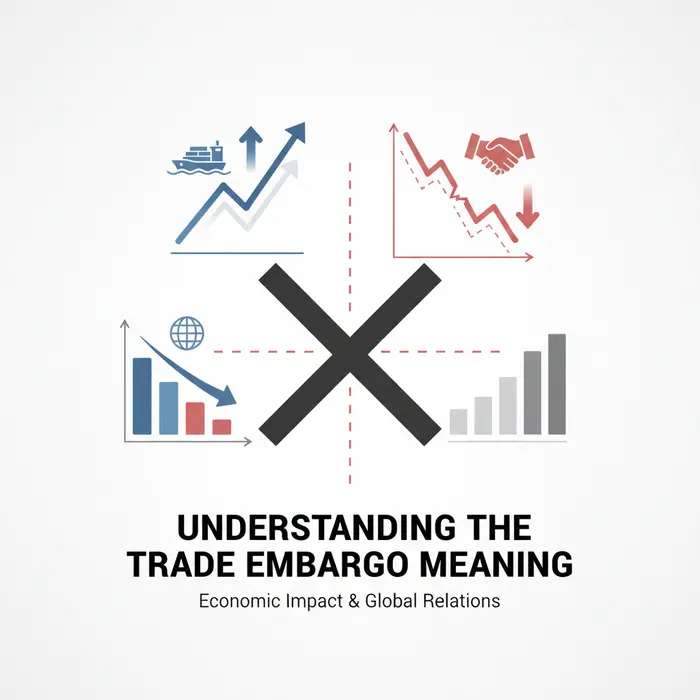
At its core, a trade embargo meaning signifies a complete and comprehensive prohibition on commerce and trade with a particular country, region, or entity. Unlike more nuanced trade restrictions, an embargo typically involves a full cessation of both imports from and exports to the targeted nation. The primary purpose is to exert significant economic pressure, coercing the target government or regime into altering specific objectionable policies or behaviors, such as human rights violations, support for terrorism, or nuclear proliferation.
Embargoes can be unilateral, imposed by a single nation, or multilateral, enforced by a group of countries or an international organization like the United Nations. While often comprehensive, some embargoes can be more targeted, banning trade in specific goods or services (e.g., military equipment, dual-use technologies) under strict export control regulations. However, the defining characteristic remains the intent to cut off virtually all economic interaction to isolate the target and disrupt its economy. The severe nature of an embargo means its implementation often carries significant humanitarian, economic, and political implications for all parties involved.
2. Embargo vs. Sanctions: Key Differences
While often used interchangeably in casual discourse, there’s a crucial distinction between an embargo and other forms of trade sanctions. To truly grasp the trade embargo meaning, one must understand how it fits within the broader category of what are trade sanctions. Trade sanctions encompass a wide array of restrictive measures designed to influence a target’s behavior. These can include tariffs, quotas, financial restrictions (like asset freezes or banking bans), travel bans, arms embargos (a specific type of embargo), and restrictions on specific technology transfers.
The key differentiator is scope and intensity. An embargo represents the most extreme form of trade sanction – a near-total ban on commercial exchange. In essence, an embargo is a specific, comprehensive type of sanction, whereas sanctions are a broader toolkit of restrictive economic measures. While an embargo aims for complete economic isolation, other sanctions can be highly targeted, aiming to disrupt particular sectors, individuals, or government functions without necessarily shutting down all trade. For instance, the impact of trade embargoes on businesses tends to be far more widespread and severe than targeted financial sanctions, affecting the entire commercial ecosystem. Understanding these nuances is vital for businesses navigating complex trade restrictions by country.
3. Historical Context and Evolution of Embargoes
The concept of using economic pressure as a tool of statecraft is far from new. Historically, blockades and trade prohibitions have been employed for centuries, from ancient city-states to the Napoleonic Wars, where the Continental System attempted to embargo British trade. The early 20th century saw the League of Nations attempting to implement economic sanctions and embargoes, notably against Italy during its invasion of Ethiopia. However, early efforts often lacked universal enforcement.
Post-World War II, with the establishment of the United Nations, multilateral embargoes gained greater legitimacy and a framework for implementation, though often hampered by Security Council vetoes. The Cold War era witnessed significant unilateral and bloc-based embargoes, such as the long-standing U.S. embargo against Cuba. More recently, there has been a noticeable shift in international policy away from blanket embargoes towards more targeted or “smart” sanctions, designed to minimize humanitarian impact while maximizing pressure on specific regimes or individuals. This evolution reflects a growing understanding of the complex impact of trade embargoes on businesses and civilian populations, pushing for more precise instruments. Nevertheless, comprehensive embargoes, though less frequent, are still deployed as a last resort in severe cases, continuing to shape global trade relations and geopolitical strategies. For further authoritative information on international trade restrictions and their implementation, entities like the U.S. Department of the Treasury’s Office of Foreign Assets Control (OFAC) provide extensive guidance on compliance with such measures. The evolving nature of these restrictions makes it imperative for businesses to continuously monitor updates and understand the full scope of any specific trade embargo meaning in effect.
Types and Reasons for Trade Restrictions
Trade restrictions, often implemented as powerful tools in international relations and economic policy, represent deliberate governmental actions to limit or regulate the flow of goods and services between countries. While they can arise from various complex motivations, understanding their diverse forms and underlying reasons is crucial for businesses navigating the global marketplace. This section delves into the different types of trade restrictions, with a particular focus on understanding what are trade sanctions, and explores the economic and political drivers behind their imposition.
What are Trade Sanctions? A Comprehensive Look
Trade sanctions are coercive measures imposed by one or more countries against another country, specific entities, or individuals, typically to achieve foreign policy or national security objectives. Unlike broader trade barriers aimed at economic protection, sanctions are often politically motivated and punitive. They can manifest in various forms, ranging from financial restrictions and travel bans to comprehensive trade limitations. A key distinction often made is between general trade restrictions and the more severe trade embargo meaning, which signifies a complete prohibition of trade with a particular country. For instance, an embargo might completely block all imports from or exports to a sanctioned nation, severing all commercial ties. These measures can include tariffs (taxes on imported goods), quotas (limits on the quantity of goods that can be imported or exported), and non-tariff barriers such as stringent product standards or licensing requirements. More direct forms include asset freezes, prohibiting financial transactions, and specific export control regulations that restrict the sale of certain technologies or goods deemed sensitive. The intent is often to exert pressure, alter behavior, or destabilize an adversarial regime, and the impact of trade embargoes on businesses can be severe, disrupting supply chains, closing markets, and increasing operational risks for companies dealing with or operating in sanctioned territories. Understanding what are trade sanctions in their entirety requires recognizing their multifaceted nature and the broad scope of their application.
Economic vs. Political Motivations for Restrictions
The imposition of trade restrictions is rarely a simple act; it stems from a confluence of complex economic and political motivations. From an economic perspective, governments might implement restrictions to protect nascent domestic industries from foreign competition (infant industry argument), safeguard industries deemed vital for national security (e.g., defense, critical technology), or address chronic trade imbalances. Anti-dumping duties, for example, are a common restriction designed to prevent foreign companies from selling goods below cost in a domestic market, which could harm local producers. Trade restrictions can also be used to generate revenue through tariffs, though this is less common in modern policy, or to ensure fair labor and environmental standards across international trade.
Politically motivated restrictions, on the other hand, are often more punitive and strategic. They are frequently deployed as tools of foreign policy to compel a change in behavior from another state or regime. This could involve pressuring countries to improve human rights records, cease nuclear proliferation, combat terrorism, or halt military aggression. For instance, trade restrictions by country can be imposed unilaterally to protest specific actions or collectively by international bodies to enforce international law. The aim is to inflict economic pain sufficient to force a policy shift without resorting to military intervention. These political motivations also encompass national security concerns, preventing adversaries from acquiring critical technologies or resources that could enhance their military capabilities. The effectiveness of these measures is often debated, but their strategic importance in the geopolitical landscape is undeniable.
Common Sanctioning Bodies and Their Objectives
Trade sanctions are implemented by a range of national and international bodies, each with distinct mandates and objectives. Globally, the United Nations Security Council (UNSC) is the preeminent body authorized to impose comprehensive sanctions, often in response to threats to international peace and security. UN sanctions are binding on all member states and typically aim to prevent conflict, deter terrorism, promote non-proliferation, or protect human rights. The European Union (EU) also implements robust sanctions regimes, both autonomously and in alignment with UN resolutions, targeting human rights violations, support for terrorism, or actions undermining democracy.
Individually, powerful nations such as the United States are frequent users of sanctions. The U.S. Department of the Treasury’s Office of Foreign Assets Control (OFAC) is a primary agency responsible for administering and enforcing sanctions programs based on U.S. foreign policy and national security goals, targeting entities involved in terrorism, narcotics trafficking, WMD proliferation, and human rights abuses. The U.S. Department of Commerce, through its Bureau of Industry and Security (BIS), manages export control regulations, restricting the sale of dual-use technologies that could have military applications. Other countries, including the UK, Canada, and Australia, also maintain their own autonomous sanctions frameworks. While the specific targets and scope vary, the overarching objectives of these sanctioning bodies generally revolve around maintaining international stability, upholding ethical governance, and countering illicit activities that pose a threat to global order or national interests. The strategic use of these measures highlights their role as critical instruments of coercive diplomacy.
Impact of Trade Embargoes on Businesses and Economies
Trade embargoes, often implemented as foreign policy tools, represent severe trade embargo meaning a comprehensive prohibition on trade with a particular country. These unilateral or multilateral what are trade sanctions are designed to exert economic and political pressure, compelling targeted nations to change specific policies or behaviors. While intended to achieve strategic objectives, the ripple effects of these trade restrictions by country extend far beyond their primary targets, significantly impacting global trade, specific industries, and consumer markets. Understanding the widespread impact of trade embargoes on businesses and economies is crucial for companies operating in an increasingly interconnected world.

1. Supply Chain Disruptions and Increased Costs
One of the most immediate and profound consequences of trade embargoes is the severe disruption to global supply chains. Businesses that rely on raw materials, components, or finished goods from an embargoed country, or those that export to such a nation, face sudden and often insurmountable obstacles. Companies are forced to seek alternative suppliers or markets, which can be challenging, time-consuming, and significantly more expensive. Rerouting logistics, finding new trusted partners, and adapting to different quality standards can lead to production delays, increased transportation costs, and higher inventory holding costs. Furthermore, complying with complex export control regulations and sanctions lists adds layers of administrative burden and compliance risk. Even companies not directly involved with the sanctioned country can be affected by the cascading effects of material shortages or price increases for commodities suddenly in higher demand from non-embargoed sources. This ultimately compromises operational efficiency and profitability across various sectors.
2. Market Access and Competitiveness Challenges for Firms
Trade embargoes fundamentally alter the competitive landscape for businesses. Firms either lose access to critical export markets or find their market share eroded by competitors from non-sanctioning countries. For companies heavily invested in a particular region, an embargo can mean the complete loss of years of market development, brand building, and customer relationships. The inability to sell goods or services in a previously viable market directly translates to lost revenue and reduced profitability. Moreover, businesses operating under embargoes may struggle to maintain technological parity or product innovation if they are cut off from international research, development partnerships, or essential intellectual property. This diminished market access and operational constraints can severely hamper a firm’s long-term competitiveness, forcing them to downsize, divest assets, or even cease operations, thereby contributing to job losses and economic contraction.
3. Consumer Impact: Prices, Availability, and Innovation
The impact of trade embargoes inevitably trickles down to consumers, affecting their daily lives through changes in prices, product availability, and the pace of innovation. When businesses face higher costs due to supply chain disruptions or have limited access to competitive goods, these costs are often passed on to consumers in the form of increased prices. This inflationary pressure reduces purchasing power and can lead to a decline in living standards. Furthermore, consumers may experience reduced availability of certain goods if imports from a popular source are prohibited. Specialty items, unique technologies, or even staple products might become scarce or disappear from shelves entirely. The lack of competition from embargoed countries can also stifle innovation, as domestic industries face less pressure to develop new products or improve existing ones. Ultimately, consumers bear the brunt of these economic pressures, facing fewer choices, higher expenses, and potentially lower quality goods, highlighting the broad socio-economic reach of trade restrictions.
Navigating Export Control Regulations
Businesses operating in the global marketplace are increasingly confronted with a complex web of international trade regulations, often referred to as export controls. Understanding the trade embargo meaning and the scope of related restrictions is paramount for sustained international operations. These regulations are designed to prevent the proliferation of weapons, combat terrorism, protect national security, and enforce foreign policy objectives. Failing to comply can lead to severe penalties, making effective risk mitigation strategies indispensable. This section will detail the regulatory landscape, focusing on compliance and risk mitigation strategies to help businesses navigate these critical controls.
Key Export Control Agencies and Laws
The regulatory environment governing international trade is primarily shaped by national governments and international agreements. In the United States, several key agencies administer distinct sets of export control regulations. The Bureau of Industry and Security (BIS) within the Department of Commerce enforces the Export Administration Regulations (EAR), which control the export and re-export of most commercial and dual-use items (items with both commercial and military applications). The Directorate of Defense Trade Controls (DDTC) under the Department of State manages the International Traffic in Arms Regulations (ITAR), which specifically govern defense articles and services.
Perhaps one of the most impactful agencies for businesses dealing with international transactions is the Office of Foreign Assets Control (OFAC) of the U.S. Department of the Treasury. OFAC administers and enforces economic trade sanctions programs primarily against countries and regimes, terrorists, international narcotics traffickers, those engaged in activities related to the proliferation of weapons of mass destruction, and other threats to the national security, foreign policy or economy of the United States. These trade restrictions by country can manifest as comprehensive embargoes or targeted sanctions, profoundly impacting permissible business activities and financial transactions. Businesses must be acutely aware of the specific lists maintained by these agencies, such as OFAC’s Specially Designated Nationals (SDN) List, the BIS Entity List, and the Denied Persons List, as engaging with listed parties can lead to immediate violations.
Compliance Best Practices for International Businesses
Developing a robust internal compliance program (ICP) is the cornerstone of effective risk mitigation for international businesses. The complexity and dynamic nature of what are trade sanctions and export controls demand a proactive approach. Best practices begin with thorough due diligence, including screening all parties involved in a transaction – customers, end-users, intermediaries, and financial institutions – against government watchlists. Automated screening tools can greatly assist in this process.
Furthermore, accurately classifying goods, software, and technology is critical. This involves determining the appropriate Export Control Classification Number (ECCN) under the EAR or identifying if an item is subject to ITAR. Incorrect classification can lead to unauthorized exports or unnecessary delays. Businesses must also understand and apply for necessary licenses or permits for controlled items or destinations. Regular employee training is another vital component, ensuring that all relevant personnel, from sales to shipping, understand their obligations and the potential impact of trade embargoes on businesses. Maintaining meticulous records of all export transactions, screening results, and compliance decisions is essential for demonstrating adherence to regulations and for potential audits. This proactive stance significantly reduces exposure to risks associated with inadvertent non-compliance and helps businesses navigate the intricate landscape of global trade restrictions by country.
Avoiding Penalties and Legal Ramifications
The consequences of violating export control and sanctions regulations are severe and multi-faceted, ranging from substantial financial penalties to criminal charges and reputational damage. Fines can reach millions of dollars per violation, and individuals found guilty of egregious offenses may face imprisonment. Beyond monetary and custodial penalties, non-compliant businesses risk losing their export privileges, which can be a death knell for companies reliant on international trade. The impact of trade embargoes on businesses that disregard compliance extends to their standing in the global market, potentially leading to exclusion from future contracts and a significant erosion of trust among partners and customers.
To avoid these drastic legal ramifications, businesses must prioritize and continuously reinforce their compliance frameworks. This includes fostering a culture of compliance from the top down, empowering compliance officers, and regularly auditing internal procedures. In the event of a potential violation, prompt self-disclosure to the relevant authorities (e.g., OFAC or BIS) can be a mitigating factor, often resulting in reduced penalties. Investing in expert legal counsel specializing in export controls and international trade law is also a wise strategy for businesses navigating particularly complex scenarios or responding to alleged violations. Ultimately, a vigilant, well-informed, and systematically implemented compliance strategy is the most effective shield against the harsh penalties associated with export control and sanctions breaches.
Global Perspectives: Trade Restrictions by Country (2025 Outlook)
Review current significant trade restrictions imposed by various countries and forecast potential developments for 2025.

In an increasingly interconnected yet politically fragmented world, trade restrictions have become a prominent tool in international relations and economic policy. As we look towards 2025, understanding the current landscape and future trajectory of these measures is critical for businesses, policymakers, and global trade analysts alike. From comprehensive embargoes to targeted sanctions and complex export control regulations, the mechanisms and impacts of limiting trade are evolving rapidly, reshaping global supply chains and market access.
Major Countries Imposing and Facing Embargoes
The imposition and reception of trade embargoes and sanctions are often dictated by geopolitical tensions, security concerns, and human rights issues. Understanding the trade embargo meaning involves grasping both the political motivations and the economic ramifications. Historically, the United States and the European Union have been major players in utilizing economic sanctions as a foreign policy instrument, targeting countries or entities perceived to be engaging in activities contrary to international norms or national interests. Iran, North Korea, Cuba, and more recently, Russia, stand as prominent examples of nations facing extensive trade restrictions, including comprehensive embargoes that severely limit their access to global markets and financial systems. These measures, often encompassing financial sanctions, travel bans, and restrictions on specific goods and technologies, aim to exert pressure and compel policy changes. Conversely, countries like China have also employed various forms of economic coercion, though often more subtly, using measures such as unofficial import bans or increased tariffs on specific goods from nations with whom they have political disputes. The strategic use of sanctions by the UN Security Council, though less frequent, carries significant international weight.
Case Studies of Recent Global Trade Restrictions
Recent years have provided several compelling case studies illustrating the multifaceted nature and profound impact of trade embargoes on businesses. The extensive sanctions imposed on Russia following its invasion of Ukraine represent one of the most comprehensive packages of trade restrictions in modern history. These measures have included bans on key Russian exports (like oil and gas to certain markets), restrictions on imports of advanced technology, and freezing of financial assets. The ripple effects have been felt globally, disrupting energy markets, straining supply chains, and forcing international companies to withdraw from Russia, incurring significant losses. Another critical area is the ongoing technological rivalry between the United States and China. Here, trade restrictions often manifest as stringent export control regulations, particularly concerning semiconductors, AI technologies, and telecommunications equipment. These controls aim to curb the technological advancement of rival nations, leading to dual supply chains and increased investment in domestic tech industries, but also creating uncertainty and complexity for companies operating across these jurisdictions. Furthermore, the rise of environmental trade policies, such as the EU’s Carbon Border Adjustment Mechanism (CBAM), represents a new frontier of trade restrictions, designed to level the playing field for industries in high-emissions countries but potentially acting as a barrier to trade for others.
Outlook for International Trade Policy in 2025
Looking ahead to 2025, several key trends are expected to shape the landscape of international trade policy and restrictions. Geopolitical fragmentation is likely to continue, leading to a proliferation of targeted sanctions and trade disputes. We can anticipate an increased focus on supply chain resilience and diversification, as nations seek to reduce dependencies on potential adversaries and secure critical inputs. This will likely drive more reshoring and friend-shoring initiatives. The weaponization of economic interdependence, where trade links are used as leverage in political conflicts, will remain a prominent feature. The development and deployment of new technologies, particularly in areas like AI, biotechnology, and quantum computing, will continue to drive new rounds of export control regulations and technology-focused restrictions. Environmental and social governance (ESG) factors are also poised to play a larger role, with more countries integrating climate goals and labor standards into their trade agreements and import/export policies, potentially creating new forms of trade barriers. Overall, the environment for international trade in 2025 will be characterized by continued volatility and the need for businesses to navigate an increasingly complex web of trade restrictions by country, making a clear grasp of the evolving trade embargo meaning more critical than ever.
Partner with Vietnam’s Leading Suppliers
Looking for reliable suppliers in Vietnam? Contact VietnamSuppliers.com today to connect with verified manufacturers and exporters across all industries.
—————————————
References
– U.S. Department of the Treasury’s Office of Foreign Assets Control (OFAC): https://home.treasury.gov/policy-issues/office-of-foreign-assets-control-sanctions-programs-and-information
– U.S. Department of the Treasury – Sanctions Programs: https://home.treasury.gov/policy-issues/financial-sanctions/sanctions-programs-and-country-information
– export control regulations: https://www.treasury.gov/resource-center/sanctions/Pages/default.aspx
– OFAC Sanctions Programs and Information: https://home.treasury.gov/policy-issues/office-of-foreign-assets-control-sanctions-programs-and-information
– sanctions by the UN Security Council: https://www.un.org/securitycouncil/sanctions/information