
What is a Proforma Invoice? Understanding its Core Meaning

In the complex world of international trade and B2B transactions, various documents facilitate smooth operations. Among these, the proforma invoice stands out as a crucial yet often misunderstood preliminary document. Far from being a demand for payment, it serves as a good-faith estimate and a commitment from the seller to provide goods or services at specified prices. Understanding the Proforma Invoice Meaning and its proper application is essential for both buyers and sellers to streamline their sales processes, manage expectations, and comply with regulatory requirements, especially in cross-border dealings.
1. Defining the ‘Estimated Bill of Sale’
At its core, a proforma invoice is a preliminary bill of sale sent to buyers in advance of a final sale and shipment. The term “proforma” itself means “for the sake of form” or “as a matter of form,” aptly describing its non-binding nature as a formal quotation. Unlike a commercial invoice, which is a legally binding demand for payment for goods or services already provided, a proforma invoice merely signifies a seller’s commitment to supply goods or services on the terms and conditions specified. It details the exact description of goods, quantities, unit prices, total value, shipping costs, and payment terms, but crucially, it does not request payment. Instead, it provides the buyer with a precise estimation, allowing them to make necessary arrangements, such as securing import licenses, arranging financing, or making payment preparations. Think of it as a detailed quote that looks and feels like an invoice but lacks the definitive legal obligation for immediate payment.
2. Primary Purpose: Pre-Sales Commitment
The primary purpose of a proforma invoice revolves around facilitating a pre-sales commitment and setting clear expectations before the final transaction. It acts as a crucial communication tool, enabling buyers to confirm order details and understand the total estimated cost, including potential shipping and handling fees, customs duties, and taxes. This transparency is particularly vital in global trade, where unexpected costs can complicate transactions. For sellers, issuing a proforma invoice demonstrates professionalism and a commitment to the quoted terms, helping to solidify the buyer’s trust and move the sales process forward. For instance, in an international transaction, a proforma invoice for export often serves as the documentation required by customs authorities to pre-clear goods or for the buyer to obtain an import permit or foreign exchange allocation from their bank. It can also be used by the buyer to apply for a letter of credit or other forms of financing, ensuring that all parties are aligned on the financial and logistical aspects before the actual shipment takes place.
3. When is a Proforma Invoice Issued?
A proforma invoice is typically issued at an early stage in the sales cycle, specifically after the seller and buyer have reached an initial agreement on the scope of goods or services but before the final commercial invoice can be generated. This usually occurs when the exact details required for a commercial invoice (such as final shipping costs, precise weights, or confirmed delivery dates) are not yet available, or when the buyer needs a preliminary document for internal processes. Common scenarios for its issuance include: when a customer requests a detailed quote that includes shipping and other charges; when goods are to be shipped internationally, requiring the buyer to present documentation for import regulations or customs pre-clearance; or when a buyer needs to obtain an internal purchase order or approval for a transaction. It’s also often used when a seller requires a prepayment or deposit before shipping goods, providing the buyer with a formal document to process this payment. This positions the proforma invoice as a bridge between a mere quotation and a final commercial invoice, providing a formal structure to the pre-payment or pre-shipment phase. Understanding the distinction, a proforma invoice vs commercial invoice, is key: the former is a preliminary estimate, while the latter is the final, legally binding demand for payment. Businesses often use a standard Proforma Invoice Template to ensure all necessary details are consistently included, facilitating clarity and compliance.
Key Components and Benefits of a Proforma Invoice
A proforma invoice is a preliminary bill of sale provided to buyers before the actual shipment or delivery of goods or services. Distinct from a commercial invoice, it serves as an estimated declaration of the transaction, detailing proposed goods, quantity, price, and terms. This document offers a clear snapshot of the upcoming transaction, making the Proforma Invoice meaning crucial for both domestic and international trade. It represents a seller’s commitment and allows the buyer to make informed decisions, secure financing, or obtain necessary import documentation.
1. Mandatory Fields: What to Include
For a proforma invoice to be effective and legally sound, it must contain several essential elements that ensure clarity and prevent misunderstandings. Key components typically include:
- Seller’s & Buyer’s Information: Full names, addresses, and contact details of both parties.
- Proforma Invoice Number and Date: A unique identifier and date of issuance.
- Detailed Description of Goods/Services: Specifics of each item, including product codes, quantity, and unit price.
- Total Estimated Price & Currency: The sum of all items, with estimated taxes, duties, and shipping, clearly stating the currency.
- Incoterms: International trade terms (e.g., FOB, CIF) defining responsibilities for delivery, insurance, and costs, especially critical for a Proforma Invoice for Export.
- Payment Terms: Agreed-upon payment method, schedule, and due dates.
- Delivery Date/Period & Validity Period: Estimated delivery timeframe and the period for which the quoted terms remain valid.
- Origin of Goods: Country of production, important for customs compliance.
Including these details ensures a comprehensive Proforma Invoice Template, vital for transparent business dealings.
2. Benefits for Buyers: Transparency & Budgeting
The proforma invoice offers significant advantages to buyers, primarily by fostering transparency and aiding meticulous financial planning. For buyers, receiving this document facilitates:
- Cost Clarity: Buyers gain a precise estimate of all associated costs—goods, shipping, insurance, and potential taxes/duties—before committing to a purchase. This foresight is invaluable, distinguishing a proforma from a final commercial invoice.
- Budgeting & Financial Planning: With a detailed cost breakdown, businesses can accurately allocate funds, secure financing, and avoid unexpected expenses, optimizing cash flow and budget adherence.
- Customs & Import Streamlining: In international trade, a proforma invoice enables buyers to apply for import licenses, foreign exchange allocations, or estimate customs duties and taxes upfront, streamlining the import process and reducing potential delays.
- Informed Decision Making: It provides a concrete document for internal approvals, allowing various departments to review and approve terms before a binding purchase order.
A well-structured proforma invoice empowers buyers with the necessary information to proceed confidently and efficiently.
3. Benefits for Sellers: Inventory & Production Planning
Beyond the buyer, proforma invoices provide substantial operational and risk management benefits for sellers:
- Inventory & Production Optimization: By issuing a proforma, sellers can gauge buyer commitment, allowing better planning for inventory levels, production schedules, or raw material procurement. This minimizes overproduction or understocking.
- Formalized Sales Process: It acts as a formal stepping stone to a confirmed sale, clarifying the seller’s offer and the buyer’s initial agreement. This reduces the likelihood of disputes by aligning expectations early.
- Securing Pre-payment: For many transactions, especially international ones, a proforma invoice serves as the document to request upfront payment, providing the buyer with necessary details for processing the transfer.
- Efficient Export Documentation: The information on a proforma invoice often mirrors what’s needed for the final commercial invoice and other shipping documents. This pre-populates essential data, making export documentation smoother and less prone to errors, particularly crucial for a Proforma Invoice for Export.
- Risk Mitigation: Detailing terms like Incoterms and payment schedules early helps sellers mitigate risks related to logistics, payment defaults, and international trade compliance.
In conclusion, the proforma invoice is an indispensable tool that facilitates structured, transparent, and efficient transactions, benefiting all parties in the supply chain.
Proforma Invoice vs. Commercial Invoice: A Clear Distinction
In the intricate world of international trade and domestic commerce, understanding the nuances between key financial documents is paramount. Two such documents, often confused yet fundamentally distinct, are the proforma invoice and the commercial invoice. While both provide details about a transaction, their legal status, purpose, and timing within the sales process vary significantly. Clarifying these differences is crucial for smooth operations, accurate record-keeping, and compliance, especially for businesses engaged in export and import activities.
A Proforma Invoice serves as a preliminary bill of sale sent to buyers in advance of a shipment or delivery of goods. It outlines the details of the proposed transaction, including the goods, quantity, price, shipping costs, and payment terms, but it is not a demand for payment. On the other hand, a commercial invoice is a final, legally binding document issued by the seller to the buyer after the goods have been shipped. It acts as a formal request for payment and is essential for customs clearance.

1. Legal Status and Binding Nature
The most critical distinction between a proforma invoice and a commercial invoice lies in their legal standing. A proforma invoice is generally considered a non-binding offer or a good-faith estimate. It’s akin to a quote or an agreement in principle. While it details the terms of a future sale, it does not create an obligation for the buyer to pay until the goods are formally dispatched or the services rendered. It is subject to change based on negotiations or unforeseen circumstances. It’s often used by buyers to secure financing, obtain import licenses, or estimate customs duties before committing to a purchase.
Conversely, a commercial invoice is a legally binding document. Once issued, typically after the goods have been shipped, it represents a definitive demand for payment for the delivered items. It serves as evidence of the sale and is a critical component for both the buyer’s and seller’s accounting records. It confirms the exact goods, quantities, and prices agreed upon, and it cannot be altered without mutual consent, unlike a proforma invoice which can be adjusted during the pre-sale negotiation phase.
2. Purpose and Timing in the Sales Process
The purpose and timing of these documents are intrinsically linked to their legal nature. A proforma invoice is generated at the very beginning of the sales cycle, typically when a potential buyer expresses interest but before a formal order is placed or fulfilled. Its primary purpose is to provide the buyer with all necessary information to make an informed decision, arrange financing, or secure necessary permits, especially important for a Proforma Invoice for Export. It allows buyers to preview the costs, including freight, insurance, and duties, without committing financially.
The commercial invoice, on the other hand, comes into play much later in the process. It is issued after the seller has fulfilled their part of the agreement, meaning the goods have been prepared, packed, and dispatched. Its central purpose is to facilitate payment and customs clearance. For international shipments, the commercial invoice is a vital customs document that provides authorities with details about the goods’ value, origin, and description, enabling them to calculate tariffs and taxes. Without a proper commercial invoice, goods can be held indefinitely at customs.
3. When to Use Each Document
Understanding when to deploy each document is key to efficient trade practices. You would issue a proforma invoice when:
- A buyer requests a detailed quote before committing to a purchase, especially for large or complex orders.
- The buyer needs to secure import licenses or permits in their country.
- The buyer needs to arrange for pre-shipment financing or open a Letter of Credit.
- You want to provide a comprehensive estimate, including shipping and other charges, to avoid surprises later. Many businesses use a Proforma Invoice Template for consistency.
Conversely, a commercial invoice is indispensable when:
- The goods have been shipped or services rendered, and you are ready to formally request payment.
- The shipment is crossing international borders, necessitating customs declaration.
- You need to document the final transaction details for your accounting and tax purposes.
- The buyer requires a definitive document for their inventory management and financial records.
In essence, the proforma invoice acts as a detailed proposal, setting expectations and facilitating pre-sale logistics, while the commercial invoice is the definitive billing document that triggers payment and allows for the physical movement of goods across borders. Differentiating between these two is fundamental for any business involved in buying or selling goods, particularly in the global marketplace where the phrase “Proforma Invoice vs Commercial Invoice” is a constant point of operational consideration.
Proforma Invoices in Export and International Trade
In the intricate world of global commerce, the Proforma Invoice stands as a cornerstone document, playing a pivotal role long before goods ever leave the exporter’s premises. Unlike a standard quote, the Proforma Invoice Meaning signifies a commitment from the seller to provide goods or services at specified prices and terms, essentially serving as a preliminary bill of sale. It’s an indispensable document for any company engaged in cross-border trade, particularly a Proforma Invoice for Export, laying the groundwork for smooth transactions and mitigating potential hurdles.
This preliminary document is critical for clarifying transaction details, facilitating financial arrangements, and ensuring regulatory compliance. Its importance spans across various stages of an international transaction, from initial negotiations to securing customs clearance and final payment. Understanding its multifaceted utility is essential for both seasoned exporters and newcomers to the global marketplace.
1. Facilitating Customs and Import Procedures
One of the primary functions of a proforma invoice is to streamline the often-complex customs and import procedures in the destination country. Before the actual commercial invoice is issued, the importer requires a detailed breakdown of the shipment to comply with local regulations. The proforma invoice provides this critical information, enabling the importer to declare the goods to their customs authorities in advance. This includes accurate descriptions, quantities, unit prices, total value, and shipping terms (Incoterms).
By providing these details early, the proforma invoice allows the importer to secure necessary import licenses, permits, and quotas that might be required for specific types of goods. Furthermore, it enables the importer to calculate estimated duties, taxes, and other import fees, thereby avoiding unexpected costs and delays upon the shipment’s arrival. This foresight is crucial for budgeting and planning, preventing goods from being held up at the port due to incomplete documentation or unforeseen charges. It acts as an unofficial customs declaration, paving the way for eventual smooth clearance when the actual goods and commercial invoice arrive.
2. Securing Pre-Payment and Financing
For many international transactions, especially those involving new trading partners or high-value goods, exporters often require pre-payment or some form of financial assurance. The proforma invoice is instrumental in this process, serving as the basis for the importer to arrange payment or secure financing. It provides the bank with all the necessary details to process a wire transfer, open a Letter of Credit (L/C), or facilitate other payment methods.
When an L/C is used, the proforma invoice’s terms and conditions are often directly incorporated into the L/C application, ensuring that the financial instrument accurately reflects the agreed-upon transaction. This level of detail minimizes discrepancies and potential payment delays. By outlining the exact costs, including product prices, freight charges, insurance, and any other relevant fees, the proforma invoice gives the importer a clear financial commitment, allowing them to allocate funds or obtain necessary credit facilities from their financial institutions. This ensures that the exporter has a firm financial commitment before committing resources to production and shipping.
3. Compliance for International Shipping
Ensuring compliance with international shipping regulations is paramount for successful cross-border trade, and the proforma invoice plays a vital supporting role. It serves as a foundational document that all parties—exporter, importer, freight forwarder, and customs brokers—can reference to confirm the specifics of the transaction. Accurate information on the proforma invoice prevents misunderstandings and miscommunications regarding product specifications, packaging, and shipping instructions, which could otherwise lead to costly errors or non-compliance penalties.
While often confused, it’s important to understand the distinction between a Proforma Invoice vs Commercial Invoice. The proforma invoice is an estimation or preliminary offer, whereas the commercial invoice is the final demand for payment and a legally binding document that accompanies the actual shipment. However, the data from the proforma invoice forms the blueprint for the commercial invoice and other essential export documentation, ensuring consistency and accuracy across all paperwork. Using a reliable Proforma Invoice Template helps ensure all necessary fields are included, meeting international standards and facilitating smoother processing by all stakeholders involved in the supply chain.
In conclusion, the proforma invoice is far more than just a preliminary quote; it is a strategic tool that lubricates the gears of international trade. From enabling proactive customs clearance and securing financial commitments to ensuring overall transactional compliance, its role is indispensable. For any business looking to navigate the complexities of global markets efficiently and effectively, mastering the use of the proforma invoice is a critical step towards success.
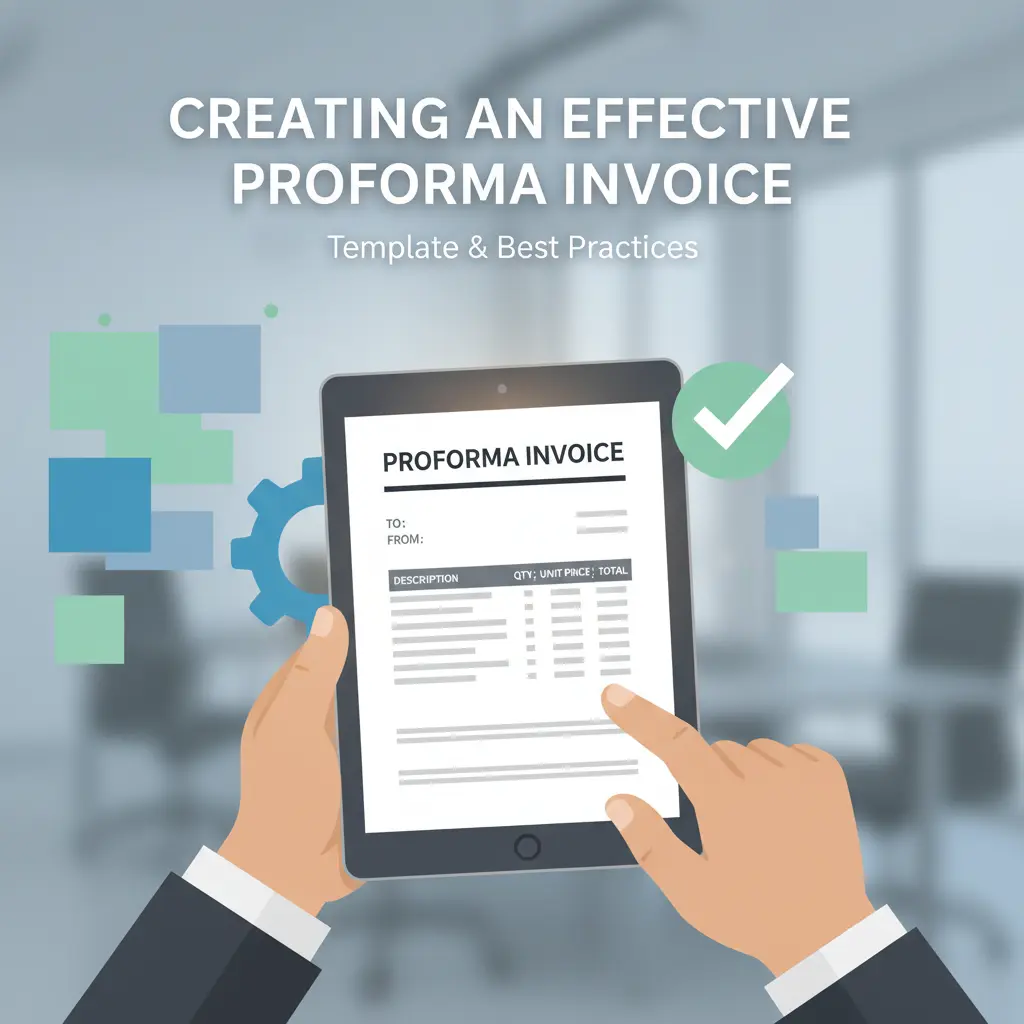
Creating an Effective Proforma Invoice: Template & Best Practices
A proforma invoice serves as a preliminary bill of sale sent to buyers ahead of a final commercial invoice. It outlines the details of an upcoming sale, including the description of goods or services, quantity, price, and other terms, providing the buyer with an accurate estimate of the total cost before the transaction is finalized. This document is particularly crucial in international trade, acting as a binding offer from the seller and a commitment from the buyer, often required for import licensing, foreign exchange allocation, or pre-shipment inspection. Understanding the proforma invoice meaning and mastering its creation can significantly streamline your sales and export processes.
1. Step-by-Step Guide to Drafting a Proforma Invoice
Drafting an accurate and comprehensive proforma invoice is essential for clear communication and smooth transactions. While not a demand for payment, it’s a detailed offer that helps the buyer understand their financial commitment. Here’s a step-by-step approach to creating an effective proforma invoice:
- Clearly Label the Document: Prominently display “PROFORMA INVOICE” at the top to distinguish it from a commercial invoice or purchase order.
- Include Seller’s Details: Provide your full business name, address, contact information, and any relevant tax identification numbers.
- Include Buyer’s Details: List the full name and address of the prospective buyer or consignee, along with their contact information.
- Assign a Unique Proforma Invoice Number: Use a sequential numbering system for easy tracking and referencing.
- State the Date of Issue and Validity Period: Specify when the proforma invoice was issued and for how long the quoted prices and terms are valid. This is crucial for managing price fluctuations, especially for a proforma invoice for export.
- Detailed Description of Goods/Services: List each item with a clear description, quantity, unit price, and total price. Include product codes, dimensions, weight, and any other relevant specifications that might be important for customs or logistics.
- Currency: Clearly state the currency for all prices.
- Payment Terms: Outline the agreed-upon payment method, terms (e.g., 30% advance, balance on delivery), and any banking details.
- Delivery Terms (Incoterms): For international trade, specify the Incoterm (e.g., FOB, CIF, EXW) that defines the responsibilities for shipping costs, insurance, and risk transfer between buyer and seller. Incoterms are globally recognized standards that ensure clarity in trade.
- Estimated Shipping Costs and Other Charges: Include estimates for freight, insurance, duties, and taxes. While these may be estimates, they provide the buyer with a realistic total cost.
- Total Estimated Amount: Provide a clear subtotal and total amount due, including all estimated charges.
- Seller’s Signature: A signature indicates the seller’s commitment to the terms outlined.
2. Utilizing a Proforma Invoice Template
While a manual approach is possible, leveraging a proforma invoice template can significantly streamline the creation process, reduce errors, and ensure consistency across all your preliminary sales documents. Templates provide a standardized format, ensuring that no critical information is omitted.
- Efficiency and Time-Saving: Instead of starting from scratch each time, a template allows you to quickly fill in the specifics for each transaction.
- Consistency and Professionalism: Templates maintain a uniform brand image and document structure, projecting professionalism to your clients.
- Reduced Errors: Pre-designed fields guide you to include all necessary details, minimizing the chance of overlooking important information, such as payment terms or Incoterms for export.
- Customization: Most templates are fully customizable, allowing you to add your company logo, specific disclaimers, or adjust the layout to suit your business needs. You can find free templates online, or use features within accounting software or ERP systems that generate proforma invoices.
3. Common Mistakes to Avoid and Best Practices
To ensure your proforma invoices are effective and serve their intended purpose without leading to complications, be mindful of common pitfalls and adhere to best practices.
Common Mistakes:
- Confusing Proforma with Commercial Invoice: Remember, a proforma invoice is an estimate and a commitment, not a final demand for payment. A commercial invoice is issued once goods are shipped or services rendered and is legally binding for payment and customs clearance. Failing to understand the distinction between a proforma invoice vs commercial invoice can lead to significant issues, particularly in international trade.
- Omitting Key Details: Leaving out essential information like a validity period, Incoterms, or detailed product specifications can cause confusion or delays.
- Inaccurate Estimates: While estimates are acceptable, ensure they are as accurate as possible, especially for shipping costs, duties, and taxes. Significant discrepancies can erode buyer trust.
- Lack of Clarity: Ambiguous language regarding payment terms, delivery schedules, or product descriptions can lead to misunderstandings.
Best Practices:
- Be Meticulously Detailed: The more comprehensive your proforma invoice, the less room for misinterpretation.
- Clearly State Validity: Always include an expiry date for the prices and terms.
- Use Clear Labeling: Always label the document clearly as “PROFORMA INVOICE.”
- Communicate Proactively: Discuss all terms and conditions with the buyer before issuing the proforma, ensuring mutual understanding.
- Maintain Records: Keep a copy of every proforma invoice issued for your records and for future reference or audits.
- Review and Update: Regularly review your proforma invoice template and practices to ensure they align with current business needs and international trade regulations.
By following these guidelines, you can create effective proforma invoices that facilitate smooth transactions, particularly in complex scenarios like international export, and build stronger relationships with your clients.
Partner with Vietnam’s Leading Suppliers
Looking for reliable suppliers in Vietnam? Contact VietnamSuppliers.com today to connect with verified manufacturers and exporters across all industries.
—————————————
References
– proforma invoice for export: https://www.investopedia.com/terms/p/proforma-invoice.asp
– Pro Forma Invoice: What It Is, How It Works, Example: https://www.investopedia.com/terms/p/proforma-invoice.asp
– proforma invoice: https://www.investopedia.com/terms/p/proformainvoice.asp
– export documentation: https://www.trade.gov/export-documentation
– Incoterms: https://www.investopedia.com/terms/i/incoterms.asp