
What is an International Shipping Letter of Indemnity (LOI)?
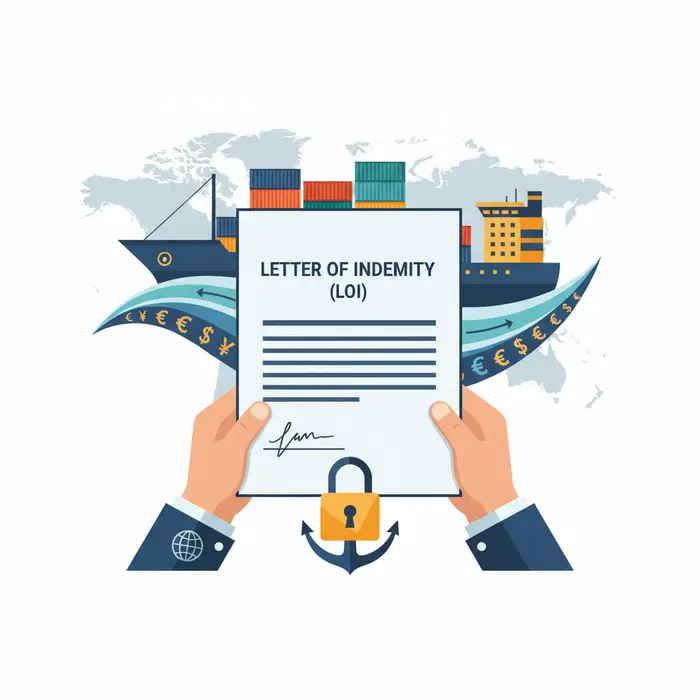
In the intricate world of global trade, efficiency and trust are paramount. However, complex logistics and unforeseen circumstances can sometimes disrupt standard procedures. This is where an International Shipping Letter of Indemnity (LOI) plays a crucial role. An LOI is a legally binding document that allows for the smooth continuation of shipping operations even when standard documentation or processes cannot be strictly followed. It serves as a guarantee from one party (typically the shipper or consignee) to another (usually the carrier or vessel owner) to cover any potential losses, damages, or liabilities that might arise from deviating from standard protocol.
Essentially, an LOI acts as a safety net, enabling flexibility in urgent or unusual situations while safeguarding the interests of all parties involved. Without such a mechanism, trade could stall due to minor discrepancies or delays in paperwork, proving costly for global businesses.
1. Letter of Indemnity definition international trade
At its core, a Letter of Indemnity in international trade is a contractual agreement where the indemnifier (the party issuing the LOI) undertakes to compensate the indemnified party (the recipient of the LOI) for any loss, damage, or expense that the latter may incur by acting on the indemnifier’s request. In shipping, this typically means a request to perform an action that carries inherent risk or deviates from the terms of the original contract of carriage, such as delivering cargo without the original bill of lading.
This definition underscores the LOI’s purpose: to mitigate risk. It shifts financial responsibility for specific, agreed-upon risks from the carrier to the party requesting the deviation. While not a substitute for proper documentation, it provides a crucial interim solution, backed by a commitment to bear financial consequences should the risk materialize. Understanding specific clauses and requirements is vital, as a poorly drafted LOI may be unenforceable.
2. Purpose and legal implications for shippers and carriers
The primary purpose of an LOI is to facilitate trade by allowing carriers to proceed with operations that, under normal circumstances, would be deemed high-risk or even unlawful without specific documentation. For instance, delivering goods without the original bill of lading is a common scenario. Without an LOI, a carrier would be reluctant to release cargo, fearing claims from the rightful owner. The LOI provides the carrier with a legal shield against such claims.
Legal Implications for Shippers:
- Assumption of Liability: When a shipper issues an LOI, they legally bind themselves to cover all specified liabilities and potential losses incurred by the carrier as a result of acting on the shipper’s request.
- Financial Risk: Shippers bear the financial risk associated with the deviation. If issues arise (e.g., fraudulent claims for the cargo), the shipper is responsible for compensating the carrier.
Legal Implications for Carriers:
- Reduced Immediate Risk: An LOI allows carriers to act quickly to avoid demurrage or port charges, or to facilitate urgent deliveries, without immediate fear of legal repercussions from a missing document.
- Reliance on Indemnity: Carriers rely on the LOI as a legally enforceable promise of compensation. However, enforceability can vary depending on jurisdiction and specific wording. Certain actions, particularly those involving known fraud, may render an LOI invalid.
- Due Diligence: Even with an LOI, carriers must exercise due diligence. They must ensure the LOI meets their specific Carrier LOI requirements and is issued by a reputable and solvent party.
The legal framework surrounding LOIs can be complex, often influenced by international maritime law and national jurisdictions. It’s crucial for both parties to seek legal advice to ensure the LOI is valid and enforceable.
3. When is an LOI typically used in global logistics?
LOIs are not meant to circumvent standard procedures but rather to provide a pragmatic solution in specific, time-sensitive scenarios. Some of the most common applications include:
- Delivery of Cargo Without Original Bill of Lading: This is arguably the most frequent use. If the original bill of lading (B/L) has been lost, delayed, or is still in transit, but the consignee urgently needs the cargo, an Letter of Indemnity for missing bill of lading allows the carrier to release the goods. The consignee (or shipper) issues an LOI, indemnifying the carrier against claims from anyone presenting the original B/L later.
- Discharge at a Port Different from the Bill of Lading: Commercial needs sometimes dictate that cargo be discharged at an alternative port. An LOI allows the carrier to comply with this request without breaching the original contract of carriage.
- Delivery to a Party Not Named on the Bill of Lading: In cases of resales or complex supply chains, the ultimate recipient might differ from the consignee named on the B/L. An LOI from the named consignee can authorize delivery to a third party.
It’s important to note that while an International Shipping Letter of Indemnity provides flexibility, it should be used judiciously. Carriers often require specific formats, sometimes referred to as an “LOI shipping template,” which might include bank guarantees or counter-signatures to enhance enforceability. The risks associated with LOIs, especially in cases of fraud, mean they are typically reserved for situations where commercial urgency outweighs procedural risks, and where there’s a strong, established relationship and trust between the parties.
In conclusion, the International Shipping Letter of Indemnity is an indispensable tool in global logistics, bridging the gap between rigid contractual obligations and the fluid realities of international trade. While offering crucial flexibility, its use demands a clear understanding of its legal implications and a careful assessment of the risks involved for both the indemnifier and the indemnified party.
Common Scenarios Requiring an LOI in Shipping
In the intricate world of international trade, unforeseen circumstances and logistical challenges are commonplace. These situations often necessitate flexible, yet legally robust, solutions to keep goods moving and protect all parties involved. This is where an International Shipping Letter of Indemnity (LOI) becomes an indispensable tool. An LOI is a formal document issued by one party (typically the shipper or consignee) to another (usually the carrier), undertaking to compensate the latter for any loss, damage, or expense incurred as a result of a specific action taken at the request of the indemnifying party. It essentially shifts the risk and liability for certain non-standard operations. Understanding these common scenarios is crucial for anyone involved in global logistics.
Letter of Indemnity for missing bill of lading
The Bill of Lading (B/L) is arguably the most critical document in international shipping, serving as a contract of carriage, a receipt for goods, and a document of title. However, situations arise where the original B/L is lost, stolen, delayed, or simply hasn’t arrived by the time the cargo reaches its destination. In such cases, a Letter of Indemnity for missing bill of lading becomes essential. This LOI is a guarantee from the consignee (often backed by a bank) to the carrier, promising to hold the carrier harmless from any claims that might arise if the cargo is released without the presentation of the original B/L. The primary purpose is to allow the consignee to take delivery of their goods without undue delay, while simultaneously protecting the carrier against potential claims from the rightful owner of the B/L, should it resurface. Carriers often have specific Carrier LOI requirements, including the need for bank guarantees or specific wording, to adequately mitigate their risks.
Dealing with cargo discrepancies or damages
Another common scenario requiring an LOI arises when there are discrepancies in the cargo itself, either in quantity or condition. This could happen at the time of loading or discharge. For instance, if cargo is loaded in a damaged condition, or if the quantity doesn’t exactly match the manifest, the carrier would normally issue a ‘claused’ or ‘dirty’ Bill of Lading, indicating the issues. However, shippers sometimes request a ‘clean’ B/L to facilitate trade finance or avoid complications. In such instances, the shipper might provide a Letter of Indemnity to the carrier, indemnifying them against any future claims by the consignee related to the pre-existing damage or discrepancy. This effectively transfers the liability for those specific issues from the carrier back to the shipper. Similarly, at the discharge port, if a consignee wishes to take delivery of goods despite observed damage or shortage, pending a formal claim, they may provide an LOI to the carrier, taking responsibility for the condition of the goods upon release. These situations highlight the flexibility of an LOI as a risk management tool in international trade, though careful drafting using an appropriate LOI shipping template is crucial.
Delivery without original documents: risks and safeguards
The most critical and high-risk scenario for carriers involves the delivery without original documents, specifically the original Bill of Lading. This situation is distinct from a missing B/L in that the documents are known to be delayed or intentionally withheld (e.g., due to payment disputes or bank delays) but the consignee urgently requires the cargo. Releasing cargo without the original B/L exposes the carrier to significant liability for misdelivery, as they are contractually bound to deliver only against the original document of title. To mitigate this substantial risk, carriers will almost invariably demand a robust LOI, often backed by an irrevocable bank guarantee, before releasing cargo under such circumstances. This safeguard ensures that if a rightful holder of the original B/L later emerges and makes a claim, the carrier has recourse against the party (or their bank) who requested the early release. The P&I Clubs, which insure shipowners and carriers, extensively advise on the dangers of such practices and the stringent Carrier LOI requirements and indemnities needed to protect their members. This underscores the definition of an LOI in international trade as a vital instrument for managing and transferring liability in exceptional circumstances, enabling trade fluidity while accounting for inherent risks.
Crafting an Effective LOI: Key Components and LOI Shipping Template
In the complex world of global logistics and international shipping, unforeseen circumstances and documentation discrepancies are not uncommon. An International Shipping Letter of Indemnity (LOI) serves as a crucial legal instrument designed to mitigate risks and facilitate the smooth flow of goods even when standard documentation is unavailable or delayed. Essentially, an LOI is a formal document issued by a shipper, consignee, or their agent to a carrier, requesting the carrier to perform an action (like releasing cargo without the original bill of lading) against an undertaking to indemnify the carrier for any loss, damage, or expense incurred as a result of complying with that request. Understanding its definition in international trade and mastering its creation are paramount for safeguarding operations. This section delves into the essential elements that must be included in a robust and legally sound LOI, offering guidance on structuring an effective document and utilizing a reliable LOI shipping template.
1. Essential clauses and information for a valid LOI
A well-drafted International Shipping Letter of Indemnity must be comprehensive, leaving no room for ambiguity. Its validity hinges on including several critical clauses:
- Identification of Parties: Clearly name and provide full contact details for the issuer (indemnifier), the recipient (indemnitee – typically the carrier), and often, the consignee.
- Specific Request and Justification: Articulate precisely what action the carrier is requested to perform (e.g., deliver cargo without original Bill of Lading, or handling a Letter of Indemnity for missing bill of lading).
- Cargo and Voyage Details: Provide a detailed description of the cargo (quantity, type, marks) and relevant identifying numbers (container numbers, booking references), along with the vessel name and voyage number.
- Indemnity Clause: This is the heart of the LOI – an unequivocal undertaking by the issuer to fully indemnify the carrier against all consequences, liabilities, losses, and expenses (including legal fees) arising from complying with the request. Its scope and duration must be explicit.
- Undertaking to Return Original Documents: If for missing documents, the issuer must commit to providing them as soon as available.
- Governing Law and Jurisdiction: Specify the law governing the LOI and the jurisdiction for dispute resolution, crucial for international trade.
- Signatures and Authority: The LOI must be signed by an authorized representative of the issuing party, with their name and title clearly indicated.
Adhering to these elements ensures the LOI’s enforceability and clarity.
2. LOI shipping template: best practices and customizable options

Utilizing a robust LOI shipping template is a best practice that ensures consistency, compliance, and reduces errors. A well-designed template serves as a foundational framework, allowing efficient population of specific details while maintaining legal integrity.
Best Practices for Templates:
- Standardization: Employ a template aligning with industry standards, such as those recommended by P&I Clubs or major carriers. BIMCO’s LOI forms are widely recognized.
- Clear Placeholders: Ensure the template clearly indicates where specific information needs insertion.
- Legal Review: Periodically review your template with legal counsel to ensure it reflects evolving Carrier LOI requirements.
Customizable Options:
The dynamic nature of international shipping often requires customization:
- Scenario-Specific Versions: Have different templates for situations like cargo release without original BL, or handling a Letter of Indemnity for missing bill of lading.
- Carrier-Specific Forms: Many carriers have stringent Carrier LOI requirements; tailor your template or use their forms to avoid rejection.
A flexible LOI shipping template streamlines the process and minimizes risks.
3. Legal considerations and common pitfalls to avoid when drafting
The legal weight of an International Shipping Letter of Indemnity is immense. It is a legally binding contract, and deficiencies can lead to significant financial and legal repercussions. Navigating the legal landscape and avoiding common pitfalls is critical.
Legal Considerations:
- Enforceability: The LOI must be legally enforceable in the specified jurisdiction, ensuring proper authorization.
- Scope of Indemnity: The indemnity clause must be clear and precise.
- Fraud and Misrepresentation: Issuing an LOI based on false information carries severe criminal and civil consequences.
- Issuer’s Solvency: Financial standing is crucial. Carriers often require LOIs to be counter-signed by a reputable bank or guarantor.
- P&I Club Cover: Complying with an LOI often falls outside standard P&I cover, placing direct risk on the carrier unless counter-indemnities are secured.
Common Pitfalls to Avoid:
- Vague Language: Unclear or general terms can render the LOI ineffective. Be specific.
- Incorrect Parties: Ensure the LOI is issued by the correct legal entity and addressed to the appropriate carrier.
- Lack of Authority: The signer must have legal authority to bind the issuing company.
- Ignoring Carrier LOI requirements: Failing to meet specific Carrier LOI requirements will result in rejection.
- Insufficient Indemnity: The indemnity amount must adequately cover potential liabilities, especially for a Letter of Indemnity for missing bill of lading concerning high-value cargo.
Always consult with legal professionals specializing in maritime law to ensure your LOI conforms to the highest legal standards and effectively serves its purpose in international shipping.
Carrier LOI Requirements and Compliance Best Practices
In the complex world of global logistics, an International Shipping Letter of Indemnity (LOI) serves as a critical document, allowing for the smooth flow of goods even when standard documentation isn’t immediately available. While an LOI offers flexibility, its acceptance and enforceability hinge on meeting the stringent carrier LOI requirements. Understanding what shipping carriers typically look for in an LOI, including their specific demands, is paramount to ensuring your letter meets compliance standards for seamless acceptance and legal enforceability. This section delves into the nuances of crafting an LOI that stands up to carrier scrutiny, transforming a potential roadblock into a facilitated delivery.
1. Understanding Carrier LOI Requirements and Standard Procedures
For shipping carriers, an LOI is a contractual promise that indemnifies them against potential losses or liabilities incurred by performing an action outside the standard terms of the Bill of Lading (B/L). The most common scenario requiring an LOI is the release of cargo without the original B/L, often referred to as a Letter of Indemnity for missing bill of lading. Carriers demand specific elements to safeguard their interests. Typically, a robust LOI must clearly identify all parties involved – the indemnifier (shipper/consignee), the carrier, and the goods in question, including detailed descriptions, vessel name, voyage number, and port details. It must explicitly state the requested action (e.g., “release cargo to X without presentation of original B/L”) and an unequivocal commitment to indemnify the carrier against “all consequences, risks, claims, demands, liabilities, actions, suits, and proceedings of whatsoever nature.” Further, it should specify the governing law and jurisdiction to resolve any disputes. Carriers often have their own LOI shipping template that they prefer or even mandate, streamlining the process by ensuring all their necessary protective clauses are included.
2. Negotiating LOI Terms with Different Shipping Lines
While the core purpose of an LOI remains constant, the specific terms and conditions can vary significantly between different shipping lines. This variation necessitates a degree of negotiation and adaptability from the party providing the indemnity. Key areas for potential negotiation often include the scope and duration of the indemnity, the financial limits (if any), and whether counter-indemnities from banks or other third parties are required. Some carriers might accept an LOI for a specific period (e.g., until the original B/L is presented or for a maximum of 12 months), while others may demand an open-ended commitment. The wording regarding “all consequences” can also be a point of discussion; however, carriers are generally reluctant to dilute this broad protection. It’s crucial to engage in clear communication with the carrier, understanding their specific operational policies and risk assessments. Having a standardized yet flexible LOI shipping template that can be adapted to individual carrier requirements can significantly expedite this process. Always clarify if the carrier requires specific clauses related to war risks, piracy, or other unusual circumstances.
3. Ensuring Validity and Enforceability from the Carrier’s Perspective
For an LOI to be effective, carriers must be confident in its legal validity and enforceability. From their perspective, several critical factors contribute to this assurance. Firstly, the LOI must be signed by an individual with proper signatory authority within the indemnifying company, often requiring a company stamp or seal. Verifying the legal standing and financial stability of the indemnifier is also paramount for the carrier. The language of the LOI must be clear, unambiguous, and leave no room for misinterpretation of the indemnifier’s obligations. It should also comply with relevant international maritime laws and conventions, such as the Hague-Visby Rules or the Hamburg Rules, depending on the voyage and jurisdiction. Consulting legal counsel specializing in maritime law to draft or review the LOI is highly recommended to ensure it aligns with the intricate legal framework of international trade. Carriers will scrutinize these details to ensure that should they face a claim due to acting on the LOI, their right to recourse against the indemnifier is indisputable. Understanding the Letter of Indemnity definition international trade from a legal standpoint helps in crafting an instrument that effectively transfers risk. For more insights into the potential risks associated with LOIs from a carrier’s perspective, this resource provides a comprehensive overview: Letter of Indemnity (LOI) Risks for Members.
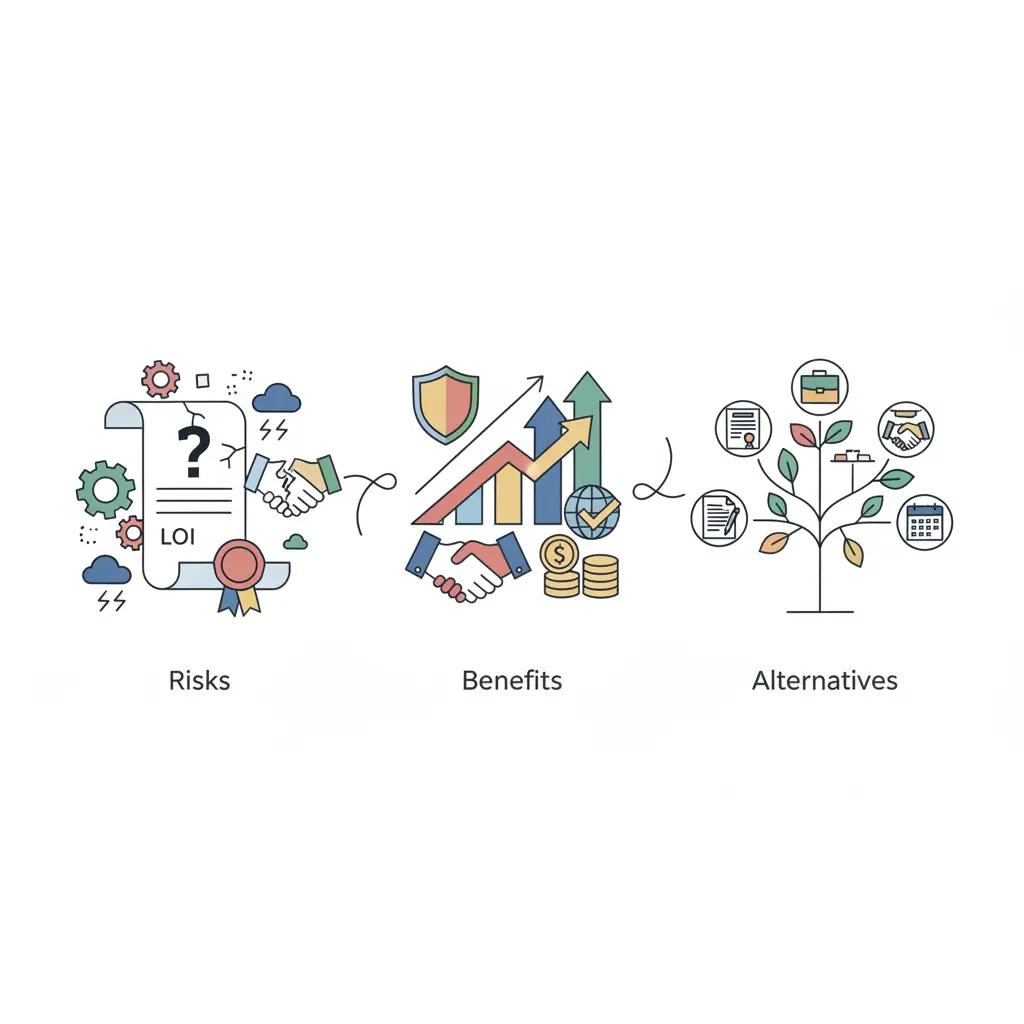
Risks, Benefits, and Alternatives to an LOI in Trade
In international trade, the smooth and timely flow of goods is crucial, yet disruptions often occur due to documentation issues. The International Shipping Letter of Indemnity (LOI) serves as a common, albeit complex, solution for expediting shipments. While an LOI can be a practical workaround, it introduces a significant interplay of risks and benefits for all parties. This section delves into the multifaceted nature of LOIs, examining their advantages and disadvantages, and exploring viable alternative strategies to mitigate trade challenges.
1. Potential risks for shippers, consignees, and carriers
At its core, a Letter of Indemnity is a contractual agreement where one party (typically the shipper or consignee) agrees to indemnify another party (usually the carrier) against the financial and legal consequences of a specific action, often the release of cargo without the original Bill of Lading. Despite its apparent simplicity, this arrangement carries significant risks:
- For Carriers: Accepting an LOI means delivering cargo without the traditional document of title. This exposes carriers to claims from the legitimate holder of the original Bill of Lading if the indemnifying party proves to be fraudulent or financially unstable. Furthermore, Protection and Indemnity (P&I) Clubs often do not cover liabilities arising from actions taken under an LOI, leaving carriers potentially uninsured. The Letter of Indemnity definition international trade implies a deviation from standard procedures, increasing the risk profile for the carrier.
- For Shippers/Consignees: While an LOI can facilitate prompt cargo release, it relies heavily on the carrier’s acceptance and the robustness of the indemnification. If the carrier faces a claim from a third party and the LOI is poorly drafted or the indemnifier becomes insolvent, the consignee might still face issues, delays, or even be held liable. There’s also the risk of fraud where an LOI is presented without legitimate authority, leading to wrongful release of goods and potential losses for the true owner.
2. Benefits of using an LOI for smooth trade flow
Despite the inherent risks, LOIs are frequently used in international trade due to their considerable benefits in facilitating smooth trade flow, particularly when minor discrepancies or delays in documentation occur:
- Expedited Cargo Release: The primary advantage of an LOI is enabling the release of cargo without the presentation of the original Bill of Lading. This is crucial when original documents are delayed in transit (e.g., due to courier issues, public holidays, or banking delays), preventing costly demurrage charges and ensuring goods reach the buyer promptly. This is especially relevant for a Letter of Indemnity for missing bill of lading scenarios.
- Flexibility in Operations: LOIs offer operational flexibility, allowing parties to adjust to unforeseen logistical challenges without causing significant disruptions to the supply chain. For instance, if a consignee needs to change the discharge port or a shipper needs to reroute cargo, an LOI can provide a mechanism for the carrier to comply without waiting for the amendment of original documents.
- Resolving Minor Discrepancies: In cases of minor errors or omissions in the original Bill of Lading (e.g., incorrect weight, package count, or consignee details), an LOI can allow the carrier to proceed with the intended delivery while the original documents are being corrected, avoiding delays. Many companies utilize an LOI shipping template to streamline this process for common issues.
3. Exploring alternative trade finance and documentation instruments
Given the risks associated with LOIs, exploring alternatives and mitigating strategies is crucial for robust risk management in international trade:
- Bank Guarantees: A bank guarantee can serve a similar purpose to an LOI but offers a higher level of security, particularly for carriers. Instead of relying solely on the shipper or consignee’s promise, the carrier holds a guarantee from a reputable bank, ensuring payment in case of a claim. This shifts the credit risk from the trading party to a financial institution.
- Escrow Services: For high-value shipments, using an independent third-party escrow service can provide security for both buyer and seller. Funds are held by the escrow agent until all contractual obligations (including proper documentation and delivery) are met, minimizing the need for an LOI due to document delays.
- Digital Documentation and Blockchain: The advent of digital Bills of Lading and blockchain technology promises to revolutionize trade documentation. Electronic Bills of Lading (eB/Ls) can be transferred instantly and securely, eliminating physical document delays and the need for LOIs. Companies should investigate adopting solutions that meet Bill of Lading requirements digitally. This aligns with modernizing Carrier LOI requirements by making LOIs less necessary.
- Enhanced Communication and Planning: Proactive communication among all supply chain partners, coupled with meticulous planning, can significantly reduce the instances requiring an LOI. Ensuring that original documents are dispatched immediately and tracking their progress can often prevent delays.
- Reputable Freight Forwarders and Insurers: Partnering with experienced and reputable freight forwarders who understand the nuances of international documentation can help preempt issues. Additionally, comprehensive cargo insurance can protect against various risks, potentially reducing the reliance on LOIs for certain scenarios.
While an International Shipping Letter of Indemnity offers a practical workaround for documentation glitches, its usage should be carefully considered due to the significant risks it can introduce. By understanding both its benefits and pitfalls, and actively exploring robust alternative solutions, businesses can navigate the complexities of international trade more securely and efficiently.
Partner with Vietnam’s Leading Suppliers
Looking for reliable suppliers in Vietnam? Contact VietnamSuppliers.com today to connect with verified manufacturers and exporters across all industries.
—————————————
References
– Letters of Indemnity for Delivery of Cargo without Production of the Original Bill of Lading: https://www.standard-club.com/knowledge-news/articles/2021/04/letters-of-indemnity-for-delivery-of-cargo-without-production-of-the-original-bill-of-lading.aspx
– NorthStandard guidance on Delivery of Cargo Without Production of the Bill of Lading: https://www.north-standard.com/insights/articles/2021/delivery-of-cargo-without-production-of-the-bill-of-lading/
– BIMCO Letters of Indemnity (LOI) forms: https://www.bimco.org/contracts-and-clauses/bimco-clauses/letters-of-indemnity
– Letter of Indemnity (LOI) Risks for Members: https://www.gard.no/web/updates/content/29729916/letter-of-indemnity-loi-risks-for-members
– The importance of Bills of Lading in international trade: https://www.bimco.org/news-and-trends/publications/insights/2020/03/the-importance-of-bills-of-lading-in-international-trade

