What Are Incoterms 2020 and Why Do They Matter?
Navigating the complexities of international trade can often feel like deciphering an intricate puzzle. From determining who pays for shipping and insurance to understanding when the risk of loss transfers from seller to buyer, the variables are numerous and significant. This is precisely where Incoterms 2020 come into play, serving as an indispensable framework that brings clarity and consistency to global commercial transactions. Far more than just abbreviations, these standardized rules are the backbone of efficient and dispute-free international trade, making them critically important for any business engaged in cross-border buying or selling.
1. Defining Incoterms: Rules for Global Trade
At its core, “Incoterms” stands for International Commercial Terms. These are a set of globally recognized rules published by the International Chamber of Commerce (ICC) that define the responsibilities of buyers and sellers for the delivery of goods under sales contracts. Essentially, Incoterms precisely dictate:
- Who pays for what: This covers transport costs, loading/unloading, customs duties, and insurance.
- When and where risk transfers: This specifies the point at which responsibility for loss or damage shifts from seller to buyer.
- Who handles what documentation: Which party is responsible for export and import clearance, including security requirements.
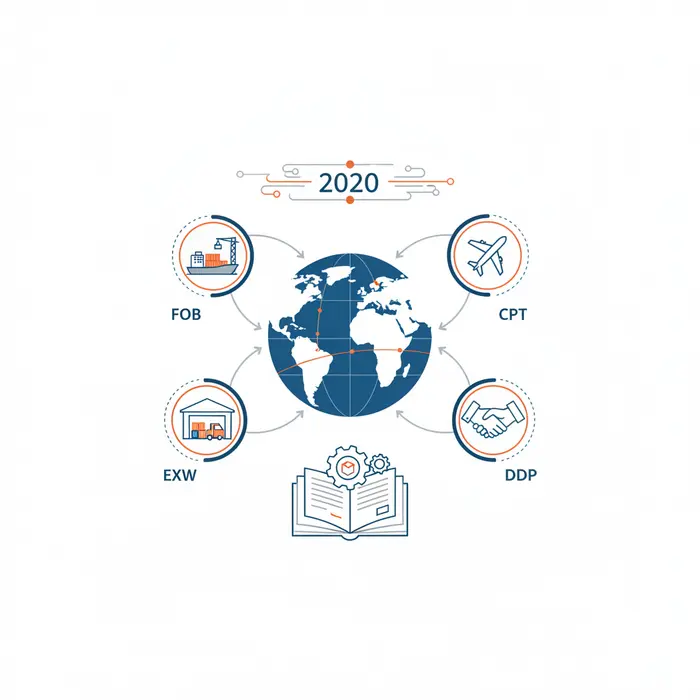
By clearly delineating these crucial aspects, Incoterms eliminate ambiguity, reduce the likelihood of costly misunderstandings, and facilitate smoother trade operations. For instance, FOB Incoterms (Free On Board) mean the seller delivers goods on board the vessel nominated by the buyer at the named port of shipment; risk transfers at that point. The buyer then bears all costs and risks from there. Understanding these nuances is fundamental to effective international commerce.
2. The Evolution to Incoterms 2020
The concept of standardized trade terms dates back to 1936 when the ICC first published Incoterms rules. Since then, rules have undergone periodic revisions to keep pace with global trade dynamics, technological advancements, and evolving logistical practices. Each revision, indicated by the year suffix (e.g., Incoterms 2000, Incoterms 2010), reflects the latest commercial practices and aims for greater clarity and relevance.
The Incoterms 2020 rules are the most current iteration, effective January 1, 2020. While maintaining core principles, they introduced several notable updates and clarifications. Key changes included replacing the DAT (Delivered at Terminal) rule with DPU (Delivered at Place Unloaded) for more delivery place flexibility, and clearer cost allocation. The 2020 version also emphasized security-related transport requirements and adjusted insurance coverage levels for rules like CIP (Carriage and Insurance Paid To) and CIF (Cost, Insurance and Freight) to better reflect modern cargo insurance practices. These updates ensure Incoterms remain a relevant and robust tool for businesses worldwide.
3. Why Using the Correct Incoterm is Crucial for Businesses
The careful selection and accurate application of the correct Incoterm are not merely administrative details; they are critical business decisions that profoundly impact a company’s financial health, operational efficiency, and legal standing. Misunderstanding or misapplying an Incoterm can lead to significant financial penalties, unexpected costs, shipping delays, and even legal disputes.
For example, comparing EXW vs DDP Incoterms illustrates the vast spectrum of responsibilities. Under EXW (Ex Works), the seller’s responsibility is minimal, making goods available at their premises, with the buyer bearing almost all costs and risks from there. Conversely, under DDP Incoterms (Delivered Duty Paid), the seller assumes maximum responsibility, covering all costs and risks, including customs duties and taxes, to deliver goods to the named destination, ready for unloading. This effectively means the seller handles everything, “door-to-door.”
Choosing the right Incoterm ensures both parties clearly understand their Incoterms responsibilities regarding costs, risks, and obligations. This clarity helps businesses to:
- Accurately price products: Knowing precisely which costs are covered helps in setting competitive prices.
- Manage logistics effectively: Clear responsibilities streamline freight forwarding, customs clearance, and delivery.
- Mitigate risks: Understanding when risk transfers allows for appropriate insurance coverage and risk management strategies.
- Avoid disputes: A well-chosen Incoterm serves as a legal reference point, preventing disagreements and simplifying resolution.
Ultimately, Incoterms 2020 provide a universal language for international trade. Their proper use is not just good practice; it’s essential for fostering trust, ensuring smooth transactions, and safeguarding the interests of both buyers and sellers in the global marketplace. Businesses mastering Incoterms gain a significant competitive advantage, enabling them to trade with greater confidence and efficiency.
Deciphering Key Incoterms: FOB & DDP Unpacked
In the intricate world of international trade, clarity and precision are paramount, especially when it comes to defining the responsibilities of buyers and sellers. This is where Incoterms 2020, a globally recognized set of rules published by the International Chamber of Commerce (ICC), play a crucial role. They standardize the interpretation of common contract terms, ensuring that parties understand who is responsible for what, and at what point risk and cost transfer from seller to buyer. Among the eleven available Incoterms, Free On Board (FOB) and Delivered Duty Paid (DDP) stand out as two of the most frequently used and impactful terms, representing nearly opposite ends of the responsibility spectrum. This section will delve into the core principles and applications of FOB Incoterms and DDP Incoterms, offering a detailed look into their operational nuances and real-world implications.
1. FOB Incoterms: Free On Board Explained
The term FOB Incoterms, standing for “Free On Board,” is a classic Incoterm specifically designed for sea and inland waterway transport. Under FOB, the seller fulfills their obligation to deliver when the goods pass the ship’s rail at the named port of shipment. This specific point marks the transfer of both risk and cost from the seller to the buyer. Prior to this point, the seller bears all risks of loss or damage to the goods, as well as the costs associated with getting the goods to the named port and loaded onto the vessel, including export clearance formalities.
Once the goods are on board, the buyer assumes all subsequent risks and costs. These typically include the main carriage (ocean freight), insurance (if desired by the buyer), unloading costs at the destination port, import customs clearance, duties, taxes, and all onward transportation to the final destination. FOB is often favored by experienced buyers who have established relationships with freight forwarders and can secure competitive shipping rates, thereby maintaining greater control over the logistics chain and potentially reducing overall costs. Understanding these Incoterms responsibilities is critical for both parties to avoid disputes and ensure smooth transactions.
2. DDP Incoterms: Delivered Duty Paid Comprehensive Guide
At the other end of the Incoterms spectrum lies DDP Incoterms, or “Delivered Duty Paid.” This term represents the maximum obligation for the seller, placing nearly all risks and costs associated with delivering the goods to the named place of destination on their shoulders. Under DDP, the seller is responsible for delivering the goods to the buyer at the named place of destination, cleared for import, and ready for unloading from the arriving means of transport. This means the seller must handle all aspects of the shipment: packaging, loading, export formalities, main carriage, insurance, unloading at destination (often not covered, but sometimes agreed upon), import clearance, and crucially, all import duties, taxes, and other official charges.
For the buyer, DDP offers the highest level of convenience and minimal responsibility. Their main obligation is simply to receive the goods at the agreed-upon location. This makes DDP particularly attractive for buyers new to international trade, those without import expertise, or in situations where a seamless door-to-door service is desired, such as in e-commerce fulfillment. While convenient for the buyer, DDP can be complex for sellers, especially when dealing with unfamiliar import regulations, varying duties, and taxes across different countries. It highlights a stark contrast to terms like EXW (Ex Works), where the buyer assumes almost all responsibility from the seller’s premises, emphasizing the vast difference in Incoterms responsibilities between EXW vs DDP Incoterms.
3. Real-World Scenarios for FOB and DDP Application
The choice between FOB and DDP Incoterms hinges on several factors, including the buyer’s and seller’s expertise, their logistical capabilities, cost control preferences, and desired level of involvement. For instance, a large retail chain in the USA importing bulk goods from China might prefer FOB Incoterms. They likely have dedicated logistics departments, established relationships with freight forwarders, and significant purchasing power for ocean freight. By choosing FOB, they can leverage their existing infrastructure to manage the main carriage, optimize routes, and potentially reduce overall landed costs by controlling the most expensive leg of the journey.
Conversely, a small e-commerce business selling specialty goods from Vietnam to individual customers globally might opt for DDP Incoterms. In this scenario, the Vietnamese supplier would handle all shipping complexities, including customs clearance and paying import duties in the destination country, before the product reaches the end consumer. This provides a clear, predictable cost for the buyer (the end consumer) and simplifies the purchasing process, mirroring a domestic transaction. This “delivered to your door” service, common in online retail, removes the burden of import procedures from the customer, significantly enhancing the customer experience. Understanding these practical applications of FOB Incoterms and DDP Incoterms is vital for any business engaged in cross-border trade, enabling them to make informed decisions that align with their operational strengths and customer expectations.
Incoterms Responsibilities: Who Does What and When?
International trade, while offering immense opportunities, is fraught with complexities. One of the most critical elements in mitigating these complexities and ensuring smooth transactions is the diligent application of Incoterms. Standing for International Commercial Terms, Incoterms are a set of globally recognized rules published by the International Chamber of Commerce (ICC) that define the responsibilities of buyers and sellers for the delivery of goods under sales contracts. Specifically, the Incoterms 2020 rules clarify the allocation of costs, risks, and responsibilities between parties, establishing clear boundaries and preventing costly misunderstandings.
Understanding these terms is paramount for anyone involved in international shipping, as they directly impact logistics, insurance, customs procedures, and ultimately, the profitability and success of a transaction. From who pays for freight to where the risk of loss or damage transfers, Incoterms provide a universal language for trade, ensuring both parties know precisely what is expected of them, from the factory gate to the final destination.

1. Understanding Risk Transfer Points and Their Impact
The concept of “risk transfer” is arguably the most crucial aspect defined by Incoterms. This point determines precisely when the responsibility for loss or damage to goods shifts from the seller to the buyer. Identifying this moment is vital for securing appropriate insurance and understanding potential liabilities. Under Incoterms 2020, this transfer point varies significantly:
- EXW (Ex Works): The seller’s responsibility is minimal. Risk transfers to the buyer at the seller’s premises (e.g., factory or warehouse) as soon as the goods are made available. From this point, the buyer bears almost all risks and costs associated with transporting the goods to their final destination.
- FOB (Free On Board): A widely used term, FOB Incoterms specify that the risk transfers from the seller to the buyer when the goods are loaded onto the vessel nominated by the buyer at the named port of shipment. The seller covers costs and risks up to this point.
- CIF (Cost, Insurance and Freight) / CIP (Carriage and Insurance Paid To): While the seller arranges and pays for main carriage and insurance to the named port/place of destination, the risk actually transfers much earlier – when the goods are loaded on the vessel (CIF) or handed over to the first carrier (CIP). This means the buyer bears the risk during the main transport, despite the seller paying for it.
- DAP (Delivered At Place) / DPU (Delivered at Place Unloaded) / DDP (Delivered Duty Paid): These “D” terms represent the highest level of seller responsibility. For DDP Incoterms, risk transfers only when the goods are delivered to the buyer at the named place of destination, cleared for import, and ready for unloading. This places almost all risks and responsibilities on the seller until the final delivery point.
Clearly understanding these risk transfer points is essential for determining who files a claim if goods are damaged in transit and for securing adequate cargo insurance coverage.
2. Cost Allocation: From Factory to Destination
Beyond risk, Incoterms precisely dictate the allocation of costs between the buyer and seller for each segment of the shipping journey. This includes everything from loading goods at the factory, inland transport, export customs, main carriage, import customs, and final delivery.
- Buyer-Centric Terms (e.g., EXW): Under EXW, the buyer is responsible for virtually all costs from the moment goods leave the seller’s factory. This provides a stark contrast when considering EXW vs DDP Incoterms, as DDP places the maximum cost burden on the seller.
- Seller-Centric Terms (e.g., DDP): With DDP, the seller bears all costs, including export/import duties, taxes, and all transport expenses until the goods are delivered to the buyer’s designated location. This offers maximum convenience to the buyer, as they only need to take delivery.
- Shared Responsibility Terms (e.g., FOB, CFR, CIF): Many Incoterms fall in between, sharing costs. Under FOB Incoterms, the seller pays for transport to the port of shipment and loading, while the buyer covers main carriage, insurance, and costs from the port of loading to the final destination. For CFR/CIF, the seller pays for the main carriage to the destination port, but the buyer takes over costs (and risk) once goods are on board the vessel at the origin port.
Accurate cost allocation is crucial for pricing strategies, budgeting, and avoiding unexpected charges that can erode profit margins for either party. It defines the “all-in” price for the buyer and the logistical burden for the seller.
3. Key Documents and Obligations for Each Party
Incoterms not only define financial and risk responsibilities but also stipulate which party is responsible for obtaining necessary documents, permits, and completing customs formalities. These Incoterms responsibilities ensure that goods can move smoothly across borders.
- Seller’s Obligations often include:
- Providing the commercial invoice and packing list.
- Obtaining export licenses and completing export customs formalities (for all terms except EXW, where this is often the buyer’s task).
- Arranging and paying for pre-carriage to the main shipping point.
- Securing transport documents (e.g., Bill of Lading, Air Waybill) as required by the chosen term.
- Arranging and paying for main carriage (under C and D terms).
- Obtaining cargo insurance (under CIF and CIP).
- Arranging import clearance and paying duties (only under DDP).
- Buyer’s Obligations often include:
- Taking delivery of the goods at the specified point.
- Obtaining import licenses and completing import customs formalities, including paying duties and taxes (for all terms except DDP).
- Arranging and paying for main carriage (under E and F terms).
- Arranging and paying for post-carriage from the destination port/place.
- Obtaining cargo insurance (under terms where the seller isn’t obliged, e.g., FOB, CFR, DAP).
- Providing the seller with necessary information for export and transport.
Clear communication and precise execution of these obligations are vital to avoid delays, penalties, or disputes. For comprehensive and definitive guidance, businesses should always refer to the official Incoterms 2020 rules published by the ICC.
In conclusion, Incoterms are far more than just three-letter acronyms; they are the bedrock of international trade contracts, providing a transparent framework for defining who does what, when, and where. Their careful selection and understanding are fundamental to successful global commerce, influencing everything from logistical planning and cost management to risk mitigation and legal liabilities.
Choosing the Right Term: EXW vs DDP and Other Comparisons
Mastering international trade hinges on a clear understanding of shipping responsibilities, costs, and risks. This is precisely where Incoterms 2020, a globally recognized set of rules published by the International Chamber of Commerce (ICC), become indispensable. They meticulously define the obligations of sellers and buyers for goods delivery under sales contracts, clarifying who manages and pays for shipment, insurance, documentation, and customs. Selecting the correct Incoterm significantly impacts pricing, profit margins, operational efficiency, and potential liabilities for both parties.
Among the 11 Incoterms, EXW (Ex Works) and DDP (Delivered Duty Paid) represent the two extremes of seller responsibility. A deep dive into the distinct differences between EXW and DDP Incoterms is vital for businesses optimizing their supply chains and avoiding unexpected expenses. This section offers a comparative analysis, guiding businesses in selecting appropriate terms, touching upon not only EXW vs DDP but also terms like FOB Incoterms.
1. EXW vs DDP Incoterms: A Detailed Comparison
The fundamental difference between EXW and DDP lies in the allocation of Incoterms responsibilities. These terms delineate the absolute minimum and maximum responsibility for the seller, respectively.
- EXW (Ex Works): Under EXW Incoterms, the seller’s responsibility is minimal. Goods are simply made available at the seller’s premises (e.g., factory, warehouse). All subsequent costs and risks—including loading, inland transport, export customs, main carriage, import customs, duties, taxes, and final delivery—fall entirely upon the buyer. Risk transfers to the buyer as soon as the goods are available for pickup at the seller’s site.
- DDP (Delivered Duty Paid): Conversely, DDP Incoterms place maximum responsibility on the seller. The seller is accountable for delivering goods to the buyer’s named destination, ready for unloading, and fully cleared for import, with all duties and taxes paid. The seller covers all transportation, insurance, export/import customs, and applicable duties/taxes. Risk transfers to the buyer only upon delivery at the named destination, cleared for import, and ready for unloading. DDP provides a complete “door-to-door” service for the buyer.
For instance, an EXW shipment from Vietnam means the buyer handles everything from the Vietnamese factory gate to their final destination. A DDP shipment from Vietnam means the Vietnamese seller manages the entire process, delivering goods directly to the buyer’s location with all duties paid.
2. When to Choose EXW: Minimal Seller Responsibility
EXW is ideal when the buyer has significant control and expertise over logistics. It suits:
- Experienced Buyers: Businesses with established logistics networks or freight forwarder relationships who prefer managing the entire shipping process to control costs and lead times.
- Shipment Consolidation: Buyers purchasing from multiple suppliers in one country who wish to consolidate goods at a central point before international shipping, optimizing container use and streamlining export.
- Minimizing Seller Risk: Sellers seeking the least administrative burden and financial risk, only needing to make goods available for collection.
While EXW offers cost transparency for the seller, buyers must be fully prepared to manage all aspects, including potentially complex export customs clearance in the origin country.
3. When DDP is the Best Choice: Maximum Seller Responsibility
DDP is preferred when the buyer desires a hassle-free, all-inclusive shipping solution. It is particularly suitable for:
- Buyers Lacking Logistics Expertise: Companies new to international trade or without dedicated logistics teams benefit from avoiding customs, duties, and transport complexities.
- E-commerce and Direct-to-Consumer: Online retailers leverage DDP for a seamless customer experience, ensuring products arrive without unexpected customs fees or delays, crucial for satisfaction.
- Premium Service Offering: Sellers using DDP can offer a superior, comprehensive service, gaining a competitive edge by simplifying the purchasing process for buyers.
However, DDP places substantial financial and logistical burdens on the seller, requiring accurate cost estimation (including duties/taxes) and robust international logistics capabilities to bear all risks until final delivery. Miscalculations can lead to significant losses.
Ultimately, the decision between EXW vs DDP Incoterms, or any other Incoterm, demands a careful assessment of both parties’ capabilities, risk tolerance, and desired control. A thorough understanding of each term’s Incoterms responsibilities is fundamental for successful global trade.
Best Practices for Incoterms 2020 Implementation
Effectively integrating Incoterms 2020 into your business operations is paramount for ensuring smooth international transactions, minimizing disputes, and avoiding costly pitfalls. These universally recognized rules, published by the International Chamber of Commerce (ICC), define the responsibilities of buyers and sellers for the delivery of goods under sales contracts. By understanding and correctly applying Incoterms, businesses can clarify obligations related to costs, risks, and customs formalities, fostering greater transparency and trust with their trading partners.

1. Common Incoterms Mistakes to Avoid
One of the most frequent errors is failing to specify the exact version of the Incoterms rules being used. Always state “Incoterms 2020” to prevent ambiguity, as rules evolve over time. Another common mistake involves misapplying terms. For instance, FOB Incoterms (Free On Board) are strictly for sea and inland waterway transport; using it for air freight is incorrect and can lead to serious disputes regarding risk transfer. Similarly, an exporter might mistakenly use EXW (Ex Works) hoping to minimize responsibility, without fully realizing that the buyer then bears all costs and risks from the seller’s premises, including export clearance. Conversely, a seller agreeing to DDP Incoterms (Delivered Duty Paid) must understand that they are responsible for all costs and risks, including import clearance and duties, until the goods reach the buyer’s nominated destination. Businesses must carefully evaluate the implications of terms like EXW vs DDP Incoterms to ensure they align with their operational capabilities and risk appetite. Never assume your trading partner has the same understanding or expertise; clear, documented agreements are essential.
2. Communicating Clearly with Your Trading Partners
Precision in communication is critical when dealing with Incoterms. The chosen Incoterm must be explicitly stated in all relevant commercial documents, including proforma invoices, sales contracts, purchase orders, and letters of credit. Crucially, the named place of delivery or destination must be specified with exactness. For example, instead of just stating “FCA, London,” it should be “FCA, ABC Warehouse, Heathrow Cargo Centre, London, UK, Incoterms 2020.” This level of detail removes guesswork about where the risk and cost transfer occurs. It’s also vital to engage in discussions with your trading partners early in the negotiation process to agree upon the most suitable Incoterm. This proactive approach helps to clarify respective Incoterms responsibilities, expectations for logistics, and preferred carriers, ensuring both parties are fully aware of their obligations and entitlements, thereby preventing misunderstandings down the line.
3. Legal, Customs, and Insurance Implications
While Incoterms rules define critical aspects of a sales contract, they do not constitute the entire contract itself. They primarily govern the point of delivery, risk transfer, and allocation of transport and customs costs. Legally, the chosen Incoterm impacts when the buyer assumes responsibility for loss or damage to goods. For example, under FOB Incoterms, risk transfers when goods are loaded on board the vessel nominated by the buyer. Regarding customs, Incoterms clearly delineate who is responsible for export and import clearance procedures. For instance, with DDP Incoterms, the seller handles both export and import clearance, including duties and taxes. Conversely, under EXW, the buyer is solely responsible for both. For comprehensive guidance on these definitions, always refer to the official Incoterms rules from the International Chamber of Commerce (ICC). Insurance obligations also vary significantly. Terms like CIF (Cost, Insurance and Freight) and CIP (Carriage and Insurance Paid To) obligate the seller to procure minimum insurance coverage. For other terms, like FOB Incoterms, the buyer typically arranges insurance from the point of risk transfer. A thorough understanding of these implications is vital for compliance, risk management, and cost control in international trade.
Partner with Vietnam’s Leading Suppliers
Looking for reliable suppliers in Vietnam? Contact VietnamSuppliers.com today to connect with verified manufacturers and exporters across all industries.
—————————————
References
– International Chamber of Commerce (ICC): https://iccwbo.org/resources-for-business/incoterms-rules/
– Incoterms 2020 Rules by ICC: https://iccwbo.org/resources-for-business/incoterms-rules/incoterms-2020/
– Incoterms 2020 rules: https://iccwbo.org/resources-for-business/incoterms-rules/
– International Chamber of Commerce – Incoterms Rules: https://iccwbo.org/resources-for-business/incoterms-rules/
– Incoterms rules from the International Chamber of Commerce (ICC): https://iccwbo.org/resources-for-business/incoterms-rules/