
Current Landscape of Global Supply Chain Cyber Threats
The intricate web of global trade, once primarily concerned with physical security and efficiency, now faces an equally formidable and rapidly evolving adversary: cyber threats. The current landscape of global supply chain cyber threats is a complex, multi-layered challenge that demands continuous vigilance and adaptation. As nations and businesses become increasingly interconnected, the integrity of international trade and logistics hinges on robust Global Supply Chain Cybersecurity measures. From state-sponsored espionage to opportunistic criminal enterprises, the vectors of attack are diversifying, and their potential to disrupt global commerce is escalating.

Advanced Persistent Threats (APTs) in Trade Networks
Among the most sophisticated adversaries are Advanced Persistent Threats (APTs). These state-sponsored or highly organized criminal groups target supply chains not for quick monetary gain, but for long-term objectives such as espionage, intellectual property theft, or strategic disruption. APTs often employ stealthy, multi-vector attacks, infiltrating trade networks through trusted third-party vendors, software vulnerabilities, or spear-phishing campaigns against key personnel. Their persistence allows them to remain undetected for extended periods, mapping critical infrastructure, exfiltrating sensitive data like customs declarations, shipping manifests, and proprietary manufacturing designs, or subtly manipulating logistics data to create chaos. The impact extends beyond financial loss, jeopardizing national security and eroding trust in international commerce, highlighting the critical need for enhanced supply chain security best practices and adherence to rigorous International Trade Data Security Standards.
Ransomware & Malware Impact on Import/Export Operations
While APTs represent the apex of cyber sophistication, ransomware and general malware continue to be pervasive and devastating threats. Ransomware attacks, which encrypt critical systems and data until a ransom is paid, can bring entire Import/Export Operations to a standstill. From port authorities and shipping companies to customs brokers and freight forwarders, any link in the chain can become a target. A successful ransomware attack can paralyze cargo movements, delay customs clearance, disrupt inventory management, and lead to massive financial losses due to operational downtime, penalties, and reputational damage. Malware, including trojans and spyware, also poses significant risks by enabling data exfiltration, system sabotage, or creating backdoors for future attacks. These Cyber Threats to Import Export demand robust preventative measures and rapid incident response capabilities.
Vulnerabilities in Legacy Systems & IoT Devices
A significant Achilles’ heel in the global supply chain is the reliance on legacy systems and the rapid proliferation of unsecure IoT devices. Many older operational technology (OT) and information technology (IT) systems used in logistics and manufacturing were not designed with modern cybersecurity threats in mind. These Legacy Systems often lack essential security features, are difficult to patch, and may be incompatible with contemporary security solutions, making them prime targets for exploitation.
Concurrently, the booming adoption of Internet of Things (IoT) devices – from smart containers and autonomous vehicles to sensor networks in warehouses and ports – introduces a vast new attack surface. While offering efficiency gains, many IoT devices suffer from weak default passwords, unpatched firmware, and insecure communication protocols. An exploited IoT device can serve as a gateway into a broader network, allowing attackers to disrupt operations, steal sensitive data, or even cause physical damage. This is particularly acute in Maritime Logistics Cybersecurity Risks, where smart shipping and port technologies are becoming increasingly prevalent, yet often remain inadequately secured. Addressing these vulnerabilities requires comprehensive Supply Chain Cyber Resilience Strategies, including regular audits, system upgrades, and stringent security protocols for all connected devices.
In conclusion, the current landscape of global supply chain cyber threats is defined by a dynamic interplay of advanced adversaries, pervasive malicious software, and inherent systemic vulnerabilities. Protecting the intricate flow of goods and data across international borders requires a holistic approach to Global Supply Chain Cybersecurity, encompassing technological safeguards, human awareness, and international collaboration. Businesses and governments must proactively invest in robust security frameworks to ensure the continuity and integrity of global trade, fostering a stronger Global Supply Chain Cybersecurity posture.
Critical Risks in Maritime & Logistics Cybersecurity
The intricate web of global trade relies heavily on the seamless operation of maritime and logistics networks. However, this critical infrastructure is increasingly becoming a prime target for sophisticated cyber threats, posing significant Global Supply Chain Cybersecurity challenges. From the colossal container ships traversing oceans to the automated warehouses and extensive ground transportation networks, every node presents a potential vulnerability. This deep dive explores the specific cybersecurity challenges facing shipping, ports, and ground logistics operations, highlighting both physical and digital vulnerabilities that contribute to Cyber Threats to Import Export and underscore the urgent need for robust defense mechanisms. Without proactive Supply Chain Cyber Resilience Strategies, the economic stability and national security of countless nations remain at risk.
1. Port Infrastructure & Industrial Control Systems (ICS) Security
Port infrastructure serves as the crucial nexus where sea, land, and air logistics converge. Modern ports are highly automated, relying on complex Industrial Control Systems (ICS) and Operational Technology (OT) to manage everything from crane operations and cargo handling to gate access and navigation assistance. These systems, often legacy and interconnected, were not initially designed with advanced cybersecurity in mind, making them highly susceptible to attacks. Exploits targeting ICS can lead to devastating physical disruptions, such as manipulating crane movements, shutting down container terminals, or altering shipping manifests. Such incidents could halt trade, cause massive financial losses, and even result in environmental disasters or human casualties. The Stuxnet-like attacks are a chilling reminder of how digital vulnerabilities can manifest into physical chaos. Protecting these critical assets requires specialized Maritime Logistics Cybersecurity Risks assessments, segregation of IT and OT networks, continuous monitoring, and comprehensive incident response plans. The Cybersecurity and Infrastructure Security Agency (CISA) provides guidance on securing critical maritime transportation systems, emphasizing the importance of a layered defense strategy.
2. Vessel Navigation & Communication System Exploits
At sea, vessels themselves are becoming increasingly connected, integrating advanced navigation systems, satellite communication networks, and remote monitoring capabilities. While these technologies enhance efficiency and safety, they also introduce new avenues for cyber exploitation. GPS spoofing, for instance, can mislead a vessel’s navigation system, causing it to deviate from its intended course, potentially leading to collision, grounding, or entry into prohibited waters. Attacks on Electronic Chart Display and Information Systems (ECDIS) or Automatic Identification Systems (AIS) can manipulate critical navigational data, creating confusion or hiding vessel movements. Furthermore, vulnerabilities in satellite communication systems (Satcom) can grant unauthorized access to a ship’s internal networks, allowing hackers to disrupt machinery, steal sensitive cargo information, or even take control of vital ship functions. Securing these systems is paramount not only for the safety of the crew and cargo but also for maintaining International Trade Data Security Standards. The integrity of ship-to-shore communications and onboard operational systems is a significant component of mitigating Maritime Logistics Cybersecurity Risks.
3. Supply Chain Visibility Platforms & Data Interception
The modern Global Supply Chain Cybersecurity landscape is characterized by an increasing reliance on digital platforms for end-to-end visibility, tracking, and management. These platforms aggregate vast amounts of sensitive data, including cargo details, financial transactions, customs information, and operational schedules. While designed to enhance efficiency and transparency, they present a lucrative target for cybercriminals and state-sponsored actors seeking to intercept, alter, or steal this invaluable data. Data interception can occur at various points: during transit over insecure networks, through compromised third-party logistics providers, or via insider threats. Successful breaches can lead to intellectual property theft, corporate espionage, illicit cargo diversion, or ransomware attacks that cripple operations. Protecting these digital veins of information requires robust encryption, stringent access controls, multi-factor authentication, and regular security audits for all parties involved in the chain. Building resilient Supply Chain Cyber Resilience Strategies involves not just technical defenses but also strong contractual obligations and shared responsibility across all stakeholders. For more insights on safeguarding these complex systems, explore resources on Global Supply Chain Cybersecurity.
Building Supply Chain Cyber Resilience Strategies
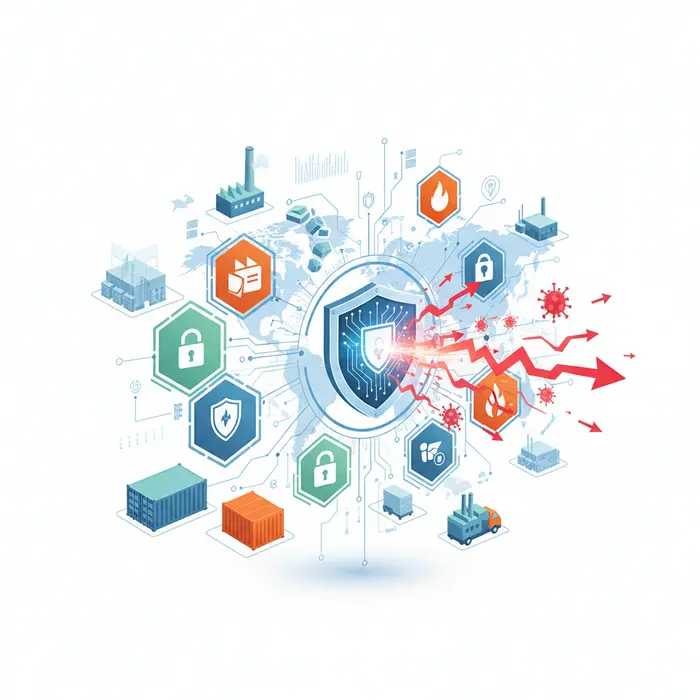
In an increasingly interconnected world, the intricate web of global supply chains forms the backbone of international commerce. However, this critical infrastructure is also a prime target for sophisticated cyber threats, making the implementation of robust **Global Supply Chain Cybersecurity** strategies more vital than ever. Organizations must adopt practical approaches and comprehensive frameworks to enhance their cybersecurity posture and strengthen resilience across every touchpoint of their global operations. From raw material sourcing to final product delivery, vulnerabilities can arise at any stage, demanding a proactive and multi-faceted defense mechanism against potential disruptions, data breaches, and operational shutdowns. Effective **Supply Chain Cyber Resilience Strategies** are not merely about preventing attacks, but also about ensuring rapid recovery and minimal impact should an incident occur.
1. Multi-layered Security Architectures & Zero Trust Principles
Achieving true cyber resilience begins with designing and implementing a multi-layered security architecture that provides defense-in-depth across all critical systems and data. This involves deploying a combination of technical controls, including firewalls, intrusion detection/prevention systems, data encryption, and endpoint protection, to create overlapping security zones. Central to this approach are **Zero Trust Principles**, which operate on the philosophy of “never trust, always verify.” Instead of assuming that everything inside a network boundary is safe, Zero Trust mandates strict identity verification for every user and device attempting to access resources, regardless of their location. For global trade, this means continuously authenticating users, devices, and applications attempting to access sensitive **International Trade Data Security Standards** and operational information. Implementing micro-segmentation, strong multi-factor authentication, and continuous monitoring are key components, ensuring that even if one layer is breached, others remain intact to limit lateral movement and contain threats.
2. Third-Party Risk Management & Vendor Due Diligence
The vast majority of cyber incidents in supply chains originate from vulnerabilities within third-party vendors or partners. Consequently, robust **Third-Party Risk Management** is an indispensable element of any comprehensive resilience strategy. Organizations must conduct thorough **Vendor Due Diligence** before engaging with any new supplier, assessing their cybersecurity posture, data handling practices, and incident response capabilities. This process should not be a one-off event but an ongoing cycle of evaluation, monitoring, and auditing. Contracts must clearly define security requirements, audit rights, and incident notification protocols. Special attention must be paid to vendors involved in critical processes susceptible to **Cyber Threats to Import Export**, such as customs brokers, logistics providers, and IT service providers. Regular security assessments, vulnerability scanning, and penetration testing of third-party systems directly integrated into your supply chain can help identify and mitigate potential weak points before they are exploited.
3. Proactive Incident Response & Business Continuity Planning
While prevention is paramount, no security strategy can guarantee absolute immunity from cyber attacks. Therefore, a proactive and well-rehearsed **Incident Response & Business Continuity Planning** (IR/BCP) framework is crucial for minimizing the impact of security breaches and ensuring operational continuity. An effective incident response plan defines clear roles and responsibilities, outlines communication protocols, and details steps for detection, containment, eradication, recovery, and post-incident analysis. Regular simulations and tabletop exercises are essential to test the plan’s effectiveness and train personnel to respond swiftly and efficiently under pressure. Business Continuity Planning focuses on maintaining essential functions during and after a cyber attack, addressing potential disruptions to critical supply chain operations, including those related to **Maritime Logistics Cybersecurity Risks** and transportation networks. This includes identifying critical systems, establishing data backup and recovery procedures, and developing alternative operational strategies to ensure the flow of goods and information can be maintained even in the face of significant cyber adversity. For further guidance on bolstering cyber defenses, consulting resources from organizations like the National Institute of Standards and Technology (NIST) can provide valuable frameworks and best practices regarding Zero Trust Architecture.
By integrating these multi-layered approaches, robust vendor management, and proactive incident planning, organizations can significantly enhance their ability to withstand, respond to, and recover from the evolving landscape of cyber threats, safeguarding their operations and strengthening overall Global Supply Chain Cybersecurity.
International Trade Data Security Standards & Compliance
In an increasingly interconnected global economy, the flow of goods and services relies heavily on the secure exchange of vast amounts of data. From customs declarations and shipping manifests to payment details and intellectual property, sensitive trade information is constantly in motion. Protecting this data is not merely a technical challenge but a critical component of fostering trust, ensuring business continuity, and maintaining competitive advantage. The ever-evolving landscape of Global Supply Chain Cybersecurity demands robust strategies and adherence to international standards to mitigate the growing Cyber Threats to Import Export operations.
1. Navigating Global Data Privacy Regulations (e.g., GDPR, CCPA)
The first pillar of robust international trade data security involves navigating the complex web of global data privacy regulations. Governments worldwide are enacting stringent laws to protect personal data, and businesses engaged in international trade must comply with multiple jurisdictions simultaneously. The European Union’s General Data Protection Regulation (GDPR) stands as a benchmark, imposing strict rules on the processing and movement of personal data originating from EU citizens, regardless of where the data is processed. Non-compliance can result in substantial fines and reputational damage.
Similarly, the California Consumer Privacy Act (CCPA) and its successor, the California Privacy Rights Act (CPRA), set high standards for consumer data protection in the United States. Other nations, from Brazil (LGPD) to India (DPDP Act 2023), are following suit, creating a fragmented yet imperative regulatory environment. For companies handling international trade data, this means developing comprehensive data mapping, implementing data minimization principles, and ensuring lawful bases for cross-border data transfers. Adhering to these privacy regulations is a fundamental aspect of building Supply Chain Cyber Resilience Strategies and preventing data breaches that could disrupt trade flows. Understanding and implementing frameworks like the NIST Cybersecurity Framework can provide a structured approach to managing privacy risks alongside security risks, ensuring a holistic defense.
2. Data Encryption & Access Controls for Trade Information
Beyond regulatory compliance, the technical implementation of strong data security measures is paramount. International Trade Data Security Standards universally emphasize the critical role of data encryption. Encryption protects sensitive trade information—such as proprietary product designs, financial transactions, and customer databases—both when it is ‘at rest’ (stored on servers or databases) and ‘in transit’ (as it moves across networks, including public internet). Advanced encryption standards (AES-256) and secure communication protocols (TLS/SSL) are essential to prevent unauthorized interception and access by cybercriminals and state-sponsored actors.
Equally vital are robust access controls. Implementing the principle of least privilege ensures that individuals and systems only have access to the data necessary for their specific roles. This includes multi-factor authentication (MFA), strong password policies, and role-based access control (RBAC), which are crucial for preventing insider threats and mitigating the impact of compromised credentials. Regular audits of access logs are also necessary to detect anomalous behavior promptly. For businesses involved in global logistics, particularly those facing Maritime Logistics Cybersecurity Risks, securing every point of data transfer, from port systems to vessel communications, with stringent encryption and access protocols is non-negotiable.
3. Secure Digital Trade Documentation & Blockchain Applications
The digitization of international trade documentation offers immense benefits in terms of efficiency and speed, but it also introduces new security vulnerabilities. Traditionally paper-based processes are being replaced by electronic documents, e-signatures, and digital platforms. Ensuring the integrity, authenticity, and non-repudiation of these digital documents is crucial. This is where technologies like blockchain are poised to revolutionize trade data security.
Blockchain technology, with its decentralized, immutable, and transparent ledger, provides an unparalleled level of security for trade documentation. Each transaction or document entry (block) is cryptographically linked to the previous one, making it nearly impossible to alter records without detection. This distributed ledger technology (DLT) can secure bills of lading, certificates of origin, customs declarations, and letters of credit, reducing fraud and disputes. Smart contracts on blockchain platforms can also automate compliance checks and payment releases upon fulfillment of predefined conditions, streamlining processes while enhancing trust. By providing a single, verifiable source of truth for all parties involved in a trade transaction, blockchain significantly bolsters the security and integrity of digital trade, offering a powerful tool in the ongoing battle against sophisticated cyber threats in the global supply chain.
In conclusion, the security of international trade data is a multifaceted challenge requiring a holistic approach. By diligently navigating global data privacy regulations, implementing robust encryption and access controls, and leveraging innovative solutions like blockchain for digital documentation, businesses can build resilient supply chains. Proactive investment in these areas not only ensures compliance and protects sensitive information but also solidifies global trust, enabling smoother, more efficient, and secure international trade flows in an increasingly digital world.
The Future of Global Supply Chain Cybersecurity in 2025 and Beyond
The intricate web of global trade, powered by increasingly interconnected digital systems, faces an escalating barrage of sophisticated cyber threats. As we look towards 2025 and beyond, safeguarding the Global Supply Chain Cybersecurity becomes not just a priority, but a strategic imperative for national economies and individual businesses alike. The coming years will witness a rapid evolution in both the capabilities of cyber adversaries and the defensive technologies designed to thwart them, demanding a proactive and adaptive approach to Supply Chain Cyber Resilience Strategies.

From the foundational layers of manufacturing to the complex logistics of international shipping, every node in the supply chain presents a potential vulnerability. Addressing these Cyber Threats to Import Export requires a multi-faceted strategy that leverages emerging technologies, fosters skilled human capital, and establishes robust international standards. The landscape of global supply chain cybersecurity is dynamic, influenced by geopolitical tensions, technological advancements, and the relentless innovation of cybercriminals.
1. AI & Machine Learning for Predictive Threat Detection
Artificial Intelligence (AI) and Machine Learning (ML) are set to revolutionize cybersecurity, shifting the paradigm from reactive defense to proactive, predictive threat intelligence. In the context of global supply chains, AI/ML algorithms will be instrumental in analyzing vast datasets from countless sources – network traffic, sensor data, transactional records, and threat intelligence feeds – to identify anomalies and potential threats with unprecedented speed and accuracy. These systems can learn normal operational patterns across complex logistics networks, flagging deviations that might indicate an intrusion, data exfiltration, or even physical tampering. For instance, AI could detect unusual shipping routes in maritime logistics or unexpected delays in a manufacturing process, correlating these with known threat vectors to predict and mitigate Maritime Logistics Cybersecurity Risks before they escalate. This predictive capability is crucial for enhancing supply chain cyber resilience strategies, enabling automated responses and empowering human analysts to focus on complex, high-impact incidents rather than sifting through endless alerts.
2. Quantum Computing’s Impact on Encryption & Security
Quantum computing represents both a profound challenge and a potential solution for future cybersecurity. The exponential processing power of quantum computers threatens to break many of the asymmetric encryption algorithms that currently secure everything from financial transactions to sensitive government communications within international trade. This looming threat necessitates a global shift towards post-quantum cryptography (PQC). Nations and organizations are already researching and standardizing new cryptographic methods designed to withstand quantum attacks. For global trade, adapting to PQC will be critical for maintaining the confidentiality and integrity of international trade data security standards. Businesses involved in cross-border commerce must begin planning their transition to quantum-safe algorithms, assessing the cryptographic agility of their systems, and understanding the long-term implications for data protection. The transition will be complex, requiring significant investment and coordination across the entire supply chain, from hardware manufacturers to software providers and logistics operators, to avoid creating new points of vulnerability.
3. Cybersecurity Workforce Development & Training Initiatives
Despite technological advancements, the human element remains the most critical factor in cybersecurity. A significant global shortage of skilled cybersecurity professionals continues to impede effective defense mechanisms. Addressing this gap is paramount for future global supply chain cybersecurity. Effective supply chain cyber resilience strategies depend on a well-trained workforce capable of deploying, managing, and responding to sophisticated cyber threats. This includes not only highly specialized security engineers but also a general workforce aware of basic cyber hygiene, phishing risks, and incident reporting protocols. Training initiatives must be tailored to the unique demands of global supply chains, covering areas like industrial control systems (ICS) security, IoT device security, cloud security, and the specifics of maritime logistics cybersecurity risks. International collaboration in education, certification, and knowledge sharing will be vital to build a robust global talent pool. Governments, academic institutions, and industry leaders must partner to create comprehensive educational programs, apprenticeships, and continuous professional development opportunities to cultivate the next generation of cybersecurity experts capable of protecting the intricate arteries of global trade.
Partner with Vietnam’s Leading Suppliers
Looking for reliable suppliers in Vietnam? Contact VietnamSuppliers.com today to connect with verified manufacturers and exporters across all industries.
—————————————
References
– CISA Supply Chain Security: https://www.cisa.gov/topics/supply-chain-security
– The Cybersecurity and Infrastructure Security Agency (CISA) provides guidance on securing critical maritime transportation systems: https://www.cisa.gov/topics/critical-infrastructure-security/maritime-transportation-systems
– Zero Trust Architecture: https://csrc.nist.gov/pubs/sp/800/207/final
– NIST Cybersecurity Framework: https://www.nist.gov/cyberframework
– NIST SP 800-161r1: Supply Chain Risk Management Practices for Systems and Organizations: https://nvlpubs.nist.gov/nistpubs/specialpublications/NIST.SP.800-161r1.pdf