
Navigating the Global Chemical Landscape: Key Drivers & Challenges
The global chemical market, a foundational pillar of modern industry, is currently experiencing a dynamic period of transformation. From consumer goods to advanced manufacturing, chemicals are indispensable, yet the industry faces unprecedented complexity driven by an interplay of economic, geopolitical, and technological forces. Understanding these overarching dynamics is crucial for any stakeholder aiming to thrive in this evolving environment. This section delves into the key drivers shaping the global chemical market trends, offering insights into the opportunities and obstacles that define the chemical industry outlook 2024 and beyond. Navigating this intricate landscape requires strategic foresight, robust global chemical supply chain analysis, and an acute awareness of B2B chemical sourcing trends, particularly as emerging chemical markets continue to gain prominence.
Economic Headwinds & Tailwinds Impacting Demand
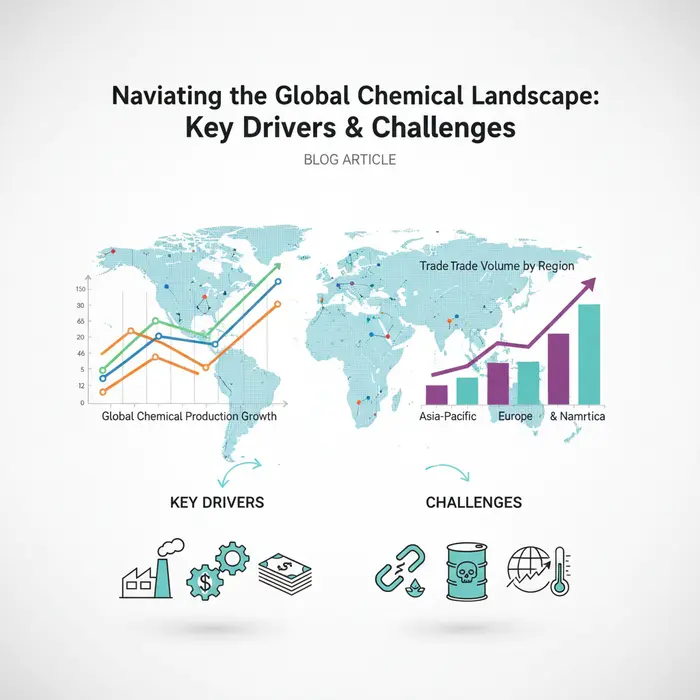
The economic climate presents a mixed bag of challenges and opportunities for the chemical sector. On the “headwinds” front, persistent inflationary pressures in major economies, coupled with rising interest rates, are dampening consumer spending and industrial investment. This can lead to reduced demand for end products, subsequently impacting the off-take of basic and specialty chemicals. Energy price volatility, exacerbated by geopolitical events, continues to be a significant cost driver, particularly for energy-intensive chemical processes. Furthermore, a slowdown in certain manufacturing sectors globally, particularly in Europe and parts of Asia, directly influences chemical demand.
However, several “tailwinds” offer optimism. The resilience and growth of emerging chemical markets, particularly in Southeast Asia, India, and parts of Latin America, are providing new avenues for growth. Rapid urbanization and industrialization in these regions fuel demand across diverse applications, from construction materials to automotive and electronics. Additionally, government stimulus packages aimed at infrastructure development and green initiatives worldwide are creating new demand streams for chemicals used in sustainable technologies, energy efficiency, and advanced materials. The ongoing push for digitalization across industries also necessitates specialty chemicals for semiconductors, coatings, and advanced packaging, offering a consistent demand base. For a comprehensive look at the market, detailed global chemical market insights from Statista underscore these complex dynamics, projecting varied growth trajectories across different segments.
Geopolitical Shifts and Their Influence on Trade
Geopolitical dynamics have become an increasingly critical factor in global chemical supply chain analysis. The rise of protectionism, trade disputes, and strategic decoupling between major economic blocs (e.g., US-China) has disrupted established trade routes and led to tariffs and non-tariff barriers. Regional conflicts and political instability in key resource-producing areas can cause significant price surges and supply shortages for essential raw materials like oil, gas, and certain minerals, which are foundational to chemical production.
In response, companies are increasingly re-evaluating their global footprints. B2B chemical sourcing trends now heavily emphasize resilience and diversification. There’s a noticeable shift towards nearshoring or friend-shoring strategies, where production and sourcing are moved closer to end markets or to politically stable allied nations. This aims to mitigate risks associated with long and vulnerable supply chains. While these shifts increase supply chain robustness, they also come with higher operational costs and the need for significant investment in new facilities or re-tooling existing ones. The complex interplay of sanctions, export controls, and evolving international regulations demands constant monitoring and agile adaptation from chemical industry players.
Technological Innovations & R&D Investment
Technology remains a powerful transformative force, driving both efficiency gains and the creation of entirely new chemical products and applications. Significant R&D investments are being channeled into areas like sustainable chemistry, green manufacturing processes, and the development of bio-based and recycled chemicals. This focus is driven by increasing regulatory pressure and growing consumer demand for environmentally friendly products. Innovations in catalysis, process intensification, and continuous flow chemistry are improving yields, reducing waste, and lowering energy consumption, thereby enhancing the industry’s sustainability profile.
Furthermore, the integration of Artificial intelligence (AI), machine learning, and advanced data analytics is revolutionizing R&D, accelerating discovery of new materials, and optimizing production processes. Digital twins, predictive maintenance, and smart factories are becoming integral to operational excellence, improving efficiency and reducing downtime across the global chemical supply chain analysis. Biotechnology is also emerging as a pivotal area, offering novel pathways for chemical synthesis, particularly for specialized ingredients and pharmaceuticals. These technological advancements are not only reshaping how chemicals are made but also redefining the competitive landscape, pushing companies to invest heavily in innovation to maintain their edge in the ever-evolving global chemical market trends.
Global Chemical Supply Chain Analysis: Resilience & Disruption
The global chemical supply chain, a intricate web connecting raw material producers to end-product manufacturers, is under unprecedented scrutiny. Recent years have underscored its inherent vulnerabilities, from geopolitical tensions and trade disputes to unforeseen events like the pandemic and significant energy price fluctuations. As we look towards the Global chemical market trends for the Chemical industry outlook 2024, a rigorous Global chemical supply chain analysis reveals an urgent need for enhanced resilience and agility. This deep dive explores the complexities, current pain points, and strategic shifts defining modern B2B chemical sourcing trends and distribution.
1. Raw Material Volatility & Sourcing Diversification
The foundation of the chemical industry rests on a steady, cost-effective supply of raw materials. However, this aspect has been anything but stable. Geopolitical instabilities, shifting regulatory landscapes, and the increasing push towards decarbonization are continuously reshaping raw material availability and pricing. Petrochemical feedstocks, critical for a vast array of chemicals, are directly impacted by crude oil and natural gas prices, making the supply chain susceptible to global energy market swings. Furthermore, the concentration of certain raw material production in specific regions presents significant single-point-of-failure risks.
To counteract this volatility, chemical companies are increasingly prioritizing sourcing diversification. This involves exploring a broader geographical spread of suppliers, identifying alternative feedstocks—including bio-based materials and recycled content—and building stronger, more collaborative relationships with existing partners. Long-term contracts with staggered expiration dates and strategic inventory management (balancing the cost of holding inventory against the risk of stockouts) are becoming standard practice. The goal is to create a more robust supplier network that can absorb shocks without severely disrupting production, thereby safeguarding the overall Global chemical supply chain analysis.
2. Logistics & Freight Cost Pressures: What to Expect
The physical movement of chemicals, from raw materials to intermediate products and finished goods, has been a significant source of disruption and cost pressure. The period of severe port congestion, container shortages, and exorbitant freight rates post-pandemic highlighted the fragility of global logistics infrastructure. While some of these pressures have eased, the logistics landscape remains volatile. Rising fuel costs, labor shortages in trucking and shipping, and new geopolitical flashpoints (e.g., disruptions in critical shipping lanes) continue to keep freight costs elevated and lead times unpredictable. This impacts every aspect of B2B chemical sourcing trends, forcing companies to reconsider traditional distribution models.
Looking ahead, companies must prepare for continued, albeit perhaps less extreme, volatility. Strategies include optimizing shipping routes for efficiency and risk mitigation, investing in advanced logistics technologies (e.g., real-time tracking, predictive analytics), and exploring multimodal transport options. Consolidating shipments and negotiating favorable, long-term contracts with diversified logistics providers are also crucial. The focus is shifting from simply finding the cheapest freight to securing reliable capacity and predictable transit times, recognizing that the true cost of logistics extends beyond the invoice to include inventory holding costs and potential production delays.
3. Regionalization and Nearshoring Strategies
The imperative for resilience has accelerated a fundamental shift away from purely globalized supply chains towards more regional or localized models. Regionalization, or nearshoring, involves bringing production and sourcing closer to the final markets. This strategy is driven by several factors: a desire to reduce lengthy lead times, improve supply chain visibility and control, mitigate geopolitical risks associated with distant manufacturing hubs, and reduce the environmental footprint of extensive transportation. Moreover, it can help companies comply with evolving regional regulations and cater more effectively to local market demands, fostering growth in Emerging chemical markets.
While nearshoring can entail higher labor costs or initial investment in new facilities, the benefits of reduced transit times, lower freight costs, enhanced flexibility, and decreased exposure to global shocks often outweigh these drawbacks. This trend is particularly evident in sectors where quick response times are critical or where there’s a strong emphasis on sustainability and local content. For instance, the European and North American chemical industries are actively exploring ways to bolster regional manufacturing capabilities. This strategic recalibration is a cornerstone of building a more robust and responsive chemical supply chain resilience for the future, profoundly influencing the Chemical industry outlook 2024 by fostering diversified growth and reducing dependencies.
Chemical Industry Outlook 2024 and Beyond: Sectoral Forecasts
Providing a comprehensive chemical industry outlook for 2024 and future years, this section breaks down growth projections across key chemical segments and highlights significant market shifts.
The global chemical industry is navigating a complex landscape in 2024, characterized by geopolitical shifts, persistent inflationary pressures, and an accelerating drive towards sustainability. Despite these headwinds, the Global chemical market trends indicate resilient growth, albeit with varying paces across different segments. The chemical industry outlook 2024 suggests a cautious optimism, underpinned by innovation, strategic capacity expansions, and evolving demand patterns. Supply chain resilience, a major lesson from recent years, continues to shape procurement strategies, influencing B2B chemical sourcing trends as companies seek diversified and regionalized supply channels. Furthermore, emerging chemical markets in Asia-Pacific, Latin America, and parts of Africa are poised for significant expansion, driven by urbanization, industrialization, and a growing middle class. Companies are increasingly focusing on digital transformation and advanced analytics to optimize operations and navigate the dynamic Global chemical supply chain analysis.
Petrochemicals: Capacity Expansions & Feedstock Shifts
The petrochemical segment, the foundational pillar of the chemical industry, is undergoing significant transformations. While established regions like North America and the Middle East continue to leverage abundant and cost-effective feedstock (primarily shale gas in the US), Asia, particularly China, remains the primary driver of new capacity additions. The chemical industry outlook 2024 for petrochemicals anticipates continued investment in large-scale integrated complexes, aimed at achieving economies of scale and feedstock flexibility. A crucial trend is the ongoing feedstock shifts, with a growing emphasis on alternative and bio-based feedstocks to reduce carbon footprint and enhance circularity. This shift is not just an environmental imperative but also an economic consideration, as companies explore diverse avenues beyond traditional crude oil and natural gas. Geopolitical tensions and crude oil price volatility will continue to influence production costs and profitability. Moreover, the demand for basic polymers like polyethylene and polypropylene, integral to packaging, automotive, and construction sectors, is expected to grow steadily, albeit moderated by sustainability mandates pushing for recycling and reduced plastic usage. Companies navigating the Global chemical supply chain analysis for petrochemicals will need to prioritize agility and regional diversification to mitigate risks.
Specialty Chemicals: Growth in High-Value Applications
Specialty chemicals are projected to be a key growth engine for the chemical industry, outpacing commodity chemicals due to their tailored properties and application-specific nature. The chemical industry outlook 2024 highlights strong demand in high-value applications across various sectors. Electronics chemicals, driven by the expanding semiconductor industry and 5G technology, along with advanced materials for electric vehicles (EVs) and renewable energy, are experiencing robust growth. Furthermore, the healthcare sector’s increasing need for pharmaceutical excipients, active pharmaceutical ingredients (APIs) intermediates, and diagnostic reagents fuels innovation in specialty polymers and fine chemicals. The focus here is on performance, sustainability, and customized solutions, pushing manufacturers towards intensive R&D and close collaboration with end-users. B2B chemical sourcing trends in this segment are characterized by a demand for high-purity, consistent quality, and reliable supply, often involving long-term strategic partnerships. This segment thrives on innovation, with companies constantly developing new formulations to meet evolving industrial and consumer needs. According to insights from S&P Global Commodity Insights, the global chemical market, including specialty chemicals, is expected to witness substantial growth, driven by these innovative applications.
Agrochemicals & Pharmaceuticals: Demand Drivers
Both agrochemicals and pharmaceuticals are indispensable sectors with distinct yet robust demand drivers.
The agrochemicals segment is primarily propelled by the imperative for global food security, necessitating higher agricultural yields from diminishing arable land. Population growth, changing dietary habits, and the increasing demand for high-quality produce globally underpin the need for effective crop protection solutions, fertilizers, and seed treatment chemicals. The chemical industry outlook 2024 for agrochemicals also reflects a strong push towards sustainable agriculture, driving innovation in bio-pesticides, precision farming solutions, and reduced environmental impact formulations. Regulatory frameworks, particularly in Europe, are becoming stricter, encouraging manufacturers to invest in environmentally friendly products.
Conversely, the pharmaceuticals sector’s demand is driven by an aging global population, the rising prevalence of chronic diseases, and advancements in medical science leading to new drug discoveries. The increasing access to healthcare in emerging chemical markets further boosts the demand for active pharmaceutical ingredients (APIs), intermediates, and excipients. Personalized medicine and biopharmaceuticals are particularly high-growth areas, requiring specialized chemical synthesis and processing capabilities. Both sectors rely heavily on stringent quality control, regulatory compliance, and a secure Global chemical supply chain analysis to ensure product integrity and availability. For more insights on the broader Global chemical market trends, including these vital sectors, explore the resources available at Vietnam Suppliers.
B2B Chemical Sourcing Trends: Strategies for Procurement
The B2B chemical sourcing landscape is undergoing a profound transformation, driven by geopolitical shifts, technological advancements, and an increasing emphasis on sustainability. For procurement professionals, navigating these complexities requires a strategic approach that goes beyond traditional cost-cutting measures, focusing instead on long-term value creation and supply chain resilience. Understanding Global chemical market trends is paramount to developing effective sourcing strategies. The Chemical industry outlook 2024 indicates continued volatility in raw material prices, heightened scrutiny on supply chain ethics, and accelerated digitalization, making proactive strategy development more critical than ever. This section delves into the evolving B2B chemical sourcing trends, offering actionable insights into optimizing procurement processes, fostering robust supplier relationships, and harnessing digital tools for competitive advantage in the Global chemical supply chain analysis. Emerging chemical markets also present both significant opportunities and complex challenges, demanding agile procurement decisions.
Supplier Relationship Management & Risk Mitigation
In an era of unpredictable disruptions—ranging from geopolitical instability and trade wars to natural disasters and pandemics—robust supplier relationship management (SRM) has become a cornerstone of successful chemical procurement. Beyond purely transactional interactions, strategic SRM involves fostering collaborative partnerships built on transparency, mutual trust, and shared objectives. This approach is vital for effective risk mitigation, especially when dealing with the intricate and often fragile Global chemical supply chain analysis. Proactive risk assessments, integrating insights into supplier financial health, operational stability, and geopolitical exposures, are essential. Implementing diversified supplier bases, exploring dual-sourcing strategies, and establishing clear, multi-channel communication protocols with key vendors can significantly enhance supply chain resilience. Furthermore, integrating comprehensive performance metrics, regular audits, and joint business reviews ensures suppliers not only adhere to strict quality standards and regulatory compliance but also align with the buyer’s long-term strategic goals, including innovation and sustainability targets. SRM platforms and analytics tools can further enhance visibility and collaboration, making it easier to manage a complex portfolio of suppliers.
Leveraging Digital Sourcing Platforms & E-commerce
The digital revolution is rapidly reshaping how B2B chemical sourcing is conducted. The adoption of advanced digital sourcing platforms and e-commerce solutions is no longer a competitive advantage but a fundamental necessity for enhancing efficiency, transparency, and cost-effectiveness across the procurement lifecycle. These platforms offer centralized access to a vast network of qualified suppliers, streamline the entire quotation, negotiation, and contracting process, and provide invaluable real-time market insights crucial for understanding Global chemical market trends. Features such as AI-powered analytics, predictive modeling for more accurate demand forecasting, and automated contract management significantly reduce manual effort, minimize human error, and accelerate decision-making. E-procurement systems facilitate faster transactions, improve inventory management through better visibility, and enhance traceability throughout the chemical supply chain. For modern procurement teams, embracing these technologies means transitioning away from traditional, fragmented processes towards integrated, data-driven decision-making, ultimately optimizing the entire purchasing lifecycle and providing a clearer Chemical industry outlook 2024 for strategic planning and execution. This digital transformation also opens doors to new sourcing models, including reverse auctions and dynamic pricing, fostering greater competition and better value.
Sustainable and Ethical Sourcing Requirements
Growing consumer awareness, increasingly stringent regulatory frameworks, and corporate social responsibility mandates are pushing sustainability and ethical considerations to the forefront of B2B chemical sourcing trends. Procurement strategies must now systematically incorporate environmental, social, and governance (ESG) criteria alongside traditional cost, quality, and delivery metrics. This comprehensive evaluation includes assessing suppliers based on their environmental footprint, labor practices, human rights policies, and strict adherence to chemical safety regulations and international standards. Certifications like ISO 14001, Responsible Care, and adherence to specific industry codes of conduct are becoming increasingly important benchmarks for supplier selection. Furthermore, companies are actively exploring circular economy principles, aiming to reduce waste, minimize resource depletion, and promote the recycling or responsible reuse of chemical products and their byproducts throughout their lifecycle. Sustainable and ethical sourcing not only mitigates significant reputational, regulatory, and financial risks but also fosters innovation, drives operational efficiency through reduced resource consumption, and enhances brand value. The accelerated push for green chemistry, bio-based feedstocks, and sustainably produced raw materials is a defining characteristic of Emerging chemical markets and will heavily influence their future development and competitive landscape.
Emerging Chemical Markets & Future Growth Opportunities
The global chemical industry is undergoing a profound transformation, driven by shifting geopolitical landscapes, rapid technological advancements, and an intensifying focus on sustainability. Understanding the evolving Global chemical market trends is crucial for businesses aiming to identify and capitalize on future growth opportunities. The Chemical industry outlook 2024 points towards several geographical areas and application segments that are poised for significant expansion, fueled by innovative products and services.
Asia-Pacific’s Continued Dominance and Emerging Hubs
The Asia-Pacific region remains the undisputed powerhouse of the global chemical industry, accounting for the largest share of production and consumption. While established giants like China, India, Japan, and South Korea continue to drive growth, a closer look reveals the emergence of new manufacturing hubs within Southeast Asia. Countries such as Vietnam, Indonesia, Thailand, and Malaysia are increasingly attracting investments, becoming crucial emerging chemical markets due to favorable government policies, developing infrastructure, lower labor costs, and a burgeoning domestic demand. These nations are seeing increased demand for specialty chemicals in sectors ranging from electronics and automotive to construction and consumer goods. Furthermore, a detailed Global chemical supply chain analysis shows a diversification away from over-reliance on single regions, positioning Southeast Asia as a strategic alternative for manufacturers and suppliers. Companies looking at B2B chemical sourcing trends are actively exploring these new hubs for resilient and cost-effective supply solutions.
Growth Potential in African and Latin American Markets
Beyond Asia, Africa and Latin America represent significant, albeit less mature, growth frontiers for the chemical industry. In Africa, rapid urbanization, industrialization efforts, and a growing middle class are fueling demand across various segments. Infrastructure development projects, the expansion of agricultural output, and the increasing need for consumer goods are creating new opportunities for basic and specialty chemicals. Local production is slowly gaining traction, reducing reliance on imports and fostering regional chemical value chains. Similarly, Latin American markets, propelled by robust agricultural sectors, a revitalized automotive industry, and an expanding industrial base, offer considerable potential. Countries like Brazil, Mexico, and Argentina are leading the charge, with increasing investments in sustainable chemical production and R&D. These regions, while facing unique economic and logistical challenges, present compelling long-term prospects for companies willing to navigate their complexities and invest in localized strategies aligned with evolving Global chemical market trends.
Bio-based & Circular Economy Chemicals: Innovation & Adoption
Perhaps the most transformative growth opportunity lies within the realm of bio-based and circular economy chemicals. The imperative for sustainability is reshaping the entire industry, driving innovation towards products and processes that minimize environmental impact. Bio-based chemicals, derived from renewable biomass sources such as agricultural waste, algae, and plant oils, are gaining significant traction as sustainable alternatives to fossil fuel-derived chemicals. This segment includes bio-based polymers, solvents, surfactants, and intermediates, finding applications in packaging, textiles, automotive, and construction. The bio-based chemicals market is projected for substantial expansion, reflecting a broader industry shift. Concurrently, the principles of the circular economy – focusing on designing out waste and pollution, keeping products and materials in use, and regenerating natural systems – are inspiring a new wave of chemical innovation. This involves developing recyclable and biodegradable materials, closed-loop chemical manufacturing processes, and advanced recycling technologies for plastics and other materials. Companies embracing these sustainable practices are not only meeting growing consumer and regulatory demands but also unlocking new markets and establishing themselves as leaders in the future of chemistry. This paradigm shift also influences B2B chemical sourcing trends, with an increasing emphasis on green and sustainable options for raw materials and finished products, signaling the emergence of new and crucial emerging chemical markets.
Partner with Vietnam’s Leading Suppliers
Looking for reliable suppliers in Vietnam? Contact VietnamSuppliers.com today to connect with verified manufacturers and exporters across all industries.
—————————————
References
– Statista Global Chemical Market Outlook: https://www.statista.com/outlook/chemicals/worldwide
– Building supply-chain resilience: The new imperative for chemicals: https://www.mckinsey.com/industries/chemicals/our-insights/building-supply-chain-resilience-the-new-imperative-for-chemicals
– S&P Global Commodity Insights: Chemical Outlook 2024: https://www.spglobal.com/commodityinsights/en/market-insights/blogs/platts-insider/011724-chemical-outlook-2024-polymers-crude-oil-natural-gas-naphtha-chemical-pricing
– Deloitte Chemical Industry Outlook 2024: https://www2.deloitte.com/us/en/pages/energy-resources-industrials/articles/chemical-industry-outlook.html
– bio-based chemicals market: https://www.grandviewresearch.com/industry-analysis/bio-based-chemicals-market

