
Introduction to Geopolitical Trade Risks
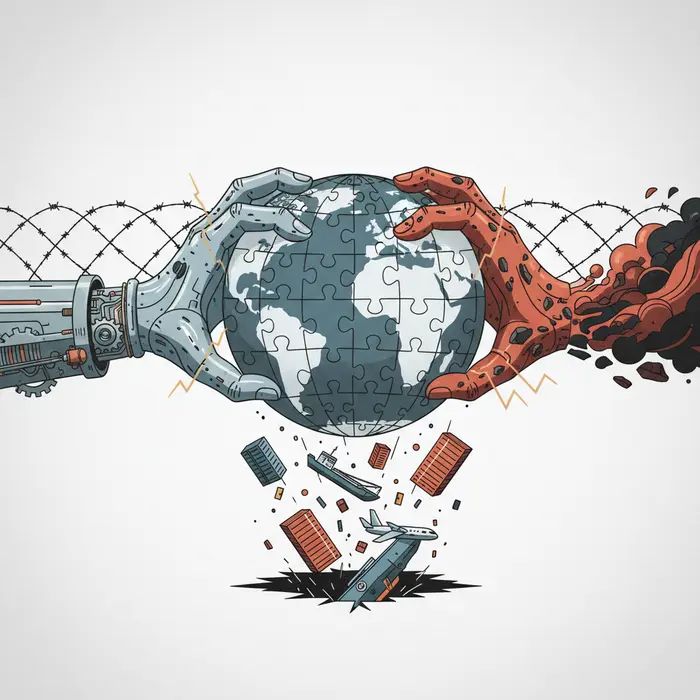
In an increasingly interconnected yet fragmented world, the intricate web of global commerce is perpetually exposed to a myriad of forces. Among the most potent and disruptive are geopolitical trade risks – a complex tapestry of political, economic, and strategic factors that can significantly impede, divert, or even halt international trade flows. Understanding these risks is no longer a niche concern for policy wonks; it has become an indispensable imperative for businesses, governments, and investors alike. As the international landscape shifts, marked by great power competition, economic nationalism, and technological rivalry, the relevance of these risks has surged, demanding a deeper analysis of their nature and implications.
1. What are Geopolitical Trade Risks?
Geopolitical trade risks are broadly defined as potential disruptions to international trade and investment stemming from political decisions, conflicts, instability, or policy shifts between nations. These are not merely economic fluctuations but rather challenges rooted in the strategic objectives, security concerns, and domestic politics of states. They manifest in various forms, each capable of inflicting significant damage on global supply chains and market access.
One prominent manifestation is a Trade Blockade Meaning, which refers to the physical or economic isolation of a country or region to prevent the import or export of goods. Historically, this might involve naval forces restricting shipping lanes; today, it often encompasses comprehensive economic measures that effectively achieve the same outcome. Furthermore, the International Sanctions Impact on Trade is profound. Sanctions, imposed by one or more countries against another, can range from targeted financial restrictions and asset freezes to broad embargoes on specific goods or technologies. These measures compel businesses to sever ties, restructure operations, and often forego lucrative markets, leading to increased compliance costs, reduced revenue, and potential legal repercussions for non-compliance. Beyond blockades and sanctions, geopolitical trade risks also include sudden tariff hikes, non-tariff barriers, expropriation of assets, cyberattacks targeting critical trade infrastructure, and the direct impact of armed conflicts.
2. Historical Context and Recent Trends
While the concept of states leveraging economic power for political ends is as old as trade itself, the modern context of geopolitical trade risks has evolved considerably. During the Cold War, trade was often bifurcated along ideological lines, with strict controls and limited interaction between blocs. The post-Cold War era ushered in a period of hyper-globalization, driven by the belief that economic interdependence would foster peace and stability. Businesses optimized for efficiency, often establishing complex, just-in-time supply chains that spanned continents, assuming a relatively benign geopolitical environment.
However, recent years have witnessed a dramatic resurgence of geopolitical tensions, fundamentally altering this calculus. The rise of economic nationalism, exemplified by protectionist policies and trade disputes between major economies, has challenged the multilateral trading system. Strategic competition, particularly in critical technologies like semiconductors and artificial intelligence, has led to export controls and restrictions aimed at stifling rivals’ technological advancement. Events like the COVID-19 pandemic starkly exposed the vulnerabilities of globalized supply chains, highlighting the urgent need for robust Supply Chain Resilience Strategies. More recent conflicts, such as the war in Ukraine, have demonstrated how quickly geopolitical events can trigger widespread disruptions, commodity price volatility, and significant shifts in trade routes and energy markets. These trends underscore a move away from purely efficiency-driven globalization towards a more security-conscious, diversified, and even regionalized approach to trade.
3. Why Businesses Must Understand Them
For businesses operating in the global arena, understanding geopolitical trade risks is no longer an optional add-on to risk management – it is foundational to long-term sustainability and competitiveness. The direct impacts can be devastating: sudden market closures, inability to import or export critical components, severe logistical bottlenecks, and increased operational costs. Businesses face the challenge of navigating complex compliance landscapes, particularly concerning evolving international sanctions and export controls, which carry hefty penalties for violations.
Proactive engagement with these risks allows companies to develop more robust Supply Chain Resilience Strategies, moving beyond single-source dependencies to implement diversified sourcing, near-shoring, or even re-shoring initiatives. It necessitates exploring Global Sourcing Alternatives, identifying new markets, and building redundancies into their operations. Beyond immediate financial implications, geopolitical instability can severely damage a company’s reputation, especially if perceived as being complicit in human rights abuses or violating international norms. Therefore, integrating geopolitical risk assessment into strategic planning, investment decisions, and operational processes is crucial. It enables companies to anticipate potential disruptions, develop agile response plans, and identify new opportunities that arise from shifting global dynamics, ultimately transforming potential threats into avenues for strategic advantage and sustained growth.
Understanding Trade Blockades and Their Consequences
In an increasingly interconnected global economy, the free flow of goods and services is critical for stability and growth. However, the threat of Geopolitical Trade Risks, particularly in the form of trade blockades, poses significant challenges to international commerce. These strategic measures, ranging from overt military actions to intricate economic pressures, can have profound and lasting impacts on national economies and global trade flows.
1. Trade Blockade Meaning and Types
A trade blockade is a coercive act designed to prevent the movement of goods, services, or information into or out of a specific region, country, or entity. Its primary purpose is to exert political or economic pressure, weaken an adversary, or achieve strategic objectives by limiting their access to essential resources and markets. The Trade Blockade Meaning encompasses several forms:
- Physical or Naval Blockades: Historically, this involved deploying naval forces to physically prevent ships from accessing ports or coastal areas. While less common in its overt military form today, the potential for maritime interdiction remains a critical concern in geopolitical hotspots.
- Economic and Financial Blockades (Sanctions): More prevalent in the modern era, these are non-military measures designed to restrict trade, financial transactions, and other economic interactions. They can include:
- Import/Export Bans: Prohibiting trade of specific goods or all trade with a country.
- Financial Restrictions: Freezing assets, limiting access to international banking systems (like SWIFT), or restricting foreign investment.
- Technology Transfer Restrictions: Preventing the sale or sharing of critical technologies.
The International Sanctions Impact on Trade can be devastating, creating a virtual blockade by denying access to global markets and financial infrastructure.
2. Economic Fallout of Blockades
The consequences of trade blockades ripple through economies with immediate and long-term effects:
- Immediate Impacts:
- Supply Chain Disruptions: Blockades instantly disrupt global supply chains, leading to shortages of raw materials, components, and finished goods, which can halt production and cause widespread scarcity. This necessitates robust Supply Chain Resilience Strategies.
- Price Hikes and Inflation: Scarcity drives up prices for essential goods and services, leading to inflation that erodes purchasing power and destabilizes economies.
- Loss of Markets and Revenue: Export-dependent nations suffer immense losses as their products cannot reach international buyers, leading to business failures and job losses.
- Reduced GDP: The cumulative effect of these factors is a significant contraction in the Gross Domestic Product (GDP), pushing economies towards recession.
- Long-Term Impacts:
- Diversification of Sourcing and Global Sourcing Alternatives: Countries under threat are compelled to seek new suppliers and markets, often at higher costs, leading to fragmentation of global trade networks.
- Investment Deterrence: Blockaded regions become unattractive to foreign direct investment (FDI), hindering long-term economic growth and technological advancement.
- Humanitarian Crises: Prolonged blockades can lead to severe shortages of food, medicine, and other basic necessities, resulting in increased mortality and social unrest.
- Geo-economic Realignments: Blockades can accelerate the formation of new trade blocs and alliances, leading to a more polarized global economic order.
3. Case Studies of Past Blockades
History offers numerous examples illustrating the diverse impacts of trade blockades:
- The Cuban Missile Crisis (1962): The U.S. naval quarantine around Cuba to prevent Soviet missile deliveries is a prime example of a physical blockade. Though short-lived, it demonstrated the immediate coercive power of such an action, bringing the world to the brink of nuclear conflict and underscoring the high stakes involved.
- U.S. Sanctions on Iran: Extensive U.S. and international sanctions against Iran over its nuclear program serve as a modern illustration of an economic blockade. These measures have profoundly impacted Iran’s economy, causing significant inflation, reduced oil exports, and shortages of goods. This highlights the power of International Sanctions Impact on Trade to cripple a nation’s economic output, even if political outcomes are not always swiftly achieved.
Understanding these historical and contemporary events underscores the critical need for robust Supply Chain Resilience Strategies and diversified Global Sourcing Alternatives. As global interdependence deepens, so too does the potential for disruption, making proactive management of Geopolitical Trade Risks paramount for maintaining economic stability and international security.
The Ripple Effect of International Sanctions
International sanctions have become a prevalent and powerful instrument in the foreign policy toolkit of nations and international bodies alike. Far from being mere punitive measures, they are strategically deployed to influence the behavior of targeted states, non-state actors, or individuals, aiming to compel changes in policy, deter aggression, or combat illicit activities. However, their impact extends far beyond the immediate targets, creating a complex web of direct and indirect consequences that ripple through global trade flows, specific industries, and financial markets. Understanding these multifaceted effects is crucial for navigating the evolving landscape of Geopolitical Trade Risks.
1. Defining International Sanctions
At their core, international sanctions are restrictive measures imposed by one or more countries, or by an international organization like the United Nations, against another state, entity, or individual. These measures can take various forms, from economic sanctions targeting trade, finance, and investment, to arms embargoes, travel bans, and asset freezes. The primary objective is often to exert pressure without resorting to military force, compelling the target to comply with international law, cease human rights abuses, or abandon destabilizing policies. For businesses, comprehending the precise Trade Blockade Meaning within specific sanctions regimes is critical, as it dictates permissible commercial activities and identifies prohibited transactions. For a comprehensive overview of U.S. financial sanctions programs and policies, businesses can refer to the U.S. Department of the Treasury’s Office of Foreign Assets Control (OFAC).
2. Impact on Trade and Investment
The imposition of sanctions invariably leads to significant disruptions in global trade and investment patterns. Directly, sanctions can halt exports and imports, sever financial transactions, and freeze assets, drastically reducing trade volumes between sanctioning and sanctioned entities. Indirectly, they create an environment of uncertainty, leading to increased transaction costs, heightened insurance premiums, and a reluctance from third-party nations and businesses to engage in trade that might inadvertently fall under sanction scrutiny. Specific industries, such as energy, technology, and finance, often bear the brunt of these restrictions, experiencing supply chain bottlenecks, price volatility, and a need to reconfigure their global operations.
The cumulative effect of these measures underscores the significant International Sanctions Impact on Trade, forcing companies to reconsider their global sourcing strategies and market access. To mitigate these disruptions, businesses are increasingly focusing on developing robust Supply Chain Resilience Strategies, diversifying their supplier base, and exploring Global Sourcing Alternatives. This proactive approach is essential for cushioning against unexpected shocks and maintaining operational continuity in a world prone to escalating Geopolitical Trade Risks. Financial markets, too, react swiftly to sanctions, experiencing currency fluctuations, shifts in capital flows, and reduced access to international lending and investment for sanctioned nations and their associated entities.

3. Compliance Challenges for Businesses
For multinational corporations and businesses engaged in international trade, navigating the complex landscape of sanctions compliance presents substantial challenges. Companies must contend with an ever-evolving patchwork of regulations from multiple jurisdictions, each with its own scope, prohibitions, and enforcement mechanisms. This necessitates rigorous due diligence processes, advanced screening technologies to identify sanctioned entities and individuals, and comprehensive internal compliance programs to prevent inadvertent breaches. The potential consequences of non-compliance are severe, including hefty fines, reputational damage, and even criminal penalties. Therefore, businesses must invest in continuous monitoring and training to ensure their operations align with the latest sanctions mandates, thereby safeguarding their global ventures against the inherent Geopolitical Trade Risks that such foreign policy tools present.
Building Supply Chain Resilience Strategies
In an increasingly interconnected yet volatile global economy, businesses are continually exposed to a spectrum of disruptions, from natural disasters and pandemics to significant Geopolitical Trade Risks. Events such as the imposition of international sanctions, trade wars, or a Trade Blockade Meaning
the forceful prevention of goods from entering or leaving a specific area, can severely cripple supply chains. Enhancing supply chain resilience is no longer merely an advantage but a fundamental necessity for sustained growth. This section outlines actionable Supply Chain Resilience Strategies
designed to help businesses withstand and rapidly recover from unforeseen events and evolving geopolitical landscapes.
1. Diversification of Suppliers and Routes
Over-reliance on a single supplier or a limited geographical region presents an inherent vulnerability. When geopolitical tensions escalate, or a natural disaster strikes a key manufacturing hub, businesses with concentrated supply bases face immediate challenges. Comprehensive diversification is paramount to mitigate this.
- Multi-Sourcing: Establish relationships with multiple suppliers for critical components and materials, ideally across different countries or continents. This provides alternatives during disruptions and can foster competition, leading to better pricing and quality.
- Geographic Spreading: Seek
Global Sourcing Alternatives
beyond traditional manufacturing centers. Exploring emerging markets or regions with stable political climates can de-risk your supply network. While some regions might offer lower initial costs, the long-term risk associated with potentialInternational Sanctions Impact on Trade
or political instability might outweigh these benefits. - Route Flexibility: Plan for alternative transportation routes and modes. If a sea lane is blocked due to a “Trade Blockade Meaning” or political dispute, having established rail, air, or even land bridge options can be crucial. Investing in logistics partnerships that offer such flexibility is a proactive measure.
2. Supply Chain Resilience Strategies: Best Practices
Beyond diversification, implementing robust operational and technological best practices is vital for fostering inherent resilience. These strategies aim to build flexibility and responsiveness into the very fabric of your operations.
- Strategic Stockpiling and Inventory Management: While lean inventory models are efficient, a purely lean approach can be detrimental during disruptions. Identify critical components and finished goods for which strategic safety stock or buffer inventory is justified. This isn’t about hoarding, but intelligent pre-positioning based on risk assessment. Leveraging technology for real-time inventory visibility across the network can prevent stockouts and enable quicker reallocation.
- Technology for Visibility and Prediction: Invest in digital tools that provide end-to-end supply chain visibility. Platforms leveraging AI and machine learning can analyze vast datasets to predict potential disruptions, track shipments in real-time, and identify bottlenecks. This proactive insight allows for timely interventions. As noted by experts, building resilient supply chains requires a holistic approach that includes technology, collaboration, and strategic planning. For deeper insights, consult resources like Harvard Business Review on Building Resilient Supply Chains.
- Supplier Relationship Management: Cultivate strong, collaborative relationships with key suppliers. Transparency and open communication are crucial. Sharing risk assessments and developing joint contingency plans can transform suppliers into partners in resilience.
- Nearshoring and Reshoring Evaluations: Re-evaluating sourcing locations to bring production closer to consumption markets (nearshoring) or back to the home country (reshoring) can significantly reduce lead times and exposure to distant
Geopolitical Trade Risks
and logistics vulnerabilities. This is a key aspect of exploring “Global Sourcing Alternatives”.
3. Risk Assessment and Scenario Planning
A resilient supply chain is built on a foundation of continuous risk identification, evaluation, and proactive planning. This involves looking ahead to anticipate potential threats and preparing robust responses.
- Comprehensive Risk Mapping: Systematically identify and map all potential risks across your supply chain, from raw material extraction to final delivery. This includes geopolitical factors, environmental risks, economic downturns, cyber threats, and operational failures. Understand dependencies and single points of failure, paying particular attention to potential “International Sanctions Impact on Trade”.
- Scenario Planning and War-Gaming: Develop various disruption scenarios, ranging from localized strikes to widespread geopolitical conflicts or a full-scale
Trade Blockade Meaning
for a critical region. For each scenario, simulate the impact and develop detailed contingency plans. Thiswar-gaming
helps teams understand potential weaknesses and refine response protocols. - Regular Review and Updates: The global landscape is constantly changing.
Geopolitical Trade Risks
evolve, new technologies emerge, and market conditions shift. Therefore, risk assessments and scenario plans must be reviewed and updated regularly – at least annually, or whenever significant global events occur. This ensures yourSupply Chain Resilience Strategies
remain relevant and effective.
By integrating these proactive strategies, businesses can transform their supply chains from fragile networks into robust, adaptive systems capable of navigating the complexities and uncertainties of the modern world.
Exploring Global Sourcing Alternatives and Future-Proofing
In an increasingly interconnected yet volatile world, businesses face unprecedented challenges in maintaining operational continuity. From unexpected pandemics to escalating geopolitical tensions, the stability of traditional supply chains is constantly under scrutiny. Navigating these geopolitical trade risks requires a proactive and adaptive approach, shifting focus from single-source reliance to diverse and resilient sourcing strategies. The imperative to explore new markets and sourcing options, such as nearshoring and friendshoring, is no longer a strategic luxury but a fundamental necessity for future-proofing business operations and ensuring long-term success.
The global economic landscape is continuously reshaped by political decisions, trade disputes, and regional conflicts. For instance, understanding the trade blockade meaning becomes critical when assessing potential disruptions to maritime routes or land borders, which can severely impact material flow and product delivery. Similarly, the international sanctions impact on trade can instantly reconfigure market access, material costs, and logistical feasibility, forcing companies to rapidly pivot their sourcing strategies. Building robust supply chain resilience strategies is thus paramount, enabling businesses to withstand shocks and recover quickly.
1. Identifying Global Sourcing Alternatives
The first step in mitigating supply chain vulnerabilities is to systematically identify and evaluate potential global sourcing alternatives. This process involves a comprehensive assessment of existing dependencies, identifying critical components, raw materials, and finished goods that are currently sourced from high-risk regions or singular suppliers. Businesses must look beyond cost efficiencies alone and prioritize factors such as political stability, regulatory environments, logistical infrastructure, and labor availability in potential new locations.
Diversification is key. Instead of a ‘China+1’ strategy, many are now considering ‘China+N’, distributing production across multiple countries to reduce over-reliance on any single nation. This involves deep dives into emerging markets, evaluating their manufacturing capabilities, quality control standards, and adherence to international trade laws. Engaging with local business associations, trade commissions, and supply chain consultants can provide invaluable insights into these new markets, helping companies make informed decisions about where to invest their sourcing efforts.

2. Nearshoring, Reshoring, and Friendshoring Explained
As part of exploring global sourcing alternatives, several distinct strategies have gained prominence: nearshoring, reshoring, and friendshoring. Each offers unique benefits and considerations:
- Nearshoring: This involves relocating production or sourcing to a geographically closer country, often sharing a border or being within the same region. For instance, North American companies might nearshore to Mexico, while European companies might look to Eastern Europe or North Africa. The advantages include reduced lead times, lower transportation costs, easier oversight due to proximity and similar time zones, and a potentially smaller carbon footprint.
- Reshoring (or Onshoring): This strategy brings production back to the company’s home country. While it might involve higher labor costs, reshoring offers enhanced control over quality, intellectual property, and compliance. It also strengthens domestic economies, creates local jobs, and significantly shortens supply lines, making them less susceptible to international disruptions and geopolitical risks.
- Friendshoring: A relatively newer concept, friendshoring (or allyshoring) involves sourcing from or manufacturing in countries that are geopolitically aligned and share similar values and economic interests. This strategy aims to build secure supply chains among trusted allies, reducing the risk of disruption due to political tensions or sanctions from adversarial nations. It prioritizes supply chain security and reliability over purely cost-driven decisions, fostering deeper economic partnerships among friendly states.
Each of these approaches offers a different balance between cost, control, risk, and resilience, allowing businesses to tailor their strategies to their specific needs and risk appetite.
3. Adapting to a Shifting Geopolitical Landscape
Successfully navigating and adapting to an ever-shifting geopolitical landscape requires more than just reactive measures; it demands foresight and strategic planning. Businesses must continuously monitor global political developments, understand their potential implications for trade routes, tariffs, and regulatory changes, and integrate this intelligence into their strategic decision-making. Developing robust scenario planning capabilities can help anticipate disruptions and prepare contingency plans for various outcomes.
Furthermore, fostering strong relationships with diverse suppliers and partners across multiple regions is crucial. This includes investing in digital tools for real-time supply chain visibility, enabling quicker responses to emerging threats. Companies should also advocate for government policies that support trade diversification and international cooperation, helping to create a more stable and predictable global trading environment. By embracing proactive supply chain resilience strategies and exploring a broad spectrum of global sourcing alternatives, businesses can transform potential vulnerabilities into opportunities for growth and sustainable operations, even amidst profound global uncertainty.
Partner with Vietnam’s Leading Suppliers
Looking for reliable suppliers in Vietnam? Contact VietnamSuppliers.com today to connect with verified manufacturers and exporters across all industries.
—————————————
References
– The Geopolitics of Global Supply Chains: https://www.foreignaffairs.com/articles/world/2023-01-24/geopolitics-global-supply-chains
– international sanctions: https://www.cfr.org/sanctions/what-are-sanctions-and-how-do-they-work
– U.S. Department of the Treasury: Financial Sanctions: https://home.treasury.gov/policy-issues/financial-sanctions
– Harvard Business Review on Building Resilient Supply Chains: https://hbr.org/2020/07/building-resilient-supply-chains
– Global Supply Chains and Geopolitical Risks: https://www.cfr.org/geoeconomics/global-supply-chains

