
Understanding the China Plus One Strategy
The global business landscape has undergone profound transformations in recent years, prompting a critical reevaluation of established manufacturing and sourcing strategies. At the forefront of this shift is the China Plus One Strategy – a pragmatic approach where companies maintain significant operations in China while simultaneously diversifying a portion of their production or sourcing to another country, most notably in Southeast Asia. Initially conceived as a means to mitigate rising labor costs in China, the strategy has evolved into an essential framework for enhancing supply chain resilience, de-risking operations, and navigating an increasingly complex geopolitical environment. For global businesses today, understanding and implementing China Plus One is not just an option but a crucial imperative for long-term stability and competitive advantage.
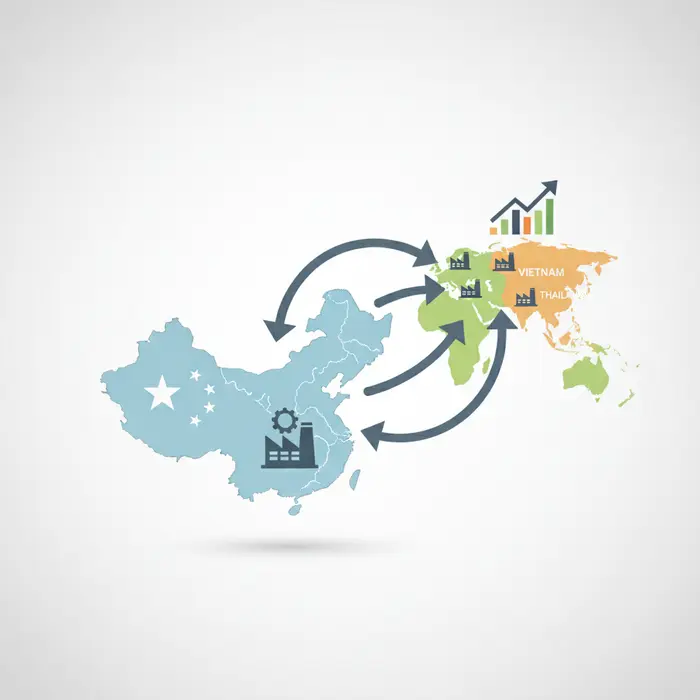
1. What is “China Plus One” and its Evolution?
At its core, the “China Plus One” strategy signifies a deliberate move away from an over-reliance on a single manufacturing hub, predominantly China, towards a multi-country approach. It’s not about abandoning China, which remains an indispensable market and production base for many, but rather about supplementing it. The strategy’s origins can be traced back to the early 2000s, when companies began exploring alternatives as China’s rapid economic development led to increasing labor wages, land costs, and stricter environmental regulations. Countries like Vietnam, India, and Thailand emerged as attractive options due to their competitive operating costs and growing industrial capabilities.
The evolution of China Plus One accelerated dramatically in the past decade. The US-China trade war introduced tariffs and heightened geopolitical tensions, compelling businesses to seek alternative manufacturing locations to avoid duties and reduce political exposure. Subsequently, the COVID-19 pandemic exposed the critical vulnerabilities of centralized supply chains, demonstrating how a single-point failure could trigger global disruptions. Today, the strategy has broadened to encompass a wider array of objectives, from pure cost savings to building more resilient supply chains and ensuring business continuity against a backdrop of increasing global uncertainties.
2. Key Drivers for Supply Chain Diversification
Several compelling factors are driving the accelerated adoption of the China Plus One strategy:
- Geopolitical Volatility and Trade Disputes: Ongoing trade tensions, sanctions, and protectionist policies make a single-country focus risky. Diversifying manufacturing bases helps companies mitigate the impact of tariffs and navigate complex international trade regulations.
- Rising Costs in China: While still a manufacturing powerhouse, China’s increasing labor costs, land prices, and tightening environmental compliance have eroded some of its cost advantages. This has led companies to explore locations where Vietnam manufacturing costs vs China offer significant savings, especially for labor-intensive industries.
- Enhanced Supply Chain Resilience: The pandemic underscored the fragility of concentrated supply chains. Natural disasters, public health crises, and regional lockdowns can severely impact production and logistics. By spreading operations, businesses can create buffers and ensure continuity even if one region faces disruptions. This is a crucial element of proactive China supply chain diversification.
- Demand for Agility and Speed to Market: A diversified network allows for greater flexibility in responding to market changes and consumer demands. Different manufacturing hubs can cater to specific regional markets, reducing lead times and transportation costs.
- Access to New Talent Pools and Markets: Expanding into new countries opens access to different skilled workforces and emerging consumer markets, fostering innovation and growth.
3. Benefits of a Multi-Country Manufacturing Approach
Adopting a multi-country manufacturing model offers a multitude of strategic benefits for global businesses:
- Risk Mitigation: The primary advantage is significantly reduced exposure to single-point-of-failure risks. If one country faces political instability, natural disaster, or economic downturn, operations can shift or be supplemented by another location, ensuring minimal disruption to global supply.
- Cost Optimization and Efficiency: By leveraging different wage structures, tax incentives, and free trade agreements, companies can strategically optimize their overall cost base. For example, Vietnam sourcing advantages often include lower labor costs and participation in numerous trade blocs, making it an attractive destination for cost-conscious production.
- Strengthened Resilience and Continuity: A diversified production footprint creates a robust and adaptable supply chain. This resilience enables businesses to respond swiftly to unforeseen challenges, minimize downtime, and maintain consistent product availability.
- Improved Negotiation Leverage: Having multiple manufacturing options enhances a company’s bargaining power with suppliers and service providers, potentially leading to better terms and greater flexibility.
- Enhanced Innovation and Customization: Different regions can specialize in distinct product lines or technological processes, fostering innovation. Furthermore, local manufacturing can better cater to specific market demands and cultural preferences. Countries like Vietnam have continually invested in upgrading their industrial parks and infrastructure, leading to impressive Vietnam factory capabilities that can support sophisticated manufacturing processes and high-quality production.
- Compliance and Ethical Sourcing: Operating in multiple countries can help businesses meet diverse regulatory standards and demonstrate a commitment to ethical sourcing practices across different jurisdictions.
Vietnam’s Appeal: A Deep Dive into Manufacturing Costs
In the dynamic landscape of global manufacturing, Vietnam has emerged as a compelling alternative, particularly for companies pursuing a China Plus One Strategy. This approach, driven by a need for China supply chain diversification, seeks to mitigate risks associated with over-reliance on a single manufacturing base. As businesses increasingly look beyond traditional hubs, understanding Vietnam manufacturing costs vs China becomes paramount. This deep dive will conduct a comparative analysis of key manufacturing cost components, including labor, land, and operational expenses, to highlight Vietnam’s growing appeal and its significant Vietnam sourcing advantages.
1. Vietnam Manufacturing Costs vs. China: Labor & Land
The primary driver behind many companies’ consideration of Vietnam is the significant difference in factor costs, particularly labor and land. Over the past decade, manufacturing wages in China have steadily risen, making it a more expensive proposition. According to various economic reports, the average manufacturing wage in Vietnam is considerably lower than in coastal Chinese provinces, often by as much as 30-50%. This wage differential directly impacts production costs, offering substantial savings for labor-intensive industries. While Vietnam’s wages are also on an upward trend, they remain competitive, especially in comparison to China’s more mature and costly labor market.
Beyond labor, land acquisition and lease costs present another critical area of contrast in Vietnam manufacturing costs vs China. Industrial land in Vietnam, particularly in newly developed or less saturated zones, is generally more affordable than in comparable industrial parks in China. Lease rates can be significantly lower, impacting long-term operational expenses and capital expenditure. This affordability allows companies to establish larger Vietnam factory capabilities or to expand existing operations with a lower initial investment. Vietnam’s government has also been proactive in developing specialized industrial parks and economic zones, offering ready-to-build infrastructure that further streamlines the setup process and reduces initial costs for foreign investors.
2. Logistics and Infrastructure Cost Considerations
While direct factor costs are crucial, logistics and infrastructure play an equally vital role in the overall manufacturing cost equation. Vietnam has made substantial investments in its infrastructure over recent years. Major deep-water ports like Haiphong in the north and Cai Mep-Thi Vai and Ho Chi Minh City in the south offer excellent connectivity to global shipping routes, reducing transit times and freight costs to key markets. The country’s road network, though still developing, is continuously improving, facilitating the movement of goods between factories and ports. Airports in major cities also support air cargo for high-value or time-sensitive products.
Comparing these aspects, China boasts a highly sophisticated and extensive logistics network. However, the sheer scale and internal distances within China can sometimes lead to higher domestic transportation costs, especially when sourcing components from disparate regions. Vietnam’s more compact geography, combined with strategic infrastructure development, often presents Vietnam sourcing advantages through more efficient internal logistics and shorter distances to export hubs. The cost of utilities, such as electricity and water, can also be a factor, with Vietnam generally offering competitive rates, though specific costs can vary by industrial zone and usage.
3. Government Incentives and Tax Benefits in Vietnam
A significant part of Vietnam’s appeal stems from its proactive government policies aimed at attracting Foreign Direct Investment (FDI). The Vietnamese government offers a range of incentives designed to reduce the operational burden and enhance profitability for manufacturers. These include:
- Corporate Income Tax (CIT) Holidays and Reductions: New investment projects in encouraged sectors (e.g., high-tech, supporting industries) or in specific economic zones can qualify for tax exemptions for several years, followed by reduced tax rates for a subsequent period. For example, some projects may enjoy a 0% CIT for 4 years, followed by a 5% rate for the next 9 years, compared to the standard 20% rate.
- Import Duty Exemptions: Manufacturers importing machinery, equipment, and raw materials not yet produced domestically for eligible projects can often benefit from import duty exemptions.
- Land Rental Exemptions/Reductions: Certain projects, especially those in prioritized sectors or remote areas, may receive exemptions or reductions on land rental fees for a specified duration.
- Free Trade Agreements (FTAs): Vietnam has a vast network of FTAs, including comprehensive agreements like the CPTPP and EVFTA. These agreements provide preferential tariff treatment, significantly reducing export costs to major global markets and offering substantial Vietnam sourcing advantages for companies looking to export from the country. This broad access to global markets through reduced tariffs further solidifies Vietnam’s position as a strategic manufacturing base.
These incentives, combined with competitive labor and land costs, significantly enhance the overall cost-effectiveness of manufacturing in Vietnam. They effectively lower the total cost of ownership for factories, making the country a highly attractive destination for businesses seeking robust and diversified supply chains. The cumulative effect of these benefits strongly positions Vietnam as a premier location for businesses implementing a China Plus One Strategy, enabling them to build resilient and cost-efficient global operations.
Strengthening Supply Chains: Vietnam’s Role in Diversification
The global landscape of manufacturing and trade has seen significant shifts, driven by a confluence of geopolitical tensions, economic uncertainties, and the imperative for greater resilience. In this context, the China Plus One Strategy has emerged as a critical approach for businesses aiming to de-risk their supply chains. Vietnam stands out as a primary beneficiary and key enabler of this strategy, playing an increasingly vital role in strengthening and diversifying global supply networks. By offering a compelling alternative to traditional manufacturing hubs, Vietnam helps mitigate risks associated with over-reliance on a single country, fostering a more robust and adaptable international trade environment.

1. Reducing Geopolitical and Economic Risks
The COVID-19 pandemic, coupled with ongoing trade disputes and geopolitical tensions, particularly between the US and China, underscored the vulnerabilities inherent in concentrated supply chains. Companies realized the urgent need for diversifying their manufacturing footprint to protect against unforeseen disruptions and political leverage. Vietnam offers a strategic escape from these pressures. Its stable political environment, consistent economic growth, and proactive engagement in international trade agreements – such as the CPTPP, EVFTA, and RCEP – provide a secure and predictable operational base. This allows multinational corporations to achieve significant China supply chain diversification, lessening their exposure to tariffs, trade barriers, and geopolitical instability, thereby securing their market access and operational continuity.
2. Building Resilient Supply Chain Networks
Beyond risk mitigation, Vietnam actively contributes to building more resilient global supply chains through its rapidly developing industrial base and competitive advantages. While Vietnam manufacturing costs vs China have historically been lower, the gap is narrowing. However, Vietnam maintains its appeal through competitive labor costs, government incentives for foreign direct investment (FDI), and a growing pool of skilled labor. The nation has invested heavily in infrastructure, including ports, roads, and industrial parks, significantly enhancing its Vietnam factory capabilities. From textiles and footwear to electronics and automotive components, Vietnamese factories are demonstrating increasing sophistication and capacity, attracting major players like Samsung, Apple, and Foxconn. These robust capabilities, combined with strategic geographical positioning and efficient logistics, offer significant Vietnam sourcing advantages, allowing businesses to optimize their production and distribution networks for greater agility and responsiveness.
3. Case Studies: Successful Transitions to Vietnam
The effectiveness of the China Plus One Strategy is best illustrated by the numerous companies that have successfully transitioned or expanded their operations into Vietnam. Major electronics manufacturers, for instance, have shifted significant portions of their assembly lines for smartphones, tablets, and wearable devices to Vietnamese facilities, leveraging the country’s skilled workforce and favorable trade policies. Apparel and footwear giants have similarly embraced Vietnam as a key production hub, benefiting from its established textile industry and export-oriented infrastructure. These transitions are not merely about cost arbitrage; they represent a strategic realignment to build more robust, distributed supply chains. Companies are finding that Vietnam’s commitment to quality, its improving technological capabilities, and its integration into global trade networks make it an indispensable partner in their long-term supply chain strategies, proving its role as a reliable alternative and complement to existing manufacturing bases.
In conclusion, Vietnam’s ascent as a global manufacturing powerhouse is central to the ongoing efforts to diversify and strengthen international supply chains. By offering a compelling combination of reduced geopolitical risk, enhanced manufacturing capabilities, and proven success stories, Vietnam is not just an alternative but a vital component of the modern supply chain strategy. Its role in enabling the China Plus One Strategy is transforming global production networks, making them more resilient, responsive, and better equipped to navigate the complexities of the 21st-century economy.
Vietnam’s Manufacturing Capabilities and Capacity
Vietnam has rapidly emerged as a formidable player in the global manufacturing landscape, increasingly positioned as a vital component of the China Plus One Strategy. This approach encourages companies to diversify their supply chains beyond China, and Vietnam’s compelling mix of strategic location, competitive Vietnam manufacturing costs vs China, and robust government support has made it a premier destination. The nation’s evolving industrial sectors, coupled with significant infrastructure advancements and a growing pool of skilled labor, are solidifying its reputation as a hub for advanced manufacturing, offering substantial Vietnam sourcing advantages for international businesses.
Key Industries and Export Strengths
Vietnam’s manufacturing capabilities extend across a diverse range of sectors, moving beyond traditional strengths in textiles and footwear to embrace more sophisticated industries. While garments, textiles, and footwear continue to be significant export drivers, contributing substantially to the economy, the country has successfully attracted foreign direct investment (FDI) into high-value manufacturing. Electronics, including smartphones, components, and consumer electronics, now represent Vietnam’s largest export category, with major global tech giants establishing extensive production facilities. Other burgeoning sectors include automotive parts, machinery, medical devices, and even high-tech aerospace components. This diversification highlights the country’s growing Vietnam factory capabilities and its ability to integrate into complex global supply chains. The nation’s strategic location, coupled with numerous Free Trade Agreements (FTAs) like the CPTPP and EVFTA, provides preferential market access to key consumer markets, further enhancing Vietnam’s appeal for companies seeking to optimize their global production and leverage Vietnam sourcing advantages. This robust export performance underscores Vietnam’s capacity to produce quality goods at scale, making it an attractive alternative for global manufacturing relocation and China supply chain diversification.
Skilled Workforce and Training Initiatives
A cornerstone of Vietnam’s manufacturing prowess is its young, adaptable, and increasingly skilled workforce. With a median age of around 32, Vietnam boasts a demographic dividend that is both eager to learn and highly cost-competitive, offering significant Vietnam manufacturing costs vs China. The government, recognizing the critical importance of human capital, has implemented various initiatives to enhance vocational training and STEM education. Public and private vocational schools, often supported by international aid and foreign investors, are churning out graduates proficient in technical skills relevant to modern manufacturing, including precision engineering, automation, and IT. Furthermore, many multinational corporations operating in Vietnam invest heavily in on-the-job training programs, upskilling local employees to meet advanced production standards. This commitment to continuous learning and skill development ensures a steady supply of competent labor, critical for supporting complex industrial operations and fostering an environment conducive to high-tech manufacturing. The adaptability and strong work ethic of the Vietnamese labor force contribute significantly to the country’s overall Vietnam factory capabilities, making it an attractive hub for long-term industrial investment.
Infrastructure Development: Ports, Roads, and Industrial Parks
Vietnam’s remarkable economic ascent is intrinsically linked to its ambitious infrastructure development agenda. The government has poured substantial investments into upgrading and expanding its transportation networks and industrial zones, creating a seamless ecosystem for manufacturing and logistics. Key deep-water ports, such as Cai Mep-Thi Vai in the south and Lach Huyen International Gateway Port near Hai Phong in the north, now accommodate larger vessels, facilitating direct shipments to international markets and significantly reducing transit times and costs. The expansion of expressways, national highways, and railway lines connects major industrial hubs to ports and airports, ensuring efficient movement of raw materials and finished goods. Furthermore, the proliferation of modern industrial parks and economic zones, many equipped with world-class utilities and infrastructure, offers ready-to-use facilities for foreign investors. These zones often provide tax incentives and streamlined administrative procedures, further enhancing Vietnam sourcing advantages. This ongoing infrastructure overhaul is crucial for supporting large-scale manufacturing operations and is a primary driver behind companies choosing Vietnam for China supply chain diversification, building resilience and efficiency into their global logistics strategies. According to the World Bank, Vietnam’s robust economic transformation is significantly underpinned by its strategic investments in infrastructure and human capital, attracting substantial foreign direct investment.
Navigating Sourcing Advantages and Challenges in Vietnam
The global supply chain landscape is in constant flux, prompting businesses worldwide to re-evaluate their sourcing strategies. Amidst this evolution, Vietnam has emerged as a powerhouse, attracting significant foreign investment and becoming a cornerstone of the increasingly popular China Plus One Strategy. This approach encourages companies to diversify their manufacturing and sourcing bases beyond China, mitigating risks associated with over-reliance on a single region. While Vietnam offers compelling opportunities for China supply chain diversification, understanding both its unique benefits and potential hurdles is crucial for successful engagement.
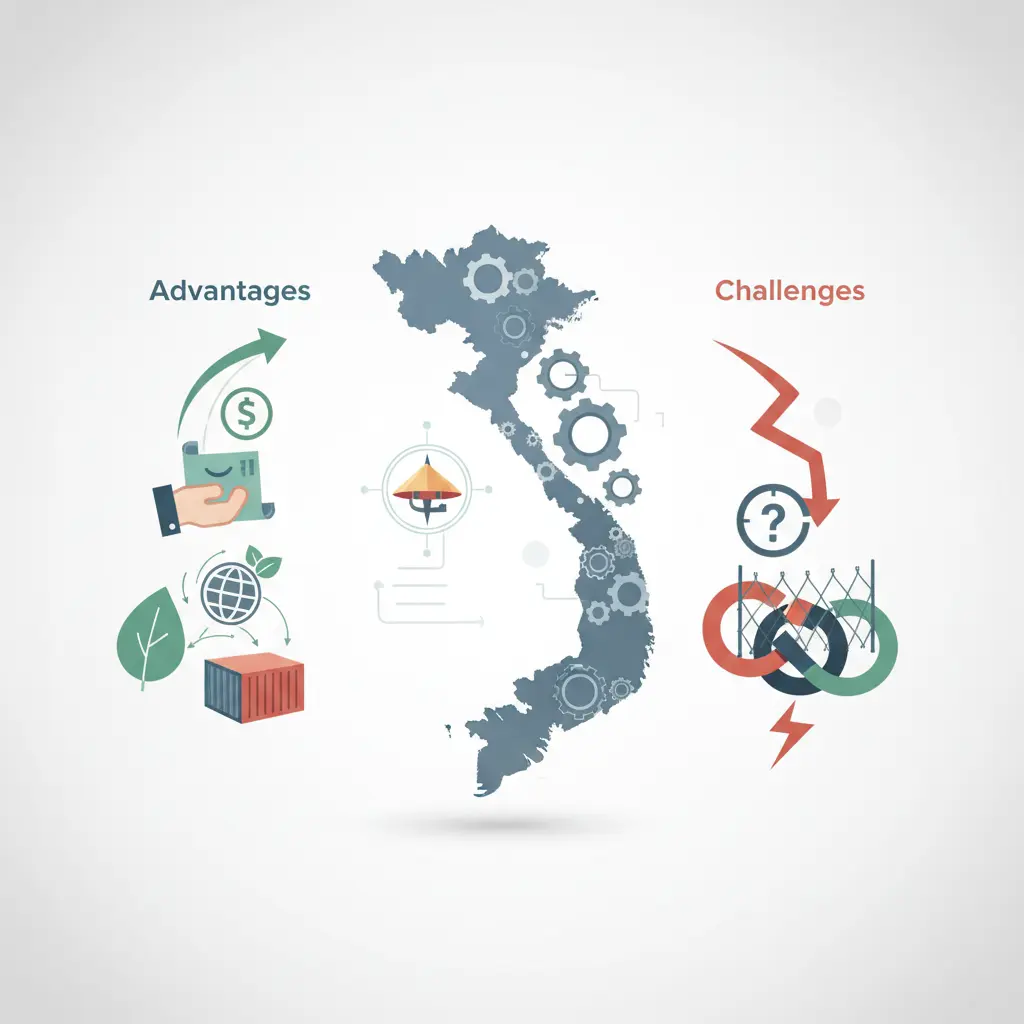
1. Vietnam Sourcing Advantages: Proximity & FTAs
Vietnam’s strategic geographical location, bordering China and offering extensive coastlines with major international shipping routes, provides a significant competitive edge. This proximity facilitates easier logistics and reduced transit times for companies relocating or expanding operations from China. Beyond geography, one of Vietnam’s most compelling draws is its Vietnam sourcing advantages derived from an extensive network of free trade agreements (FTAs). These include the Comprehensive and Progressive Agreement for Trans-Pacific Partnership (CPTPP), the EU-Vietnam Free Trade Agreement (EVFTA), and the Regional Comprehensive Economic Partnership (RCEP), among others. These FTAs grant preferential tariffs and enhanced market access to key consumer markets, making goods produced in Vietnam more competitive globally. Furthermore, the country boasts increasingly competitive Vietnam manufacturing costs vs China, particularly for labor-intensive industries, combined with a young, adaptable workforce that is eager to learn and improve skills. The government’s proactive stance on foreign investment, coupled with improving infrastructure, further solidifies its position as an attractive sourcing destination.
2. Common Challenges: Quality Control, IP, and Regulations
Despite its advantages, sourcing from Vietnam is not without its challenges. Ensuring consistent quality control can be a hurdle, especially for businesses new to the region or those dealing with smaller, less experienced local suppliers. While Vietnam factory capabilities are rapidly advancing, disparities in manufacturing standards and adherence to international specifications can vary. Robust oversight and diligent auditing are often required to maintain desired quality levels. Intellectual Property (IP) protection is another critical concern. While Vietnam has made strides in strengthening its legal framework, enforcement can still be inconsistent. Companies must implement comprehensive IP strategies, including careful contract drafting, registration of trademarks and patents, and thorough due diligence on partners. Navigating the local regulatory environment, which can be complex and subject to change, also demands attention. Understanding customs procedures, labor laws, and investment regulations requires either significant internal expertise or reliance on knowledgeable local partners. Infrastructure, while improving, can still pose challenges outside major industrial hubs, impacting logistics and supply chain efficiency.
3. Best Practices for Establishing Operations and Sourcing
To successfully navigate the Vietnamese sourcing landscape, companies should adopt several best practices. Firstly, thorough due diligence on potential suppliers and partners is paramount. This involves not only assessing manufacturing capabilities and financial stability but also understanding their ethical standards and commitment to quality. Building strong, long-term relationships based on trust and clear communication is crucial. Secondly, implementing stringent quality control measures from the outset, including regular on-site inspections, third-party audits, and clearly defined quality agreements, is essential. For IP protection, registering all relevant IP in Vietnam is a must, coupled with non-disclosure agreements (NDAs) and robust contractual safeguards with all partners. Engaging with local legal counsel and consultants can prove invaluable for understanding and complying with Vietnamese regulations and for dispute resolution. Finally, consider a phased approach when implementing the China Plus One Strategy, starting with smaller-scale projects or components before full-scale relocation. Leveraging local expertise, whether through establishing a local office or partnering with an experienced sourcing agent, can significantly mitigate risks and accelerate the learning curve. By strategically addressing these challenges, businesses can fully harness Vietnam’s potential as a vital component of their global supply chain.
Partner with Vietnam’s Leading Suppliers
Looking for reliable suppliers in Vietnam? Contact VietnamSuppliers.com today to connect with verified manufacturers and exporters across all industries.
—————————————
References
– How can companies build more resilient supply chains amid polycrisis?: https://www.weforum.org/agenda/2023/01/how-can-companies-build-more-resilient-supply-chains-amid-polycrisis/
– World Trade Organization – Fact File: The Benefits of Trade: https://www.wto.org/english/thewto_e/whatis_e/tif_e/fact2_e.htm
– Global supply-chain pressure is easing, but companies are still reshaping their networks: https://www.mckinsey.com/capabilities/operations/our-insights/global-supply-chain-pressure-is-easing-but-companies-are-still-reshaping-their-networks
– World Bank Overview on Vietnam: https://www.worldbank.org/en/country/vietnam/overview
– World Bank: Vietnam Overview: https://www.worldbank.org/en/country/vietnam/overview

