
Understanding International Trade Documentation Essentials
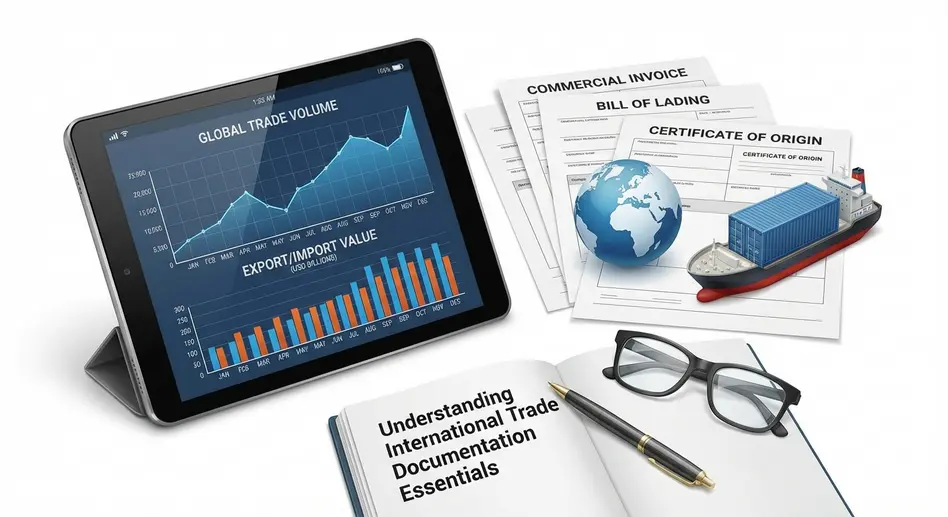
In the complex ecosystem of global commerce, International trade documentation serves as the vital link between manufacturers, freight forwarders, and end-users. Without precise records, the movement of goods across borders would grind to a halt. Navigating the intricacies of cross-border transactions requires more than just high-quality products; it demands a rigorous approach to B2B trade compliance. Documentation acts as the ‘passport’ for cargo, containing essential data that dictates how goods are handled, taxed, and released by various authorities.
1. The Role of Paperwork in Global Logistics
The primary function of paperwork in global logistics is to facilitate the seamless transfer of risk and ownership. When companies engage in International trade documentation management, they are essentially creating a legal trail that protects all parties involved. From commercial invoices to packing lists, these records provide the evidence needed for insurance claims, payment processing via letters of credit, and regulatory audits.
Furthermore, having a comprehensive set of customs clearance documents is the difference between a shipment arriving on schedule or being detained at a port for weeks. Customs officials rely on these documents to determine the harmonized system (HS) codes, calculate duties, and ensure that the goods do not violate any local prohibitions. Errors in this paperwork can lead to significant fines, storage fees, and a damaged reputation with logistics partners.
2. Key Differences Between Domestic and International Records
While domestic trade often relies on a simple bill of sale or delivery note, international transactions demand a much higher level of scrutiny. The disparity arises from the need to satisfy multiple jurisdictions, each with its own set of standards and legal requirements. To manage this complexity, experienced exporters utilize a robust export compliance checklist to ensure no detail is overlooked.
International records must account for foreign exchange regulations, international maritime law, and specific bilateral trade agreements. For instance, according to the standards set by the International Chamber of Commerce, documentation must clearly define the Incoterms used, which specify the exact point where the seller’s responsibility ends and the buyer’s begins. This level of detail is rarely necessary for domestic shipments but is foundational for global business operations.
3. Digital Transformation: The Rise of the Electronic Bill of Lading
The traditional image of international trade—stacks of paper and physical stamps—is rapidly evolving. One of the most significant advancements in recent years is the transition toward the electronic bill of lading (eBL). As a document of title, the bill of lading has historically been the most difficult to digitize due to the legal weight it carries regarding the ownership of goods.
However, the adoption of blockchain and secure digital platforms has made the eBL a reality for many modern traders. Moving to a digital format reduces the risk of document loss, eliminates the costs associated with courier services for physical papers, and drastically speeds up the administrative process. By integrating digital documentation into their workflow, businesses can ensure that their records are more accurate, easily searchable, and less prone to fraudulent alterations. As the industry moves toward a fully paperless environment, staying updated on these digital tools is essential for maintaining a competitive edge in the global marketplace.
Critical Customs Clearance Documents for Global Sellers
Navigating the complexities of global logistics requires more than just high-quality products; it demands meticulous attention to International trade documentation. For global sellers, the ability to move goods across borders without delays or penalties hinges on how well they manage their paperwork. Border authorities utilize these documents to verify the legality of shipments, ensure safety standards are met, and accurately assess duties and taxes. Without a comprehensive approach to documentation, even the most efficient supply chains can grind to a halt at a port of entry.
1. Commercial Invoices and Packing Lists
The commercial invoice is arguably the most important of all customs clearance documents. It serves as a bill of sale between the buyer and the seller, providing essential details for customs officials to determine the value of the goods. This document must include the Harmonized System (HS) codes, a clear description of the items, the transaction currency, and the terms of sale (Incoterms). An error here can lead to incorrect duty assessments or significant fines.
Accompanying the invoice is the packing list. While the invoice focuses on the financial value, the packing list details the physical characteristics of the shipment. It specifies the weight, dimensions, and packaging type (e.g., pallets, crates, or cartons) for every item. Customs officers use the packing list to verify that the physical cargo matches the paperwork, making it a cornerstone of any export compliance checklist.
2. Certificates of Origin and Quality Inspections
To benefit from Free Trade Agreements (FTAs) and preferential tariff treatments, sellers must provide a Certificate of Origin (COO). This document officially declares the country where the goods were manufactured. In the modern landscape of B2B trade compliance, the COO is vital for avoiding unnecessary costs and ensuring that goods are not originating from sanctioned regions.
Furthermore, many industries require specialized quality inspection certificates. These may include phytosanitary certificates for agricultural products, health certificates for food items, or CE/UL certifications for electronics. These inspections prove that the goods meet the destination country’s regulatory and safety standards. Ensuring these documents are prepared in advance is a proactive step in maintaining high standards of B2B trade compliance and building trust with international partners.
3. Transport Contracts and the Electronic Bill of Lading
The third pillar of essential documentation involves the contract of carriage. Traditionally, the Bill of Lading (BoL) has served as a document of title, a receipt for shipped goods, and a contract between the shipper and the carrier. In recent years, the industry has seen a significant shift toward the electronic bill of lading (eBL). This digital transition reduces the risks of loss or forgery and speeds up the transfer of ownership, which is crucial for high-velocity B2B transactions.
Whether using a digital or paper-based BoL, it is imperative that the information aligns perfectly with the commercial invoice. Discrepancies between the shipping quantities listed on the bill of lading and those on the customs declaration are a red flag for inspectors. By digitizing these processes, global sellers can ensure their international trade documentation remains organized, accessible, and ready for audit at a moment’s notice. Implementing a robust export compliance checklist that includes a final review of these three categories will significantly reduce the risk of border delays.
Why Use an Electronic Bill of Lading (eBL)?
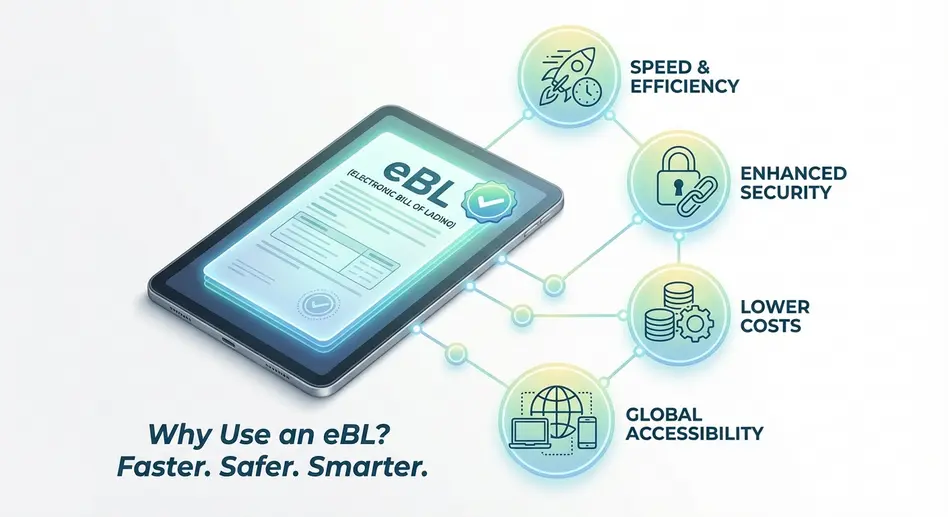
The maritime and logistics industry is undergoing a significant paradigm shift, moving away from century-old paper-based processes toward streamlined digital solutions. Central to this transformation is the adoption of the electronic bill of lading (eBL), a digital equivalent to the traditional paper bill of lading that serves as a document of title, a receipt for shipped goods, and evidence of the contract of carriage. In the complex landscape of International trade documentation, the transition to eBL is no longer just an option for tech-savvy firms; it is becoming a cornerstone of modern B2B trade compliance.
1. Benefits of eBL for Supply Chain Speed
One of the most immediate advantages of adopting an electronic bill of lading is the drastic reduction in transit time for documentation. In traditional shipping, paper bills must be physically couriered across borders, often leading to situations where the cargo arrives at the port of discharge before the original documents do. This mismatch results in costly demurrage and detention fees. By digitizing this process, the eBL can be transferred instantly between parties—shipper, carrier, bank, and consignee—at the click of a button. This acceleration is a critical component of any modern export compliance checklist, as it ensures that the flow of information matches the speed of the physical goods, thereby optimizing port operations and vessel turnaround times.
2. Security Standards for Digital Trade Titles
Security and fraud prevention are paramount when dealing with high-value international shipments. Paper documents are susceptible to forgery, loss, or physical damage, which can lead to significant legal disputes and financial loss. Modern eBL platforms utilize advanced encryption and, increasingly, blockchain technology to create an immutable audit trail. These digital trade titles are governed by international legal frameworks, such as the UNCITRAL Model Law on Electronic Transferable Records (MLETR), which provides a harmonized legal environment for the recognition of electronic documents. This high level of security ensures that customs clearance documents remain tamper-proof, providing peace of mind to all stakeholders involved in the supply chain and reducing the likelihood of fraudulent claims.
3. Cost-Efficiency and Sustainability in Global Logistics
Beyond speed and security, the shift to digital documentation offers substantial cost savings. The administrative overhead associated with printing, handling, and mailing paper documents adds up significantly over thousands of shipments. By integrating eBLs into their standard workflows, companies can eliminate these courier costs and reduce the risk of manual clerical errors that lead to delays. Furthermore, the environmental impact of paper consumption in global trade is immense. Adopting electronic alternatives aligns with modern corporate sustainability goals, reducing the carbon footprint of the logistics industry. For businesses focusing on B2B trade compliance, the ability to store and retrieve documents digitally also simplifies long-term record-keeping and auditing processes, making it easier to demonstrate adherence to international regulations without the need for massive physical archives.
Your 2025 Export Compliance Checklist
In the rapidly evolving landscape of global commerce, maintaining a robust export compliance checklist is no longer optional—it is a strategic necessity for business continuity. As we move into 2025, geopolitical shifts and digital transformations are redefining how companies manage their supply chains. To mitigate risks such as heavy fines, loss of export privileges, and reputational damage, businesses must stay ahead of changing B2B trade compliance standards and regulatory updates.
Adopting a proactive stance toward compliance ensures that your organization can navigate the complexities of foreign markets while maintaining operational efficiency. Below is a comprehensive guide to the essential pillars of export compliance in the coming year.
1. Denied Party Screening Protocols
The foundation of any compliance program is knowing exactly who you are doing business with. Denied party screening (also known as restricted party screening) involves checking all parties involved in a transaction—including customers, vendors, and intermediaries—against various government watchlists. In 2025, these lists are updated more frequently than ever due to shifting international relations.
Automating this process is critical. Manual checks are prone to human error and cannot keep pace with the real-time changes mandated by global export laws. Your screening protocols should cover not only the primary entities but also their beneficial owners to avoid circumventing sanctions. Establishing a clear internal process for handling “potential matches” is equally important to ensure that legitimate shipments are not delayed unnecessarily while high-risk transactions are flagged and investigated.
2. Product Classification and Export Licenses
Accurate product classification is the prerequisite for determining whether an export license is required. Every item intended for export must be assigned the correct Export Control Classification Number (ECCN) or United States Munitions List (USML) category, as well as the appropriate Harmonized System (HS) code for duty assessment. Misclassification is a leading cause of delays and penalties during the customs process.
For 2025, companies should conduct a full audit of their product catalogs. Technological advancements, particularly in dual-use goods like electronics and software, often lead to changes in control status. Once classified, you must determine if the destination country, the end-user, or the end-use triggers the need for a specific export license. Documenting the rationale behind every classification decision is a hallmark of a mature compliance program and provides a crucial defense during regulatory audits.
3. Digital Transformation of International Trade Documentation
The transition toward paperless trade is accelerating. One of the most significant trends for 2025 is the widespread adoption of the electronic bill of lading (eBOL). Transitioning to digital formats reduces the risk of document loss, speeds up the transfer of ownership, and provides a more secure audit trail for regulators. Ensuring your internal systems are compatible with digital standards is a vital component of modern B2B trade compliance.
Beyond the bill of lading, your business must maintain meticulous customs clearance documents, including commercial invoices, packing lists, and certificates of origin. Proper management of International trade documentation is essential for proving compliance with regional trade agreements and environmental regulations. Record-keeping requirements typically mandate that these documents be stored and easily retrievable for at least five years. By centralizing these records in a secure, digital environment, your business can respond swiftly to inquiries from customs authorities and ensure a seamless flow of goods across international borders.
Optimizing B2B Trade Compliance Processes
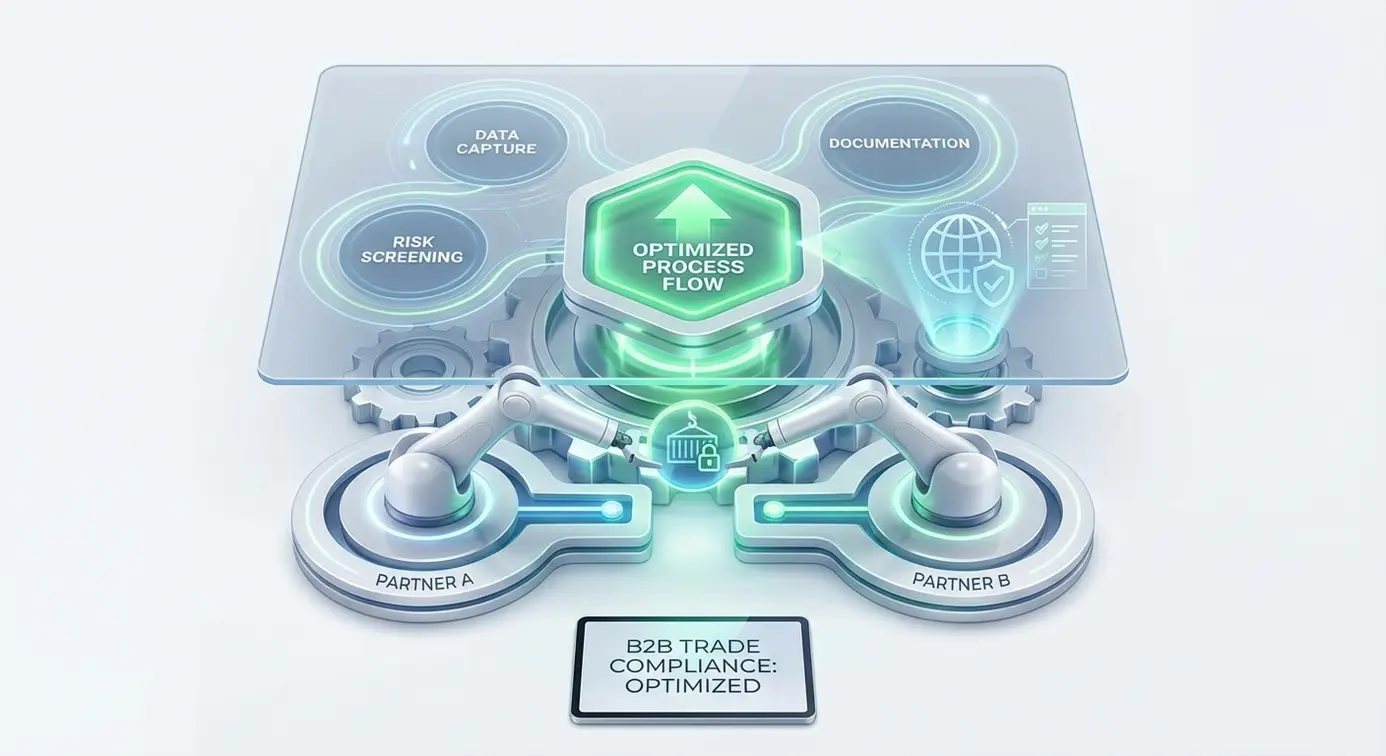
In the high-stakes world of global commerce, the ability to navigate complex regulatory frameworks is a defining factor for success. Modern enterprises are increasingly finding that manual handling of international trade documentation is not only inefficient but also a significant liability. To maintain a competitive edge, businesses must pivot toward strategic automation and rigorous compliance protocols. This transition ensures that goods move across borders without the friction of administrative errors, which often lead to costly detention and demurrage fees. By optimizing documentation workflows, companies can transform their supply chain from a series of bottlenecks into a streamlined engine for growth.
1. Leveraging Automation in B2B Compliance
Automation stands at the forefront of modern trade strategy. For many organizations, the sheer volume of paperwork required for cross-border transactions makes manual entry a primary source of error. Implementing specialized software allows for the auto-generation of critical forms based on standardized data. This is particularly vital for maintaining B2B trade compliance across multiple jurisdictions. When systems are synchronized with global trade databases, they can automatically update tariff codes and regulatory requirements, ensuring that every shipment adheres to the latest legal standards.
Furthermore, automation facilitates real-time tracking of documentation status. Instead of waiting for manual verification, automated platforms can flag missing signatures or incorrect data fields instantly. This proactive approach allows logistics teams to rectify issues before the cargo reaches the port of exit, significantly reducing the likelihood of government audits or shipment rejections. By integrating these systems, businesses achieve a level of transparency and speed that manual processes simply cannot match.
2. Risk Mitigation for High-Volume International Trade
Risk management in international trade requires a meticulous attention to detail. One of the most effective tools for reducing operational risk is a comprehensive export compliance checklist. This checklist serves as a final gatekeeper, ensuring that all parties involved in a transaction have been screened against denied-party lists and that the end-use of the product complies with international sanctions. According to the International Trade Administration, maintaining rigorous compliance records is essential for any business looking to expand its global footprint securely.
High-volume traders must also account for the variability in regional requirements. What suffices for one customs authority may be insufficient for another. By centralizing the management of customs clearance documents, companies can ensure consistency across all shipping lanes. This centralized repository not only aids in internal audits but also provides a ready trail of evidence should a regulatory body request a review of past transactions. Mitigation is about preparation, and structured documentation is the foundation of that preparation.
3. Integrating Digital Solutions for Global Supply Chains
The final step in optimizing B2B trade compliance is the full adoption of digital assets, such as the electronic bill of lading (eBL). Transitioning from paper-based bills to digital versions eliminates the risk of physical loss, theft, or forgery. The eBL speeds up the transfer of title and allows for faster processing by banks and customs officials alike. As more nations move toward digital-first trade initiatives, the ability to provide electronic documentation becomes a prerequisite for participation in major trade corridors.
Digital integration also enables better collaboration between stakeholders, including freight forwarders, carriers, and insurers. When all parties have access to a single source of truth—a digital version of the international trade documentation—the margin for communication error evaporates. This collaborative ecosystem ensures that every stakeholder is aligned with the compliance requirements of the destination country, fostering a more resilient and agile supply chain. Ultimately, the fusion of automation, risk management, and digital documentation creates a robust framework that supports sustainable international expansion.
Partner with Vietnam’s Leading Suppliers
Looking for reliable suppliers in Vietnam? Contact VietnamSuppliers.com today to connect with verified manufacturers and exporters across all industries.
—————————————
References
– International Chamber of Commerce: https://iccwbo.org/
– B2B Trade Compliance and Documentation: https://www.trade.gov/customs-and-import-documentation
– UNCITRAL Model Law on Electronic Transferable Records (MLETR): https://uncitral.un.org/en/texts/ecommerce/modellaw/electronic_transferable_records
– U.S. Bureau of Industry and Security – Export Laws: https://www.bis.doc.gov/index.php/regulations/export-administration-regulations-ear
– International Trade Administration: https://www.trade.gov/

