
What Are International Export Duties?
International export duties represent a critical, yet often misunderstood, component of global commerce. Unlike import duties which are levied on goods entering a country, export duties are taxes imposed by a government on products exiting its borders. This section provides a foundational understanding of international export duties, defining what they are, their purpose in global trade, and the key terminology associated with them. For businesses engaged in cross-border transactions, particularly B2B buyers, grasping these duties is essential for accurate cost forecasting, supply chain management, and ensuring compliance with international trade regulations.

1. Definition and Purpose of Export Duties
At its core, an export duty is a tax or fee charged on goods when they leave the territorial jurisdiction of a country. While import duties are far more common and serve primarily to generate revenue and protect domestic industries from foreign competition, export duties serve a different set of strategic objectives. Governments implement various types of export taxes for several key reasons:
- Revenue Generation: Though less common than import duties, export duties can provide a source of income for governments, especially for countries rich in natural resources or primary commodities.
- Resource Conservation: Many nations impose export duties on raw materials (e.g., minerals, timber, agricultural products) to conserve domestic supplies, ensuring sufficient quantities for local industries or consumption. This prevents over-extraction and manages natural resources sustainably.
- Encouraging Domestic Processing: By making the export of raw materials more expensive, governments incentivize domestic industries to process these materials into higher-value finished goods before export. This promotes industrialization, creates jobs, and boosts a nation’s manufacturing capabilities.
- Stabilizing Domestic Prices: In times of scarcity or high demand, export duties can limit the outflow of essential goods, helping to stabilize their prices within the domestic market and ensure food security or industrial supply.
- Influencing Global Markets: For countries that are dominant producers of certain commodities, export duties can impact global supply and prices, giving them a degree of leverage in international trade negotiations.
Understanding the specific goals behind a country’s export duty regime is crucial for businesses, as it directly influences product availability and pricing in international markets.
2. Key Terms: Tariffs, Quotas, and Levies
While often used interchangeably, it’s important to differentiate between several key terms related to international trade restrictions:
- Export Tariffs (Duties): These are direct taxes imposed on goods exported from a country. They can be calculated in various ways, often referred to as export duty calculation methods.
- Ad Valorem Duties: Calculated as a percentage of the exported goods’ value. For example, a 5% ad valorem duty on a $100,000 shipment would be $5,000.
- Specific Duties: A fixed amount charged per unit of measure (e.g., per ton, per liter, per piece). For instance, $10 per barrel of crude oil.
- Compound Duties: A combination of both ad valorem and specific duties.
- Export Quotas: Unlike duties, quotas are quantitative restrictions that limit the volume or value of specific goods that can be exported during a given period. They are not taxes but serve a similar purpose of controlling the outflow of goods, often for conservation or domestic supply reasons.
- Export Levies: This term is often used broadly as a synonym for duties or taxes. However, sometimes it can refer to a more specific charge or fee earmarked for a particular fund or purpose, such as an environmental levy or a fund for agricultural development. For instance, some countries might impose a levy on certain agricultural exports to fund research and development in that sector.
Each of these mechanisms can significantly impact the cost and feasibility of international trade, directly affecting the competitiveness of goods in the global marketplace and influencing the impact of export tariffs on global trade.
3. Historical Context and Evolution of Export Taxes
The practice of levying taxes on exported goods is not new; it has roots in ancient trade routes and mercantilist economic policies. Historically, many empires and kingdoms used export taxes to generate wealth and control the flow of valuable resources. During the era of colonialism, metropolitan powers often imposed export duties on raw materials from their colonies, ensuring these resources primarily served the industrial needs of the colonizing nation.
In the post-World War II era, with the establishment of multilateral trade agreements like the General Agreement on Tariffs and Trade (GATT) and its successor, the World Trade Organization (WTO), there has been a general global trend towards reducing trade barriers. While import tariffs have been a primary focus of reduction efforts, export duties are also subject to certain international rules, though they are less prevalent and generally discouraged, especially if they distort global trade or create unfair competition.
Today, export taxes are predominantly used by developing nations or countries rich in specific natural resources (e.g., oil, minerals, certain agricultural commodities) to achieve specific economic or environmental objectives. Examples include export duties on rare earth minerals to control their supply and encourage domestic processing, or taxes on agricultural exports to ensure food security. Businesses, particularly B2B buyers, should be aware of potential export duty exemptions for B2B buyers, which sometimes exist under specific free trade agreements or bilateral agreements to promote certain trade relationships or supply chains.
Types of Export Taxes and Tariffs
When goods cross international borders, they often encounter a complex web of financial levies. These International Export Duties are not just revenue-generating tools for governments but also strategic instruments to influence trade patterns, protect domestic industries, or manage natural resources. Understanding the various types of export taxes and tariffs is crucial for businesses engaged in global trade. These duties, which can significantly impact the final cost of goods and their competitiveness, necessitate a thorough grasp of export duty calculation methods to ensure compliance and accurate pricing. This section explores the primary categories of these duties, detailing their characteristics, application, and the broader impact of export tariffs on global trade. It’s also important to note potential considerations around export duty exemptions for B2B buyers, which can sometimes be negotiated under specific trade agreements or conditions.
1. Ad Valorem vs. Specific Duties
The most fundamental distinction in types of export taxes lies between Ad Valorem and Specific duties.
- Ad Valorem Duties: Derived from the Latin “according to the value,” these duties are calculated as a fixed percentage of the exported good’s value. For instance, a 5% ad valorem duty on a shipment valued at $100,000 would equate to $5,000 in taxes. This method is widely adopted because it naturally adjusts with the fluctuating price of goods, maintaining a consistent revenue proportion for the imposing country. It is particularly common for manufactured goods and high-value items where precise valuation is feasible. The primary challenge, however, lies in accurately determining the customs value, which can be complex.
- Specific Duties: In contrast, specific duties are fixed monetary amounts levied per physical unit of the exported good, regardless of its market value. Examples include $10 per ton of coal or $0.50 per liter of oil. This method is straightforward and easy to administer, as it doesn’t require complex valuation. Specific duties are often applied to bulk commodities or goods with relatively standardized units. While simple, their main drawback is that they do not adjust for inflation or changes in commodity prices, meaning their real burden can decrease over time if prices rise, or become disproportionately high if prices fall. For businesses, understanding these different export duty calculation methods is vital for accurate financial planning.
2. Compound Duties and Variable Levies
Beyond the basic ad valorem and specific categories, countries also implement more complex structures like compound duties and variable levies.
- Compound Duties: These duties combine elements of both ad valorem and specific duties. For example, an export might be subject to a duty of “5% of its value plus $1 per kilogram.” This hybrid approach aims to capture the benefits of both methods: the flexibility of ad valorem duties to account for value fluctuations and the simplicity and floor provided by specific duties. Compound duties are often applied to products where both value and quantity are significant factors, such as processed agricultural goods, allowing governments to protect specific domestic industries or manage resource exports more effectively.
- Variable Levies: Variable levies are duties designed to fluctuate in response to market conditions, often to maintain a target price or protect domestic producers from volatile international prices. While less common for exports than for imports, similar mechanisms can be employed, particularly for strategic commodities. For instance, a country might impose a variable export tax on a key natural resource, increasing it when global prices are high to capture more rent, or decreasing it to maintain competitiveness during price slumps. These duties can have a significant impact of export tariffs on global trade by introducing unpredictability and requiring sophisticated export duty calculation methods.
3. Anti-dumping and Countervailing Duties on Exports
While typically associated with imports to protect domestic industries from unfairly priced goods, anti-dumping and countervailing measures can, in specific circumstances, influence or directly impact exports, though not in the traditional sense of duties imposed on exports by another country.
- Export Restrictions for Resource Management/Domestic Supply: Sometimes, what appear to be export duties might function similarly to anti-dumping measures in reverse. For example, a country might impose high export duties on critical raw materials if it believes domestic industries are being deprived or if it wants to encourage domestic processing. This is a strategic export control, distinct from anti-dumping as defined by WTO rules on tariffs and trade, which primarily govern import duties. Such measures aim to prevent the “dumping out” of essential resources, ensuring domestic availability and value addition.
- Countervailing-like Duties on Exports (Rare): Similarly, a government might theoretically impose a duty on certain exports if those exports are receiving subsidies that are deemed detrimental to a specific domestic sector or contrary to the country’s broader economic goals. This is highly unusual, as countervailing duties are almost exclusively levied by importing countries against subsidized imports. However, the principle of governments intervening through duties to correct perceived market distortions or protect strategic interests remains. Such measures are distinct from standard revenue-generating types of export taxes and are typically applied in response to specific market failures or policy objectives, further illustrating the multifaceted impact of export tariffs on global trade. Businesses should carefully monitor global trade policies and potential export duty exemptions for B2B buyers, as these can significantly alter market dynamics.
Conclusion:
The landscape of International Export Duties is diverse, ranging from straightforward ad valorem and specific duties to more complex compound duties and responsive variable levies. While anti-dumping and countervailing duties are primarily import-focused, the principles of government intervention through duties to manage trade and resources are pervasive. A deep understanding of these types of export taxes and their corresponding export duty calculation methods is paramount for any business aiming for successful and compliant international trade. Staying informed about trade agreements and potential export duty exemptions for B2B buyers can provide a competitive edge in an increasingly complex global marketplace.
Export Duty Calculation Methods Explained
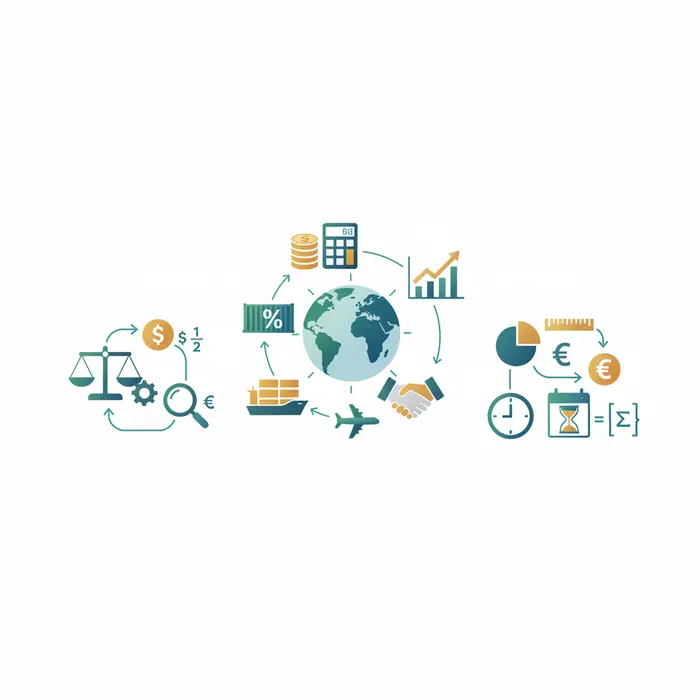
Understanding international export duties is crucial for businesses engaged in cross-border trade. This section provides a detailed breakdown of how these duties are calculated, including common methodologies, the indispensable role of HS codes, and the various factors that influence the final duty amount. Accurate calculation of international export duties is vital for competitive pricing, compliance, and avoiding unexpected costs, ultimately impacting a company’s bottom line and global trade strategies.
1. Calculating Ad Valorem and Specific Duties
The core of export duty calculation methods generally revolves around two primary types: ad valorem duties and specific duties. Understanding these types of export taxes is fundamental for any exporter.
- Ad Valorem Duties: This is the most common method, where the duty is calculated as a percentage of the declared value of the goods being exported. For instance, if a country levies an ad valorem export duty of 5% on timber, and a shipment of timber is valued at $100,000, the export duty would be $5,000. This method directly ties the duty amount to the commercial value of the product, often reflecting its market price.
- Specific Duties: Unlike ad valorem duties, specific duties are a fixed amount per unit of measurement, irrespective of the product’s value. This could be per weight (e.g., $10 per ton of raw material), per volume (e.g., $5 per liter of oil), or per piece (e.g., $2 per manufactured unit). For example, if an export duty is $0.50 per kilogram of coffee beans, a shipment of 10,000 kg would incur a duty of $5,000. Specific duties are often applied to raw materials or bulk commodities where value fluctuations are less of a concern than quantity.
Some goods may even be subject to a combination of both, known as compound duties, to address various economic or regulatory objectives.
2. The Role of Harmonized System (HS) Codes
At the heart of global trade classification and duty determination lies the Harmonized System (HS) code. Developed and maintained by the World Customs Organization (WCO), HS codes provide a standardized, international product nomenclature system. Every product traded across borders is assigned a specific HS code, typically a six-digit number at the international level, which can be extended to eight or ten digits by individual countries for more granular classification.
These codes are paramount because they dictate the applicable duty rate. When a product’s HS code is identified, customs authorities worldwide can ascertain the exact export duty, import duty, and any other relevant taxes, regulations, or restrictions. Misclassifying a product, even inadvertently, can lead to incorrect duty calculations, fines, delays, and potential legal issues. Therefore, accurately determining the HS code is a critical first step in the export duty calculation methods process, ensuring compliance and smooth customs clearance.
3. Factors Influencing Duty Rates: Origin, Destination, Product Type
Beyond the fundamental calculation methodologies and HS codes, several other critical factors profoundly influence the final export duty rates:
- Country of Origin: The country where the goods originate plays a significant role. Bilateral or multilateral free trade agreements (FTAs) between countries can lead to preferential duty rates, or even exemptions, for goods originating from signatory nations. Conversely, goods from countries without such agreements might face higher standard (Most Favoured Nation – MFN) tariff rates. The origin can also influence whether certain export duty exemptions for B2B buyers are available.
- Country of Destination: The policies and tariff schedules of the importing country are equally important. While export duties are levied by the exporting country, the overall competitive landscape is shaped by the total tax burden on the product in the destination market. The importing country’s demand, strategic interests, and trade relationships all contribute to the final cost to the B2B buyer.
- Product Type and Sensitivity: Even within a broad HS code category, specific product characteristics can alter duty rates. Environmentally sensitive goods, strategic raw materials (like rare earth minerals or certain agricultural commodities), or products deemed critical for national security often face special or higher export duties to manage supply, control domestic prices, or generate government revenue. These targeted types of export taxes can significantly impact global supply chains.
The cumulative impact of export tariffs on global trade is considerable. High duties can make products less competitive internationally, discourage exports, and shift production patterns. Businesses must navigate this complex landscape, leveraging accurate data and expert advice to optimize their global trade strategies and ensure compliance with all export duty calculation methods.
Impact of Export Tariffs on Global Trade
Export tariffs, often referred to as International Export Duties, are taxes levied by a government on goods leaving its borders for sale in another country. Unlike import tariffs designed to protect domestic industries from foreign competition, export duties aim to achieve various domestic objectives, such as securing raw material supply for local industries, increasing government revenue, or influencing global commodity prices. Understanding the impact of export tariffs on global trade involves a comprehensive analysis of their far-reaching economic consequences, affecting not only the exporting nations but also importing countries, global market prices, and the intricate fabric of international supply chains. This exploration delves into the various types of export taxes and their broader implications, offering insights beyond mere export duty calculation methods, and even considering potential export duty exemptions for B2B buyers in specific scenarios.
Effects on Exporting Businesses and Competitiveness
For the exporting nation, the imposition of export tariffs can have a dual-edged effect. Primarily, it increases the cost of goods for foreign buyers, making the exporting country’s products less competitive in the global market. Businesses reliant on international sales may experience a significant drop in demand, leading to reduced production, lower profits, and potential job losses. This diminished competitiveness can be particularly damaging for industries operating with tight margins or those producing commodities where price is a critical differentiator. Small and medium-sized enterprises (SMEs) often bear the brunt of these policies, as they may lack the financial reserves or market diversification to absorb the increased costs or navigate complex International Export Duties frameworks.
Furthermore, export tariffs can discourage domestic producers from investing in expansion or innovation if their primary market is overseas. If the goal is to reserve raw materials for domestic processing, it might spur growth in downstream industries, but at the cost of the upstream export-oriented sector. Over time, such policies can lead to a shrinking export base, impacting the nation’s balance of trade and overall economic growth. The extent of this impact heavily depends on the elasticity of demand for the exported goods and the availability of alternative suppliers in the global market. Countries with a monopoly or significant market share in a particular commodity might exert greater influence, but even then, long-term market shifts and the search for alternatives are inevitable.
Impact on Importing Countries and Consumer Prices
From the perspective of importing countries, export tariffs imposed by their suppliers translate directly into higher acquisition costs for goods. This cost increase is typically passed down through the supply chain, ultimately affecting consumer prices. For essential commodities like food, energy, or raw materials, this can lead to inflationary pressures, eroding purchasing power and potentially lowering living standards. Industries that rely heavily on these imported goods as inputs for their own production processes will also face increased operational costs, which they may then pass on to their customers or absorb, impacting their profitability and competitiveness.
In response to higher prices or reduced availability, importing countries might seek alternative suppliers or accelerate efforts to develop domestic substitutes. While this can foster self-sufficiency in the long run, the immediate disruption can be significant, potentially leading to supply shortages and market instability. For developing nations heavily dependent on specific imports, such tariffs can have severe socio-economic consequences, exacerbating poverty and hindering development efforts. The geopolitical implications are also noteworthy, as export tariffs can strain trade relations, provoking retaliatory measures and leading to broader trade disputes.
Global Market Dynamics and Trade Relations
The imposition of export tariffs by a major producer can significantly alter global market dynamics. If the exporting country holds a dominant position in a particular commodity market, its tariffs can lead to a substantial increase in global prices, creating windfall profits for other producing nations not subject to the same tax, but raising costs for all importing nations. Conversely, if there are many alternative suppliers, the tariff might primarily harm the imposing nation’s exporters as buyers simply shift to cheaper sources. This can lead to reconfigurations of global supply chains, as businesses seek to diversify their sourcing to mitigate risks associated with future tariff impositions.
Beyond direct economic impacts, export tariffs often carry substantial geopolitical weight. They can be perceived as protectionist measures, distorting fair trade practices and potentially violating international trade agreements. Such actions can sour bilateral and multilateral trade relations, leading to tit-for-tat tariff wars and a general decline in global trade cooperation. International bodies like the World Trade Organization (WTO) often mediate disputes related to such trade barriers, emphasizing the importance of transparent and predictable global trade policies to foster a stable economic environment. In an increasingly interconnected world, understanding the intricate ripple effects of export tariffs on trade flows, diplomatic ties, and the overall stability of the international economic order is crucial for policymakers and businesses alike.
Navigating Export Duty Exemptions for B2B Buyers
For B2B buyers engaged in international trade, International Export Duties represent a significant cost factor impacting profitability and competitiveness. Understanding how to mitigate these costs through various exemptions and relief programs is crucial for optimizing supply chains and achieving favorable pricing. This section explores key strategies and mechanisms designed to help B2B buyers reduce or even avoid export duties, transforming potential liabilities into strategic advantages.

1. Understanding Free Trade Agreements (FTAs) and Preferential Tariffs
Free Trade Agreements (FTAs) are bilateral or multilateral treaties that reduce or eliminate trade barriers, including export tariffs and import duties. For B2B buyers, leveraging FTAs is one of the most effective strategies for securing export duty exemptions for B2B buyers. These agreements establish preferential tariffs, meaning goods originating from a signatory country can enter another at a reduced or zero duty rate. The key to benefiting from FTAs lies in complying with their respective Rules of Origin, which define which goods qualify as “originating” based on where they were wholly obtained or underwent substantial transformation.
B2B buyers should proactively work with suppliers to ascertain if products meet specific Rules of Origin criteria for relevant FTAs, often requiring certificates of origin or supplier declarations. Major FTAs, such as the CPTPP, RCEP, and various EU agreements, offer significant opportunities for cost savings. By identifying applicable agreements and ensuring proper documentation, businesses can substantially reduce the financial impact of types of export taxes, directly influencing the landed cost of goods and enhancing market competitiveness.
2. Duty Drawbacks and Rebate Schemes
Duty drawbacks are a powerful mechanism allowing businesses to recover duties, taxes, and fees previously paid on imported materials when those materials are subsequently exported in a finished product or their original form. This scheme is particularly beneficial for manufacturers who import raw materials or components, process them, and then export the finished goods. The rationale is to prevent “double taxation” and encourage domestic manufacturing for export. Eligibility typically requires clear documentation tracing imported goods to exported products, adherence to specific timeframes, and accurate export duty calculation methods.
Many countries also offer various rebate schemes or export incentive programs, including value-added tax (VAT) refunds on exported goods, subsidies for specific industries, or tax credits. These schemes aim to boost a nation’s export competitiveness by offsetting production or logistics costs. While B2B buyers don’t directly claim these, they significantly benefit when their suppliers utilize them, leading to more competitive pricing from the exporter. Understanding the availability of such programs in the exporting country can be a crucial negotiation point and a determinant in supplier selection.
3. Temporary Export Regimes and Carnet Systems
For goods intended for temporary export and subsequent re-import without significant transformation or sale, special temporary export regimes and carnet systems offer significant advantages. These systems allow goods to cross international borders duty-free and tax-free for a specified period, eliminating the need to pay duties upon entry and then claim them back upon re-export. The most widely recognized system is the ATA Carnet, an international customs document that acts as a passport for goods for temporary admission into foreign countries. It simplifies customs procedures by replacing national customs declarations and guarantees for duties and taxes.
The ATA Carnet system is invaluable for B2B buyers dealing with professional equipment, commercial samples, or goods for trade fairs and exhibitions. Instead of navigating complex customs formalities and posting bonds in each country, a single ATA Carnet covers temporary imports in multiple signatory countries. This significantly reduces administrative burdens, processing times, and upfront cash outlays. Utilizing such regimes minimizes the impact of export tariffs on global trade for specific scenarios, allowing businesses to showcase products or conduct operations internationally with greater ease and cost-efficiency.
Navigating the landscape of International Export Duties can be intricate, but with a strategic approach to leveraging FTAs, understanding duty drawback mechanisms, and utilizing temporary export regimes, B2B buyers can unlock substantial cost savings. Proactive engagement with suppliers, meticulous documentation, and a thorough understanding of international trade regulations are paramount to optimizing procurement strategies and maintaining a competitive edge in the global marketplace.
Partner with Vietnam’s Leading Suppliers
Looking for reliable suppliers in Vietnam? Contact VietnamSuppliers.com today to connect with verified manufacturers and exporters across all industries.
—————————————
References
– WTO | Tariffs and non-tariff barriers: https://www.wto.org/english/thewto_e/whatis_e/tif_e/fact2_e.htm
– WTO rules on tariffs and trade: https://www.wto.org/english/docs_e/legal_e/legal_e.htm
– World Customs Organization (WCO): https://www.wcoomd.org/en/topics/nomenclature/instrument-and-tools/hs_code.aspx
– World Bank Trade Overview: https://www.worldbank.org/en/topic/trade/overview#1
– The ATA Carnet – ICC: https://www.atacarnet.com/

